Things to do
Perito Moreno Glacier: visiting, activities and practical tips
We may earn a commission when you book through links on this page, at no extra cost to you. We don't visit or try the places we cover: we summarize published sources. How we work
In short
- The glacier is 80 km (50 mi) from El Calafate on a paved road: about 1 h by car, or a shuttle for €15-25 (about $17 to 29) round trip.
- Los Glaciares National Park entry is about €30 (about $35) for foreign visitors (50,000 pesos since June 1, 2026; peso rates may change).
- The mini-trek on the ice (2 h, about €200 / $230, to be checked) must be booked ahead; the longer Big Ice (5 h) is for experienced walkers.
- Morning (8-11 am) is the best time: good light and fewer visitors. The glacier can be visited all year.
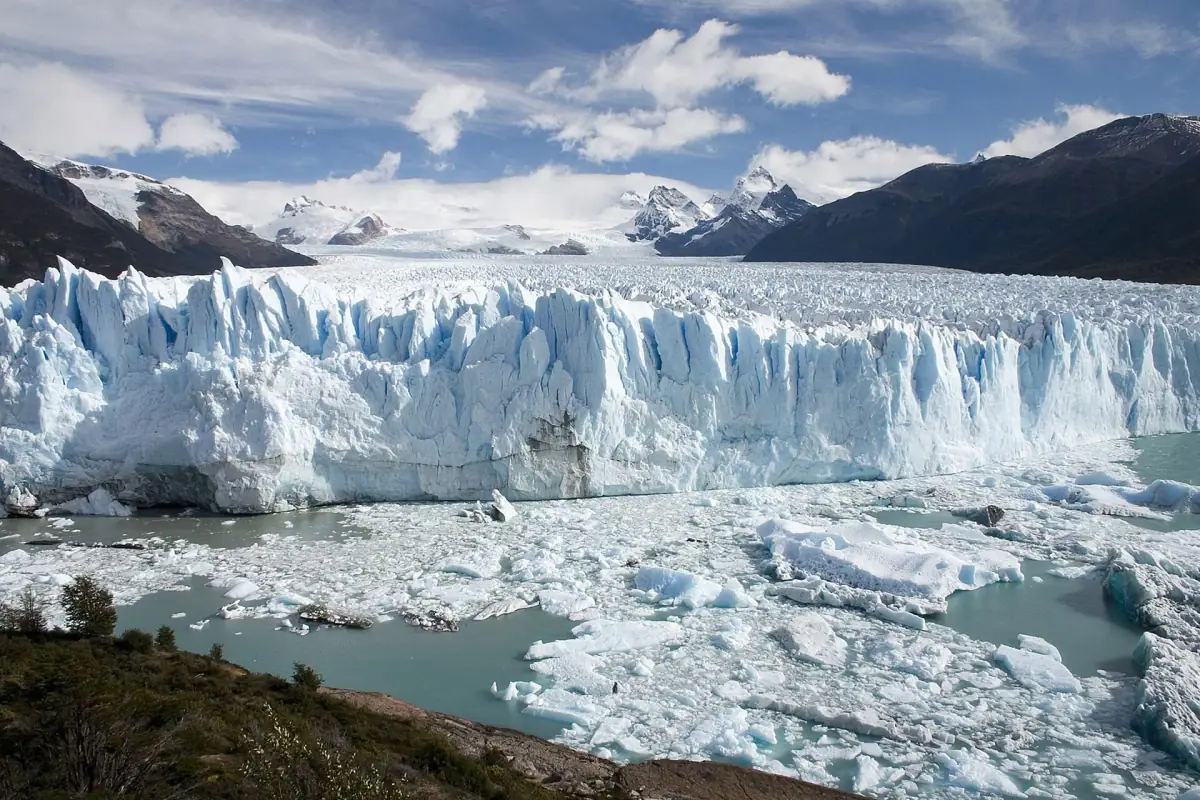
The Perito Moreno Glacier is one of the most spectacular natural wonders on the planet. This blue wall of ice, 5 km (3 mi) wide and 60 to 70 meters (197 to 230 ft) high, is the iconic image of Patagonia, and for good reason. Seeing it with your own eyes, hearing the crash of ice blocks collapsing into Lago Argentino with a thunderous roar, and walking on this ancient ice are experiences that will stay with you for life.
Why is the Perito Moreno so special?
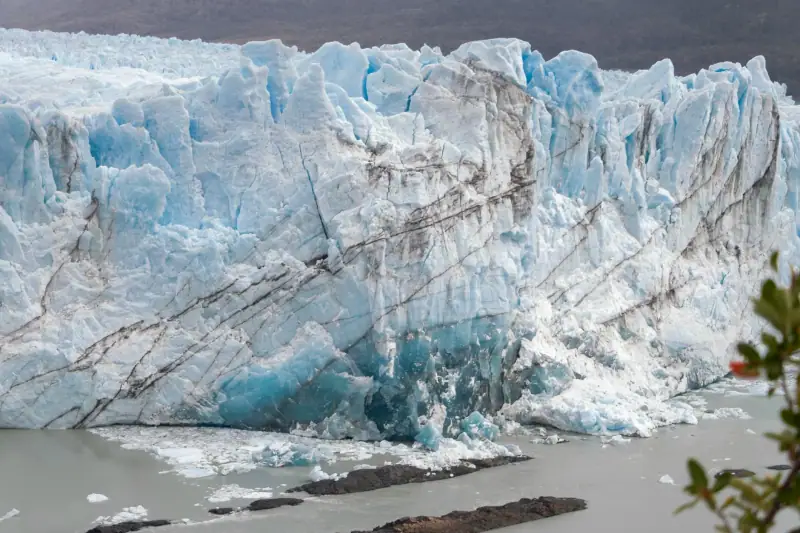
It is one of the few glaciers that is still advancing. While 97% of the world’s glaciers are retreating under the effect of global warming, the Perito Moreno is in dynamic equilibrium: it advances about 2 meters (6.6 ft) a day but loses as much through calving. Its size stays stable.
The calving is spectacular. The glacier front pushes into Lago Argentino and creates immense pressure on the ice. Enormous blocks, sometimes several meters high, crash into the lake several times an hour, creating waves and a rumble that echoes through the whole valley.
The rupture of the ice dam is a rare but spectacular phenomenon. About every 4-5 years, the glacier blocks the Rico arm of Lago Argentino, forming a natural dam. Water pressure eventually creates a bridge and the dam breaks in a cascade, an event thousands of people come to watch.
How to get to the glacier
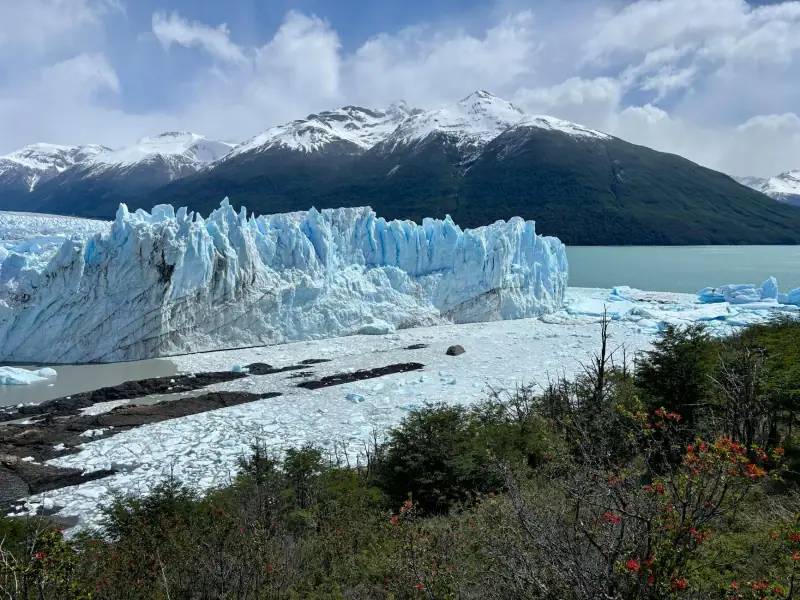
From El Calafate
The glacier is 80 km (50 mi) from El Calafate via Provincial Route 11. The road is fully paved.
Option 1: Tourist bus Tourist shuttles leave every morning from several points in El Calafate (hotels and the central bus station). Departure: 8-9 am, return: 5-6 pm.
- Fare: €15-25 (about $17 to 29) round trip
- Booking: at any travel agency in El Calafate or online
- Advantage: simple, no need to drive
- Drawback: fixed schedule, you leave with everyone else
Option 2: Rental car The road is direct and easy. Go at your own pace, stay longer if you want.
- Drive time: 1 h from El Calafate
- Free parking in front of the park entrance
- Recommended for travelers who want flexibility
Option 3: Guided excursion Agencies offer guided tours. More expensive but informative. Often combined with another activity (mini-trek or boat).
Park hours
- Opening: 8 am
- Closing: 6-8 pm (depending on the season)
- Every day of the year (except in exceptional weather conditions)
Perito Moreno Glacier excursions
Bus, mini-trek, Big Ice, boat: book your activities ahead.
Activities at the glacier
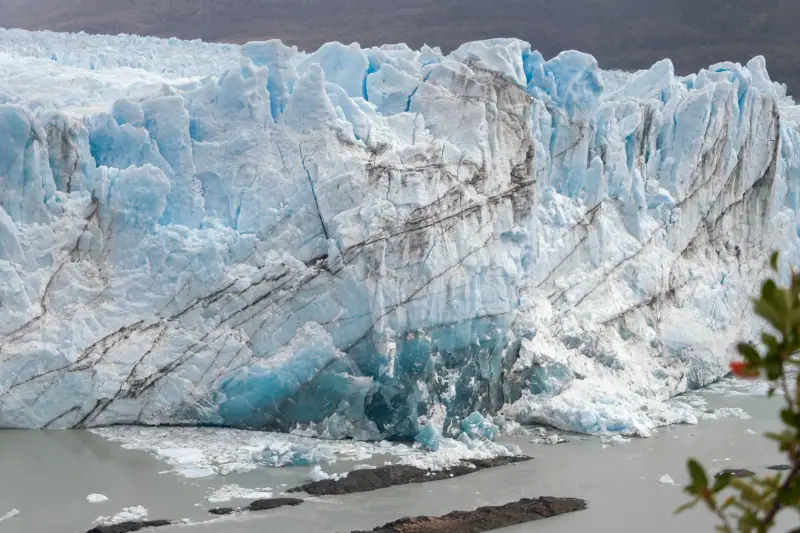
The walkways (included in park entry)
A network of wooden walkways several kilometers long lets you approach the glacier front from different angles and heights. This is the “classic” visit, free once park entry is paid.
The different levels:
- Lower walkways: frontal view of the glacier, at lake level
- Upper walkways: plunging view of the glacier and the lake
- Upper viewpoint: panorama of the whole glacier front
Allow 2 to 4 hours to walk all the walkways at a relaxed pace.
Mini-trek on the glacier (about €200 / $230, to be checked)
The recommended experience if your budget allows. A boat crosses the Rico arm of Lago Argentino to drop you on the south shore of the glacier. You put on crampons, get a safety briefing, then walk 2 hours on the ice with a certified guide.
On the program: Crossing crevasses (over ice bridges), observing blue ice formations, understanding glacier dynamics. A glass of whisky on ancient ice ends the adventure.
Booking: Mandatory in high season (several days ahead). Contact agencies in El Calafate or book online.
Requirements: Good physical condition, walking shoes, rain jacket. The operator provides the crampons.
Big Ice (about €350-400 / $405-465, to be checked)
For experienced walkers. 5 hours on the glacier instead of 2, with a deeper exploration of glaciology. Access to less visited areas with spectacular ice formations.
Requirement: Good fitness, hiking experience, minimum age 18.
Boat trip (about €15-25 / $17-29)
Small boats let you get close to the glacier front from Lago Argentino. You get a better sense of the dizzying height of the ice wall and can watch the floating icebergs. The trip usually lasts 45 minutes to 1 hour.
Note: This boat does not drop you on the glacier. It is a discovery visit from the water.
Tips for photographing the glacier
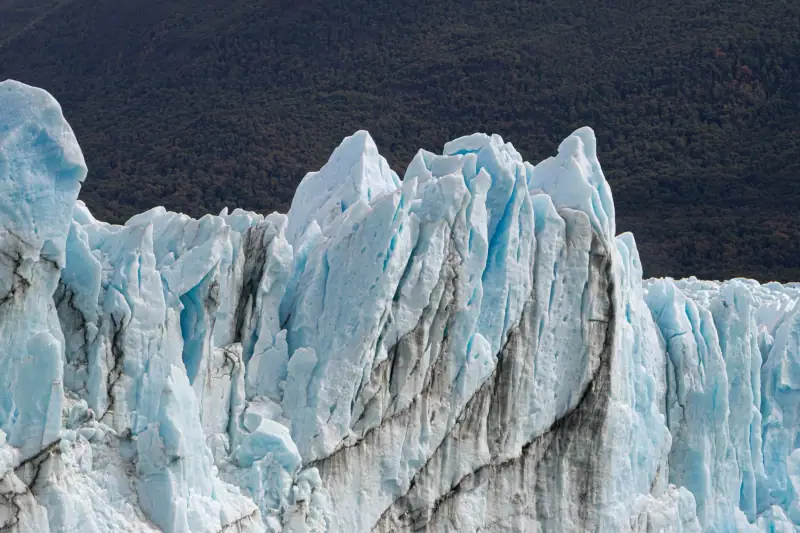
The Perito Moreno is one of the most spectacular photographic subjects in South America.
Best light: Early morning (8-10 am), with direct golden light on the glacier front. Midday light is flat. In late afternoon (5-6 pm), the light returns nicely on the west side.
Equipment:
- Telephoto lens (200-400 mm) to photograph calving from afar
- Wide angle for panoramas from the upper walkways
- Protect your gear from moisture and spray
Calving timing: The big falls happen in thermal cycles. Hot, sunny days favor calving. Don’t miss the sounds: you will hear the cracking before you see the blocks fall.
Weather and best times
All seasons: The glacier is accessible all year, unlike other Patagonian sites.
Summer (November-March): Best overall conditions, long days. But the crowd can spoil the atmosphere.
Autumn-winter (April-August): Fewer people, sometimes a layer of fresh snow on the surrounding landscape, beautiful winter light. But cold temperatures.
Spring (September-October): A good option: few people, a renewed landscape.
Hotels in El Calafate
Your base for visiting the Perito Moreno. Book with free cancellation.
Practical tips
- Bring a rain jacket: spray from calving can get you wet on the lower walkways
- Bring your lunch: the park cafeteria is expensive and often packed
- Charge your camera: you will want to take hundreds of photos
- Stay patient: the most spectacular calving sometimes takes an hour of waiting
- Stay quiet: in the silence, you will hear the cracking before calving, a prehistoric sound
To plan your stay in El Calafate, see our lodging guide and our restaurant recommendations.
Frequently asked questions
How much does a visit to the Perito Moreno Glacier cost?
Los Glaciares National Park entry costs about €30 (about $35) for foreign visitors (50,000 pesos since June 1, 2026; peso rates may change). The round-trip bus from El Calafate costs €15-25 (about $17 to 29). The mini-trek on the glacier is extra (about €200, or $230, to be checked with the operator). Expect €50 to 70 (about $58 to 81) for a simple day visit, and more than €250 (about $290) with the mini-trek.
What is the best time to visit the Perito Moreno?
Morning (8-11 am) is ideal: the light is beautiful, the glacier is not yet overrun by tourists, and calving seems more frequent. In the afternoon the light is flatter and the crowd larger.
Can you walk on the Perito Moreno Glacier?
Yes, the mini-trek (2 h on the glacier with crampons) is an exceptional experience. You need to book ahead with licensed agencies. A longer 'Big Ice' version (5 h) is available for experienced walkers.
Is the Perito Moreno Glacier advancing or retreating?
The Perito Moreno is one of the few glaciers in the world in dynamic equilibrium: it advances about 2 meters (6.6 ft) a day but melts at the same rate. Unlike most glaciers, which are retreating under the effect of warming, the Perito Moreno keeps its overall size.
Is calving guaranteed at the Perito Moreno?
Calving (blocks of ice falling) is frequent but not guaranteed. Blocks fall several times an hour on average. The warmer and sunnier the weather, the more frequent the calving. Be patient and you will see some.
More Patagonia guides
Keep reading
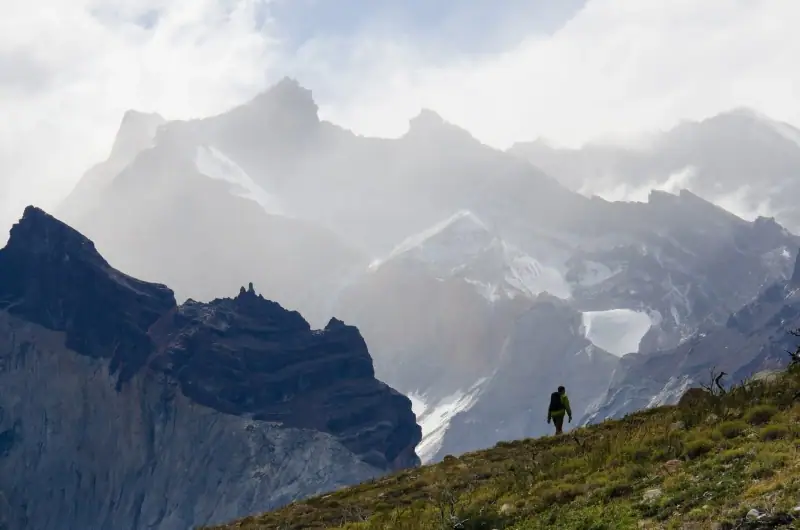
Hiking in Patagonia: the 12 most beautiful treks not to miss
A selection of the best hikes in Patagonia: Fitz Roy, Torres del Paine, Cerro Torre, Cerro Martial... From easy trail to demanding trek, all the info.
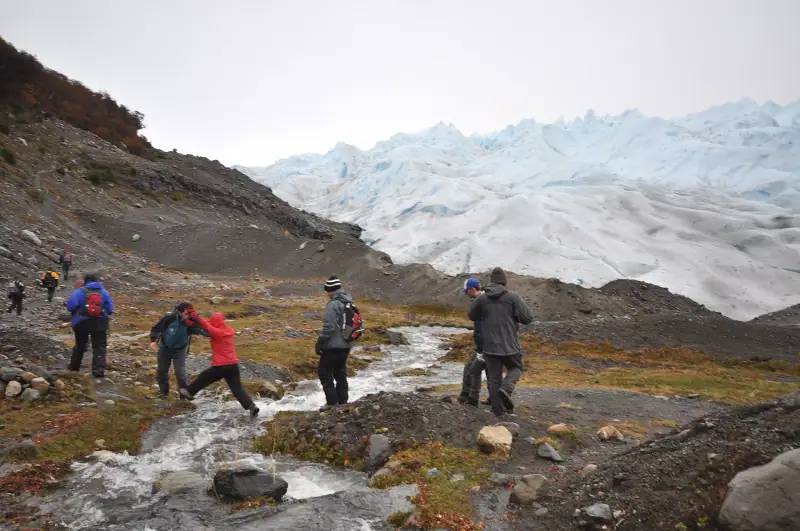
Torres del Paine trek: the complete guide to the W circuit and the full circuit
Complete guide to the Torres del Paine trek: W circuit, full circuit, difficulty, gear and reservations. Make your Patagonia trek a success.
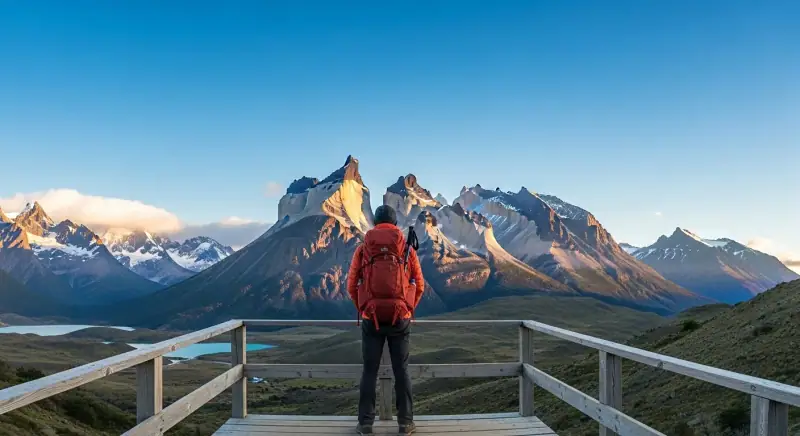
Patagonia budget: how much does a trip cost in 2026?
Estimate the cost of your Patagonia trip: lodging, transport, meals, activities. All the prices in detail for small or big budgets.
Ready-made
Patagonia itineraries
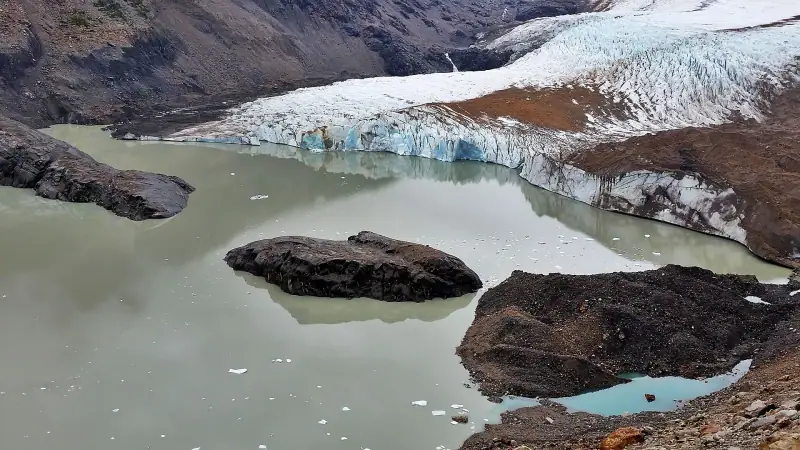
21 days
Patagonia road trip: a 3-week itinerary by car
BarilocheEsquelPerito Moreno townEl ChalténEl CalafatePuerto NatalesPunta ArenasUshuaia
12 days
Patagonia in 12 days without a car: a realistic bus itinerary
El CalafateEl ChalténPuerto NatalesPunta Arenas
10 days
Patagonia 10-day itinerary: from Bariloche to Ushuaia
BarilocheEl CalafateEl ChalténUshuaia