What to see
Visit Punta Arenas: a complete guide to the capital of Chilean Patagonia
We may earn a commission when you book through links on this page, at no extra cost to you. We don't visit or try the places we cover: we summarize published sources. How we work
In short
- Two days cover the town and a boat trip to Isla Magdalena, home to about 86,000 Magellanic penguins from October to March.
- The Magdalena excursion costs generally €90-130 (about $105 to 150) and takes a full day: about 2 h each way, 1 h 30 on the island.
- Puerto Natales is 3 h by bus on the paved RCH 9 (€8-12, about $9 to 14); the airport (PUQ) is about 20 km (12 mi) north of downtown.
- Wind is the main hazard: summer gusts reach 80-100 km/h (50-62 mph), so bring a solid windbreaker.
At the end of the world, where the map of Chile seems to fray before getting lost in the Antarctic channels, Punta Arenas stretches out facing the Strait of Magellan like a town that had no reason to be there, and yet has existed for nearly two centuries. Capital of the Magallanes region, with some 130,000 inhabitants, it is the largest town in Chilean Patagonia and the main access hub to one of the wildest regions on the planet.
Founded in 1848 as a military penal colony, Punta Arenas had its golden age in the late 19th century, when sheep farming and maritime trade made it one of the richest towns in Chile. The palaces left by the big immigrant families (Braun, Menéndez, Nogueira) still testify to this vanished prosperity. Today, the town lives from regional trade, fishing, hydrocarbons and booming tourism, driven by the proximity of Torres del Paine National Park and Tierra del Fuego.
Punta Arenas is not a postcard destination. It is real, windy, a little rough, with an identity of its own. Travelers who take the time to linger discover an endearing town, rich in history and ideally placed to branch out toward the wonders of southern Patagonia.
How to get to Punta Arenas
By air
The usual route is a flight to Santiago de Chile, then:
- Santiago → Punta Arenas (Presidente Carlos Ibáñez del Campo airport, code PUQ): about 3 h 15 by plane with LATAM Airlines or Sky Airline. Several flights a day in high season. Check the frequencies with the airlines.
Punta Arenas airport is about 20 km (12 mi) north of downtown. Taxis and shuttles link it with the center.
From Puerto Natales or Argentina
- Bus from Puerto Natales: about 3 hours, on the fully paved RCH 9 road. Several daily departures (companies Bus Sur, Buses Fernández, Turbus). Fare: €8-12 (about $9 to 14).
- From Buenos Aires or El Calafate: a long trip via the land border. Most travelers combine a Buenos Aires–Punta Arenas or El Calafate–Punta Arenas flight to avoid 12+ hours on a bus.
Punta Arenas highlights
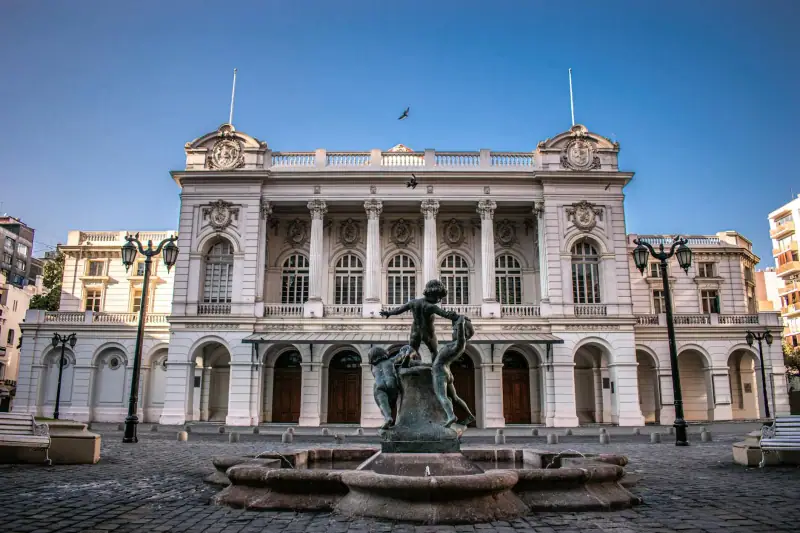
Plaza Muñoz Gamero and the historic center
The heart of Punta Arenas is its central square, the Plaza Muñoz Gamero, adorned with an imposing bronze statue of Ferdinand Magellan, the Portuguese explorer who crossed the strait in 1520 and gave his name to these waters. Tradition says that travelers who rub the bare foot of one of the kneeling figures at the base of the statue, a Tehuelche (Aonikenk) figure, will one day return to Patagonia. The square is surrounded by historic buildings with colorful facades, several dating from the late 19th-century golden age.
The streets around the square (Bories, Navarro, Magallanes) concentrate cafés, restaurants, shops and historic hotels. A walking tour of the center takes only 30 minutes but reveals surprising architecture for such a southern town.
The Palacio Sara Braun
Built between 1895 and 1905 for Sara Braun, widow of the businessman Nogueira and a dominant figure of the Magallanes aristocracy, the Palacio Sara Braun is one of the finest neoclassical buildings in southern Chile. The building materials (marble, woodwork, stained glass) were all imported from Europe. Today the palace houses a luxury hotel and a bar, but part of it is open to visits.
The Palacio Mauricio Braun (Museo Regional de Magallanes)
A few streets from the Plaza, the Palacio Mauricio Braun (Sara’s brother) is now a regional museum tracing the history of the settlement of Patagonia: Croatian and Dalmatian immigration, the sheep industry, life on the estancias, contact with the Kawésqar and Aonikenk (Tehuelche) indigenous peoples. Even if the collection is modest, the palace’s architecture and preserved interiors are worth the visit.
The Cementerio Municipal: the pioneers’ cemetery
One of the most unusual and most photographed sites in Punta Arenas is its municipal cemetery, a few hundred meters north of the center. Planted with tall cypresses and dotted with ornate mausoleums belonging to the big immigrant families (Braun, Menéndez, Blanchard…), it is a striking panorama of the history of Patagonian settlement. The more modest graves, with their wooden crosses and plastic flowers, bear witness to the fate of the ordinary workers who built the region.
Allow 30 to 45 minutes for a leisurely visit. Free entry.
Excursions from Punta Arenas
Penguins on Isla Magdalena, strait cruises, excursions to Tierra del Fuego.
The Mirador de la Cruz
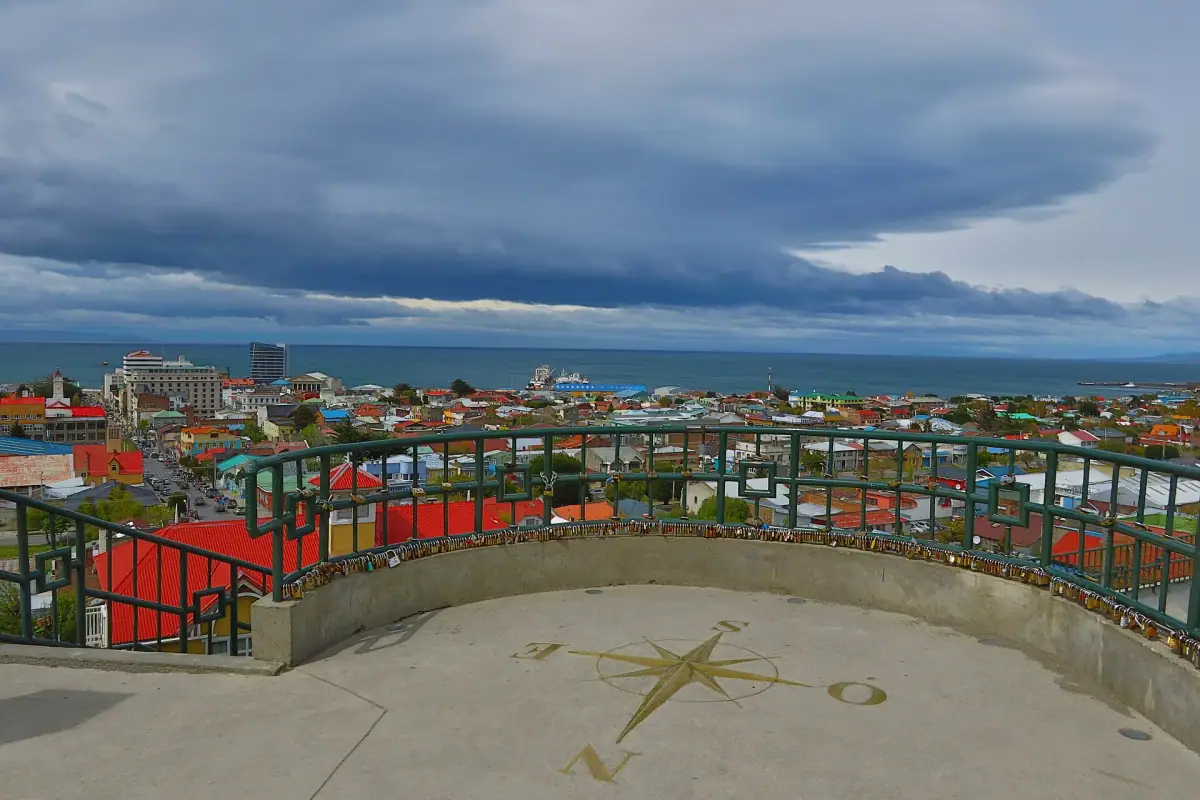
For a panoramic view of the town, the Strait of Magellan and the snowy mountains of Tierra del Fuego in the distance, climb Cerro de la Cruz (about 500 meters / 0.3 mi on foot from the center). A viewpoint with a wrought-iron cross offers the best panorama of the town. Ideal at sunset, especially in the austral summer when daylight lasts until 10 pm.
The must-do excursion: the penguins of Isla Magdalena
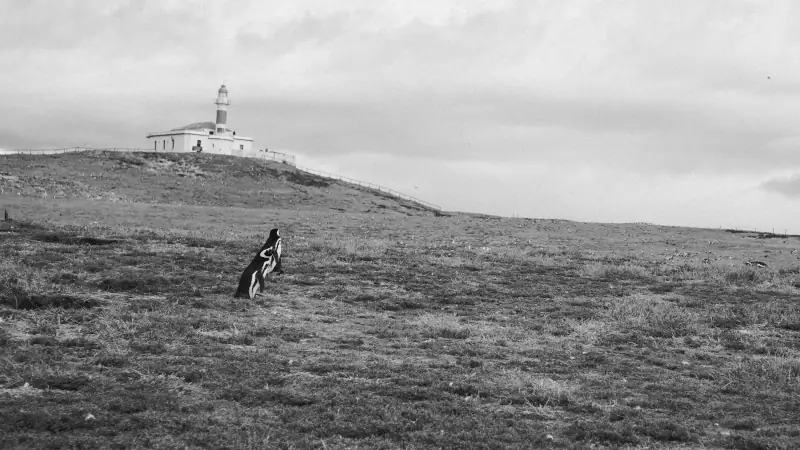
Without question the most iconic excursion from Punta Arenas: a visit to the Monumento Natural Los Pingüinos on Isla Magdalena, about 35 km (22 mi) offshore, reachable only by boat.
Between October and March, about 86,000 Magellanic penguins (43,000 breeding pairs) come to nest on this flat island battered by the winds of the strait. They dig burrows in the peat, raise their chicks, and let visitors approach within a few meters on the trails marked by CONAF (Chile’s national parks administration).
How to get there
Boat excursions leave from Punta Arenas’s port. The crossing takes about 2 hours each way across the Strait of Magellan. Time on the island is generally 1 h 30. Allow a full day (departure 9-10 am, return 4-5 pm).
- Price: Generally €90-130 (about $105 to 150) per person (crossing + park entry), depending on the operator and season
- Season: October to March (tourist access). November-December are the best weeks because the chicks are still in the nest.
- Booking: Strongly advised in high season. Several boat companies operate from Punta Arenas.
Alternative: the Seno Otway reserve
About 65 km (40 mi) north of Punta Arenas, the Seno Otway reserve used to host a smaller penguin colony. It reportedly no longer receives visitors, so check locally before planning around it. Isla Magdalena is the reliable option for penguins.
Punta Arenas, gateway to Tierra del Fuego
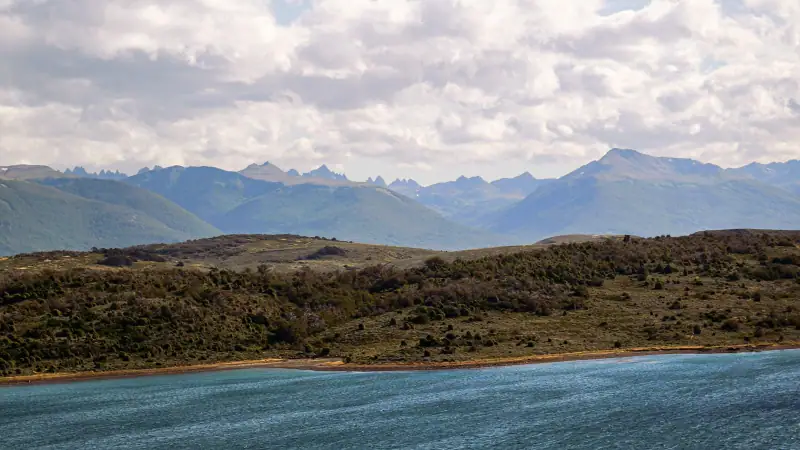
Punta Arenas is the starting point for crossing the Strait of Magellan to Chilean Tierra del Fuego. The port of Tres Puentes, a few kilometers from the center, serves Porvenir, the only town in Chilean Tierra del Fuego.
- Ferry Punta Arenas → Porvenir: About 2 hours of crossing. Check with the company Transbordadora Austral Broom for schedules (1 to 2 crossings a day depending on the season). Fare: about €5-8 (about $6 to 9) per person, car extra.
- From Porvenir, the road to Ushuaia: A partly unpaved road, a crossing of a second strait by ferry, then the road via Rio Grande (Argentina). Allow a full day to link Punta Arenas to Ushuaia overland (about 560 km / 348 mi via Rio Grande).
Most travelers going to Ushuaia choose the plane from Punta Arenas (a 50-minute flight) or a bus from Punta Arenas via Rio Grande (total duration 9-12 h depending on the borders).
Car rental in Punta Arenas
Explore Chilean Patagonia at your own pace. Essential for visiting Seno Otway or reaching Puerto Natales independently.
Where to stay in Punta Arenas
The lodging choice is wide, from youth hostels to historic luxury hotels. Book ahead between November and March; the town is often stretched when air links with Santiago are disrupted by weather.
Budget
Punta Arenas has several youth hostels offering dorms and private rooms at competitive rates. Downtown lodging is preferable, within walking distance of the Plaza Muñoz Gamero and restaurants. Expect €12-20 (about $14 to 23) in a dorm, €35-55 (about $41 to 64) for a double room.
Mid-range
Downtown has most of the 3-star hotels. Several historic buildings have been renovated as boutique hotels, combining modern comfort and the charm of old Patagonian wooden houses. Typical budget: €70-130 (about $81 to 150) a night for a double room.
Luxury
The Hotel José Nogueira, set in part of the Palacio Sara Braun in the heart of town, is Punta Arenas’s historic top address. Higher-category hotels also offer views of the strait. Expect €150-300 (about $175 to 350) a night.
Lodging in Punta Arenas
Compare hotels, B&B and hostels in central Punta Arenas. Book ahead in high season.
Where to eat in Punta Arenas
Punta Arenas’s food reflects its history and geography: Patagonian lamb, seafood from the channels and a culinary tradition of immigrants (Chilean, Croatian, Spanish, British) that has created something unique.
Specialties to try
- Patagonian lamb: Lamb from Chilean Patagonia, raised free-range on the region’s estancias, is remarkably tender and flavorful. You will find it spit-roasted (al palo) or oven-roasted in most restaurants in town.
- Centolla (strait spider crab): The emblematic crustacean of Magallanes, caught in the cold waters of the Strait of Magellan. The legal season is generally May to October. High price (€20-35, about $23 to 41, a dish) but incomparable quality.
- Centollón and cholgas: Other crustaceans and shellfish from the Magellanic channels, cheaper than centolla and just as tasty.
- Empanadas de mariscos: Pastries filled with seafood, everywhere in bakeries and casual restaurants.
- Patagonian kuchen: Cakes with German and Croatian influence, especially tarts made with local wild berries (calafate, murta).
Where to eat
Punta Arenas has a good concentration of restaurants around the Plaza Muñoz Gamero and in the adjacent streets. For fresh seafood, the covered municipal market is a must-visit: several stalls offer centolla platters and seafood ceviche at more accessible prices than tourist restaurants.
Practical tips
Daily budget
- Backpacker (dorm, self-catering or market): €40-60 a day (about $46 to 70)
- Comfort (3-star hotel, restaurants): €100-160 a day (about $115 to 185)
- Luxury (historic palace hotel, private excursions): €300+ a day (about $350+)
Punta Arenas is slightly cheaper than El Calafate on the Argentine side, but boat excursions to Isla Magdalena are a significant expense.
For more on managing your budget, see our Patagonia budget guide.
Wind: enemy number one
Punta Arenas is one of the windiest towns in the world. Gusts of west wind can reach 80-100 km/h (50-62 mph) in summer. Bring a solid windbreaker (preferably with a hood) and protective glasses if your eyes are sensitive, and don’t open an umbrella: it will be turned inside out in seconds. The wind is especially strong around midday and early afternoon.
When to go
November to March is high season: temperatures of 10 to 17 °C (50 to 63 °F), long days (up to 17 hours of daylight in December), active penguin colonies. December-January is the busiest period. March-April offers austral autumn colors and fewer people.
To choose the best window, see our guide when to go to Patagonia.
Getting around town
Downtown Punta Arenas is fully accessible on foot. For the cemetery, the ferry port and the surroundings, taxis are plentiful and inexpensive (€3-8, about $3.50 to 9, for a ride in town). Car rental agencies let you explore the surroundings (Seno Otway, the road to Puerto Natales) independently.
Suggested itinerary: 2 days in Punta Arenas
Day 1: Historic town and panorama
- Morning: Arrive at the airport, check in at your lodging. Walk around the Plaza Muñoz Gamero and the immediate surroundings. Coffee and empanadas at the municipal market.
- Afternoon: Visit the Palacio Mauricio Braun (regional museum), tour the municipal cemetery. Climb to the Mirador de la Cruz for the sunset panorama.
- Evening: Dinner in town for Patagonian lamb or centolla depending on the season.
Day 2: Isla Magdalena and penguins
- All day: Boat excursion to Isla Magdalena (departure around 9-10 am, return 4-5 pm). It is the best possible day in Punta Arenas in season.
- Evening: Light meal, prepare to leave the next day for Puerto Natales or Torres del Paine.
Punta Arenas in a wider Patagonia circuit
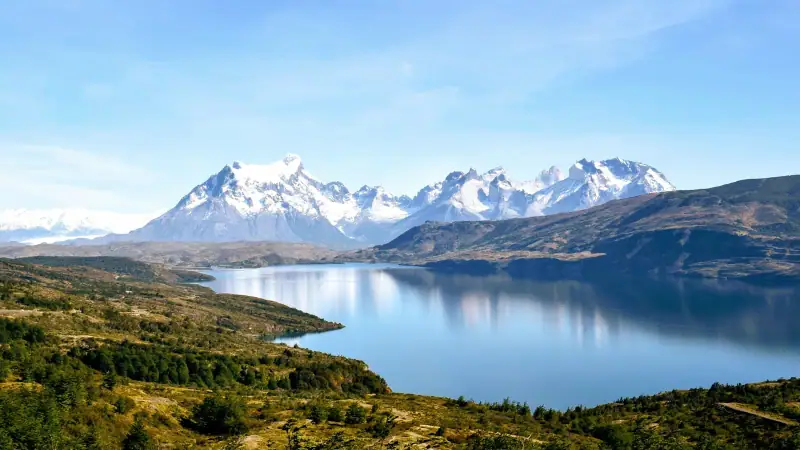
Punta Arenas holds a strategic position in any Patagonia circuit:
- 250 km (155 mi) from Puerto Natales (3 h by bus), starting point for Torres del Paine
- 70-112 km (43-70 mi) from the Torres del Paine park entrance (via Puerto Natales, 5 h in total)
- ~560 km (348 mi) from Ushuaia (Argentina, via Río Grande and Tierra del Fuego), or 50 min by plane
- Direct air connection with Santiago (3 h 15) for the flight home
A classic 2 to 3 week circuit can be organized like this: arrive Punta Arenas (2 days) → Puerto Natales (1-2 nights) → Torres del Paine (5-7 days) → El Calafate (2-3 days) → El Chaltén (3-4 days) → return via El Calafate or Punta Arenas.
For detailed itineraries, see our complete 14-day Patagonia guide and our Patagonia road trip.
In short: Punta Arenas, much more than a stopover
Many travelers only pass through Punta Arenas, in a hurry to reach Torres del Paine or Ushuaia. That means missing a town with a real soul. Its immigrant palaces, its pioneers’ cemetery, its wind-swept strait and its 86,000 penguins on Isla Magdalena make it a stop in its own right, not just a waiting room before the big hikes.
Give it 2 days. You will leave with a deeper understanding of what Patagonia really is: a land built by people from nowhere, on a corner of the world no one wanted, who made something unforgettable of it.
To prepare your trip, see our complete guide to Patagonia and our guide to Puerto Natales.
Frequently asked questions
How many days should you spend in Punta Arenas?
2 days are enough to see the essentials of the town and take an excursion to Isla Magdalena to see the penguins. If you want to visit Tierra del Fuego (Porvenir) or take an excursion toward Puerto Natales and the surroundings, plan 3 to 4 days.
How do you get to Torres del Paine from Punta Arenas?
You first need to reach Puerto Natales (3 h by bus from the Punta Arenas terminal, about €8-12 / $9 to 14), then take a shuttle from Puerto Natales to the entrances of Torres del Paine National Park (2 more hours). Most travelers spend a night in Puerto Natales before entering the park.
What is the best time to visit Punta Arenas?
November to March (austral summer) is high tourist season, with temperatures of 10 to 17 °C (50 to 63 °F). It is also the only period when the penguin colonies on Isla Magdalena are active (October to March). December and January have the longest days, but also the heaviest crowds and the strongest winds.
Can you see penguins at Punta Arenas?
Yes, it is one of the best reasons to stop in Punta Arenas. The Monumento Natural Los Pingüinos nature reserve on Isla Magdalena hosts about 86,000 Magellanic penguins from October to March. It is reached only by boat from Punta Arenas, a crossing of about 2 hours each way. Boat excursions leave from Punta Arenas's port.
How do you fly to Punta Arenas?
Flights generally connect through Santiago de Chile. Santiago to Punta Arenas (PUQ) takes about 3 h 15 with LATAM or Sky Airline. Check the frequencies with the airlines.
Is Punta Arenas dangerous?
No, Punta Arenas is a relatively safe city by Latin American standards. The usual precautions apply (do not display valuables, avoid isolated areas at night), but travelers are numerous and the town welcomes international tourists well. The main danger is the weather: the wind can be extremely strong.
More Patagonia guides
Keep reading
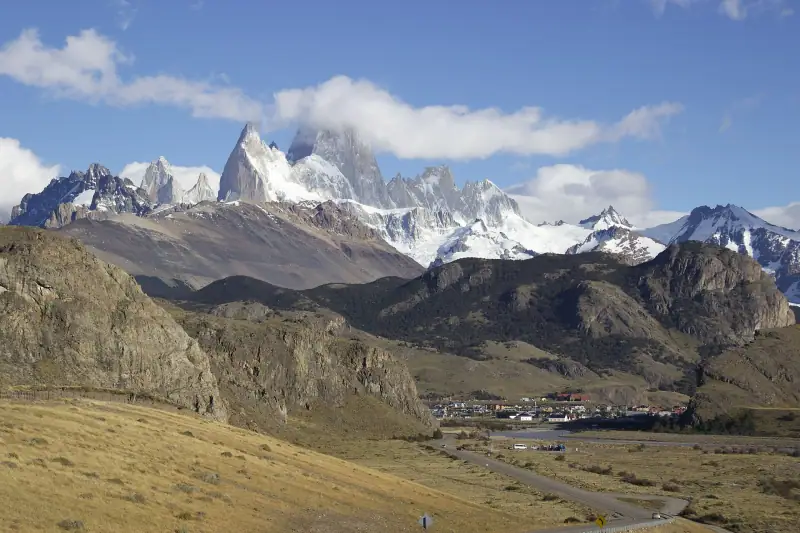
Visit El Chaltén: a complete guide to the trekkers' village
El Chaltén, Patagonia's trekking capital: Fitz Roy, Cerro Torre, hikes, lodging and practical tips for a successful stay.
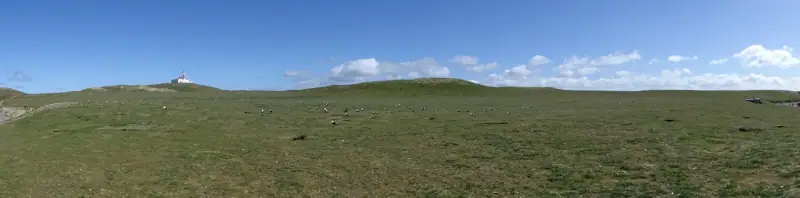
Isla Magdalena: penguins near Punta Arenas, schedules, prices and season
Isla Magdalena in practice: penguin season (Oct.-March), departures, tour and entry prices, duration. Seno Otway is closed: here is the alternative.
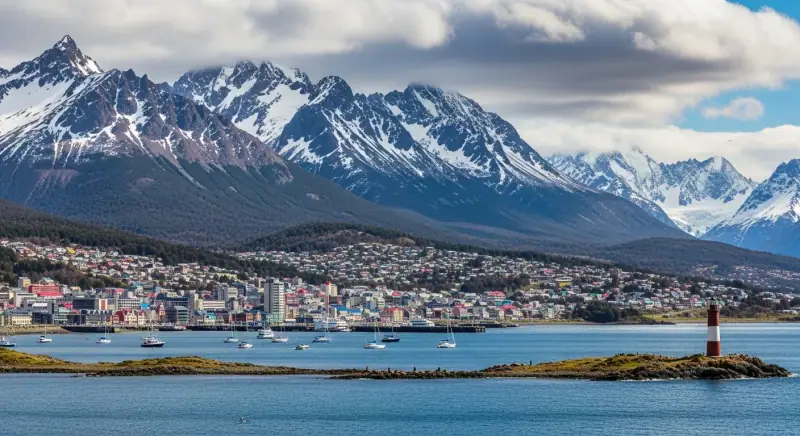
Ushuaia top sights: the 10 things to do and see
Ushuaia's top sights: Tierra del Fuego, the Beagle Channel, the End of the World Train and penguins. A full program for your stay.
Ready-made
Patagonia itineraries
21 days
Patagonia road trip: a 3-week itinerary by car
BarilocheEsquelPerito Moreno townEl ChalténEl CalafatePuerto NatalesPunta ArenasUshuaia
12 days
Patagonia in 12 days without a car: a realistic bus itinerary
El CalafateEl ChalténPuerto NatalesPunta Arenas
10 days
Patagonia 10-day itinerary: from Bariloche to Ushuaia
BarilocheEl CalafateEl ChalténUshuaia