Itineraries
Bariloche and Chile's Lakes District in 12 days: a loop by car
We may earn a commission when you book through links on this page, at no extra cost to you. We don't visit or try the places we cover: we summarize published sources. How we work
Day by day
- Days 1-3Cross to Chile, Puerto Varas, Frutillar, Osorno volcano, Petrohué
- Days 4-6Pucón, Villarrica volcano, Huerquehue, rivers and hot springs
- Days 7-9Back to Argentina, Bariloche, Circuito Chico, Isla Victoria
- Days 10-11Esquel, Los Alerces National Park, La Trochita
- Day 12Drive to Bariloche Airport and fly home
Where to sleep
- Puerto Varas3 nights
- Pucón3 nights
- Bariloche3 nights
- Esquel2 nights
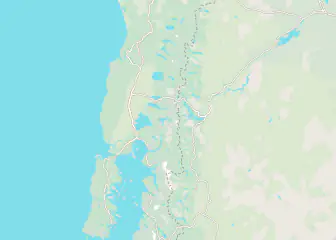
In short
- Pick up the car at Bariloche Airport (BRC), cross into Chile on day 1 by Cardenal Samoré and return to Argentina on day 7 by Mamuil Malal.
- Bases: Puerto Varas (3 nights), Pucón (3), Bariloche (3), Esquel (2). The longest drive is Pucón to Bariloche, about 6 h 30 plus the border.
- The rental company must obtain the Argentina-Chile permit in advance and you pay its fee; ask at booking, about 7 business days ahead for some companies.
- Both passes can close in snow, so the loop suits November to April best.
This loop suits drivers who want two lake districts in one trip: the Chilean side, with its volcanoes and German-settled lakeshore towns, and the Argentine side around Bariloche and Esquel. You pick up the car at Bariloche Airport (BRC), drive over the Andes to Chile, come back over a second pass, and finish in Patagonia’s northern Andes before returning to the airport.
The route has four bases and 11 nights. Most days are short, but three are real driving days: Bariloche Airport to Puerto Varas on day 1, Pucón to Bariloche on day 7, and Esquel back to the airport on day 12. Two of those cross a border, and both passes can close in snow.
The route at a glance
| Days | Base | Nights | Drive from previous base |
|---|---|---|---|
| 1-3 | Puerto Varas (Chile) | 3 | From Bariloche Airport (BRC): about 4 h 25, 304 km (189 mi), plus the border |
| 4-6 | Pucón (Chile) | 3 | From Puerto Varas: about 4 h 00, 322 km (200 mi) |
| 7-9 | Bariloche (Argentina) | 3 | From Pucón: about 6 h 30, 379 km (235 mi), plus the border |
| 10-11 | Esquel (Argentina) | 2 | From Bariloche: about 3 h 30, 283 km (176 mi) |
| 12 | Bariloche Airport (BRC) | - | From Esquel: about 3 h 45, 301 km (187 mi) |
Compare rental companies in Bariloche
When you compare, tick or ask for the cross-border option and list Argentina and Chile.
Day by day
Days 1-3: Puerto Varas, Lake Llanquihue and Osorno volcano
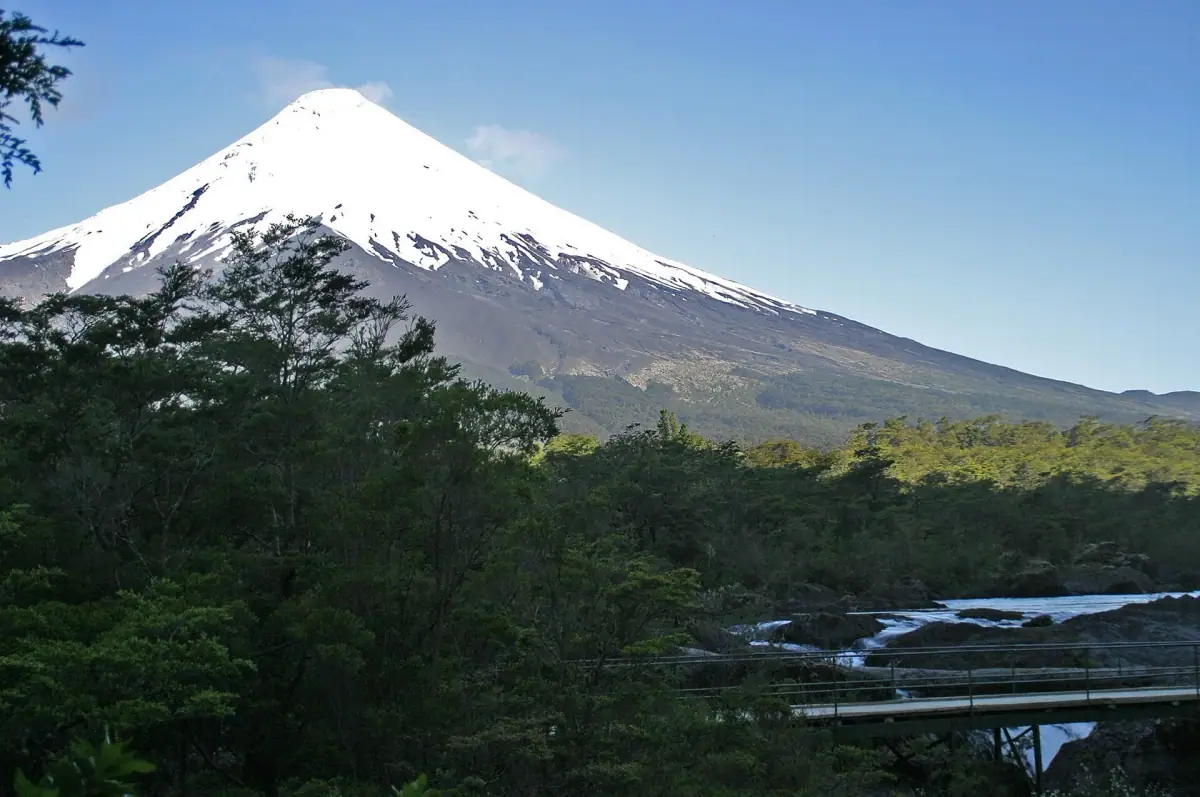
Day 1. Leave Bariloche Airport early and take the Cardenal Samoré pass to Chile. The drive to Puerto Varas is about 4 h 25 for 304 km (189 mi), not counting the border queue and formalities. Do not linger in Puerto Montt if you pass it: our Chile guide calls it a large port city that is more functional than charming. Puerto Varas sits on the south shore of Lake Llanquihue, facing the Osorno and Calbuco volcanoes, with a look shaped by the German settlers of the 19th century. Keep the evening light: a walk on the shore, dinner, and a check of the forecast, since it decides day 3. More detail is in our Lake District road trip guide.
Day 2. Drive around Lake Llanquihue to Frutillar, about 30 km (19 mi) from Puerto Varas, known for its lakefront, wooden houses in German style and a large modern theater on the water. A morning is enough for a walk and a slice of kuchen. Then continue around the lake or return slowly to Puerto Varas.
Day 3. This is the big nature day. Route 225 follows the lake to Vicente Pérez Rosales National Park, the oldest in Chile: about 40 km (25 mi) to Ensenada, then a few more kilometers to the Petrohué Falls, a little under an hour on paved road. Walkways lead to rapids over dark volcanic rock in turquoise-green water. The road continues to the shore of Lake Todos los Santos, where boat trips run in season depending on wind. Leave early to stay ahead of the tour groups that arrive in mid-morning. For longer walks elsewhere in Chile, see our guide to hiking in Chile’s national parks.
Sleep in the town center: Hotels in Puerto Varas.
Days 4-6: Pucón and Villarrica volcano
Day 4. Drive about 4 h 00, 322 km (200 mi), from Puerto Varas to Pucón, mostly on Ruta 5, then on the road to Villarrica. Our Chile guide suggests leaving mid-morning, having lunch in a town on the way, and arriving in the late afternoon. Keep some Chilean pesos for tolls on this road. Pucón is a small resort on the south shore of Lake Villarrica, in the Araucanía region, and easy to explore on foot. Choose lodging near the center or the lake.
Day 5. Take a calmer day. The town has dark volcanic-sand beaches on the lake, and rental operators for kayaks and stand-up paddleboards. Huerquehue National Park, about an hour’s drive from Pucón, has a trail through forest to several high lagoons, with araucarias and views of Villarrica in clear weather. The waterfalls and beaches at Lake Caburgua, and the Ojos del Caburgua turquoise pools, make an easy alternative. Park fees are collected at the entrance and vary by nationality and season.
Day 6. Villarrica rises to about 2,850 m (9,350 ft) and is one of the most active volcanoes in South America. The climb must be done with an agency that provides crampons, ice axe, helmet and mask, and that decides on the day whether it can go ahead. Plan a full day and a very early start. Cancellations are common, sometimes several days in a row in wind. Our budget guide gives about 150,000 CLP per person with many operators, and around 85,000 CLP at some agencies, for an outing of about 9 hours. If it is canceled, go rafting on the Trancura River or soak in hot springs such as Termas Geométricas near Coñaripe or the more rustic Termas Los Pozones, whose access roads are partly unpaved. Details are in our Pucón and Villarrica guide.
Compare Activities in Pucón and Hotels in Pucón.
Days 7-9: back in Argentina, Bariloche and Lake Nahuel Huapi
Day 7. The longest day: Pucón to Bariloche is about 6 h 30, 379 km (235 mi), plus the Mamuil Malal border, so leave early and check the pass is open before you set out. You arrive in Bariloche, on the south shore of Lake Nahuel Huapi at about 770 m (2,526 ft), in the evening. Dinner at a parrilla fits the occasion: our guide mentions Patagonian lamb and lake trout.
Day 8. Drive the Circuito Chico, a paved loop of about 60 km (37 mi) around the lake. Stops include the chairlift up Cerro Campanario (1,049 m / 3,442 ft) for a view of Nahuel Huapi, Lake Moreno and the Andes, Puerto Pañuelo, the Punto Panorámico and Colonia Suiza, whose craft and food market runs on Sundays. In town, the Centro Cívico and the chocolate shops on Avenida Mitre fill an afternoon.
Day 9. Take a boat from Puerto Pañuelo to Isla Victoria, with its giant sequoias, and the Quetrihué Peninsula, known for its arrayán forest. Allow half a day to a full day. In summer (November to March), Cerro Catedral (about 2,100 m / 6,890 ft, 19 km / 12 mi from downtown) is an alternative for hikes to high lakes and a gondola ride to Refugio Lynch. More options are in our Bariloche guide, and neighborhood advice is in where to stay in Bariloche.
Book your bed here: Hotels in Bariloche.
Days 10-11: Esquel and Los Alerces National Park
Day 10. Drive south from Bariloche to Esquel: about 3 h 30, 283 km (176 mi). Our Patagonia road trip guide describes the road as paved. Use the afternoon to settle in. Our Patagonia road trip guide covers this stretch as part of the longer route toward Ushuaia.
Day 11. Spend the day in Los Alerces National Park, which shelters alerce trees (Fitzroya cupressoides) up to 4,000 years old, the oldest trees in South America. The guide lists three things to do: a boat trip across Lake Futalaufquen to see the giant alerces, a hike to Glaciar Torrecillas, and a ride on La Trochita, the narrow-gauge train. Opening hours and schedules are not in our guides, so check them locally.
Find lodging: Hotels in Esquel.
Day 12: to Bariloche Airport
Drive about 3 h 45, 301 km (187 mi), from Esquel to Bariloche Airport, which is about 14 km (9 mi) east of downtown. Leave a comfortable margin before your flight, since returning a rental car takes time.
Crossing the borders
This route crosses the Argentina-Chile border twice. On day 1 you enter Chile by the Cardenal Samoré pass, between Bariloche and Osorno or Puerto Varas. On day 7 you return to Argentina by Mamuil Malal, between Pucón and Junín de los Andes. Hours change and both passes can close in heavy snow. Cardenal Samoré had a summer schedule of 8 am to 7 pm from September 6, 2026 (press report); Mamuil Malal ran 9 am to 6 pm in winter 2026, usually longer in summer, and closed for a few days of works in September 2026. Check Chile’s pasosfronterizos.gob.cl or Argentina’s argentina.gob.ar before you go.
Your rental car can cross only with a permit that the rental company obtains in advance. Chile’s customs authorises each car, free, on the company’s request, valid up to 90 days, and the company charges its own fee. Ask when you book. Published 2026 examples: Avis/Budget Argentina charges ARS 206,611.57 per rental from Bariloche or El Calafate and asks for 7 business days; Avis Chile charges CLP 120,000 plus tax. Europcar Chile (terms of June 2024) lets only SUVs, pickups and minivans cross, with 7 working days of notice. Companies say they are not responsible if a border closes. Chile also requires SOAPEX, a compulsory personal-accident insurance for foreign-registered cars; ask whether it comes with the permit. It covers people, not damage to the car. There is no Green Card system here.
Carry your passport, driving licence, rental contract, the cross-border permit and the SOAPEX certificate if it is separate. When entering Chile, everyone 18 or over fills in the free SAG sworn declaration (at sag.gob.cl up to a day before, or on paper at the border) and declares fruit, vegetables, seeds, meat, dairy, honey and other animal or plant products. Undeclared food is fined, so arrive with no fresh food. Neither country uses a vignette. Argentina and Chile use their own pesos, not the euro. For entry rules and licences or an international driving permit, check your government’s official advice: travel.state.gov (US), gov.uk/foreign-travel-advice (UK), travel.gc.ca/destinations (Canada) or smartraveller.gov.au (Australia). More background is on the border section of this tour.
A drop-off in another country is often refused or carries a high one-way fee, and Avis Chile does not allow a drop in Argentina. Because this route is a loop that starts and ends at Bariloche Airport, only the crossing fee applies.
Getting there and away
Bariloche Airport (BRC) is the arrival and departure point. Our guide puts it about 2 h by air from Buenos Aires, with Aerolíneas Argentinas, JetSMART and Flybondi serving that route, and a fare of about €80 to 250 (~$93 to 290) one way. Travelers from the US, UK, Canada and Australia usually reach BRC through Buenos Aires, as intercontinental routes are not covered by our guides. Check airlines directly.
When to go
The Lake District in Chile is at its best from about November to April: this is the safest window for the Villarrica climb, rafting and hiking. December to February is the warmest and busiest, and March and April are often a good choice, with fewer crowds. In Bariloche, spring runs 8 to 18 °C (46 to 64 °F) and mid-November is recommended by our Patagonia guide. Summer days reach 15 to 22 °C (59 to 72 °F), with January the busiest and priciest month. April has the most colorful forests. Winter brings snow, and both passes can close. See when to go to Chile and when to go to Patagonia.
Budget
From the Chile guide (rate around 1,050 to 1,060 pesos per €1 in August 2026): double rooms at 50,000 to 80,000 CLP (about €50 to €80 / $58 to $93) are mid-range, and meals at 10,000 to 20,000 CLP are mid-range. The Patagonia guide gives, for Argentina, a mid-range budget of €80 to 150 (~$93 to 175) a day, an economy car at €40 to 60 (~$46 to 70) a day, an SUV at €60 to 100 (~$70 to 115), and full insurance at €15 to 25 (~$17 to 29) a day extra. Bariloche double rooms run €65 to 130 (~$75 to 150). Add the crossing fee from the border section above.
Adapt it
For 10 days, drop Esquel and return from Bariloche to the airport on day 10. For a longer trip, add Frutillar as a night on Lake Llanquihue or a day trip to Puerto Montt. Puerto Montt (PMC) and Temuco (ZCO) are other airports of this planner, but they suit a Chile-only rental such as our 7-day Lake District road trip. Further south, the Patagonia stops of El Calafate, El Chaltén, Puerto Natales and Punta Arenas belong to a separate trip.
Frequently asked questions
Can I take an Argentine rental car into Chile?
Yes, but only with a permit the rental company obtains in advance, and you pay its fee. Ask when you book, because some companies need about 7 business days. Rental companies say they are not responsible if a border closes.
Which border crossings does this loop use?
Cardenal Samoré on day 1, from Bariloche toward Osorno and Puerto Varas, and Mamuil Malal on day 7, from Pucón toward Junín de los Andes and Bariloche. Both can close in heavy snow.
What is the longest driving day?
Day 7, Pucón to Bariloche: about 6 h 30, 379 km (235 mi), plus the border formalities. Leave early, because the crossing has opening hours.
Can I bring food across the border into Chile?
Plan to arrive with no fresh food. Everyone 18 or over fills in Chile's free SAG sworn declaration and must declare fruit, vegetables, seeds, meat, dairy, honey and other animal or plant products. Undeclared food is fined.
Is a one-way rental possible instead of a loop?
A drop-off in another country is often refused or carries a high one-way fee. This loop starts and ends at Bariloche Airport, so only the crossing fee applies.
Ready-made
Patagonia road trip (Chile & Argentina) itineraries
10 days
Patagonia in 10 days: El Calafate, Torres del Paine and El Chaltén by car
Puerto NatalesEl CalafateEl Chaltén
11 days
From El Chaltén to Punta Arenas in 11 days: Argentina to Chile, one way
El ChalténEl CalafatePuerto NatalesPunta Arenas