Itineraries
Chile's Lake District road trip: 7 days from Puerto Varas to Pucón
We may earn a commission when you book through links on this page, at no extra cost to you. We don't visit or try the places we cover: we summarize published sources. How we work
Day by day
- Day 1Arrive in Puerto Montt, settle in Puerto Varas
- Day 2Lake Llanquihue loop and Frutillar
- Day 3Osorno Volcano, Petrohué Falls, Lake Todos los Santos
- Day 4Drive from Puerto Varas to Pucón
- Day 5Lake, beaches and hiking around Pucón
- Day 6Villarrica Volcano, or rivers and hot springs
- Day 7Spare day, then return to Temuco airport
Where to sleep
- Puerto Varas3 nights
- Pucón3 nights
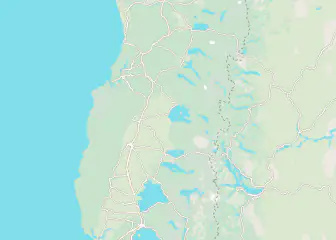
Opens the trip planner with these stops and nights already filled in. Add a stop, drop one or change the nights.
Weather through the year on this route
| Jan | Feb | Mar | Apr | May | Jun | Jul | Aug | Sep | Oct | Nov | Dec | |
|---|---|---|---|---|---|---|---|---|---|---|---|---|
| High °F (°C) | 6619 | 6820 | 6418 | 5915 | 5513 | 5010 | 489 | 5211 | 5412 | 5714 | 6116 | 6418 |
| Low °F (°C) | 5010 | 5010 | 489 | 468 | 457 | 415 | 394 | 415 | 415 | 436 | 468 | 489 |
| Rain in (mm) | 2.870 | 2.460 | 3.590 | 4.9125 | 6.7170 | 7.9200 | 6.7170 | 6.3160 | 4.1105 | 4.3110 | 3.590 | 3.180 |
Normals 1991–2020 at Puerto Varas: averages over 30 years, not a forecast. Source: NASA POWER (MERRA-2), grid of about 50 km. Figures computed by us in November 2026.
In short
- Seven days link Puerto Varas (3 nights) and Pucón (3 nights), with one long drive of about 320 km (199 mi), roughly 3 h 45 to 4 h, on day 4.
- Pick up the car at Puerto Montt airport and drop it at Temuco; a one-way rental often carries a surcharge, so compare it with a round trip.
- The Villarrica climb depends on weather and volcano conditions and is often canceled, so day 7 is kept as a spare day.
- January and February are the busiest months: book accommodation and the car early.
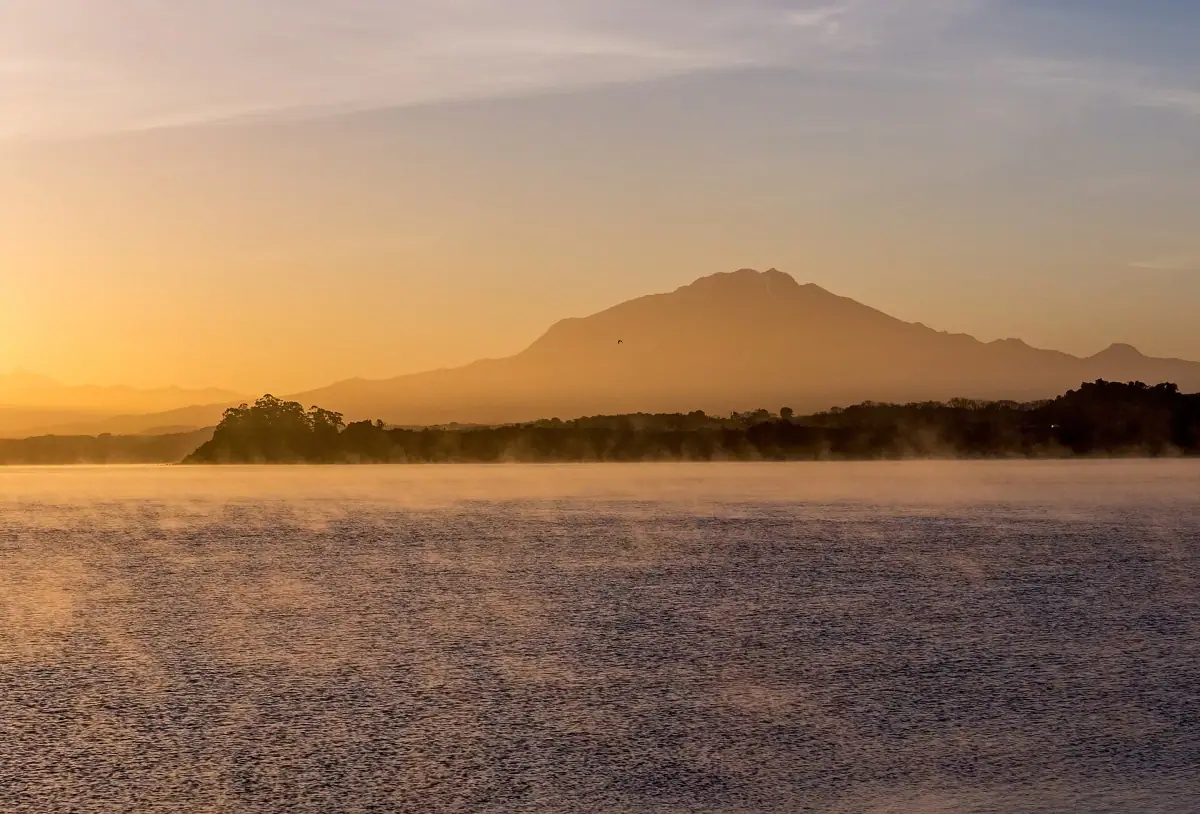
The Lake District is one of the best places in Chile for a road trip. Between Puerto Montt and Pucón, the road crosses green plains, runs alongside huge lakes and offers a view of a snow-capped volcano at every bend. Distances stay reasonable, the roads are generally good and the stopover towns are pleasant, which makes it an excellent choice for a first drive in Chile.
This seven-day itinerary links two hubs: Puerto Varas, on the shore of Lake Llanquihue, and Pucón, at the foot of Villarrica Volcano. Between them, one long day on the road of about four hours takes you from one setting to the other. If you have more time, our two-week Chile itinerary shows how to fit this region into a wider circuit with Santiago, the desert and Chiloé.
Overview: 7 days at a glance
Here is the breakdown:
- Day 1: arrive in Puerto Montt and settle in Puerto Varas
- Day 2: Lake Llanquihue loop and Frutillar
- Day 3: Osorno Volcano, Petrohué Falls and Lake Todos los Santos
- Day 4: drive to Pucón
- Day 5: lake, beaches and hiking around Pucón
- Day 6: Villarrica Volcano, or a day of rivers and hot springs
- Day 7: spare day and return to Temuco airport
The drive between the two hubs is the only real road day. Everything else is done in short stages, which leaves time to stop in villages, have lunch facing the lake or change the plan if the weather requires it. To choose your dates, see our guide to when to go to Chile: the region is beautiful all year, but the austral summer remains the best season for volcanoes and hiking.
Preparing your road trip: car, roads and pace
The simplest way is to pick up the car at Puerto Montt airport, from where you reach Puerto Varas in a little over 30 minutes, and return it at Temuco, the airport serving Pucón. This one-way setup avoids backtracking, but it often carries a surcharge: compare it with a round trip before you book. Prices rise in high season, so it is best to book ahead.
A few rules to know before you go:
- Tolls: Ruta 5, the main north-south road, has tolls, often payable in cash in Chilean pesos. Keep small change.
- Driving: traffic drives on the right. Speed limits are clearly posted, and police checks are frequent.
- Fuel: fill up in towns before taking secondary roads; gas stations become scarce around the parks.
- Dirt tracks: some access roads to natural sites are gravel. Ask your rental company about any insurance restrictions.
- Weather: the weather changes fast. A waterproof jacket and a warm layer are useful even in summer.
For the overall trip budget, our article on the budget for Chile details the biggest costs. If you do not want to drive, buses are frequent between the main cities of the south.
Day 1: Puerto Montt and Puerto Varas
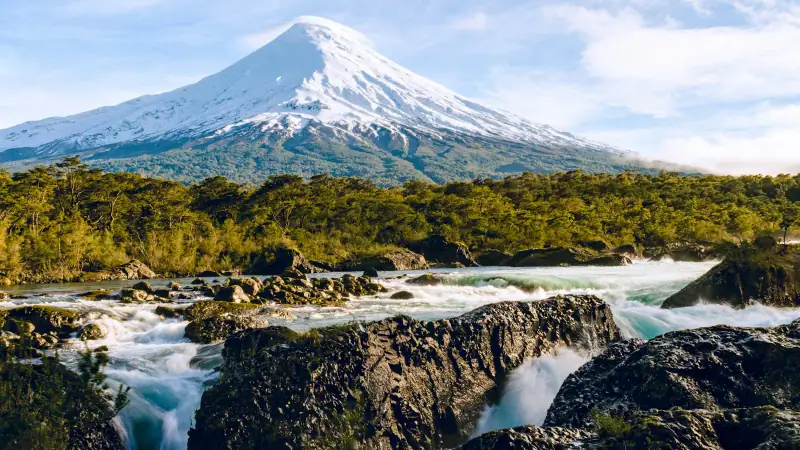
After landing, do not linger in Puerto Montt, a large port city that is more functional than charming. Head straight for Puerto Varas, about 20 km (12 mi) from the center of Puerto Montt. The town stretches along the south shore of Lake Llanquihue, facing the Osorno and Calbuco volcanoes, and its look is marked by the legacy of the German settlers who arrived in the 19th century.
For this first evening, keep the plan light: a walk along the shore, a coffee or dinner in the center, and an early night if jet lag kicks in. If the sky is clear at sunset, Osorno Volcano takes on pink hues that are often spectacular. It is also the best time to check the weather for the coming days, because it decides your visit to the volcano and to Lake Todos los Santos.
Puerto Varas is an ideal base for three nights: restaurants and accommodation are plentiful, and several major sites are less than an hour’s drive away.
Stay in Puerto Varas
Hotels, cabañas and guesthouses facing Lake Llanquihue: compare places to stay for your dates.
Day 2: Lake Llanquihue loop and Frutillar
Lake Llanquihue is one of the largest lakes in Chile, and the road around it serves several picturesque small towns. The best known is Frutillar, about 30 km (19 mi) from Puerto Varas, which charms with its lakefront, its German-style wooden houses and its peaceful atmosphere. The town also has a large modern theater on the water, known for its music season.
A morning is enough to wander around Frutillar: a walk along the shore, a visit to the historic district, and a treat with “kuchen,” a cake inherited from German tradition that you find in many tea rooms in the region. You can then continue around the lake by the west shore or return unhurriedly to Puerto Varas, depending on your energy.
The appeal of this day is its slowness. The stops multiply: a viewpoint over the volcano, a crafts market by the roadside, a pebble beach where you sit down for a picnic. Keep the end of the afternoon to be back in Puerto Varas before dark.
To go deeper into the specialties to try along the way, our guide to typical Chilean dishes covers the basics of local cooking.
Day 3: Osorno Volcano, Petrohué Falls and Lake Todos los Santos
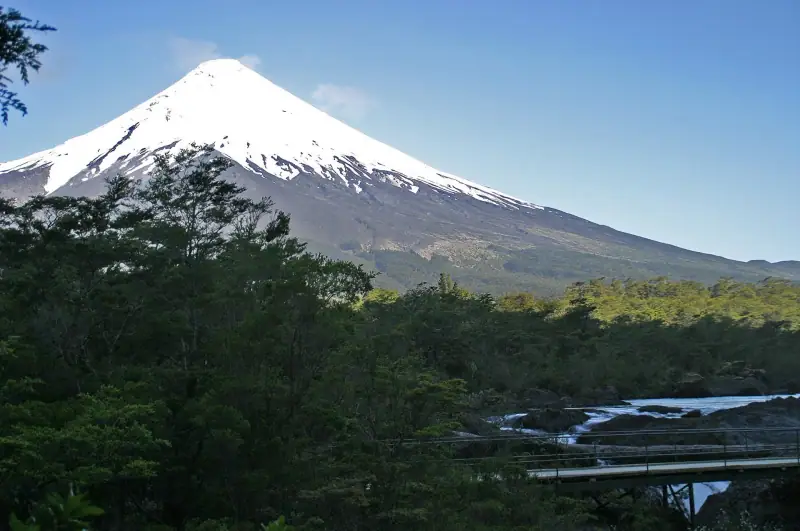
This is the big nature day of the trip. From Puerto Varas, Route 225 follows Lake Llanquihue eastward, then goes into Vicente Pérez Rosales National Park, the oldest in Chile. Allow about 40 km (25 mi) to reach Ensenada, then a few more kilometers to the Petrohué Falls: the whole trip takes a little under an hour on a paved road.
The Petrohué waterfalls (saltos) are cascades and rapids that flow over dark volcanic rock, in strikingly turquoise-green water. A network of walkways lets you see them easily, with no particular effort. Further on, the road leads to the shore of Lake Todos los Santos, surrounded by forest and dominated by volcanoes. Boat trips are offered there in season, with conditions that vary with the wind.
Osorno Volcano, with its almost perfect cone, can be seen both from the shore of Lake Llanquihue and from the access roads to the parks. If you want to get closer to the volcano, ask the local tourist office about access and conditions: roads and lifts depend on the season and the weather.
Plan to leave early to avoid the groups arriving on organized tours, generally in mid-morning. Bring water, a snack, good shoes and layers, because the weather can change quickly. For more hiking ideas across the country, see our selection of hikes in Chile’s national parks.
Tours from Puerto Varas
Would you rather not drive? Compare day trips, outdoor activities and guided visits around Lake Llanquihue.
Day 4: the road from Puerto Varas to Pucón
This day is the only real road stage of the trip. Between Puerto Varas and Pucón it is about 320 km (199 mi), covered in 3 h 45 to 4 h depending on traffic, mostly on Ruta 5, a four-lane expressway with a speed limit of 120 km/h (75 mph). Tolls are frequent: keep cash.
Leave mid-morning after an unhurried breakfast, stop for lunch in a town along the way, then leave the highway for the road to Villarrica and Pucón. This stretch runs through more rolling country, with Villarrica Volcano gradually appearing, sometimes crowned with a plume of smoke. You arrive in the late afternoon: settle in, then stroll along the lake.
Pucón is a tourist town geared toward adventure, with many tour agencies, restaurants and shops lined up along the main street. Choose accommodation close to the center or the lake to limit getting around: the town is very easy to explore on foot. Before you arrive, it helps to identify which agencies to approach for the volcano climb, because the choice is wide and conditions vary from one day to the next.
Stay in Pucón
Lodges, cabañas, hostels or hotels with a view of Villarrica Volcano: compare places to stay.
Day 5: lake, beaches and hiking around Pucón
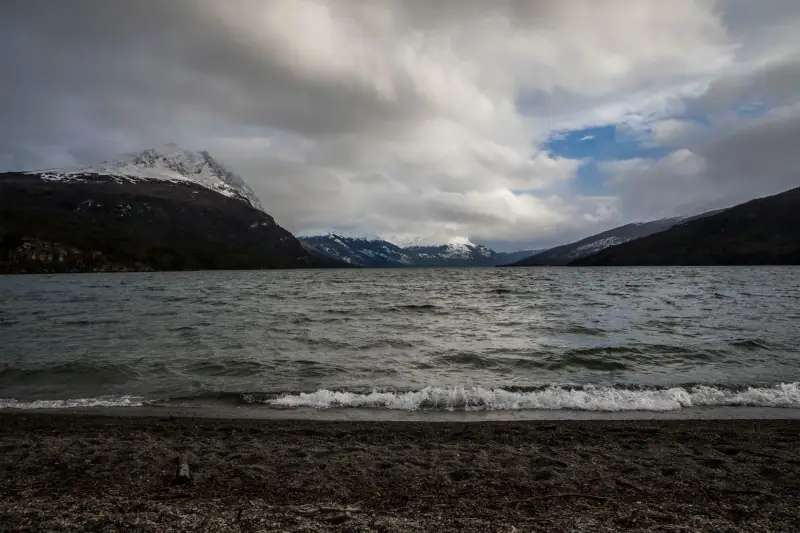
After the drive, treat yourself to a calmer day. Pucón sits on the shore of Lake Villarrica, and its dark volcanic-sand beaches are pleasant in summer, for swimming as well as relaxing. You can also kayak, stand-up paddle or sail, with rental operators set up on the beach.
The surroundings offer fine hikes in araucaria forests, the emblematic trees of the region with their distinctive shape. Huerquehue National Park, about an hour’s drive from Pucón, is one of the most popular for its trails leading to high-altitude lagoons. Another popular site is the waterfalls near Lake Caburgua, which you can combine with a stop on its beaches. Check access conditions and opening hours in advance; they vary by season and may require an entrance fee.
End the day in Pucón with dinner on a terrace. For a more detailed description of activities and agencies, read our article on Pucón and Villarrica Volcano.
Day 6: Villarrica Volcano, or rivers and hot springs
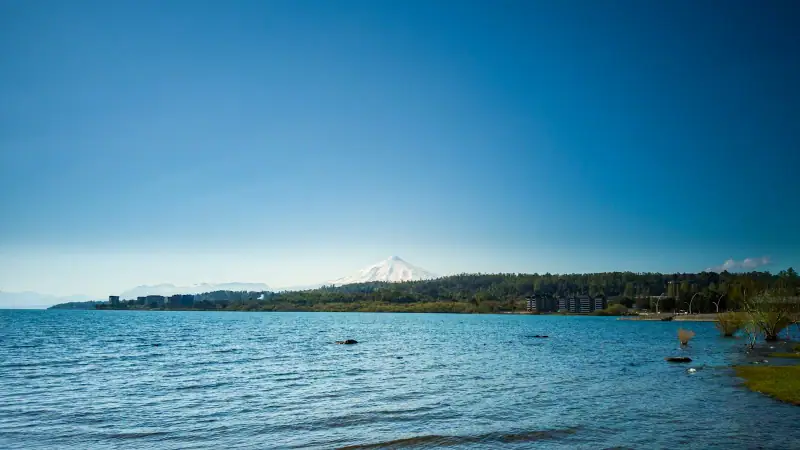
Villarrica Volcano is Pucón’s headline attraction. The climb must be done with an agency that provides guide, helmet, crampons and ice axe, and that decides on the morning itself whether the outing is feasible, based on wind, visibility and volcano activity. It takes a full day, with a demanding walk on a steep slope and mountain equipment. Cancellations are frequent, which is why this outing sits on day 6, with a spare day right after it.
If the climb is not possible, or does not appeal to you, there are several alternatives: rafting on a river in the region, canyoning, horseback riding, or an afternoon of relaxing in hot springs. There are many hot springs around Pucón, set in the middle of nature, and they are a perfect end to a day of hiking. Check opening hours, any reservation requirement and prices in advance, as they vary by establishment.
In any case, avoid planning too dense a program: mountain weather stays unpredictable, and it is the weather that decides.
Activities in Pucón
Villarrica Volcano, rafting, canyoning, hot springs: compare the activities and tours offered from Pucón.
Day 7: spare day and return to Temuco
The last day is for whatever could not be done: an outing canceled by the weather, a soak in the hot springs or one last walk by the lake. To reach Temuco airport, allow about an hour and a half of driving from Pucón. Leave a comfortable margin before your flight, especially if you return a one-way rental car, because drop-off formalities take time.
If your return flight leaves Temuco for Santiago, it is also a chance to extend the trip to the capital or the coast: our guide to Santiago lists the main visits. Entry rules depend on your passport. Check the official travel advice of your government before you book: travel.state.gov (US), GOV.UK (UK), travel.gc.ca (Canada), Smartraveller (Australia) (checked November 2026). Also consider travel insurance covering outdoor activities and repatriation.
Variations: adapting the road trip
This itinerary is easy to adjust to the time you have:
- Short version, 4 days: keep Puerto Varas, Osorno Volcano and the Petrohué Falls, then head straight up to Pucón by bus or car for two nights.
- Long version, 10 days: add two days on Chiloé starting from Puerto Montt, with its wooden churches and palafitos, covered in our guide to Chiloé.
- With kids: favor the lake beaches, hot springs and short walks, and skip the volcano climb.
- More active: add a hiking day at Huerquehue and a rafting outing.
- Without a car: combine scheduled buses between Puerto Varas and Pucón with organized tours along the way.
Whichever version you choose, book your accommodation and car as early as possible for January and February, the busiest months.
Tips for a successful road trip
To finish, a few recommendations drawn from the most frequent questions:
- Build in flexibility: volcanoes sometimes disappear into the clouds for several days. Keep alternatives at hand.
- Start early: roads are quieter, sites less crowded and the light nicer in the morning.
- Keep some pesos: cards are widely accepted in town, but some tolls, small shops and park entrances may require cash.
- Protect yourself from the sun: at altitude and by the water, exposure is strong, even in cool weather.
- Respect nature: take your trash with you, stay on the trails and follow the instructions of park rangers.
With a little organization, this loop between Puerto Varas and Pucón gives a condensed version of what is most accessible in Chile: spectacular volcanoes, huge lakes, hearty food and a travel pace that is easy to keep up.
Frequently asked questions
How many days do you need for a Lake District road trip?
Seven days let you enjoy Puerto Varas and its surroundings, then Pucón, without rushing. With only four or five days, focus on one of the two hubs; with ten days, add Chiloé or more hot springs.
When is the best time for this road trip?
The austral summer, December to March, has the longest days and the best chance of clear skies to see the volcanoes. January and February are the busiest months, so book early. In spring and fall the region is quieter but rainier.
Do you need an international driving permit to rent a car in Chile?
Rental companies generally ask for your national driver's license and a passport; some recommend an international permit as well. Check the exact conditions with the rental company when you book, along with the insurance deductible.
Are the roads easy for a foreign driver?
The north-south axis, Ruta 5, is a fast road in good condition, with tolls. Secondary roads around the lakes are mostly paved, but some tracks to the parks can be gravel. Avoid driving at night, as animals and fog are common.
Can you do this itinerary without a car?
Partly. Buses run regularly between Puerto Varas and Pucón, and organized tours serve major sites such as the Petrohué Falls. A car mainly gives you freedom with timing and access to less-visited places.
Can you climb Villarrica Volcano during this trip?
It is possible with a local agency, but the climb depends on the weather and the state of the volcano. Keep a spare day in your schedule, because outings are often canceled the day before for safety reasons.
More Chile guides
Keep reading
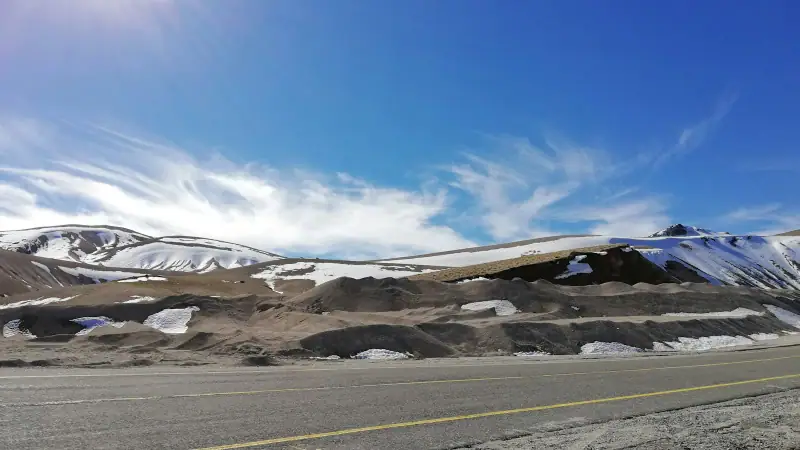
Chile trip budget: real costs, 3 profiles and money-saving tips
How much does a trip to Chile cost? Prices by category (lodging, transport, meals, activities), three daily budgets and tips to spend less.
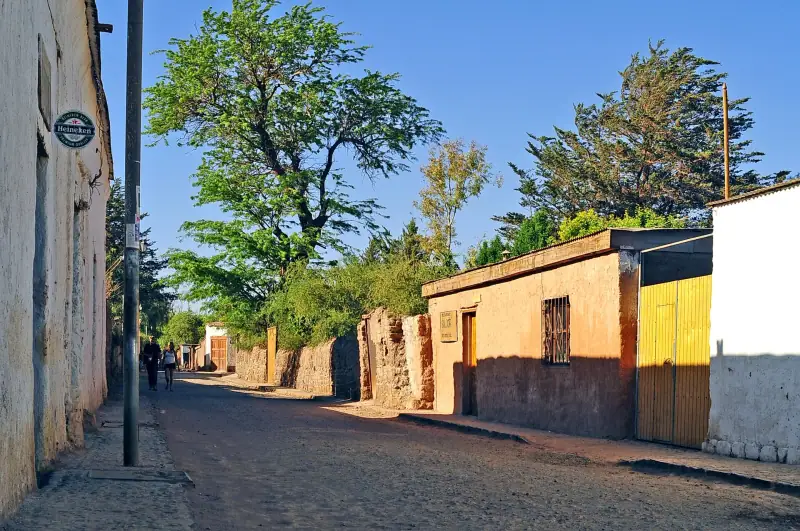
Where to stay in San Pedro de Atacama without a car: town center or outskirts?
No car in San Pedro de Atacama: stay near Caracoles Street or on the outskirts? Areas, walking distances, early-morning tours and pitfalls to avoid.
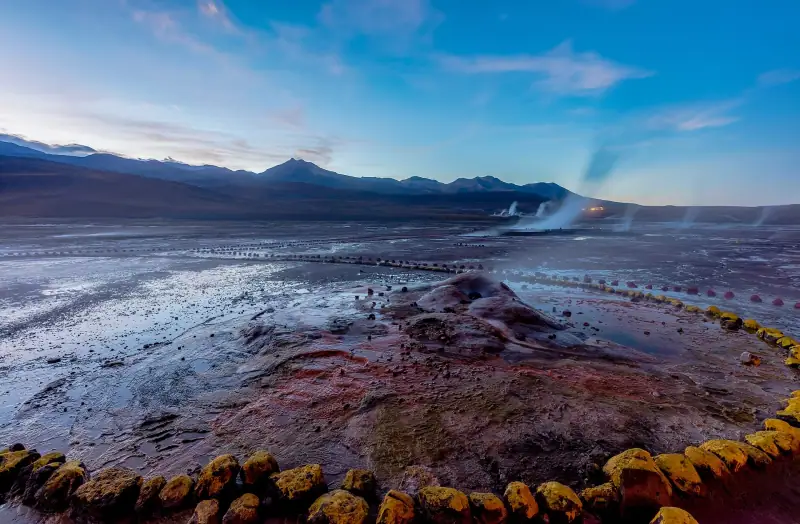
El Tatio geysers without a tour: car, entrance fee and hours
Visit El Tatio geysers without a tour: B-245 road, 15,000 CLP ticket, night departure, cold and altitude. The real conditions before you rent a car.
Ready-made
Chile itineraries
3 days
3 days in San Pedro de Atacama: a day-by-day itinerary
3 days in San Pedro de Atacama: a day-by-day plan with Moon Valley, lagoons, El Tatio geysers and stargazing, plus altitude and logistics tips.
14 days
2-week Chile itinerary: Atacama, the Lakes and Chiloé
A 14-day Chile itinerary, day by day: Santiago, Valparaíso, the Atacama Desert, Pucón, Puerto Varas and Chiloé, with flights, durations and tips.