Where to stay
Where to Stay in The Hague: Neighborhoods and Types of Lodging
We may earn a commission when you book through links on this page, at no extra cost to you. We don't visit or try the places we cover: we summarize published sources. How we work
In short
- The center, around Den Haag Centraal, the Binnenhof and the pedestrian streets, is the most practical base for a first stay of two or three nights.
- Scheveningen, linked to the center by tram, suits summer, families and beach stays; Statenkwartier and Archipelbuurt are the quietest.
- Delft is about fifteen minutes by train and Amsterdam under an hour by direct train.
- Prices rise on the coast in midsummer and on fine-weather weekends, and congresses can fill central hotels on weekdays.
The Hague (Den Haag) is a city apart in the Dutch landscape. The official capital? No: that is Amsterdam. But The Hague is the seat of the government, of Parliament and of several international institutions, including the International Court of Justice housed in the Peace Palace. It has grand bourgeois avenues, mansions, parks, top museums and, a few minutes by tram, a large seaside resort: Scheveningen. This double nature, both administrative and maritime, makes the choice of neighborhood especially important.
This guide reviews the main areas to stay in The Hague, their atmosphere, advantages and limits, then compares the types of lodging to help you decide according to your budget, length of stay and season. If you are also preparing the country’s other big cities, you can see the guides to sleeping in Rotterdam and sleeping in Amsterdam, which follow the same logic.
The Hague in brief: a city spread between center and sea
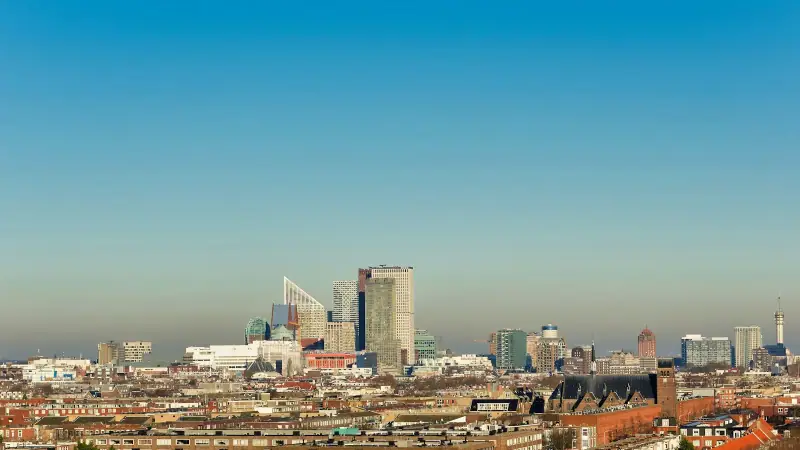
First, understand the geography. The Hague stretches between the inland and the North Sea, and it is the tram that links its different parts. The historic and administrative center is around the Binnenhof, the complex of buildings where political power sits, the Mauritshuis and the shopping streets. Heading west, you reach the residential neighborhoods then the dunes and the beach of Scheveningen. In the southwest is Hollands Spoor station, in the southeast an area in the midst of transformation.
The city has two main stations: Den Haag Centraal, the closest to the center, and Den Haag HS (Hollands Spoor), which serves notably the direction of Delft and Rotterdam. The two are linked by tram and on foot in reasonable times. To understand how trains, trams and shared bikes work, read the guide to getting around the Netherlands by train and bike.
For an overview of what there is to see, the article on Rotterdam, Delft and The Hague will help you decide how many nights to devote to it.
The center (Centrum), the most practical base
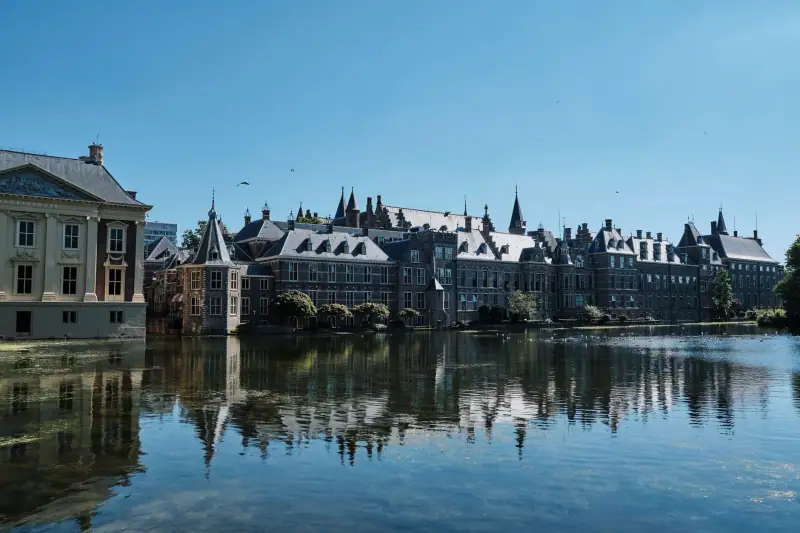
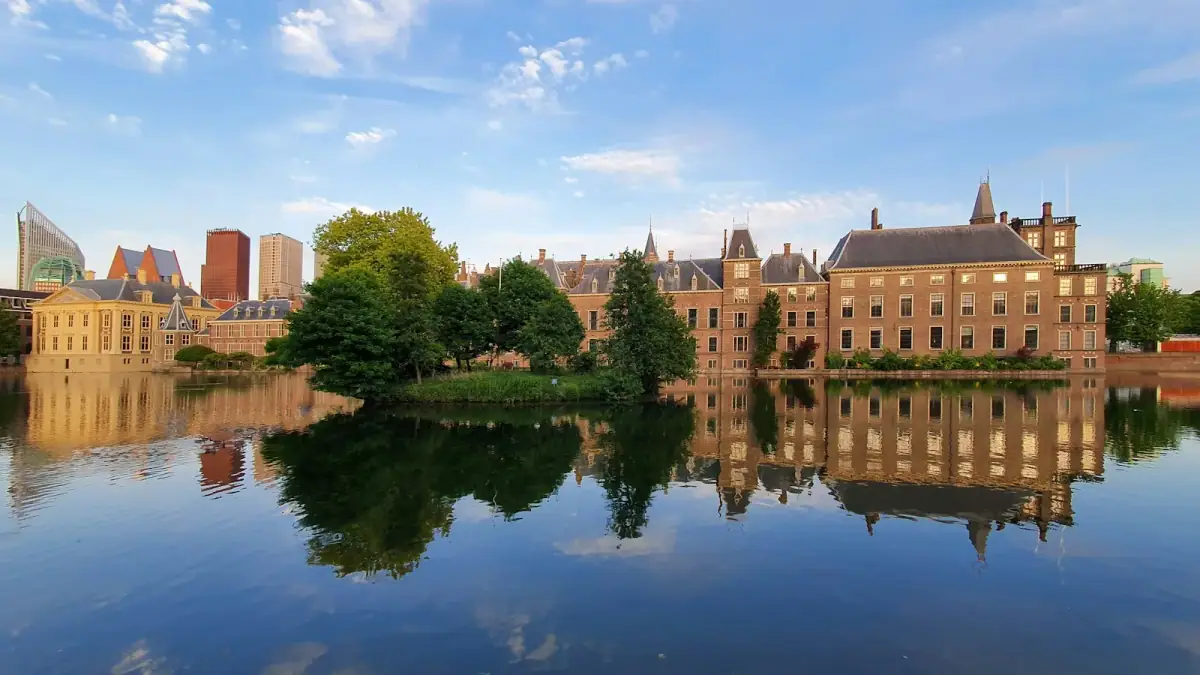
The Hague’s center gathers the essentials: the Binnenhof and its pond (the Hofvijver), the Mauritshuis, pedestrian streets, lively squares, many restaurants and shopping arcades. Centraal station is close, which makes arriving with luggage easier. This is the area with the widest hotel offer, from the budget chain property to the charming address.
The advantages are obvious: you visit on foot, you easily find a restaurant in the evening, and you are a few minutes by tram from the beach. For a first stay of two or three nights, it is the simplest choice, especially if you arrive late or leave early.
The drawbacks come down to atmosphere. The center is active by day and rather quiet in the evening in the administrative streets, but some streets near the station and the shopping arteries are noisy. If you are a light sleeper, avoid rooms that face a busy road or a bar street directly, and read recent reviews.
🏨 Sleeping near the Binnenhof and the station: hotels in the center of The Hague are many, but congress periods and fine weather push rates up. Compare offers and preferably choose free cancellation.
Hofkwartier, Noordeinde and the old center, for charm
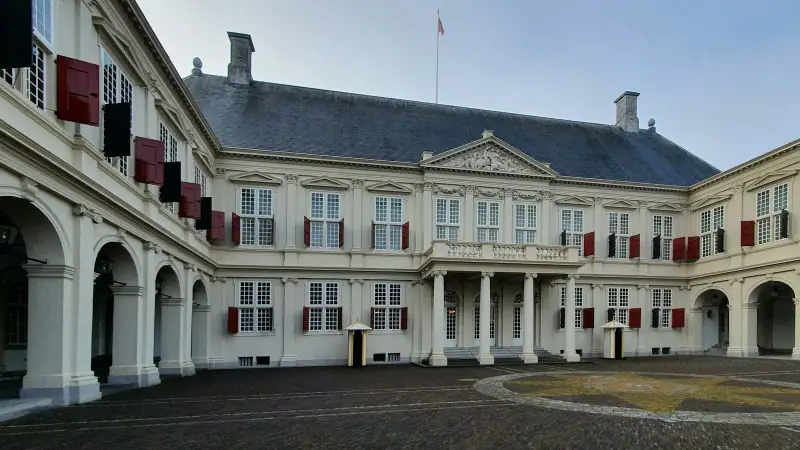
Around Noordeinde Palace and the neighboring lanes, the old center shows a more refined face: antique shops, galleries, neighborhood cafés, brick facades and small canals. The atmosphere is elegant and quiet, very different from the commercial bustle of the station area.
Sleeping here means choosing charm and proximity to historic sites without being in the middle of the crowds. The lodging offer is more small hotels, guesthouses and apartments than big chains. It is a good choice for couples, history lovers and those who like to wander. Just check accessibility: in old buildings, the stairs are often steep and narrow.
The Zeeheldenkwartier, for a local and creative atmosphere
The Zeeheldenkwartier, northwest of the center, is a former working-class district that has become one of the locals’ favorite addresses. It has brick streets, independent shops, neighborhood cafés, galleries and a market. The atmosphere is relaxed, a little bohemian, with a friendly nightlife without excess.
This neighborhood appeals to travelers looking for a less touristy experience who stay several days. It is a short distance from the center, on foot or by bike, and linked by public transport. Lodging is mostly apartments and small properties: the choice is narrower than in the center, which justifies booking early.
Scheveningen, for sleeping by the sea
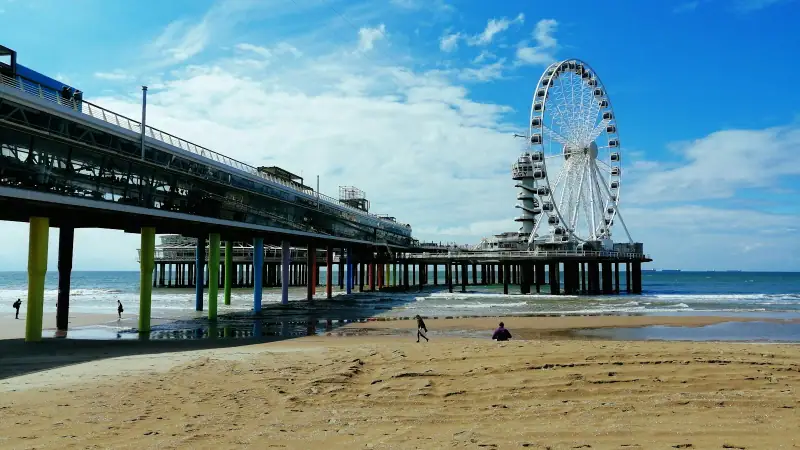
Scheveningen is The Hague’s seaside resort, a few kilometers from the center. It has a wide sandy beach, a promenade lined with cafés and restaurants, a pier, a fishing harbor and the Kurhaus, the resort’s historic building. In summer it is a very lively place, with many beach restaurants. The neighboring dunes allow walks on foot or by bike.
The advantage is obvious for families and for anyone who wants to enjoy the beach: you sleep a few steps from the sand and can reach the center by tram. The lodging offer is abundant, with seafront hotels, residences, apartments and a few properties with character. The harbor district, more authentic, is also worth lingering in.
The limits are seasonal. In midsummer and on fine-weather weekends, Scheveningen is packed and prices go up. In winter, the atmosphere is calmer, the sea often cold and windy, and some properties run at a slow pace. If your stay is about museums and city life, it may be better to sleep in the center and come to the beach only for a day. The article on when to go to the Netherlands details the seasons.
🌊 Sleeping in Scheveningen: seafront hotels, apartments and rooms with a view. Summer weekends go fast, so book early and keep free cancellation.
Statenkwartier and Archipelbuurt, for a residential stay
Between the center and the sea, the Statenkwartier is a residential district with fine houses, tree-lined streets and neighborhood shops. Next to it, the Archipelbuurt, with streets named after great navigators and islands, has a comparable atmosphere, closer to the diplomatic center. These districts are among the most pleasant places to live in the city.
They suit families, travelers who stay a week or more, and those who want calm. Lodging is mainly apartments, guesthouses and a few small hotels. The tram reaches both the center and the beach, which makes them an interesting compromise. In the evening, the choice of outings is more limited than in the heart of the city: count on a few good neighborhood restaurants rather than intense nightlife.
Hollands Spoor and the south, for tight budgets
Around Hollands Spoor station, southwest of the center, the atmosphere is more working-class and cosmopolitan. The district is well linked by train, particularly to Delft and Rotterdam, and has shops of all origins and markets. Lodging is sometimes more affordable than in the center.
This area can appeal to those who put price and rail connections first. It is less picturesque than the old center, and it is best to read recent reviews about noise, cleanliness and the atmosphere of the street before booking. Also check the return route if you go out late in the center.
Duinoord and the edges of the dunes, for a nature stay
In the northwest, Duinoord and the districts near the dunes offer a more open, calm and green setting. The atmosphere is that of a neighborhood of brick houses with nearby parks, close to the vast dune area that separates the city from the coast.
It is a good base for walkers, cyclists and families who like to alternate city and nature. The offer is mostly apartments and guesthouses. Check the walking distance to a tram stop: it determines the comfort of the stay, much more than the straight-line distance to the center.
Hotel, hostel, apartment or residence: how to choose?
The hotel remains the simplest option for a short stay: central location, services, cancellation flexibility. Chain properties are mostly concentrated near the stations and the center; hotels with character are more in the old center and on the seafront.
The hostel suits tight budgets, solo travelers and groups of friends. Dorm or private room, it noticeably reduces spending compared with a hotel. Services vary: check recent reviews on cleanliness and noise, and see whether a locker is provided.
The apartment or guesthouse makes sense from three or four nights, for a family or to cook. Tourist rentals are subject to local regulation: make sure the listing is in order and read the owner’s conditions (deposit, arrival times, cleaning).
Residences and beach hotels in Scheveningen suit family stays, with more spacious rooms or formulas with a kitchen. Check what is included (breakfast, parking, bed linen).
Do not forget the tourist tax: it is set by the municipality and sometimes added to the displayed price. Read the breakdown of the final rate before confirming your booking.
What budget to plan for sleeping in The Hague?
Prices vary a lot by season, day of the week and events. The Hague is generally more affordable than Amsterdam for an equivalent category, but this advantage shrinks in midsummer on the coast and during congress periods or major international events. Hostels are the cheapest option, followed by budget hotels, then mid-range and upper-category properties in the center and on the seafront.
To estimate your overall spending, see the guide to the budget for a trip to the Netherlands. A few habits help keep the bill under control: travel on weekdays rather than weekends, avoid the heart of summer on the coast, book early, compare several neighborhoods and check whether breakfast is included.
🎟️ Discover The Hague differently: a guided tour helps you spot the neighborhoods before choosing yours, or understand the history of the Binnenhof and the city.
The Hague as a base for exploring the region
The Hague is a logical base for exploring South Holland. Delft, the city of blue pottery, is about fifteen minutes away by train. Rotterdam is about as close, and Amsterdam is reached by direct train in under an hour. In spring you can also reach the flower fields and the flower park: see the article on Keukenhof and the tulip fields.
This choice makes sense if you like returning in the evening to a calm city, with the sea within reach of the tram, or if you chain several stages in the south of the country. It makes less sense if you plan to spend most of your evenings in Amsterdam: in that case, it is better to sleep there. To place The Hague in a wider trip, the complete guide to the Netherlands will help you organize your itinerary.
If you arrive by air, Schiphol Airport is linked to The Hague by train. Compare arrival options before choosing the area to sleep in.
🏨 Compare lodging across the region: if The Hague is full on your dates, also look at Delft or Rotterdam, served by frequent trains.
Tips for choosing
- First stay, 2 to 3 nights: the center, to do everything on foot.
- Charm and calm in the old center: Noordeinde and Hofkwartier.
- Local, creative atmosphere: Zeeheldenkwartier.
- Beach and family stay: Scheveningen.
- Residential stay, tram to the sea and the center: Statenkwartier or Archipelbuurt.
- Tight budget and rail connections: Hollands Spoor, or a hostel in the center.
Whatever the neighborhood, check three things before booking: access (stairs, elevator), the walking distance to a tram stop and recent reviews about noise. Finally, keep a free-cancellation option as long as your plans are not fixed. If you travel by bike, also make sure the lodging has a safe place to park it.
In short
The Hague is best discovered by relying on the right neighborhood. The center is the most practical, the old center brings charm, the Zeeheldenkwartier a local atmosphere, Scheveningen the sea and the Statenkwartier residential calm. Compare several dates, book early for summer and weekends, and choose the type of lodging that matches the length of your stay.
Frequently asked questions
What is the best neighborhood to stay in The Hague on a first visit?
The center, around Den Haag Centraal station, the Binnenhof and the pedestrian streets, is the most practical for discovering the city on foot. If you come mostly for the sea, Scheveningen is a good compromise, linked to the center by tram.
Is it better to stay in Scheveningen or in the city center?
It depends on your stay. Scheveningen suits summer, families or enjoying the beach and the promenade; the center is better for museums, restaurants and train connections. The two are linked by tram.
Is The Hague a good base for visiting Amsterdam, Rotterdam and Delft?
Yes, the city is served by frequent trains to Delft, Rotterdam, Leiden and Amsterdam. Delft is about fifteen minutes away, Amsterdam under an hour by direct train. Check the schedules on the Dutch railways site before building your program.
Which neighborhood to choose for a quiet stay?
Statenkwartier and Archipelbuurt, residential and tree-lined, are among the quietest. Duinoord, closer to the dunes, also has a peaceful atmosphere.
Is The Hague cheaper than Amsterdam for lodging?
Generally yes, for an equivalent category, but the gap varies by season, day of the week and events. The coast is more expensive in midsummer and on fine-weather weekends. Compare several dates.
Do you need to book far in advance?
As soon as your dates are set, especially for summer, school vacations and weekends. The city hosts international events and congresses that can fill central hotels on weekdays. Choose a rate with free cancellation.
More Netherlands guides
Keep reading
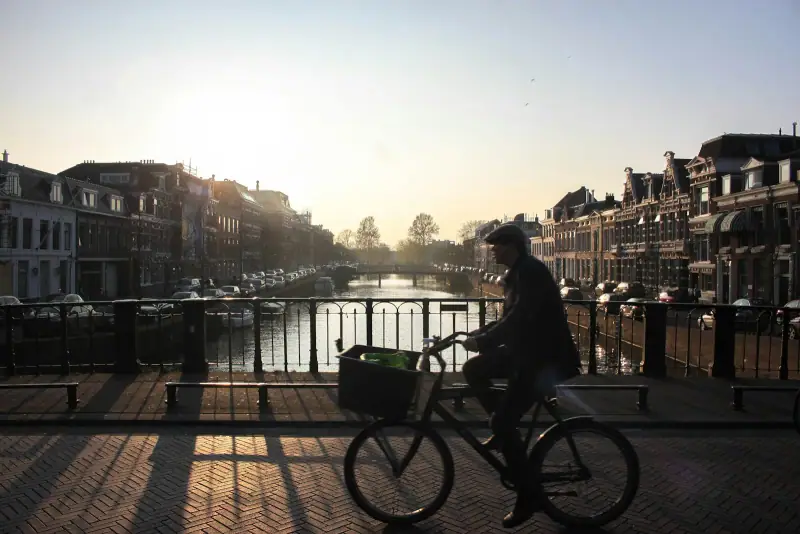
Where to Stay in Haarlem: Neighborhoods and Types of Lodging
Grote Markt, Spaarne banks, station area or nearby coast: compare Haarlem's neighborhoods and lodging types to choose where to stay.
Where to Stay in Maastricht: Neighborhoods and Types of Lodging
Historic center, Wyck, Jekerkwartier, Céramique or Sint Pieter: compare Maastricht's neighborhoods and lodging types to choose where to stay.
Where to Stay in Delft: Neighborhoods and Types of Lodging
Historic center, station area, Agnetapark or campus: compare Delft's neighborhoods and lodging types to choose where to stay.
Ready-made
Netherlands itineraries
4 days
Amsterdam and Maastricht in 4 Days Without a Car: Is It Doable by Train?
AmsterdamMaastricht
7 days
Netherlands 7-Day Itinerary: Amsterdam, Delft, Rotterdam, Kinderdijk and Utrecht
A one-week itinerary in the Netherlands by train: Amsterdam, Haarlem, Zaanse Schans, The Hague, Delft, Rotterdam, Kinderdijk and Utrecht, day by day.