Where to stay
Where to Stay in Delft: Neighborhoods and Types of Lodging
We may earn a commission when you book through links on this page, at no extra cost to you. We don't visit or try the places we cover: we summarize published sources. How we work
In short
- The historic center around the Markt, the canals and the two big churches is the best base for a first stay: all on foot, station a few minutes away.
- Delft and The Hague are linked by frequent trains and trams, about a quarter hour apart; Amsterdam is about an hour by train each way.
- Central lodging is limited (small hotels, guesthouses, apartments in old houses) and fills up fast in spring, summer and on weekends.
- One night is enough for the center; two nights allow the main sites plus a trip to The Hague or Rotterdam.
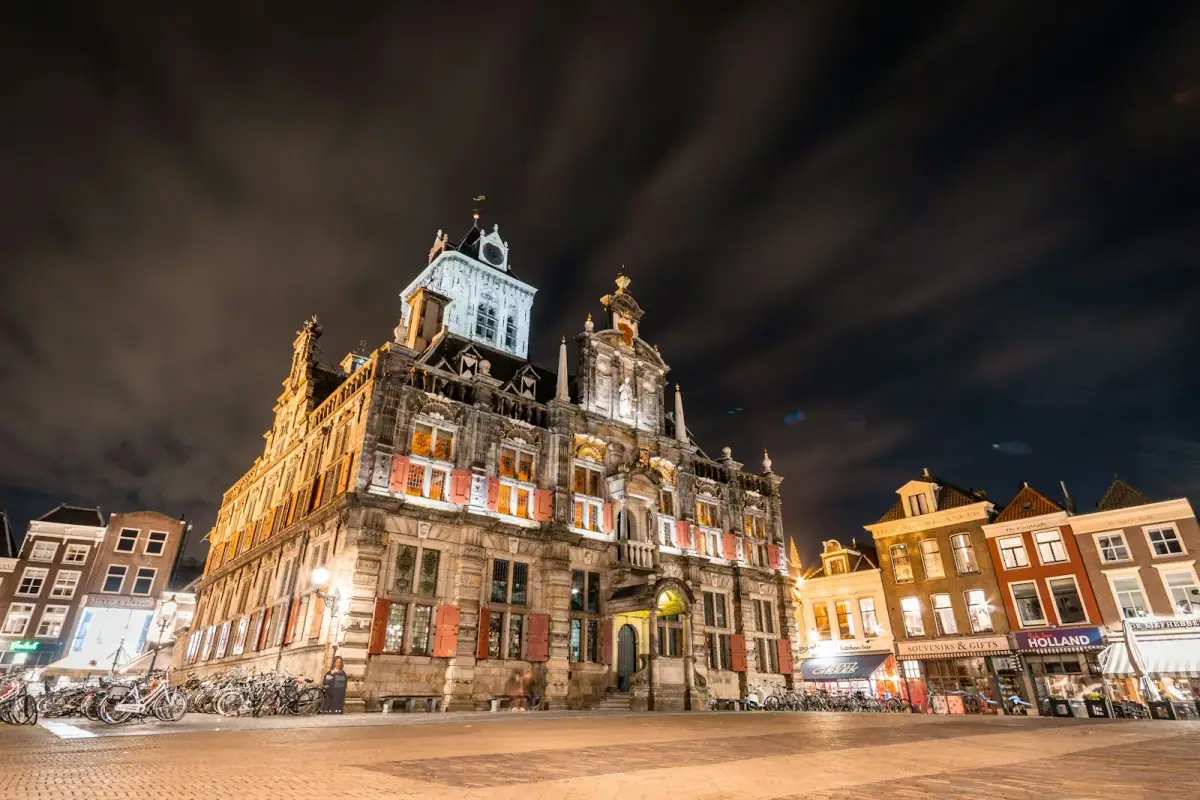
Delft is one of the most photogenic cities in the Netherlands: tree-lined canals, stone bridges, brick facades, a large market square dominated by two churches, and that blue-and-white pottery that made its name across Europe. It is also the city of the painter Johannes Vermeer and of the prestigious technical university, which gives it a side that is both old and student. It is small, and that is exactly what makes the choice of lodging both simple and decisive: between a place on a canal in the center and a room on the outskirts, the experience of the stay is not the same.
This guide reviews the neighborhoods to stay in Delft, their advantages and limits, then compares the types of lodging and answers the question many travelers ask: is it better to stay in Delft or in a big neighboring city? If you are still hesitating about how to combine the southern cities, the article Rotterdam, Delft and The Hague: what to see and how to combine them will help you split your nights.
Delft in brief: a compact city you visit on foot
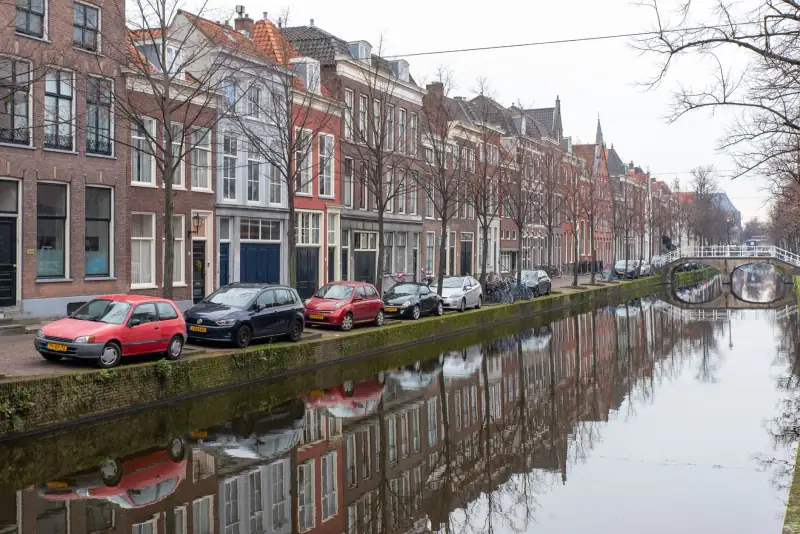
Delft is easy to cover on foot. The historic center is ringed by an arc-shaped canal, the former line of defense, and most sites fit inside this perimeter: the market square (Markt) with the town hall and the Nieuwe Kerk, the Oude Kerk and its leaning tower, the Prinsenhof, a former convent turned museum, and many small canals lined with cafés. In a few minutes you go from a lively square to a quiet lane.
This compactness has a direct consequence: the difference in distance between neighborhoods is counted in minutes on foot or by bike, not in transit trips. The landmarks to keep in mind are Delft station, southeast of the center, and the tram that links the city to The Hague. The station has frequent trains to The Hague and Rotterdam, about a quarter hour away, and to Amsterdam and Schiphol Airport, in under an hour and a half. To understand how trains, trams and bikes work, see the guide to getting around the Netherlands by train and bike.
The historic center, the best base for a first stay
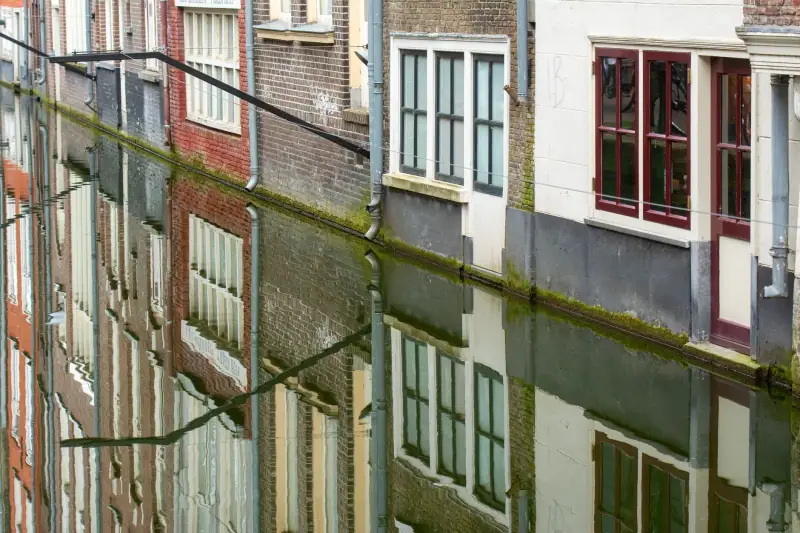
Sleeping in the historic center means enjoying Delft at its best: early in the morning, when the canals are empty and the light is soft, and in the evening, when the day-trippers have left. The market square, the two churches and the main canals are a few steps from your door. You get around only on foot or by bike, and you find the largest concentration of cafés, restaurants and shops.
The offer is mostly small charming hotels, guesthouses and apartments in old houses, rather than big chains. That means rooms that are often small, with steep, narrow stairs and sometimes no elevator: something to check if you travel with a heavy suitcase, children in strollers or reduced mobility. Because there are few properties, they fill up fast in season.
The main drawback is noise. The streets around the market square and café streets stay lively late on weekend evenings, and church bells ring regularly. If you are a light sleeper, ask for a courtyard room or one facing a secondary canal, and read recent reviews.
🏨 Sleeping beside a canal in the center: the small hotels and guesthouses in central Delft are few and go early in spring and summer. Compare offers and keep, if possible, free cancellation.
Around the market square and the Nieuwe Kerk, for lively surroundings
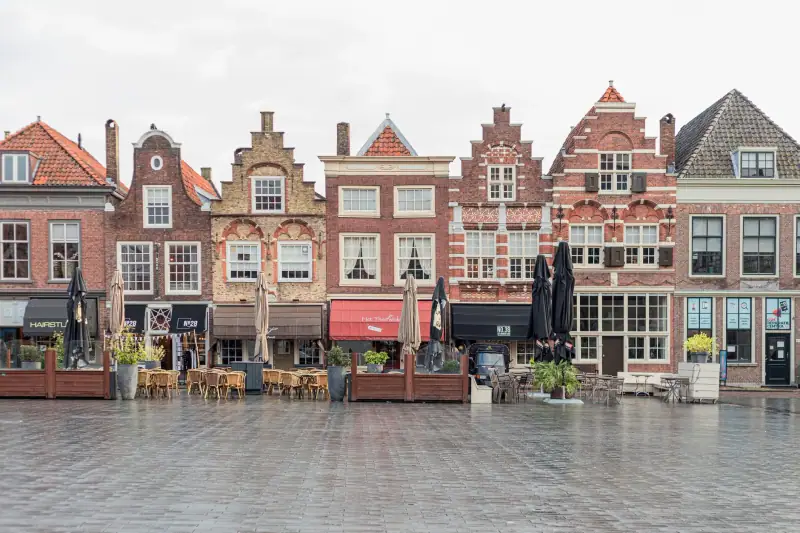
The heart of the center, around the large square, is the liveliest area. This is where the weekly Thursday market is held, one of the regular meeting points for residents, and where the café terraces are concentrated. The mood is cheerful by day and carries on into the evening without becoming excessive: Delft remains a quiet city compared with Amsterdam.
This area suits those who want everything at hand and do not want to worry about transport. It is less suited to travelers seeking complete silence. For train arrivals with luggage, the station is a reasonable walk, but cobblestones and bridges tire you with a wheeled suitcase; allow a little time.
The Prinsenhof, the Oude Kerk and neighboring canals, for calm and charm
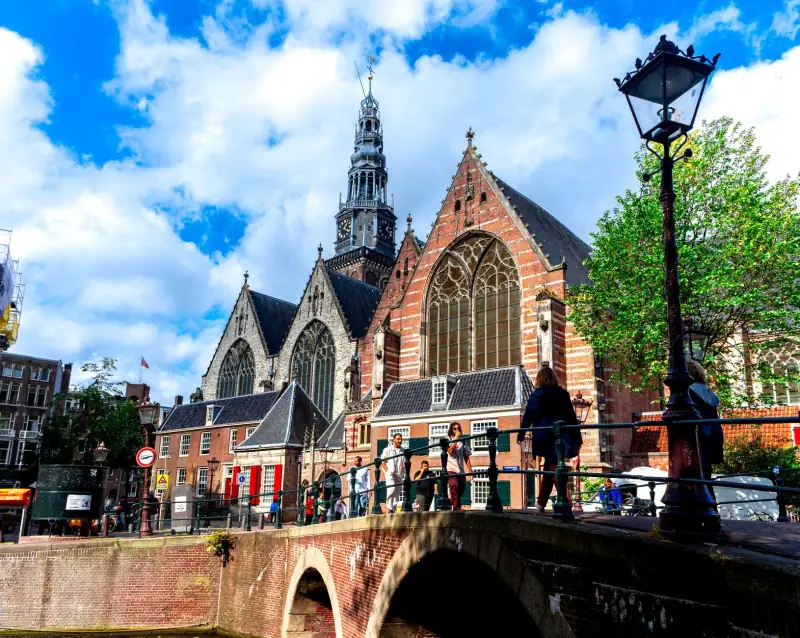
Moving away from the main square toward the Oude Kerk and the Prinsenhof, you enter the most romantic Delft. The canals are narrower, the lanes quieter, the houses lower. The atmosphere is that of an old residential neighborhood, with a few local cafés and galleries.
This is the ideal area for a couple’s stay, a quiet weekend or travelers who like to wander. You mostly find guesthouses, small hotels and apartments. The lively center remains reachable in a few minutes on foot, so you get both the calm of the night and the proximity of the sites. Check bike access and parking if you travel with your own.
The station area, for convenience and tight budgets
Around Delft station, the atmosphere is more functional. The district was largely redeveloped with the new station, and the city gained recent buildings, offices and modern hotels. You find more business-type or chain hotels, with standard rooms and prices sometimes more affordable than in the historic center.
The advantages are concrete: simplified arrival and departure, quick connections to The Hague, Rotterdam and Schiphol, and a walk of about ten minutes to reach the center. The drawbacks are just as clear: the atmosphere is less picturesque, and the district is almost deserted in the evening. This area suits travelers who use Delft as a base to fan out and spend more time outside than in the city itself, or those who arrive late or leave early. The article on sleeping near Schiphol or in Amsterdam before an early morning flight can also help if your stay ends with a morning flight.
Agnetapark and residential neighborhoods, for a stay in the green
Northwest of the historic center, the Agnetapark district is a green ensemble built in the late 19th century around a landscaped park. The streets are tree-lined, the houses detached, the atmosphere very calm. It is a residential neighborhood, pleasant for running or walking, and a sharp contrast with the center.
Lodging here is mostly guesthouses and apartments, in limited numbers. This area suits stays of several days, families and people who appreciate calm. It is about a fifteen-minute walk from the center, or a few minutes by bike: a bike is almost essential, or at least very handy, to enjoy this kind of lodging without tiring yourself. Check whether your host lends or rents bikes.
The university campus and the outskirts, for tight budgets
The south of the city is dominated by the Delft University of Technology campus and the business zones around it. The atmosphere is student and international, with modern housing, residences, apartments and a few business hotels. Prices here are sometimes lower than in the center, and space more generous.
It is a serious option for travelers looking to cut the bill, or who come for an event tied to the university or the neighboring companies. It is, however, very far from the image people have of Delft: little charm, few restaurants with character, and a bike or transit ride to reach the center. If you choose the outskirts, check the real walking distance to a tram or bus stop before booking, rather than the straight-line distance.
🎟️ Discover Delft with a guide: a walking tour or a boat tour on the canals helps you spot the neighborhoods before choosing yours, and understand the history of the pottery and Vermeer.
Hotel, guesthouse, apartment or hostel: how to choose?
The charming hotel is the most representative option of the historic center. Compact, often set in an old house, it offers an unbeatable location but modest-sized rooms. It suits short stays of one to three nights, and couples.
Modern hotels, concentrated around the station and in recent areas, offer more spacious rooms, often with better practical comfort (elevator, air conditioning, parking in some cases). They suit families, business travelers and those who arrive by car or train with a lot of luggage.
The guesthouse is an excellent option in Delft, where the welcome is a real plus. Breakfast is often included, and the host readily recommends places. Rooms are few, however: book far ahead for weekends.
The apartment makes sense from three or four nights, for a family or to cook. Tourist rentals are subject to local regulation: make sure the listing is in order and read the conditions (deposit, arrival times, cleaning).
The hostel is an option for tight budgets and solo travelers, but supply is more limited in Delft than in the big cities. If you cannot find a place, look at The Hague or Rotterdam, both very close.
Do not forget the tourist tax: it is set by the municipality and sometimes added to the displayed price. Always read the final rate before confirming.
Sleep in Delft or in a neighboring city?
Delft is so small and so well connected that the question is worth asking. Here is how to decide.
Sleep in Delft if you want to enjoy the evening and morning atmosphere, if you like small-scale cities, or if you want a quiet stay with good rail access. It is the best choice for two nights devoted to the south of Holland.
Sleep in The Hague if you want the sea, more museums and restaurants, or a wider hotel offer. Delft is then easily visited in half a day, a quarter hour by train. The guide to sleeping in The Hague details the neighborhoods.
Sleep in Rotterdam if you like contemporary architecture and a livelier city, again with Delft within reach by train. See the article on where to stay in Rotterdam.
Sleep in Amsterdam if your program is mostly about the capital: Delft then fits as a day trip, which is entirely realistic.
To place Delft in a wider trip, the 7-day itinerary in the Netherlands offers a coherent sequence between the capital, Delft, Rotterdam, Kinderdijk and Utrecht.
🏨 Compare lodging across the region: if Delft is full on your dates, also look at The Hague or Rotterdam, served by frequent trains and very close.
What budget to plan for sleeping in Delft?
Prices vary a lot by season, day of the week and type of lodging. Delft is generally more affordable than Amsterdam for an equivalent category, but the scarcity of supply in the center can push rates up in spring, summer and on weekends. Modern hotels around the station and on the outskirts are often the cheapest, guesthouses sit in a middle range, and small charming hotels on the canals are generally the most expensive.
To estimate your overall spending, see the guide to the budget for a trip to the Netherlands. A few habits help keep the bill under control: travel on weekdays rather than weekends, avoid peak crowds, book early, compare several neighborhoods and check whether breakfast is included. If the center is too expensive, staying in an outlying neighborhood or in The Hague and using the train remains a simple solution.
Tips for choosing
- First stay, one to two nights: the historic center, to do everything on foot.
- Romantic, quiet stay: the Prinsenhof, Oude Kerk and neighboring canals area.
- Late arrival or early departure, tight budget: the station area.
- Stay of several days, family, calm: Agnetapark and residential neighborhoods, with bikes.
- Tight budget or business trip: the south, around the campus.
Whatever the neighborhood, check four points before booking: access (stairs, elevator), the walking distance from the station or a tram stop, recent reviews about noise, and cancellation terms. Keep a free-cancellation option as long as your plans are not fixed. If you travel by bike, make sure the lodging has a safe place to store it.
In short
In Delft, the choice of neighborhood comes down to atmosphere more than distance. The historic center is the most charming and the most practical for a first stay, the neighboring canals bring calm, the station area brings convenience and low prices, and residential districts like Agnetapark offer a stay in the green. Book early for spring, summer and weekends, compare with The Hague and Rotterdam if supply is full, and choose the type of lodging that matches the length of your stay.
Frequently asked questions
What is the best neighborhood to stay in Delft?
For a first stay, the historic center, around the market square (Markt), the canals and the two big churches, is the most pleasant: everything is on foot and the station is a few minutes away. It is also where most of the charming lodging is concentrated.
Should you stay in Delft or The Hague?
Delft is smaller, more picturesque and calmer in the evening; The Hague offers more museums, more restaurants and Scheveningen beach. The two cities are linked by frequent trains and trams, about a quarter hour apart, so the choice depends mostly on the atmosphere you want.
Is Delft a good base for visiting Amsterdam?
It is possible, but the round trip takes time: allow about an hour by train each way. If you spend several days in Amsterdam, it is better to sleep there; if Amsterdam is only one day in a stay in the south, Delft works very well.
How many nights should you plan in Delft?
One night is enough to see the center and the evening atmosphere; two nights allow the main sites without rushing and a side trip to The Hague or Rotterdam. Beyond that, Delft becomes mostly a quiet base for exploring the region.
Is lodging in Delft expensive?
Generally more affordable than Amsterdam for an equivalent category, but supply is limited in the center: small properties fill up fast in spring, summer and on weekends. Book early and compare several dates.
Can you get around without a car from Delft?
Yes. The station serves The Hague and Rotterdam directly, and the tram links Delft to The Hague. Cycling is the best way to reach outlying neighborhoods. No car is needed, especially as parking is difficult and paid in the center.
Are there neighborhoods to avoid?
Delft is a safe, compact city with no neighborhood really to avoid. The differences are mostly about noise (café streets, the station area) and distance from the center. Read recent reviews to check the atmosphere of the exact street.
More Netherlands guides
Keep reading
Where to Stay in Haarlem: Neighborhoods and Types of Lodging
Grote Markt, Spaarne banks, station area or nearby coast: compare Haarlem's neighborhoods and lodging types to choose where to stay.
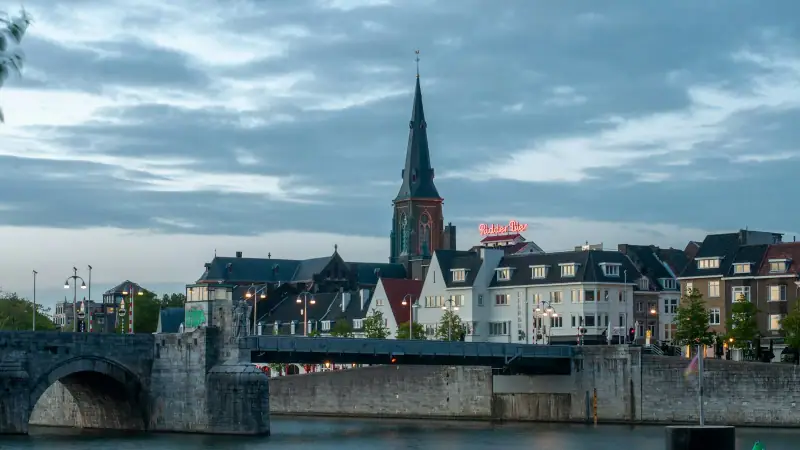
Where to Stay in Maastricht: Neighborhoods and Types of Lodging
Historic center, Wyck, Jekerkwartier, Céramique or Sint Pieter: compare Maastricht's neighborhoods and lodging types to choose where to stay.
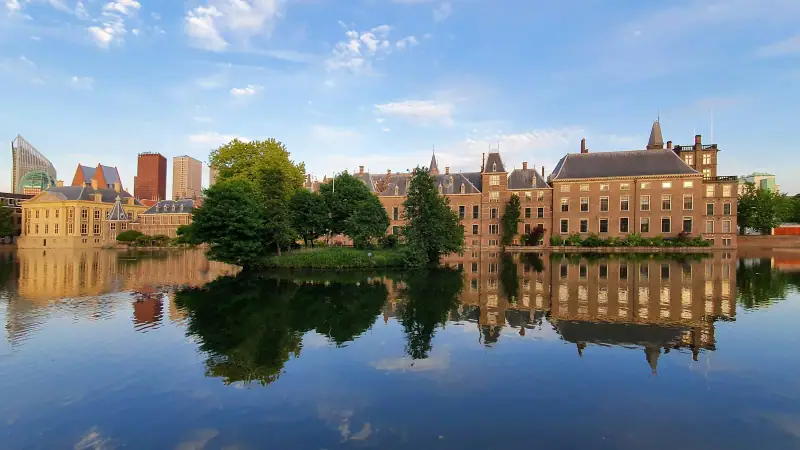
Where to Stay in The Hague: Neighborhoods and Types of Lodging
Center, Scheveningen, Statenkwartier, Zeeheldenkwartier or Hollands Spoor: compare The Hague's neighborhoods and lodging types to choose where to stay.
Ready-made
Netherlands itineraries
4 days
Amsterdam and Maastricht in 4 Days Without a Car: Is It Doable by Train?
AmsterdamMaastricht
7 days
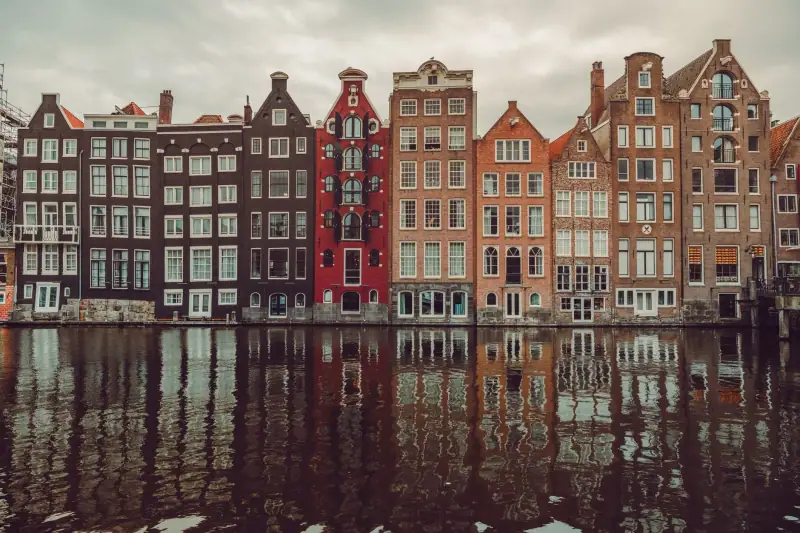
Netherlands 7-Day Itinerary: Amsterdam, Delft, Rotterdam, Kinderdijk and Utrecht
A one-week itinerary in the Netherlands by train: Amsterdam, Haarlem, Zaanse Schans, The Hague, Delft, Rotterdam, Kinderdijk and Utrecht, day by day.