What to see
Visiting Marrakech: What to See and Do in 3 Days
We may earn a commission when you book through links on this page, at no extra cost to you. We don't visit or try the places we cover: we summarize published sources. How we work
In short
- Three days cover the medina's big sites, a garden and the souks without rushing; with four or five you can add an Atlas, Agafay or coast excursion.
- Suggested rhythm: day 1 Bahia Palace, Saadian Tombs, souks and Jemaa el-Fna at sunset; day 2 Majorelle Garden and Ben Youssef Madrasa; day 3 an excursion or a slow day.
- Spring and fall are the most pleasant; in summer, sightsee early in the morning and late in the afternoon.
- Small (petit) taxis are handy outside the medina: agree on the price before getting in or ask for the meter.
Marrakech is the Moroccan city you imagine before you have even set foot there: earth-colored ramparts, minarets, endless souks and a big square where life never stops. It is also richer than its reputation as a city of souks: palaces, gardens, museums and excursions to the nearby Atlas make for a varied stay. Here is how to organize three days there, alternating highlights and breaks.
Jemaa el-Fna: the beating heart of the medina
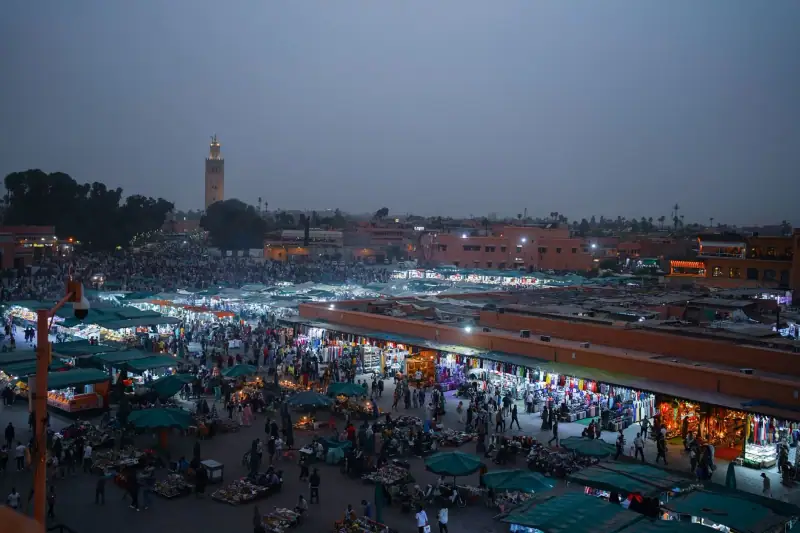
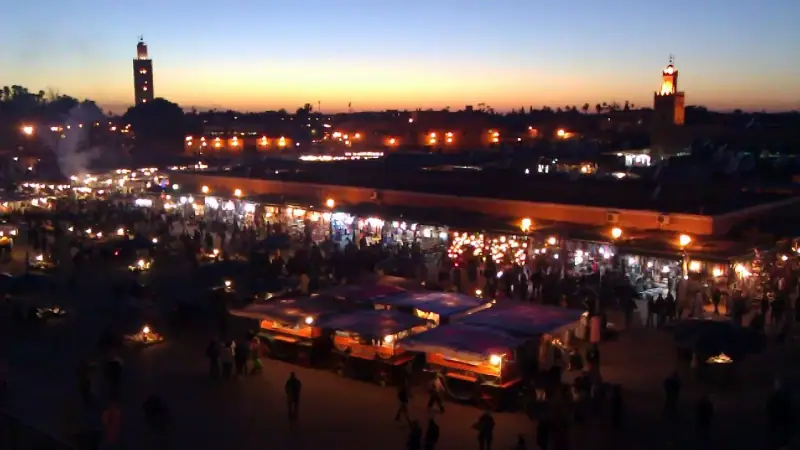
Jemaa el-Fna square is the natural starting point of any visit. Listed as an intangible cultural heritage of humanity, it changes character through the day. In the morning it is calm, with a few orange juice sellers and café terraces. In late afternoon it fills with storytellers, musicians, snake charmers and food stalls that set up for the evening.
A few tips for enjoying the square without stress:
- Go up to a café terrace at sunset: the view of the square’s bustle and the Koutoubia minaret is very beautiful.
- Ask the price before taking a photo with an animal or a performer: it is a paid activity.
- For dinner, look at the crowds, the stalls most used by locals and the freshness of the displayed produce. Our guide to Moroccan dishes to taste helps you recognize the specialties.
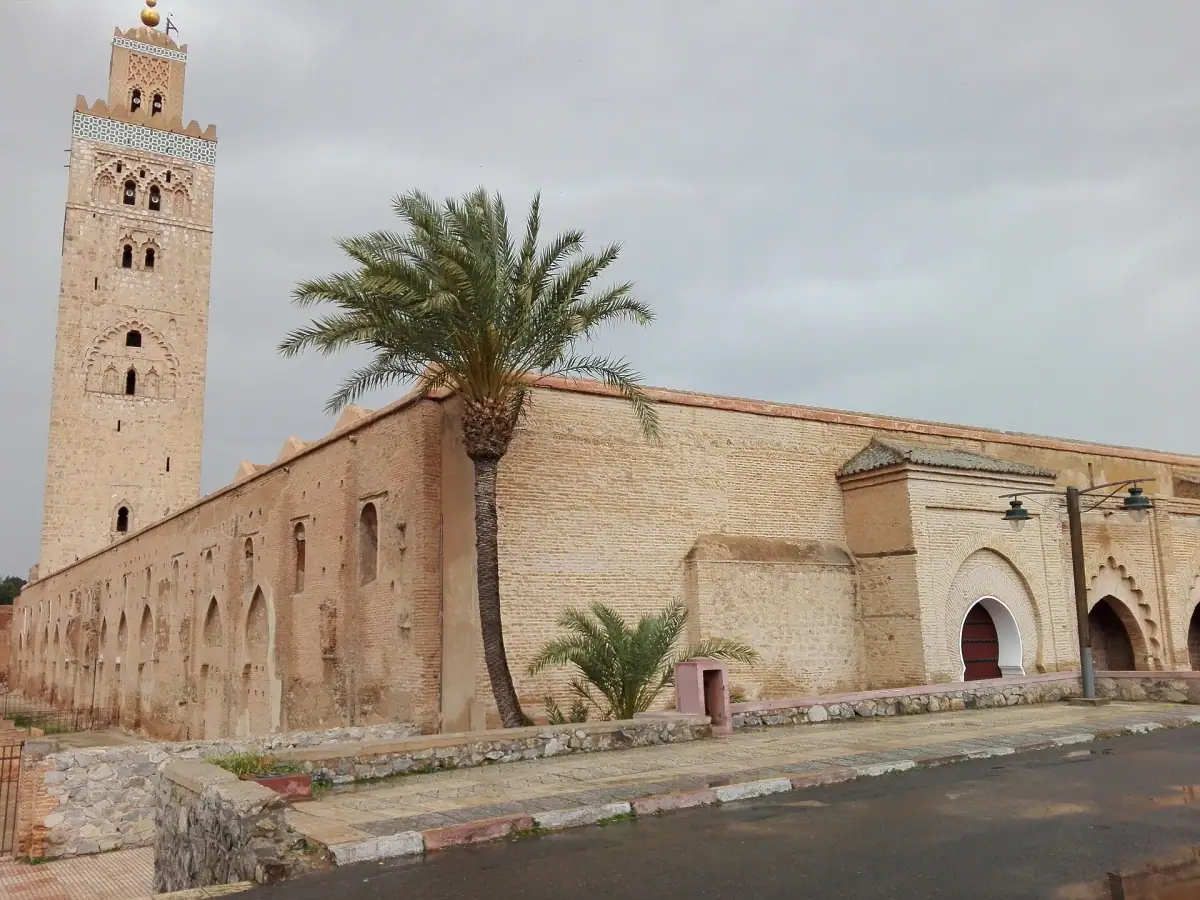
The nearby Koutoubia Mosque dominates the neighborhood with its 12th-century minaret. It is not open to non-Muslim visitors, but its surroundings and gardens can be walked freely and serve as a landmark for finding your way.
Where to stay in Marrakech
Medina riads or hotels with a pool: compare lodgings for your dates, with free cancellation on many offers.
The souks: getting lost without wearing out
North of the square stretches the network of souks, organized by specialty: leather, babouches (leather slippers), spices, metal lanterns, rugs, pottery, jewelry. It is easy to get lost, and that is partly the pleasure. The main streets are wide and very busy; the side alleys are calmer but harder to read.
To keep the walk pleasant:
- Start early, before the heat and the crowds set in.
- Bargain in good humor: the first price quoted is generally far above the final price. Set a budget per item before entering the shop.
- Do not accept an improvised “guide” who offers you a shortcut: he will most often lead you to a partner shop. A simple “no thank you” easily closes the conversation.
- Keep an offline map on your phone and note a few fixed points, such as the square or the Ben Youssef mosque.
The souks are also an excellent place to buy spices, black soap or copper items. Compare across several shops before buying more expensive items, such as rugs, and always ask about origin and materials.
The medina’s historic monuments
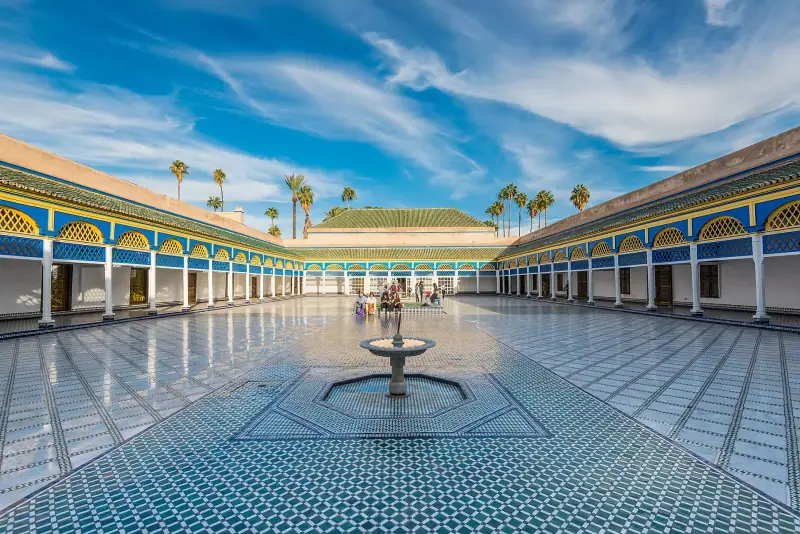
Several sites deserve a visit inside or around the medina. Group them by area to limit travel.
The Bahia Palace. Built in the late 19th century, this palace is known for its courtyards, painted cedar ceilings, stucco and zellige. The visit takes about an hour. Arrive at opening time to enjoy the light and avoid the crush.
The Saadian Tombs. This mausoleum of the Saadian dynasty, rediscovered in the early 20th century, holds finely decorated tombs in rooms with marble columns and carved cedar ceilings. The space is small and the queue can be long: it is better to go at the start of the day.
The El Badi Palace. Its ruins, vast and open to the sky, give an idea of the grandeur of the former 16th-century palace. The storks nesting on the ramparts add to the atmosphere. It is also a good place for a view over the medina’s rooftops.
The Ben Youssef Madrasa. A former Koranic school, it is one of the finest examples of Arab-Andalusian architecture in the city: marble patio, central pool, carved cedar wood and mosaics. It is close to the mosque of the same name, which remains closed to non-Muslims.
Plan half a day for two of these sites, plus a tea break in the shade, rather than chaining them all in one morning.
Gardens and museums: cool-down breaks
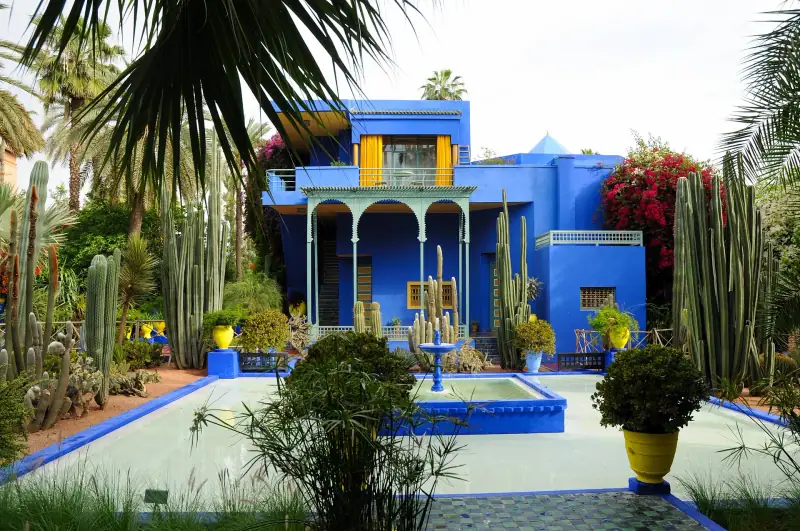
Marrakech has a gentler side too. Between two rounds of the souks, the gardens offer a welcome contrast.
The Majorelle Garden. Created by the painter Jacques Majorelle, then saved from disappearing by Yves Saint Laurent and Pierre Bergé, it is known for its intense blue, cacti, bamboo and pools. It is very busy: book ahead if possible and visit early in the morning or late in the day. Nearby, the Yves Saint Laurent Museum and the Berber Museum extend the visit.
The Menara Gardens. West of the city, this large garden organized around a basin and a pavilion, with the Atlas as a backdrop, is a favorite walking spot for residents. It is calmer than Majorelle.
The Secret Garden. Located in the medina, it offers pretty Islamic gardens sheltered from the noise, as well as a tower from which you see the city’s rooftops.
Contemporary museums and galleries in the Guéliz neighborhood round out the offer if you want another view of the city. To choose your base neighborhood, see our guide to where to stay in Marrakech.
Guided tours in Marrakech
Medina tour with a local guide, horse-drawn carriage ride or garden discovery: compare the available activities.
Hammam, spa and relaxation: a tradition to try
A visit to the hammam is part of the experience. There are two main options: the traditional hammam, used by residents, simple and inexpensive, with a black soap scrub; and the spas of riads or hotels, more comfortable, with treatments and massages. For a first time, an establishment that welcomes foreign visitors is easier: they explain the routine, supply what you need, and rates are posted.
A few useful pointers:
- Bring a swimsuit or disposable underwear, depending on the establishment.
- Agree on the price and content of the treatment before starting.
- Drink water after the session, especially in hot weather.
It is also a very good way to recover after a day of walking in the medina.
Excursions from Marrakech
Marrakech is an excellent base for day trips. The most common:
- The Ourika Valley and the High Atlas: Berber villages, waterfalls and mountain scenery, less than two hours by road.
- The Agafay desert: a landscape of rocky steppe and hills, a little under an hour from the city, with activities such as a camel ride or dinner in a tent. It is not like the sand dunes of Merzouga, covered in our guide to the Merzouga desert.
- Essaouira: the fortified city on the Atlantic coast, about three hours by road. It can be visited in a day, but deserves a night there: read our guide to things to do in Essaouira.
- The Ouzoud waterfalls, to the northeast, for a longer nature day.
If you plan a longer stay in the country, our 10-day Morocco itinerary shows how to link Marrakech, the South and the desert. For another imperial city, see Fes.
Excursions from Marrakech
Ourika Valley, Agafay desert, Essaouira or Ouzoud waterfalls: compare day excursions with transport.
Organizing your 3 days in Marrakech
Here is a balanced rhythm for a first stay:
- Day 1: the historic medina. Morning at the Bahia Palace and the Saadian Tombs, a simple lunch, a walk toward the souks, then sunset on Jemaa el-Fna square.
- Day 2: gardens and culture. Majorelle Garden first thing in the morning, nearby museums, lunch in Guéliz, then an afternoon at the Ben Youssef Madrasa and in the souks. End the day at the hammam.
- Day 3: excursion or relaxation. A trip into the Atlas or to Agafay, or a slower day with the Menara Gardens, a terrace and last-minute shopping.
Practical tips before you go
- When to go: spring and fall are the most pleasant. See our guide on when to go to Morocco to choose your season.
- Dress: light but modest clothing, comfortable shoes for the alleys, a hat and sunscreen. In religious places, modest dress is appreciated.
- Money: bring small change in dirhams for taxis, cafés and tips. ATMs are plentiful in Guéliz and near the big squares.
- Taxis: petit taxis run around the city; agree on the price before getting in or ask for the meter.
- Car: unnecessary for visiting the city. If you want to explore the Atlas, rent one only on the day you leave.
- Water and health: drink bottled water with a sealed cap and protect yourself from the sun.
Marrakech charms as much by its monuments as by its atmosphere. By giving it time, alternating visits, gardens and tea breaks, you will keep much more than a list of ticked-off sights.
Frequently asked questions
How long do you need to visit Marrakech?
Three days let you see the medina's big sites and a garden, and stroll the souks without rushing. With two days you have to make choices; with four or five, you can add an excursion to the Atlas, the Agafay desert or the coast.
What is the best time to visit Marrakech?
Spring and fall offer the most pleasant temperatures for walking in the city. Summer can be very hot during the day: plan visits early in the morning and late in the afternoon.
Do you need a guide to visit the Marrakech medina?
It is not mandatory, but a guided visit of a few hours is useful on the first day to understand how the souks are organized and save time. Avoid improvised guides who approach you in the street and prefer a visit booked in advance.
How do you get around Marrakech?
The medina is visited on foot. To reach Guéliz, the Majorelle Garden or the Palmeraie, petit taxis are handy: agree on the price before getting in or ask for the meter.
Is Marrakech suitable for first-time visitors to Morocco?
Yes, it is one of the easiest gateways to Morocco. You just need to get used to the shopkeepers' solicitations and bargain with a smile.
More Morocco guides
Keep reading
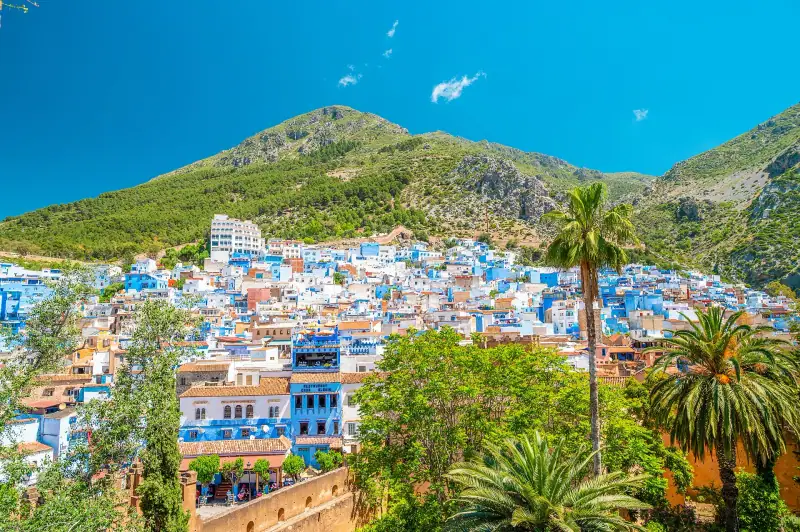
Visiting Chefchaouen: Guide to the Blue City of the Rif
Visiting Chefchaouen: blue medina, Outa el Hammam square, kasbah, the Ras el Maa spring and hikes to Akchour. Tips to organize your stay.
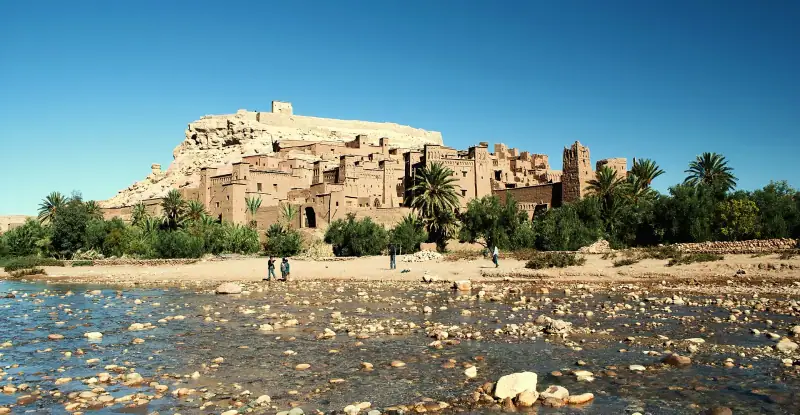
Complete Guide to Visiting Morocco: Cities, Regions, Budget and Tips
Visiting Morocco: regions, imperial cities, desert, Atlas and coast. When to go, how to get there, get around, where to stay and budget to plan your trip.
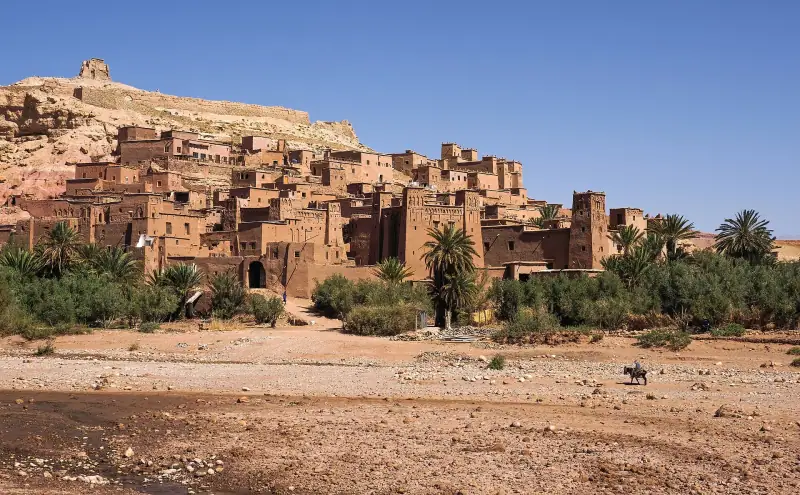
Ouarzazate and Aït Ben Haddou: Kasbahs, Ksar and Film Sets
Visiting Ouarzazate and Aït Ben Haddou: UNESCO-listed ksar, Taourirt Kasbah, film studios, the road from Marrakech and tips to plan your stop.
Ready-made
Morocco itineraries
10 days
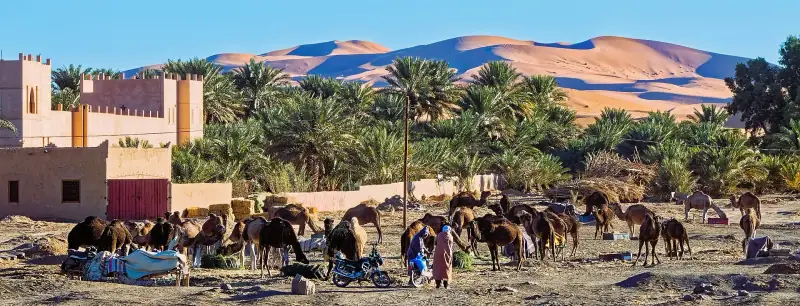
Morocco in 10 Days: Marrakech, the Merzouga Desert, Fes and Chefchaouen
A 10-day Morocco itinerary, day by day: Marrakech, the Atlas, Aït Ben Haddou, Todgha Gorges, Merzouga desert, Fes and Chefchaouen, with drive times.
8 days
Morocco in 8 Days Without a Car: A Realistic Train and Bus Itinerary
Morocco in 8 days without a car: Marrakech, Essaouira, Rabat, Fes and Chefchaouen by train and CTM bus, with distances, travel times and pitfalls to avoid.
5 days
Morocco's Imperial Cities: Rabat, Meknes, Volubilis and Fes in 5 Days
RabatMeknesFes
Can be adapted in the planner