Itineraries
Morocco's Imperial Cities: Rabat, Meknes, Volubilis and Fes in 5 Days
We may earn a commission when you book through links on this page, at no extra cost to you. We don't visit or try the places we cover: we summarize published sources. How we work
Day by day
- Day 1Rabat: Kasbah of the Udayas, Hassan Tower, Mohammed V Mausoleum, Chellah
- Day 2Rabat to Meknes: Bab Mansour, El Hedim square, Moulay Ismail Mausoleum
- Day 3Volubilis and Moulay Idriss, then on to Fes
- Day 4Fes el-Bali: tanneries, madrasas, Marinid Tombs
- Day 5Last morning in Fes, then departure or Chefchaouen
Where to sleep
- Rabat1 night
- Meknes1 night
- Fes2 nights
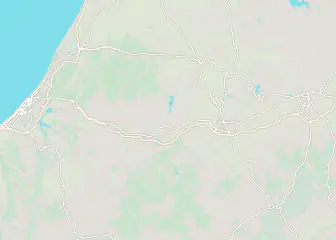
Opens the trip planner with these stops and nights already filled in. Add a stop, drop one or change the nights.
In short
- Five days: Rabat, Meknes, Volubilis and Moulay Idriss, then Fes. Legs are short: Rabat to Meknes about 140 km (87 mi), Meknes to Fes about 60 km (37 mi).
- The three cities are on the same rail line, so the train works well; a day taxi or a tour covers Volubilis from Meknes.
- Volubilis has little shade: go early or late, with water, a hat and good shoes. Allow one to two hours.
- Chefchaouen is a classic extension, about 200 km (124 mi) from Fes and around 4 hours by road; plan at least one night.
When people talk about Morocco, Marrakech grabs the attention. Yet the north of the country holds another side of its history: the imperial cities, former capitals of the dynasties that shaped the kingdom. Rabat, Meknes and Fes keep ramparts, monumental gates, mausoleums and UNESCO-listed medinas. Nearby, the Roman site of Volubilis recalls that the region was already a crossroads two thousand years ago. This five-day itinerary links these stops with short legs, suited to train or car. The durations and distances given are approximate: they vary with traffic, the season and your stops.
Overview: five days, four stops
The circuit follows a simple line from the southwest to the east, with no backtracking:
- Day 1: Rabat, the kingdom’s capital, its gardens and its kasbah
- Day 2: road to Meknes (about 140 km / 87 mi), gates and mausoleum
- Day 3: excursion to Volubilis and Moulay Idriss, then transfer to Fes (about 60 km / 37 mi from Meknes)
- Day 4: Fes el-Bali, the great medina
- Day 5: last morning in Fes, then departure or extension to Chefchaouen
This plan suits travelers who like history, architecture and medina atmospheres that are more authentic and less touristy than Marrakech. If you have ten days and want to add the desert, our 10-day Morocco itinerary offers a complete sequence.
Before you go: choosing train or car
The train is the most comfortable option for this circuit. The three cities are on the same rail line, the stations of Rabat, Meknes and Fes are in modern neighborhoods, and a taxi then takes you to the medinas. Rental cars give more flexibility for Volubilis, but driving in town is demanding: dense traffic, difficult parking near the medinas, pedestrian alleys.
A good compromise is to travel by train between the cities and to organize the Volubilis excursion with a day taxi from Meknes. That way you avoid the stress of driving while keeping your freedom for the archaeological part. If you still prefer to rent a vehicle, compare conditions before booking.
Flights to Morocco
Compare flights to Casablanca, Rabat or Fes, depending on your dates.
Entry rules depend on your passport. Check the official travel advice of your government before you book: travel.state.gov (US), GOV.UK (UK), travel.gc.ca (Canada), Smartraveller (Australia) (checked November 2026). Also remember to choose the right period with our guide on when to go to Morocco.
Day 1: Rabat, the quiet capital
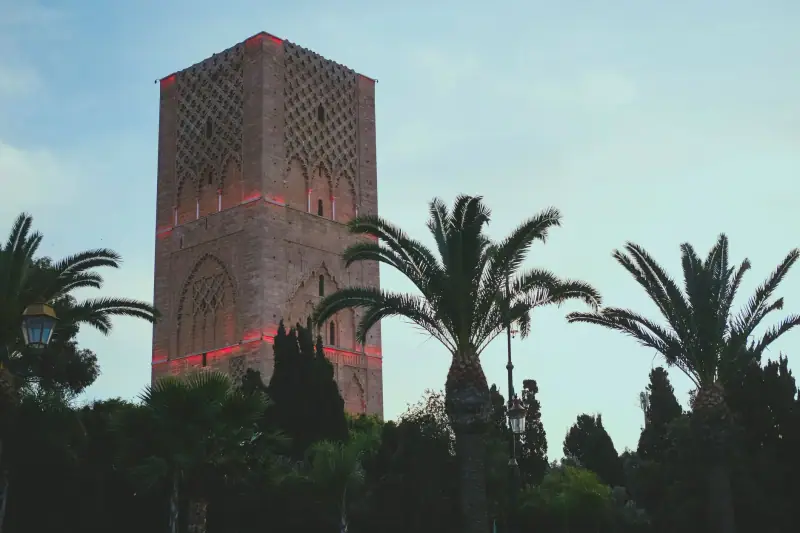
Rabat is the administrative capital of Morocco, and its calm is a surprise compared with Casablanca or Marrakech. The city stretches along the Atlantic and the mouth of the Bou Regreg. Wide avenues, gardens and official buildings contrast with old neighborhoods that have stayed very much alive.
Start with the Kasbah of the Udayas, a fortress overlooking the estuary. Its white and blue alleys can be walked at leisure, and the terrace offers a view of the ocean and the neighboring city of Salé. It is a place to stroll, have mint tea and watch the light change on the water.
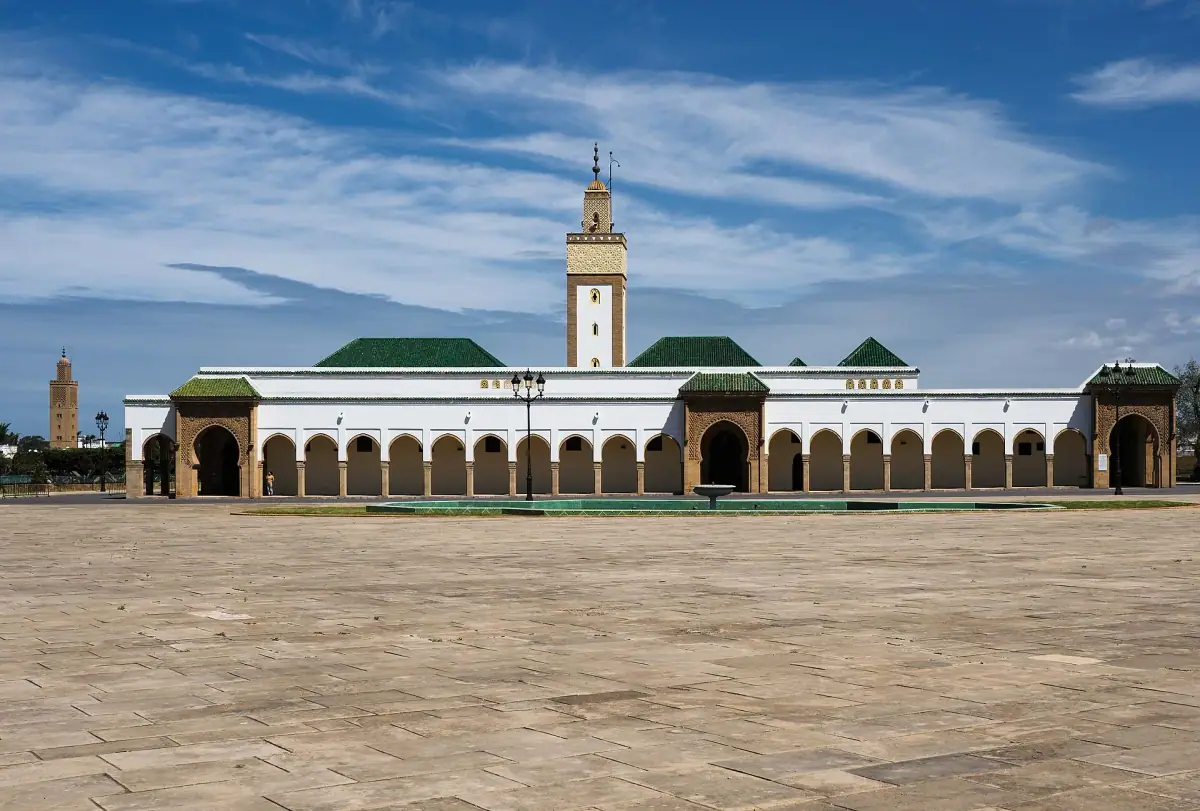
The Hassan Tower, an unfinished 12th-century minaret surrounded by stone columns, is one of the city’s symbols. Next to it is the Mohammed V Mausoleum, a building of white marble and zellige, guarded by soldiers in ceremonial dress. Proper dress is recommended, and entry is generally free, but ask there about visiting conditions.
In the afternoon, the Chellah site, a fortified necropolis mixing Roman remains and medieval ruins, offers a different atmosphere: storks nest on the walls, gardens mingle with the stones. The whole city of Rabat is listed as a UNESCO World Heritage site, as a modern capital and historic city. Finally, the Rabat medina is calmer and less commercial than those of Fes or Marrakech: a good way to get introduced to medina life without being constantly solicited.
Where to stay in Rabat
Rabat has riads in the medina and near the kasbah, as well as hotels in the modern center. For a single night, lodging near the station makes early departures easier, while a guesthouse in the old neighborhoods brings more character.
Stays in Rabat
Compare riads and hotels for your dates and read recent reviews before choosing.
Day 2: from Rabat to Meknes
The road or train between Rabat and Meknes covers about 140 km (87 mi). The trip takes two to three hours depending on the mode of transport, which leaves time for a first stroll in late morning. Meknes was a capital under Sultan Moulay Ismail, in the late 17th century, and the city keeps the imprint of that reign: immense ramparts, monumental gates, stables and granaries.
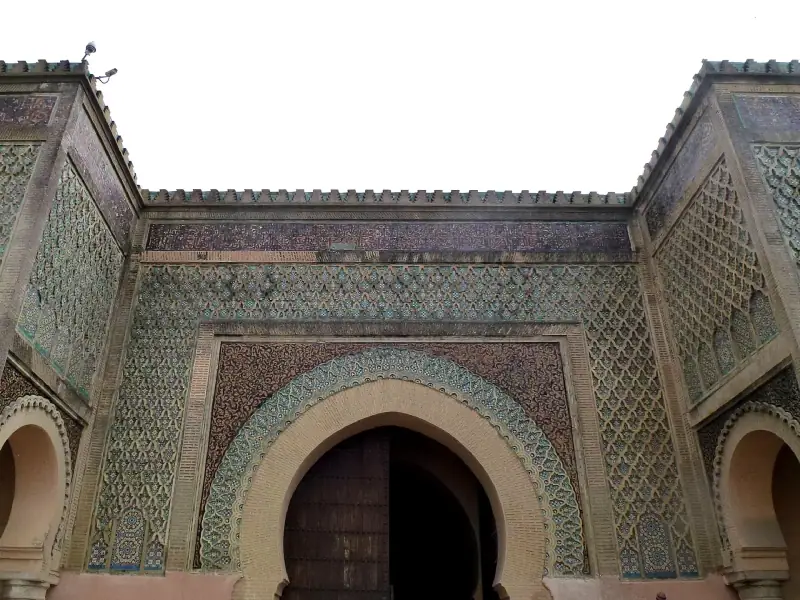
Bab Mansour, a big gate decorated with zellige and marble columns, is the city’s most famous entrance. It opens onto El Hedim square, where people like to sit at the end of the day to watch local life. Facing the square, the medina begins: souks, workshops, small cafés. Meknes is less visited than Fes, and the mood is more relaxed.
The Moulay Ismail Mausoleum is one of the few shrines in the region open to non-Muslims. It is generally visited in respectful dress. Farther on, the former royal stables and granaries, called Heri es-Souani, give an idea of the scale of the sultan’s project. The Meknes medina is a UNESCO World Heritage site.
For the evening, treat yourself to a meal in the medina: our article on Moroccan dishes to taste will help you choose what to order and identify the specialties.
Day 3: Volubilis, Moulay Idriss and arrival in Fes
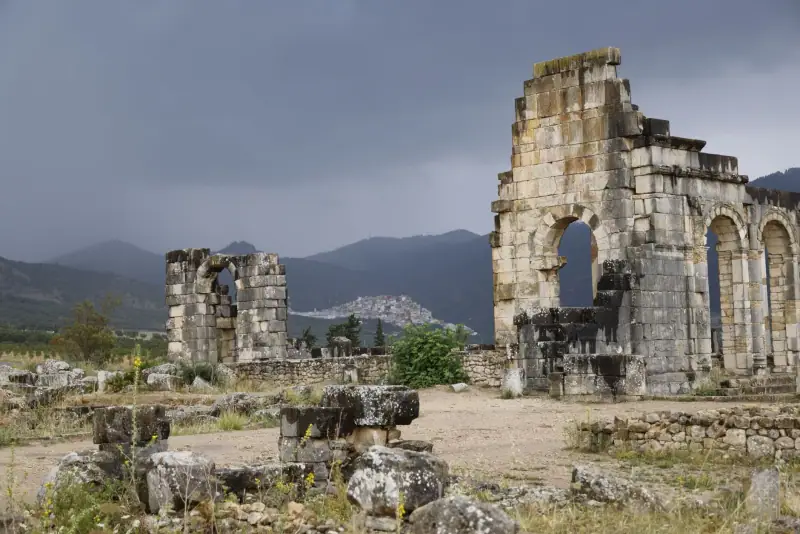
The third day is the archaeological excursion. Volubilis lies about thirty kilometers (19 mi) from Meknes, amid farmland plains. The Roman site, UNESCO-listed, was a city of the province of Mauretania Tingitana. You discover mosaics still in place, the foundations of notables’ houses, a triumphal arch and a basilica. There is little shade on the site: go early in the morning or late in the afternoon, with water, a hat and good shoes.
A few kilometers away, the village of Moulay Idriss Zerhoun is stacked on two hills. It holds the shrine of the founder of Morocco’s first dynasty, an important pilgrimage site. The village is visited on foot, and the terraces offer a fine viewpoint over the valley. Allow one to one and a half hours of walking.
If you do not have a vehicle, an organized excursion greatly simplifies logistics: driver, guide, transport, and often a departure from Meknes or Fes.
Excursions to Volubilis and Meknes
Compare guided day trips from Fes and read travelers' reviews.
At the end of the day, head to Fes, about 60 km (37 mi) from Meknes: the trip takes a little over an hour by car, a little less by train from Meknes station. Settle into your riad, then enjoy a first evening with no plan: the medina at night has a special charm.
Day 4: Fes el-Bali, the medina of medinas
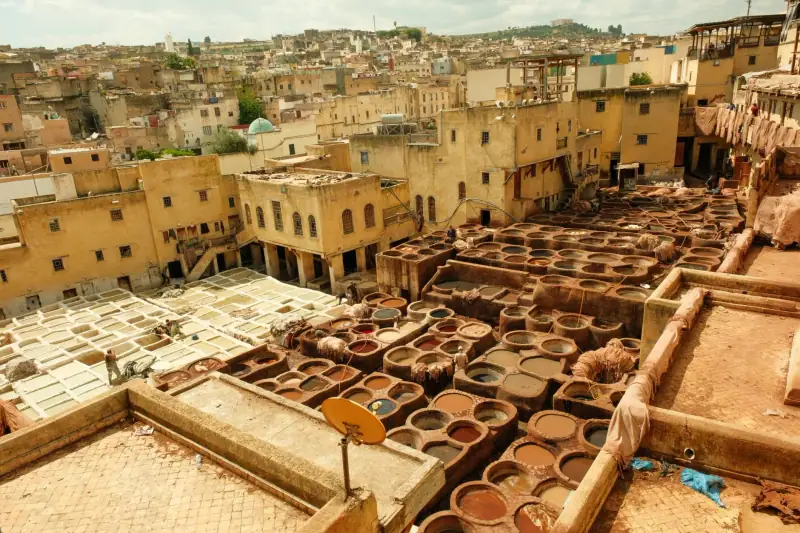
Fes el-Bali is one of the largest car-free urban areas in the world, UNESCO-listed since 1981. It holds thousands of alleys, madrasas, fondouks, artisan workshops and the famous al-Qarawiyyin university. It is easy to get lost there, and that is partly the charm of the place.
An official guide can be worth it for the first morning: they show you the landmarks, the artisans’ neighborhoods, the madrasas open to visitors. The tanneries are among the most photographed sites: you watch them from the terraces of the surrounding leather shops. The smell is strong, often softened by sprigs of mint handed to visitors. The Bou Inania and el-Attarine madrasas, with their carved cedar ceilings and zellige walls, are among the finest buildings in the medina.
In the afternoon, head up to the heights of the city, where the Marinid Tombs give an overview of the medina, especially beautiful late in the day. To go deeper into each neighborhood, see our guide to visiting Fes.
Where to stay in Fes
Sleeping in the medina lets you do everything on foot and enjoy calm evenings. The downside: access is through narrow alleys, sometimes with suitcases to carry. New Town hotels are more accessible and close to the station. Our article on where to stay in Fes compares the neighborhoods in detail.
Riads and hotels in Fes
Compare lodgings in the medina and the New Town, and check recent reviews.
Day 5: last morning and onward travel
Keep the last morning for what you did not have time to see: a pottery workshop, a traditional hammam, a cooking class or simply tea on a terrace. Fes has a slower rhythm in the morning, and it is the best time to photograph the alleys without the crowd.
Then you have three options. The return to Casablanca or Rabat is by train, to catch an international flight. Fes also has an airport, with connections to several European cities: check the available routes by season. Finally, you can extend to Chefchaouen, the blue city of the Rif, about 200 km (124 mi) away. Our guide to visiting Chefchaouen details this stage, which takes about four hours by road.
Budget and practical tips
The budget for this kind of circuit stays reasonable. Trains, shared taxis and buses cost little, local meals are affordable, and lodging varies with the comfort level. Monument entrance fees are modest for the most part, but rates change: ask there rather than relying on old figures.
A few tips for a calm trip:
- Dress: choose modest clothing, especially for religious sites and medinas.
- Shoes: bring comfortable ones, as cobbles and slopes are frequent.
- Guides: use an official guide rather than touts. Agree on the price before starting.
- Money: keep small change for taxis, tips and small purchases in the souks.
- Hours: monuments often close at certain times and on certain days: check before heading out.
- Insurance: travel insurance covering medical costs is advisable; compare offers before you go.
Going further
This circuit combines easily with other stops. Toward the south, it can be followed by the desert and the Atlas kasbahs, as in our ten-day itinerary. Toward the north, Chefchaouen offers a contrast of colors. And if you prefer a more seaside atmosphere, day five can also serve as a transition to the Atlantic coast. In every case, do not try to see everything: it is better to give each city time than to skim it.
Frequently asked questions
How many days do you need to visit the imperial cities?
Five days let you see Rabat, Meknes, the Roman site of Volubilis and Fes without rushing. With only three days, it is better to focus on Meknes and Fes, which are close to each other. Fes deserves two full days on its own.
Do you need to rent a car for this circuit?
No, it is not essential. Rabat, Meknes and Fes are linked by train, and Volubilis can be visited as an excursion with a taxi or a driver from Meknes. A car gives more freedom, but traffic and parking in the cities are complicated.
How do you get from Rabat to Fes?
The train is the simplest option: it serves Meknes then Fes, with a total trip of roughly three to four hours depending on the train. By road, it is about 200 km (124 mi). Check timetables with the Moroccan rail company before you go.
Can you extend the trip to Chefchaouen?
Yes, it is a classic extension. Chefchaouen is about 200 km (124 mi) from Fes, and the road generally takes around four hours by bus or car. Plan at least one night there.
What is the best time of year for this circuit?
Spring and fall are the most pleasant: it is mild for walking in the medinas. Summer can be very hot in Fes and Meknes, and winter is cool with possible rain. See our guide to the best time to visit Morocco.
What is there to see at Volubilis?
Volubilis is a UNESCO-listed Roman archaeological site, known for its mosaics, house remains, triumphal arch and basilica. Allow one to two hours for the visit, preferably in the morning or late in the day to avoid the heat.
Where should you stay in Fes for this circuit?
A riad in the medina lets you do everything on foot and gives the strongest sense of place. A hotel in the New Town is easier to reach by car and close to the station. Our dedicated article compares the neighborhoods.
More Morocco guides
Keep reading
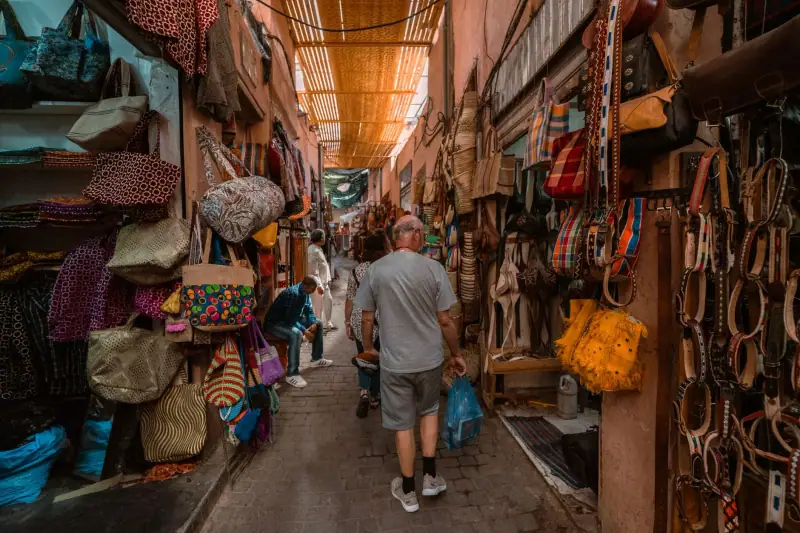
Morocco Budget: How Much Does a Trip Cost? Real Prices and 3 Costed Profiles
Budget for a trip to Morocco: real costs by item (riad, transport, meals, activities), three daily profiles with figures and tips to spend less.
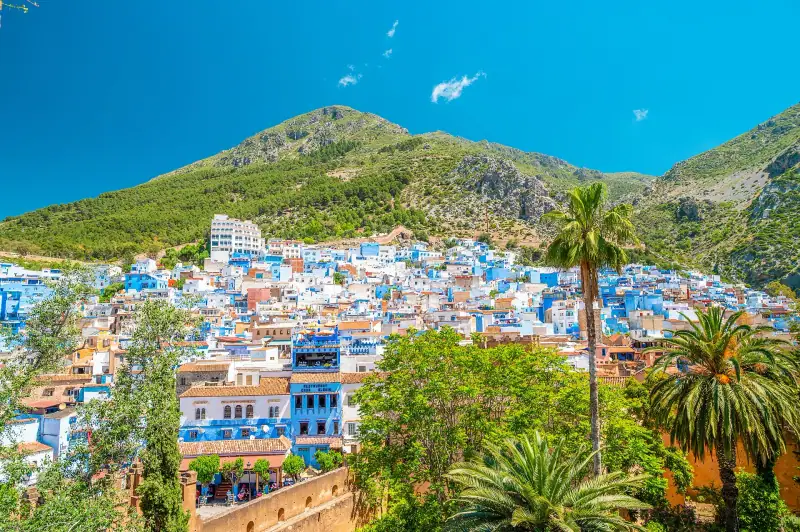
Visiting Chefchaouen: Guide to the Blue City of the Rif
Visiting Chefchaouen: blue medina, Outa el Hammam square, kasbah, the Ras el Maa spring and hikes to Akchour. Tips to organize your stay.
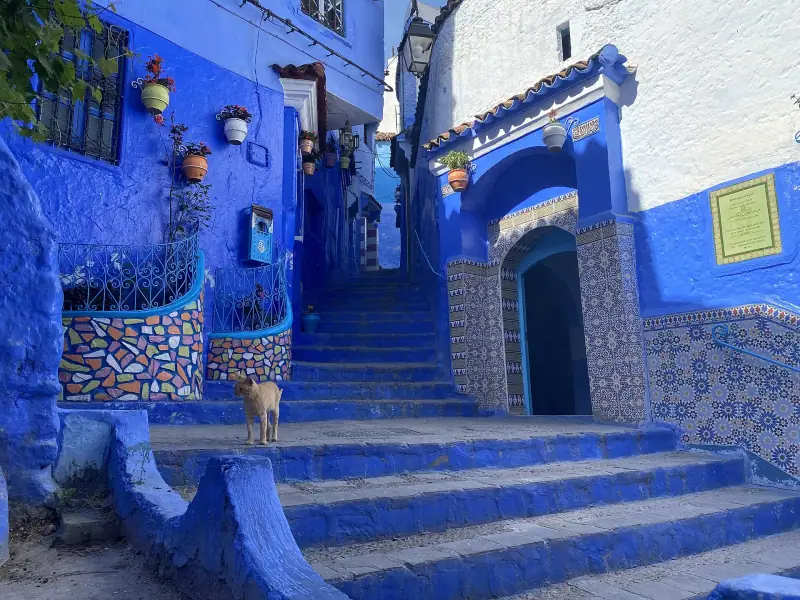
Where to Stay in Chefchaouen by Car: Medina, Parking and Which Area to Pick
Driving to Chefchaouen: stay in the car-free medina, near Bab el Ain, or at a hotel with parking? Criteria to choose without struggling with luggage.
Ready-made
Morocco itineraries
10 days
Morocco in 10 Days: Marrakech, the Merzouga Desert, Fes and Chefchaouen
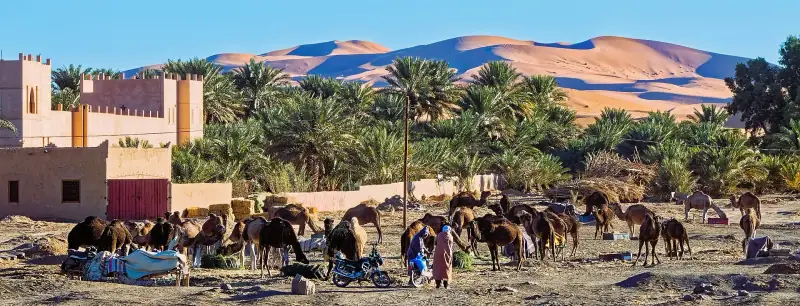
A 10-day Morocco itinerary, day by day: Marrakech, the Atlas, Aït Ben Haddou, Todgha Gorges, Merzouga desert, Fes and Chefchaouen, with drive times.
8 days
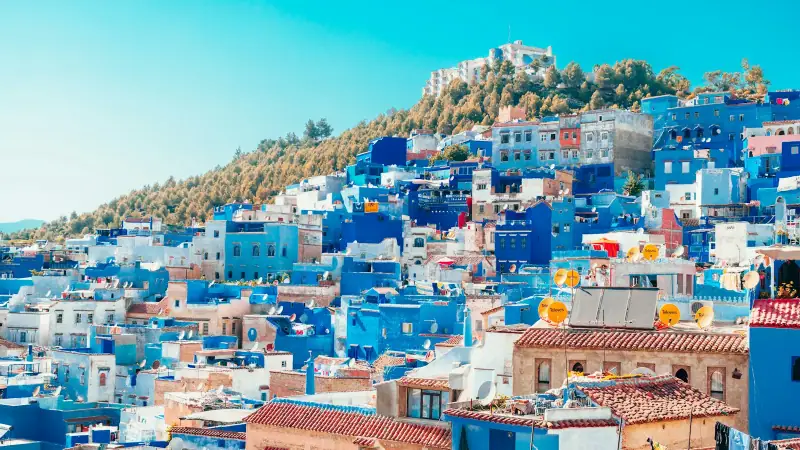
Morocco in 8 Days Without a Car: A Realistic Train and Bus Itinerary
Morocco in 8 days without a car: Marrakech, Essaouira, Rabat, Fes and Chefchaouen by train and CTM bus, with distances, travel times and pitfalls to avoid.