What to see
Visiting Fes: Medina, Madrasas and Tanneries, a Guide to Finding Your Way
We may earn a commission when you book through links on this page, at no extra cost to you. We don't visit or try the places we cover: we summarize published sources. How we work
In short
- Fes has three parts: Fes el-Bali (the old medina, most of your time), Fes el-Jdid (half a day) and the New Town (a practical base for transport and meals).
- Two full days cover the medina, madrasas and tanneries; three days add Fes el-Jdid, viewpoints and time to wander.
- Start early, download an offline map and avoid strangers who offer to lead you: use your lodging or an agency for an official guide.
- Mosques, including the Qarawiyyin, are closed to non-Muslims; some madrasas, such as Bou Inania, can be visited for a modest fee.
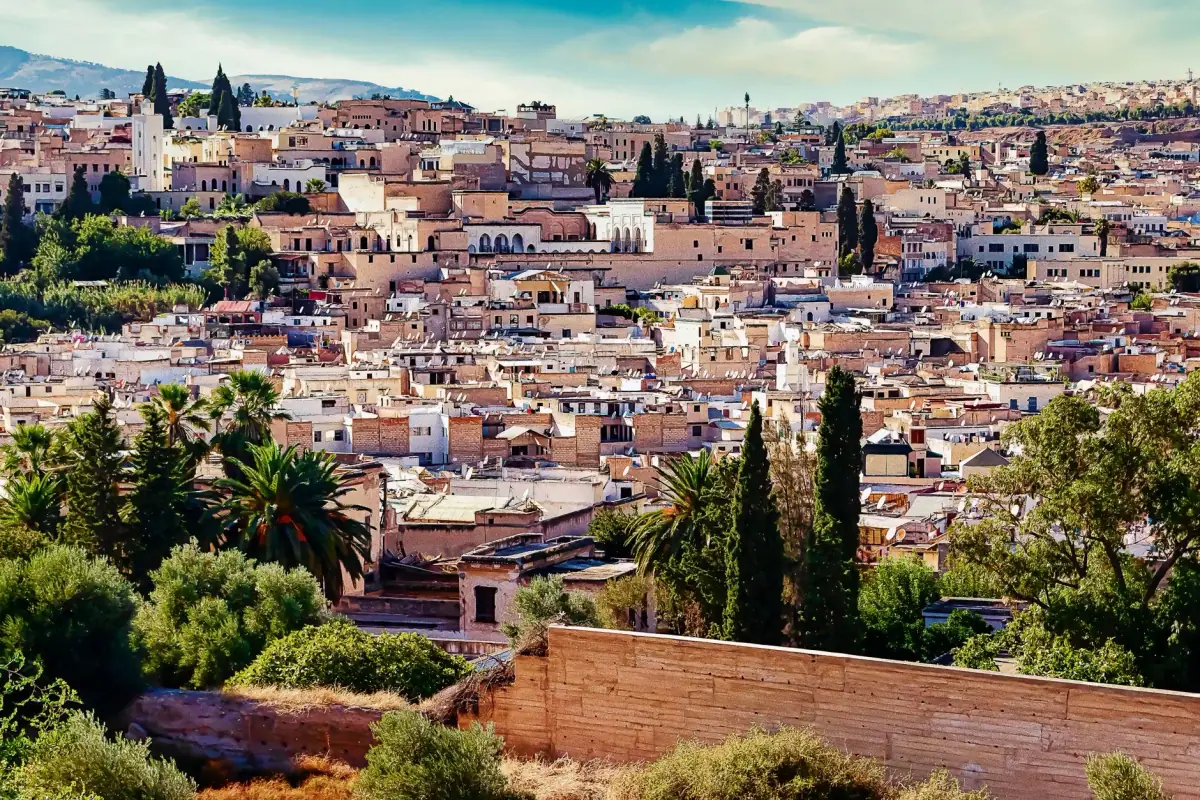
Fes is the oldest of Morocco’s imperial cities, and probably the most disorienting. Its medina, Fes el-Bali, a UNESCO World Heritage site, is a tangle of alleys, workshops, fountains and madrasas where you move on foot or by mule, away from traffic. Less polished than more touristy destinations, it takes a bit of planning but richly rewards those who take the time to get lost in it. Here is how to explore it, what to see first and how to prepare your stay.
Understanding Fes: three cities in one
Before you go, it helps to know that Fes is made up of three very distinct parts. Fes el-Bali, the oldest medina, is the historic heart, born around the 9th century. Fes el-Jdid, “new Fes”, was founded later by the Marinid dynasty, with its royal palace, its Jewish quarter (the mellah) and its wide avenues. Finally, the New Town, built during the French protectorate, holds train stations, banks, restaurants and more conventional hotels.
This layout explains the rhythm of a stay: you spend most of your time in Fes el-Bali, half a day in Fes el-Jdid, and the New Town serves mostly as a practical base for transport and meals outside the medina.
Another useful landmark: the medina is a basin. You go down into it from its main gates, and climb back up to leave. Remembering which gate you entered by will spare you many detours.
Fes el-Bali: getting lost in the largest car-free medina
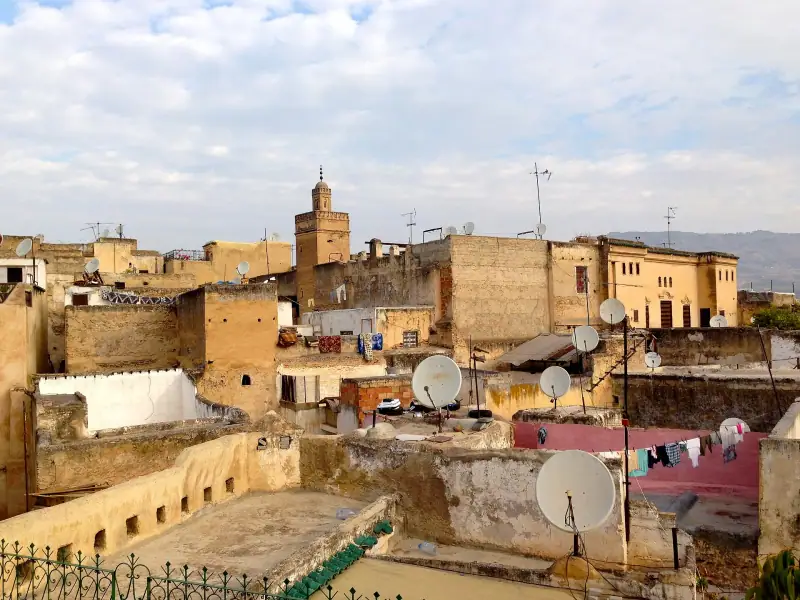
This is the main reason to come. The Fes medina is considered one of the largest car-free urban areas in the world, and you meet artisans, porters, donkeys loaded with goods and children coming home from school. The souks are organized by trade: copper, babouches (leather slippers), spices, fabrics, brass work. Sounds and smells change from one alley to the next, and the pleasure is precisely in letting yourself be surprised.
A few tips for approaching it calmly:
- Start early: in the morning, the alleys are calm and the light is better.
- Download an offline map: the phone’s built-in compass helps, but the GPS signal is sometimes imprecise between the walls.
- Do not follow strangers who “know where it is”: some are fake guides who will then ask for payment. If you want a guide, go through your lodging or an agency.
- Bargain calmly: say that you want to look first, and compare prices before buying.
- Wear comfortable shoes: the paving is uneven, sometimes slippery, and there are many climbs.
A good way into the medina is through Bab Boujloud, the big gate decorated with blue and green zellige, which opens onto the main street and its cafés. The neighboring terraces offer a first look at the rooftops and minarets.
Riads and hotels in Fes
Sleep in the medina or nearby: compare riads, guesthouses and hotels for your dates.
The madrasas and the Qarawiyyin: Fes’s scholarly heritage
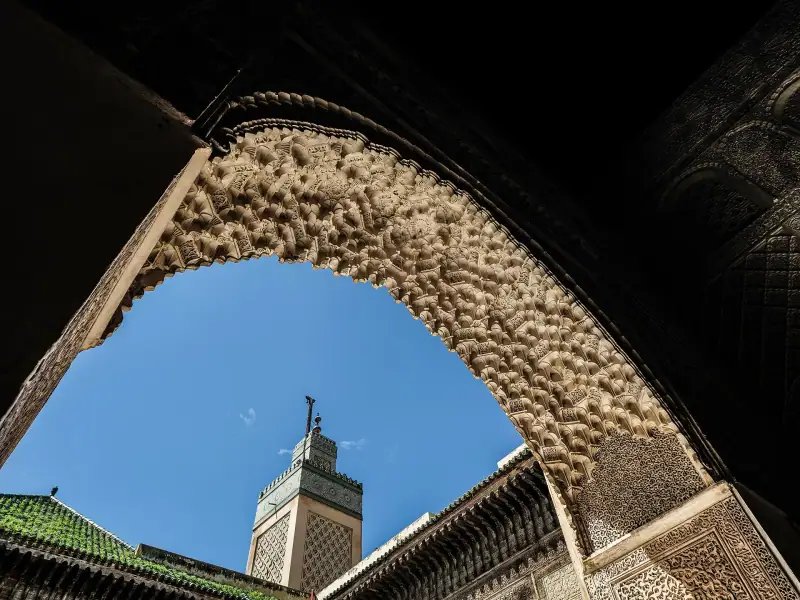
Fes was long the intellectual and religious capital of Morocco. The Al-Qarawiyyin university, founded in the mid-9th century by Fatima al-Fihri, is often cited among the oldest teaching institutions still active in the world. The mosque associated with it is reserved for Muslims, but you can glimpse its interior from some doors, and soak up the atmosphere of the very busy surrounding neighborhood.
To see Marinid architecture from the inside, the madrasas are the best choice. The Bou Inania Madrasa, from the 14th century, can be visited and charms with its zellige-paved courtyard, carved cedar woodwork and chiseled stucco. The Attarine Madrasa, smaller and very close to the Qarawiyyin, shows the same refinement in a more intimate format. These places were both student residences and places of prayer: their calm contrasts with the bustle of the souks.
The entrance fee is generally modest, but rates and hours can change: it is better to check there, and avoid the busy early-afternoon hours.
The Chouara tanneries: a colorful spectacle
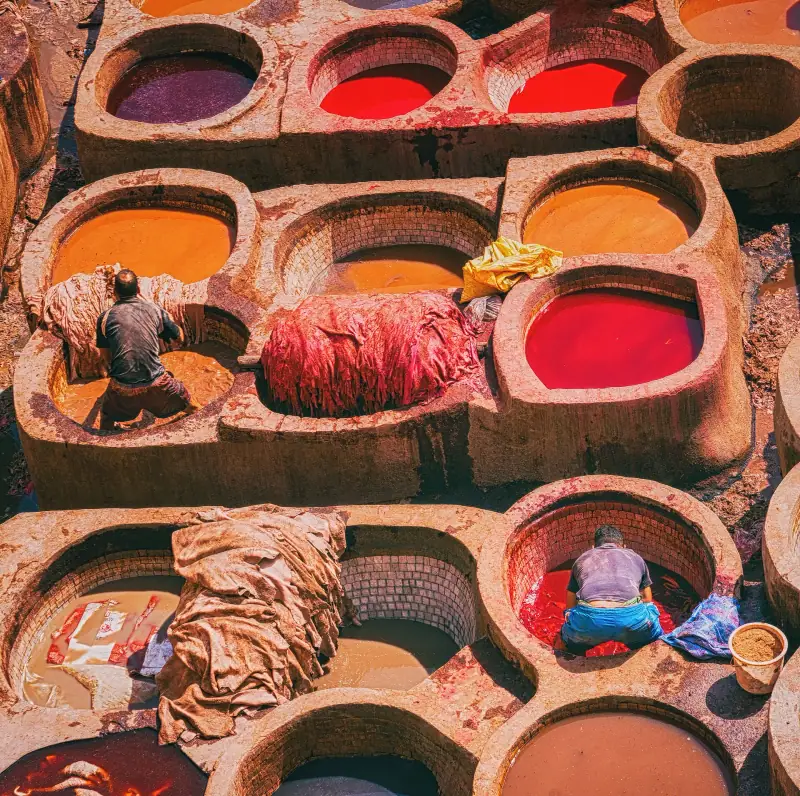
You cannot talk about Fes without mentioning its tanneries, the best known of which is Chouara. From the terraces of the leather shops that surround them, you see dozens of stone vats filled with dyes of different colors, where workers treat hides using methods handed down for centuries.
A few pointers for the visit:
- The smell is intense, especially in summer. You will probably be handed a sprig of mint to hold under your nose.
- Access is through the leather shops: the view is in principle free, but you will be invited to tour the shop afterward. There is no obligation to buy, but a tip is appreciated.
- The morning is the best time to see the workers at work and enjoy better light for photos.
- Respect the workers: ask before photographing a person up close.
If you want to bring home a leather souvenir, this area is the ideal place: bags, poufs, belts and babouches are easy to compare. Take the time to touch the material and compare finishes before buying.
Fes el-Jdid, the mellah and the viewpoints
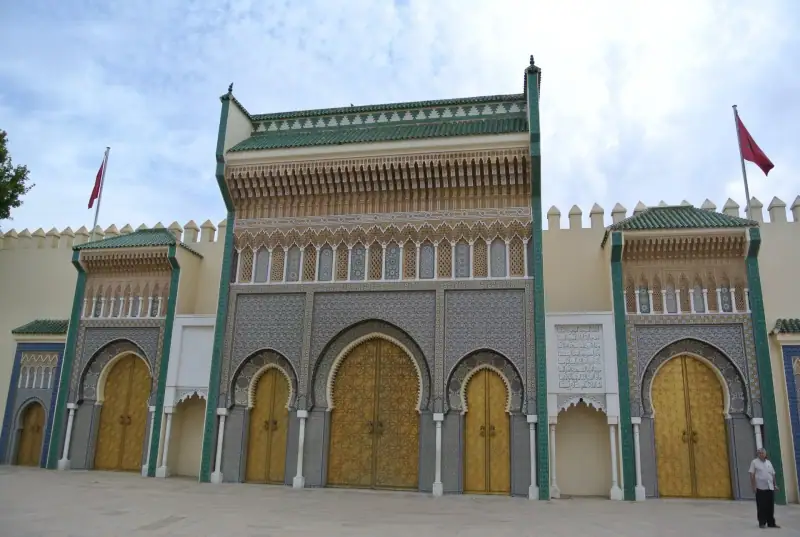
Once the medina is explored, spend half a day on Fes el-Jdid. You find the big brass doors of the royal palace (the interior cannot be visited, but the door is very photogenic), the mellah, the former Jewish quarter with wooden balconies very different from the medina’s architecture, and the adjoining Jewish cemetery, which can be visited.
The city is also understood from above. Two classic viewpoints let you grasp the size of the medina and how it steps down: the Marinid Tombs, on the heights north of the medina, at sunset, and the Borj Nord, a former fort that houses a museum devoted to weapons. From these lookouts, the medina appears as a sea of flat roofs dotted with minarets.
Take a taxi up: walking is possible but long, and in summer the sun makes it exhausting.
Guided tours in Fes
Medina tour with a local guide, food walk or excursion: compare the available activities.
What to eat in Fes
Fes has the reputation of having one of the best cuisines in the country, inherited from its great urban families. You find the Moroccan classics, tagines, couscous and pastilla, with an often more refined approach, where sweet-and-savory mixes are common. In the medina, small stalls offer skewers, soups such as harira, sandwiches and pastries with honey and almonds.
To go deeper, our guide to Moroccan dishes to taste covers the specialties worth trying. If you want to eat in a calmer setting, many riads offer dinner by reservation, a practical solution in the evening, when the medina’s alleys are harder to navigate.
Where to stay: medina or New Town?
The choice depends on your travel style:
- In Fes el-Bali: total immersion, with riads set in former townhouses, patios, fountains and terraces. In return, access is on foot, sometimes with a porter’s help for luggage. Choose a riad near a main gate if you travel with big suitcases.
- Near the medina gates: a good compromise, with easy taxi access and quick departures to the sights.
- In the New Town: more practical for those arriving by train, with conventional hotels and more family restaurants, but far from the old-town atmosphere.
If you hesitate, for a first visit a medina riad is generally the most memorable choice. For an idea of riad atmospheres, our guide to where to stay in Marrakech gives useful pointers that also apply to Fes.
Excursions from Fes
Fes is also a starting point for exploring the region. The nearby city of Meknes, another imperial city, and the Roman site of Volubilis are classic excursions, often combined in a day, by car with a driver or on an organized tour. To the north, Chefchaouen, the blue city, is a natural stop on the road to the Rif: our guide to visiting Chefchaouen will help you prepare that stage.
Since distances in Morocco are often longer than you think, leave some slack in your schedule and check travel times before booking your stops.
Flights to Morocco
Compare flights and find the best dates for your circuit through the imperial cities.
Practical tips for your stay
- When to go: spring and fall are the most comfortable. See our guide on when to go to Morocco to choose your dates.
- Dress: modest, comfortable clothing, with shoulders and knees covered, out of respect for the places and to be more at ease.
- Money: keep small change for tips, small purchases and taxis.
- Taxis: insist on the meter or agree on the price before getting in.
- Safety: as in any big medina, keep your belongings close and stay alert in narrow alleys, especially at busy hours.
- Pace: alternate walking in the medina with breaks on a terrace or at the riad; the visit is more pleasant that way.
Bottom line
Fes takes a bit more effort than other Moroccan cities, but in exchange it offers a rare dive into the history and traditional trades of the country. Allow two to three days to discover it without stress: medina and madrasas on the first day, tanneries and souks on the second, Fes el-Jdid and viewpoints to finish. To complete your circuit, pair it with Marrakech, Chefchaouen or Essaouira depending on the time you have, and leave a little room for the unexpected: it is often in an unplanned alley that Fes reveals itself.
Frequently asked questions
How long do you need to visit Fes?
Two full days let you see the essentials of the medina, madrasas and tanneries. With three days, you add Fes el-Jdid, the viewpoints over the city and time to stroll without rushing.
Do you need a guide to visit the Fes medina?
It is not mandatory, but the medina is a maze where phones sometimes get poor reception. An official guide, booked through your lodging or an agency, is very useful on the first day. After that, many travelers explore alone.
Are the Fes tanneries worth seeing?
Yes, they are one of the city's emblematic sights: dye vats seen from the terraces of leather shops. The smell is strong, and you are often offered a sprig of mint to bear it. A visit generally ends with a sales presentation, with no obligation to buy.
What is the best time to visit Fes?
Spring and fall are the most pleasant. Summer can be very hot, winter cooler with chilly evenings. See our guide to the best time to visit Morocco to compare regions.
Can you enter the madrasas and mosques?
Some madrasas, such as the Bou Inania Madrasa, can be visited for a modest entrance fee. Mosques, including the Qarawiyyin, are however reserved for Muslims: you can only peek in from the doors.
Where should you stay in Fes?
For atmosphere, a riad in Fes el-Bali is ideal, but you must accept walking with your luggage through the alleys. For easier access, a hotel near a medina gate or in the New Town is more practical.
More Morocco guides
Keep reading
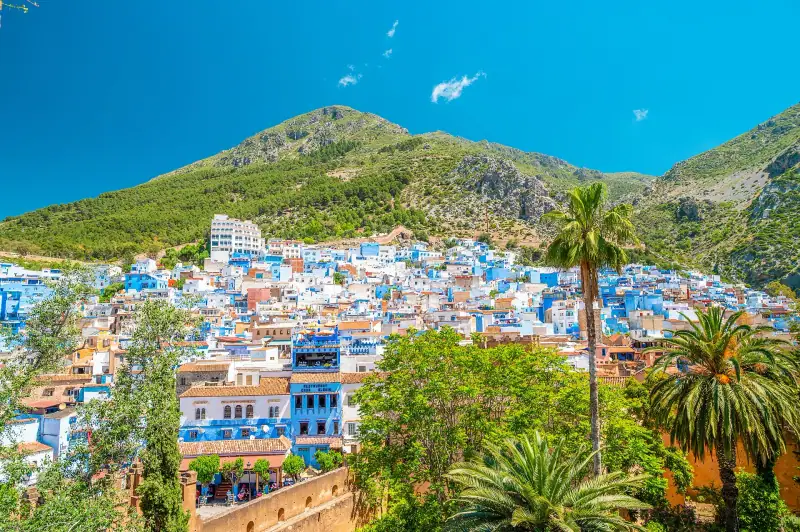
Visiting Chefchaouen: Guide to the Blue City of the Rif
Visiting Chefchaouen: blue medina, Outa el Hammam square, kasbah, the Ras el Maa spring and hikes to Akchour. Tips to organize your stay.
Complete Guide to Visiting Morocco: Cities, Regions, Budget and Tips
Visiting Morocco: regions, imperial cities, desert, Atlas and coast. When to go, how to get there, get around, where to stay and budget to plan your trip.
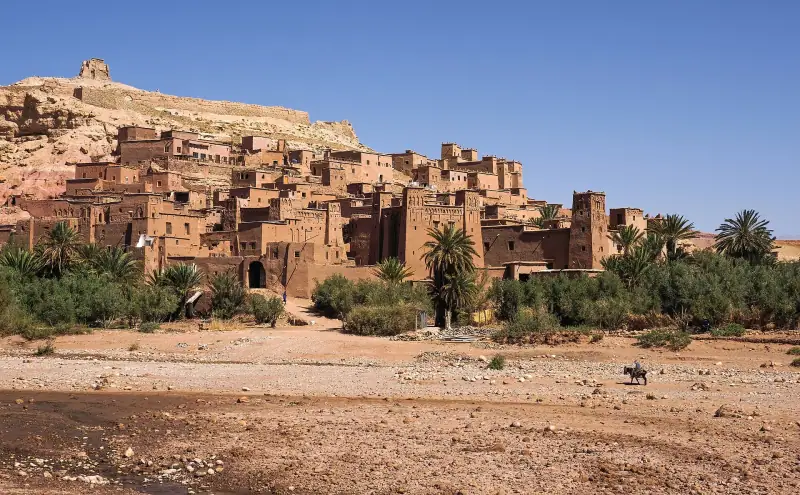
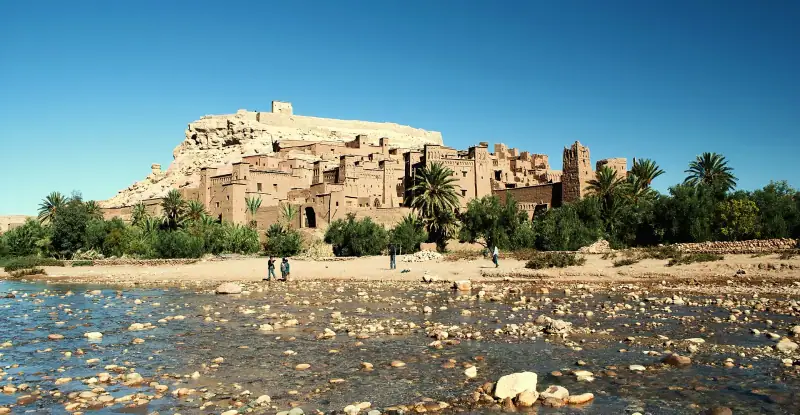
Ouarzazate and Aït Ben Haddou: Kasbahs, Ksar and Film Sets
Visiting Ouarzazate and Aït Ben Haddou: UNESCO-listed ksar, Taourirt Kasbah, film studios, the road from Marrakech and tips to plan your stop.
Ready-made
Morocco itineraries
10 days
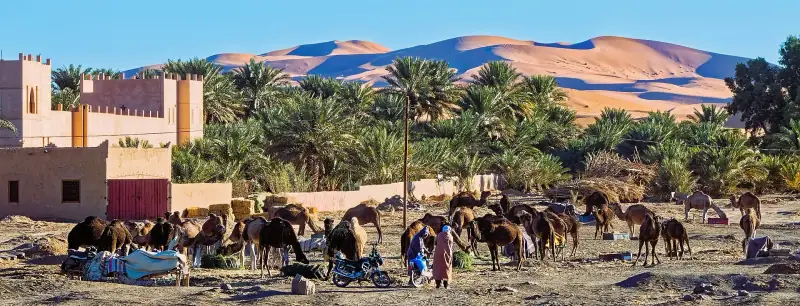
Morocco in 10 Days: Marrakech, the Merzouga Desert, Fes and Chefchaouen
A 10-day Morocco itinerary, day by day: Marrakech, the Atlas, Aït Ben Haddou, Todgha Gorges, Merzouga desert, Fes and Chefchaouen, with drive times.
8 days
Morocco in 8 Days Without a Car: A Realistic Train and Bus Itinerary
Morocco in 8 days without a car: Marrakech, Essaouira, Rabat, Fes and Chefchaouen by train and CTM bus, with distances, travel times and pitfalls to avoid.
5 days
Morocco's Imperial Cities: Rabat, Meknes, Volubilis and Fes in 5 Days
RabatMeknesFes
Can be adapted in the planner