What to see
Visiting Chefchaouen: Guide to the Blue City of the Rif
We may earn a commission when you book through links on this page, at no extra cost to you. We don't visit or try the places we cover: we summarize published sources. How we work
In short
- The blue medina is small and easy to walk; go early, when the alleys are almost empty. Allow at least half a day, and one or two nights overall.
- Key stops: Outa el Hammam square, the kasbah (garden and small museum), the Ras el Maa spring, and the Spanish Mosque viewpoint (about 45 minutes on foot).
- Akchour, in the Talassemtane park area, is the most popular hike; it takes most of a day and trail conditions vary, so ask locally.
- No airport. From Fes it is about 200 km (124 mi), 4 hours by road; from Tangier about 2 hours. Spring and fall are the most pleasant.
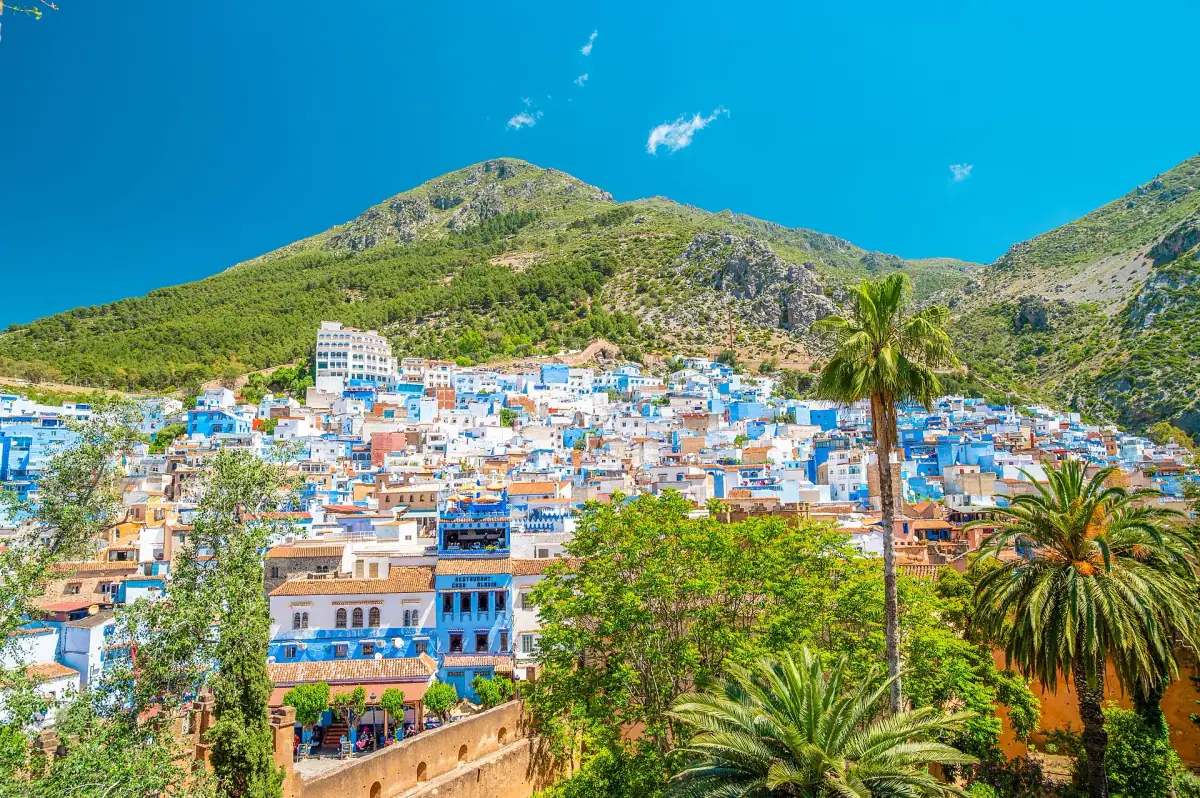
Nestled in the Rif mountains in northern Morocco, Chefchaouen is one of the most photographed towns in the country. Its pale blue alley walls, flowered staircases and colorful doors give it the look of a film set, but the town is above all a place where people live, calm and welcoming, where you come to walk without a precise goal. At about 600 meters (1,970 ft) above sea level, it also has a cooler climate than the cities of the South and is a starting point for hikes in the nearby mountains. Here is how to organize your visit.
The blue medina: getting lost without worry
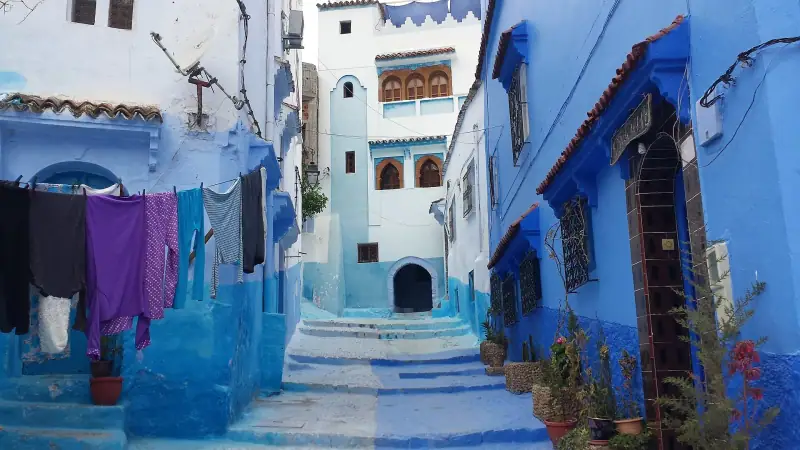
The medina is the center of Chefchaouen and the main reason to visit. Unlike the mazes of Fes, it is modest in size and stays easy to walk: you climb, descend, turn at random, and you always end up finding a square or a gate of the old town. The houses, whitewashed and painted in shades from sky blue to indigo, form a surprisingly harmonious whole.
The origin of the color has several accounts. According to the most widespread explanation, it was adopted by Jewish families who took refuge here in the 20th century, blue symbolizing the sky and spirituality. Other residents give more practical reasons: blue would keep the houses cool and mosquitoes away. Whatever the truth, the tradition continues, and the walls are regularly repainted.
A few tips for enjoying the medina:
- Start early: in the morning, the alleys are almost empty and the soft light brings out the walls. It is the best time for photography.
- Wear comfortable shoes: the streets are steep and the paving is sometimes slippery after rain.
- Look up: the doors, ironwork and flower pots hung on the facades are as worth a look as the walls themselves.
- Respect residents: ask permission before photographing a person, and avoid stopping in front of house doors.
Allow at least half a day for a full stroll, more if you like to stop in shops or on a terrace.
Outa el Hammam square and the kasbah
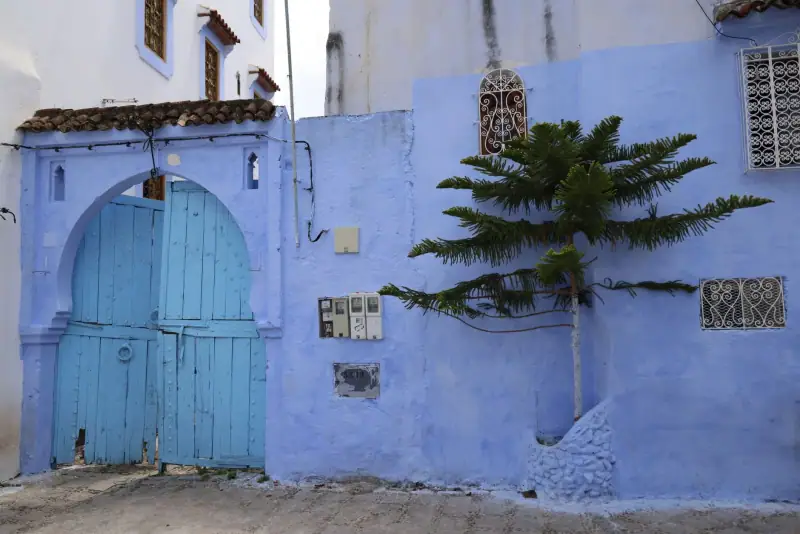
The center of the medina’s social life is Outa el Hammam square. Lined with cafés and restaurants, it is dominated by the walls of the kasbah and by the octagonal minaret of the Great Mosque, a feature inherited from Andalusian influence. The square is lively at all hours: people come to have mint tea, watch the comings and goings of residents and travelers or simply rest between two walks.
The kasbah, built in the 15th century to protect the town, holds a calm, shaded Andalusian garden and a small museum devoted to the crafts and history of the region. The visit is short, but it offers a pleasant contrast with the bustle of the square. From the top of the tower, an open view spreads over the medina’s rooftops and the surrounding mountains, a good way to understand the geography of the town.
For opening hours and entrance fees, it is better to ask there, as they change with the season.
The town was founded in the late 15th century, at a time when refugees from Andalusia, Muslim and Jewish, were looking for a new home in Morocco. This heritage can still be read in the architecture, in the arches, the patios and even in some dishes of the local cuisine.
Where to stay in Chefchaouen
Guesthouses in the medina or hotels with mountain views: compare lodgings for your dates and budget.
The Ras el Maa spring and local life
East of the medina, a path descends to Ras el Maa, the spring that has supplied the town with water for centuries. The place is a popular meeting spot: water gushes out of the mountain, waterfalls and small bridges line the route, and café terraces let you sit near the stream. It is also a good place to observe daily life: you meet residents who come to fetch water or wash laundry out of long habit.
The walk is easy and takes a few minutes from the medina. It is especially pleasant in summer, when the coolness of the water contrasts with the heat of the day, and in spring, when the flow is greater. Families enjoy this spot, as it is shaded and reachable without effort.
In the neighboring alleys, stalls sell products of the region: fresh goat cheese, honey, olives, herbs and spices. Goat cheese is a specialty of the Rif, often eaten at breakfast with bread and olive oil. To learn more about the flavors of the country, see our guide to Moroccan dishes to taste.
The Spanish Mosque viewpoint
On the hill that overlooks the town, to the east, a small mosque now out of use offers the best panorama of Chefchaouen. It is called the Spanish Mosque because it was built in the 20th century during the Spanish protectorate. It is nothing exceptional in itself, but its position lets you see the whole town spread across the valley, with its red roofs and blue walls, backed by the mountain.
The climb on foot from the medina takes about three quarters of an hour, depending on your pace, along a well-marked but sometimes steep path. The best time to go is late afternoon, when the golden light brings out the colors, but make sure to come down before dark, as the trail is not lit. Bring water and suitable shoes, especially in summer.
Sunset draws a crowd: if you prefer quiet, go up in late morning or early in the day instead, when the site is almost deserted.
Hiking around Chefchaouen: Akchour and Talassemtane park
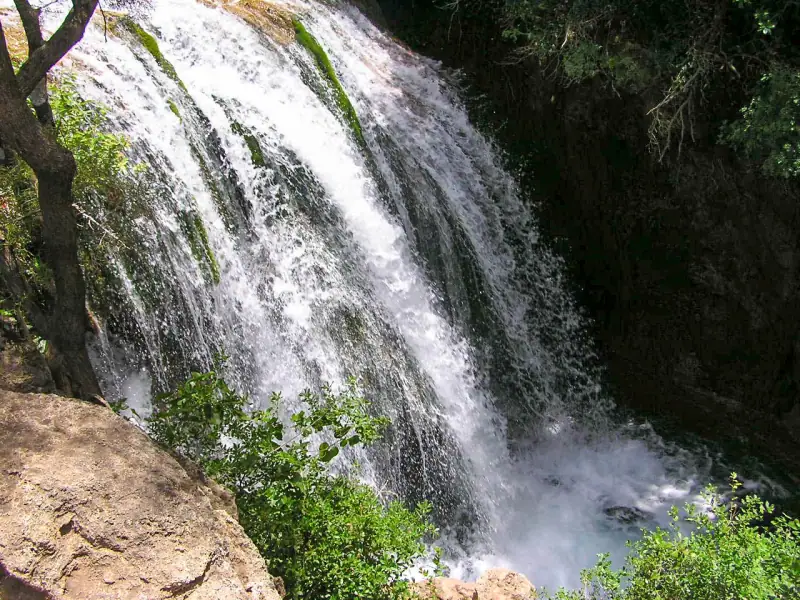
For those who like to walk, the Rif mountains offer fine possibilities around the town. Talassemtane National Park protects a massif of forests, gorges and limestone ridges where you find, among other things, the Moroccan fir, a rare species. Trails there are varied, from an easy stroll to a sporty hike of several hours.
The Akchour site, in the Farda wadi valley, is the most popular excursion. A trail follows the river up to waterfalls and pools of clear water, where you can cool off in the warm season. The walk calls for some fitness, as the terrain is uneven, and access conditions to the site sometimes vary: ask locally before you go and check the state of the trails.
A few useful precautions:
- Bring water and food: there are few places to buy supplies once on the trail.
- Start early: the hike takes most of the day and it is better to return before dark.
- Avoid periods of heavy rain: sudden floods can make passage dangerous.
- Use a local guide if you do not know the area: they know the state of the trails and can suggest variations.
Hikes and excursions around Chefchaouen
Guided hike to Akchour, medina visit with a local guide or day excursion: compare the experiences on offer.
Crafts and souvenirs to bring home
The medina’s shops offer typical Rif crafts. You find hand-woven wool blankets with red and white stripes, baskets of plant fiber, jewelry, babouches (leather slippers) and leather goods. Weaving is one of the region’s traditional activities, and some workshops let you see the artisans at work.
To shop under good conditions:
- Compare before choosing: prices vary from shop to shop and haggling is customary, in good humor.
- Choose hand-woven pieces: ask to see the quality of the wool and the finish, and beware of industrial products sold as handmade.
- Avoid illicit products: the region is known for growing kif, but buying and using cannabis is illegal in Morocco, despite the offers you may hear in the street. Decline politely, without stopping.
The bright colors of fabrics, soaps and spices, displayed on the walls and in front of doors, add to the atmosphere of the town and make good photos, as long as you ask the shopkeeper’s permission.
Where to eat in Chefchaouen
Local cuisine is simple and generous. Around Outa el Hammam square, many restaurants offer tagines, skewers and Moroccan salads, often served on terraces or rooftops with a view of the medina. Look for places where you see residents eating, which is generally a good sign, and check the posted menus to compare prices.
Among the Rif specialties to try, fresh goat cheese, mountain honey and herb-simmered dishes are worth trying. The local breakfast, with bread, olive oil, olives and cheese, is a very good way to start the day before a walk. Have mint tea in the late afternoon, facing alleys that light up at nightfall.
If you travel in a group, share several dishes: portions are generally large and you get to taste more flavors.
Getting to Chefchaouen and getting around
Chefchaouen has no airport: you arrive by road. From Fes, it is about 200 km (124 mi) and 4 hours of driving. From Tangier, the road is shorter, about 2 hours, which makes it a practical stop for a trip starting in the north of the country. Scheduled buses and shared taxis serve the town from the main cities of the region, and private transfers exist for more comfort.
Flights to Morocco
Compare flights to Tangier, Fes or Casablanca, then reach Chefchaouen by road.
To choose where to stay when you arrive by car, see our guide to where to stay in Chefchaouen by car. In town, a car is useless: the medina is car-free, and distances are short. Leave the vehicle in a parking lot outside the old town and get around on foot. Mountain roads call for caution: drive without rushing, especially at night or in rainy weather.
As for timing, spring and fall are the most pleasant: days are mild and the light is beautiful. Winter is cooler and wetter, but the town is then very quiet. Summer is hot, but evenings stay cool. To compare seasons across the country, see our guide on when to go to Morocco.
Combining Chefchaouen with the rest of Morocco
Chefchaouen works very well in one or two nights, often as part of a wider circuit. It naturally fits between Tangier and Fes, or as a stop before heading down to the imperial cities. If your trip continues south, Marrakech offers a striking contrast with the calm of the Rif: our guide to where to stay in Marrakech will help you choose your neighborhood.
Here is a simple proposal for organizing your stay:
- Day 1: arrival, stroll through the medina, tea on Outa el Hammam square, visit to the kasbah, then sunset from the ramparts or the hill.
- Day 2: morning at the Ras el Maa spring, craft shopping, then a hike or excursion to Akchour if weather and fitness allow.
Bottom line
Chefchaouen is a restful stop, far from the tumult of the big cities. Its blue medina, lively square, kasbah and mountain trails form a coherent whole, easy to cover in one or two days. It is an ideal destination for those who like to walk, take photos and stroll, as long as you start early to enjoy the still-calm alleys and respect the residents’ way of life.
Frequently asked questions
Why is Chefchaouen blue?
Several explanations circulate: the color is said to have been introduced by Jewish families who took refuge in the town in the 20th century, but others mention protection against mosquitoes, coolness in summer or simply local tradition. The exact origin is still debated.
How long do you need to visit Chefchaouen?
One day lets you see the medina, the main square and the kasbah. Two days are more comfortable to enjoy the town at a relaxed pace, climb to the Spanish Mosque viewpoint and, if possible, hike in the surroundings.
What is the best time to visit Chefchaouen?
Spring and fall offer the most pleasant temperatures. At altitude and near the mountains, winter can be cool and rainy, while summer is hot but bearable in the evening.
How do you get from Fes to Chefchaouen?
The road is about 200 km (124 mi), roughly 4 hours of driving. Scheduled buses, shared taxis and private transfers run the route, which avoids driving on mountain roads.
Is Chefchaouen suitable for families?
Yes, the atmosphere is relaxed and the medina is explored on foot. Note that the sloping alleys and stairs are impractical with a stroller.
Can you photograph the locals?
Always ask people's permission before photographing them. Many refuse, and respecting that choice is part of good traveler manners.
More Morocco guides
Keep reading
Complete Guide to Visiting Morocco: Cities, Regions, Budget and Tips
Visiting Morocco: regions, imperial cities, desert, Atlas and coast. When to go, how to get there, get around, where to stay and budget to plan your trip.
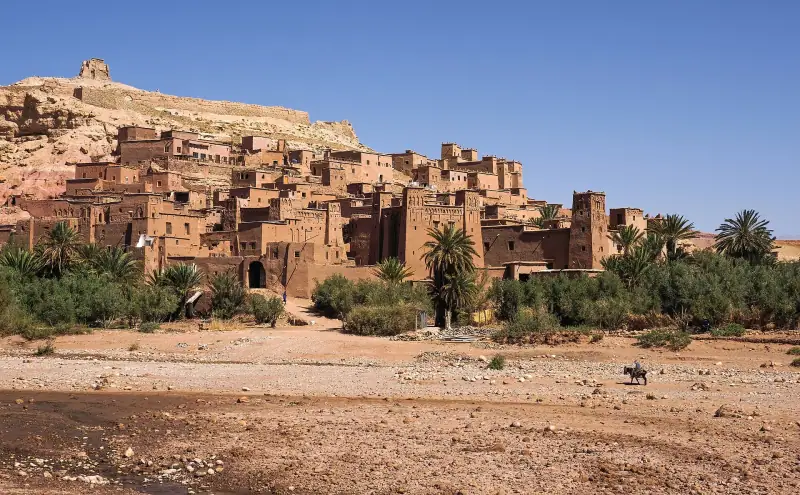
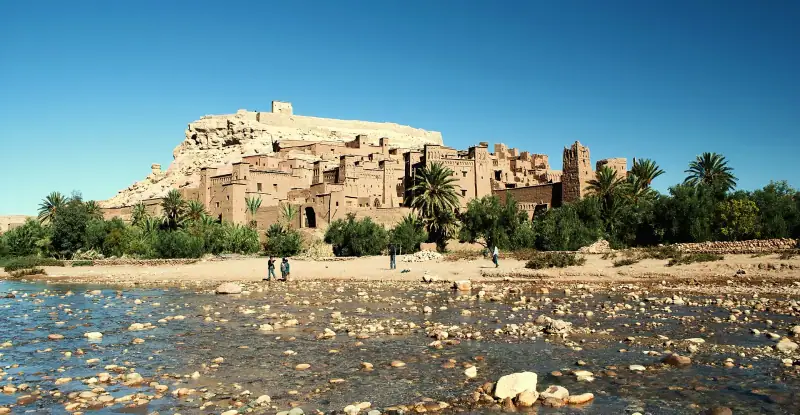
Ouarzazate and Aït Ben Haddou: Kasbahs, Ksar and Film Sets
Visiting Ouarzazate and Aït Ben Haddou: UNESCO-listed ksar, Taourirt Kasbah, film studios, the road from Marrakech and tips to plan your stop.
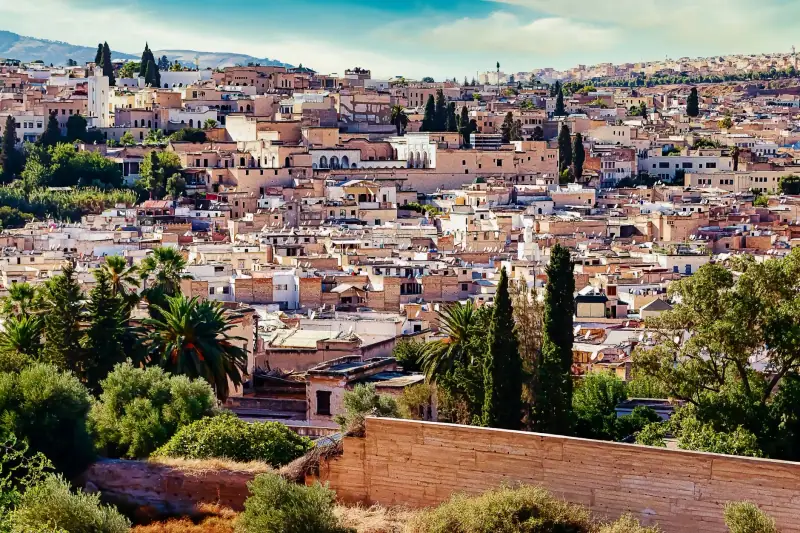
Visiting Fes: Medina, Madrasas and Tanneries, a Guide to Finding Your Way
Visiting Fes in 2 or 3 days: Fes el-Bali medina, madrasas, Chouara tanneries, Fes el-Jdid and excursions. Tips to get oriented and avoid pitfalls.
Ready-made
Morocco itineraries
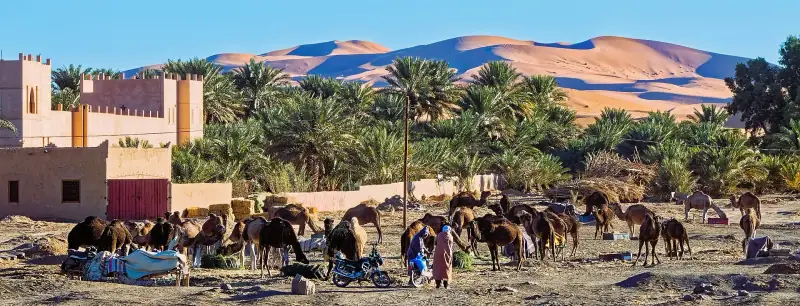
10 days
Morocco in 10 Days: Marrakech, the Merzouga Desert, Fes and Chefchaouen
A 10-day Morocco itinerary, day by day: Marrakech, the Atlas, Aït Ben Haddou, Todgha Gorges, Merzouga desert, Fes and Chefchaouen, with drive times.
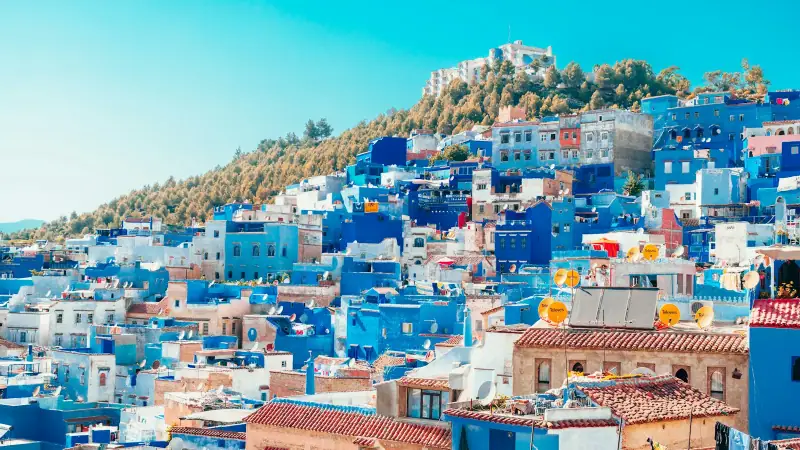
8 days
Morocco in 8 Days Without a Car: A Realistic Train and Bus Itinerary
Morocco in 8 days without a car: Marrakech, Essaouira, Rabat, Fes and Chefchaouen by train and CTM bus, with distances, travel times and pitfalls to avoid.
5 days
Morocco's Imperial Cities: Rabat, Meknes, Volubilis and Fes in 5 Days
RabatMeknesFes
Can be adapted in the planner