What to see
Ouarzazate and Aït Ben Haddou: Kasbahs, Ksar and Film Sets
We may earn a commission when you book through links on this page, at no extra cost to you. We don't visit or try the places we cover: we summarize published sources. How we work
In short
- One day covers the Aït Ben Haddou ksar and the Taourirt Kasbah; two days with a night there leave room for a film studio or the Skoura palm grove.
- From Marrakech, the road crosses the High Atlas by the Tizi n'Tichka pass in about 4 hours or a little more; buses and transfers also run it.
- Visit the ksar early or late in the day, when the light is softer and the groups have left; allow about 2 hours.
- Spring and fall are the most pleasant; summer is very hot on the plain and winter nights are cool, with snow sometimes on the Atlas passes.
South of the High Atlas, where the mountains give way to stony plateaus and palm groves, Ouarzazate is one of the great stops of inland Morocco. People come for the red-earth kasbahs, for the Aït Ben Haddou ksar, a UNESCO World Heritage site, and for the atmosphere of its film studios, which have served as sets for many films. On the road to the desert or on an excursion from Marrakech, the region deserves more than a passing stop. Here is how to organize your visit.
Aït Ben Haddou: the emblematic ksar of the South
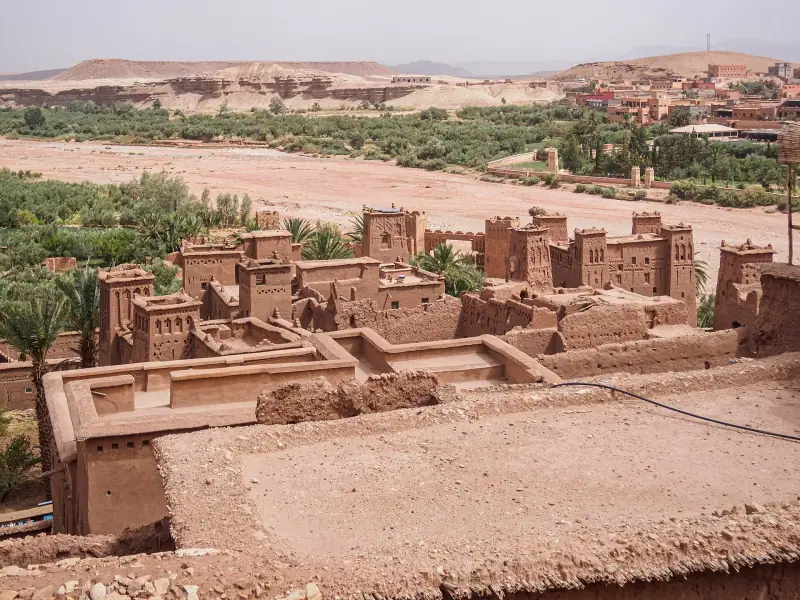
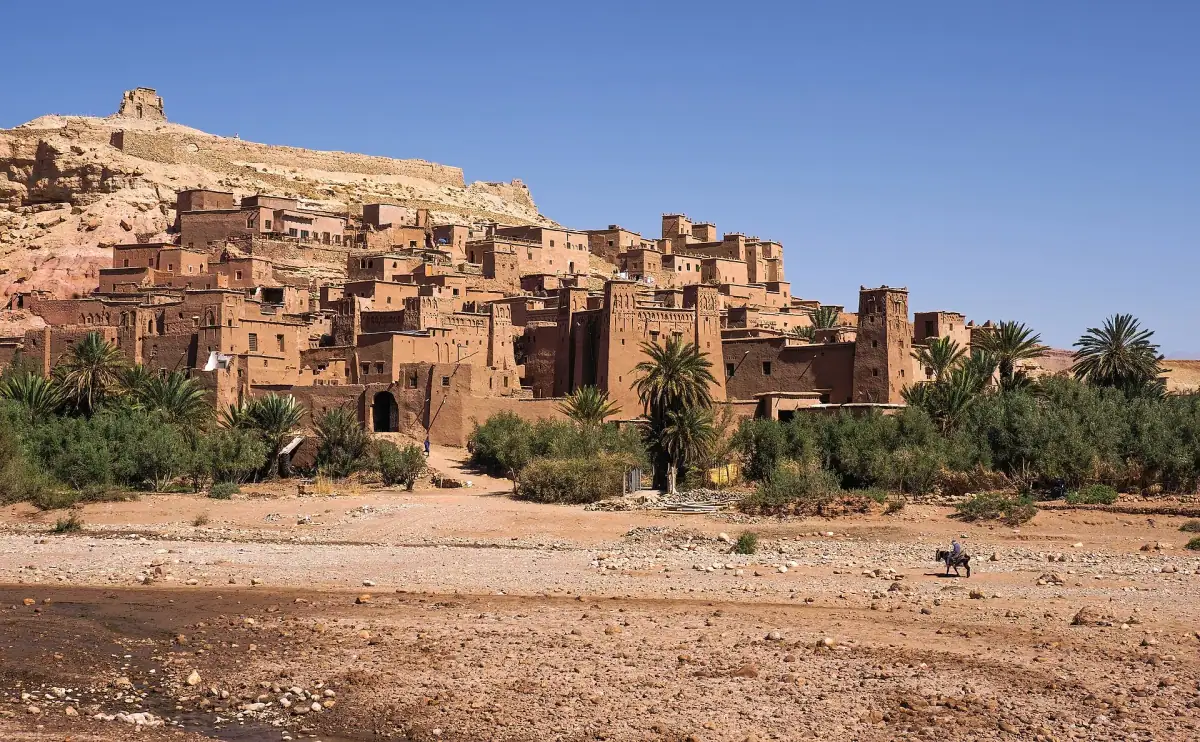
The Aït Ben Haddou ksar is the best-known site in the region. This fortified village, built of raw earth on a hillside, groups houses packed tightly together, topped with small towers with geometric patterns. It was listed by UNESCO in the late 1980s and remains one of the best examples of traditional adobe architecture in southern Morocco.
The ksar was once a stop on the caravan routes linking the Sahara to Marrakech. Its inhabitants found protection behind its walls, with collective granaries and houses adapted to the climate. Today only a few families still live there; most residents have settled in the modern village, on the other side of the wadi.
To make the most of the visit:
- Cross the wadi on foot or over the stones when the water level allows, then climb through the alleys to the top.
- Arrive early or late in the day: the light is softer on the ochre earth and the groups are smaller.
- Climb to the collective granary, at the highest point, for a view of the village, the valley and the mountains.
- Wear comfortable shoes: the alleys are uneven and sometimes dusty.
Allow about two hours for an unhurried route, with photo stops. The craft shops set up in the ksar sell pottery, jewelry and paintings made with tea and saffron: a chance to haggle over prices, always with a smile.
Film sets: why so many films are shot here
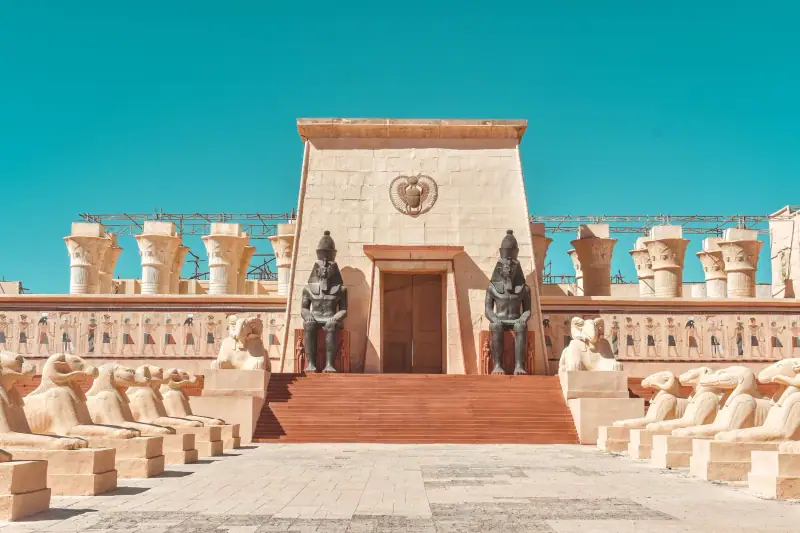
Ouarzazate is nicknamed the capital of Moroccan cinema. The light, the varied landscapes and the earth buildings have attracted many international productions, which have shot in the town and its surroundings. Aït Ben Haddou itself has served as a set for several films and series, which partly explains its fame with the general public.
Several studios can be visited on the outskirts of town. You discover former sets, ancient facades, temples and squares of imaginary cities, built in light materials but very convincing. Visits are often guided and last one to two hours. They mostly interest film fans and families, but the experience is sometimes more commercial than historical: do some research before choosing a studio and check the opening conditions, which vary with shoots in progress.
A cinema museum, set up in town, completes the discovery with objects, posters and shooting photographs. It is a short visit, pleasant during the hottest part of the day.
Excursions to Ouarzazate and Aït Ben Haddou
Tours from Marrakech, guided visits of the ksar and studios: compare the excursions on offer before you go.
The Taourirt Kasbah in the heart of Ouarzazate
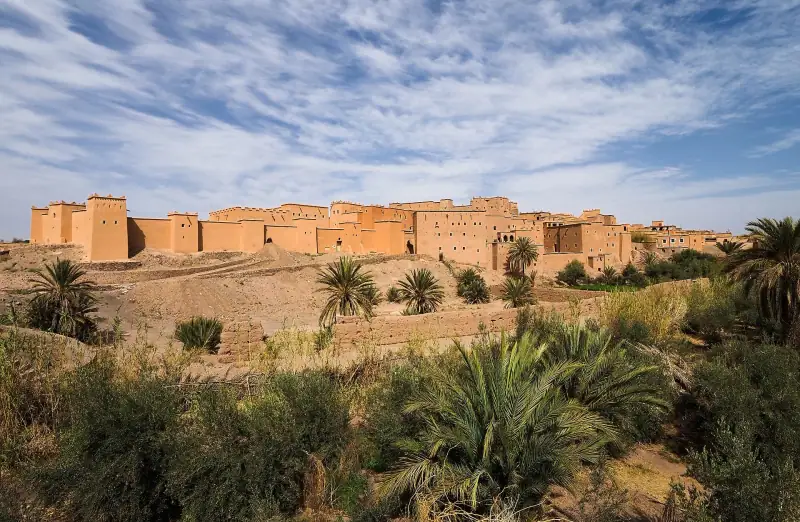
In the town itself, the Taourirt Kasbah is the monument to see. Former residence of the region’s great families, it charms with its patterned earth walls, its inner courtyards and rooms with carved plaster and painted wooden ceilings. Part of the building can be visited for a modest entrance fee, and you can walk through the rooms at your own pace.
Around the kasbah, the neighborhood is lively: craft cooperatives, rug workshops, cafés and small shops stretch along the neighboring streets. It is a good place to buy Berber rugs, jewelry or copper items, as long as you compare offers before committing.
Ouarzazate itself is an airy town, with wide avenues and a calmer atmosphere than Marrakech. It often serves as a logistics base: you find hotels of all categories, restaurants and car rental companies. For a break, the main avenue and the café terraces in late afternoon offer a moment of rest after the road.
Getting to Ouarzazate from Marrakech
The most common route starts in Marrakech and crosses the High Atlas by the Tizi n’Tichka pass. The road is paved and offers superb panoramas of the mountains, Berber villages and terraced valleys. It is also winding: the trip takes about 4 hours, or a bit more depending on traffic and roadworks.
Along the way, several stops are worthwhile:
- The pass viewpoints, for photos of mountains and valleys.
- Small Atlas villages, where you can stop for tea or watch the local markets.
- Roadside kasbahs, some of which can be visited quickly.
If you do not want to drive on mountain roads, private transfers and organized excursions are a good alternative. Scheduled buses also link Marrakech to Ouarzazate, with timetables to check locally.
Flights to Morocco
Compare flights to Marrakech, an ideal starting point to reach Ouarzazate by road.
Skoura, the Drâa Valley and other stops
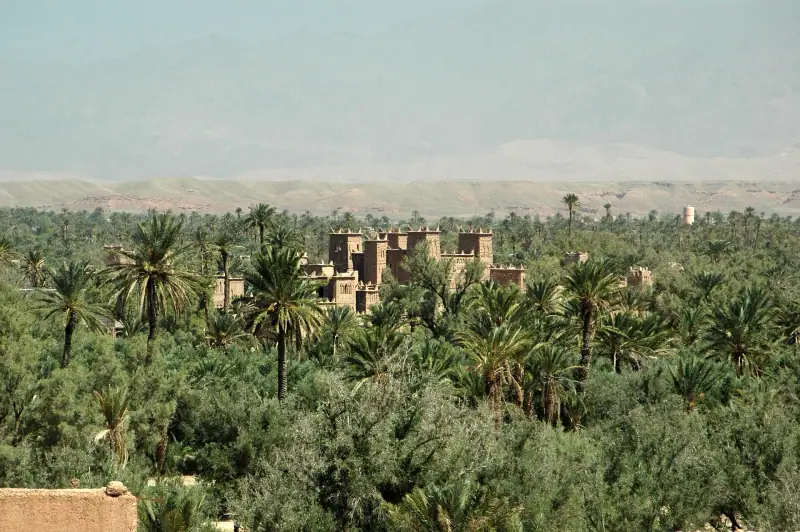
If your stay allows, the region offers several extensions that complete the visit. The Skoura palm grove, northeast of Ouarzazate, gathers kasbahs amid irrigated gardens. You walk or cycle among the palm trees, barley fields and irrigation canals. It is a peaceful escape, away from the busiest sites.
The Drâa Valley, to the south, follows a long ribbon of palm trees stretching toward the desert. Earth villages follow one another, with landscapes that change every kilometer. To the east, the Dadès and Todgha gorges offer spectacular cliffs and mountain roads, which combine easily with a circuit to the Merzouga desert. To prepare for that next leg, read our guide to the Merzouga desert excursion.
These stops combine well in a multi-day circuit from Marrakech. Be careful not to add too many side trips, however: distances are long, roads winding and fatigue arrives quickly, especially in summer.
Where to stay in Ouarzazate and around Aït Ben Haddou
Several options are available depending on the atmosphere you want. In Ouarzazate, conventional hotels suit travelers who want a practical stop, with a pool and parking. Around Aït Ben Haddou, guesthouses and converted kasbahs offer a more authentic stay, with a view of the ksar or the mountains. Sleeping nearby lets you see the village at sunset, when the day’s groups have left.
A few tips for choosing:
- Book ahead in high season, in spring and fall, when tour groups are numerous.
- Check the heating if you come in winter: nights can be very cool.
- Ask whether dinner is included: in isolated guesthouses, it is often the simplest solution.
Where to stay in Ouarzazate
Hotels, guesthouses and converted kasbahs: compare lodgings for your dates and budget.
If you arrive from Marrakech and need a bigger base before you leave, our guide to where to stay in Marrakech will help you choose the right neighborhood.
When to go and how to get organized
Spring and fall are the most pleasant seasons: the light is beautiful, days are mild and evenings stay bearable. In summer, the heat can become intense on the plain, and it is best to limit visits to the early morning hours or the end of the afternoon. In winter, days are often sunny, but nights are cool and the Atlas passes can be snowy. To compare seasons across the country, see our guide on when to go to Morocco.
As for gear, bring closed shoes, a hat, sunscreen, enough water and a light jacket for the evening. For car trips, leave early, fill the tank before leaving the big cities and avoid driving at night on mountain roads.
A rental car is handy for stopping freely on the Atlas road: compare conditions before you book.
Ideas for organizing two days
Here is a simple proposal, starting from Marrakech:
- Day 1: early departure over the Tizi n’Tichka, scenic stops, visit to the Aït Ben Haddou ksar late in the day and a night there or in Ouarzazate.
- Day 2: visit to the Taourirt Kasbah in the morning, a stop at a film studio or the museum, lunch in town, then return to Marrakech or continue south.
This itinerary leaves time to enjoy the landscapes without too much haste. If you have an extra day, add the Skoura palm grove or a walk in the Drâa Valley.
Bottom line
Ouarzazate and Aït Ben Haddou make an essential stop for understanding the earth architecture of southern Morocco and its transitional landscapes between the Atlas and the desert. The ksar is the highlight of the visit, the Taourirt Kasbah offers a more intimate look at life in the past, and the film sets add a playful touch. With two days and a bit of organization, it is an excellent stop between Marrakech and the Merzouga desert.
Frequently asked questions
How long do you need to visit Ouarzazate and Aït Ben Haddou?
One day is enough to see the Aït Ben Haddou ksar and the Taourirt Kasbah. If you want to add a film studio, the Skoura palm grove or a walk in the surroundings, plan two days with a night there.
How do you get from Marrakech to Ouarzazate?
The road crosses the High Atlas by the Tizi n'Tichka pass, with spectacular scenery. Allow about 4 hours on the road, more with photo stops or slow traffic behind trucks. Buses, shared taxis and private transfers also run the route.
Why is Ouarzazate nicknamed the gateway to the desert?
The town lies at the foot of the High Atlas, at the junction of several roads leading to the Drâa, Dadès and Todgha valleys. It is the natural starting point to reach the South and the dunes.
Can you visit Aït Ben Haddou for free?
Access to the ksar's alleys is generally free, but some houses or terraces set up for visitors ask for a small contribution. It is wise to keep a few dirhams in small change for these occasions.
What is the best time to visit the region?
Spring and fall offer the most pleasant temperatures. Summer can be very hot on the plain, and winter brings cool nights, sometimes snow on the Atlas passes.
Do you need a guide to visit Aït Ben Haddou?
It is not mandatory, as the route is simple to follow. A local guide can, however, explain the history of the ksar, earth construction techniques and how life was organized in the past.
More Morocco guides
Keep reading
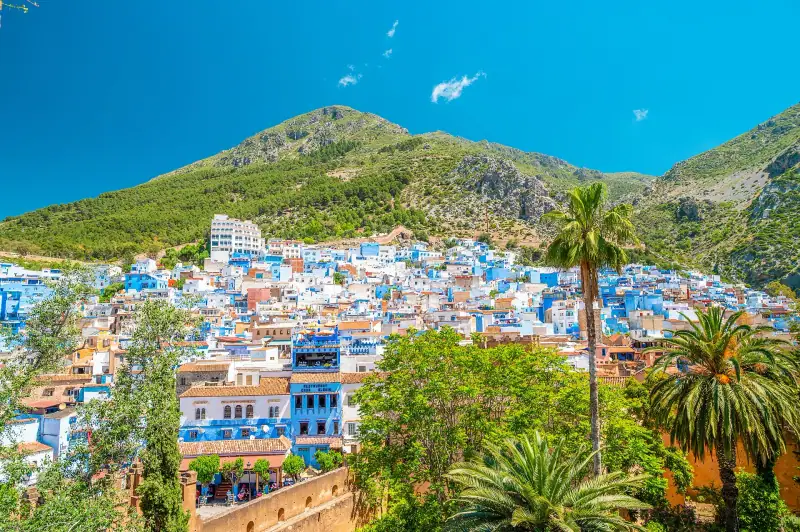
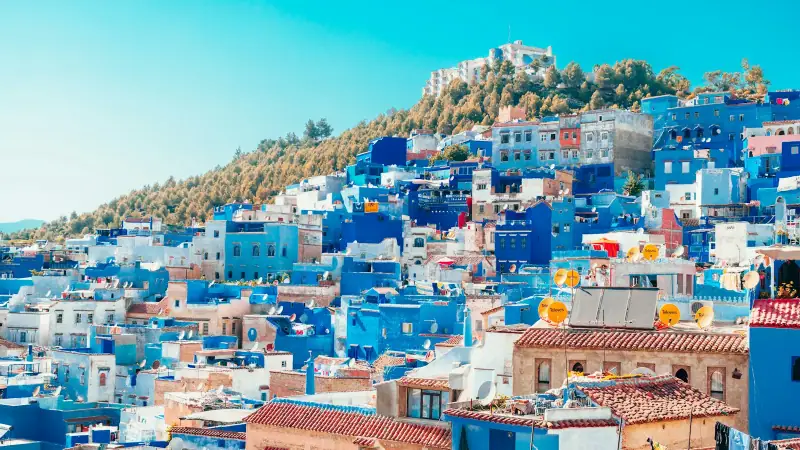
Visiting Chefchaouen: Guide to the Blue City of the Rif
Visiting Chefchaouen: blue medina, Outa el Hammam square, kasbah, the Ras el Maa spring and hikes to Akchour. Tips to organize your stay.
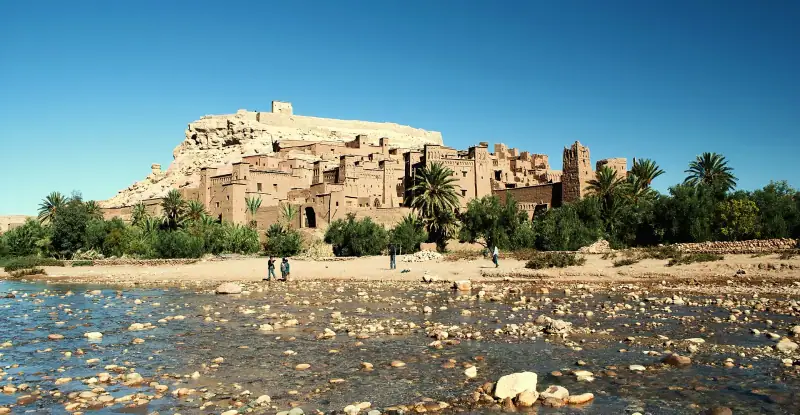
Complete Guide to Visiting Morocco: Cities, Regions, Budget and Tips
Visiting Morocco: regions, imperial cities, desert, Atlas and coast. When to go, how to get there, get around, where to stay and budget to plan your trip.
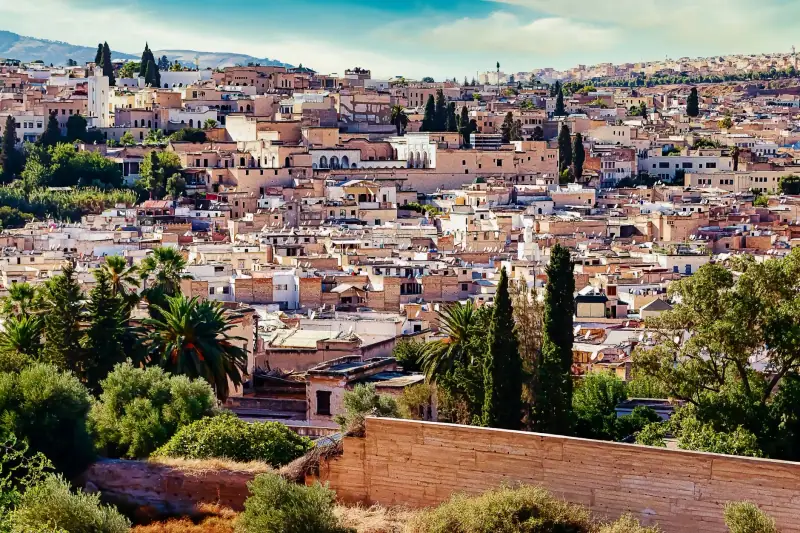
Visiting Fes: Medina, Madrasas and Tanneries, a Guide to Finding Your Way
Visiting Fes in 2 or 3 days: Fes el-Bali medina, madrasas, Chouara tanneries, Fes el-Jdid and excursions. Tips to get oriented and avoid pitfalls.
Ready-made
Morocco itineraries
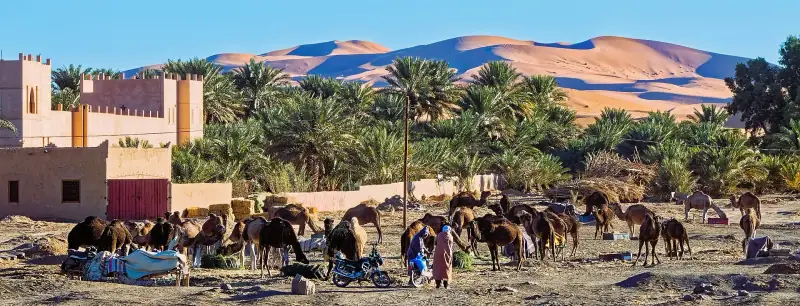
10 days
Morocco in 10 Days: Marrakech, the Merzouga Desert, Fes and Chefchaouen
A 10-day Morocco itinerary, day by day: Marrakech, the Atlas, Aït Ben Haddou, Todgha Gorges, Merzouga desert, Fes and Chefchaouen, with drive times.
8 days
Morocco in 8 Days Without a Car: A Realistic Train and Bus Itinerary
Morocco in 8 days without a car: Marrakech, Essaouira, Rabat, Fes and Chefchaouen by train and CTM bus, with distances, travel times and pitfalls to avoid.
5 days
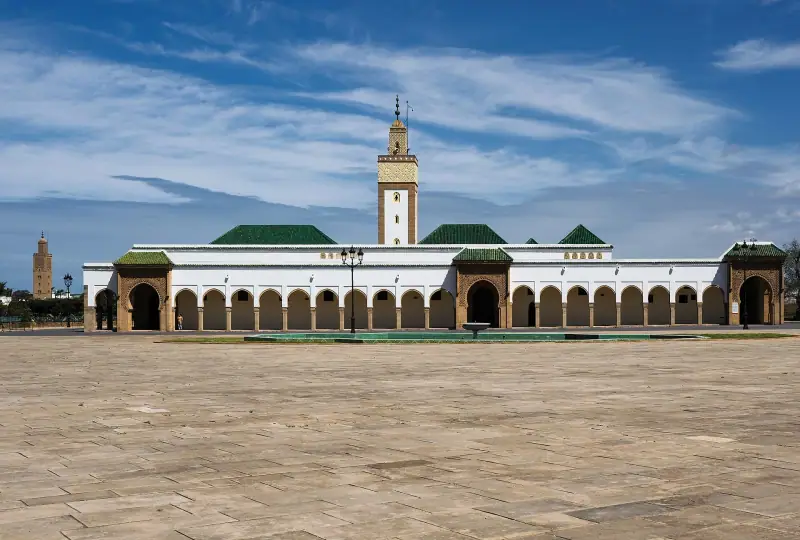
Morocco's Imperial Cities: Rabat, Meknes, Volubilis and Fes in 5 Days
RabatMeknesFes
Can be adapted in the planner