Things to do
Merzouga Desert: How to Plan Your Erg Chebbi Excursion
We may earn a commission when you book through links on this page, at no extra cost to you. We don't visit or try the places we cover: we summarize published sources. How we work
In short
- Marrakech to Merzouga is about 560 km (348 mi) across the High Atlas; plan at least three days in total, with one night in the dunes.
- For a first trip, split the outbound drive with a night in Ouarzazate or the Dadès Valley rather than 9 to 10 hours in one go.
- Spring and fall are the most comfortable seasons; summer days are very hot and winter nights can be freezing.
- Camps vary widely: check distance from the village, private or shared bathrooms, what is included (meals, camel transfer) and recent reviews.
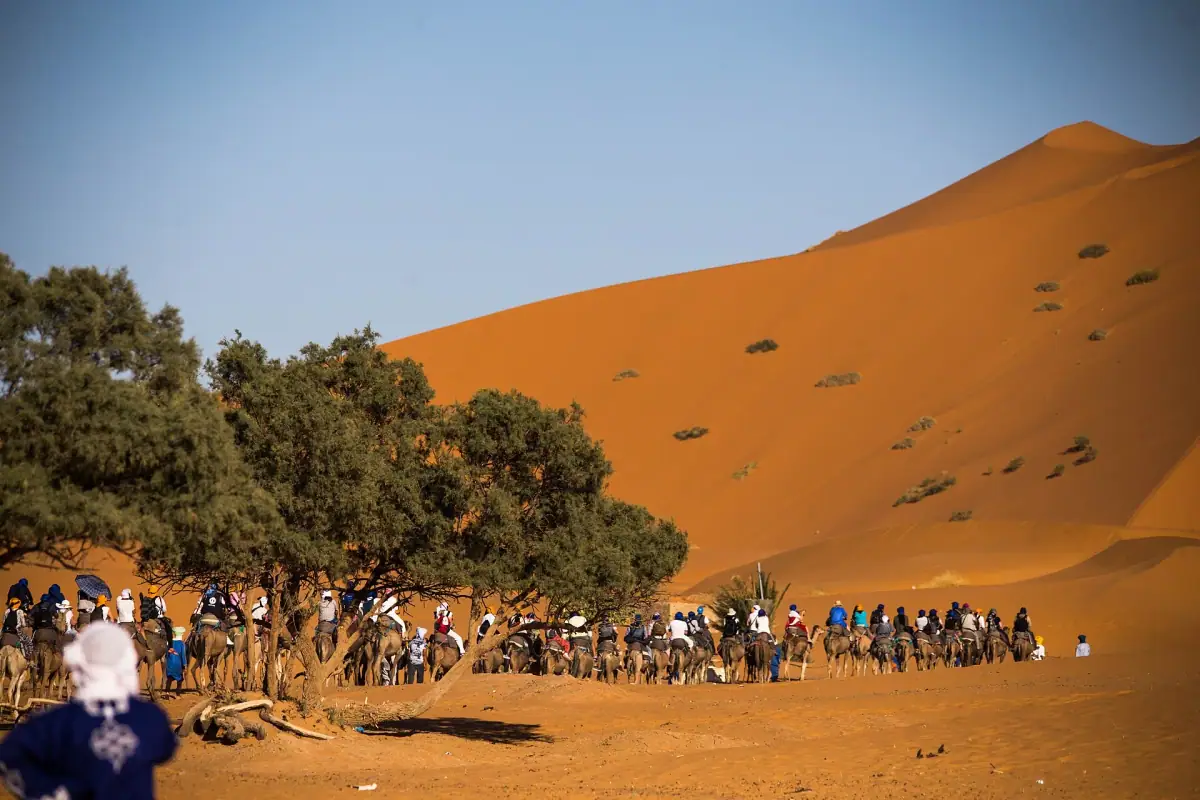
In southeastern Morocco, near the Algerian border, Erg Chebbi is a massif of orange sand dunes that changes hue from dawn to dusk. The village of Merzouga, at its foot, has become the classic gateway to the Moroccan Sahara: you arrive after a long journey, ride a camel to a camp and sleep under a sky full of stars. It is one of the most memorable experiences of a trip, as long as you prepare a little. Here is how to organize your excursion, what to expect from the camp and how to avoid disappointments.
Where is Erg Chebbi and what does it look like?
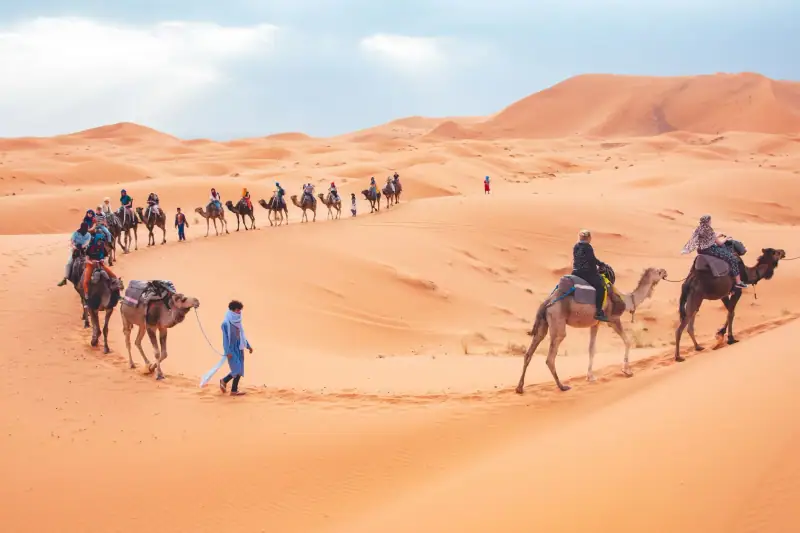
Erg Chebbi is a dune field about twenty kilometers (12 mi) long, stretching north to south along a hamada landscape, the desert of flat stones. The highest dunes rise about a hundred meters (330 ft) above the plain, enough to give a real desert feel, with crests, hollows and slopes of fine sand.
Merzouga is the nearest village, with its inns, simple restaurants and excursion agencies. A little farther north is Rissani, a former caravan town known for its market, and farther on Erfoud, known for its fossils. The region thus combines dunes, palm oases and ksour, those fortified adobe villages.
There is another erg, Chegaga, wilder and more remote, reached mostly by 4x4 from the Drâa Valley. It suits travelers who want more isolation, but Merzouga remains far easier to reach for a first time.
How to get to Merzouga from Marrakech or Fes
Merzouga is remote. From Marrakech, the distance is about 560 km (348 mi), a long day on the road, crossing the High Atlas by the Tizi n’Tichka pass. From Fes, the road goes through the Middle Atlas and the Ifrane region, for a trip that is still long but more direct.
Three main options are available:
- An organized 2- to 4-day excursion: the driver-guide drives, and you enjoy the scenery and stops. It is the simplest option, especially if you do not like long mountain drives.
- A trip on your own: by rental car or local transport, with stops in Ouarzazate, the Dadès Gorges or the Todgha Gorges. Long-distance buses serve Merzouga and nearby towns, but timetables are long.
- A tailor-made circuit with a driver: you set the stops, pace and breaks, at a higher cost.
If you choose to drive, avoid driving at night: the road has mountain sections, animals and slow vehicles. For a comfortable stopover before you leave, our guide to where to stay in Marrakech helps you choose a neighborhood, and the one on visiting Fes gives you pointers if you leave from the north.
Where to stay in Merzouga
Inns, guesthouses and hotels at the foot of the dunes: compare lodgings for your dates.
The trip from Marrakech: kasbahs, gorges and valleys
The road from Marrakech to the desert is already a trip in itself. You cross the High Atlas, then descend toward Aït Ben Haddou, an adobe ksar listed by UNESCO, and toward Ouarzazate, often nicknamed the gateway to the desert. From there, the road follows the Dadès Valley and its kasbahs, then reaches the Todgha Gorges, with their very high rock walls.
For a first experience, it is reasonable to split the outbound trip into two stages, with a night in Ouarzazate or the Dadès Valley, rather than chaining 9 to 10 hours of driving. You reach Merzouga in late afternoon, just in time for the sunset ride.
On the way back, many travelers choose a different route, through the Drâa Valley and Zagora, or through Midelt and the Middle Atlas, to vary the scenery. If you want to organize a fuller trip between the imperial cities and the desert, keep in mind that distances are significant: it is better to plan fewer stops and more time in each place.
The night in a desert camp: what to expect
The typical program is simple. In late afternoon, you leave the inn to reach the camp by camel, in one to two hours of slow walking in the dunes. The guide, often from a local family, accompanies you on foot. You arrive at the camp before nightfall, then climb a dune to watch the sunset.
In the evening, dinner is generally a tagine or a semolina dish prepared at the camp, followed by an evening around the fire with music and drumming. At night, the sky is full of stars, especially far from lights and when the moon is not full. In the early morning, some camps offer another dune climb for sunrise, before breakfast and the return to Merzouga.
What comfort level to choose?
Camps are not all equal. You find very simple options, with a shared tent and basic bathrooms, and more comfortable ones, with larger tents, real beds and showers. Before booking, check:
- whether the camp is close to the village or truly in the dunes;
- whether the bathrooms are private or shared;
- whether the meals and camel transfer are included;
- recent reviews from travelers, more reliable than an agency’s photos.
A very cold night is possible in winter: ask for extra blankets and keep a fleece within reach, even if the day was warm.
Other activities around Merzouga
A single night in the dunes does not sum up the region. If you have a little time, several activities complete the stay:
- A 4x4 ride on the tracks around the erg, with a stop in a nomad village and a visit to a waterhole.
- Sandboarding, sliding down sand slopes, fun but tiring, since you have to climb back up on foot.
- A visit to Rissani and its market, livelier on certain days of the week.
- A quad ride, to choose with a reputable agency and while respecting authorized zones, to limit the impact on the environment.
Desert excursions
Circuits from Marrakech, nights in a desert camp and camel rides: compare offers and read the reviews.
When to go to the Merzouga desert
The desert can be visited almost all year, but comfort varies a lot. Spring and fall are the most pleasant periods: days are warm without being overwhelming and nights stay bearable. In summer, the daytime heat is very strong: if you go, schedule activities early in the morning and late in the day. In winter, days are mild, but nights can be cold, even freezing.
More rarely, the sand wind, the chergui, blows for several hours, reducing visibility. It is better to keep some slack in your program. To compare seasons across the country, see our guide on when to go to Morocco.
Preparing your trip: practical tips
- Water and sun protection: bring enough water and a high-SPF sunscreen, even in winter.
- Clothing: choose light layers, light pants, a fleece for the evening and a scarf to protect against sand.
- Cash: ATMs are rare in the villages of the South. Withdraw dirhams in town before leaving.
- Cameras and phones: fine sand gets everywhere, protect your gear in a waterproof bag.
- Respect for places: take your trash with you and ask before photographing residents.
- Travel insurance: check that it covers desert activities and repatriation.
If you rent a car, compare offers: rates and mileage conditions vary by company, and a vehicle in good condition is essential for a trip like this.
Flights to Morocco
Compare flights to Marrakech or Fes to start your circuit to the desert.
Merzouga in summary: for whom, for how long?
Merzouga suits travelers who like vast landscapes, slowness and simple experiences. If you are looking for a beach or city stay, the trip may seem long. For everyone else, a night in the dunes remains one of the strongest moments of a trip to Morocco. Plan three days minimum from Marrakech or Fes, choose a camp suited to your comfort level and keep a little flexibility in your schedule: that is what separates a rushed excursion from a lasting memory.
Frequently asked questions
How long does a Merzouga excursion take?
From Marrakech or Fes, allow at least three days for the trip to stay pleasant: two days of round trip on the road and one night in the dunes. Four days lets you stop longer in the valleys of the South.
What is the best time to sleep in the desert?
Spring and fall offer the most comfortable temperatures. In summer, the daytime heat is very strong, and in winter nights are definitely cold. Our guide to when to go to Morocco covers the seasons.
Should you book an organized excursion or go on your own?
Both work. An organized excursion saves you from driving long hours and generally includes the stops. If you travel on your own, you book a camp or an inn at the foot of the dunes directly.
Is a desert camp comfortable?
It depends on the camp. Options range from a simple tent with a mattress to more spacious tents with bathrooms. Read the descriptions and recent reviews carefully before booking.
What should you pack for a night in the dunes?
Layered clothing, a windbreaker or fleece for the evening, a scarf against sand, sunglasses, sunscreen and a headlamp. Plan closed shoes for walking in sand.
More Morocco guides
Keep reading
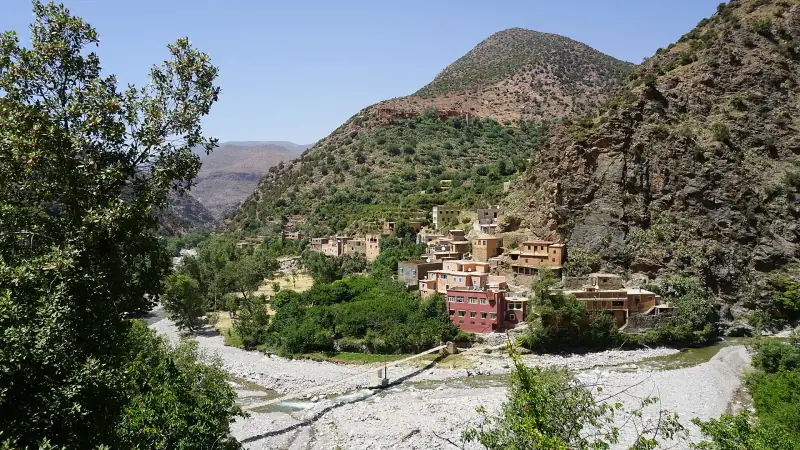
Setti Fatma Waterfalls (Ourika) Without a Tour: Transport, Guide, Difficulty
Setti Fatma on your own from Marrakech: grand taxi, bus or car, whether a guide helps, which waterfalls to pick by level, season and flash-flood risk.
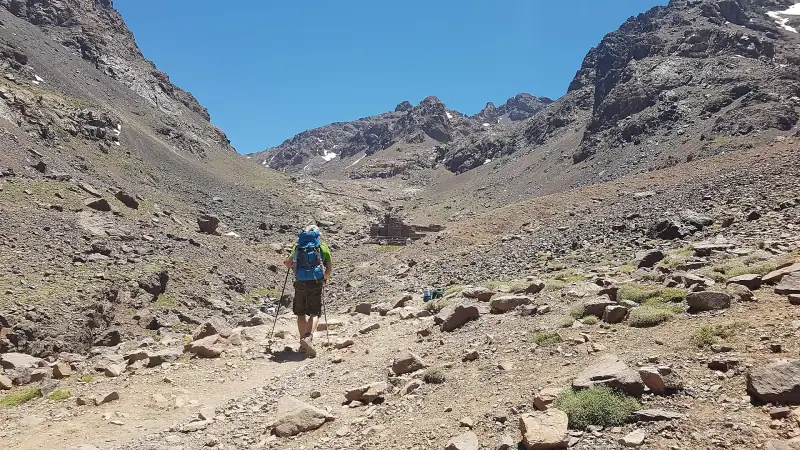
Hiking in the High Atlas: Imlil, Berber Valleys and Toubkal
Hiking in the High Atlas from Marrakech: easy walks around Imlil, climbing Toubkal, seasons, gear, guides and tips to get organized.
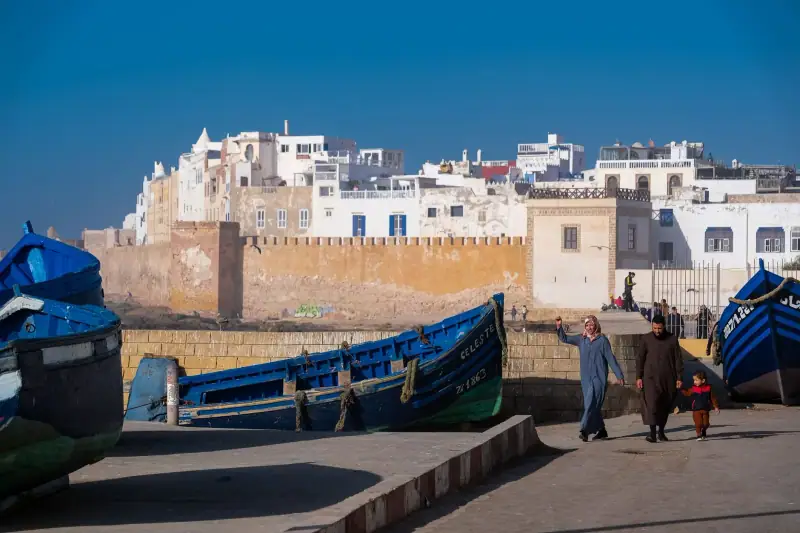
Things to Do in Essaouira: Medina, Ramparts, Port and Beaches
What to do in Essaouira? UNESCO-listed medina, ramparts, fishing port, kitesurfing and crafts: a guide to organizing 2 days in the windy city.
Ready-made
Morocco itineraries
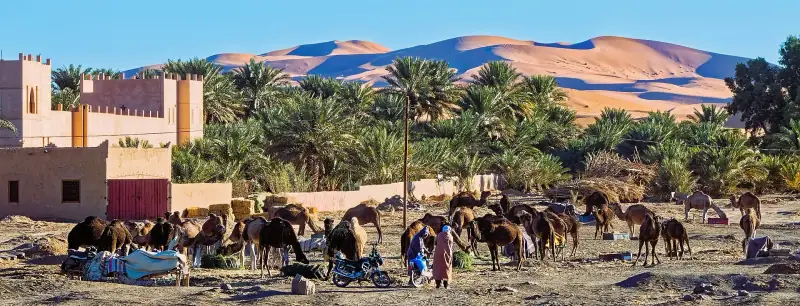
10 days
Morocco in 10 Days: Marrakech, the Merzouga Desert, Fes and Chefchaouen
A 10-day Morocco itinerary, day by day: Marrakech, the Atlas, Aït Ben Haddou, Todgha Gorges, Merzouga desert, Fes and Chefchaouen, with drive times.
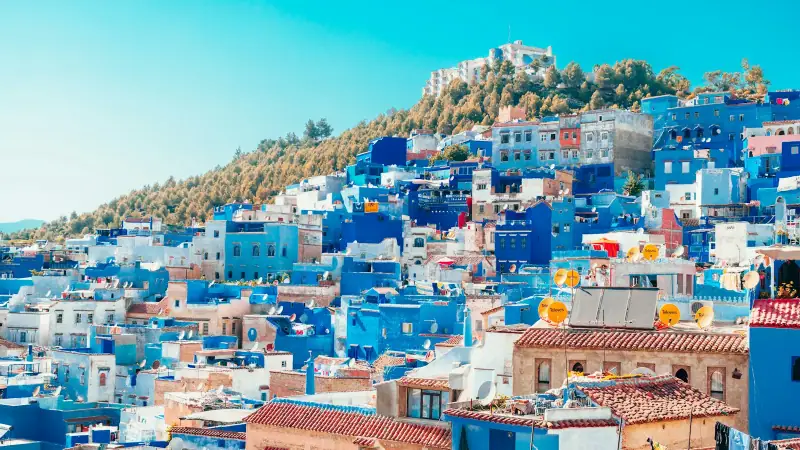
8 days
Morocco in 8 Days Without a Car: A Realistic Train and Bus Itinerary
Morocco in 8 days without a car: Marrakech, Essaouira, Rabat, Fes and Chefchaouen by train and CTM bus, with distances, travel times and pitfalls to avoid.
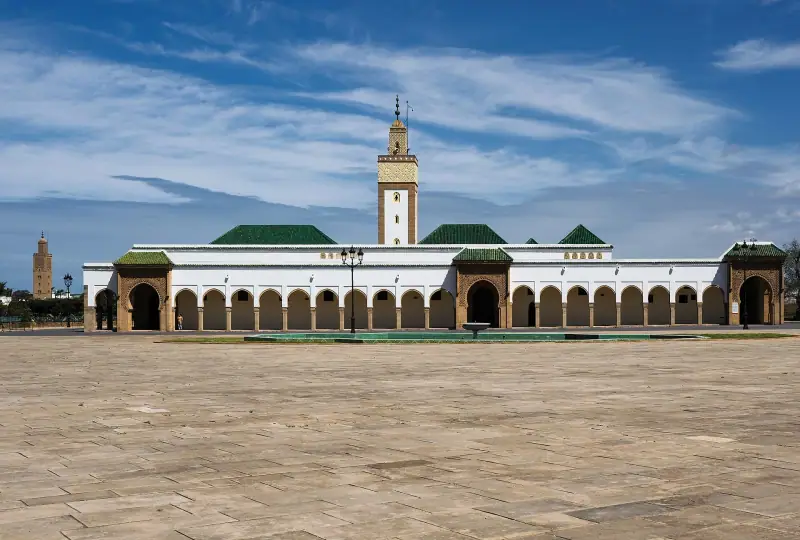
5 days
Morocco's Imperial Cities: Rabat, Meknes, Volubilis and Fes in 5 Days
RabatMeknesFes
Can be adapted in the planner