Plan your trip
When to Go to Morocco: Seasons, Climate and Best Time by Region
We may earn a commission when you book through links on this page, at no extra cost to you. We don't visit or try the places we cover: we summarize published sources. How we work
In short
- Spring (March to May) and fall (September to November) are the most versatile seasons: temperatures stay bearable in Marrakech, the imperial cities and the South.
- Summer suits the Atlantic coast and the High Atlas heights; the interior, Marrakech and the desert can be very hot.
- Winter days are often mild in the cities and the South, but nights can be cold in the desert and at altitude, with snow possible in the High Atlas.
- Ramadan dates shift by about ten days each year; travel remains possible, but hours and daytime dining change. Check the calendar before booking.
Morocco can be visited all year, but not in the same way everywhere. The country stretches from the Atlantic coast to the gates of the Sahara, through the High Atlas mountains: the same month can therefore offer pleasant mild weather in Essaouira, strong heat in Marrakech and crisp air in the mountains. Choosing your dates is above all about matching them to the itinerary you are preparing. Here is how to plan it, season by season and then region by region.
Spring: the most balanced season
From March to May, the country is at its best for a full circuit. Days are generally mild to warm in the cities, the light is beautiful and the countryside, especially after a rainy winter, keeps greener shades than the rest of the year. It is an ideal period to combine medinas, kasbahs and an excursion into the South.
It is also a very busy period: spring holidays and long weekends push up demand for flights and riads. Booking early gives you more choice, and a free-cancellation lodging keeps you from locking in too soon on dates that may still shift.
What to plan for: temperature swings between day and night, especially early in the season. A light jacket and a warmer layer for the evening are enough for most travelers.
Stays in Morocco
Riads, hotels and guesthouses: compare offers for your dates, with free cancellation on many options.
Summer: the coast and the mountains rather than the interior
Between June and August, temperatures in the interior of the country can become painful for sightseeing on foot. Marrakech, the imperial cities and the desert then require organization: outings early in the morning or late in the day, a break during the hot hours, plenty of water and air-conditioned lodging, with a pool if possible.
The Atlantic coast offers a far more bearable alternative. Towns such as Essaouira or Agadir benefit from the ocean breeze, and swimming is possible there, even if the Atlantic water stays cool. Wind is frequent, which explains the popularity of board sports at some coastal spots. The High Atlas also lets you find coolness at altitude for hiking.
If you travel as a family during school holidays, the most comfortable approach is to build a stay centered on the coast, possibly with one or two short excursions inland, rather than a big car circuit in the heat.
Fall: a second high season
From September to November, the heat fades gradually. September can stay hot in the South and in Marrakech, while October and November often offer very pleasant conditions for the cities, the coast and the desert. It is an excellent period for a circuit mixing Marrakech, the kasbahs of the South and the dunes.
Tourism picks up again: it is better to book flights, nights in a desert camp or popular riads a little ahead of time. To compare airfares for your dates, flight search engines remain the simplest way to spot the cheapest days.
Flights to Morocco
Compare flights for your dates and find the most advantageous period.
Winter: mildness in the South, coolness elsewhere
From December to February, the country changes character. In cities such as Marrakech, days are often sunny and pleasant, perfect for visiting without suffering from the heat. Nights, however, are cool, and riads are not always well heated: ask about heating before booking.
In the North and on the Atlantic coast, rain is more likely, and the High Atlas is sometimes covered in snow, which gives it a very different character from summer. In the desert, days are generally mild but nights can be cold: a thick blanket in the tent and warm clothes are essential for a night in a camp.
Winter is also a period when lodging prices can be lower than in spring, outside school holidays and the end-of-year holidays.
Region by region: which period to choose?
Rather than looking for a single month for the whole country, adapt your dates to the region that matters most to you:
- Marrakech and the imperial cities (Fes, Meknes, Rabat): spring and fall are the most comfortable. Winter suits visits well; summer requires getting up early.
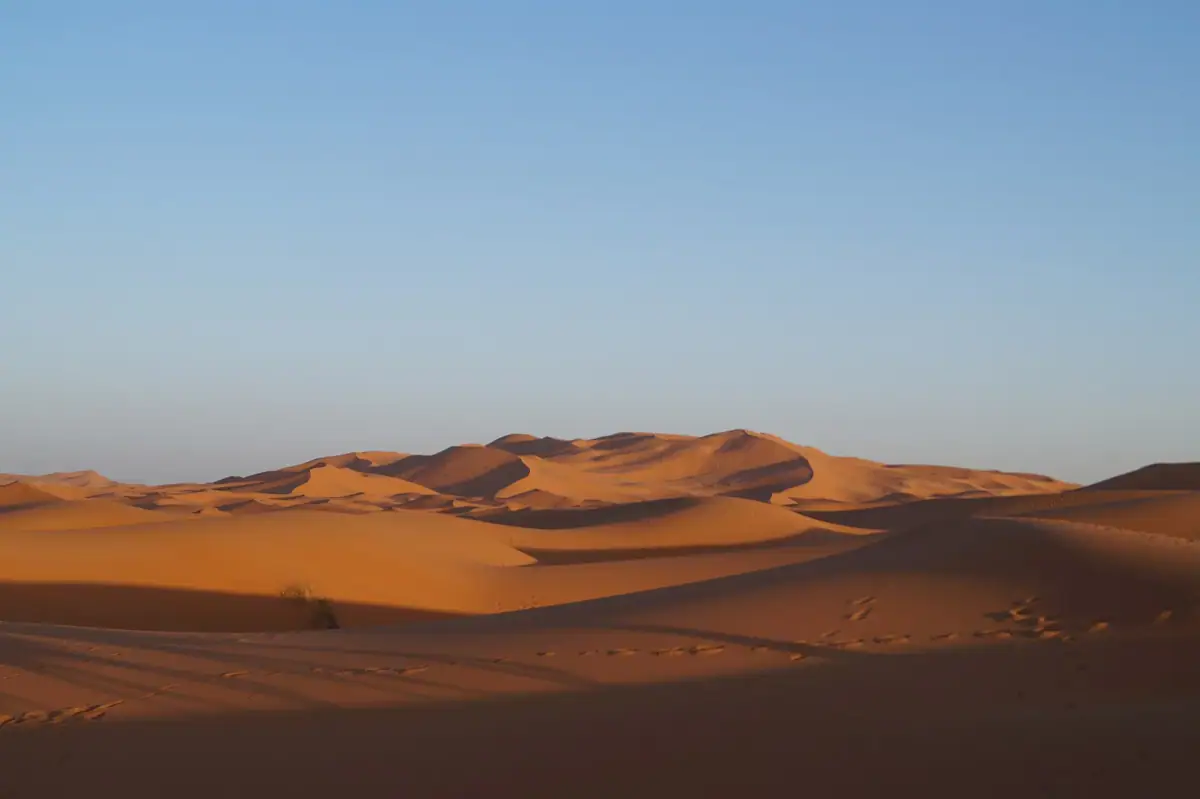
- Merzouga desert and the southern valleys: fall, winter and early spring to avoid the big daytime heat.
- Atlantic coast (Essaouira, Agadir): all year, with a preference for late spring, summer and early fall for the beach.
- Chefchaouen and the North: spring and early fall, when the weather is pleasant for strolling the alleys and walking in the surroundings.
- High Atlas: late spring to fall for hiking; winter is better for lovers of snowy landscapes ready to cope with more uncertain weather.
If your circuit crosses several regions, you can favor the period that best suits the most demanding part: generally the desert or the mountains.
Ramadan, holidays and school breaks: dates that change the experience
The religious calendar influences the trip. During Ramadan, whose dates shift by about ten days each year, daily life is organized around the fast: some restaurants close during the day, the hours of some shops change, then life resumes with a very particular atmosphere after the breaking of the fast. Travel remains possible and can be a fine experience, as long as you adapt your rhythm and stay discreet in public about your meals.
On top of this come religious holidays and school and public holidays, in Morocco and in your home country, which can make transport and lodging busier. Check the calendar for the current year before setting your dates, especially if you want to book specific stops in advance.
Adapting your trip to conditions
Whatever the season, a few habits simplify the stay:
- Plan layers: the gap between day and night is large, particularly in the South and at altitude.
- Protect yourself from the sun: hat, sunscreen and water, even in winter, as sunshine is strong.
- Be flexible on trips: mountain roads can be disrupted by snow or rain in winter, and inland trips are more tiring in full heat.
- Book according to demand: spring, fall and school holidays are when availability fills first.
- Keep slack in your schedule: Morocco is not well suited to overloaded days, especially when the road is long.
To explore from a city, a rental car can be useful, but it is not essential for visiting the medinas. In big cities, taxis and organized transport are more than enough; guided excursions are often simpler for the desert or the Atlas.
Excursions and tours in Morocco
Desert, Atlas, Atlantic coast: compare excursions and circuits by season and budget.
Bottom line
For a first trip combining cities, desert and coast, spring and fall are the safest choices. If you prefer the beach atmosphere in summer, concentrate on the Atlantic coast and the mountains; if you travel in winter, focus on the cities and the South, bringing something to cover up with in the evening. Once your dates are set, all that remains is to book flights and lodging early enough, and to plan an itinerary that leaves time to stroll. To prepare your first stop, see our guide on where to stay in Marrakech.
Frequently asked questions
What is the best time to visit Morocco?
Spring (March to May) and fall (September to November) are the most versatile seasons: temperatures stay bearable in Marrakech, in the imperial cities and in the South. Winter suits the cities and the coast, summer the Atlantic coast and the mountains.
Can you go to Morocco in summer?
Yes, but not everywhere. The interior of the country, Marrakech and the desert can see strong heat. Summer suits the cooler Atlantic coast or the heights of the High Atlas better.
Is it cold in Morocco in winter?
Days are often mild in the cities and the South, but nights can be cool, even cold in the desert and at altitude. Snow is possible in the High Atlas. Plan warm layers for the evening.
Should you avoid traveling during Ramadan?
It is not mandatory; travel remains possible. The rhythm does change, however: some restaurants close during the day, activity slows and then picks up after the breaking of the fast. The dates shift by about ten days each year, to be checked before booking.
When should you book flights and lodging?
For spring, fall and school holidays, book several weeks ahead, more for charming riads. Favor free-cancellation options as long as your dates are not final.
Which period should you choose for the Merzouga desert?
Fall, winter and early spring are the most comfortable, with pleasant days. Summer is very hot during the day. Plan something to cover up at night, as temperature swings are marked.
More Morocco guides
Keep reading
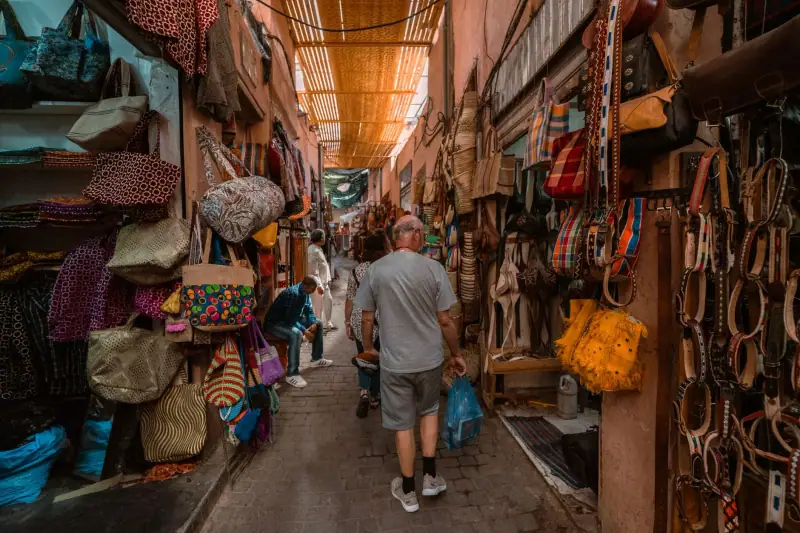
Morocco Budget: How Much Does a Trip Cost? Real Prices and 3 Costed Profiles
Budget for a trip to Morocco: real costs by item (riad, transport, meals, activities), three daily profiles with figures and tips to spend less.
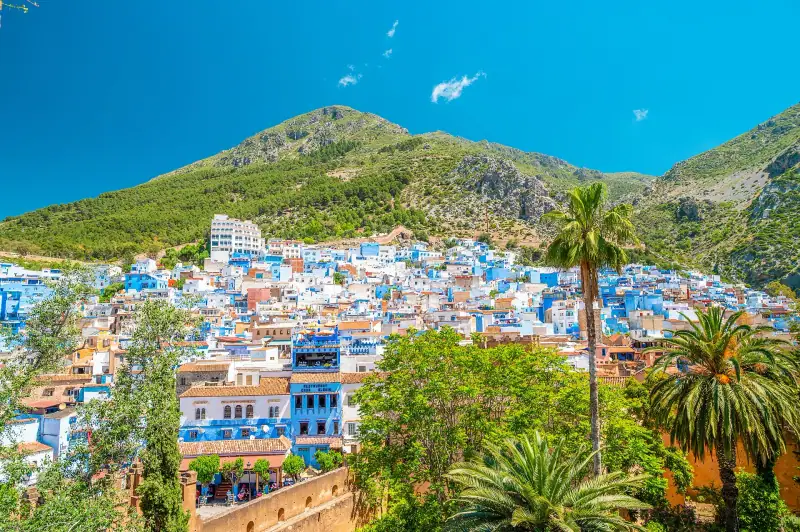
Visiting Chefchaouen: Guide to the Blue City of the Rif
Visiting Chefchaouen: blue medina, Outa el Hammam square, kasbah, the Ras el Maa spring and hikes to Akchour. Tips to organize your stay.
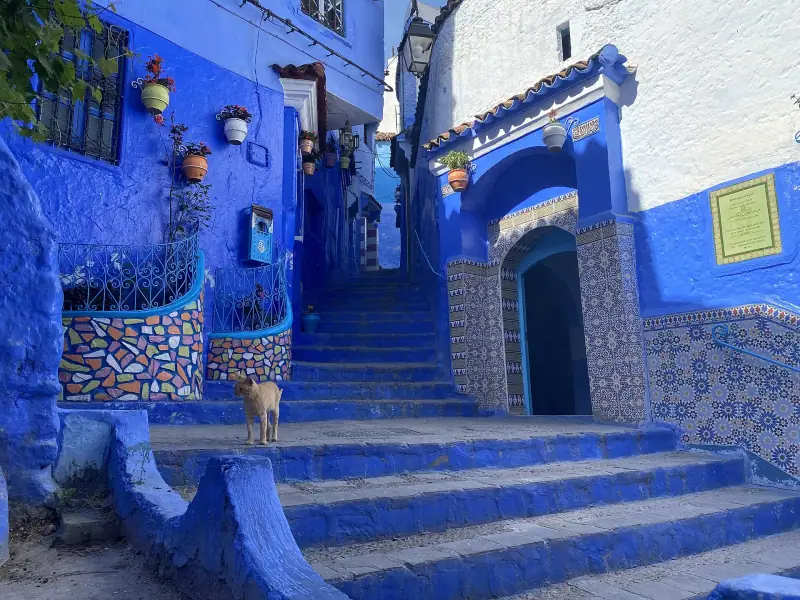
Where to Stay in Chefchaouen by Car: Medina, Parking and Which Area to Pick
Driving to Chefchaouen: stay in the car-free medina, near Bab el Ain, or at a hotel with parking? Criteria to choose without struggling with luggage.
Ready-made
Morocco itineraries
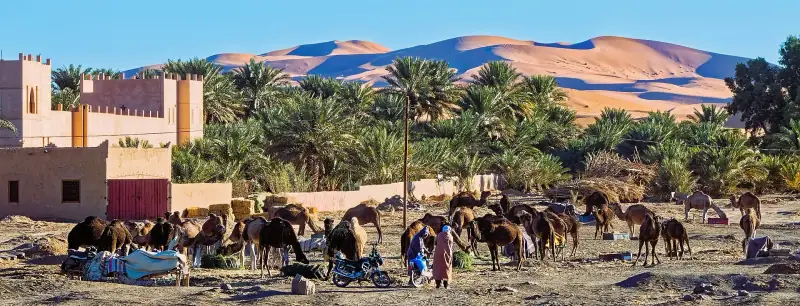
10 days
Morocco in 10 Days: Marrakech, the Merzouga Desert, Fes and Chefchaouen
A 10-day Morocco itinerary, day by day: Marrakech, the Atlas, Aït Ben Haddou, Todgha Gorges, Merzouga desert, Fes and Chefchaouen, with drive times.
8 days
Morocco in 8 Days Without a Car: A Realistic Train and Bus Itinerary
Morocco in 8 days without a car: Marrakech, Essaouira, Rabat, Fes and Chefchaouen by train and CTM bus, with distances, travel times and pitfalls to avoid.
5 days
Morocco's Imperial Cities: Rabat, Meknes, Volubilis and Fes in 5 Days
RabatMeknesFes
Can be adapted in the planner