What to see
Visiting Oaxaca: what to see and do in 3 days in the city and around
We may earn a commission when you book through links on this page, at no extra cost to you. We don't visit or try the places we cover: we summarize published sources. How we work
In short
- Three days cover the historic center, the markets, Monte Albán and a day in the valley; with five days, add Hierve el Agua, a craft village and free time.
- From Mexico City, the flight takes about 1 h 15; the bus takes roughly 6 to 8 hours.
- Monte Albán is 10 km (6 mi) from the center; allow two to three hours. Hierve el Agua is 70 km (43 mi) away.
- The Guelaguetza (July) and Día de Muertos (early November) are very popular: book far ahead.
Oaxaca is one of the most endearing stops in Mexico. The city combines a colorful colonial center, markets where you eat at any hour, a cuisine renowned across the country and a Zapotec heritage that is still very present. The historic center and the nearby Monte Albán archaeological site have been jointly listed as a UNESCO World Heritage site since 1987.
Located in a valley at about 1,500 meters (4,900 ft) of altitude, the city has a milder climate than the Yucatán coasts, with warm days and cool evenings. This guide offers a three-day program: one day for the city, one day for Monte Albán and the craft villages, one day for the valley landscapes. Hours and prices change regularly: check them before you go.
Oaxaca’s historic center: zócalo, cathedral and Santo Domingo
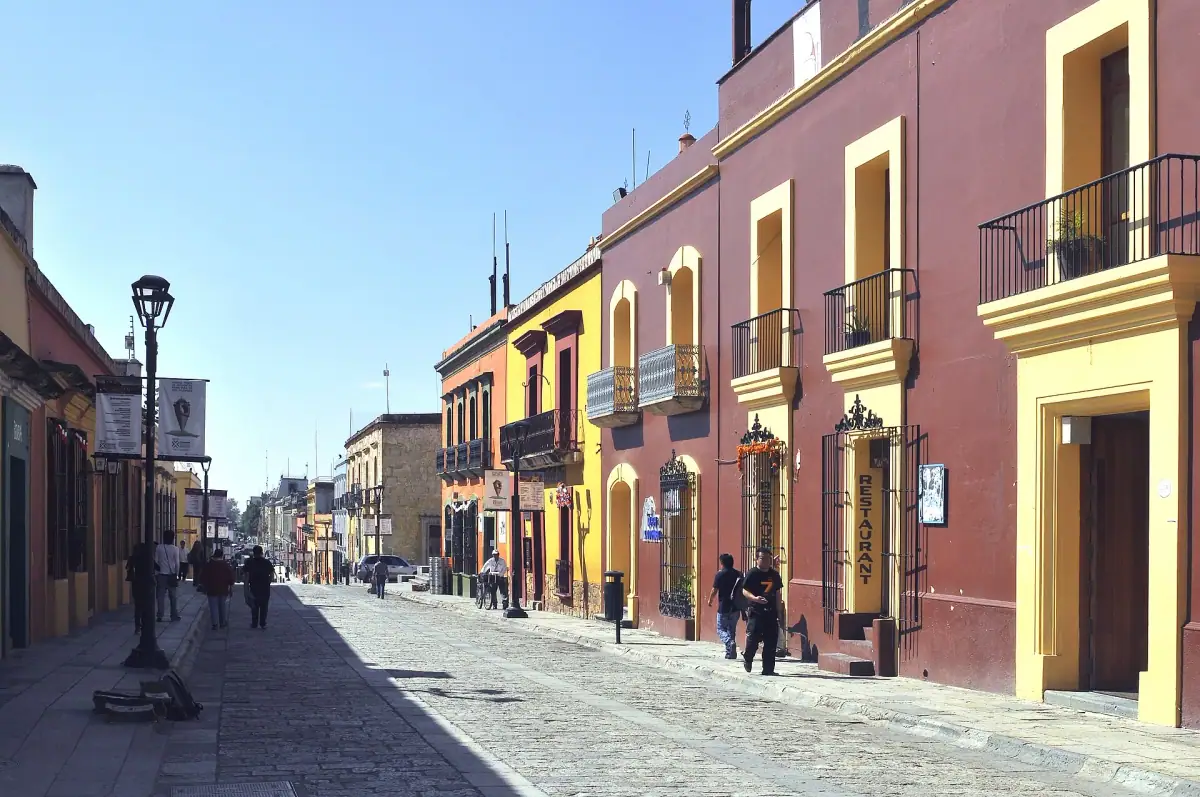
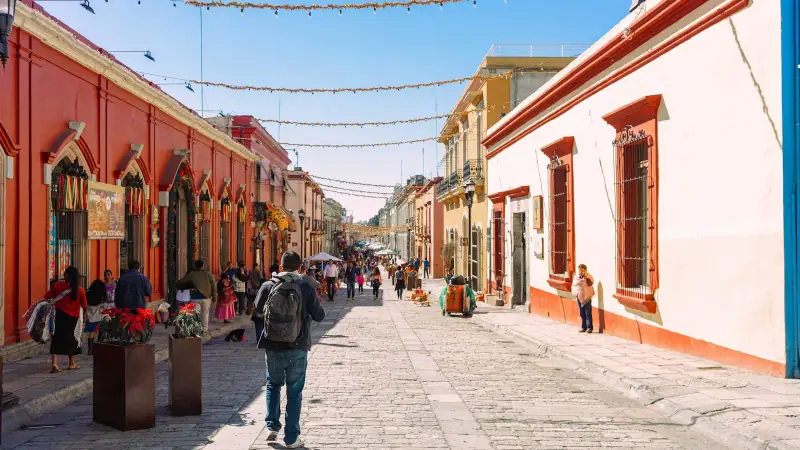
The city center is best explored on foot, and it is a pleasure. The zócalo, the main square lined with arcades, cafés and the cathedral, is where residents gather late in the day, with sometimes musicians and street vendors. Sit on a terrace to watch the life of the square before setting out to explore the surrounding streets.
Next, head to the church of Santo Domingo de Guzmán, one of the finest examples of Mexican Baroque. Its greenish stone facade and gold-leaf interior impress even visitors who are not drawn to religious art. The adjoining former convent houses a museum devoted to the region’s cultures, very useful to prepare for the Monte Albán visit. A pedestrian street links the zócalo to the church and concentrates galleries, craft shops and cafés.
The streets of the center are flat and regular, which makes walking easy. Wear comfortable shoes: sidewalks are sometimes narrow and uneven, and the sun is stronger than you think at this altitude.
Oaxaca’s markets and Oaxacan cuisine
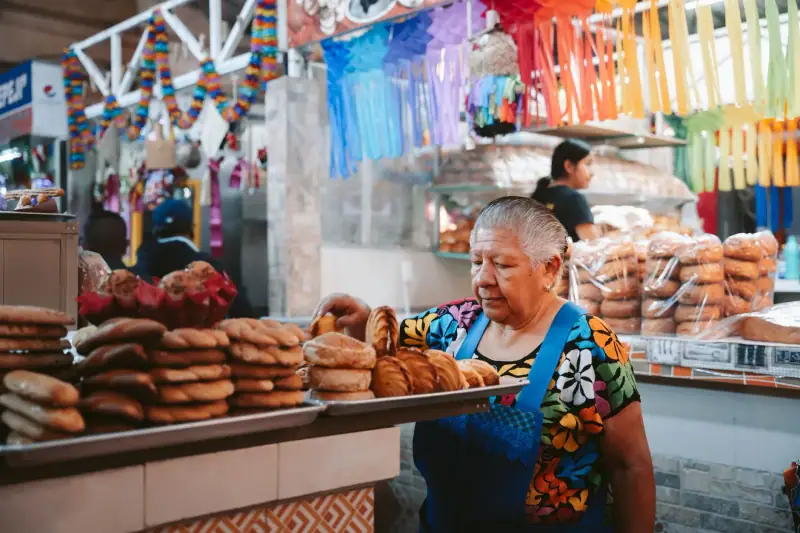
The markets are reason enough to come. In the center’s market halls, you find fruit, chocolate, chiles, cheeses, fabrics, and above all whole aisles of kitchens where you have lunch at the counter. It is the ideal place to taste local food at a low price, in a lively atmosphere.
A few specialties to try:
- Mole, a complex sauce based on chiles, spices and sometimes chocolate. The region is known for its moles of varied colors and flavors, including black mole.
- Tlayuda, a large crispy tortilla topped with beans, cheese and meat.
- Hot chocolate, prepared the traditional way and often mixed with cinnamon.
- Quesillos, the local stringy cheese, eaten in a tortilla.
- Chapulines, grilled and seasoned grasshoppers, which the most curious will try as a snack.
To go further, our article on Mexican food details the dishes to try across the country. If you prefer to be guided, a cooking class or a food tour helps you understand the ingredients and leave with a few recipes.
Cooking classes and tastings in Oaxaca
Markets, mole, mezcal: several food experiences with a local guide.
Monte Albán, the Zapotec city on the heights
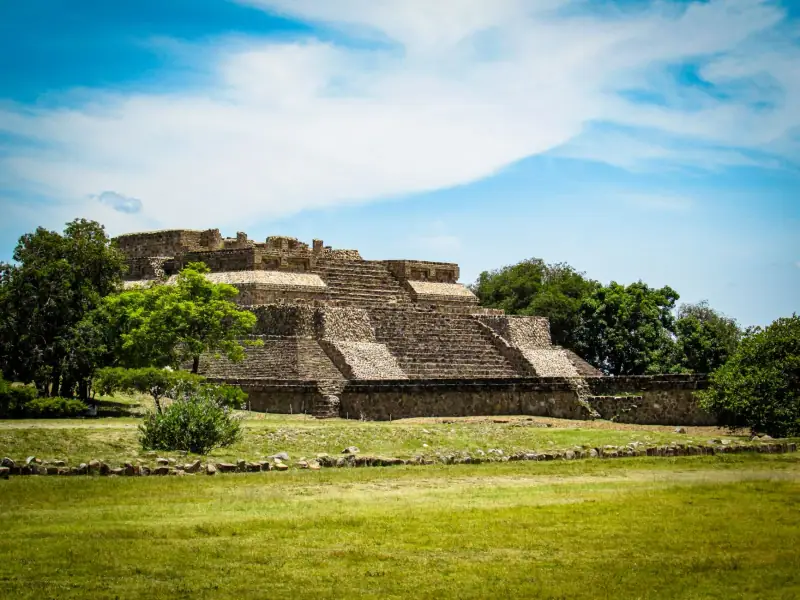
About ten kilometers (6 mi) from the center, Monte Albán occupies a leveled summit overlooking the valley. It was one of the first great cities of Mesoamerica, founded by the Zapotecs more than two thousand years ago, then occupied for several centuries. The big esplanade, surrounded by platforms, temples and a ball court, offers a superb panorama of the mountains.
Points to look for: the central plaza, the “danzantes” bas-reliefs, carved figures whose interpretation is still debated, and the decorated tombs found on the site. Allow about two to three hours there. Arrive preferably at opening: the light is softer, it is cooler and the groups are not there yet.
To get there, several options exist: taxi, organized shuttle from the center or guided visit. Ask locally about departure times, as they vary by season.
Guided tours of Monte Albán
Transport and guide included, to understand the site without worrying about access.
Mitla, Tule and the valley’s craft villages
The Oaxaca valley groups several villages that can be visited in the same day. On the road east, you first meet Santa María del Tule, famous for its monumental tree, an ahuehuete reputed to be among the widest in the world. It is visited in a few minutes and makes a good first stop.
Further on, Mitla is a Zapotec and Mixtec site known for its geometric stone mosaics, very different from the Maya architecture of Yucatán. The visit is short and combines well with a mezcal tasting at a small craft distillery nearby: you discover how the agave is cooked, crushed and distilled.
Other villages specialize in crafts: wool weaving, black pottery, colorful painted wood carvings, the famous “alebrijes”. Buying directly from artisans is a good way to support the local economy, and bargaining stays polite and measured. A day excursion, organized or by car, lets you link several of these stops.
Hierve el Agua, petrified waterfalls
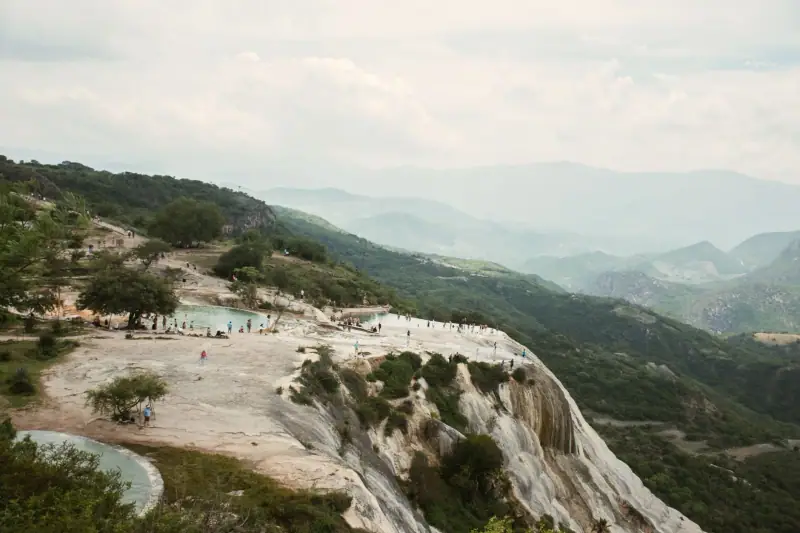
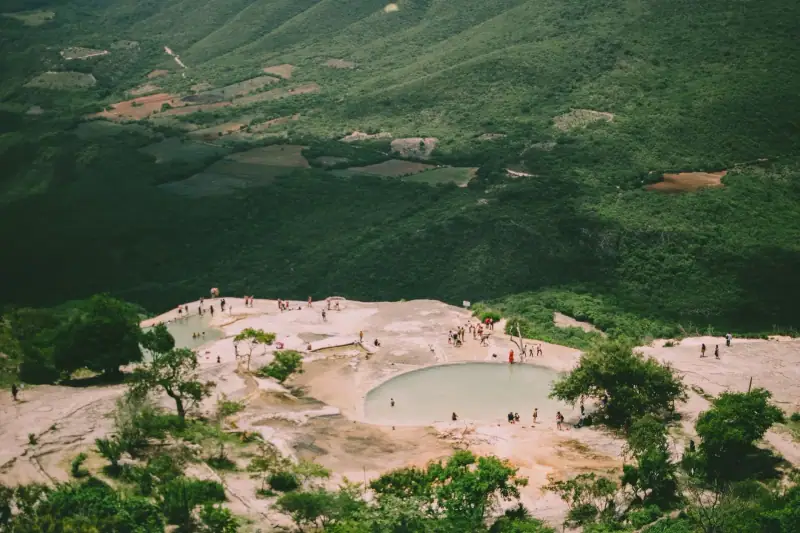
About 70 km (43 mi) from the city, Hierve el Agua is a surprising natural curiosity. Mineral-rich springs have deposited over time limestone formations that look like frozen waterfalls on the mountainside. Natural pools let you swim with a view over the valley, and a path goes around the formations.
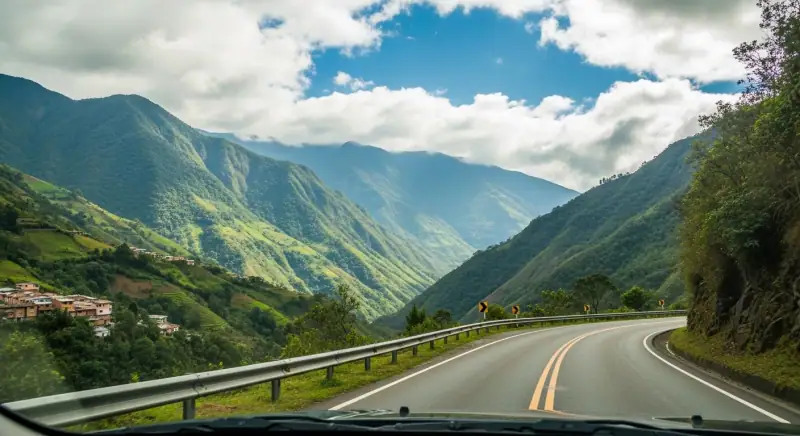
The trip generally takes between an hour and a half and two hours from Oaxaca, on mountain roads. Many visitors combine Hierve el Agua with Mitla and a mezcal workshop in the same day. Bring closed shoes for the path, a swimsuit and water.
Hotels in Oaxaca
Colonial houses, boutique hotels and simple places in the historic center.
Three-day program
A simple setup, to adapt to your pace:
- Day 1: the city. Morning at the zócalo and cathedral, visit Santo Domingo and its museum, lunch at the market, a stroll along the pedestrian streets and a dinner of mole or tlayuda.
- Day 2: Monte Albán and crafts. Monte Albán at opening, back to the center for lunch, then an afternoon in a craft village or a gallery in the center.
- Day 3: the valley. Day excursion with the Tule tree, Mitla, a mezcal workshop and Hierve el Agua.
If you have more time, add a day of relaxation or an excursion to the mountain villages. To place Oaxaca in a wider trip, our 10-day Mexico itinerary shows how to link it with Mexico City and Yucatán.
Mezcal: understanding the region’s emblematic spirit
Oaxaca is the great mezcal region, an agave spirit made by traditional methods. Contrary to a common idea, mezcal is not limited to the image of the worm in the bottle: there are many varieties depending on the agave used, the cooking method and the distillation. The smoky notes come from cooking the agave in pits.
It is sipped in small mouthfuls, often with orange slices and chile salt, and not in one go. Several bars in the city center offer guided tastings, and distilleries in the valley organize visits. Drink in moderation.
When to go and how to get there
The dry season, from about October to April, offers the most pleasant days, with cool evenings. From May to October, storms often break late in the day, but the vegetation is greener and visitors fewer. The dates of the Guelaguetza, a big festival of traditional dances in July, and of Día de Muertos, in early November, draw many people: book far ahead. For an overview, see our guide on when to go to Mexico.
To come from Mexico City, the flight of about 1 h 15 is the fastest. The long-distance bus, by day or night, takes between six and eight hours or so and stays economical. Once there, the center is covered on foot, and valley excursions are done by taxi, shared transport or organized tour.
Flights to Mexico City
Compare flights to reach Mexico before continuing to Oaxaca.
Budget and practical tips
Oaxaca is generally more affordable than the beach destinations of Yucatán, especially for eating and getting around. Markets and small restaurants let you have a good lunch at a low price, while the boutique hotels of the center fall in a range that varies with the season. Our guide to the budget for a trip to Mexico helps you estimate your overall spending.
A few last tips: bring a light jacket for the evenings, sunscreen since altitude strengthens the sun, and some cash for markets and villages. Drink bottled or filtered water, and enjoy the city’s peaceful rhythm: it is one of the stops where you most want to slow down.
Frequently asked questions
How many days do you need to visit Oaxaca?
Three days let you see the historic center, the markets, Monte Albán and a valley excursion. With five days, you add Hierve el Agua, a craft village and a bit of free time.
How do you get to Oaxaca from Mexico City?
Flying is the fastest, with a flight of about 1 h 15. The night or day bus generally takes between 6 and 8 hours depending on the company and the route. Check current schedules before booking.
Can you visit Monte Albán without a guide?
Yes, the site is easy to cover alone thanks to the information panels. A guide is, however, a real plus for understanding Zapotec history and the bas-reliefs.
Do you need to rent a car in Oaxaca?
It is not essential: the center is visited on foot, and valley excursions are offered by shared transport, taxi or organized tour. A car is useful if you want to link several villages at your own pace.
What is the best time to go to Oaxaca?
The dry season, from about October to April, is the most pleasant. Día de Muertos in early November and the Guelaguetza in July are very popular: book far ahead.
More Mexico guides
Keep reading
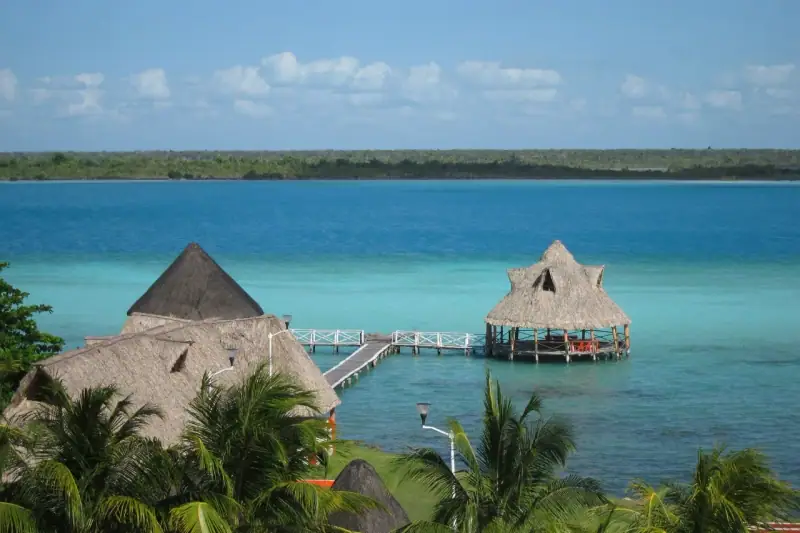
Bacalar and its Lagoon of Seven Colors: is it worth the detour without a car?
Is Bacalar worth the detour? Getting there by ADO bus or Tren Maya from Tulum and Cancún, what to do around the lagoon, where to swim and how many nights.
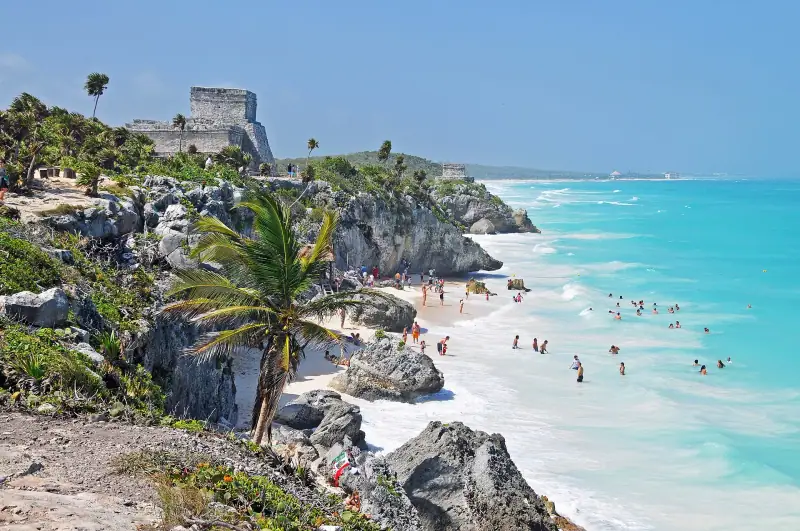
Visiting Tulum: Maya ruins, beaches and cenotes in 2 or 3 days
What to see in Tulum: a Maya site facing the sea, beaches, cenotes, Sian Ka'an reserve and the Cobá ruins. Access, best time and tips to plan your stay.
Complete guide to visiting Mexico: regions, highlights and tips
Prepare your trip to Mexico: regions, cities, Maya sites, beaches, food, best time, transport, lodging and budget. The pillar guide to the destination.
Ready-made
Mexico itineraries

7 days
Yucatán road trip in 7 days: Cancún, Valladolid, Mérida and Chichén Itzá
TulumValladolidMérida
Can be adapted in the planner
7 days
Mexico City, Puebla and Oaxaca in one week without a car: a realistic bus itinerary
Mexico CityPueblaOaxaca
3 days
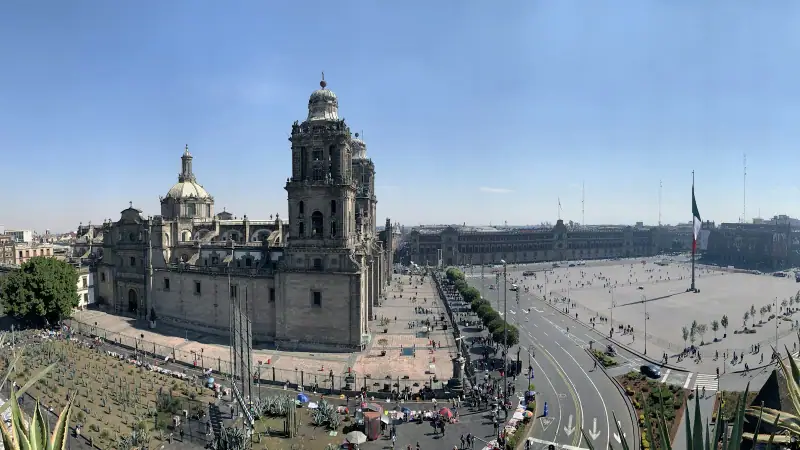
3 days in Mexico City: a day-by-day itinerary for a first stay
What to do in 3 days in Mexico City? Historic center, museums, Coyoacán, Xochimilco or Teotihuacán: a realistic itinerary with altitude and transport tips.