Plan your trip
Martinique trip budget: real costs and 3 sample budgets
We may earn a commission when you book through links on this page, at no extra cost to you. We don't visit or try the places we cover: we summarize published sources. How we work
In short
- The flight is usually the heaviest item and varies with your departure point and the season; high season (December to April) raises lodging prices by about a third.
- On the ground: a rental car runs about €30 to €50 (~$35 to $60) a day in low or mid season, and a local restaurant dish about €10 to €20 (~$12 to $23).
- Beaches, marked trails and markets are free; boat trips, diving and guided hikes are the activities that push the budget up.
- Keep a 10% safety margin, and book the car and lodging early with free cancellation.
Martinique is a French overseas region where you pay in euros, and it is often seen as an “exotic but simple” destination. On budget, though, you should not expect low prices. Imported goods, tourist rentals and the seasonality of flights push the bill up, and the plane ticket weighs the most. Good news: by choosing your period, lodging and transport well, you can travel on a reasonable budget. Here are the real costs item by item, three sample traveler profiles and tips for spending less.
The figures below are orders of magnitude from comparison sites and travel guides consulted in October 2026 (Partir.com, Air Caraïbes, Routard). They vary with season and availability: always check the current fare before booking.
The flight: the first expense
For most travelers, the plane is the heaviest and least compressible expense. Its price depends on your departure point and the season, so it is not priced here: compare dates and airlines for your own trip. Leaving outside school vacations can save several hundred per person, the equivalent of several hotel nights. For a family of four, the gap becomes huge. To choose the right time, read our guide on when to go to Martinique.
Also think about checked baggage, seat selection fees and different departure airports: fares can differ from one to another. Compare dates, play with a few days of flexibility and watch airline offers, which regularly run promotions.
Compare flights to Martinique
Price gaps between two dates can be large: compare before you book.
Lodging: from a tent to a beachfront bungalow
On the ground, lodging is the second item. The price benchmarks gathered give, for two people:
- Camping and mobile homes: from about €30 (~$35) a night for a pitch or simple formula, up to €160-175 (~$185-205) for the best-equipped mobile homes;
- Guesthouses and rentals: most often between €70 and €100 (~$80 to $115) a night, with a large majority of guesthouses under €100 and a few offers from about €40 (~$45);
- Hotels and residences: generally €100 to €130 (~$115 to $150) a night for two in mid season, more in the big beachfront hotels in high season;
- Upscale hotels and villas: from €200 (~$230) a night and often well beyond, depending on the beach and season.
High season, December to April, raises rates by about a third. A rental with a kitchen (guesthouse, studio, bungalow) is often better value than a hotel once you stay more than four or five nights, since it lets you prepare breakfast and a few meals. The choice of area matters too: Les Trois-Îlets and Sainte-Anne are very touristy, while Le Diamant, Les Anses-d’Arlet or the Atlantic coast often offer better value. Our article on where to stay in Martinique details the strengths of each area.
Also budget for the tourist tax, generally charged on top per person per night, whose amount depends on the lodging category and the town.
Lodging in Martinique
Guesthouses, residences and hotels: filter by price and area to stay within your budget.
Getting around: car, ferry shuttles and taxis
A rental car generally costs €30-50 (~$35-60) a day in low or mid season, excluding fuel and options. In high season and during school vacations, prices rise and vehicles, notably automatics, become scarce. Add fuel, parking in towns and any extra insurance or deductible reduction.
Over a week, the car therefore comes to about €250 to €400 (~$290 to $465) all in for two people, to be shared. It is worthwhile if you move around a lot. If your stay is concentrated around Les Trois-Îlets and Fort-de-France, ferry shuttles, which cross the bay in about twenty minutes, avoid the rental. Shared taxis and buses are the cheapest options, but their schedules and limited coverage reserve them for trips between towns. Regular taxis are useful for a transfer but expensive over long distances. All the details are in our guide to getting around Martinique.
Compare rental offers for your dates before booking: gaps between companies can be large.
Meals: between lolos, markets and restaurants
Eating in Martinique can cost very little or a lot, depending on where. The benchmarks noted:
- Snacks, sandwiches and takeout: under €15 (~$17);
- Small local restaurants (“lolos”, beach tables): a dish of the day is most often between €10 and €15-20 (~$12 to $23), and a full meal between €15 and €25 (~$17 to $29);
- Starter-main-dessert menus: frequently between €24 and €29 (~$28 to $34);
- Upscale or tourist seaside restaurants: €30 to €50 (~$35 to $60) per person, or more with drinks.
Guides put total food spending at €30 to €40 (~$35 to $45) per person per day for a traveler who mixes family restaurants and grocery shopping. At the supermarket, the bill can be surprising, especially for imported products. Local products (seasonal fruit, fish, root vegetables, bananas) are, on the other hand, much better value than imported ones, notably at markets. To know what to order and where, see what to eat in Martinique.
For drinks, a beer or an infused rum at a beach bar costs more than at the supermarket; agricultural rum bought at a distillery is often a very good deal, especially if you follow the distillery route, where tastings and shops offer attractive prices.
Activities: lots of free, a few big items
One of the island’s assets is that its best pleasures are free or nearly so: sand beaches (no paid access on public beaches), marked trails, markets, panoramas and fishing villages. Guides estimate an average daily activity spend of about €9 to €14 (~$10 to $16) per person, a smoothed figure that includes days with nothing paid.
The items that push the budget up:
- Boat trip, catamaran or kayak: generally several tens of euros per person depending on duration;
- Diving: intro dive or exploration dive, rather around €50 to €100 (~$60 to $115) per outing;
- Guided hike: useful for Mount Pelée or less-traveled traces, at variable rates;
- Site visits: distilleries (often free or low-priced with a tasting), plantations, gardens, museums, with tickets from a few euros to about €20 (~$23).
For hikes, our guide to hiking in Martinique helps you choose free routes and guided outings. If you prefer to book, compare excursions with transport included.
Excursions and boat trips
Catamaran, snorkeling, guided hikes: compare prices and reviews before booking.
Three budget profiles for a week for two
Here are three scenarios for 7 nights, two people, built from the ranges above. The flight is not included (it depends on your departure point), nor are personal spending and souvenirs. Amounts are estimates per person.
Economical profile
- Lodging in a guesthouse, campground or small studio with a kitchen: €60 to €80 (~$70 to $95) a night, so €210 to €280 (~$245 to $325) per person;
- Shared car, small category: €35 (~$40) a day, about €125 (~$145) per person, with fuel to be adjusted;
- Meals: groceries and homemade breakfasts, one local meal a day, about €25 (~$29) per person per day, so €175 (~$205);
- Activities: mostly free, plus one or two paid outings, about €50 (~$60).
Comfort profile
- Hotel or residence with a pool: €110 to €140 (~$130 to $160) a night, so €385 to €490 (~$445 to $570) per person;
- Car for the week: about €150 to €200 (~$175 to $230) per person, with fuel and options;
- Meals: restaurants once a day, €40 to €50 (~$45 to $60) per person per day, so €280 to €350 (~$325 to $405);
- Activities: a boat trip, a guided hike, visits, about €150 to €200 (~$175 to $230).
Premium profile
- Boutique hotel or villa with a view: €200 to €350 (~$230 to $405) a night, so €700 to €1,200 (~$810 to $1,390) per person;
- Larger car or occasional driver: €250 (~$290) and more per person;
- Meals: fine dining and seaside tables, €80 to €100 (~$95 to $115) per person per day;
- Activities: diving, private outings, spa treatments and excursions, €250 (~$290) and more.
If you travel with several people, lodging and the car are shared, which reduces the per-head spend.
Tips to spend less
A few simple levers lighten the bill noticeably without sacrificing the experience.
- Shift your dates. Traveling in September-October or May-June rather than August or December can save a lot on the plane ticket. Just plan cancellation insurance and watch the hurricane season.
- Book early, especially the car. Cheap cars and lodging go quickly in high season. Compare offers and favor free cancellation.
- Stay somewhere with a kitchen. A guesthouse or studio avoids two restaurants a day. Homemade breakfasts and beach picnics easily save €15 to €20 (~$17 to $23) a day per person.
- Buy local. Fruit, vegetables, fish and spices at the markets cost much less than imported products from supermarket shelves.
- Eat where locals eat. Lolos and small village restaurants offer generous dishes at gentle prices, away from pricier waterfront tables.
- Enjoy the free. Public beaches, coastal trails, the center of Saint-Pierre, the Fort-de-France market, panoramas: these visits cost nothing. See Saint-Pierre or Fort-de-France for low-cost visit ideas.
- Share. With four in a car, the rental becomes almost trivial per person. Some guesthouses also offer weekly discounts.
- Optimize your trips. Grouping visits by area limits miles, fuel and time spent in traffic around Fort-de-France.
- Avoid all-inclusive packages by default. They suit some profiles, but compare with a free-form option before paying for services you will not use.
Hidden costs not to forget
Beyond the big items, a few costs slip into the budget and go unnoticed:
- Travel and cancellation insurance, essential with hurricane season and the distance;
- Checked baggage and extras on some airfares;
- Sunscreen, mosquito repellent and hiking or water shoes, pricier there, see our list of accessories for Martinique;
- Fuel, parking and possible car park fees;
- The tourist tax, collected by the host;
- Tips, not mandatory but appreciated in restaurants where service is not always listed separately;
- Small pleasures: ice cream, fresh juice, infused rum, souvenirs, which easily add €10 to €20 (~$12 to $23) a day.
Plan a safety margin of 10% of the total budget to absorb the unexpected.
Bottom line: a budget built around your season
Martinique is neither the most expensive destination in the Caribbean nor a bargain at any price. The plane ticket, the season and the type of lodging determine most of the bill, while local meals, beaches and hikes let you keep spending under control. Choose your profile, book with some flexibility and build your stay with our 7-day Martinique itinerary to make the most of each day. Entry rules depend on your passport: check the official travel advice of your government before you book (travel.state.gov (US), GOV.UK (UK), travel.gc.ca (Canada), Smartraveller (Australia), checked November 2026).
Sources
- Martinique Tourism Authority: figures checked November 2026
Frequently asked questions
What budget should you plan for a week in Martinique?
The flight depends on where you start and is not priced here. On the ground, the budget profiles below list lodging at €60 to €80 (~$70 to $95) a night for the economical profile and €110 to €140 (~$130 to $160) for the comfort profile, a car at about €35 (~$40) a day and above, and meals from about €25 (~$29) a day.
Is Martinique expensive?
Imported goods, tourist rentals and the seasonality of flights push the bill up. Groceries at the supermarket weigh more than expected, especially imported products, while local fruit, fish and market produce are much better value.
How much does a meal at a restaurant cost?
In a small local restaurant, a dish is generally between €10 and €20 (~$12 to $23), and a full menu around €25 to €30 (~$29 to $35). Upscale places and seaside restaurants in tourist areas are clearly above that.
Can you travel in Martinique without renting a car?
Yes, by limiting yourself to Fort-de-France, Les Trois-Îlets (by ferry shuttle) and one or two organized excursions. To explore the island freely, a car remains the most efficient option, and generally costs €30 to €50 (~$35 to $60) a day in low season.
What is the cheapest period?
High season runs December to April, with lodging prices often about a third higher. May to November is more affordable, but it is also the rainy and hurricane season: check the weather and plan cancellation insurance.
Should you carry cash?
Bank cards are accepted almost everywhere. Still, keep a few tens of euros in cash for markets, small stands, car parks and some shared taxis. The currency is the euro: check with your bank about foreign transaction fees and how you will get euros.
More Martinique guides
Keep reading
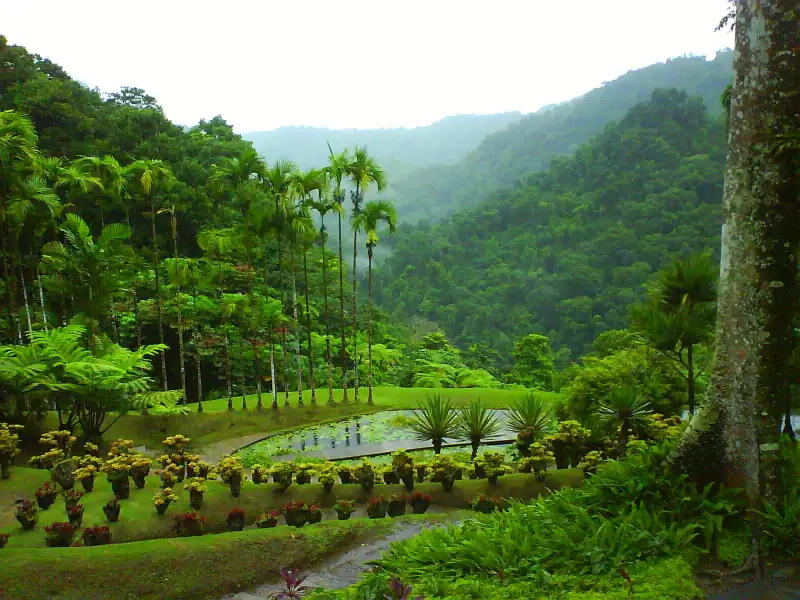
When to go to Martinique: weather, seasons and best times
When to go to Martinique: dry and wet seasons, hurricane risk, carnival, sea and budget. A month-by-month guide to choosing the best time.
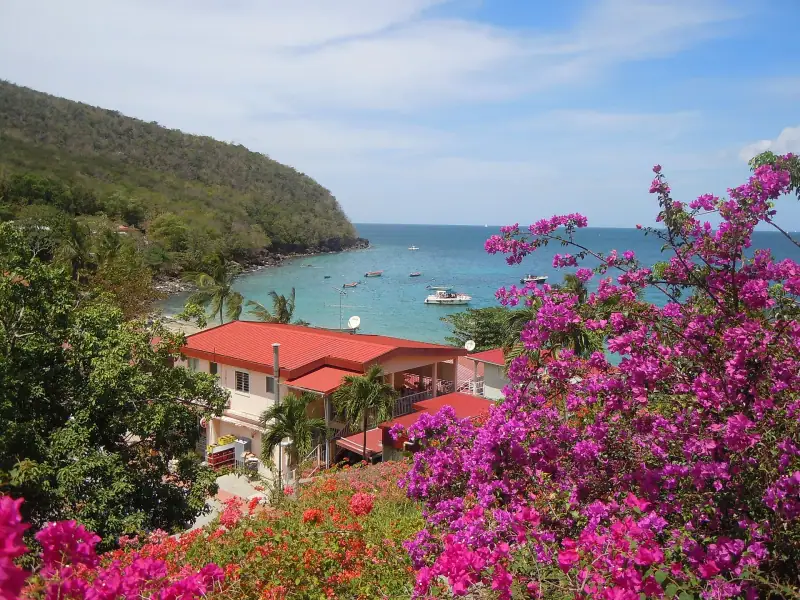
Where to stay in Les Anses-d'Arlet: Grande Anse, Anse Dufour or Petite Anse?
Where to stay in Les Anses-d'Arlet, Martinique: the village, Grande Anse, Petite Anse, Anse Dufour and Anse Noire. Which area, lodging, car or no car.
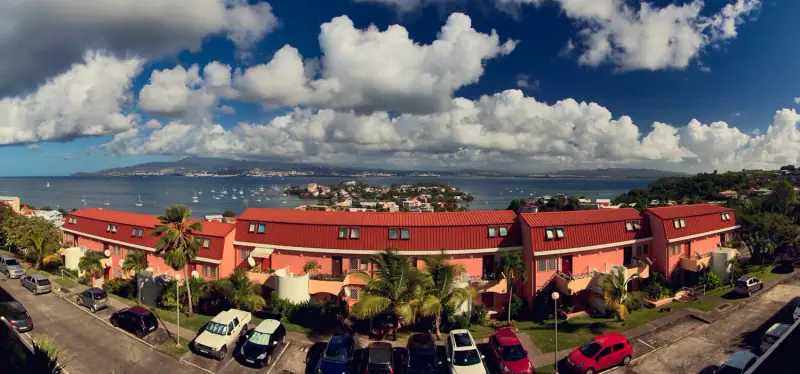
Where to stay in Les Trois-Îlets: Pointe du Bout, Anse Mitan or Anse à l'Âne?
Where to stay in Les Trois-Îlets, Martinique: Pointe du Bout, Anse Mitan, Anse à l'Âne and the village compared, with lodging types and booking tips.
Ready-made
Martinique itineraries
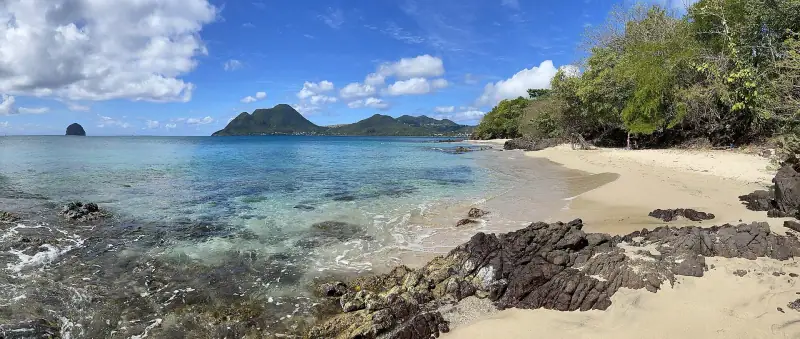
5 days
Martinique in 5 days with kids: stops, distances and a realistic pace
Martinique in 5 days with kids: day-by-day stops, distances, drive times, safe beaches and breaks to keep the pace without wearing out the family.
3 days
3 days in northern Martinique: a volcano, forest and wild coast itinerary
A 3-day itinerary for northern Martinique: Saint-Pierre, Mount Pelée, the Caribbean coast, the Trace and the Atlantic coast, with tips and variations.
7 days
Martinique in 7 days: a day-by-day itinerary for a first stay
Martinique in 7 days: a day-by-day itinerary through Fort-de-France, Saint-Pierre, the Caravelle and the southern beaches, with drive times and tips.