Things to do
Snorkeling and diving in Martinique: turtles, wrecks and Diamond Rock
We may earn a commission when you book through links on this page, at no extra cost to you. We don't visit or try the places we cover: we summarize published sources. How we work
In short
- Les Anses-d'Arlet, on the southern Caribbean coast, is the best-known snorkeling area: green turtles graze on the seagrass close to the beach.
- The Saint-Pierre roadstead wrecks (1902 eruption) are mostly for certified divers; Diamond Rock is exposed to swell and currents and reserved for experienced divers.
- Water stays warm all year; the dry season, roughly January to May, usually brings calmer seas and better visibility.
- Look, do not touch: keep your distance from turtles and never walk on seagrass beds.
Martinique is not just postcard beaches: beneath the surface, the Caribbean Sea offers seagrass beds where turtles graze, reefs full of colorful fish and wrecks steeped in history. Best of all, many of these spots can be explored without a tank, straight from the sand, with just a mask and snorkel. For certified divers, the island also has legendary sites, from Diamond Rock to the Saint-Pierre roadstead. Here is how to choose your spots, when to go, what gear to bring and how to enjoy the sea while respecting the animals that live in it.
Why the Caribbean coast is the sea champion
Martinique is washed by two very different seas. The Atlantic coast, in the east, is exposed to the trade winds and swell: it appeals to kitesurfers and lovers of wild landscapes, but is poorly suited to relaxed swimming. Reefs and islets there sometimes form sheltered pools, to be approached with a guide or a local provider.
The Caribbean coast, in the west and southwest, is the one that interests us. Sheltered from the prevailing winds, it offers a generally calm sea, warm water all year and bottoms that drop quickly along the island’s volcanic slopes. This is where the snorkeling spots reachable from the beach are concentrated, along with most dive clubs.
To choose where to lay your towel before putting on your mask, see our selection of the most beautiful beaches in Martinique: several of them are also excellent snorkeling spots.
Les Anses-d’Arlet: turtle paradise
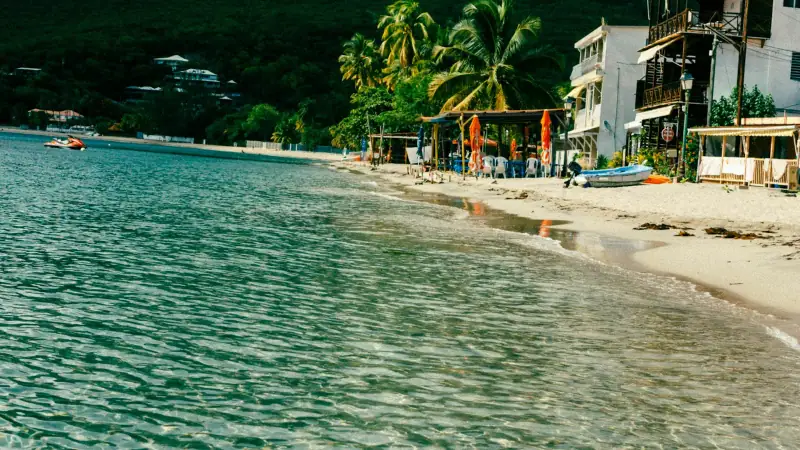
If you only do one snorkeling session, this would be it. The Les Anses-d’Arlet area, south of the Bay of Fort-de-France, strings together typical small coves: fishing village, church facing the sea, colorful boats pulled up on the sand. The seagrass beds along the coast attract green turtles that come to feed, often only a few dozen yards from the shore.
Three beaches are worth knowing:
- Grande Anse: the largest, with its long strip of sand and its services. It is the simplest starting point, with the village church as a backdrop.
- Petite Anse: smaller and more intimate, reached on foot or by car from the village.
- Anse Dufour and Anse Noire: two neighboring coves, separated by a short path. The first is colored by its fishing boats, the second stands out with its dark volcanic sand, contrasting with the clear water.
The principle is simple: enter the water with mask, snorkel and fins, swim gently toward the seagrass beds and watch. The turtles are wild; some days they are there, some days not. Keep a respectful distance, never touching them or cutting off their path. You will also very likely see parrotfish, surgeonfish and schools of small silvery fish around the rocks.
To sleep in the area or combine it with Les Trois-Îlets, read our guide on where to stay in Martinique.
Stay near Les Anses-d'Arlet
Staying steps from the sea lets you get in the water in the morning, when it is calmest and clearest.
Snorkeling from the beach: tips for getting started
Snorkeling is the most accessible water activity on the island: it needs no certification, no booking and no great fitness. A few habits make the experience much more pleasant.
Choose a suitable mask. Place it on your face without the strap and inhale through your nose: if it stays on by itself, the seal is good. A poorly fitted mask that leaks quickly spoils the outing. A little anti-fog product, or failing that a bit of saliva rinsed off, prevents fogging.
Get good fins. They save your effort and let you swim slowly without stirring up the bottom. For a first try, short travel fins are enough.
Protect yourself from the sun. In the tropics you burn on your back without noticing, because the water cools you. A long-sleeved UV shirt is more effective than sunscreen, and it spares the coral. If you use sunscreen, choose a formula that is gentle on marine environments. We detail what is worth packing in our guide to accessories to bring to Martinique.
Always swim with someone. Even close to shore, never go alone, stay within sight of the beach and keep an eye out for boats. A small brightly colored safety float is a good habit.
Respect the seagrass. Do not walk on it: it is the turtles’ pantry and shelters many juvenile fish.
An overview of other snorkeling spots
Beyond Les Anses-d’Arlet, several areas of the Caribbean coast are worth a detour for a mask-and-snorkel session.
Les Trois-Îlets and Pointe du Bout. Facing Fort-de-France, across the bay, the Les Trois-Îlets resort offers family beaches and calm water. You can easily combine swimming, walks and cultural visits, making it a good base camp for those traveling with children.
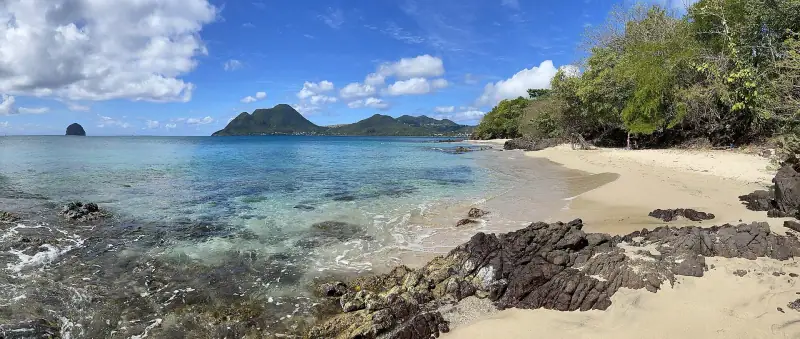
Le Diamant and Sainte-Anne. Farther south, Le Diamant’s big beach faces the famous rock, while the Sainte-Anne and Les Salines region makes up the tropical scenery you imagine: pale sand, coconut palms, transparent water. Conditions vary from day to day with wind and swell: ask locally before getting in the water, notably on the exposed side of Le Diamant beach, where swimming calls for caution.
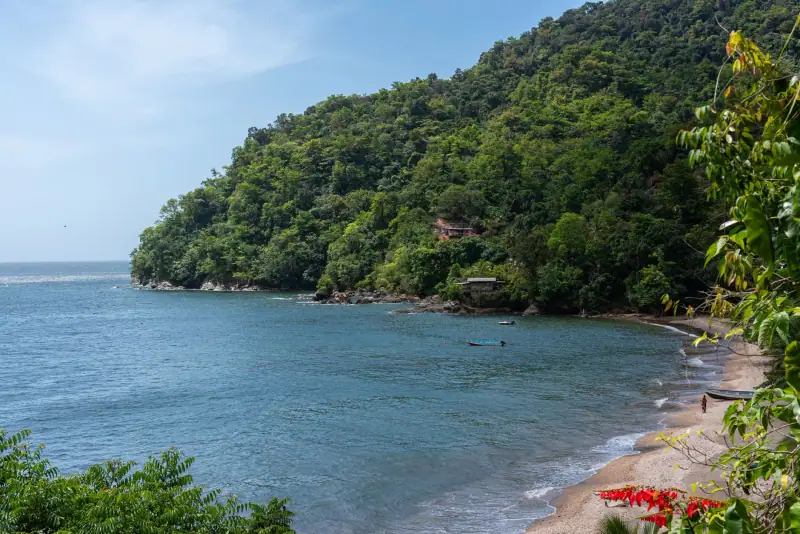
The Caribbean north. Around Saint-Pierre and Le Carbet, the sand is volcanic and dark, and the bottom drops faster. Seascape lovers find atmospheres very different from the south, with Mount Pelée as a backdrop.
Wherever you are, the golden rule stays the same: check the swimming sign, the wind direction and the state of the sea before getting in, and if doubt remains, ask the fishermen or the beach managers.
Scuba diving in Martinique
To go deeper, the island has several dive clubs, mostly along the Caribbean coast. They generally offer intro dives for beginners, exploration dives for certified divers, training and boat trips to farther sites. Conditions are accessible: the water is warm all year, and most Caribbean-coast sites are sheltered.
Here is what to expect depending on your level:
- Beginners: an intro dive takes place at a calm site, with an instructor, after a briefing on the essential gestures. The club provides the equipment. A medical certificate may be requested.
- Certified divers: choose a club that runs regular outings, with a limited number of divers per group. Do not hesitate to ask the level required for each site.
- Experienced divers: the island has a few more demanding sites, one of the most famous being Diamond Rock, detailed below.
Before booking, check that the club is professional and properly registered, that it asks for your certification card and logbook, and that it presents clear safety instructions. A good center takes the time to explain rather than filling the boat.
Sea outings and water activities
Intro dives, boat trips, catamaran outings: compare the offers available in Martinique.
The wrecks of the Saint-Pierre roadstead
This is the island’s dive most steeped in history. On May 8, 1902, the eruption of Mount Pelée destroyed the town of Saint-Pierre, then the economic and cultural capital of Martinique. Several ships anchored in the roadstead were swept away by the burning cloud and sank. More than a century later, their hulks still rest on the bottom, covered in sponges, coral and fish.
Diving these wrecks is a special experience: you explore a fragment of the island’s history, in often clear water. The bottoms are sometimes at depths that require decent diving experience, hence the need to go through a local club that knows the currents and the day’s conditions. Never try to go on your own, and do not take any object: the wrecks are part of the heritage.
For those who prefer to stay dry, the town itself is well worth the visit, with its ruins, its theater and its museum devoted to the volcano. It is all detailed in our guide to visiting Saint-Pierre.
Diamond Rock: a well-known dive site
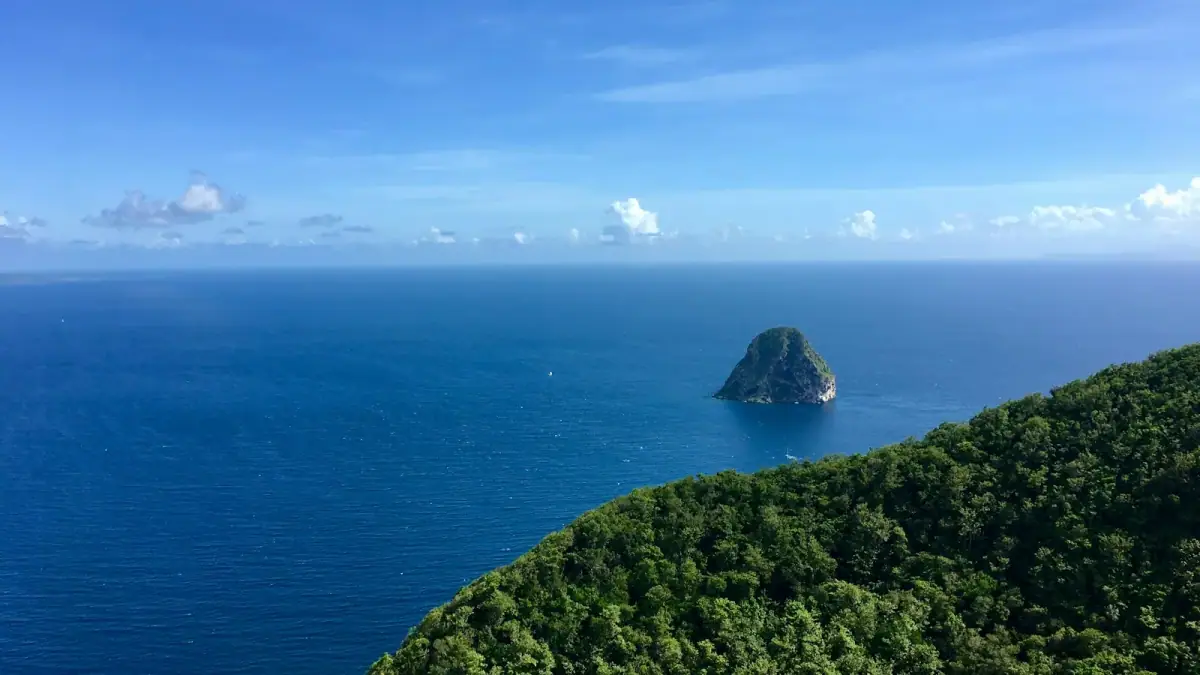
Off the town of Le Diamant, a huge rocky islet rises from the sea, about 2 km (1.2 mi) from the coast. Diamond Rock is one of Martinique’s symbols. It also has a military history: during the naval wars between France and England, it was used as a defense post.
For divers it is a reference site, with walls plunging into the water and abundant marine life. But it is exposed to swell and currents: it is therefore reserved for experienced divers, accompanied by a club that knows the place. Outings depend on the weather and sea state; they can be canceled at the last minute, which is normal when safety requires it.
If you are not a diver, you can still admire the rock from Le Diamant beach, or from the road overlooking the bay, especially at the end of the day when the light gilds the stone.
When to go to dive or swim in Martinique
The water stays warm all year, which makes Martinique accessible in every season. There are still a few nuances to know.
- January to May (dry season): the dry season, with a calmer sea and good visibility. This is the period favored by many divers.
- June to November (wet season): heat and humidity rise, rain is more frequent and hurricane season, especially between August and October, means you should follow the weather. Rates can also be lower.
- Swell and wind: even in the dry season, swell episodes can complicate some outings. The wisest approach is to stay flexible and allow several days for your sea sessions.
To refine your choice of dates, our complete guide on when to go to Martinique details the climate, seasons and events.
Flights to Martinique
Compare flights for your dates and book early if you travel during school vacations.
Respecting turtles, coral and seagrass
Martinique’s seabed is fragile. A few simple actions are enough to protect it:
- Touch nothing, neither coral, sponges nor animals. Contact can damage organisms that take years to rebuild.
- Keep your distance from turtles. Do not chase them, do not feed them, avoid photographing them with a flash and always leave them access to the surface.
- Do not walk on seagrass beds and do not anchor a boat on them: they are the base of the coastal ecosystem.
- Avoid harsh sunscreens: favor a UV garment, and rinse off on land.
- Take your trash back, including cigarette butts, caps and snack wrappers.
- Do not collect live shells or coral to take home as souvenirs.
Safety: good habits before getting in the water
The tropical sea is welcoming but deserves respect.
Watch before you enter. Currents, swell and wind change from day to day. If the water is rough, it is better to give up or choose another, more sheltered spot.
Beware of sea urchins. Black long-spined urchins frequent some rocks. Avoid putting your feet on rocky bottoms and wear water shoes if you must walk in the water.
Tell someone. Let your host or your group know where you are going and what time you expect to be back.
Respect the rules of diving. Follow your club’s instructions, including its recommended wait before flying after a dive.
Plan suitable insurance. If you dive, check that your policy covers the activity and repatriation.
How to organize your sea sessions
To build a balanced stay, alternate days: half a day at sea, then a calmer time on land, to let the body recover from sun and salt. Here is an idea of a week’s split:
- Day 1: arrival, easy swim near your lodging.
- Day 2: snorkeling day at Les Anses-d’Arlet, with a picnic and turtle watching.
- Day 3: visit Saint-Pierre and, if you dive, an outing to the wrecks.
- Day 4: a hike at altitude for a change of scenery (see our guide to hiking in Martinique).
- Day 5: free day on the Sainte-Anne and Les Salines side, or a dive at Le Diamant for experienced divers.
To get between these spots, a car remains the most practical option: see our guide to getting around Martinique.
Bottom line
Martinique is a very good destination for anyone who loves the sea: accessible snorkeling at Les Anses-d’Arlet, the Saint-Pierre wrecks and Diamond Rock offer three very different experiences, suited to all levels. Start with the turtles if you are a beginner, let a serious club guide you for diving, and keep in mind that the best spot is often the one where the sea is calm on the day you are there. Bring a good mask, a UV shirt and plenty of curiosity: the Caribbean Sea takes care of the rest.
Frequently asked questions
Where can you see turtles while snorkeling in Martinique?
The Les Anses-d'Arlet area, on the southern Caribbean coast, is the best known: the seagrass beds near Grande Anse beach and the neighboring small coves attract green turtles that come to graze. They are wild, so no outing guarantees their presence, but sightings there are very frequent.
Do you need to know how to dive to see the underwater world?
No. Snorkeling (mask, snorkel, fins) is enough to watch fish and turtles near the shore. For scuba diving, clubs offer supervised intro dives, with no prerequisite other than the medical certificate or declaration the club may ask for.
What is the best time to dive in Martinique?
You can dive all year, as the water stays warm. The dry season, running roughly from January to May, generally offers a calmer sea and better visibility. From July to October, hurricane season means you should follow the weather and swell.
Can you dive the Saint-Pierre wrecks?
Yes. During the 1902 eruption of Mount Pelée, several ships sank in the Saint-Pierre roadstead. These wrecks, resting on the bottom, can be visited with local dive clubs. They are mainly for already certified divers: ask the club about the level required.
Is Diamond Rock accessible to beginners?
It is a well-known dive site, exposed to currents and swell, and mostly reserved for experienced divers. Beginners will prefer the sheltered sites of the Caribbean coast. Only a local club can judge the day's conditions.
Should you bring your own snorkeling gear?
It is advisable for comfort: a mask that fits you changes everything. Many beaches and clubs also rent masks, snorkels and fins. Consider sun protection without ingredients harmful to coral and a UV shirt.
How should you behave around sea turtles?
Watch from a distance, without touching, chasing or feeding them. Avoid placing yourself between the turtle and the surface, since it needs to come up to breathe. Stay calm, swim slowly, and never walk on seagrass beds.
More Martinique guides
Keep reading
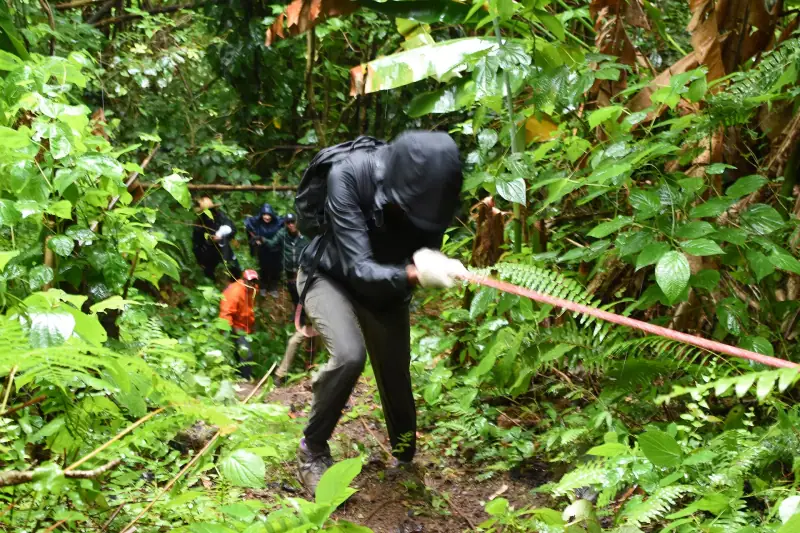
Hiking in Martinique: Mount Pelée, gorges and coastal trails
The best hikes in Martinique: climbing Mount Pelée, the Gorges de la Falaise, rainforest, the Caravelle Peninsula and southern trails. Tips and safety.
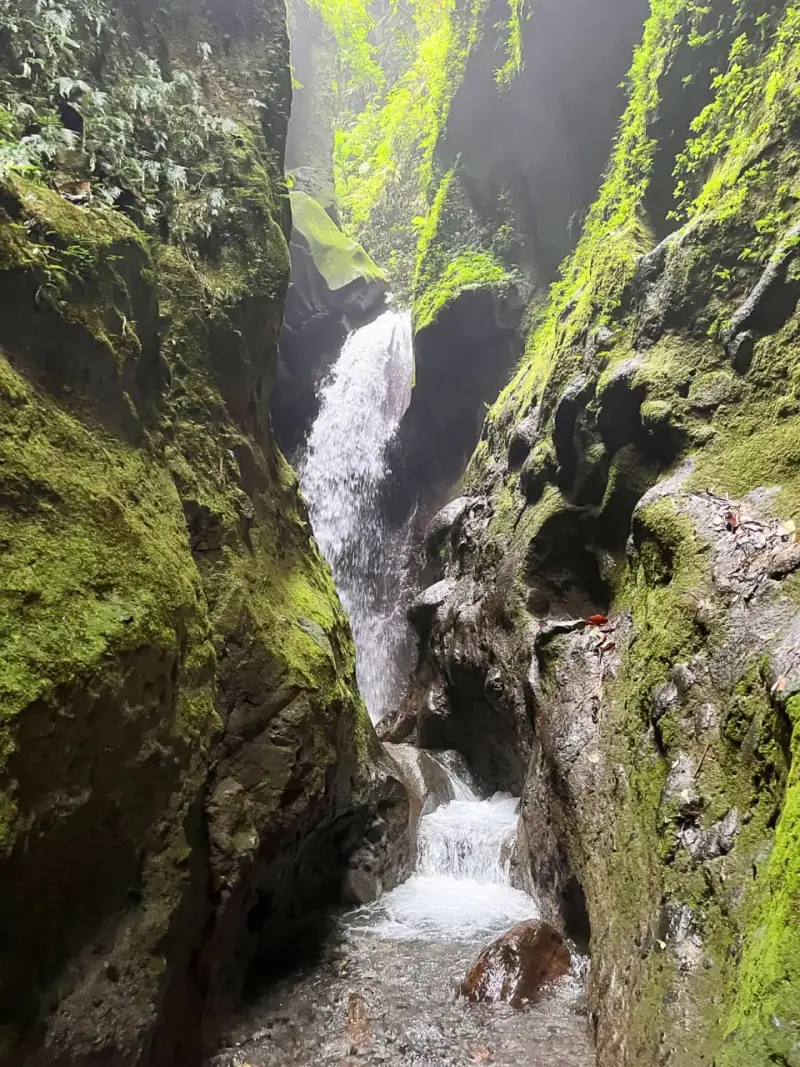
Gorges de la Falaise in Martinique: price, required guide, rain and difficulty
Gorges de la Falaise at Ajoupa-Bouillon: guided tour price, booking, duration, difficulty, children's age and what to do when rain closes the site.
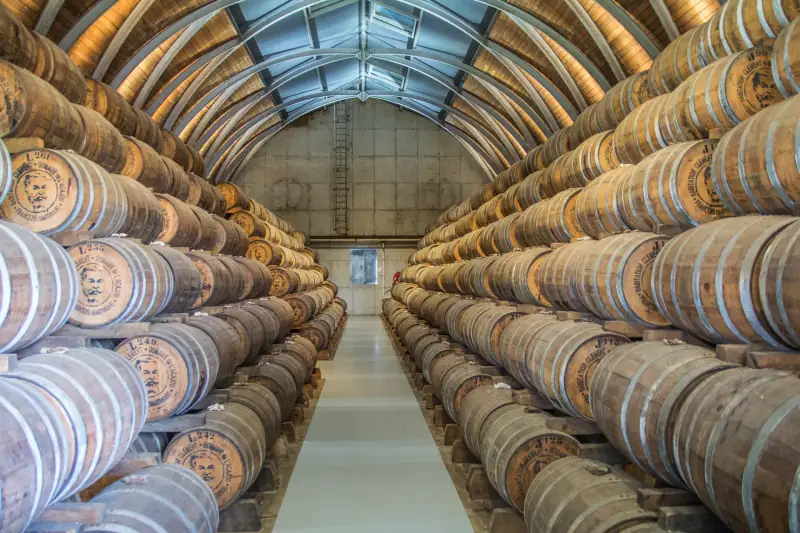
Martinique's rum distillery route: the agricultural rums to visit
Habitation Clément, Saint James, J.M, Depaz, La Mauny: a guide to Martinique's distillery route, with an itinerary, tasting tips and the rhum agricole AOC.
Ready-made
Martinique itineraries
5 days
Martinique in 5 days with kids: stops, distances and a realistic pace
Martinique in 5 days with kids: day-by-day stops, distances, drive times, safe beaches and breaks to keep the pace without wearing out the family.
3 days
3 days in northern Martinique: a volcano, forest and wild coast itinerary
A 3-day itinerary for northern Martinique: Saint-Pierre, Mount Pelée, the Caribbean coast, the Trace and the Atlantic coast, with tips and variations.
7 days
Martinique in 7 days: a day-by-day itinerary for a first stay
Martinique in 7 days: a day-by-day itinerary through Fort-de-France, Saint-Pierre, the Caravelle and the southern beaches, with drive times and tips.