Itineraries
Western Madagascar road trip: from Antsirabe to Morondava and the tsingy
We may earn a commission when you book through links on this page, at no extra cost to you. We don't visit or try the places we cover: we summarize published sources. How we work
Day by day
- Day 1Antananarivo to Antsirabe on the RN7
- Day 2Antsirabe: rickshaw ride, craft workshops, market
- Day 3Antsirabe to Miandrivazo on the RN34
- Day 4Miandrivazo to Morondava
- Day 5Avenue of the Baobabs and Morondava surroundings
- Day 6Morondava to Bekopaka, the long track
- Days 7-8Bemaraha tsingy: Great Tsingy, Little Tsingy, Manambolo gorges
- Day 9Return to Morondava
- Day 10Morondava to Antananarivo by flight or road
Where to sleep
- Antsirabe2 nights
- Miandrivazo1 night
- Morondava2 nights
- Bekopaka3 nights
- Morondava1 night
In short
- The 10-day loop runs Antananarivo, Antsirabe, Miandrivazo, Morondava, then Bekopaka for the Bemaraha tsingy, with a return by road or domestic flight.
- Antsirabe to Morondava is about 480 km (298 mi), roughly 10 hours without stops, so split it at Miandrivazo (about 6 h, then about 5 h).
- The Morondava to Bekopaka track takes a full day with a suitable vehicle; most travelers hire a vehicle with a driver-guide.
- The dry season, roughly May to October, is the best period; in the rainy season the tracks worsen and access to the tsingy can be suspended.
Western Madagascar is the region of the images people keep from this trip: giant baobabs rising in the evening light, a river you float down in a pirogue, and the tsingy, those stone forests of razor-sharp blades. It is also the region where distances are paid for in hours on the road, and where a badly paced itinerary quickly turns into a marathon.
This guide offers a 10-day road trip that starts in the Highlands, heads west through Antsirabe and Miandrivazo, reaches Morondava, then goes on to Bekopaka and the Bemaraha tsingy. It relies on cautious drive times, stages split in the right places and a few alternatives to save time. To place this circuit within a longer stay, see also our two-week itinerary in Madagascar.
Overview of the circuit: 10 days, one direction
The principle is simple: one big arc from Antananarivo, with a return by the same route or by air. Here is the suggested breakdown.
| Days | Stage | Indicative drive time |
|---|---|---|
| 1 | Antananarivo → Antsirabe | 4 to 5 h |
| 2 | Antsirabe, spa town | rest or sightseeing |
| 3 | Antsirabe → Miandrivazo | about 6 h |
| 4 | Miandrivazo → Morondava | about 5 h |
| 5 | Avenue of the Baobabs and Morondava | short trips |
| 6 | Morondava → Bekopaka | a full day on the track |
| 7 | Bemaraha tsingy | at the site |
| 8 | Bekopaka, Little Tsingy and gorges | at the site |
| 9 | Return to Morondava | a full day on the track |
| 10 | Morondava → Antananarivo | flight or two days by road |
These durations are rough estimates. In Madagascar, the state of the road, a broken-down truck or a downpour can change the plan. Keep a half-day margin across the whole stay.
Day 1: Antananarivo → Antsirabe
The first stage is on national road 7 (RN7), the same one that leads south. Antsirabe is about 170 km (106 mi) from the capital, which generally means four to five hours on the road depending on traffic, with the exit from the capital being the slowest part. Leave early to arrive in the early afternoon.
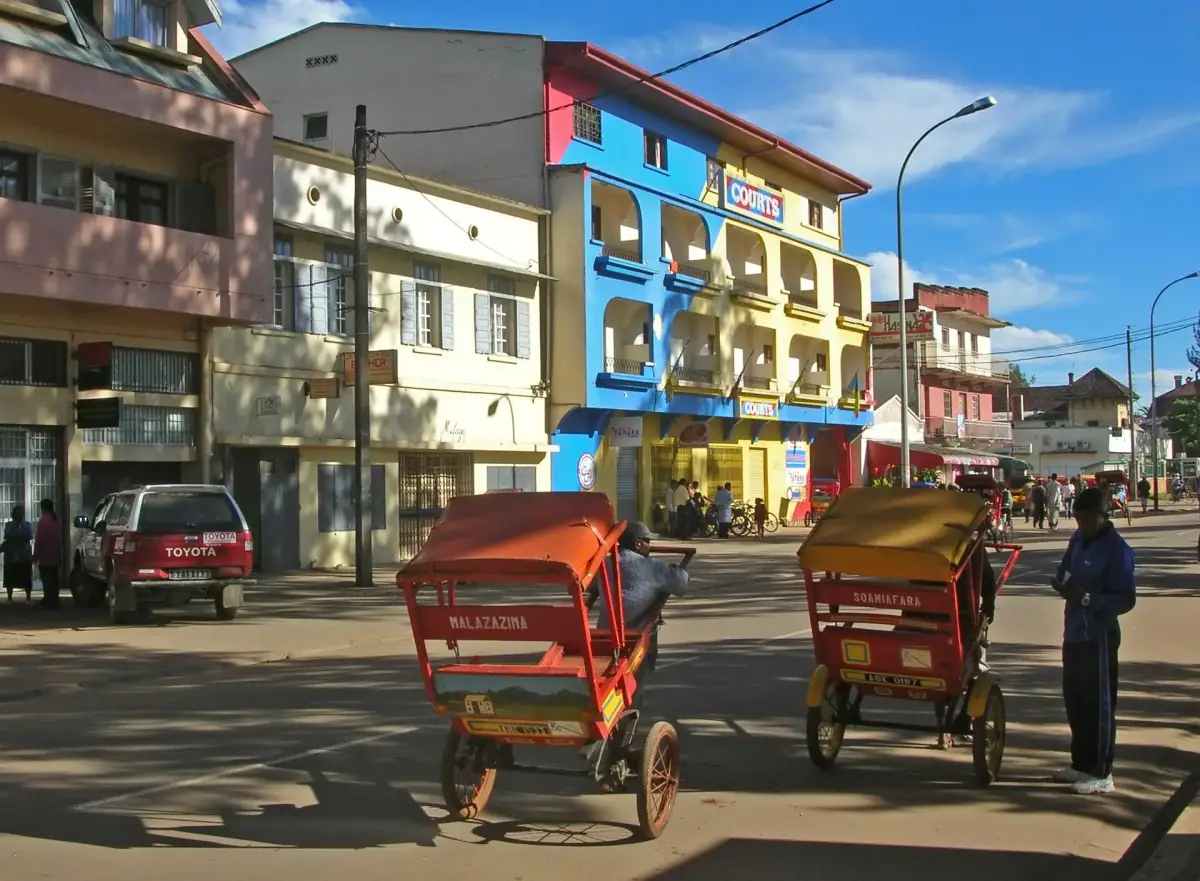
This stage is more than simple transit. Antsirabe, a Highlands town, owes its reputation to its spa past and to its colorful pousse-pousse rickshaws, which replace taxis in the center. The pace is calm, the altitude makes evenings cool, and it is a good introduction to the country before the harder days on the road.
Our guide to national road 7 details this section and the possible stops between the capital and Antsirabe.
Day 2: Antsirabe, a day to catch your breath
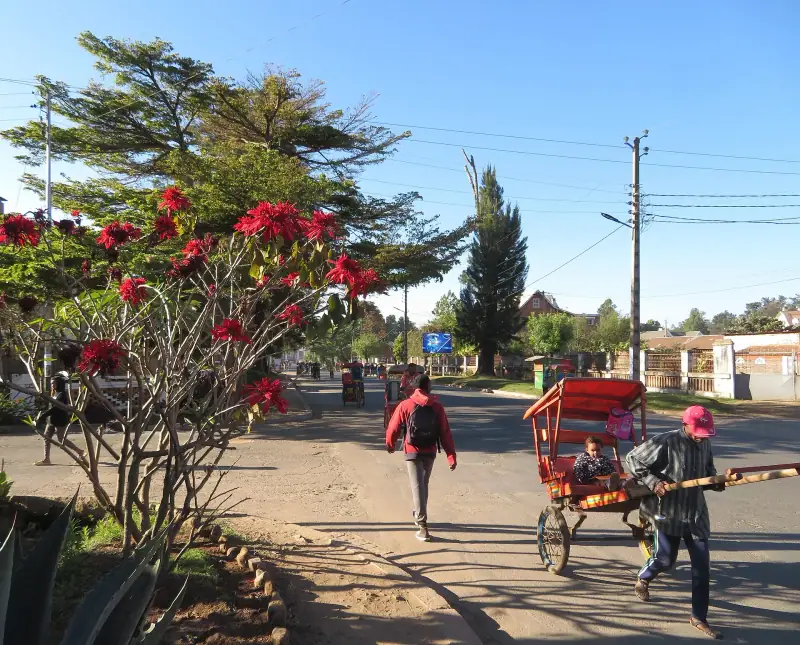
Many circuits skip this day. That is a mistake: it helps you absorb jet lag, check the vehicle and stock up on supplies before the long road west.
A few ideas to fill it without tiring yourself:
- a pousse-pousse ride in the center, to be negotiated before departure;
- a visit to craft workshops, where horn, wood or embroidery are worked;
- a tour of the market to buy fruit, biscuits and bottled water for the road;
- a walk around the nearby lakes if the weather allows.
It is also the time to change cash, because ATMs become rare once you leave the main towns. For the financial outline, see our article on the budget in Madagascar.
Hotels in Antsirabe
Compare accommodation in Antsirabe for your first stage toward the west.
Day 3: Antsirabe → Miandrivazo, the road west
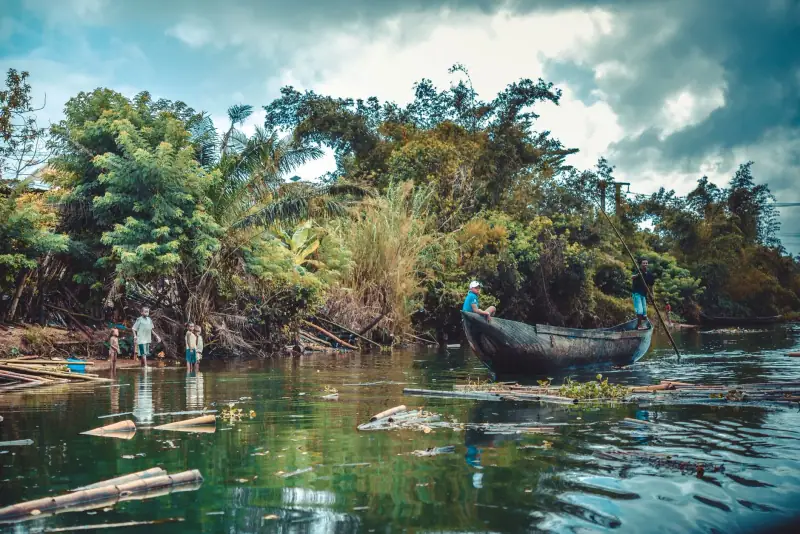
This is where the trip changes character. You leave the RN7 for national road 34 (RN34), which descends westward. From Antsirabe to Miandrivazo, allow about 220 km (137 mi) and six hours on the road, sometimes more if traffic is heavy or roadworks slow things down.
This distance is a little more than what is usually recommended for one day, but it remains doable because the road is mostly paved. The landscape changes gradually: the rice paddies and hills of the Highlands give way to drier, hotter plains. The temperature rises noticeably as you approach Miandrivazo, a town known for its heat and as the starting point for descents of the Tsiribihina River.
A few tips for the day:
- leave early, to arrive before dark, because driving at night is not recommended;
- carry plenty of water and snacks, because supply points are rare;
- plan light clothes for the arrival, but keep a jacket for the morning start;
- fill the tank whenever you can, because fuel stations are far apart.
To plan the stages around the season, read our article on when to go to Madagascar.
Day 4: Miandrivazo → Morondava
The last stretch toward the west coast: about 265 km (165 mi) and five hours on the road, based on commonly reported times. In total, Antsirabe to Morondava is about 480 km (298 mi) and around ten hours without stops, which is why splitting at Miandrivazo is the most reasonable solution.
You arrive in Morondava at the end of the day, a quiet seaside town on the Mozambique Channel and the starting point of all the circuits in the region. The golden evening light and the sea breeze make it a welcome reward after two days on the road. Settle in, have grilled fish for dinner if you feel like it, and prepare for the next day.
Variant: floating down the Tsiribihina
Some travelers replace part of the road with a descent of the Tsiribihina River by pirogue or boat, from the Miandrivazo area to the surroundings of Belo sur Tsiribihina, before rejoining the road. It is a slower but very different experience, with nights in tents by the water. It means going through a reliable agency or guide and adding at least two days to the program. It cannot be improvised: find out about navigation conditions and the season.
Day 5: the Avenue of the Baobabs and the Morondava area
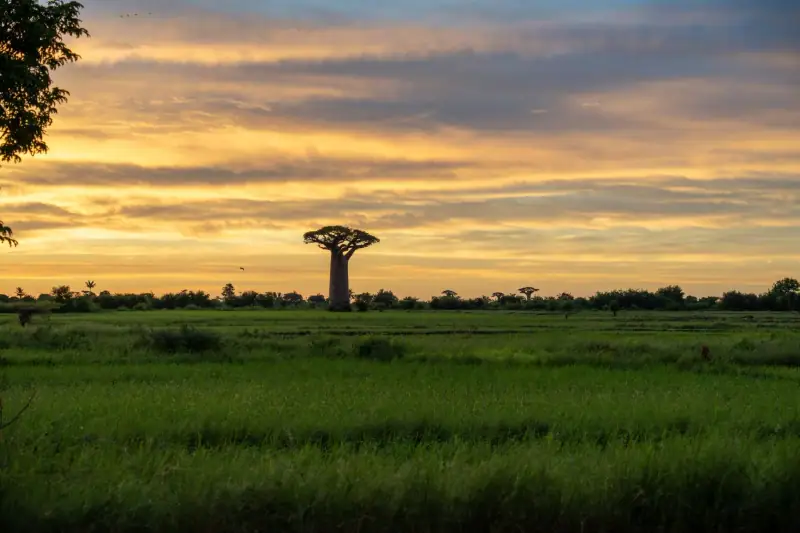
This is the big visual moment of the trip. The Avenue of the Baobabs is a stretch of track lined with giant baobabs, about twenty kilometers (12 mi) from Morondava, where people mainly come for the sunset. Arrive an hour early to enjoy the light and the play of shadows, and bring some small change for possible access fees and the small craft sellers.
Our detailed guide, the Avenue of the Baobabs and Morondava, explains how to avoid the crowds, which hours to favor and which nearby sites to add to the day.
The rest of the day can go to calmer visits:
- a walk on Morondava beach in late morning;
- a visit to a fishing village on the coast, if your guide offers it;
- free time to sort photos and recharge batteries before the track to the tsingy.
Excursions around Morondava
Baobabs, villages and guided tours: compare the activities you can book online.
Day 6: Morondava → Bekopaka, the big track
This is the most demanding stage. From Morondava to Bekopaka, the gateway village to the tsingy, the road is long and includes sections of track, with river crossings by ferry. Allow a full day, often from dawn to dusk, with a suitable vehicle and a driver used to these conditions.
Travel times depend heavily on the season, the wait at the ferries and the state of the track. Do not plan anything else that day. Set off with water, food, a headlamp and some cash, because there is no ATM and no reliable phone signal along the way.
On arrival, accommodation is simple: bungalows and small establishments, often close to the river. Electricity may be limited to certain hours. Our guide to the Bemaraha tsingy details the park formalities, routes and access conditions.
Days 7 and 8: the Bemaraha tsingy
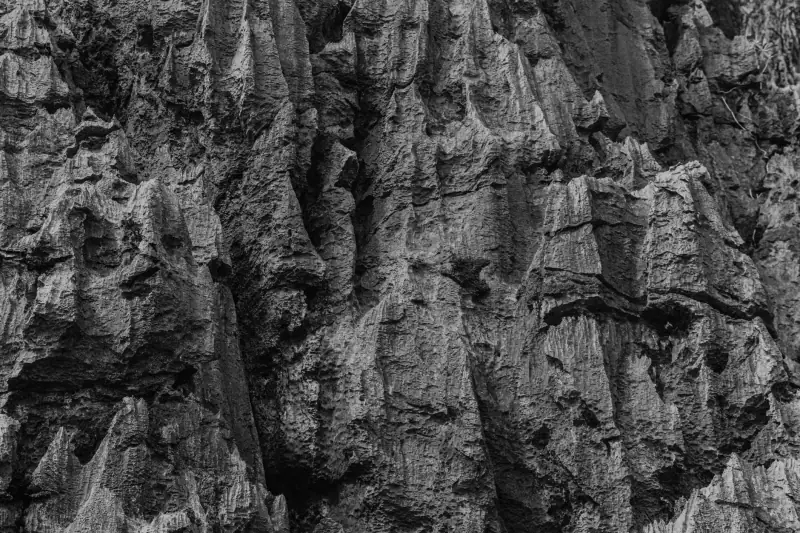
Two full days to discover the park. The tsingy are tall limestone blades eroded by water, forming a stone labyrinth listed as a UNESCO World Heritage site. You walk them with a licensed guide, in a harness on some routes, on walkways and ladders.
A balanced program:
- Day 7: the Great Tsingy, the most spectacular part, with its suspended passages and viewpoints. Bring closed shoes with good grip, gloves if possible and plenty of water.
- Day 8: the Little Tsingy, less demanding, and the gorges of the Manambolo River, which you sometimes explore by pirogue.
Some passages require a minimum of fitness and no fear of heights. If you travel with children or less experienced people, choose the easiest routes and ask your guide for advice before setting off.
Day 9: back to Morondava
The return follows the same track, with the same constraints. Leave early, because the ferries can stop in late afternoon and night falls quickly. Nothing stops you from taking a break along the way, in a village, to taste a local dish or buy crafts from residents.
Once in Morondava, treat yourself to a restful evening: a good dinner, a hot shower if your hotel has one, and a full night before the journey home.
Day 10: back to Antananarivo, by road or air
You have two options.
- The domestic flight: an air link generally connects Morondava to the capital. It is the fastest solution, useful if your international flight leaves the next day. Check airlines, schedules and baggage allowances, because the offer varies from one season to the next.
- The road: the return trip to Antananarivo takes two long days, with a night in Miandrivazo or Antsirabe. It is possible if your schedule allows, but it is better to keep a day of margin before the flight home.
To avoid unpleasant surprises, never plan an international flight the day after a long road stage. Add a night in Antananarivo, where you will find places to rest: our guide on where to stay in Antananarivo helps you choose the district.
Choosing your vehicle and driver
On this circuit, the choice of vehicle matters as much as the choice of stages. A 4x4 is recommended for the Bekopaka track, especially outside the height of the dry season. Most travelers opt for a rental with a driver-guide, who knows the roads, handles mechanical surprises and makes exchanges with villagers easier.
Before booking, check:
- the general condition of the vehicle and a spare wheel in good shape;
- the kilometers included, the fuel and the driver’s lodging costs;
- the driver’s experience on the western tracks;
- the cancellation and replacement conditions in case of a breakdown.
Ask several local providers for quotes and compare prices and conditions before committing.
Budget and time: what to plan for
The cost of a road trip in the west depends mainly on the vehicle, the fuel, the number of nights and the comfort level. Accommodation in Bekopaka and Morondava remains simple, but transport weighs heavily because of the long distances. A circuit with a driver costs more than traveling by local transport, but it saves valuable time and reduces risks.
For reference points, our article on the budget in Madagascar details the spending items. Always plan a cash reserve, because card payments are not possible everywhere.
Health, safety and preparation
A few precautions are needed before setting off on this circuit:
- ask your doctor or a travel clinic, and see the official travel health pages (CDC in the US, TravelHealthPro in the UK);
- bring a first-aid kit, effective insect repellent, sun protection and a headlamp;
- check the security and health situation with official sources;
- never drive at night and avoid isolated roads after sunset;
- keep your documents and valuables on you, in a small discreet bag.
For entry formalities: entry rules depend on your passport. Check the official travel advice of your government before you book: travel.state.gov (US), GOV.UK (UK), travel.gc.ca (Canada), Smartraveller (Australia) (checked November 2026). Travel insurance with repatriation cover is strongly advised for such an isolated circuit.
Mistakes to avoid on this circuit
- Trying to do everything in one week: the west has to be earned, and seven days force you to sacrifice the tsingy or take a plane.
- Underestimating the Bekopaka track: allow a full day, with no side program.
- Neglecting the season: the rainy season makes the tracks difficult and can close access to the tsingy.
- Forgetting cash: ATMs and card payments are rare outside towns.
- Driving at night: it is dangerous, because of the state of the roads as well as animals and pedestrians.
- Booking at the last minute: in high season, Bekopaka’s accommodation fills up quickly.
Key takeaways
A road trip in western Madagascar is an adventure that demands patience, but it offers some of the most striking landscapes in the country. By splitting the stages well, accepting long days on the road and keeping a margin for the unexpected, you will make the most of the baobabs, the river and the tsingy. For travelers in a hurry, the domestic flight to Morondava remains the best way to save time.
The durations given are rough estimates: check road conditions with your host or agency before each stage.
Frequently asked questions
How many days do you need for a road trip in western Madagascar?
Allow ten days at the very least from Antananarivo to combine Antsirabe, the road to Morondava, the Avenue of the Baobabs and the Bemaraha tsingy without rushing. Twelve days leave more room for track delays.
How long is the drive between Antsirabe and Morondava?
About 480 km (298 mi), or around ten hours of driving without stops, which is why splitting the stage at Miandrivazo makes sense. Times vary with road condition and season.
Can you do this circuit without a driver?
It is not recommended for most travelers. Distances are long, traffic is unpredictable and the tracks to Bekopaka call for a suitable vehicle and good knowledge of the terrain. A vehicle with a driver-guide is the most common option.
Do you need to book accommodation in advance?
In high season, roughly May to October, yes, especially in Morondava and Bekopaka where supply is limited. Outside the season there is room, but the roads are harder.
What is the best time for this circuit?
The dry season, roughly May to October. During the rainy season the tracks deteriorate and access to the tsingy can be suspended.
Can you save time with a domestic flight?
Yes, there is generally an air link between Antananarivo and Morondava, which saves several days on the road. Check airlines and frequencies before booking, because the offer changes.
More Madagascar guides
Keep reading
When to go to Madagascar: seasons, weather and best months
When to go to Madagascar? Dry season, rains, cyclones, whales, lemurs: a region-by-region guide to choosing the best time to travel.
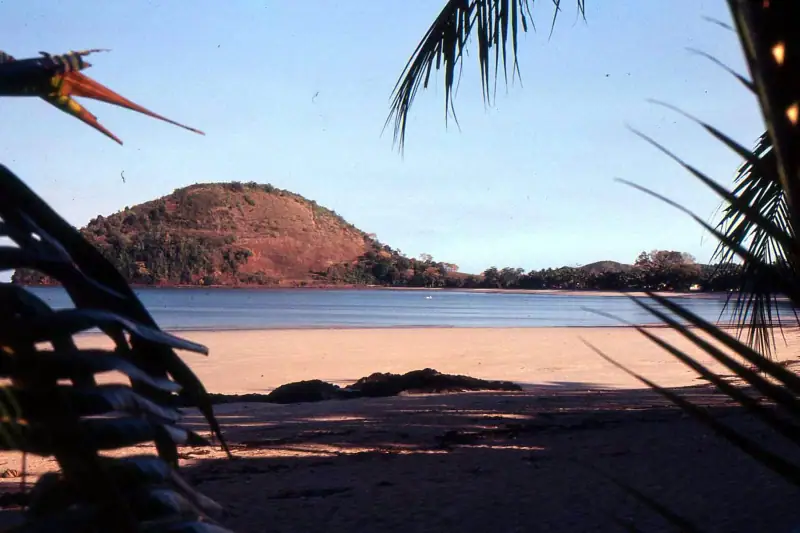
Nosy Be: what to do, beaches and excursions on the perfume island
What to do in Nosy Be? Beaches, snorkeling, Nosy Komba, Nosy Tanikely, Lokobe Reserve, ylang-ylang: a guide to plan your stay on the perfume island.
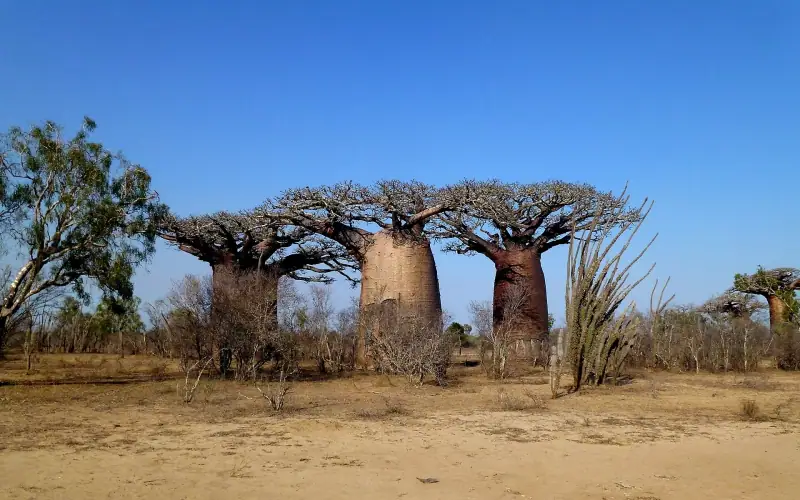
What to see in Madagascar: the 10 top sights
What to see in Madagascar? Baobabs, tsingy, Isalo, Andasibe lemurs, Nosy Be: a selection of 10 top sights to help you prepare your trip.
Ready-made
Madagascar itineraries
12 days
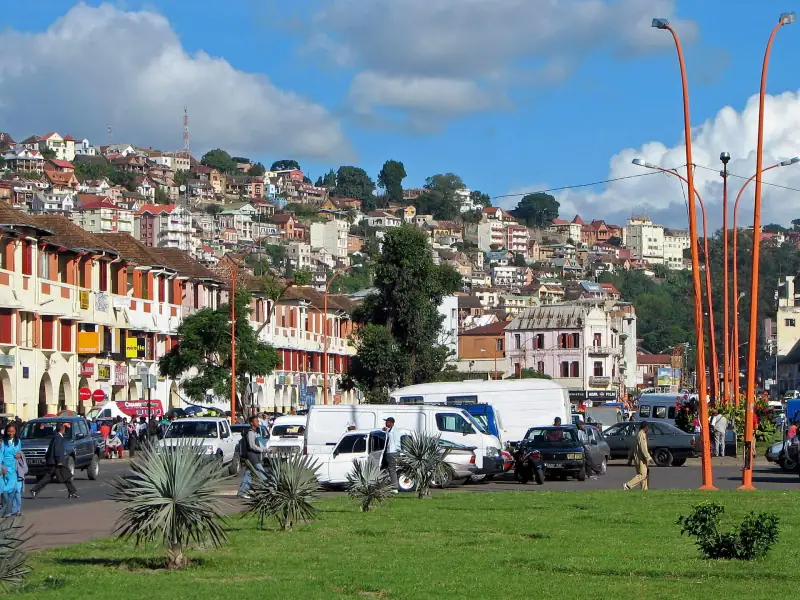
National road 7 in Madagascar: itinerary from Antananarivo to Toliara
Detailed RN7 itinerary in Madagascar: Antsirabe, Fianarantsoa, Ambalavao, Isalo and Toliara. Stages, drive times, practical tips and trip organization.
14 days
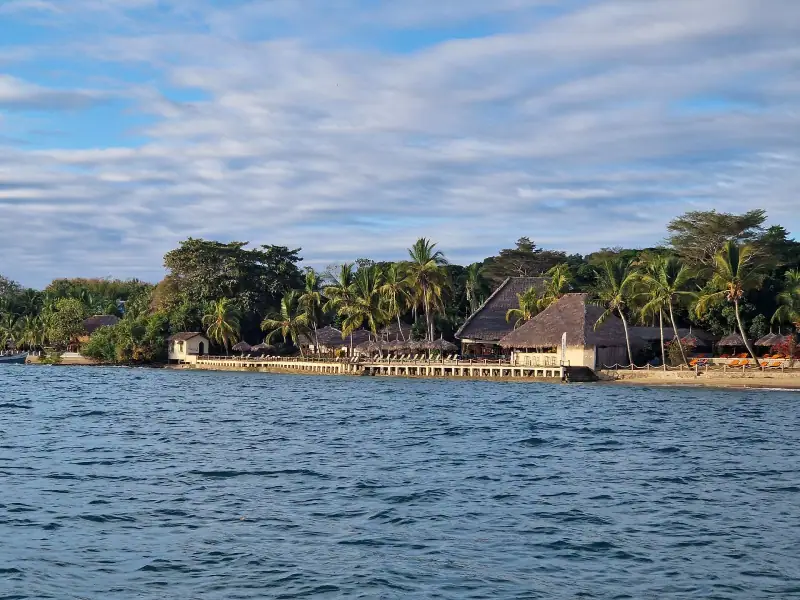
Madagascar in 2 weeks: day-by-day itinerary and variants
A 14-day itinerary in Madagascar: Andasibe, RN7, Isalo, beach, with two variants (West and baobabs, North and Nosy Be), pace, transport and time budget.
7 days
Northern Madagascar in 7 days: Diego Suarez, Ankarana and Montagne d'Ambre
7-day itinerary in northern Madagascar: Diego Suarez, Montagne d'Ambre, Red Tsingy, Ankarana, Ramena and an end in Nosy Be, with realistic trips and tips.