Where to stay
Where to stay in Antananarivo: districts, types of accommodation and tips
We may earn a commission when you book through links on this page, at no extra cost to you. We don't visit or try the places we cover: we summarize published sources. How we work
In short
- For a first stay, the Isoraka and Antaninarenina area in the center is a good compromise: restaurants, shops and sights nearby.
- Upper Town has the most charm and calm, but its steep cobbled streets are tiring with luggage.
- The Ivato airport to the center transfer takes roughly 30 minutes to 1 h 30, depending on traffic; sleeping near the airport suits late arrivals or very early departures.
- Antananarivo sits at about 1,300 m (4,265 ft), so nights can be cool, especially from May to August.
For most travelers, Antananarivo (“Tana” to locals) is the entry point to Madagascar: Ivato international airport serves the capital, and most tours then head off along the RN7, to the west or the east. Many visitors only see the city through a taxi window, between two flights. That is a pity, but understandable: the city is dense, traffic is slow, and the choice of accommodation largely shapes the first impression of the island.
This guide helps you choose where to stay in Antananarivo depending on the length of your stop, your budget and your way of traveling. It deliberately sticks to district criteria rather than names of establishments: the offer changes quickly, and it is safer to compare recent reviews at the time you book. For an overview of the other regions, first see our article where to stay in Madagascar.
Understanding the city’s geography before booking
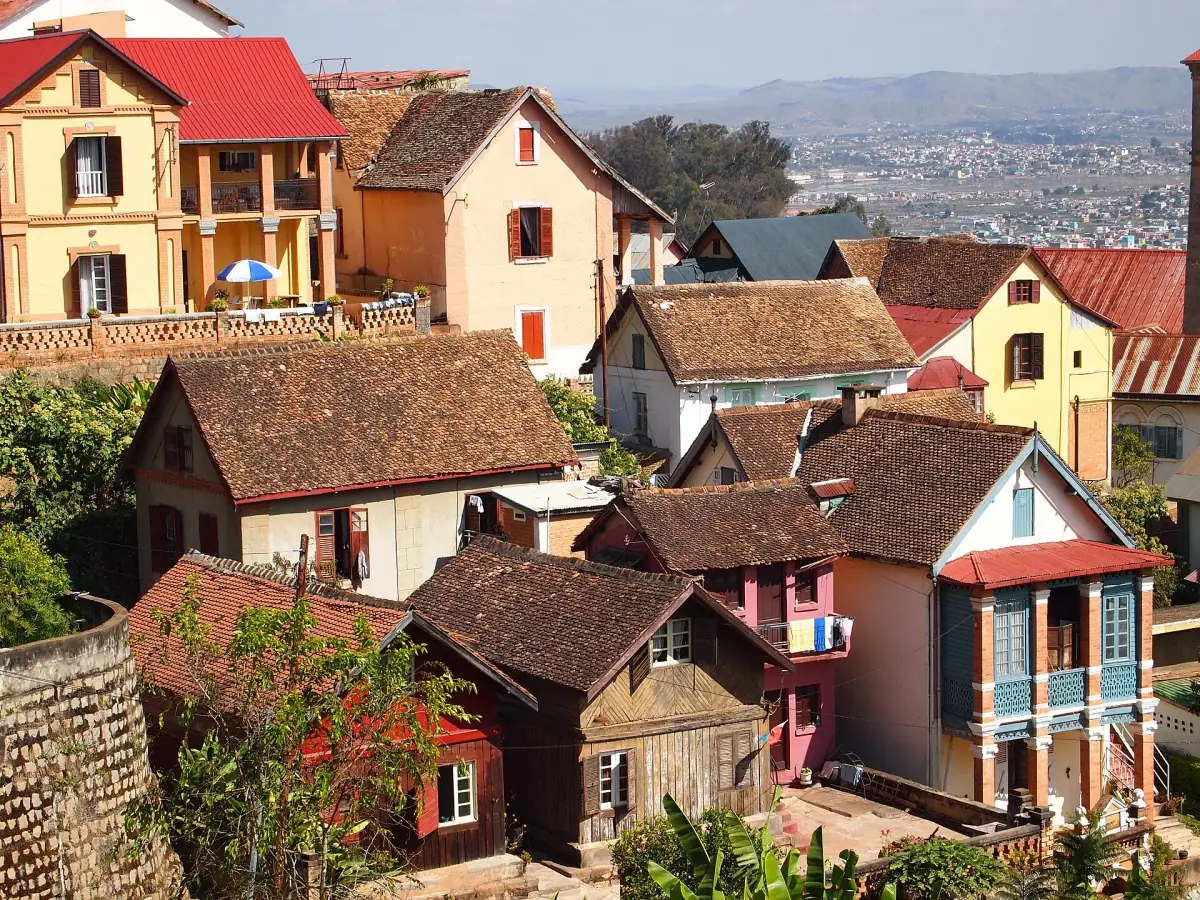
Antananarivo is built on several hills in the Highlands, at about 1,300 m (4,265 ft) of altitude. This topography explains two practical realities: streets are often sloped, sometimes cobbled, and a trip of a few kilometers can take a long time at rush hour. A map therefore gives a misleading picture: two addresses that seem close can be separated by a steep climb or a traffic jam.
The city can be summed up in four main areas that matter to travelers:
- Upper Town, the historic district on the hill, around the Queen’s Palace (the Rova);
- the center, around Analakely, the great staircase and Avenue de l’Indépendance, with the shops and the market;
- Isoraka and Antaninarenina, residential and business districts with a slightly faded charm, where you find many restaurants and hotels;
- the more modern residential districts such as Ivandry, further northeast, with guesthouses and hotels geared to business travelers and expatriates.
On top of this comes the airport area, at Ivato, north of the city. The trip to the center generally takes between thirty minutes and an hour and a half depending on traffic: never schedule a tight appointment right after an evening arrival.
Upper Town: historic charm, with its constraints
Upper Town holds much of Antananarivo’s heritage: stone houses, lanes, viewpoints over the city and access to the Rova district. It is the place where you feel most like you are traveling. A few guesthouses and small charming hotels are found here, often set in former mansions.
The advantages are clear: a calmer atmosphere in the evening, pleasant views, and the possibility of doing part of the sightseeing on foot. The drawbacks are about access: streets are narrow, climbs are steep, and taxis cannot always drop you at the door. If you travel with a big suitcase or small children, ask the property how arrival works, and whether staff can help with luggage.
This area suits travelers who stay two nights or more and like history and architecture. It suits less those who arrive late after a long flight and simply want to sleep.
Isoraka, Antaninarenina and the center: the best compromise
For a first stay, the Isoraka – Antaninarenina area is often the simplest. It has a high density of restaurants with varied cuisines, cafes, shops and several mid-range hotels, as well as more comfortable addresses. It is central enough to reach Upper Town, the markets and the travel agencies that organize tours by taxi.
Analakely and the commercial heart of the city are noisier and busier. The market is an experience in itself, but the atmosphere is dense, and caution is needed: wear your bag in front of you and avoid visible valuables. Sleeping right in this area is not essential, because you can easily visit it for half a day from a calmer district.
Points to check in this area:
- noise: very busy streets can be noisy early in the morning, ask for a courtyard-side room;
- heating: southern winter nights are cool, and the city does not have the tropical climate of the coast;
- hot water and generator: power outages happen, and accommodation with a backup solution is a big comfort;
- Wi-Fi: advertised everywhere, but of very variable quality.
If you want an idea of what awaits you on the plate in these districts, our guide to Malagasy cuisine and its specialties will help you choose what to order.
Hotels in Antananarivo
Compare hotels in the capital by district, dates and your budget.
Ivandry and the modern districts: comfort and relative calm
Northeast of the center, districts such as Ivandry hold residences, embassies, offices and several newer hotels. The properties are often more spacious, sometimes with a pool, secure parking and a restaurant. The atmosphere is less picturesque, but quieter and more practical for those arriving in a car with a driver or a tour minibus.
This area is worth considering in several cases:
- you travel as a family and want space;
- you combine a business stay with a trip;
- you prefer a quiet setting to recover after the flight.
The downside is some distance from the historic sights: allow a taxi ride, with traffic in mind, for each outing. It is better to plan a single big outing per day rather than several round trips.
Near Ivato airport: for late arrivals
If your flight lands in the evening or you leave at dawn, sleeping near Ivato avoids crossing the city at rush hour. A few transit hotels and guesthouses offer a shuttle service. It is a practical solution, but the surroundings are not touristy: you sleep, then leave.
A suggestion: stay only for the arrival or departure night, and spend your other nights in a more pleasant district. Always ask the property whether it offers the transfer and on what terms, and confirm the pickup time the day before. To prepare your whole stay, our complete guide to Madagascar gives the outline.
Which type of accommodation to choose for your budget
In Antananarivo, the range goes from a simple room with a host family to a comfortable hotel with a restaurant. Prices vary with the season, the district and the level of service; this guide therefore gives no precise rates, which only the booking site can show for your dates. For a general view of what a trip to the island costs, see our budget for Madagascar.
Mid-range hotels. They make up most of the offer in the center. You generally find a clean room, breakfast and a restaurant. Check recent reviews on cleanliness and hot water reliability.
Guesthouses. Often the best choice for those looking for authenticity: few rooms, personal hospitality, tips on the city and sometimes an arranged transfer. They fill up quickly in the dry season.
Upscale hotels. They offer comfort closer to international standards, with a pool, reinforced security and concierge services. They are useful after a long flight or for a rest stop before a demanding tour.
Simple lodgings and hostels. On a tight budget, hostels and budget guesthouses offer basic rooms, sometimes dormitories. Check the security of the place, the presence of a guard and the quality of the locks.
Safety and comfort: what to check before booking
Antananarivo is a large capital where caution is called for. Nothing alarmist, but a few simple precautions make the stay more relaxed. Before booking, check the official travel advice of your government: travel.state.gov (US), GOV.UK (UK), travel.gc.ca (Canada), Smartraveller (Australia) (checked November 2026).
Here are the criteria worth looking at:
- the property’s security: gate, guard, in-room safe;
- the transfer from the airport, preferably arranged by the accommodation, rather than a taxi found on the spot on arrival;
- heating or blankets in the southern winter, because evenings are cool;
- water: drink bottled water with a sealed cap, and ask whether tap water is filtered;
- arrival times: tell the hotel if you arrive at night, so that someone waits for you.
Avoid walking alone at night, prefer taxis recommended by your accommodation and keep your valuables discreet. Travel insurance covering repatriation assistance is strongly advised for Madagascar.
When to book and which season to choose
The dry season, from about April-May to October-November, is the period most visited by travelers, and the good addresses fill up earlier. The rainy season, hotter and more humid, is quieter: supply is wider, but trips are slower. To choose your dates, read our guide on when to go to Madagascar.
In Antananarivo, the difference is mostly about the nights. The southern winter can be cool, even cold early in the morning: bring a fleece, even if you then head to the beaches of the north or the west.
How many nights to spend in Antananarivo?
The right answer depends on your circuit:
- One night on arrival if you leave the next day for the RN7 or the east: you recover from the flight and avoid driving tired.
- Two nights to see Upper Town, a market and one or two museums without rushing.
- One night on the way back if your international flight leaves early or if your circuit ends far from the capital.
If you are preparing the rest of your trip, national road 7 is the classic route from Antananarivo to Antsirabe, Fianarantsoa and the south. For discovering the city, a guided visit makes it easier to understand the history of Upper Town than on your own.
Tours and excursions in Antananarivo
Browse the guided tours and activities offered from the capital.
Organizing your arrival without stress
The first hours in Madagascar are often the most disorienting: formalities, currency exchange, people approaching you outside the airport. So prepare the essentials before leaving. Entry rules depend on your passport. Check the official travel advice of your government before you book: travel.state.gov (US), GOV.UK (UK), travel.gc.ca (Canada), Smartraveller (Australia) (checked November 2026).
A few useful habits:
- keep your documents and hotel confirmation easily accessible;
- bring a little cash for the first expenses;
- ask the accommodation for a transfer, or at least the usual taxi fare for the trip;
- do not hand your luggage to strangers without a clear agreement on the price;
- tell the hotel about any flight delay.
For renting a vehicle or transfers, be aware that driving yourself in the capital is not recommended on a first stay: traffic is dense and rules are not always followed. Most travelers choose a vehicle with a driver.
Common mistakes to avoid
Booking too far from the center without checking the trip. A cheaper room on the outskirts can cost a lot in time and taxis.
Underestimating the cold. The Highlands climate surprises those who think Madagascar is always hot. Nights are cool for a good part of the year.
Planning a tight connection. If your domestic flight leaves early in the morning, sleep in town or near the airport the night before, never on the same day after a long trip.
Not reading recent reviews. A hotel can change management or standards: reviews from the last few months are worth more than those from five years ago.
Suggestions by traveler profile
Couples and travelers looking for charm: a guesthouse in Upper Town, for two nights, with a view and a calm atmosphere.
Families: a hotel in a residential district with a pool and secure parking, to rest before or after the circuit.
Tight budgets: a simple guesthouse in Isoraka or nearby, favoring security and cleanliness.
Travelers in transit: accommodation near Ivato with a shuttle, to sleep without crossing the city.
Business travelers: a modern hotel in Ivandry, with a reliable connection and a generator.
In every case, the golden rule is the same: do not multiply hotel changes in the capital. One well-chosen base is worth more than two badly placed addresses.
In summary
Staying in Antananarivo is above all a choice between the charm of Upper Town, the convenience of Isoraka and the center, the comfort of Ivandry or the simplicity of Ivato for a stopover. For a first stay, the Isoraka – Antaninarenina area is the most practical, with a night in Upper Town if your schedule allows. Book ahead, ask about the airport transfer, and keep in mind that the city is only a starting point: the real discovery of the island begins just afterward.
Frequently asked questions
What is the best district to stay in Antananarivo?
For a first stay, the Isoraka and Antaninarenina area, in the center, is a good compromise: restaurants, shops and sights nearby. Upper Town offers more charm and calm, but its sloping cobbled streets are tiring with suitcases.
How many nights should you plan in Antananarivo?
One to two nights are enough for most travelers: one on arrival to recover from the flight, and possibly one on the way back before departure. If you like markets, crafts and history, allow two to three nights.
Should you stay near Ivato airport?
It is useful if your flight arrives late or leaves very early, because traffic toward the center can be slow. For a stay of several days, it is better to sleep in town.
Is it dangerous to get around Antananarivo in the evening?
Travelers are advised to be careful: avoid walking alone at night, do not show valuables and prefer a taxi arranged by your accommodation. Check your government's official travel advice before you go.
Is it cold in Antananarivo?
The city is in the Highlands, at about 1,300 m (4,265 ft). Nights can be cool, especially in the southern winter (May to August), and not all accommodation is heated. Bring a warm jacket.
Do you need to book a hotel in Antananarivo in advance?
Yes, especially for the first night after a long-haul flight and in high season (dry season). Booking also lets you arrange the airport transfer.
More Madagascar guides
Keep reading
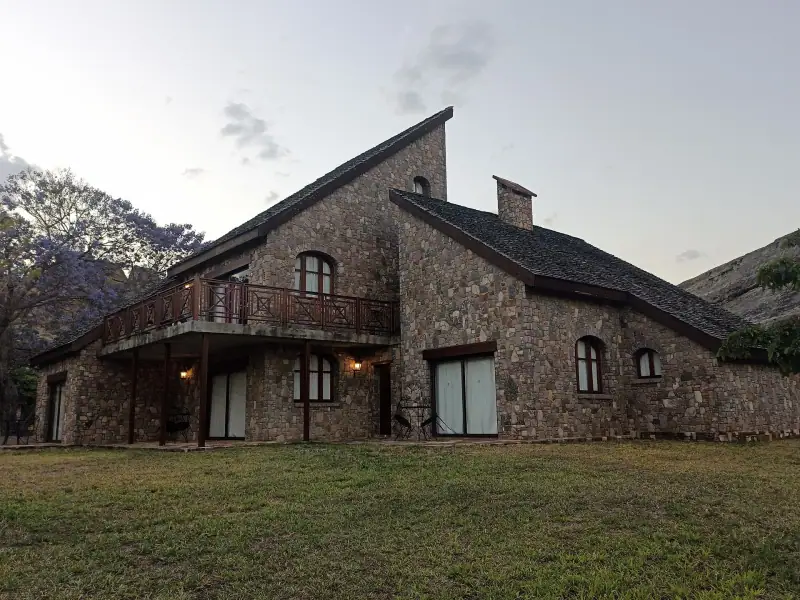
Where to stay in Isalo: Ranohira or a lodge near the massif?
Sleep in Ranohira or in a lodge along the RN7 to visit Isalo: distances, comfort, booking, budget and pitfalls to avoid depending on your profile.
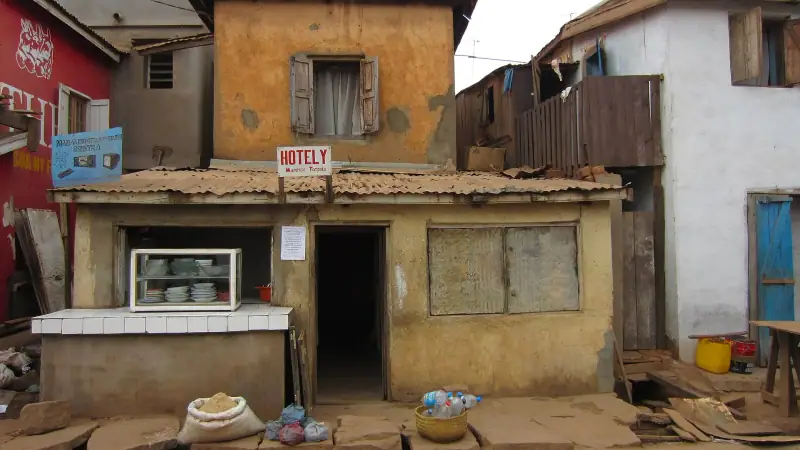
Where to stay in Madagascar: regions, types of accommodation and tips
Where to stay in Madagascar? Antananarivo, RN7, Nosy Be, Morondava: types of lodging, bungalows, lodges, hotels, booking tips and mistakes to avoid.
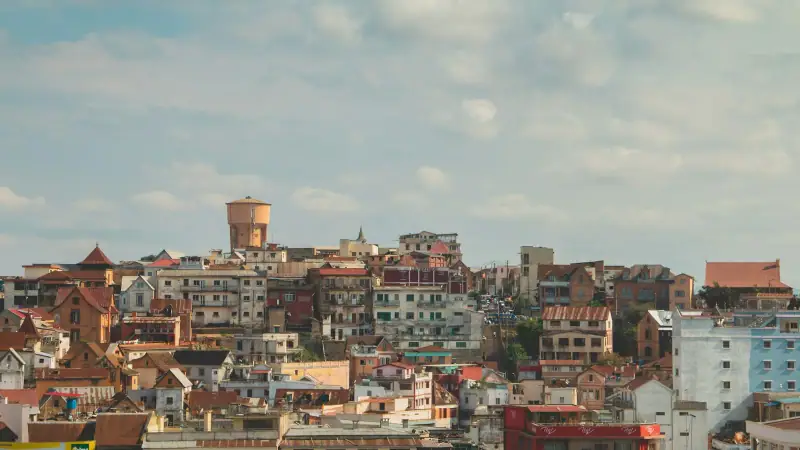
Sleeping near Ivato airport (Antananarivo): late arrival, options and prices
Flight landing at night or leaving at dawn? Where to sleep near Ivato airport in Antananarivo: hotels, shuttle, budget and pitfalls to avoid.
Ready-made
Madagascar itineraries
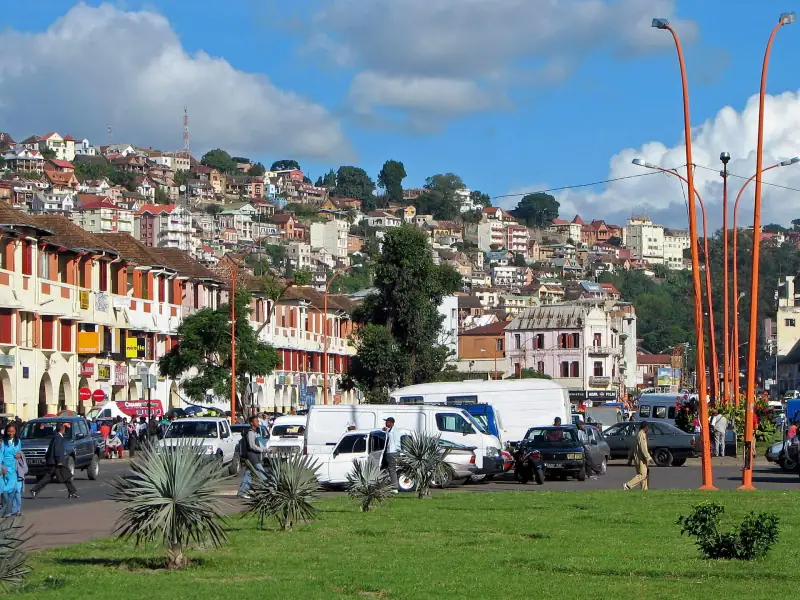
12 days
National road 7 in Madagascar: itinerary from Antananarivo to Toliara
Detailed RN7 itinerary in Madagascar: Antsirabe, Fianarantsoa, Ambalavao, Isalo and Toliara. Stages, drive times, practical tips and trip organization.
14 days
Madagascar in 2 weeks: day-by-day itinerary and variants
A 14-day itinerary in Madagascar: Andasibe, RN7, Isalo, beach, with two variants (West and baobabs, North and Nosy Be), pace, transport and time budget.
7 days
Northern Madagascar in 7 days: Diego Suarez, Ankarana and Montagne d'Ambre
7-day itinerary in northern Madagascar: Diego Suarez, Montagne d'Ambre, Red Tsingy, Ankarana, Ramena and an end in Nosy Be, with realistic trips and tips.