Where to stay
Where to stay in Osaka: neighborhoods, hotels and tips for choosing well
We may earn a commission when you book through links on this page, at no extra cost to you. We don't visit or try the places we cover: we summarize published sources. How we work
In short
- For a first stay, Namba is the most popular choice: restaurants, Dotonbori, the subway and the train to Kansai Airport nearby.
- Umeda is best for chaining train trips to Kyoto, Kobe or Himeji; Shinsaibashi balances shopping and nightlife; Tennoji suits smaller budgets.
- Kyoto is about half an hour from Osaka by rapid train and Nara under an hour, so Osaka works well as a Kansai base for 3 to 4 nights.
- Book several months ahead for cherry blossom season, Golden Week and fall; otherwise a few weeks ahead is generally enough.
Osaka is Japan’s big food city, and its energy hits you as soon as you leave the station. Unlike Kyoto, everything here is urban, dense and lively late into the night. Good news for travelers: the lodging offer is vast, from compact business hotels to big international towers, and the city is very well linked to the rest of the Kansai. Bad news: the choice of neighborhood matters, because Osaka is sprawling and its hubs are quite different from one another.
This guide compares the main areas to stay, the types of lodging and a few booking habits. To organize your days once there, see our guide what to do in Osaka, and to combine the city with its neighbors, our 5-day Kansai itinerary.
How to choose your neighborhood in Osaka
Three criteria help you decide.
Transport. Osaka is organized around two big hubs: Umeda in the north (around Osaka Station) and Namba in the south, linked by the Midosuji subway line, the city’s main axis. Staying on this line or near a JR station simplifies getting around enormously, including with suitcases.
Atmosphere. Neon and street food in Namba, skyscrapers and shopping centers in Umeda, a trendy district in Shinsaibashi, a working-class feel in Tennoji and Shinsekai, a theme park near the bay: the choice depends on what you expect from your evening.
Osaka’s role in your trip. If you spend two nights there visiting the city, favor the lively center. If Osaka mainly serves as a base to fan out to Kyoto, Nara, Kobe or Himeji, proximity to stations comes first.
Compare stays in Osaka
Business hotels, apartments and upscale properties: check availability and reviews for your dates.
Namba and Dotonbori: the first-stay choice
Namba is the center of Osaka’s food and nightlife. This is where the Dotonbori canal lies, lined with illuminated signs, takoyaki and okonomiyaki restaurants, and covered shopping arcades. The area is also a major transport hub, with several subway lines and trains to Kansai International Airport.
Advantages. You step out of the hotel and you are in the middle of the restaurants. Airport links are simple, which is a big plus on arrival and departure days. The choice of hotels is very wide, at all prices, and the area stays lively late at night.
Drawbacks. It is noisy and very busy, especially on weekends. Rooms are often small, and the shopping streets can give an impression of permanent crowds. If you like quiet nights, ask for a room away from the street or on a high floor.
Who is it for? Food lovers, first-time visitors, couples or friends who want to go out in the evening. To know what to taste, see our guide to Japanese food.
Umeda and Osaka Station: the business and transport hub
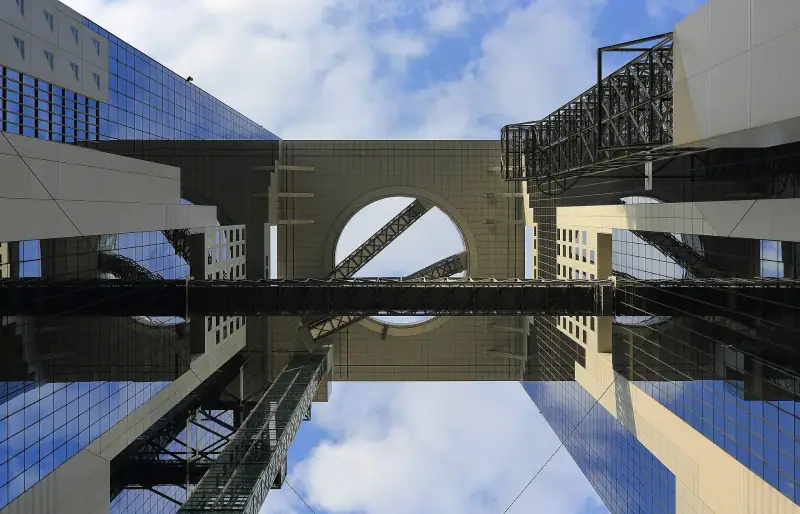
Umeda, in the north of the city, groups Osaka Station, several subway and private train lines, and big shopping centers. There are office towers, department stores and many restaurants, including underground in vast shopping arcades. The Shinkansen stops at Shin-Osaka, a neighboring station linked to Umeda by a train line of a few minutes.
Advantages. It is the best starting point for train excursions: rapid lines to Kyoto, Kobe or Himeji leave from Osaka Station. The choice of hotels is considerable, from business chains to high-end properties. Handy if you arrive or leave by Shinkansen: for rail passes, see our guide to the Shinkansen and the Japan Rail Pass.
Drawbacks. The mood is more functional than picturesque, and the station is a maze: allow time the first time. In the evening it is lively but geared more toward offices and shopping centers than street food.
Who is it for? Travelers chaining several cities, those using Osaka as a base for the Kansai, and business stays.
Shinsaibashi and Horie: shopping and a trendy feel
Between Namba and the center, Shinsaibashi is famous for its long covered shopping arcade, department stores and fashion boutiques. Farther west, the Horie district and its neighbor Amerikamura are known for independent shops, cafés and a younger feel.
Advantages. You are within walking distance of Namba and Dotonbori while enjoying a somewhat trendier area. Subway stations are numerous and the choice of restaurants and cafés is excellent.
Drawbacks. Hotel prices are often a bit higher than in more distant neighborhoods, and the crowd is dense on the shopping arteries during the day.
Who is it for? Fans of shopping, cafés and urban life, and those who want to stay near the action without being in the thick of Dotonbori’s noise.
Taste Osaka street food with a guide
Food tours, tastings and cooking classes: the best way to discover the local cuisine from your first evening.
Tennoji and Shinsekai: Osaka’s working-class side
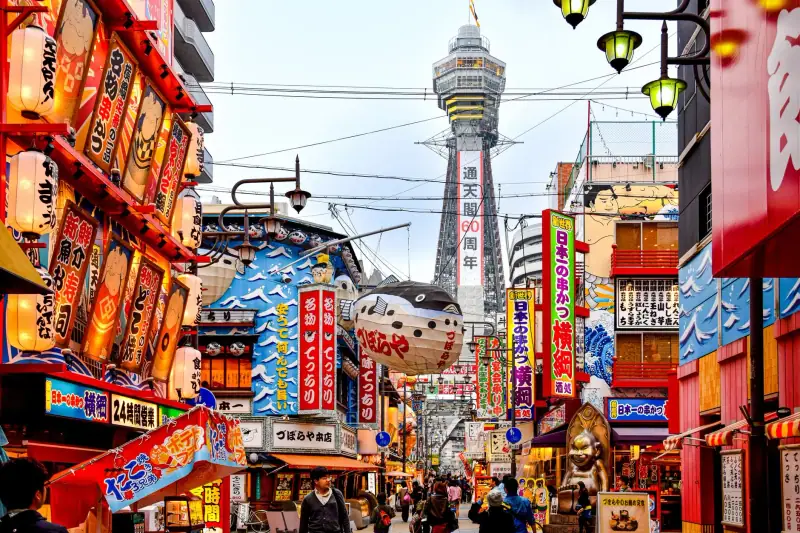
South of the center, Tennoji is another big transport hub, with a very visible skyscraper, a park, a zoo and an art museum. Right next to it, Shinsekai is a district with a retro feel, dominated by the Tsutenkaku tower, with fried-skewer (kushikatsu) restaurants and a clearly more working-class atmosphere.
Advantages. Lodging rates there are often lower than in Namba or Umeda. Tennoji station is served by rapid trains to Kansai Airport and by lines to Nara, making it a good base if you plan those trips.
Drawbacks. The Shinsekai district has a slightly rough reputation at night and does not suit everyone: choose a hotel near Tennoji station rather than in the lanes. You will also be a few subway stops from Dotonbori.
Who is it for? Budget-conscious travelers, fans of authentic atmospheres and those planning to leave early for the airport or Nara.
Osaka Bay: for Universal Studios Japan
West of the city, the bay area is home to the Universal Studios Japan park and the Kaiyukan aquarium, one of the largest in the country. Several hotels are right next to the park, which can be reached by train from downtown.
Advantages. You avoid the morning commute and can enjoy the park right at opening. It is handy with young children who tire quickly, since you can go back to the hotel for a break.
Drawbacks. The old-town Osaka atmosphere is about twenty minutes away by train, and the choice of restaurants outside the park is more limited. Rates climb on weekends and school holidays.
Who is it for? Families and theme park fans. If you only spend one day at the park, staying downtown is generally more interesting.
Which type of lodging to choose in Osaka
Business hotels. They dominate the offer, notably around stations: compact but functional rooms, private bathroom, decent bedding, careful service. It is the simplest formula for good value.
Large international hotels. Mostly concentrated in Umeda and downtown, with high floors and city views. They suit stays where you want to treat yourself or travel with lots of luggage.
Hotels near Namba in Osaka
Dotonbori on foot, subway and train to the airport: compare the area's hotels by budget.
Apartments. Handy for families or groups, with a kitchen and sometimes a washing machine. Check that the property is registered: tourist rentals are regulated in Japan and the rules can change.
Hostels and capsule hotels. An economical solution, with dorms or capsules. Many are clean and well kept, and located near Namba or Umeda. Check the house rules (quiet, hours, men-women separation).
Ryokan. Fewer in Osaka than in Kyoto, but they exist. If you want to stay in a traditional inn, we suggest booking that kind of night in Kyoto or near an onsen: see our guide to onsen and Japanese etiquette and our article where to stay in Kyoto.
Osaka as a base for visiting the Kansai
Osaka is an excellent base. Kyoto is about half an hour away by rapid train, Nara under an hour, and Kobe and Himeji are also reachable by train. By staying in the same room for several days, you avoid packing and unpacking at each stage.
This formula has a cost: you lose the evenings in Kyoto’s temples and the calm early mornings of Nara, which are often the most beautiful moments. If Kyoto is the heart of your trip, spend at least one or two nights there. Our two-week itinerary for Japan shows how to split nights among the big cities.
Three to four nights in Osaka are generally enough for a well-paced Kansai base: a day in Osaka itself, one in Kyoto, one in Nara or Himeji, and a free day for Kobe or the city.
Arriving in Osaka and reaching your hotel
If you arrive at Kansai International Airport, two families of trains serve Osaka: a private line reaches Namba, and a JR line reaches Tennoji, Umeda and Shin-Osaka. Choosing a hotel near the terminus of your arrival line greatly simplifies the first day, especially after a long flight.
If you arrive by Shinkansen, you get off at Shin-Osaka. From there, a short train takes you to Umeda, and the subway takes you to Namba in a few stops. Remember to check the distance between the station and the hotel: ten minutes on foot is acceptable, but not with two big suitcases in the rain.
Find your flight to Osaka
Compare airlines and schedules to Kansai Airport or to Tokyo, depending on your trip's route.
Smart booking tips
Favor proximity to a station. Under ten minutes’ walk from a well-served train or subway station: that is the right habit, especially with suitcases.
Check the room size. Japanese rooms are often compact. If you travel in a group or with big luggage, look for a family room or an apartment.
Compare several dates. Rates vary a lot with weekends, public holidays and big events in the city. Shifting one night can noticeably lower the bill.
Read the cancellation terms. Free cancellation gives you flexibility if your plans change, which often happens on a long trip.
Send your luggage. In Japan, a luggage delivery service (takkyubin) lets you ship suitcases from one lodging to the next. Ask your hotel: it is very handy if you continue to Kyoto or Hiroshima.
Think about your overall budget. Lodging is generally the biggest expense: our Japan budget guide helps you split costs. And to choose the right season, see when to go to Japan.
Consider travel insurance. A long or costly stay deserves protection against cancellation, medical costs and lost luggage.
In short: which neighborhood for which traveler?
- First stay, food and nights out: Namba and Dotonbori.
- Train excursions, arriving by Shinkansen: Umeda and Osaka Station.
- Shopping and a trendy feel: Shinsaibashi and Horie.
- Small budget and working-class feel: Tennoji, near the station.
- Family and theme park: the bay, near Universal Studios Japan.
Whatever your choice, Osaka is best discovered in the evening, when the city lights up and the street-food stalls come alive. Well-located lodging lets you enjoy it without depending on the last train, and set off the next day to the rest of the Kansai with peace of mind.
Frequently asked questions
What is the best neighborhood to stay in Osaka?
For a first stay, Namba is the most popular choice: restaurants, Dotonbori, the subway and the train to Kansai Airport nearby. Umeda suits you better if you chain train trips to Kyoto, Kobe or Himeji, and Shinsaibashi offers a good compromise between shopping and nightlife.
How many nights should you plan in Osaka?
Two nights let you see the highlights and taste the local food. Three or four nights are useful if you also want excursions to Kyoto, Nara or Himeji using Osaka as a base.
Can you stay in Osaka and visit Kyoto and Nara as day trips?
Yes, it is a very common strategy. Trains link Osaka to Kyoto in about half an hour by rapid train, and Nara is reachable in under an hour. Osaka generally offers a wider choice of hotels, often cheaper than Kyoto, at the price of a train ride back in the evening.
Where should you stay in Osaka to go to Universal Studios Japan?
The bay area, around Universal City station, concentrates the park's hotels. You save time at opening, but the downtown atmosphere is about twenty minutes away by train. For a single day at the park, a downtown hotel is more than enough.
When should you book lodging in Osaka?
Several months ahead for cherry blossom season (late March-early April), Golden Week in late April-early May and fall. Outside those periods, booking a few weeks before is generally enough. Prefer free-cancellation rates.
Are Osaka hotels more expensive than Tokyo's?
Rates vary strongly by season and events in town, but Osaka is often seen as slightly more affordable than Tokyo or Kyoto for equivalent comfort. Always compare several dates, as prices move a lot around public holidays.
More Japan guides
Keep reading
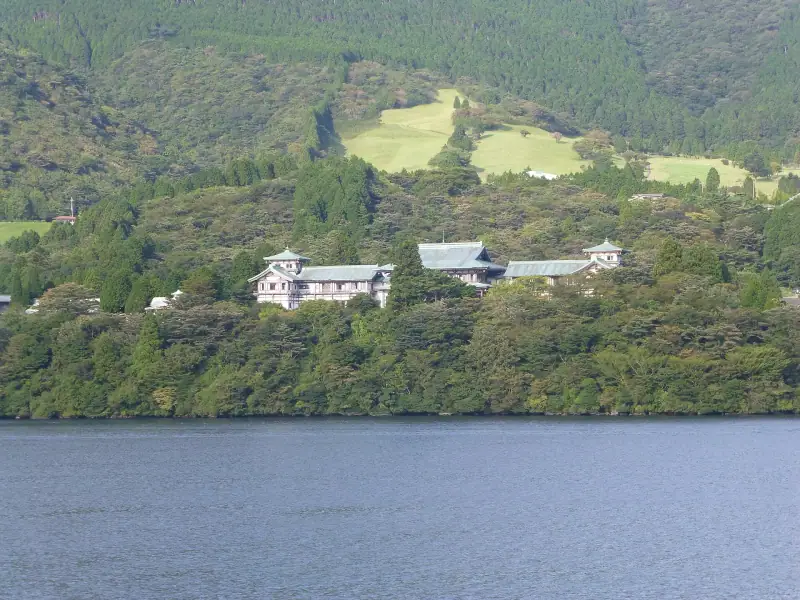
Where to stay in Hakone: Yumoto, Gora or Lake Ashi, which area to choose?
Hakone-Yumoto, Gora, Miyanoshita or Lake Ashi: compare Hakone's areas by transport, ryokan with onsen and budget for one night.
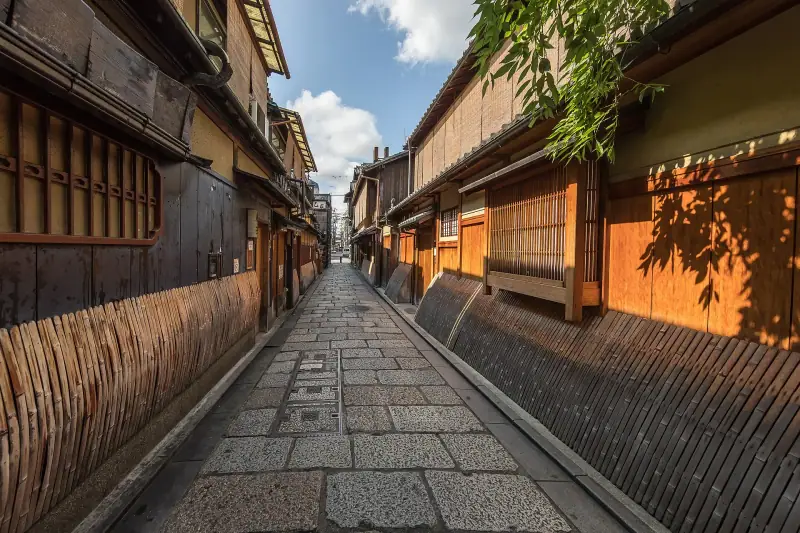
Where to stay in Kyoto: neighborhoods, ryokan and tips for choosing well
Kyoto Station, Gion, Higashiyama, downtown or Arashiyama? Compare Kyoto's neighborhoods, ryokan and hotels to choose where to stay.
Where to stay in Tokyo: the best neighborhoods for your trip
Shinjuku, Shibuya, Asakusa, Ginza or Ueno? Compare Tokyo's neighborhoods, lodging types and tips for choosing where to stay on your trip.
Ready-made
Japan itineraries
5 days
Kyoto, Nara and Osaka in 5 days: a day-by-day itinerary
A 5-day Kansai itinerary: Kyoto temples, Nara deer and Osaka street food, with transport, tips and mistakes to avoid.
10 days
Japan in 10 days with kids: stops, journeys and a realistic pace
TokyoHakoneKyoto
5 days
Tokyo, Hakone and Mount Fuji in 5 days: a detailed itinerary
A 5-day itinerary through Tokyo, Hakone and the Mount Fuji lakes: trains, onsen, volcano views, budget and mistakes to avoid on a first trip.