Where to stay
Where to stay in Hakone: Yumoto, Gora or Lake Ashi, which area to choose?
We may earn a commission when you book through links on this page, at no extra cost to you. We don't visit or try the places we cover: we summarize published sources. How we work
In short
- One night is enough to taste Hakone. Stay in Gora for a ryokan with a private bath, in Hakone-Yumoto for a late arrival or fewer transfers, near Lake Ashi for the view and calm.
- Gora is the terminus of the mountain train, about forty minutes from Hakone-Yumoto, and has many ryokan with hot-spring baths.
- The Odakyu Hakone Freepass (2 days) is listed at 7,100 yen from Shinjuku (6,000 yen from Odawara); check prices before buying.
- Book early for fall, cherry blossom season, weekends and Japanese holidays, and check arrival and dinner times.
Hakone stretches across several valleys and around a lake, and the area where you drop your bags changes the experience a lot. Our answer in two sentences: for a single night in a ryokan with onsen, choose Gora; for simple travel or a late arrival, Hakone-Yumoto; for the lake view, the Ashinoko area; for the mood of a historic hotel, Miyanoshita.
In short: One night is enough to taste Hakone. Stay in Gora if a private bath and the transport loop matter most, in Hakone-Yumoto if you arrive late or want to avoid connections, near Lake Ashi if you want the view and the calm. Book early in fall and on weekends.
Hakone is one of the first stops of a trip to Japan: our Tokyo, Hakone and Mount Fuji 5-day itinerary shows how to fit it into a stay. Here, we focus on one question: where to stay once you are there.
How the Hakone region is organized
The Hakone town tourist office divides the area into main sectors: Hakone-Yumoto and Tonosawa at the entrance of the valley, Miyanoshita and Kowakudani higher up, Gora and Miyagino, Sengokuhara, then the Lake Ashi area. You climb gradually from Hakone-Yumoto station, where trains from Tokyo arrive, by a small mountain train, a funicular, a ropeway and buses.
This terrain explains most of it: the higher you go, the more it feels like a different world, but the longer and more timetable-dependent the trips. Distances are short on the map, but each change of transport takes time, especially with a suitcase.
Hakone-Yumoto: the simplest for arriving and leaving
Hakone-Yumoto is the gateway. You step off the train and find shops, restaurants and souvenir stores, and you can drop your bags before exploring.
Who is it for? Travelers arriving at the end of the day, those leaving early for Tokyo or Odawara, families with heavy suitcases and those who prefer to avoid connections.
Its limits. No lake view, the feel of a small passing-through town rather than a mountain retreat, and more classic establishments. Many travelers choose to leave their suitcases there in the morning and explore the Hakone loop without luggage.
If you spend little time in Hakone, this area saves you from losing half a day climbing up and down.
Gora: the best choice for a night in a ryokan with onsen
Gora is the terminus of the mountain train, at the start of the funicular climbing to the ropeway. It is also an area with many ryokan and hotels with baths fed by a hot spring, some with a private outdoor bath in the room.
Who is it for? Couples, travelers who want an authentic ryokan, those who want a private bath (handy if you have a tattoo) and those planning to do the Hakone loop in the uphill direction.
Its limits. Expect about forty minutes on the mountain train from Hakone-Yumoto, with connections for the last stretch. Ryokan serve dinner at a fixed time: arrive before the stated check-in time. Independent restaurants are few in the evening.
Top-end ryokan, like the famous Gora Kadan, are booked long in advance. For a more reasonable budget, look for a small family-run ryokan or a hotel with a shared bath.
Ryokan and hotels in Gora
Compare establishments with a private bath or onsen, dinner included and free cancellation.
Miyanoshita and Kowakudani: the charm of historic hotels
Between Hakone-Yumoto and Gora, the Miyanoshita area is known for its 19th-century Western-Japanese style hotels, like the Fujiya Hotel, opened in 1878. Kowakudani, higher up, is home to large onsen hotels and an open-air sculpture garden, often cited among the region’s museums.
Who is it for? Those who like old architecture, gardens and a quiet pace. The trip is simple on the small train, with a stop at the area’s station.
Its limits. A few restaurants, little nightlife, and prices that rise quickly in the historic establishments.
Lake Ashi, Motohakone and Hakone-machi: the view and the calm
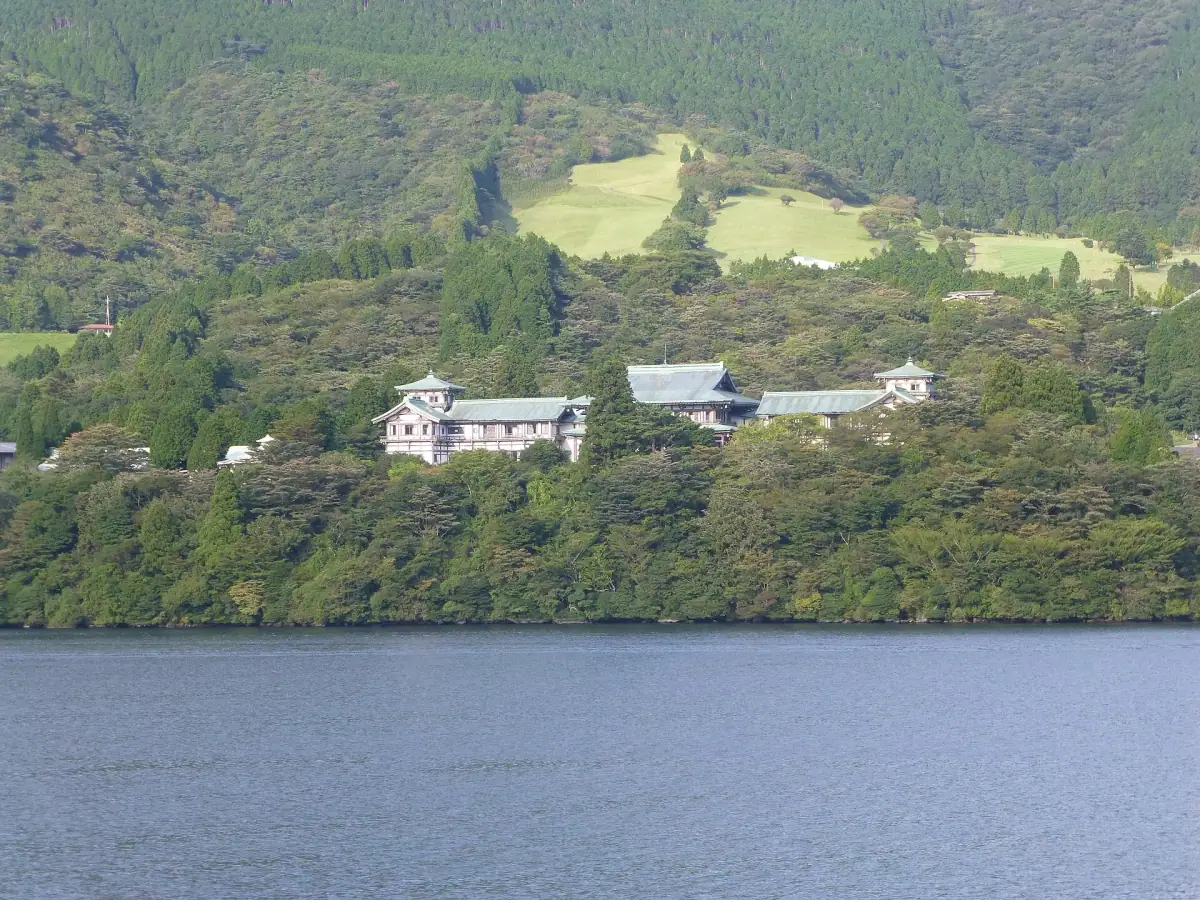
On the shore of Lake Ashi, you stay facing the water, with Fuji in the background in clear weather. The Motohakone and Hakone-machi area is also home to the red gate standing in the water, which belongs to Hakone Shrine. There are lakeside hotels, ryokan on the hills and a few establishments with a bath open to the landscape.
Who is it for? Travelers who want the big landscape, morning photographers, once the crowd has gone, those who have already done the classic loop.
Its limits. Access is by bus or boat from Gora or Togendai, with timetables to watch, and there are fewer shops. The last bus leaves earlier than you might think: check it before dining out.
Area comparison table
| Area | Mood | Ideal for | Weak point |
|---|---|---|---|
| Hakone-Yumoto | Small town, shops | Late arrival, suitcases, early departure | No view or retreat feel |
| Miyanoshita | Historic hotels, gardens | Charm, architecture | Little nightlife |
| Gora | Ryokan, private baths | An “onsen” night, couples | Longer trip from Yumoto |
| Lake Ashi | Lake and Fuji view | Scenery, calm | Buses and boats on fixed schedules |
The criterion that matters: transport, not price
In this region, the deciding factor is the transport time between the arrival station, the lodging and the next day’s departure. The operator Odakyu sells a Hakone Freepass: on its official page, the two-day pass from Shinjuku is listed at 7,100 yen for an adult (6,000 yen from Odawara), and it covers the mountain train, ropeway, lake boat and several bus lines. Prices can change: check them before buying.
If you stay one night, this pass is generally worthwhile, since it covers both the round trip from Tokyo and the loop. To compare with another mode of transport, see our guide getting around Japan.
Tips for booking a ryokan in Hakone
- Book early. The most sought-after establishments fill up weeks ahead in fall and on weekends.
- Check what is included. The classic formula includes dinner and breakfast; some hotels sell the room alone.
- Respect the arrival time. Dinner is served at a fixed time: tell the establishment if you arrive later than planned.
- Private or shared bath. If you hesitate, our guide to onsen and their etiquette explains the rules to know before entering the water.
- Luggage. Send the big suitcase to your next stop or leave it in Tokyo, and go up to Hakone with just an overnight bag. Our guide where to stay in Tokyo helps you choose a hotel that holds luggage.
Stays in Hakone
Compare all areas, from ryokan to hotels near Hakone-Yumoto station.
Budget: what to expect
Prices vary enormously by season, day of the week and type of establishment. Small hotels and guesthouses around Hakone-Yumoto remain the most accessible, a ryokan with dinner and a private bath requires a clearly higher budget, and luxury establishments have their own levels. Compare across several dates, and look at the price per person with dinner included rather than the room-only price. To place this night in the whole trip, see our Japan budget guide.
If a ryokan in Hakone tempts you but you want a different experience, our guide to sleeping in a temple on Mount Koya offers a very different night.
Excursions to Hakone and Mount Fuji
Guided tours from Tokyo, useful if you would rather not manage the connections.
Which area to choose for your profile
- One night, as a couple, with a private onsen: Gora.
- Late arrival or early departure: Hakone-Yumoto.
- History and architecture fan: Miyanoshita.
- Lake and Fuji view: the Lake Ashi area.
- Family with suitcases: Hakone-Yumoto, then a day trip without luggage.
To choose the best period and avoid crowds, also see when to go to Japan.
Sources
Frequently asked questions
Where should you stay in Hakone if you only have one night?
Gora is the most practical choice for a single night: it is the terminus of the mountain train, the starting point of the ropeway and the area with many ryokan with private baths. Hakone-Yumoto suits you if you want to limit transfers or arrive late.
Should you stay overnight in Hakone or make a round trip from Tokyo?
A same-day round trip is possible, but you spend a lot of time in transport and miss the main appeal of the region: the evening bath and the evening at the ryokan. A night there really changes the experience.
Is Hakone-Yumoto a good place to stay?
It is the best-served area, with the station where trains from Tokyo arrive, shops and several establishments at varied prices. It feels less like a different world than Gora or the heights, and you do not get the lake view there. It suits late arrivals and short stays.
Is a ryokan required to enjoy an onsen in Hakone?
No. Many hotels offer baths fed by a hot spring, and several facilities accept day visitors. The ryokan adds the traditional dinner, the futon and the atmosphere, but costs more.
Do you need to book far in advance?
Yes for fall, cherry blossom season, weekends and Japanese holidays: the good ryokan fill up early. Preferably choose a free-cancellation rate and check arrival and dinner times when booking.
Can you stay in Hakone with a tattoo?
The rule depends on each establishment. Many shared onsen refuse visible tattoos. The simplest solution is a ryokan or hotel offering a private bath, which you reserve for yourself: check the establishment's policy before booking.
More Japan guides
Keep reading
Where to stay in Osaka: neighborhoods, hotels and tips for choosing well
Namba, Umeda, Shinsaibashi, Tennoji or the bay? Compare Osaka's neighborhoods, lodging types and tips for choosing where to stay.
Where to stay in Kyoto: neighborhoods, ryokan and tips for choosing well
Kyoto Station, Gion, Higashiyama, downtown or Arashiyama? Compare Kyoto's neighborhoods, ryokan and hotels to choose where to stay.
Where to stay in Tokyo: the best neighborhoods for your trip
Shinjuku, Shibuya, Asakusa, Ginza or Ueno? Compare Tokyo's neighborhoods, lodging types and tips for choosing where to stay on your trip.
Ready-made
Japan itineraries
5 days
Kyoto, Nara and Osaka in 5 days: a day-by-day itinerary
A 5-day Kansai itinerary: Kyoto temples, Nara deer and Osaka street food, with transport, tips and mistakes to avoid.
10 days
Japan in 10 days with kids: stops, journeys and a realistic pace
TokyoHakoneKyoto
5 days
Tokyo, Hakone and Mount Fuji in 5 days: a detailed itinerary
A 5-day itinerary through Tokyo, Hakone and the Mount Fuji lakes: trains, onsen, volcano views, budget and mistakes to avoid on a first trip.