What to see
Complete guide to visiting Ireland: regions, highlights and practical tips
We may earn a commission when you book through links on this page, at no extra cost to you. We don't visit or try the places we cover: we summarize published sources. How we work
In short
- One week combines Dublin with one western region; 10 to 15 days add the west coast and Northern Ireland; three weeks allow the full island tour.
- May, June and September are often the best compromise between weather, crowds and prices; rain can fall in any season.
- A rental car is the most practical way to see the west coast. Driving is on the left, and minor roads are narrow.
- The Republic of Ireland uses the euro; Northern Ireland is in the UK and uses the pound sterling. Ireland is one of the most expensive destinations in Western Europe.
Cliffs battered by the Atlantic, endless bogs, colorful villages, ruined castles, pubs where music starts without warning: visiting Ireland feels like traveling far without leaving Europe. The island is small enough that you can see a lot in one to two weeks, and rich enough that you will want to come back. It is split between the Republic of Ireland (roughly three quarters of the island, with Dublin as its capital) and Northern Ireland, which belongs to the United Kingdom and whose capital is Belfast.
This complete guide is the main guide on the site. It presents the regions and cities, the highlights, the best time to go, how to get there and around, the accommodation options and the budget to plan for. Each section links to a detailed guide for going further. Practical information (prices, hours, entry conditions) changes: always check it on official websites before booking.
Ireland at a glance
The island is roughly a big bowl: plains and lakes in the middle, hills and cliffs around the edge, especially in the west. This geography explains most of what people come for. The Atlantic coast, cut into peninsulas, holds the most spectacular landscapes. The east, flatter and more populated, is home to Dublin, the monastic sites and the gardens. The north offers a unique basalt coastline and a capital marked by an intense recent history.
A few useful points before you build your trip:
- Languages: English is spoken everywhere. Irish (Gaelic) is an official language and remains alive in certain areas of the west, the Gaeltacht, where signs are sometimes in Irish only.
- Currency: the euro in the Republic of Ireland, the pound sterling in Northern Ireland.
- Driving: on the left throughout the island.
- Climate: oceanic, mild but very changeable. You can get four kinds of weather in one day.
- Distances: short on the map, but minor roads are narrow and slow. Allow about three hours from Dublin to Cork, a little over two and a half hours from Dublin to Galway, and a little over two hours from Dublin to Belfast, without traffic.
A good planning habit: fix the length of your trip first, then the two or three regions you really want to see, and only then the detail of the stops. Many travelers want to see everything and spend their trip behind the wheel; it is better to see less and enjoy it.
Dublin and the East: the capital and its surroundings
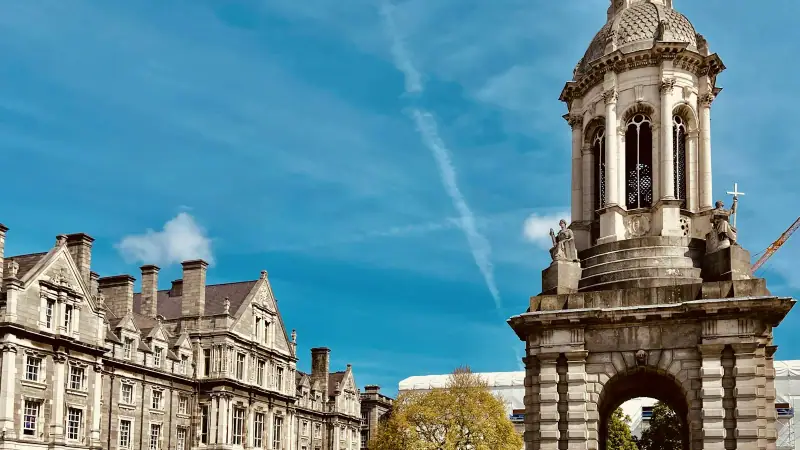
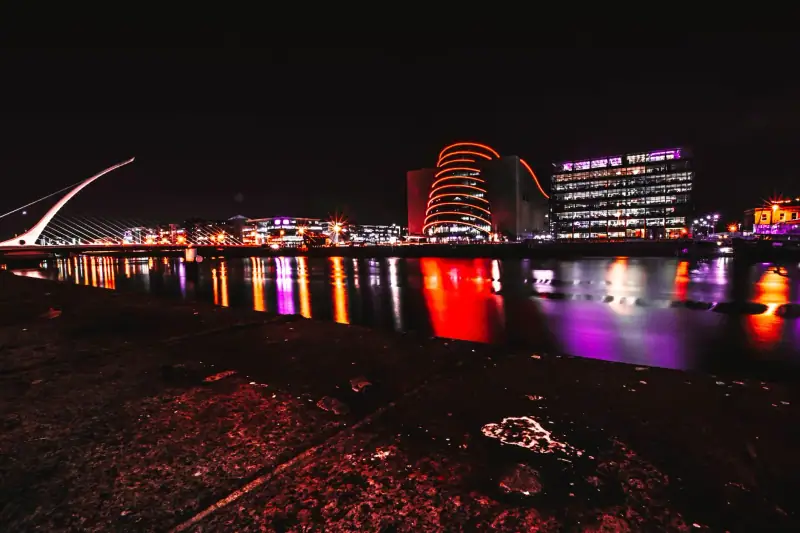
Dublin is the natural gateway to Ireland: the main airport is here, and the city can be explored on foot. You will find the Trinity College campus and its famous Book of Kells, Georgian parks, St Patrick’s Cathedral, the River Liffey and its bridges, the renovated quays and, of course, the pub atmosphere. The Temple Bar district is the most touristy and the liveliest in the evening; it is also more expensive and noisier than the rest of the city.
Three days are enough to cover the essentials. Our itinerary for visiting Dublin in 3 days organizes the visits day by day to limit back-and-forth. If you are unsure which area to base yourself in, the guide on where to stay in Dublin compares neighborhoods by budget and priorities (quiet, nightlife, proximity to transport).
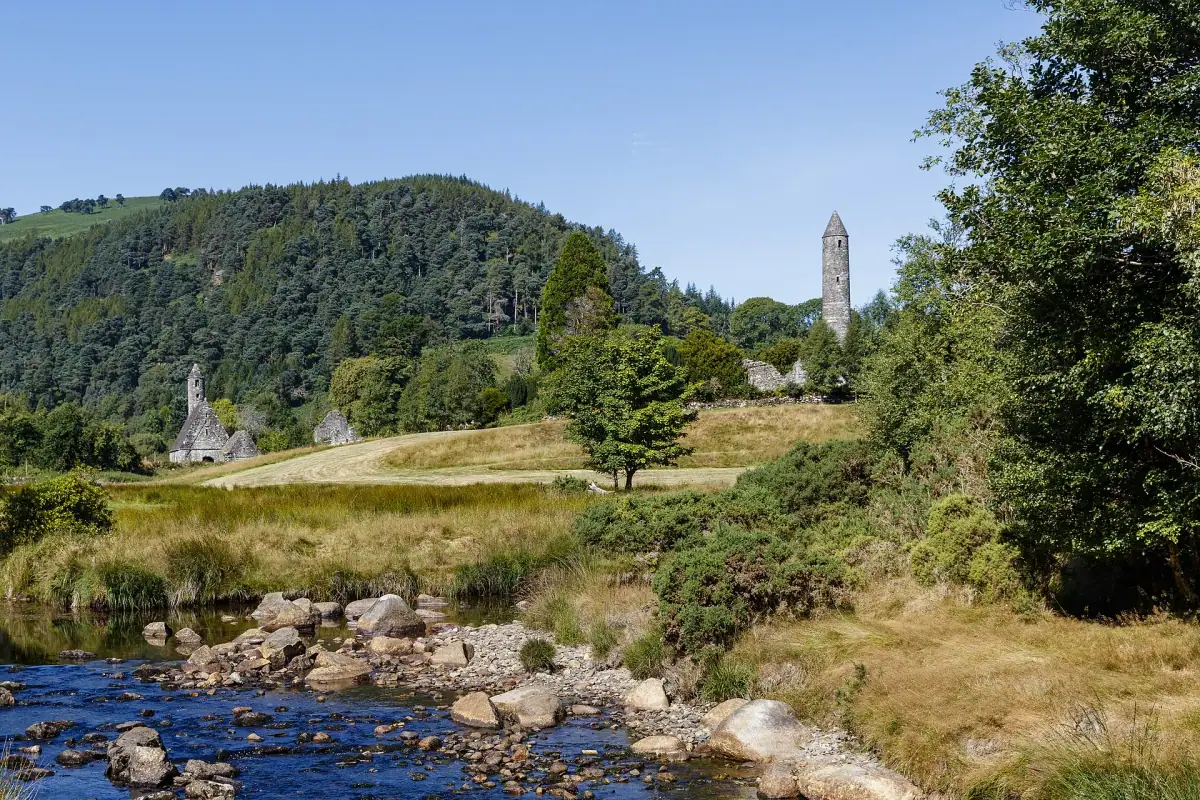
Around the capital, County Wicklow is nicknamed “the Garden of Ireland”. Its mountains, lakes and glacial valleys are reachable in under two hours from Dublin. The monastic site of Glendalough, founded in the early Middle Ages, is the star stop: round tower, ruined churches, two lakes and many trails. It is all detailed in our article on Glendalough and the Wicklow Mountains, which explains how to get there on a tour or on your own.
Further west and south of Dublin, there are also historic towns such as Kilkenny, famous for its medieval castle and stone lanes. It makes a pleasant stop on the road between Dublin and the southwest, for those who want to vary the atmosphere.
Hotels, B&Bs and hostels: compare rates and availability for your dates, especially in high season when small towns fill up quickly.
Galway and Connemara: the wild West
Galway is the west’s big city: a student and party town, with pedestrian streets enlivened by musicians, packed pubs and colorful facades. It is known for its cultural life and is an ideal base for exploring the coast. Its quays, the Salthill promenade and its small seafood restaurants make a stay easy, even without a car.
To the northwest stretches Connemara, a land of lakes, bogs, rounded mountains and jagged coasts. It is a region where you drive slowly, stop every four kilometers (2.5 mi) to photograph a landscape, and meet more sheep than cars. Clifden, often described as the “capital” of Connemara, is a practical base: a small town with pubs, restaurants and places to stay, close to the coastal road called the Sky Road. The Aran Islands, reached by ferry from the coast, are another great classic: dry-stone walls, prehistoric forts and an end-of-the-world feeling.
Our Connemara and Galway road trip in 3 days offers a detailed itinerary with stops, viewpoints and recommended breaks. It suits a short stay particularly well, because the region is compact.
County Clare: Cliffs of Moher and the Burren
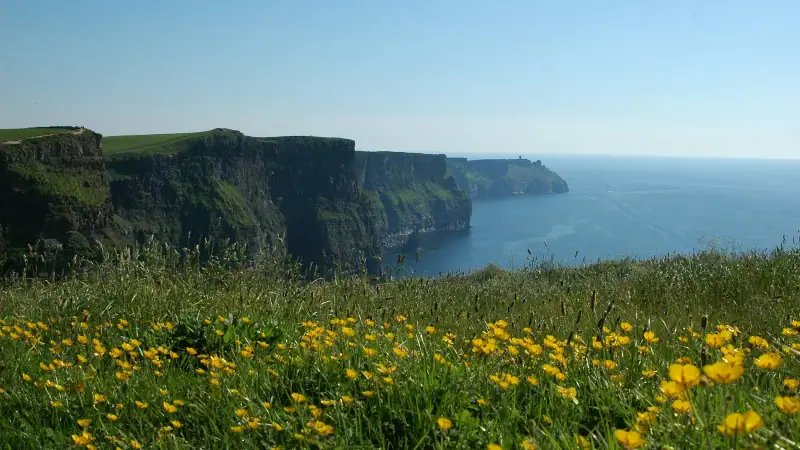
South of Galway, County Clare holds two of the country’s best-known landscapes. The Cliffs of Moher raise a wall of rock facing the Atlantic over several kilometers, with a high point above 200 meters (655 ft). It is Ireland’s most visited natural site, which means crowds in the middle of the day in summer. Arriving early in the morning or late in the afternoon changes the experience radically, as does choosing a stretch of the coastal path far from the visitor center.
Right next door, the Burren surprises by contrast: a gray, cracked, almost lunar limestone plateau where, in spring, rare flowers from very different origins still grow. The village of Doolin, known for the traditional music played in its pubs, is a favorite stopover for hikers and folk fans.
To organize the day (hours, parking, route between the cliffs and the Burren), see our guide to the Cliffs of Moher and the Burren. It is designed to fit in one day, starting from Galway, Limerick or Doolin.
Kerry: peninsulas, lakes and mountains
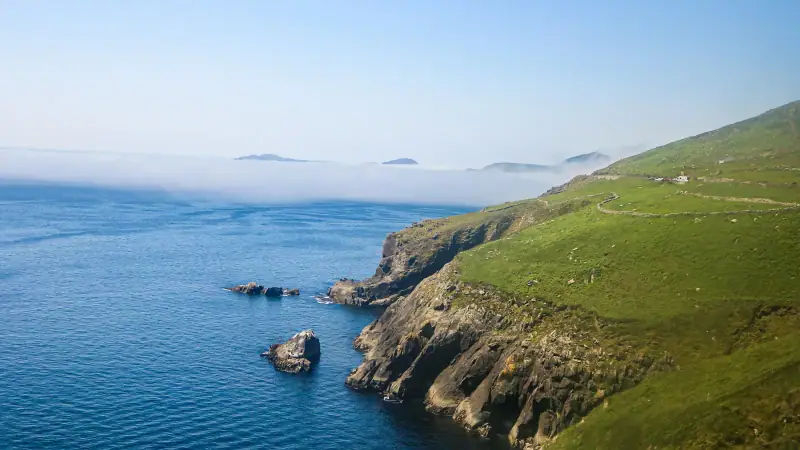
In the southwest, Kerry is probably the most famous region for a road trip. Killarney is its gateway: a small tourist town bordered by a national park, lakes, historic houses and trails. The region’s two big road loops start from here.
The Ring of Kerry, about 180 kilometers (112 mi), circles the Iveragh Peninsula. It alternates beaches, villages, ocean views and passes. Many tour buses take it in the same direction, which affects how smoothly traffic flows: find out the usual direction before you go and leave early to drive in peace. The Dingle Peninsula, further north, is more intimate: it has the village of Dingle, a colorful and lively fishing port, and the Slea Head road, which runs along cliffs dropping into the sea, prehistoric remains and views of the Blasket Islands.
Our Kerry and Dingle road trip in 4 days links these two loops with realistic stops, so you do not spend all your days behind the wheel. This pace leaves time for walks, pubs and sunsets, which are a large part of the appeal here.
Cork and the South: coasts, harbors and food
Cork, the Republic’s second city, has a strong identity. It is pleasant to visit: a historic covered market, the River Lee wrapping around it, a culture of pubs and cafés, and local pride in its food. In the surrounding area, coastal villages like Kinsale, known for its colorful houses and restaurants, make good stops for a more gourmet break between two days of landscapes.
Northern Ireland: Belfast and the Antrim coast
Northern Ireland is part of the United Kingdom, but it fits very well as an add-on to a trip in the Republic. Belfast, its capital, is a city with an industrial past (shipbuilding, with the story of the Titanic) and a complex political past, now turned toward culture, food and museums. The wall murals in the historic neighborhoods and the exhibitions on recent events tell a story that is essential to understanding the island.
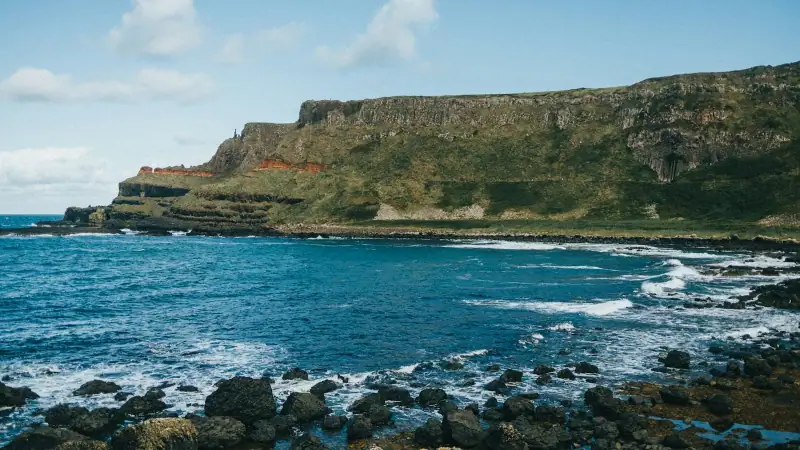
In the north, the Antrim coast is one of the most beautiful coastal routes in Europe. It leads to the Giant’s Causeway, a set of thousands of basalt columns, a UNESCO World Heritage Site, plunging into the sea. The Carrick-a-Rede rope bridge, Dunluce Castle and the Dark Hedges round out the area’s highlights. Our guide to the Giant’s Causeway and the Antrim coast helps you organize the day, with access and visit durations. Note that crossing between the Republic and Northern Ireland happens without systematic border checks, but currency, road signs (miles and mph) and some rules change: see the section on entry requirements below.
Day tours from Dublin, Galway or Belfast: Cliffs of Moher, Giant's Causeway, Wicklow. Compare offers and traveler ratings.
The highlights
If you could only keep a short list, here are the sights and experiences that come up most often in travelers’ accounts, with the matching guide:
- Dublin: Trinity College, Georgian parks, pubs and museums. → Visiting Dublin in 3 days
- Glendalough and Wicklow: monastic site, lakes and hikes. → Glendalough excursion
- Connemara and Galway: bogs, lakes, coastal road. → Connemara and Galway road trip
- The Cliffs of Moher and the Burren: the great classic of the Atlantic coast. → Moher and the Burren
- Kerry and Dingle: Ring of Kerry, Slea Head, Killarney. → Kerry and Dingle road trip
- The Giant’s Causeway: basalt columns and the Antrim coast. → Giant’s Causeway
The Wild Atlantic Way, a signposted touring route that follows the west coast for about 2,500 kilometers (1,553 mi), links a good share of these stops. You do not need to do all of it: treating it as a guiding thread rather than a goal to complete is more reasonable and more enjoyable.
Finally, Ireland is more than its big sights. Part of the pleasure lies in what you find along the way: a pub where a few musicians settle in with their instruments, a village where you stop for tea and a slice of cake, a path that heads down to an empty beach. Leave room in your schedule for these moments, which are often the ones you remember best.
When to go to Ireland
The Irish climate is oceanic: mild winters, cool summers, rain possible all year, frequent wind on the west coast. May, June and September are often considered the best compromise: long days, nature at its best, crowds still reasonable. July and August offer the most pleasant temperatures and the most daylight hours, but also the highest prices and very busy sights. Winter is quiet and cheaper, but days are short and some attractions and rural accommodation close or cut their hours.
A few events can shape your choice of dates: St Patrick’s Day, in March, transforms Dublin and pushes prices up; certain music or cultural festivals in the western towns liven up the summer. If the festive atmosphere appeals to you, book very early; if you prefer calm, avoid those dates.
Our article on when to go to Ireland details the months, average temperatures and what to pack. One point to remember in any season: plan for layers of clothing and a waterproof jacket rather than an umbrella, which does not stand up to the wind.
How to get to Ireland
By air
Dublin is the country’s main airport. Other regional airports, such as Cork, Shannon (near Limerick and County Clare) or Belfast, also receive international flights, often with a connection. Landing in one city and leaving from another (an “open jaw”) is a good strategy for a road trip: you avoid retracing your route. Prices vary a lot with the season and how far ahead you book, hence the value of comparing several dates.
Ticket prices vary strongly by season and airline: compare options from your city before fixing your dates.
Entry requirements
Entry rules depend on your passport and your route. The Republic of Ireland is not in the Schengen area, and Northern Ireland falls under the British regime, which may require an electronic travel authorization depending on your situation. Do not rely on a summary: check the official travel advice of your government before you book: travel.state.gov (US), GOV.UK (UK), travel.gc.ca (Canada), Smartraveller (Australia) (checked November 2026).
How to get around Ireland
The car: freedom and constraints
To explore the west coast, a rental car is the most practical choice: many sights are not served, or poorly served, by public transport. But driving in Ireland takes adjustment. People drive on the left, minor roads are narrow, often without a shoulder, lined with low walls or hedges, and meeting tour buses or tractors takes patience. Roundabouts are taken clockwise, and the speed limit is in kilometers per hour in the Republic and in miles per hour in Northern Ireland.
A few basic tips: take a small car (easier on narrow roads), favor an automatic if you are not used to driving on the left, read the insurance and deductible terms carefully, and limit your daily stages to keep time for stops. Our guide to renting a car in Ireland details insurance, the deposit, pitfalls to avoid and habits for driving on the left calmly.
Train, bus and guided tours
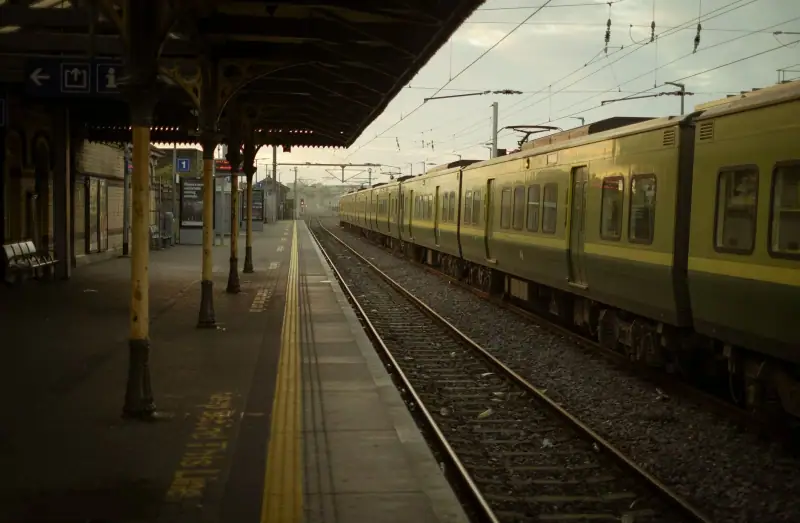
The rail network radiates from Dublin like a star: you can easily reach Cork, Galway, Limerick, Killarney or Belfast by train or bus, but cross-country links are less convenient. Intercity buses complete the network and serve smaller towns. However, isolated natural sites (peninsulas, cliffs, valleys) are hard to reach without a car.
If you do not drive, guided day tours from Dublin, Galway or Belfast are a good alternative: they cover the big classics (Moher, Wicklow, Giant’s Causeway) with no driving or parking worries. They have one downside: the pace is set for you and the stops are sometimes short.
Where to stay in Ireland
Accommodation is the biggest expense and the one that needs the most advance planning. The main families of options are:
- B&Bs and guesthouses: very typical of Ireland, they offer a room in a home or small property, with a hearty Irish breakfast included. This is often the best value and the best way to meet people.
- Hotels: from chain properties to manor-house or castle hotels, they are more common in big cities and heavily touristed sites.
- Hostels: practical for small budgets and solo travelers, with dorms or private rooms.
- Rentals and campsites: suited to families or long stays, especially in summer.
A few useful rules: book early for July-August and for small towns like Dingle, Killarney or Doolin, where supply is limited; favor places within walking distance of the center to avoid driving again in the evening after a drink; check cancellation terms, because the weather can upend your plans. In Dublin, the choice of neighborhood matters as much as the property: see our article on where to stay in Dublin.
Eating and drinking in Ireland
Irish cuisine long suffered from a bad reputation that is now outdated: very fresh seafood on the coast, quality meat and dairy, traditional breads and pastries, and a creative restaurant scene in the cities. The best-known dishes include Irish stew, soda bread, fish and chips, seafood chowders and the famous full breakfast. As for drinks, Guinness, Irish whiskeys and Irish coffee are among the must-tries.
The pub is not just a place to drink: it is the center of social life, where people eat, listen to live music and chat with neighbors. In many villages, it is also the most accessible restaurant. Our article on Irish food and its specialties details twelve dishes and drinks to try, with tips for choosing well.
Budget: how much to plan for
Ireland is an expensive country. Accommodation weighs the most, followed by restaurant meals and the car. Several factors change the bill: the season (June to August and St Patrick’s Day are the most expensive), the region (Dublin costs more than the rest of the country) and the mode of transport (a car shared among several people changes everything).
For a trip for two, excluding flights, you can think in three profiles: a tight budget (hostels or simple B&Bs, pub meals, public transport or a shared car), a mid-range budget (B&Bs or 3-star hotels, restaurants, rental car) and a comfortable budget (upscale hotels, good restaurants, paid activities). The gaps between these profiles are large, and we put figures on them in our guide to the budget for a stay in Ireland, with tips for spending less.
A few levers that work everywhere: travel in May, June or September rather than midsummer, book early, stay in B&Bs with breakfast included, have lunch in pubs (where midday dishes are often cheaper than evening menus) and take advantage of the many free sights and museums, as well as coastal paths that cost nothing.
Building your itinerary
Depending on how much time you have, here are some ways to combine the regions presented above. They are not exhaustive, but they are realistic starting points:
- A long weekend (3 to 4 days): Dublin alone, possibly with a trip to Wicklow. This is the ideal format for discovering the capital without a car.
- One week: Dublin (2 to 3 days), then one western region of your choice: Connemara and Galway for compactness, Clare for the cliffs, or Kerry for the peninsulas.
- Ten days: Dublin, then a west coast route linking Galway, Clare and Kerry, returning via Cork or Kilkenny.
- Two weeks: the whole west coast, plus Northern Ireland (Belfast and the Antrim coast) before returning via Dublin.
- Three weeks: the tour of the island, with longer stages, hiking days and rest days.
A simple rule: do not exceed two to three hours of actual driving per day on the roads of the west, because photo stops, villages and the unexpected always lengthen the day. And remember that changing accommodation every night is tiring: two nights in one place let you explore without your luggage.
Distillery or brewery tours, food tours and city discoveries with a local guide: compare offers in Dublin and elsewhere.
Practical tips before you go
A few points that come up again and again in traveler feedback and are worth anticipating:
- Electricity: sockets are British-style (type G) in Ireland as in Northern Ireland, with a voltage of 230 V. Check whether your devices need a plug adapter or a voltage converter.
- Payment: bank cards are accepted almost everywhere. Keep a little cash for remote situations, and remember pounds sterling in Northern Ireland.
- Tipping: not mandatory, but customary in restaurants with table service, where people often leave about 10% if satisfied.
- Clothing: favor several layers, a breathable waterproof jacket and good waterproof walking shoes. Even in summer, a sweater remains useful.
- Phone: check your carrier’s international plan before you go, or consider a travel eSIM; conditions may differ between the Republic of Ireland and Northern Ireland.
- Insurance: travel insurance with repatriation and suitable health coverage is recommended, especially if you plan to hike.
- Weather: check the local forecast in the morning and adjust your plans. When it rains, museums, distilleries and pubs are excellent fallbacks.
- Respect for places: many paths cross private land or pastures. Close gates, stay on the trails and leave no litter.
Finally, take the time to chat. The Irish sense of welcome is not a cliché: a conversation with a B&B owner or a bartender is often worth more than any guidebook recommendation.
All our guides to prepare your trip
Here, by theme, are all the articles on the site to go deeper into each step of your preparation:
Practical
- When to go to Ireland: weather, seasons and best time
- Budget for a stay in Ireland: real costs and 3 priced profiles
- Entry requirements for Ireland
- Renting a car in Ireland: driving on the left, insurance and tips
Itineraries
- Visiting Dublin in 3 days: day-by-day itinerary
- Connemara and Galway road trip in 3 days
- Kerry and Dingle road trip in 4 days
Discovery
- Cliffs of Moher and the Burren: how to visit in one day
- Giant’s Causeway: visit, access and the Antrim coast in 1 day
Activities
Accommodation
Food
- Irish food: 12 specialties to try
Final thoughts: preparing your trip to Ireland well
Ireland takes a little effort: the unpredictable weather, narrow roads and high prices call for preparation. In return, it offers landscapes of rare intensity, a living culture and a welcome that stays in the memory. For the trip to go well, keep five principles in mind: limit the number of stops, choose the right season, book accommodation and the car early, pack suitable clothing and leave room for the unexpected.
Start by choosing your dates and regions, then follow the detailed guides above to refine each stage. Safe travels, or as they say in Irish, Slán abhaile (safe home)!
Frequently asked questions
How long do you need to visit Ireland?
A week lets you combine Dublin with one region of the west coast, for example Connemara or Kerry. With ten to fifteen days, you can link Dublin, the west coast and Northern Ireland without rushing. For a full tour of the island, three weeks is comfortable.
What is the best time to go to Ireland?
From May to September the days are long and temperatures mild, but it is also high season. May, June and September often offer the best compromise between weather, crowds and prices. Rain can fall in any season.
Do you need to rent a car to visit Ireland?
For Dublin, Belfast, Cork or Galway, public transport is enough. For the west coast (Connemara, the Burren, Kerry, Dingle), a car remains the most flexible way. Remember that people drive on the left, and book an automatic if you are not comfortable shifting a manual with your left hand.
What currency is used in Ireland?
The Republic of Ireland uses the euro. Northern Ireland is part of the United Kingdom and uses the pound sterling. Bank cards are accepted almost everywhere, including in most pubs.
Do you need a passport or a visa for Ireland?
Entry rules depend on your passport. The Republic of Ireland and Northern Ireland (UK) do not have the same regime. Check the official travel advice of your government before you book: travel.state.gov (US), GOV.UK (UK), travel.gc.ca (Canada), Smartraveller (Australia) (checked November 2026).
Is Ireland expensive?
Yes, it is one of the most expensive destinations in Western Europe, especially for accommodation and meals. Dublin and high season push prices up. Booking early, staying in B&Bs and sharing the car help keep the budget under control.
Can you visit Ireland with kids?
Yes, the destination suits families well: varied landscapes, castles, beaches, easy-to-reach sights and a warm welcome. Just plan short driving stages, because minor roads are narrow and winding, and bring a waterproof layer for everyone.
More Ireland guides
Keep reading
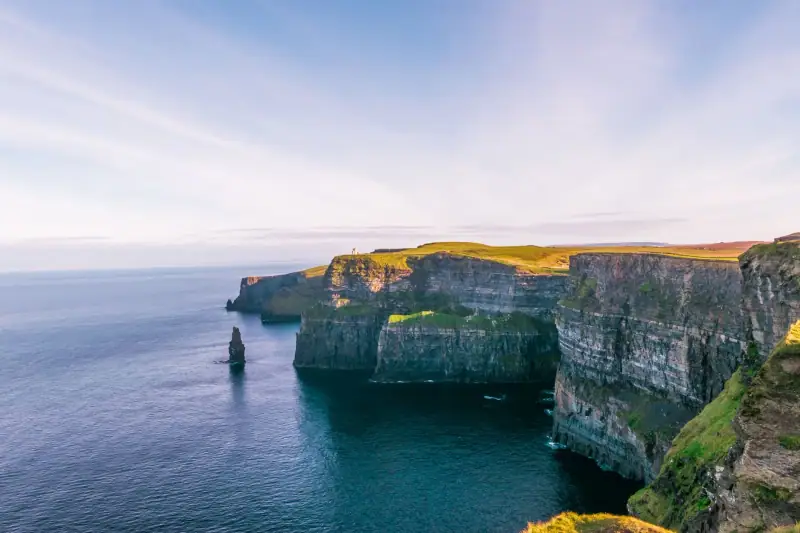
Cliffs of Moher and the Burren: how to visit them in one day
Visiting the Cliffs of Moher and the Burren in County Clare: access from Galway or Dublin, best times, hiking from Doolin, dolmen and caves.
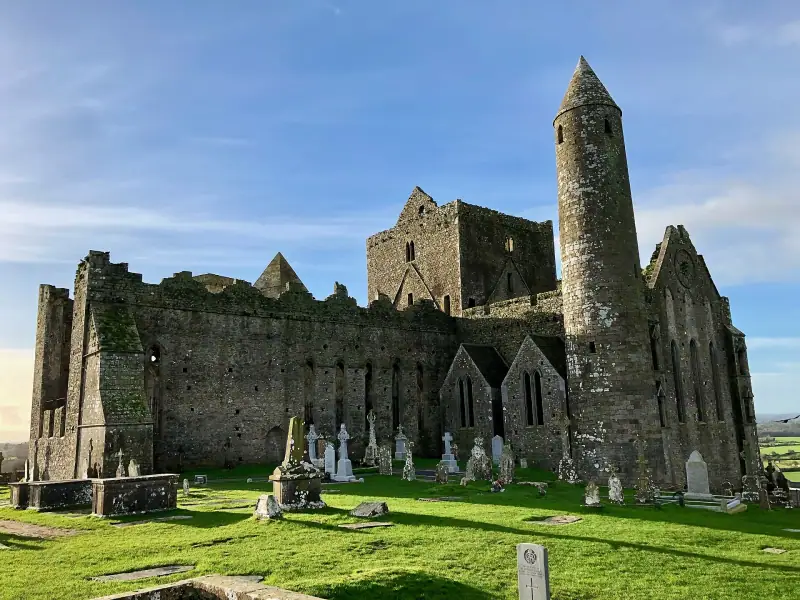
Rock of Cashel from Dublin without a car: hours, prices and bus access
Rock of Cashel from Dublin without a car: seasonal hours, official prices, bus 245X, train to Thurles, Cormac's Chapel and Hore Abbey.
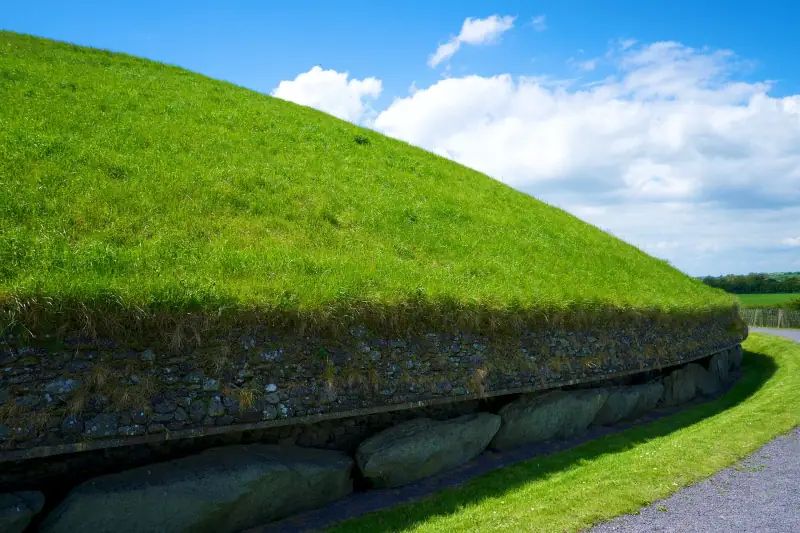
Newgrange from Dublin without a car: booking, hours and getting there
Newgrange from Dublin without a car: required booking at Brú na Bóinne, seasonal hours, train and bus 163 or a day tour, and the winter solstice.
Ready-made
Ireland itineraries
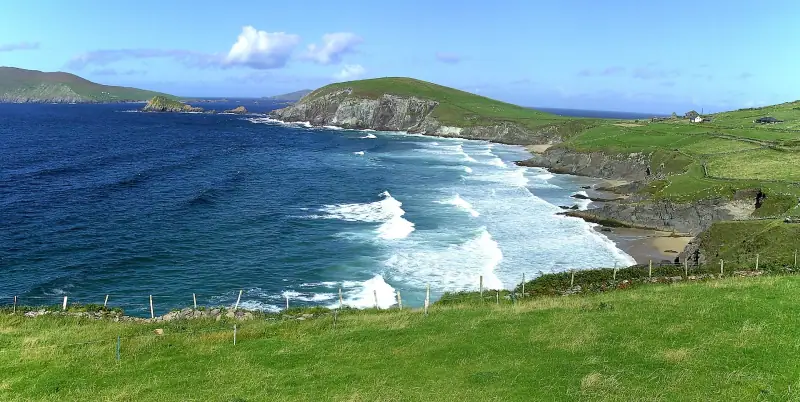
4 days
Kerry and Dingle road trip in 4 days: complete itinerary
KillarneyDingle
7 days
Ireland in 7 days without a car: a realistic train and bus itinerary
DublinGalwayKillarney
3 days
Visiting Dublin in 3 days: day-by-day itinerary
What to do in Dublin in 3 days? Trinity College, Guinness Storehouse, Kilmainham Gaol, Temple Bar and a trip to Howth: a walking itinerary with tips.