Itineraries
Visiting Dublin in 3 days: day-by-day itinerary
We may earn a commission when you book through links on this page, at no extra cost to you. We don't visit or try the places we cover: we summarize published sources. How we work
Day by day
- Day 1Trinity College, Dublin Castle, cathedrals, St Stephen's Green, Temple Bar
- Day 2Guinness Storehouse, Kilmainham Gaol, Phoenix Park
- Day 3O'Connell Street, museums, DART train to Howth
Where to sleep
- Dublin2 nights
Weather through the year on this route
| Jan | Feb | Mar | Apr | May | Jun | Jul | Aug | Sep | Oct | Nov | Dec | |
|---|---|---|---|---|---|---|---|---|---|---|---|---|
| High °F (°C) | 468 | 468 | 489 | 5211 | 5513 | 6116 | 6418 | 6418 | 6116 | 5513 | 5010 | 468 |
| Low °F (°C) | 394 | 394 | 394 | 436 | 468 | 5010 | 5412 | 5412 | 5211 | 489 | 457 | 415 |
| Rain in (mm) | 3.385 | 2.870 | 2.870 | 2.665 | 2.665 | 3.075 | 3.075 | 3.385 | 3.180 | 3.795 | 4.1105 | 3.795 |
Normals 1991–2020 at Dublin: averages over 30 years, not a forecast. Source: NASA POWER (MERRA-2), grid of about 50 km. Figures computed by us in November 2026.
In short
- Three days cover the classics (Trinity College, Dublin Castle, the cathedrals, Guinness Storehouse, Kilmainham Gaol) plus a half-day trip to Howth by DART train.
- Book the Book of Kells, Kilmainham Gaol and the Guinness Storehouse ahead, especially in summer and on weekends.
- No car needed: the center is walkable, with Dublin Bus, the Luas tram and the DART train for the rest.
- Sleeping south of the Liffey is the most practical for doing everything on foot.
Ireland’s capital, Dublin is a human-scale city: its historic center can be crossed on foot in a little under an hour, and most of the major sights are grouped on either side of the Liffey, the river that cuts the city in two. That makes it an ideal destination for a three-day stay, without a car and without rushing.
This itinerary alternates history, literature, pubs and a little nature. It follows a geographic logic to limit travel, and leaves room for improvisation, because a good part of Dublin’s charm lies in its streets, its musicians and its conversations at the bar.
Day 1: historic Dublin south of the Liffey
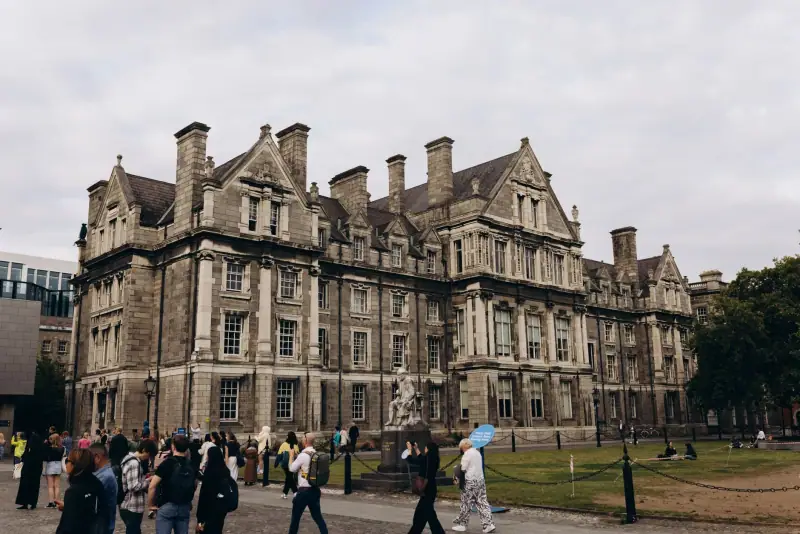
Start the day at Trinity College, Ireland’s oldest university, founded in the late 16th century. Its cobblestones, lawns and bell tower create a setting of their own in the middle of the city. The main draw is the exhibition on the Book of Kells, a medieval illuminated manuscript, which ends in the spectacular Long Room, the Old Library’s main chamber, with its wooden shelves of ancient books.
Tickets are booked online with a time slot: arrive at opening or book early, especially between May and September.
Continue on foot to Dublin Castle, a few minutes away. For centuries the seat of British power, it now houses state apartments, gardens and rooms you can visit with or without a guide. Nearby, the Chester Beatty Library shows a rich collection of manuscripts and works of art from around the world, and entry is generally free.
Late in the morning, head to the city’s two great medieval cathedrals, very close to each other:
- Christ Church Cathedral, of medieval origin, with its crypt;
- St Patrick’s Cathedral, the largest church in the country, linked to the writer Jonathan Swift, who was its dean.
Have lunch in the area, then go back north through the shopping streets. In the afternoon, take a green break in St Stephen’s Green, a Victorian park with ponds and tall trees, ideal for catching your breath after a morning of sightseeing. Grafton Street, the neighboring pedestrian street, is lively with street performers and leads to the park.
Sleeping near Trinity College and Grafton Street lets you do everything on foot. Compare availability and ratings.
Temple Bar and an evening in the pubs
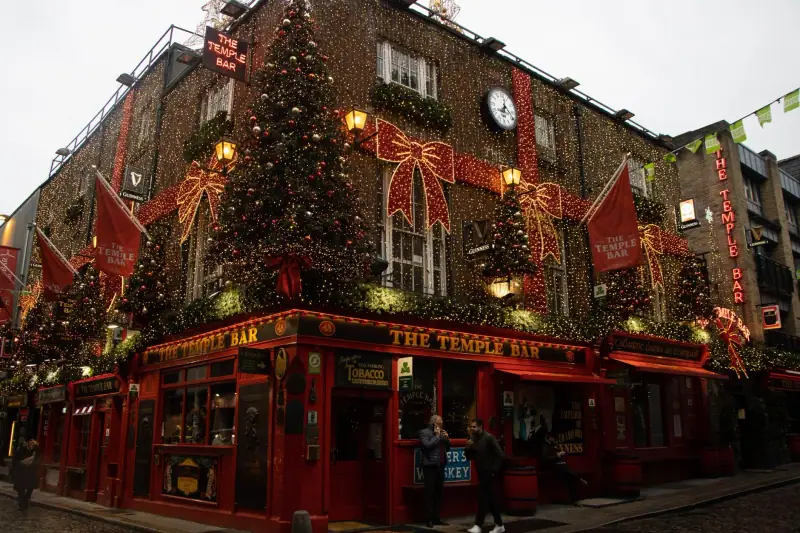
End the day in Temple Bar, the district most famous for its pubs, cobbled lanes and live music. It is very touristy and prices are higher than elsewhere: if you want a less hectic atmosphere, choose the pubs on the neighboring streets, where you also find traditional music almost every night.
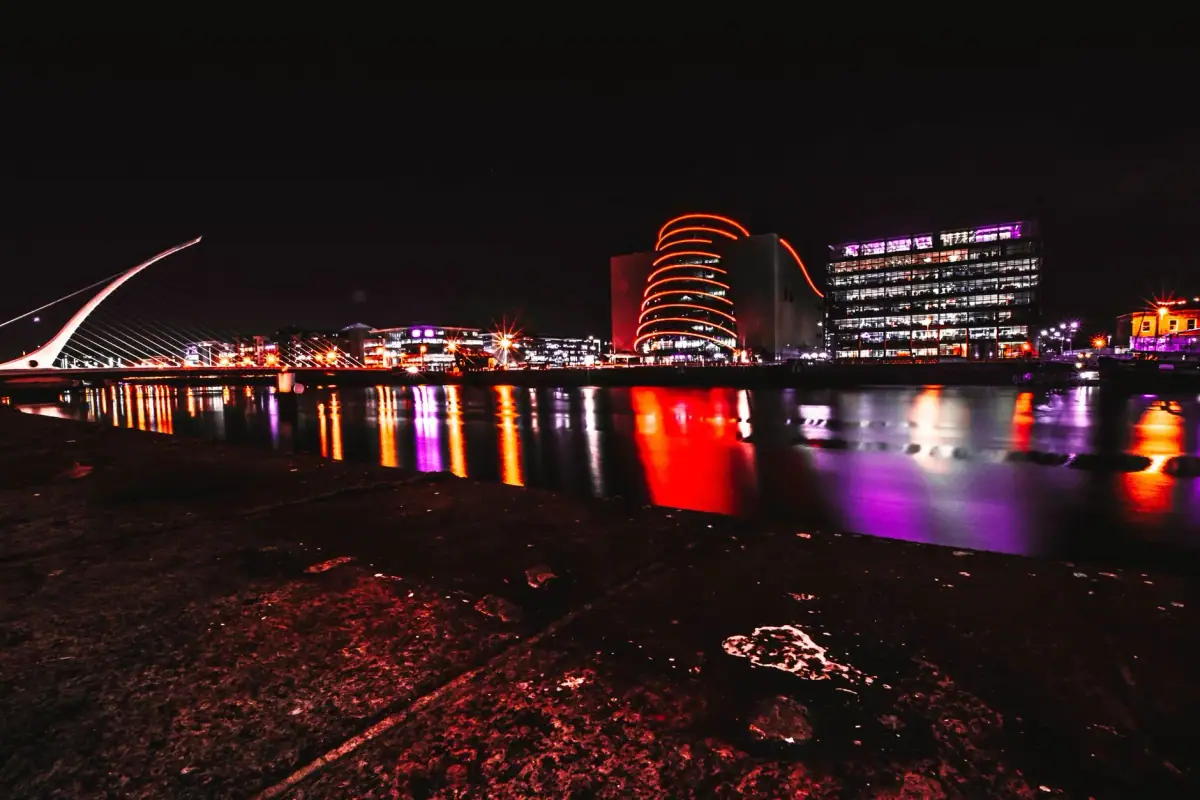
Cross the Liffey on the Ha’penny Bridge, a cast-iron pedestrian bridge that has become one of the city’s symbols, for a waterside walk at the end of the day. To learn more about what to eat and drink in Dublin, see our guide to Irish food.
Day 2: Guinness, history and open spaces
The second day is based west of the center. First stop: the Guinness Storehouse, at St James’s Gate, on the brewery’s historic site. The visit runs over several floors devoted to how the beer is made, its history and its advertising, and ends at the Gravity Bar, which offers a panoramic view of the city. Book a time slot online and allow about two hours.
Next, head to Kilmainham Gaol, a former prison turned museum. It is closely tied to the history of Irish independence, since several leaders of the 1916 Rising were held there. The visit is by guided group only and places go fast: book ahead.
Compare guided tours, walking tours and entry tickets to the capital's must-see sights.
Phoenix Park and a nature afternoon
If the weather allows, spend the late afternoon in Phoenix Park, one of the largest enclosed urban parks in Europe. You will see free-roaming deer, wide lawns and several monuments. The park can be visited on foot, by bike or on a rented bike, and it is a good way to see Dubliners on a weekend.
For the evening, go back to the center and try a neighborhood pub: a simple meal (stew, fish and chips, seafood chowder) will show you another side of the city. Near Dublin, the article on Glendalough and the Wicklow Mountains offers a day trip if you have more time.
Day 3: museums, the north side and a trip to Howth
The last day can start north of the Liffey. O’Connell Street, the city’s main avenue, is dotted with monuments, including the Spire, a very slender metal needle, and the General Post Office (GPO), the central building of the 1916 Rising, which now houses a museum.
If you prefer museums, Dublin has several that are free or very affordable:
- the National Museum of Ireland (archaeology branch), for Bronze Age and Viking treasures;
- the National Gallery of Ireland, for its collections of European and Irish paintings;
- EPIC The Irish Emigration Museum, an interactive museum on the Irish diaspora, with a paid ticket.
Entry conditions change: check hours and prices on the official websites before you go.
Howth, the coast half a day from Dublin
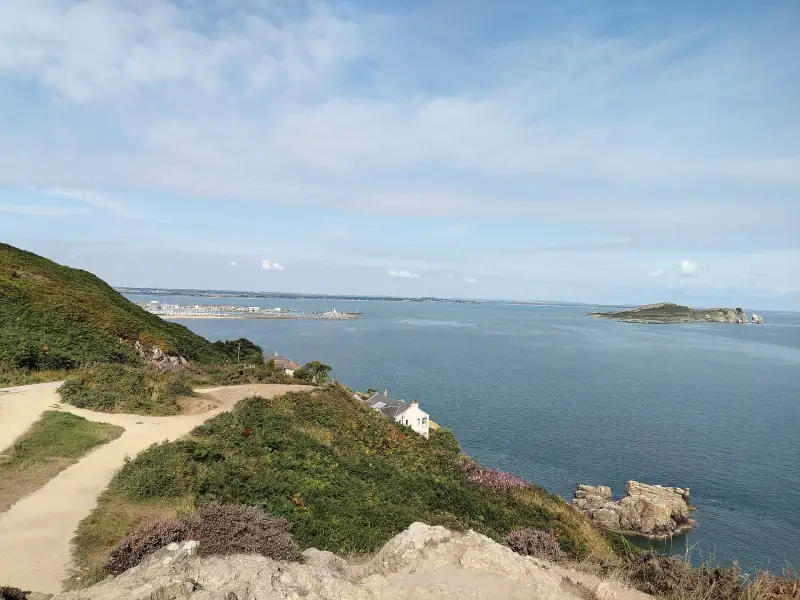
For the afternoon, take the DART train to Howth, a fishing village on a peninsula northeast of Dublin. The trip takes about half an hour from the center. Once there, stroll around the harbor, or follow one of the cliff paths around the peninsula, with views of Dublin Bay and the lighthouse.
It is a chance to taste fresh fish and seafood in one of the harbor restaurants before taking the train back for the evening. This trip is a pleasant contrast with the city: wind, gulls and sea air.
Pubs, Irish cuisine and whiskey: discover the food tours and tastings offered in the capital.
Getting around Dublin
The center is best visited on foot. For longer trips, there are several options:
- buses run by Dublin Bus, which serve almost every neighborhood;
- the Luas tram, with two main lines crossing the city;
- the DART train, which runs along the coast of Dublin Bay, notably to Howth and Dalkey;
- the Leap card, a rechargeable card usable on most of these networks, often cheaper than single tickets.
For this itinerary you do not need a car: it only becomes useful if you extend your stay with a road trip around the country. In that case, see our itineraries in Connemara and Galway or in Kerry, and keep in mind that driving is on the left.
Practical tips for planning your stay
A few pointers to make the most of your three days:
- Book ahead for the Book of Kells, Kilmainham Gaol and the Guinness Storehouse, especially in summer and on weekends;
- Bring a waterproof layer: the weather is changeable, and a shower can follow a clear sky within minutes. Our article on the best time to go to Ireland details the seasons;
- Sleep south of the Liffey to limit travel: our guide on where to stay in Dublin compares the neighborhoods;
- Stay flexible: if the rain sets in, swap the outdoor activities (Phoenix Park, Howth) for museum visits.
Central hotels fill up quickly in high season: compare offers and book early.
In short
In three days, Dublin shows its two faces: that of a historic and literary capital, and that of a city open to the sea and the nearby countryside. With a little forward planning for bookings and good walking shoes, this itinerary can be done without stress, at the pace of the pubs and waterside walks.
With an extra half day, you can also head up to the Boyne Valley: here is how to visit Newgrange without a car from Dublin, reservation included.
Frequently asked questions
Are three days enough to visit Dublin?
Yes, three days let you see the big classics (Trinity College, the castle, the cathedrals, the Guinness Storehouse, Kilmainham Gaol) and keep half a day for a coastal trip, to Howth for example.
Do you need to book Dublin sights in advance?
It is strongly advised for the Book of Kells at Trinity College, Kilmainham Gaol and the Guinness Storehouse, whose time slots fill up fast in high season. Book online on the official websites as soon as your dates are set.
Do you need to rent a car to visit Dublin?
No, the center is walkable and public transport (bus, Luas tram, DART train) covers the rest. A car is only useful for trips to the Wicklow Mountains or farther, and parking in the city center is expensive.
Where should you stay for a three-day trip to Dublin?
The city center, south of the Liffey, is the most practical for doing everything on foot. Our dedicated guide compares the neighborhoods and types of accommodation.
What is the best time to visit Dublin?
From May to September for long days and mild temperatures, but the city can be visited all year: there are plenty of museums, pubs and indoor places when the rain arrives.
More Ireland guides
Keep reading
Budget for a trip to Ireland: real costs and 3 priced profiles
What budget to plan for Ireland? Real costs by category (lodging, transport, meals, activities), three priced profiles and tips to spend less.
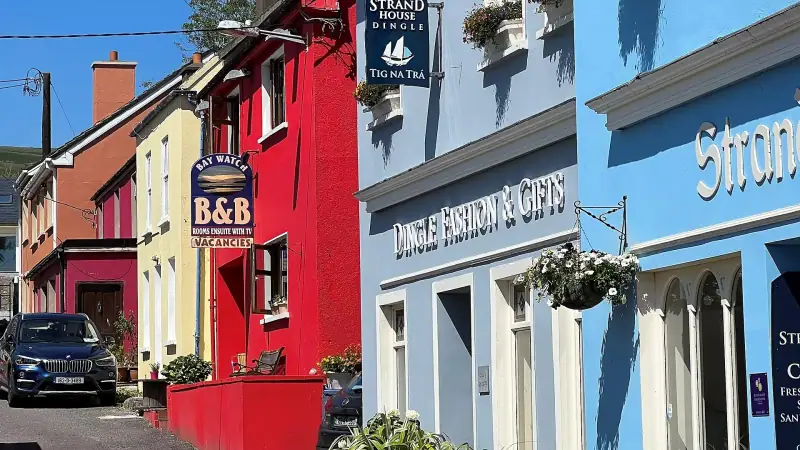
Where to stay in Dingle: town center, harbor or Slea Head, which base to choose?
Where to stay in Dingle? Center, harbor, edge of town or peninsula villages (Ventry, Ballyferriter): how to choose, parking, B&Bs and booking.
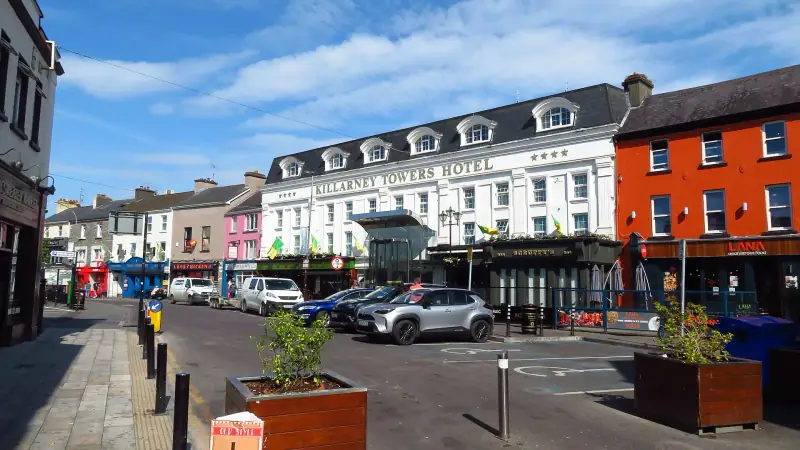
Where to stay in Killarney: town center, lakes and B&Bs for exploring Kerry
Where to stay in Killarney? Town center, Muckross road, national park edges, B&B or hotel: areas, budget and tips for booking before the Ring of Kerry.
Ready-made
Ireland itineraries
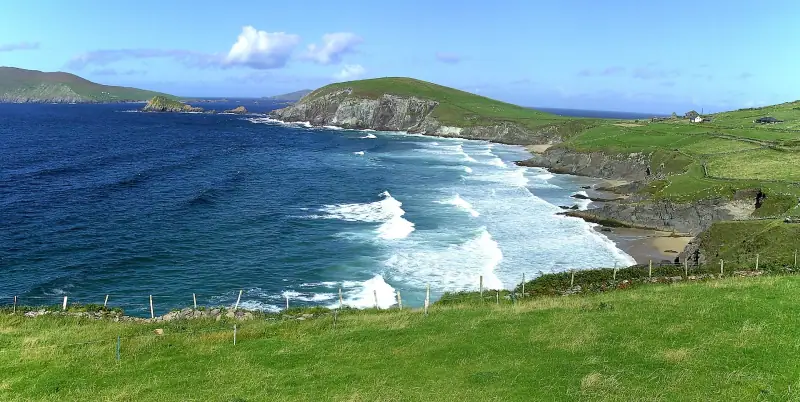
4 days
Kerry and Dingle road trip in 4 days: complete itinerary
KillarneyDingle
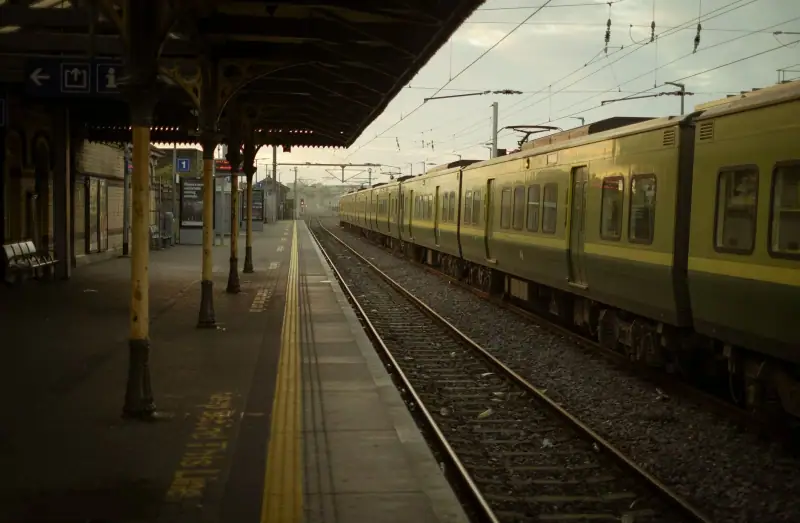
7 days
Ireland in 7 days without a car: a realistic train and bus itinerary
DublinGalwayKillarney
3 days