Things to do
Glendalough and the Wicklow Mountains: a day trip from Dublin
We may earn a commission when you book through links on this page, at no extra cost to you. We don't visit or try the places we cover: we summarize published sources. How we work
In short
- Glendalough is about 50 km (31 mi) south of Dublin, roughly one hour to an hour and a quarter by road, so it works as a day trip.
- Allow about an hour for the monastery ruins and its 30 m (98 ft) round tower; trails range from easy lake walks to a steeper climb to a viewpoint.
- Reach it by car (most flexible, with Sally Gap and Powerscourt), by bus in season, or on an organized tour from Dublin.
- May to September has long days and drier trails; bring a waterproof jacket, grippy shoes, water and food.
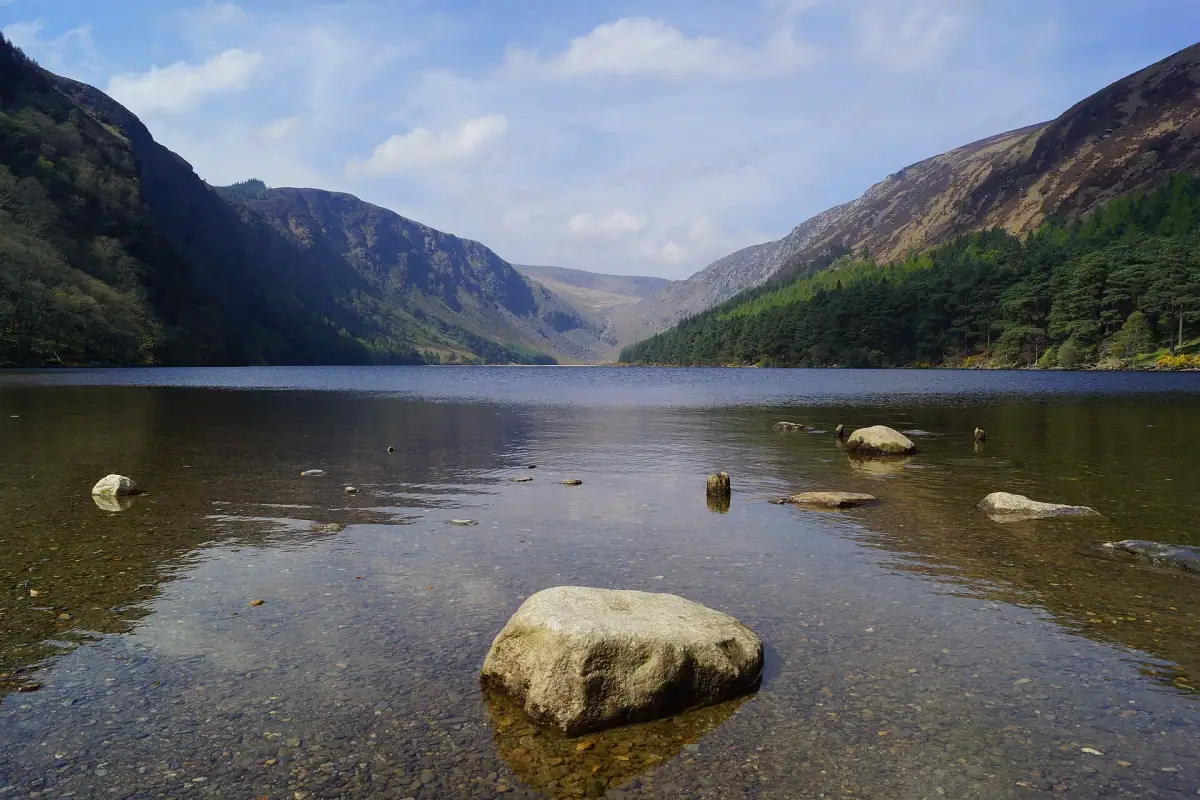
Less than an hour by road from Dublin, the Wicklow Mountains offer a striking contrast with the capital: heather moorland, bogs, dark lakes and glacial valleys where the wind sweeps the ridges. In this range lies Glendalough, the “valley of two lakes”, a monastic site founded in the 6th century and one of the most visited places in the country.
It is the most obvious day trip when staying in Dublin: you can combine history, hiking and scenery without changing accommodation. This guide details the site, the possible walks, the stops to add on the way and how to get there.
Glendalough monastery: an early medieval monastic site
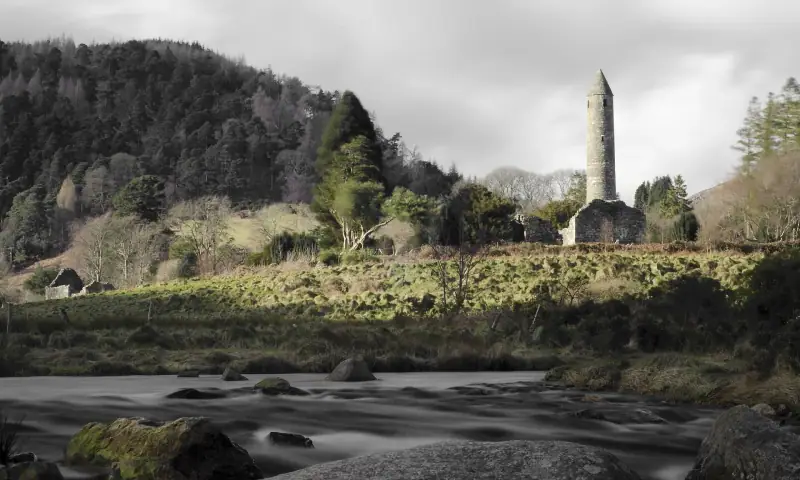
According to tradition, St Kevin settled here in the 6th century to live as a hermit, and a monastery grew up around his memory. For several centuries, Glendalough was an important religious and teaching center, before declining in the late Middle Ages.
Today a remarkably readable group of ruins remains, dominated by a round tower about 30 meters (98 ft) high, which served as a bell tower and refuge. Around it you will find a ruined cathedral, small stone churches, including the famous St Kevin’s Church, nicknamed “the Kitchen” for its chimney-shaped belfry, and a cemetery with Celtic crosses.
A visitor center presents the history of the site with an exhibition and a model. Allow about an hour to walk the ruins at an easy pace and read the information panels. Hours and any admission fees depend on the season: check them before you go.
To enjoy the place, avoid the middle of the day in summer, when tour buses crowd the site. Early in the morning or late in the afternoon, the atmosphere is much more contemplative and the low light brings out the stone.
Day tours with transport from Dublin, often combined with other stops in the Wicklow Mountains: compare packages and ratings.
The lakes and hikes around Glendalough
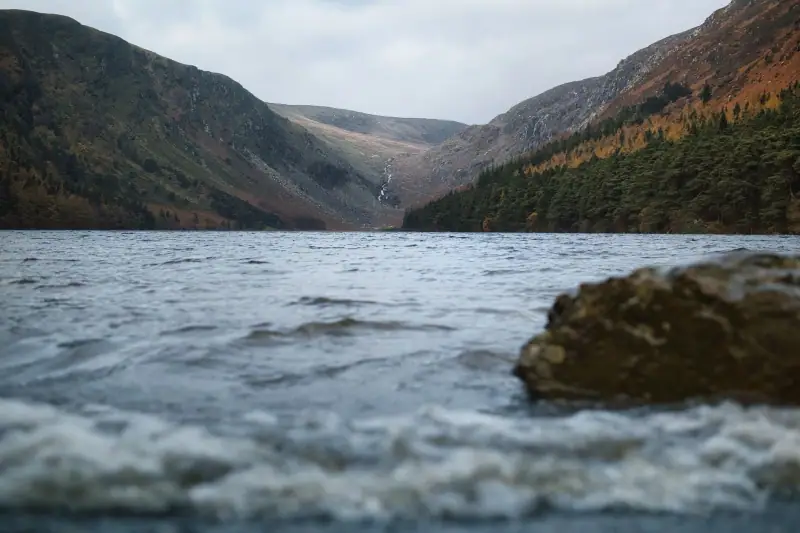
The Lower Lake and the Upper Lake are the two bodies of water that give the site its name. They are separated by a short distance and linked by a pleasant path that follows the valley, between forest and granite cliffs. The Upper Lake, more enclosed, is generally calmer.
Several marked trails start from the visitor center, with different colors by difficulty. In brief:
- Easy walks: a loop around the Lower Lake or a round trip to the Upper Lake, suited to families and those who do not want to walk more than two hours.
- Medium loops: they combine forest, waterfall and valley viewpoints, for half a day.
- The climb to the viewpoint: a steeper trail, with a notable elevation gain and many wooden steps, that gives an overall view of the lakes from above.
Before you set off, pick up a map at the visitor center or consult the park’s official information, because routes can be changed after bad weather or maintenance work. Even in summer, a waterproof jacket and good shoes are essential: the ground is often wet and the weather changes fast.
Serious hikers also know the Wicklow Way, a trail of about 130 kilometers (81 mi) that crosses the range from south of Dublin to County Carlow, passing through Glendalough. You can walk a stage of it without committing to the whole.
Wicklow Mountains National Park and the Sally Gap road
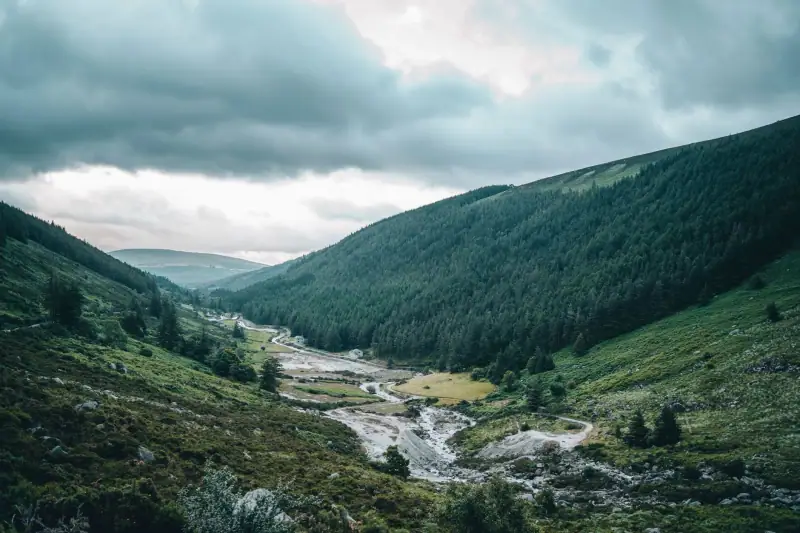
Glendalough is part of Wicklow Mountains National Park, the largest protected area of its kind in eastern Ireland. Beyond the valley, the landscape changes: peat plateaus, dark streams, free-roaming sheep and open horizons.
A much-loved way to discover this part of the range is to take the scenic road that passes through Sally Gap, a crossroads of passes in the middle of the moor. On the way, a viewpoint lets you glimpse Lough Tay, a black lake bordered by cliffs and pale sand, sometimes nicknamed the “Guinness Lake” because of its dark color and white rim. It is private land: you admire it from afar, from the road.
This road is narrow, often windy and without major facilities. Fill up beforehand, drive slowly and do not count on stable mobile coverage over the whole crossing. In fog, visibility can become very limited.
Hotels, guesthouses and cottages around Glendalough, Laragh and Wicklow: compare rates and ratings to extend the excursion.
Powerscourt: gardens and waterfall at Enniskerry
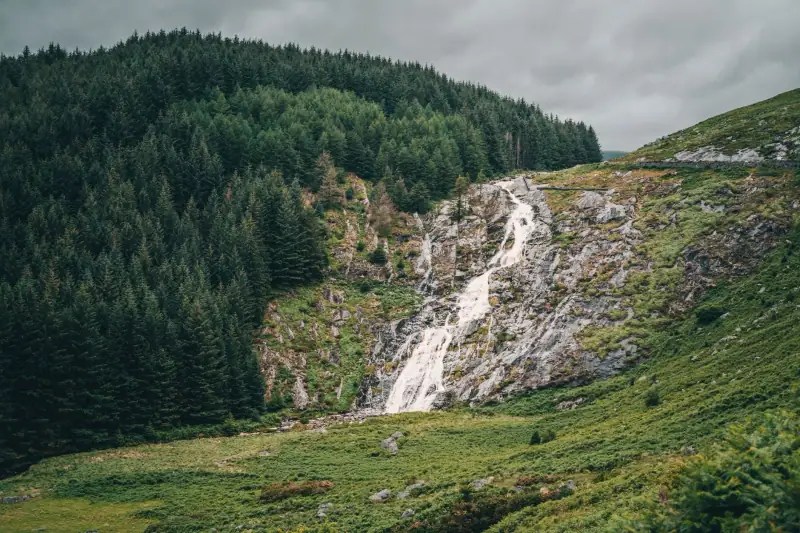
On the road to Wicklow from Dublin, a stop at Powerscourt, near the village of Enniskerry, is an easy addition. This estate is known for its Italian-style gardens, orderly terraces and view of the mountains. A few kilometers away, Powerscourt Waterfall is among the tallest in Ireland, with a drop of about 120 meters (394 ft).
The estate charges admission, and hours and prices vary by season. If your day is already full with Glendalough, you can choose one or the other: the gardens suit a quiet visit, the waterfall a short stop with a picnic.
Other stops are possible depending on your wishes: the little village of Enniskerry for a coffee, or the coast of County Wicklow, often nicknamed the “Garden of Ireland”, which you can reach after the mountains.
How to get to Glendalough from Dublin
The site is about 50 kilometers (31 mi) south of Dublin. Depending on traffic and route, allow about one hour to an hour and a quarter by road.
- By car: the most flexible, since you can link Glendalough, Sally Gap and Powerscourt. Remember driving on the left and the size of the minor roads. Parking is available near the site, often full in summer and on weekends.
- By bus: regular services link Dublin to Glendalough in season, but frequency is lower in winter. Check the return times, especially if you plan a hike.
- On an organized tour: practical if you have no car and do not want to handle driving. Time at the site is more limited, however, with a fixed departure and return time.
For a stay that is not limited to Dublin, a car becomes more interesting. Pick up the vehicle on the day you leave the capital, because driving and parking in the city center are impractical.
A one-day itinerary between Dublin and Glendalough
Here is a realistic sequence by car, without rushing:
- Morning: leave Dublin early, with a possible stop at Enniskerry or Powerscourt if the weather is clear.
- Late morning: arrive at Glendalough, visit the monastery and stop at the visitor center to choose a trail.
- Midday: picnic or break in the village of Laragh, very close, which has a few cafés and pubs.
- Afternoon: hike around the lakes, a medium loop or the climb to the viewpoint depending on your energy.
- Late afternoon: return by the Sally Gap road if the weather is clear, otherwise by the main road, which is faster.
Allow a full day, returning to Dublin in the early evening. If you want to walk more or enjoy the calm once the tour buses have left, spend a night nearby instead.
To explore from the capital, compare Dublin hotels by neighborhood, budget and traveler rating.
When to go and what to bring
The good season runs from May to September, with long days and drier trails. It is also the busiest period. In spring and early fall, the light is beautiful and trails less crowded, but the weather remains very variable. In winter, days are short and mud or frost can complicate some trails. To choose your period at the scale of the country, see our guide on when to go to Ireland.
In all cases, bring:
- a waterproof, windproof jacket;
- closed, non-slip walking shoes;
- water and food, since there is little to buy on the trails;
- a time margin before the last bus or nightfall;
- a plan B in case of rain, such as the visitor center or a café in Laragh.
If you are looking to organize your stay in the city, our guide on where to stay in Dublin helps you choose the right neighborhood. And to continue on the Atlantic coast, the article on the Cliffs of Moher and the Burren is a natural extension of the itinerary.
Frequently asked questions
Can you visit Glendalough in a day from Dublin?
Yes. The site is about an hour by road from the capital, which leaves time to visit the monastery, walk along the lakes and do a short or medium hike. Leave early to enjoy the light and avoid the crowds.
How do you get to Glendalough without a car?
Buses and organized tours from Dublin serve the site, especially in season. Check the timetables before you go, because they vary by period and the last return can be fairly early.
Which hike should you do at Glendalough?
Several marked trails start from the visitor center, from a simple walk around the lower lake to the more demanding loop that climbs to the viewpoint above the lakes. Choose according to your fitness and the weather.
Do you need to book to visit Glendalough?
The site can be explored freely. A visitor center offers an exhibition, and hours and any fees vary by season: check the official information before you come.
What is the best time to visit the Wicklow Mountains?
From May to September, the days are long and the trails passable. Fall offers beautiful colors and fewer people, but the weather is more unpredictable. In winter, trails can be muddy, even snowy at altitude.
More Ireland guides
Keep reading
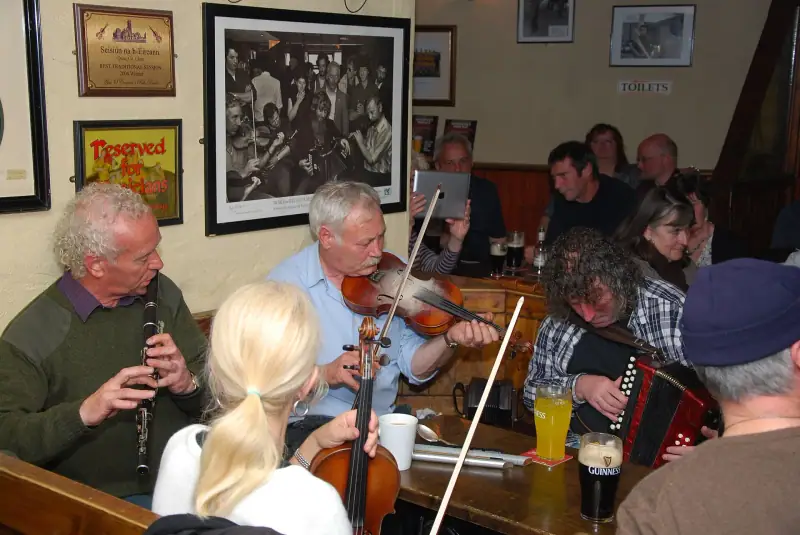
Irish pubs and traditional music: sessions, etiquette and tips
How to enjoy a real pub night in Ireland: trad music sessions, round etiquette, instruments, best towns and mistakes visitors should avoid.
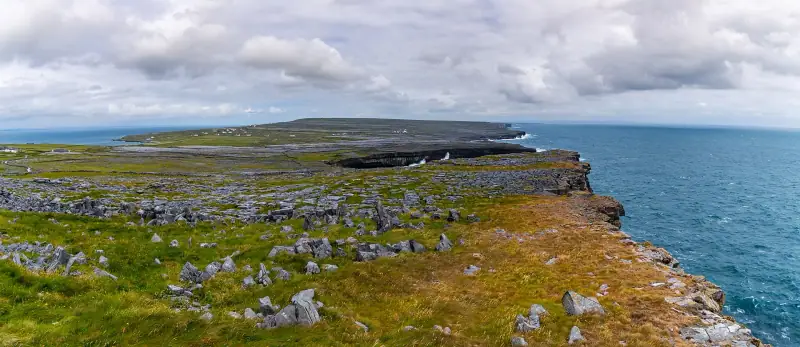
Aran Islands: visiting Inis Mór by bike from Galway
Visiting the Aran Islands from Galway: ferry, bike rental, Dún Aonghasa, villages and tips for a day or a night on Inis Mór, without stress.
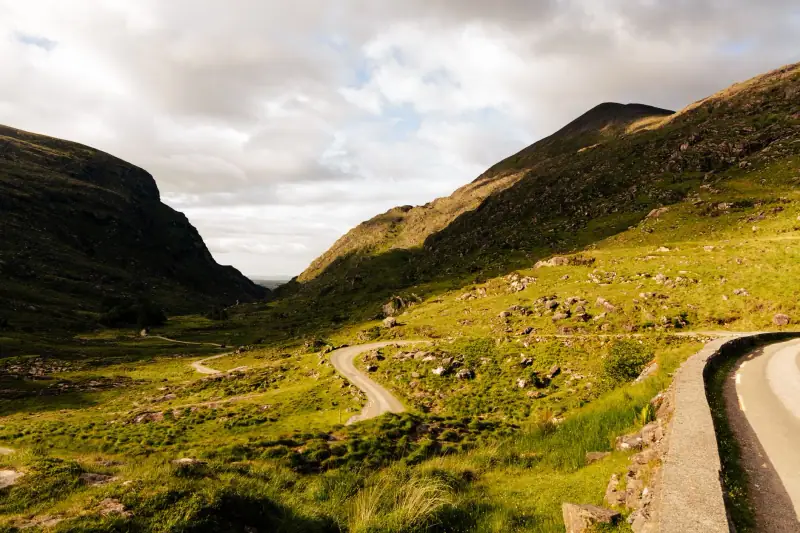
Budget for a trip to Ireland: real costs and 3 priced profiles
What budget to plan for Ireland? Real costs by category (lodging, transport, meals, activities), three priced profiles and tips to spend less.
Ready-made
Ireland itineraries
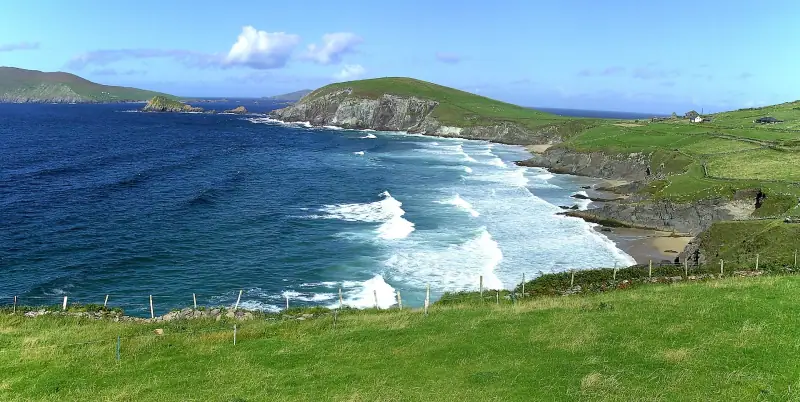
4 days
Kerry and Dingle road trip in 4 days: complete itinerary
KillarneyDingle
7 days
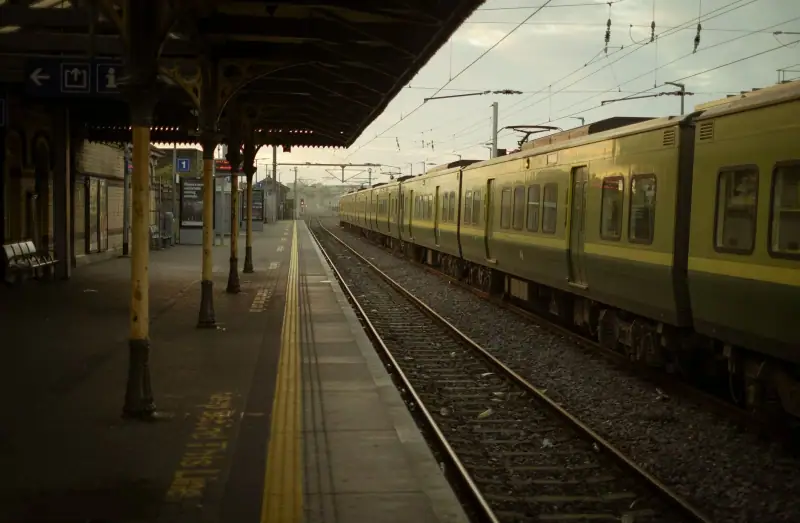
Ireland in 7 days without a car: a realistic train and bus itinerary
DublinGalwayKillarney
3 days
Visiting Dublin in 3 days: day-by-day itinerary
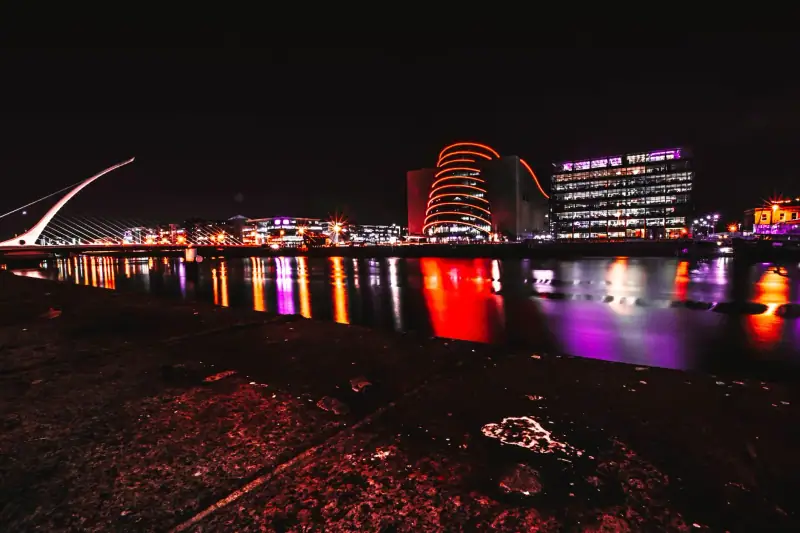
What to do in Dublin in 3 days? Trinity College, Guinness Storehouse, Kilmainham Gaol, Temple Bar and a trip to Howth: a walking itinerary with tips.