Itineraries
Connemara and Galway road trip in 3 days: detailed itinerary
We may earn a commission when you book through links on this page, at no extra cost to you. We don't visit or try the places we cover: we summarize published sources. How we work
Day by day
- Day 1Galway: Latin Quarter, Spanish Arch, cathedral, Salthill
- Day 2Leenane, Kylemore Abbey, Connemara National Park, Clifden
- Day 3Sky Road, Roundstone, coast road back to Galway
Where to sleep
- Galway1 night
- Clifden1 night
In short
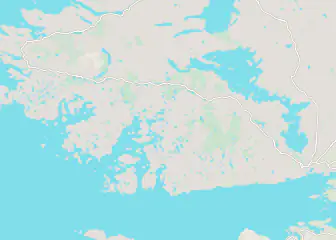
- Three days: Galway, a big Connemara loop to Clifden (about 110 to 120 km / 68 to 75 mi), then the Sky Road and the coast back.
- A car is strongly recommended: public transport mostly serves the main roads, and the best viewpoints are on small roads.
- Galway to Clifden on the N59 takes about 1 h 15 to 1 h 30 for roughly 80 km (50 mi), longer in summer or with photo stops.
- Drive on the left, fill up in Galway or Clifden, and download offline maps: mobile coverage can be weak in the valleys.
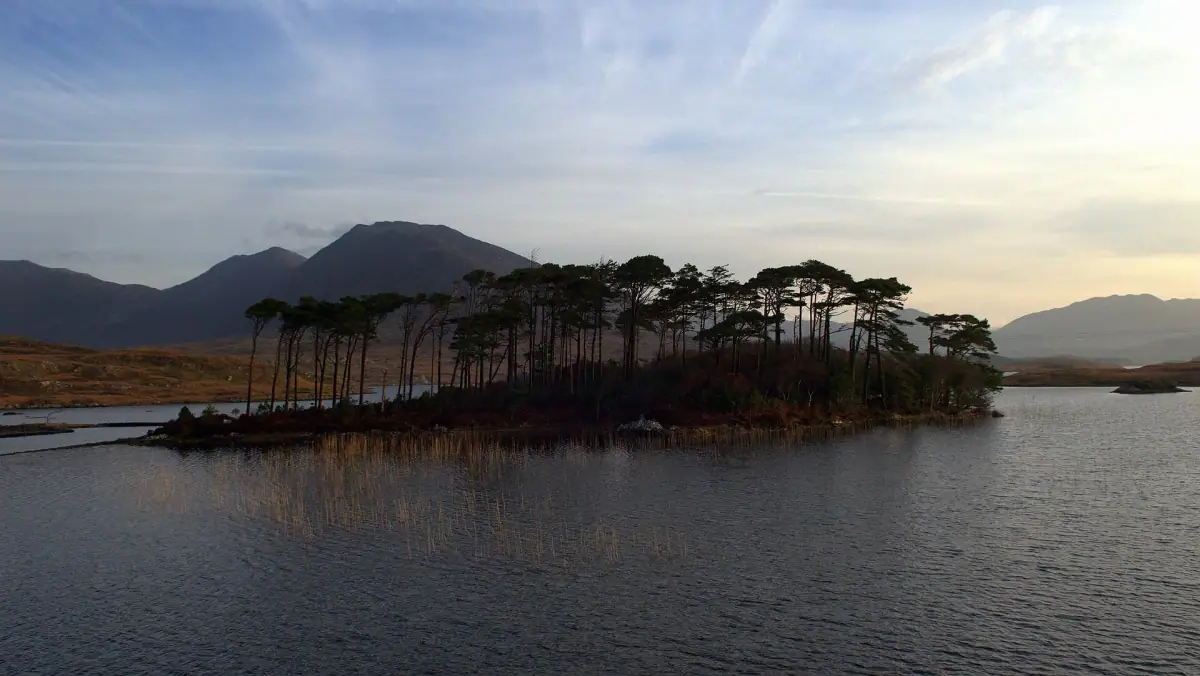
Between the busy streets of Galway and the dark lakes of Connemara, the west of Ireland offers a striking contrast. On one side, a small student city where traditional music pours out of the pubs. On the other, a region of bogs, rounded mountains, white beaches and almost empty roads that run along the Atlantic.
Here is a three-day itinerary by car, designed to keep distances reasonable: one day in Galway, a big loop through Connemara to Clifden, then a return along the coast.
Day 1: Galway, gateway to the west
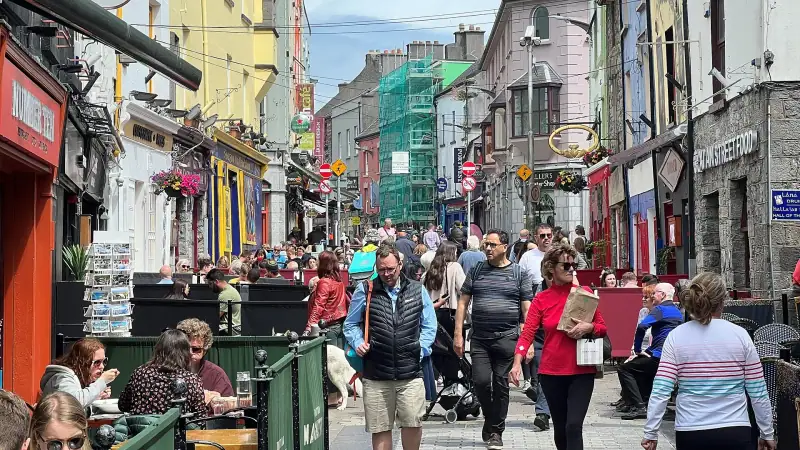
Galway is the best starting point for exploring Connemara. The center is walkable, and you can easily spend a day there without a car. Park it as soon as you arrive and leave it alone until the next day.
The center’s main sights:
- the Latin Quarter, a maze of pedestrian lanes lined with pubs, shops and cafés, where street musicians are common;
- Spanish Arch, a remnant of the old fortifications beside the River Corrib, near where it flows into the bay;
- Galway Cathedral, a large stone building from the 20th century that overlooks the river;
- the Salthill promenade, about 2 km (1.2 mi) west of the center, popular for a sunset walk facing the bay.
In the evening, pick a pub with traditional music. Galway is known for this atmosphere, and most places in the center host sessions several nights a week. For dinner, the city is also a good place to try seafood from the west coast: the simplest approach is to check recent reviews and favor short menus.
If you arrive from Dublin, the drive to Galway usually takes a little over 2 hours on the M6 motorway, which leaves the afternoon free.
Hotels, B&Bs and apartments in the center or near the bay: compare rates, locations and traveler ratings.
Day 2: the big Connemara loop
This is the highlight day. The idea is to reach Clifden through the interior, then follow the coast. The total is about 110 to 120 km (68 to 75 mi) of driving, but the roads are winding and you will stop often: plan a full day.
Galway → Leenane. Leave Galway to the northwest, go through the villages beside Lough Corrib, then head into the mountains toward Maam Cross, an isolated crossroads in the middle of the region. The road then crosses the Maam Valley to Leenane, a small village at the head of Killary Harbour, often described as Ireland’s only fjord. It is a nice spot for a coffee and a look at the water squeezed between the mountains.
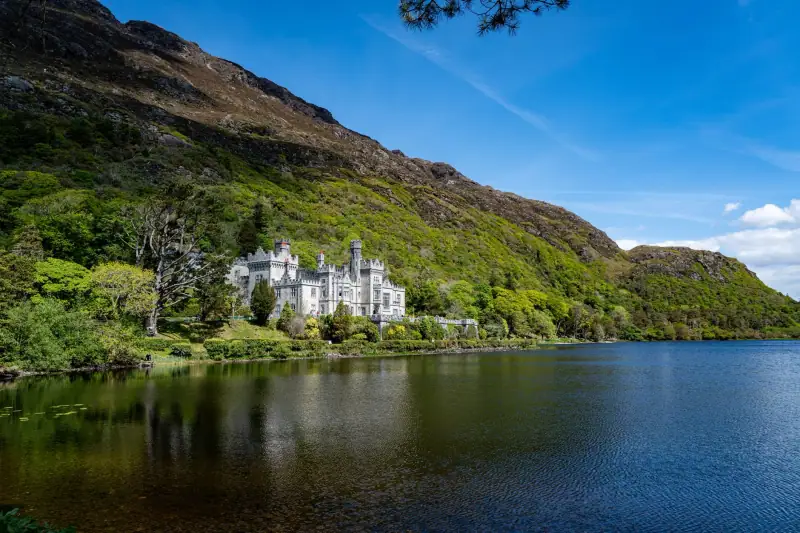
Leenane → Kylemore Abbey. About 15 to 20 minutes by road separate Leenane from Kylemore Abbey, a 19th-century neo-Gothic castle reflected in a lake, at the foot of a wooded hill. It is now home to a community of Benedictine nuns. The site also includes a Victorian walled garden. Allow one to two hours there, and check hours and prices on the official website before you go.
Kylemore → Letterfrack. A few minutes away, the village of Letterfrack has the entrance to Connemara National Park, which covers part of the Twelve Bens mountains. The visitor center is the starting point of several marked trails, from an easy walk of about 30 minutes to the climb of Diamond Hill, which peaks at about 400 m (1,310 ft). The upper trail, about 6 km (3.7 mi), takes around 2 hours and offers, in clear weather, a superb view of the coast and the islands offshore. Bring good shoes: the ground can be soaked.
Letterfrack → Clifden. About 15 km (9 mi) remain (15 to 20 minutes on the N59) to reach Clifden, the “capital” of Connemara, a colorful town tucked into the head of a bay. Settle in for the night: the town has plenty of places to stay, pubs and restaurants, and the center can be covered on foot in a few minutes.
Guided tours, hikes and day trips from Galway: compare offers, durations and traveler ratings.
Day 3: Sky Road, wild coast and back to Galway
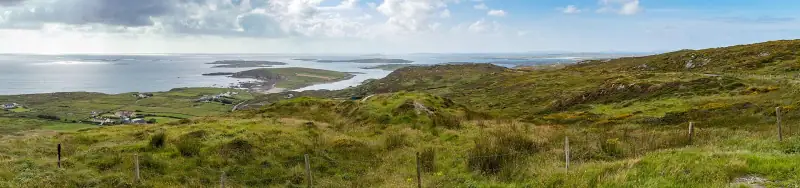
The last day follows the Atlantic coast. Start with the Sky Road, a scenic loop road that leaves Clifden to the west and climbs above the bay, with open views of the ocean and the islets. Allow an hour if you stop at the viewpoints, more if the sky is clear.
Then continue southeast toward Roundstone, a small fishing port backed by Errisbeg mountain. The road passes pale sandy beaches and bog landscapes dotted with lakes, and you may come across Connemara ponies, the well-known local breed. Swimming is possible in summer, but the water stays cool and the weather unpredictable.
The return to Galway along the coast, via the R336, is about 100 km (62 mi) from Roundstone including detours. The road winds from village to village through landscapes of stone, dry-stone walls and small bays. You can end the trip with a last meal in central Galway before returning the car.
As an alternative, you can spend this third day on the Aran Islands: the ferry leaves from Rossaveal harbor, a crossing of about 40 minutes to Inis Mór, the largest of the three islands, where the prehistoric fort of Dún Aonghasa stands at the edge of a cliff. It makes a full day but replaces the Sky Road and the coast.
Ferry crossings and day trips to Inis Mór: compare the options and available times.
Driving in Connemara: practical tips
In Ireland, people drive on the left. If it is your first time, take a small car, preferably an automatic if you are not comfortable driving on the left: on Connemara’s small roads, width and terrain demand attention.
A few useful points:
- minor roads are often narrow, with no shoulder and sheep crossing; slow down in blind bends;
- distances are short, but average speeds are low: allow more time than your GPS suggests;
- fill up in Galway or Clifden: gas stations are rare in remote areas;
- mobile coverage can be weak in the valleys, so download your maps for offline use.
As for weather, the region is exposed to the Atlantic: showers are frequent, even in summer. A windbreaker and waterproof shoes matter more than a swimsuit. To choose a season, see our guide on when to go to Ireland.
Extending the trip
This route combines easily with other stages of the Wild Atlantic Way, the coastal route along the country’s west side. From Galway, the Cliffs of Moher and the Burren are about 1 h 30 to 2 h away by road, and the southwest awaits with our Kerry and Dingle road trip in 4 days.
If you start from Dublin, book your first night ahead: our guide on where to stay in Dublin will help you choose the right area before you set off west.
Sources
- Aran Island Ferries: figures checked November 2026
Frequently asked questions
How many days do you need to visit Connemara?
Three days let you combine a day in Galway and two days in Connemara without rushing. One day is enough for a loop from Galway, but then there is little time to walk or stop in the villages.
Do you need a car to visit Connemara?
It is strongly recommended: public transport mostly serves the main roads, and the best viewpoints are on small roads. Without a car, day trips from Galway let you see the main sights.
What is the best time to visit Connemara?
From May to September the days are long and the weather milder. Still, the weather stays changeable all year on the Atlantic coast: always pack a waterproof jacket and warm layers.
How long does it take to get from Galway to Clifden?
On the N59, allow about 1 h 15 to 1 h 30 for roughly 80 km (50 mi), more in summer or if you make many photo stops.
Can you visit the Aran Islands during this trip?
Yes, by replacing part of day 3. The ferry leaves from Rossaveal harbor in Connemara, and the crossing to Inis Mór takes about 40 minutes. Check the timetable and sea conditions before booking.
More Ireland guides
Keep reading
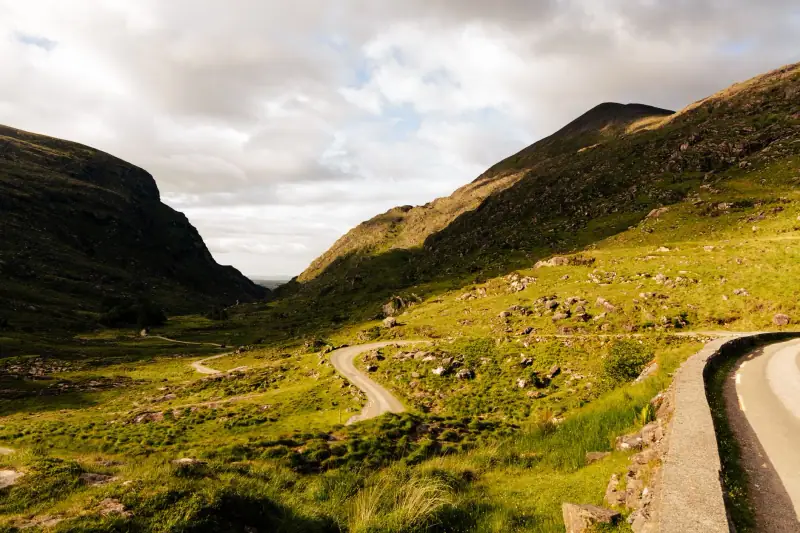
Budget for a trip to Ireland: real costs and 3 priced profiles
What budget to plan for Ireland? Real costs by category (lodging, transport, meals, activities), three priced profiles and tips to spend less.
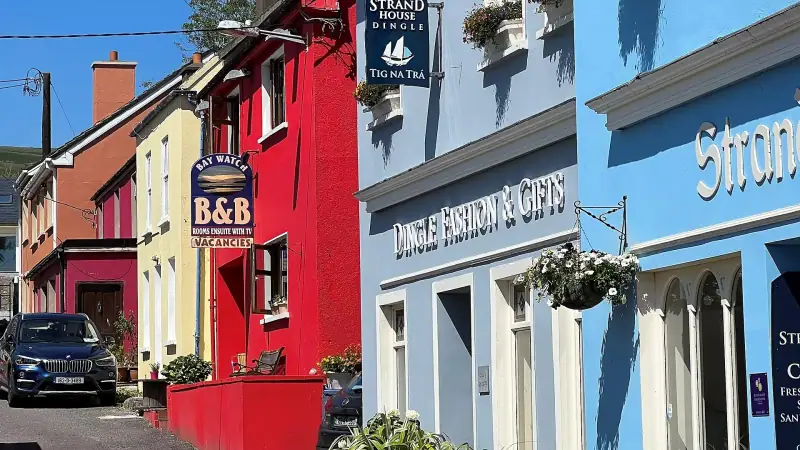
Where to stay in Dingle: town center, harbor or Slea Head, which base to choose?
Where to stay in Dingle? Center, harbor, edge of town or peninsula villages (Ventry, Ballyferriter): how to choose, parking, B&Bs and booking.
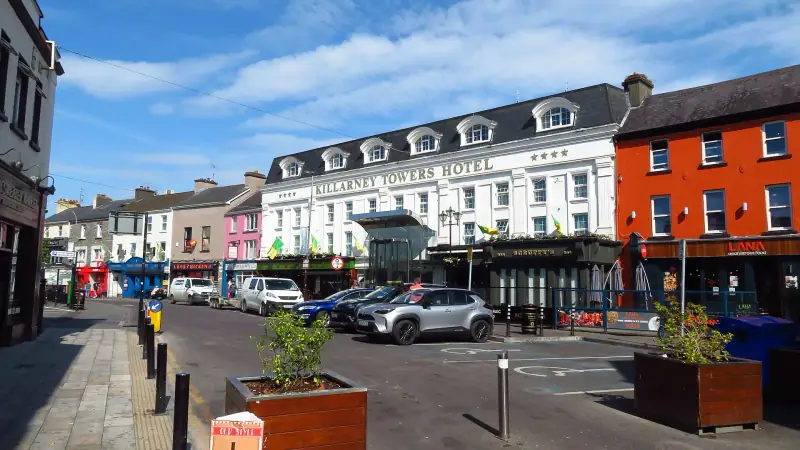
Where to stay in Killarney: town center, lakes and B&Bs for exploring Kerry
Where to stay in Killarney? Town center, Muckross road, national park edges, B&B or hotel: areas, budget and tips for booking before the Ring of Kerry.
Ready-made
Ireland itineraries
4 days
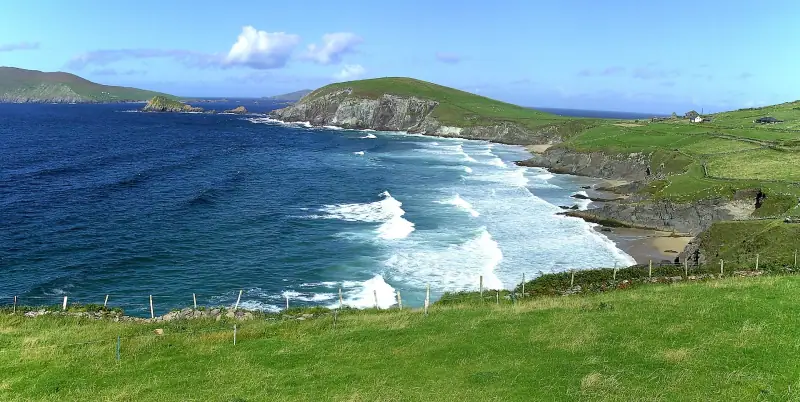
Kerry and Dingle road trip in 4 days: complete itinerary
KillarneyDingle
7 days
Ireland in 7 days without a car: a realistic train and bus itinerary
DublinGalwayKillarney
3 days
Visiting Dublin in 3 days: day-by-day itinerary
What to do in Dublin in 3 days? Trinity College, Guinness Storehouse, Kilmainham Gaol, Temple Bar and a trip to Howth: a walking itinerary with tips.