What to see
Newgrange from Dublin without a car: booking, hours and getting there
We may earn a commission when you book through links on this page, at no extra cost to you. We don't visit or try the places we cover: we summarize published sources. How we work
In short
- Every visit starts at the Brú na Bóinne visitor center, about 50 km (31 mi) north of Dublin; you cannot go straight to the monument.
- A booked ticket is required for all visitors, children included. Booking opens 30 days ahead from April 1 to November 1, 7 days ahead otherwise.
- Without a car: commuter train from Dublin Connolly to Drogheda (about 35 min), then local bus 163, or a day tour from Dublin.
- From November 2 to the end of February, only the Newgrange visit with exhibition is offered; the center is closed December 23 to 27 and January 1.
Newgrange can be visited without a car, but not at the last minute: you need a booked ticket for a guided visit, then you must reach the Brú na Bóinne visitor center, about fifty kilometers (31 mi) north of Dublin, by train and local bus or on an organized tour.
In short: book your slot first on the official Heritage Ireland site (30 days ahead in season, 7 days in winter), then choose between the train to Drogheda plus a local bus, or a day tour from Dublin. Go to the visitor center, never directly to the monument.
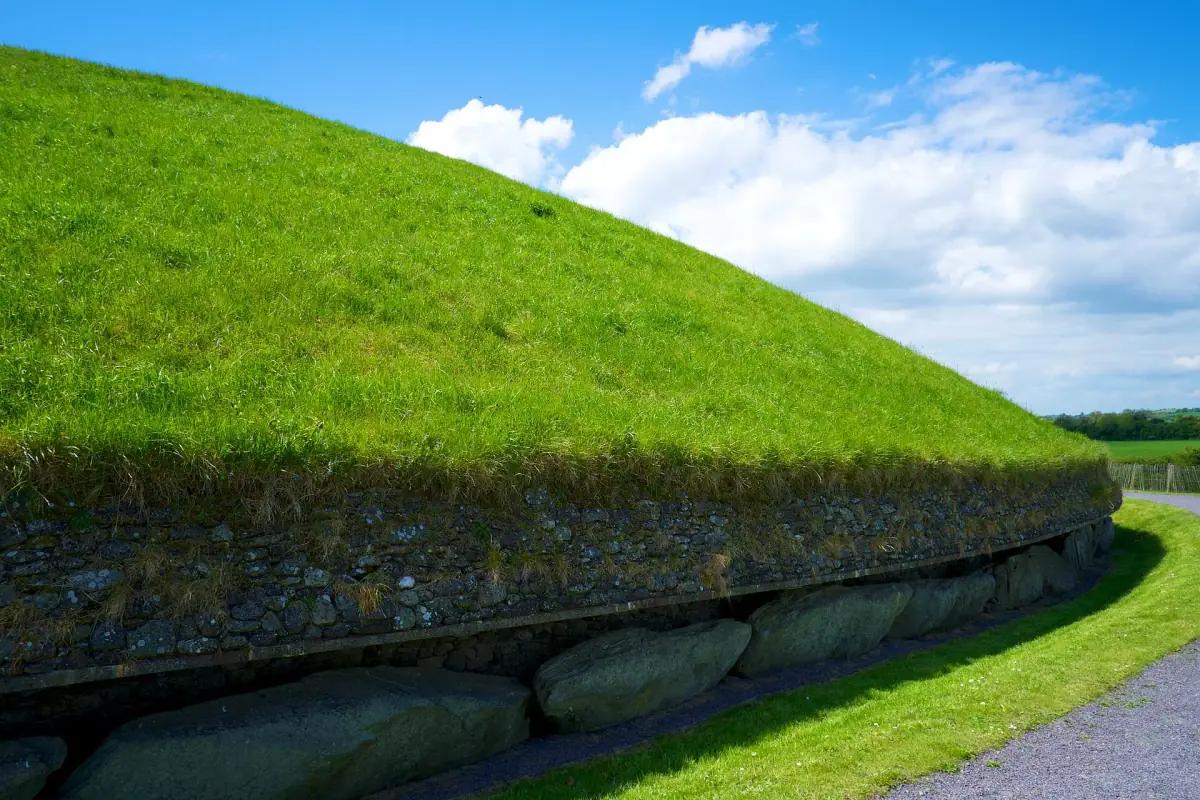
This mound, about 5,000 years old and older than Stonehenge and the Egyptian pyramids, is part of the Brú na Bóinne site, listed by UNESCO in 1993 together with Knowth and Dowth. It is one of the best day trips from the capital, including for those who have chosen to travel without a car, by train and bus.
Booking Newgrange: the rule to know first
You cannot go to Newgrange directly. The process is always the same:
- you book a guided-visit slot;
- you show up at the Brú na Bóinne visitor center at the time on your ticket;
- a shuttle takes you to the monument, where a guide accompanies you.
According to the official site, all visitors, including children and infants, need a ticket, unaccompanied minors are not admitted, and tickets bought on resale platforms are not valid. Only the visitor center (exhibition) can be visited without a reservation.
When does booking open?
Online booking windows vary by period:
- April 1 to November 1: 30 days ahead;
- November 2 to December 31 and January 1 to March 1: 7 days ahead.
Tickets are released at midnight, Irish time. Cancelled tickets are put back on sale at any time: the official site advises checking in the late afternoon (3 pm to 4 pm) and in the morning (8:30 am to 9:30 am). If you are aiming for July or August, book as soon as the window opens. Admission prices are published on the official page and are not given here, to avoid quoting an outdated figure.
Visitor center hours by season
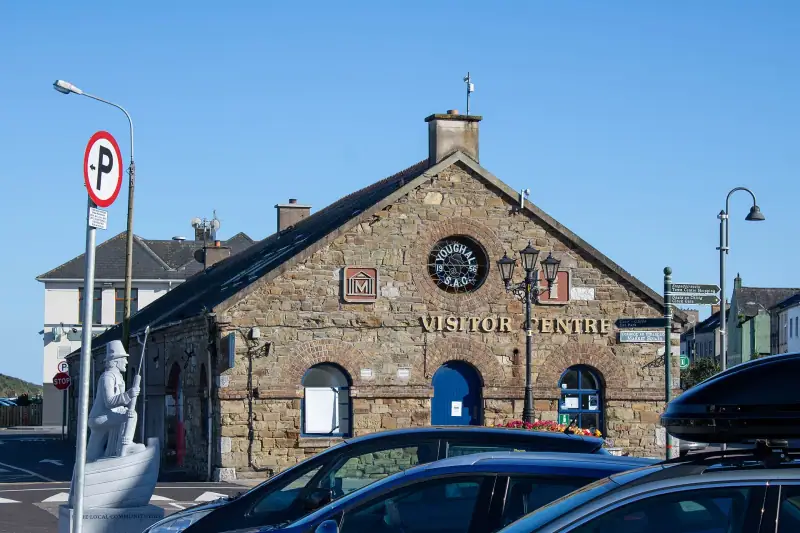
The visitor center follows these seasonal hours:
| Period | Visitor center hours |
|---|---|
| January, February, November, December | 9:00 am - 4:15 pm |
| March, April, October | 9:30 am - 4:45 pm |
| May to September | 9:00 am - 5:45 pm |
| December 18 to 22 | Opens earlier, usual visits suspended (solstice) |
| December 23 to 27 and January 1 | Closed |
Hours can change at short notice in bad weather: check the opening status on the official page the same morning.
Which visits are offered by season?
- March 1 - November 1: main visit “Brú na Bóinne + Newgrange chamber”; optionally, a Newgrange visit with exhibition and a Knowth visit, each limited to one per day. You cannot enter the chambers at Knowth.
- November 2 - February 28: only the Newgrange visit with exhibition and access to the chamber is offered.
In short, from November to February there is only one option: book it, and do not count on a plan B at Knowth.
Getting to Newgrange from Dublin without a car
Option 1: train + local bus (the cheapest)
The trip is made in two stages:
- Irish Rail commuter train from Dublin Connolly to Drogheda (Dublin-Dundalk line), allow about 35 minutes, with a train roughly every hour;
- local bus, route 163, from Drogheda to the Brú na Bóinne visitor center.
The difficulty is the connection: route 163 is infrequent, and travelers report tight connections. Check the Transport for Ireland and Irish Rail timetables the day before, and choose your ticket time around a bus, with a comfortable margin. Also check the last return bus before choosing a late slot.
Option 2: a day tour from Dublin
Many tours leave from Dublin with bus transport and admission included. It costs more than the train, but you avoid managing connections, and some tours add other stops in the Boyne Valley. Time at the site, however, is fixed. Check that entry to the Newgrange chamber is included in the package.
Day tours with transport from Dublin: compare packages, departure times and ratings before booking.
Option 3: taxi or car
If you are in a group or in a hurry, a taxi from Drogheda to the visitor center is a fallback. To link several sights (Newgrange, Hill of Tara, Trim), a car remains more flexible: our guide on renting a car and driving on the left details the points to watch.
What you will see at Newgrange
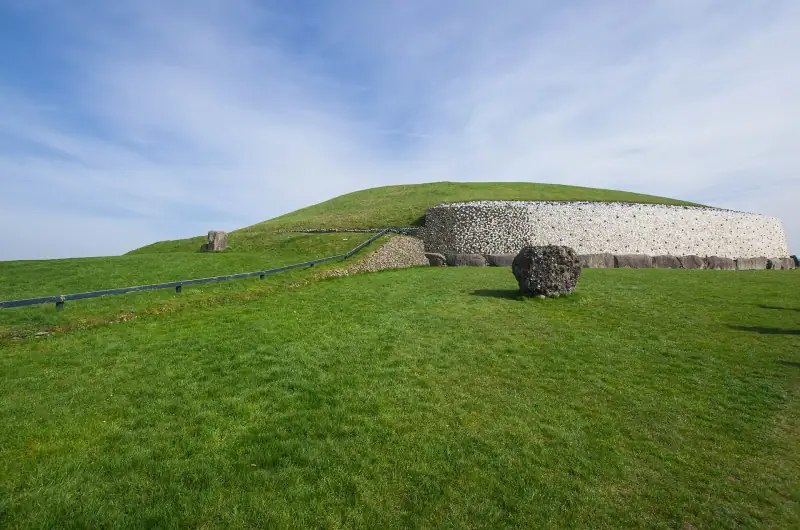
The visit takes a little over two hours in all, with the shuttle and the exhibition. Here are the essentials:
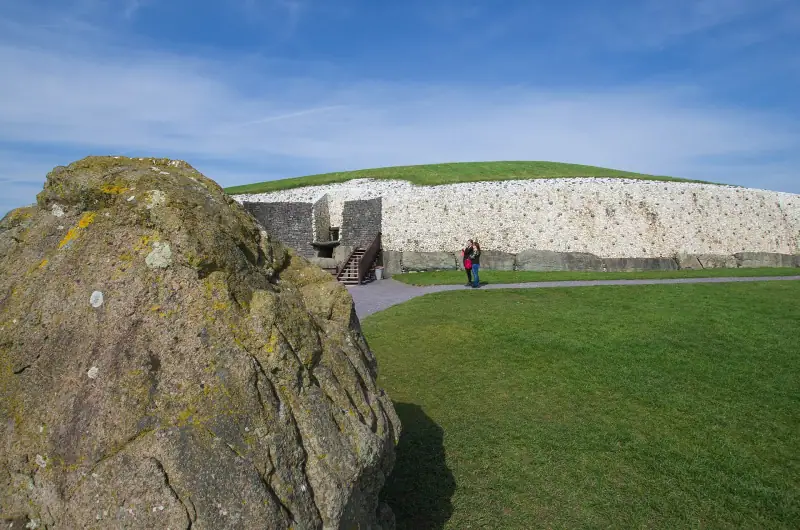
- a mound about 80 meters (262 ft) in diameter, whose facade is covered with white quartzite;
- kerbstones carved with spirals, the emblem of the site;
- a narrow passage leading to a cross-shaped burial chamber;
- 19th-century graffiti still visible at the entrance.
The chamber is small and the group is packed in: tell the visitor center if you have accessibility needs ([email protected]) before you book.
The winter solstice: light and a lottery
In December, at dawn around the solstice, a ray of sunlight travels about 19 meters (62 ft) of passage and lights the chamber. Places to watch the illumination are allocated by lottery among thousands of applicants. Other visitors see a simulation: an orange beam of light recreates the effect in the chamber. This is also why ordinary visits are suspended from December 18 to 22.
When to go to avoid the crowds
- Off-season (November to February): few people, a single option, but short days and a less convenient local bus. Dress warmly, the visit alternates between outdoors and a cool chamber.
- May to September: more visit options, but slots go fast. Aim for the first slot in the morning or the last in the afternoon.
- Weekdays: generally calmer than weekends and Irish school holidays.
To place this trip in your stay, see our 3-day Dublin itinerary: Newgrange fits well as an extra half day or in place of a museum day.
To use Connolly Station as a base, compare Dublin hotels by neighborhood, budget and traveler rating.
To choose the right neighborhood near the stations, read our guide on where to stay in Dublin.
Quick table
| Question | Short answer |
|---|---|
| Distance from Dublin | about 50 km (31 mi) north |
| Booking | required for guided visits |
| Booking opens | 30 days (April 1 - November 1), 7 days the rest of the year |
| Starting point | Brú na Bóinne visitor center, then shuttle |
| Without a car | Connolly - Drogheda train + bus 163, or a tour |
| Winter (Nov 2 - Feb 28) | Newgrange visit only |
| Closed | December 23 to 27 and January 1 |
Sources
- Heritage Ireland: Brú na Bóinne Visitor Centre, Newgrange, Knowth and Dowth
- Tourism Ireland: Newgrange
Frequently asked questions
Can you go straight to Newgrange without stopping at the visitor center?
No. All visits start at the Brú na Bóinne visitor center, from where a shuttle takes visitors to the monuments. If you turn up directly at the site, you will not be admitted.
Do you need to book a Newgrange visit?
Yes, booking is essential for guided visits, and all visitors, including children, need a ticket. Only a visit to the visitor center alone is possible without a reservation. Do not buy a ticket from a resale platform: the official body says they are not valid.
How far ahead does booking open?
According to the official Heritage Ireland site, 30 days ahead from April 1 to November 1, and 7 days ahead the rest of the year. Tickets are released at midnight Irish time, and cancelled tickets are put back on sale during the day.
Is there a direct bus from Dublin to Newgrange?
None is known. The simplest car-free route is the train from Dublin Connolly to Drogheda, then the local bus (route 163) to the visitor center, or a day tour from Dublin with transport and entry. Check the route 163 timetable before you go: it changes by season.
Can you see the winter solstice sunrise inside?
Places for the solstice illumination are allocated by lottery among thousands of applications. Other visitors can watch a simulation in the chamber, with a beam of light that recreates the effect.
More Ireland guides
Keep reading
Cliffs of Moher and the Burren: how to visit them in one day
Visiting the Cliffs of Moher and the Burren in County Clare: access from Galway or Dublin, best times, hiking from Doolin, dolmen and caves.
Rock of Cashel from Dublin without a car: hours, prices and bus access
Rock of Cashel from Dublin without a car: seasonal hours, official prices, bus 245X, train to Thurles, Cormac's Chapel and Hore Abbey.
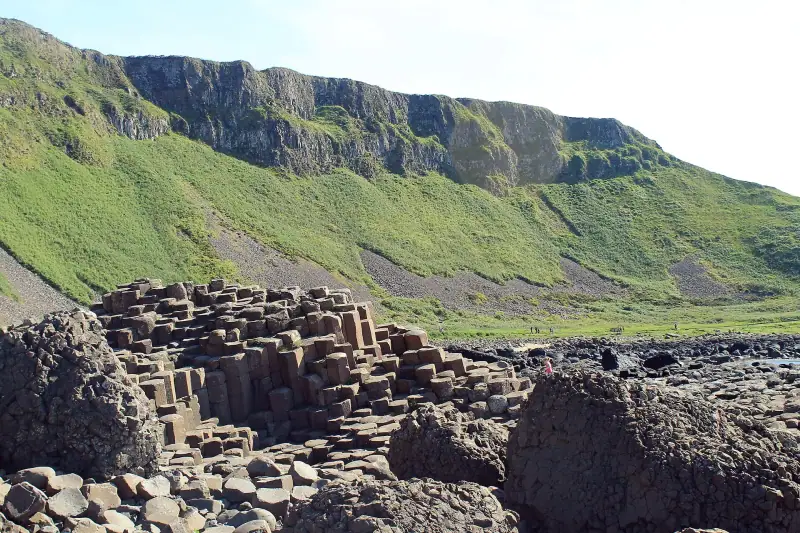
Giant's Causeway: visit, access and the Antrim coast in one day
Visiting the Giant's Causeway in Northern Ireland: access from Belfast and Dublin, what to see on the Antrim coast, practical tips and best time.
Ready-made
Ireland itineraries
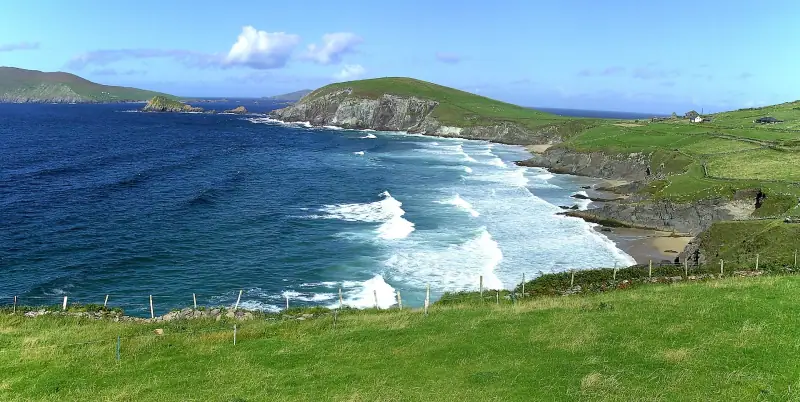
4 days
Kerry and Dingle road trip in 4 days: complete itinerary
KillarneyDingle
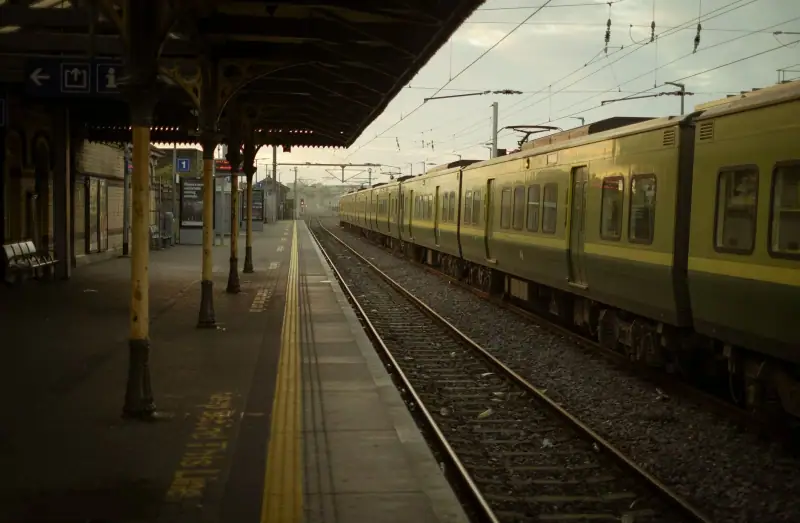
7 days
Ireland in 7 days without a car: a realistic train and bus itinerary
DublinGalwayKillarney
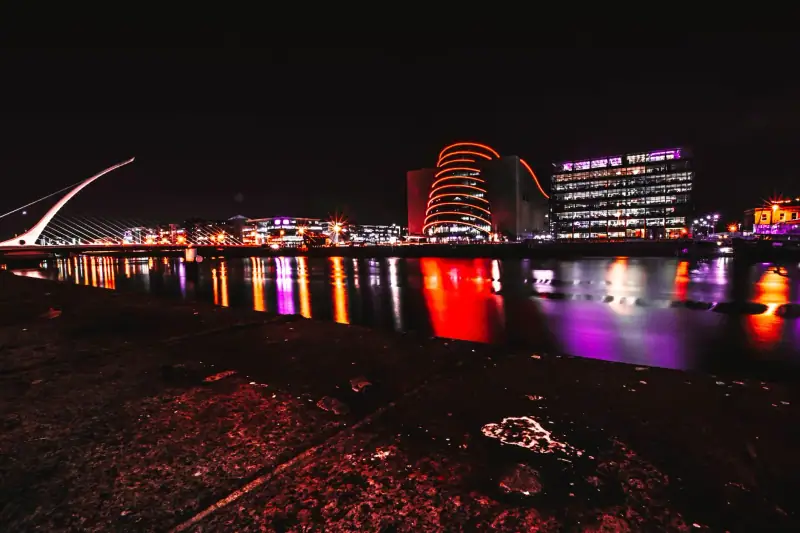
3 days
Visiting Dublin in 3 days: day-by-day itinerary
What to do in Dublin in 3 days? Trinity College, Guinness Storehouse, Kilmainham Gaol, Temple Bar and a trip to Howth: a walking itinerary with tips.