What to see
Ecuador's Southern Andes: what to see around Cuenca, from Ingapirca to Vilcabamba
We may earn a commission when you book through links on this page, at no extra cost to you. We don't visit or try the places we cover: we summarize published sources. How we work
In short
- The essentials around Cuenca are Ingapirca (Inca and Cañari site), the craft villages of Gualaceo and Chordeleg, Saraguro, Loja and the Vilcabamba valley.
- Allow one day for Ingapirca with Gualaceo and Chordeleg from Cuenca, then three to five days to continue to Saraguro, Loja and Vilcabamba; with Cuenca, a week is comfortable.
- Buses link Cuenca and Loja in about four hours; a car lets you stop at Saraguro on the way.
- The driest months, generally June to September, are the most comfortable for hiking and open-air sites.
Many travelers stop in Cuenca, won over by its blue domes and colonial center, then head off to the coast or the Galápagos. That is a pity: around it, Ecuador’s Southern Andes bring together pre-Columbian ruins, craft villages, a living indigenous culture and valleys with a mild climate. The region is less visited than the Avenue of the Volcanoes, slower, and this unhurried pace is exactly its charm.
This article extends our guide to Cuenca in 2 days. There we detail the city itself; here we go further: Ingapirca, Gualaceo, Chordeleg, Saraguro, Loja and Vilcabamba, with pointers for organizing your stops.
The Southern Andes at a glance: geography, climate and mindset
The Southern Andes refers to the southern part of the Ecuadorian Sierra, around the provinces of Cañar, Azuay and Loja. Landscapes are gentler than in the north: cultivated valleys, green hills, brick-and-tile villages, and a páramo of lagoons on the heights. The snow-capped volcanoes of the Quito region give way to more rounded, older mountains.
Cuenca serves as the natural base. It is well served, offers a wide choice of lodging (see our guide to where to stay in Cuenca) and lets you head out for the day to Ingapirca or the craft villages. Further south, Loja takes over, with Vilcabamba as a relaxing extension.
A few pointers for preparing:
- Altitude: Cuenca and Loja are at a moderate altitude for the Andes, but Ingapirca and Cajas park are clearly higher; plan warm layers. For health questions, ask your doctor or a travel clinic.
- Weather: clear mornings often give way to clouds or showers in the early afternoon. The guide to when to visit Ecuador details the seasons.
- Pace: distances are short on the map, but mountain roads are winding. Allow generously for travel times.
- Language: Spanish is spoken, and in indigenous communities, Kichwa. A few words of Spanish help a lot.
Ingapirca: the country’s great archaeological site
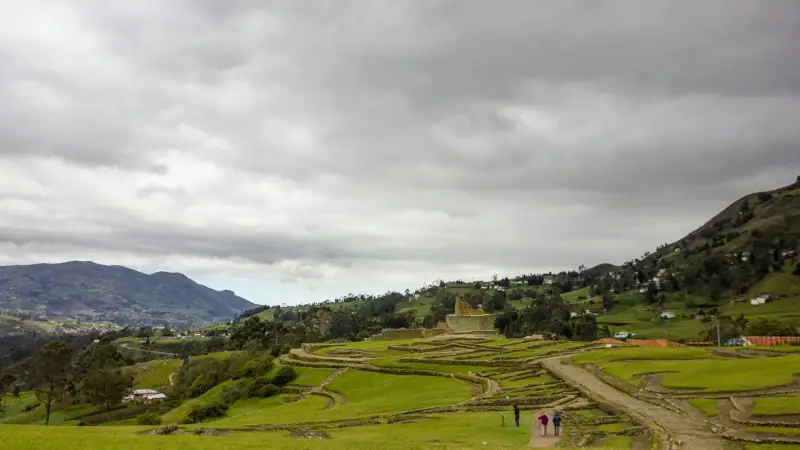
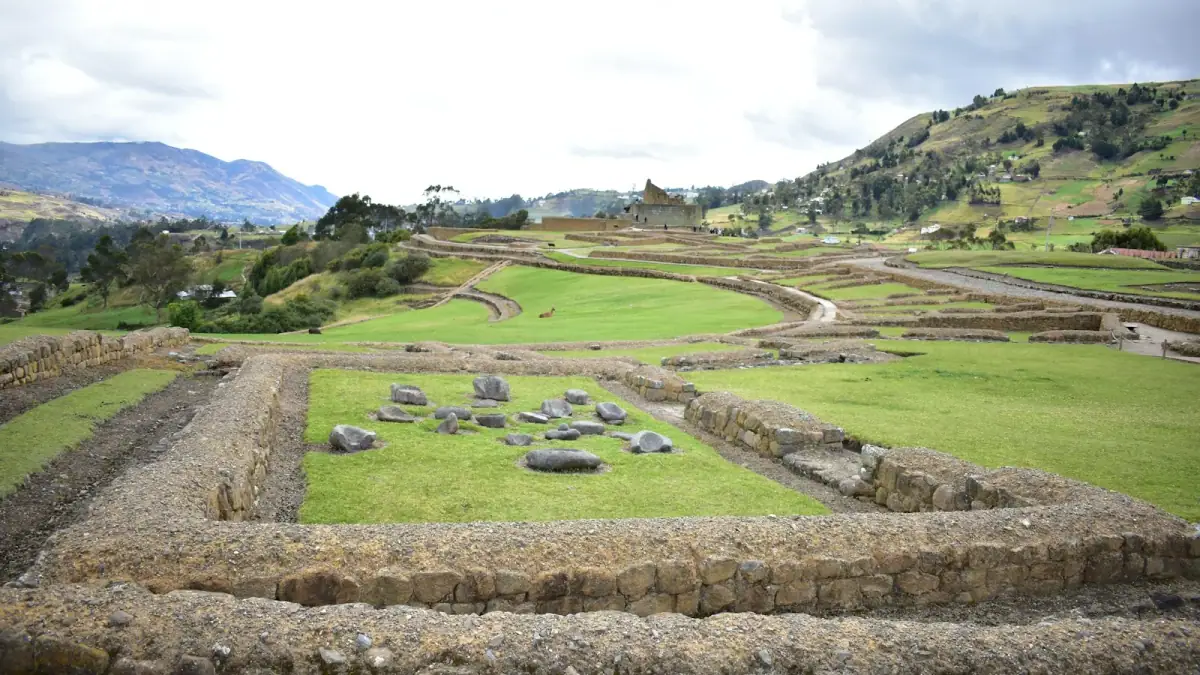
Ingapirca is Ecuador’s most important archaeological site. The Cañari, the people who occupied the region, had established a place of worship there before the Incas conquered the territory in the late 15th century and built over it. The result is a mixed site where two cultures meet.
The most famous monument is an elliptical building, often called the Temple of the Sun. Its cut stone walls, precisely fitted, recall the Inca masonry known elsewhere in the Andes. Around it, you can make out remains of buildings, terraces and paths. A small museum at the site gives the historical context, and local guides offer guided visits with commentary, useful because the site is hard to read alone.
How to get there
The site is north of Cuenca, in Cañar province. Online sources give varying distances and durations depending on the starting point; plan on about an hour to an hour and a half by car, and longer by bus, often with a change. The simplest is to leave early in the morning, visit the site and return in the early afternoon.
Dress warmly: the site is exposed to the wind and the sky changes quickly. A light waterproof jacket, a hat and sun protection are good companions.
🎟️ Ingapirca excursion: several agencies offer days from Cuenca with transport, guide and stops in the craft villages. Handy if you do not want to manage bus connections.
Gualaceo and Chordeleg: craft villages
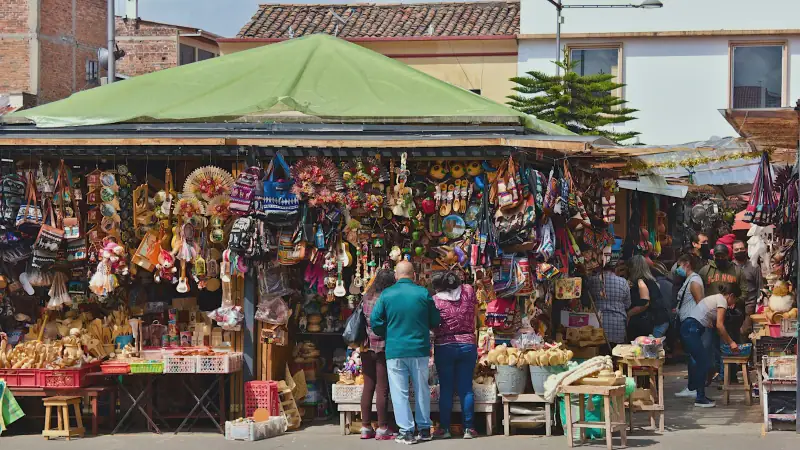
East of Cuenca, in the Santa Bárbara river valley, two small towns are easily visited in half a day. They are linked to Cuenca by frequent buses, about an hour away. They are two complementary stops for understanding the region’s crafts.
Gualaceo is nicknamed the “garden of Azuay” for its flowers and orchids. People come for its market, for its weaving workshops where shawls are made with traditional techniques, and for the simple provincial-town atmosphere. It is a good place for lunch in a small local restaurant: our guide to Ecuadorian cuisine lists the dishes to look for on menus.
Chordeleg is known for its gold and silver jewelry and its ceramics. Several shops and workshops surround the main square. Compare several stalls before buying, ask to see the finishing work and do not hesitate to discuss the price courteously. Do not let yourself be rushed: quality jewelry is bought with time.
These two towns combine well with Ingapirca in a long day trip from Cuenca. Some operators offer exactly this circuit, of about nine hours, with a guide. If you travel alone, the bus remains the cheapest way, as long as you accept spending time on the road.
Cajas National Park: the páramo at Cuenca’s door
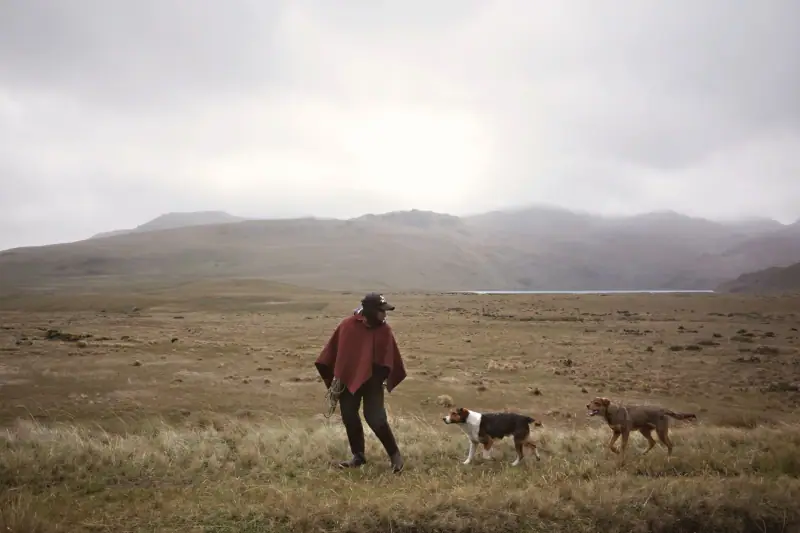
Even though Cajas park is detailed in our Cuenca guide, it deserves its place in an overview of the Southern Andes. A little under an hour from the city, its lagoons, peat bogs and small woods of twisted trees make a high-altitude landscape very different from the valley. You walk from one to several hours, depending on the trails.
On the trails, the ground is often soaked and fog can drop without warning. Waterproof high-top shoes are a big plus.
Before leaving, ask the park’s visitor center about trail conditions, never start a long route if the sky clouds over, and tell your accommodation your itinerary.
Equip yourself with warm layers, a windbreaker and something to drink.
Saraguro: a living indigenous culture
Between Cuenca and Loja, the small town of Saraguro is home to a Kichwa indigenous community, the Saraguros. It is known for having preserved its culture, lands and identity through the Inca empire and then Spanish colonization. The traditional costume, dominated by dark tones, is worn daily by many residents, notably on market days.
For a visitor, Saraguro is less a place of “monuments” than an opportunity for encounters. Community tourism initiatives offer visits, meals with local families and introductions to local know-how (weaving, beadwork, farming). Ask locally or with your accommodation: offers and prices vary, and it is better to book ahead.
A few rules of etiquette: always ask permission before photographing a person, avoid treating residents as scenery, and favor tours run by the community itself so the income goes back to it.
Saraguro is on the road between Cuenca and Loja: it is the ideal stop if you travel by car, or a one-night stop if you take the bus and want to spend more time with the locals.
Loja: the city of music and the gateway to the south
Loja is the Southern Andes’ big city. It is renowned in Ecuador for its cultural and musical life, and is often presented as the country’s musical capital. It is a university city, calmer than Quito or Guayaquil, explored on foot around its central square, churches and parks.
Among the known landmarks are the monumental castle-shaped gate that marks the entrance to the city, and the urban parks where residents gather at the end of the day. The heritage is more modest than in Cuenca, but the atmosphere is authentic and the welcome warm.
Loja serves mainly as a base for:
- nature lovers, with Podocarpus National Park, known for its high-altitude biodiversity and its many birds;
- travelers continuing to the Vilcabamba valley;
- those who want to reach neighboring Peru, which we do not cover here.
From Cuenca to Loja
Buses link the two cities throughout the day. Allow about four hours depending on the company and road conditions. Prices and schedules change, so it is better to check them at the bus terminal on the day or the day before. If you drive, the road crosses a mountain landscape and lets you stop at Saraguro.
🏨 Where to stay in Loja: a night in Loja lets you visit the city and prepare the next stage toward Vilcabamba or Podocarpus. Compare accommodation for your dates.
Vilcabamba: the valley with a mild climate
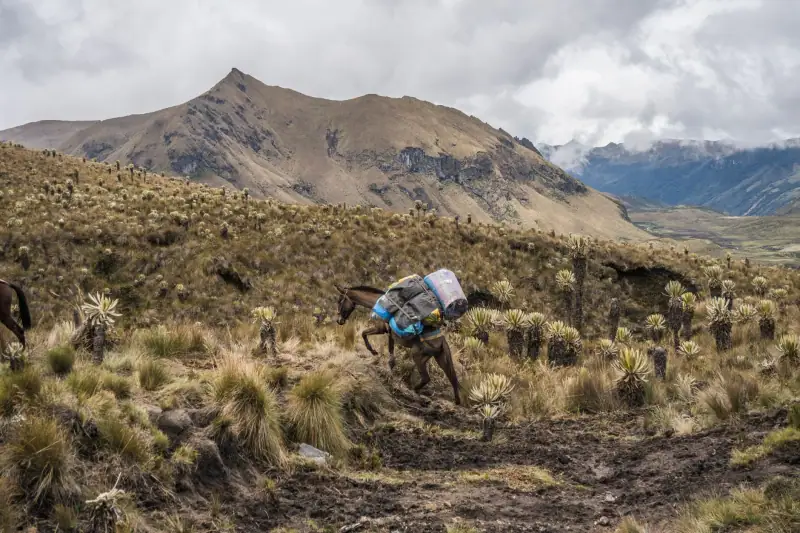
South of Loja, the Vilcabamba valley charms with its mild climate and green landscapes. It has long been known as the “valley of longevity”, a reputation that owes more to tourist legend than to scientific proof: remember mostly a restful setting, far from the bustle of big cities.
People come to walk, rest, enjoy the village’s cafés and small restaurants, or take a horseback ride. Many trails crisscross the hills, some with fine views of the valley. The valley also attracts foreign travelers who have settled there, which explains the offer of yoga, vegetarian cooking and cafés.
The trip from Loja is short, about an hour by bus or taxi depending on stops. You can therefore go for the day, but two nights let you really slow down. If you are looking for a place to catch your breath after several days on the road, this is the spot.
How to organize your Southern Andes circuit
Here are three ways to combine these stops, depending on your time.
Short formula, 1 day from Cuenca: Ingapirca in the morning, then Gualaceo and Chordeleg in the afternoon. It is a long day, done on an organized excursion or by car.
One-week formula, 5 to 7 days: two days in Cuenca (see our Cuenca guide), a day for Ingapirca and the villages, a stop in Saraguro, a night in Loja then two nights in Vilcabamba. The return to Quito or Guayaquil is by domestic flight or long bus rides.
Extended formula, from Quito: combine with the Avenue of the Volcanoes and Chimborazo to head gradually south, then finish with Cuenca and Loja. It is a trip of two to three weeks, very complete.
Bus or car?
The bus is the cheapest option, and it serves all the towns mentioned. The downside: schedules, connections and sometimes unpredictable travel times. A car gives you more freedom for Saraguro, the villages and the small trails, but mountain roads are winding, often wet and sometimes foggy. Drive by day, be careful in the bends and avoid night trips. If you rent a vehicle, you can compare rental companies to find a rate suited to your length of stay.
Getting ready: gear, health and connection
The Southern Andes is a region where temperatures change quickly. To be comfortable:
- a light waterproof jacket and a warm sweater;
- closed shoes, preferably waterproof for the páramo;
- a hat and sunscreen, as the sun is strong at altitude;
- a reusable water bottle and a small daypack;
- cash, as many small shops and communities do not accept cards. Our article on formalities, health and money takes stock.
To stay connected, coverage is good in cities and more irregular in the valleys. Check your carrier’s international plan or use a travel eSIM. Saily offers plans in more than 150 countries, check the offer for Ecuador; our guide to SIM cards and eSIMs compares the options.
Budget and practical tips
- Budget: the Southern Andes is generally cheaper than Quito and the Galápagos, especially for meals and lodging. Our guide to the budget in Ecuador gives the orders of magnitude.
- Markets: market days change from village to village; ask your accommodation so you do not arrive on a quiet day.
- Hours: opening hours of sites and museums vary with the season, check locally.
- Safety: the region has a reputation for being quiet, but the usual precautions apply: belongings close, official taxis at night, bus trips by day.
- Insurance: travel insurance covering care and repatriation is recommended.
- Respect: in indigenous communities, ask before photographing and favor buying directly from artisans.
In summary
The Southern Andes lacks the fame of the Galápagos and the spectacular verticality of the Avenue of the Volcanoes, and that is exactly what makes them precious. Between the stones of Ingapirca, the workshops of Gualaceo and Chordeleg, Saraguro’s culture, Loja’s relaxed atmosphere and Vilcabamba’s softness, the region offers a slow, human and varied trip. If you pass through Cuenca, give yourself at least one more day to leave the city: it is often there that the trip becomes memorable.
Frequently asked questions
What is there to see in Ecuador's Southern Andes besides Cuenca?
The highlights are the Inca and Cañari site of Ingapirca, the craft villages of Gualaceo and Chordeleg, the Saraguro indigenous community, the university city of Loja and the Vilcabamba valley. Cajas National Park rounds out the picture for nature lovers.
How many days do you need to discover the Southern Andes?
Allow a day for Ingapirca with Gualaceo and Chordeleg from Cuenca, then three to five days if you continue to Saraguro, Loja and Vilcabamba. With Cuenca, a week gives a comfortable pace.
How do you get from Cuenca to Loja?
Buses link the two cities regularly, for a trip of about four hours depending on the company and weather. Check schedules at the bus terminal. A rental car lets you stop at Saraguro on the way.
Do you need a vehicle to visit the Southern Andes?
No, buses link all the towns mentioned and day excursions leave from Cuenca. A vehicle does give more freedom for Saraguro, the villages and the trails, at the price of sometimes winding mountain roads.
What is the best time to visit the Southern Andes?
The Sierra's drier months, generally June to September, are the most comfortable for hiking and open-air sites. The region remains pleasant the rest of the year, with showers to expect: see our guide to the best time to visit Ecuador.
Is the Southern Andes suitable for travelers concerned about altitude?
For anything related to altitude and health, ask your doctor or a travel clinic, and see the official travel health pages (CDC in the US, TravelHealthPro in the UK). Cuenca and Loja sit clearly lower than Quito and the Vilcabamba valley is milder still; only Ingapirca and Cajas park call for warm clothing.
More Ecuador guides
Keep reading
What to see north of Quito: Pululahua, Cayambe, Ibarra and Cotacachi
Beyond Otavalo, what to see north of Quito: Pululahua crater, Cayambe volcano, Ibarra, Cotacachi and Lake Cuicocha. Tips and travel times.
Visiting Guayaquil: what to see and do in Ecuador's big Pacific city
Malecón 2000, Las Peñas, Cerro Santa Ana, the iguana park, the cemetery, Santay Island: what to see and do in Guayaquil, gateway to the Galápagos.
Chimborazo, Riobamba and the Devil's Nose train: Ecuador's central Andes
Visit Chimborazo, Riobamba and the Devil's Nose train at Alausí: altitude, refuges, best season and tips for planning this Andean stretch.
Ready-made
Ecuador itineraries
7 days
One week in Ecuador: a 7-day itinerary, day by day
QuitoLatacungaBaños
Can be adapted in the planner
5 days
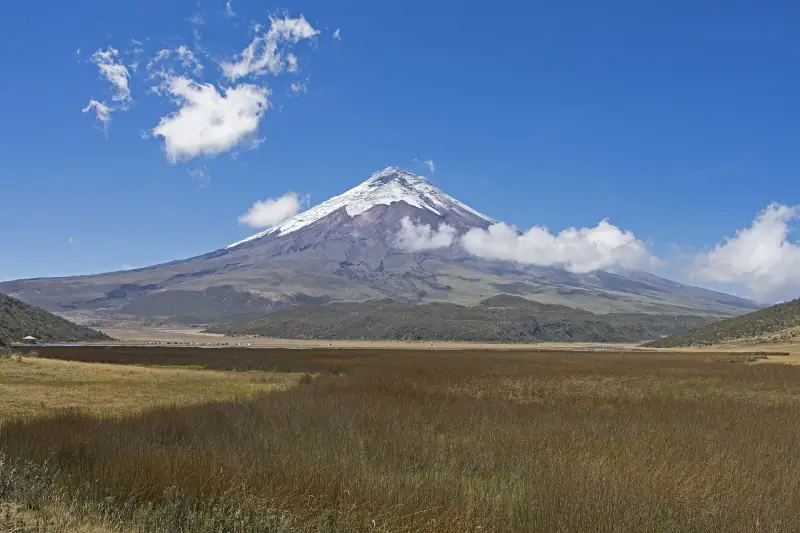
Avenue of the Volcanoes in Ecuador: Cotopaxi, Quilotoa and Baños in 5 days
A 5-day itinerary on the Avenue of the Volcanoes from Quito: Cotopaxi, Quilotoa lagoon, Baños and Chimborazo, with travel times, stops and altitude notes.
3 days
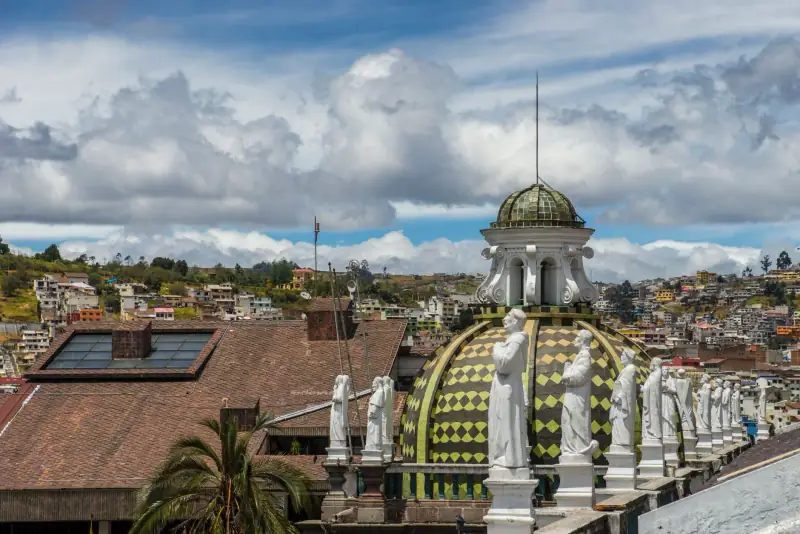
What to do in Quito in 3 days: historic center, volcano views and the Mitad del Mundo
Quito in 3 days: UNESCO-listed historic center, Panecillo, cable car, La Ronda and the Mitad del Mundo. A realistic itinerary that builds up gradually.