Where to stay
Where to stay in Cuenca: areas and types of accommodation to help you choose
We may earn a commission when you book through links on this page, at no extra cost to you. We don't visit or try the places we cover: we summarize published sources. How we work
In short
- For a first stay, the historic center is the simplest choice: churches, squares, museums and restaurants are all on foot.
- The Tomebamba riverside and Calle Larga are calmer while staying a few minutes' walk from the heart of the city.
- Two nights are enough for the center and museums; plan three or four to add Cajas National Park or the Ingapirca ruins.
- At about 2,500 m (8,200 ft), nights are cool all year: check recent reviews for blankets or heating, especially in old houses.
Cuenca is the stop many travelers remember best from Ecuador. The country’s third-largest city, set in an Andean basin at about 2,500 m (8,200 ft), it charms with its UNESCO-listed colonial center, cobbled streets, domes, markets and the rivers that cross the town. Smaller and calmer than Quito, it can be visited almost entirely on foot. That also makes choosing where to stay both simpler and subtler: everything is close, but the atmosphere really changes from one street to the next.
This guide details the main areas to stay, the types of accommodation found there and a few pointers for choosing according to your length of stay, budget and travel style. We do not name any particular property: prices, quality and staff change quickly, and only recent reviews for your dates count. For an overview of the country, our article on where to stay in Ecuador covers all the regions; here, we focus on Cuenca.
Understanding Cuenca’s geography before you book
Cuenca spreads across a valley that is flat compared with Quito, which changes everything for the visitor. The city is crossed by several rivers, including the Tomebamba, which borders the historic center to the south and serves as a natural landmark. The colonial center is compact: from the main square, most sights are about fifteen minutes’ walk away, often less.
To find your way, you can divide the city into four areas:
- the historic center, around the main square and the two cathedrals;
- the banks of the Tomebamba, with the Calle Larga area and the terraced neighborhood overlooking the river;
- the residential neighborhoods around the center, such as El Ejido or San Sebastián, more modern and calmer;
- the heights, such as Turi, which offer views over the city but require a taxi to get back.
For a first stay, the question is mostly choosing between the heart of the historic center and its immediate edges. The other areas answer more specific needs. Our article on Cuenca in 2 days details what there is to see to help you place your lodging relative to the sights.
The historic center: sleeping in the heart of the colonial city
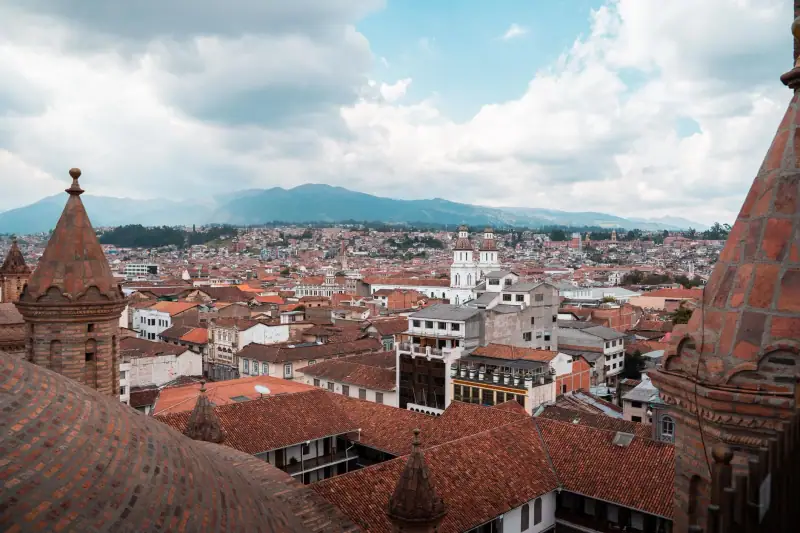
The historic center is the obvious choice for anyone who wants to do everything on foot. Churches, squares, museums, craft shops and a large share of restaurants and cafés are concentrated here. Waking up in a courtyard house with church bells in the background is exactly what people come to Cuenca for.
Main advantages:
- everything is reachable on foot, without a taxi, by day and in the evening;
- the colonial atmosphere is everywhere, with restored buildings and lively streets;
- most excursion agencies and tourist services are nearby;
- accommodation is very varied, from hostels to boutique hotels.
Drawbacks to know:
- noise can be present, especially on busy streets, on weekends and during festivals;
- some rooms face the street and are less quiet than those opening onto a courtyard;
- prices are generally higher than on the outskirts for equivalent comfort.
The offer is mostly old houses converted into boutique hotels or guesthouses, a few more classic mid-range hotels and hostels set in old buildings. Rooms within the same house can be very different: look at the photos of the exact category you book and read recent reviews about quietness and heating.
🏨 Staying in Cuenca's historic center: colonial houses, boutique hotels and hostels. Compare locations, recent reviews and cancellation conditions for your dates.
The Tomebamba banks and Calle Larga: charm and calm
South of the center, Calle Larga runs along the top of a small escarpment overlooking the Tomebamba river. It is an area appreciated by those who want to stay close to everything without the bustle of the main square. Colonial houses stand alongside restaurants, galleries and small hotels, and some rooms have views of the river or the rooftops.
The main advantage is the atmosphere: more peaceful in the evening, with pleasant walks along the water. You reach the center in a few minutes on foot, and the Pumapungo museum, on the edge of the historic zone, remains easy to get to. The flip side is topography: the escarpment means some stairs or slopes, which can complicate life with a big suitcase or reduced mobility. Ask the property how to reach the room.
It is a good compromise for couples, travelers who like calm and those staying several nights. Small guesthouses and boutique hotels are common, with rooms often quieter than those on the center’s shopping streets.
San Blas and El Vado: a more local feel
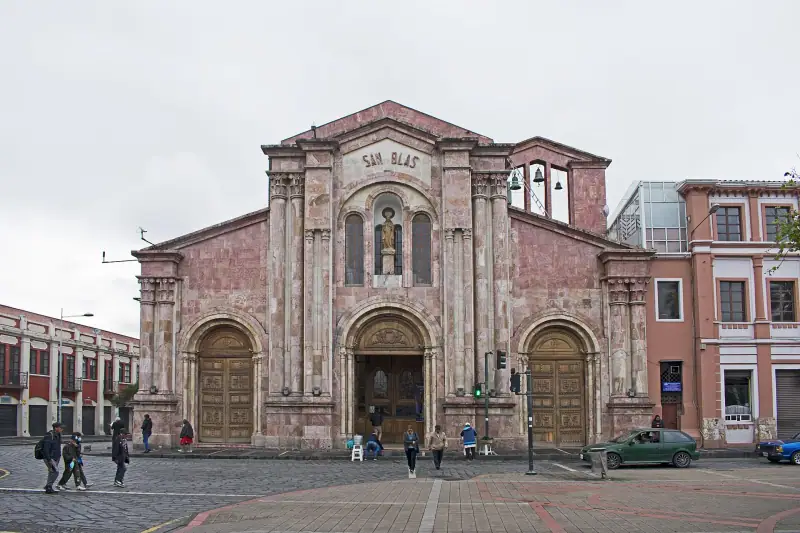
East of the main square, the San Blas neighborhood is organized around its church and a quieter square. You feel more of Cuenca’s daily life here: bakeries, small shops, families gathering in the evening. It is a few minutes’ walk from the center, making it a pleasant base for those who prefer a less touristy setting.
The El Vado area, closer to the river, has an identity of crafts and neighborhood life. Depending on the street, the atmosphere varies, and it helps to check recent reviews and the exact location on the map before booking. Overall, these areas suit travelers who want to step a little off the usual circuit while keeping the center within walking distance.
The offer here is more modest: small guesthouses, bed-and-breakfasts, a few mid-range hotels and apartments. Prices can be gentler than in the historic heart, with often comparable comfort. As everywhere in the city, avoid quiet streets at dusk and prefer a taxi if you return late.
El Ejido and the residential neighborhoods: comfort and space
Beyond the Tomebamba, southeast of the historic center, El Ejido and neighboring areas offer a more modern face: wide avenues, parks, cafés, contemporary restaurants and recent buildings. These are residential areas, appreciated for long stays, remote workers and those who prefer a modern hotel to a colonial house.
What you gain:
- rooms that are often more spacious and more recent;
- a calmer setting and easier parking if you rent a car;
- equipped apartments, handy for cooking and for stays of a week or more.
What you lose: the charm of the colonial center. Expect a longer walk or a short taxi ride to reach the main square, and the evening atmosphere is less lively. For a two-night visit, this is generally not the best choice; for a longer stay, however, it can be a good option.
Turi and the heights: views, but more isolation
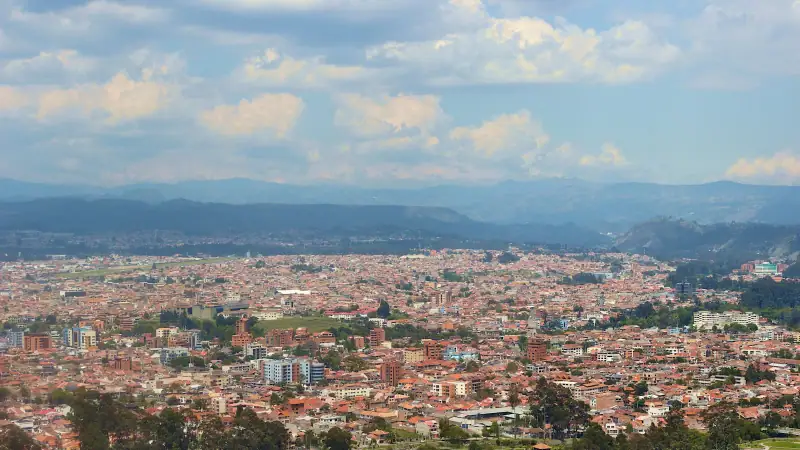
The Turi neighborhood, south of the city, is best known for its viewpoint, from which you see Cuenca’s checkerboard of roofs and domes. Staying there lets you enjoy this panorama and a very quiet atmosphere. You mostly find a few hotels and guesthouses perched on the heights.
The price is distance: the center is not conveniently reachable on foot, and every outing means a taxi. For most visitors, it is better to stay in town and go up to Turi for a visit. This area only makes sense if you mainly seek calm and views, or if you have a vehicle.
Which type of accommodation to choose in Cuenca?
Beyond the neighborhood, the type of property shapes the experience. Here are the main families you will find.
Colonial houses and boutique hotels
This is Cuenca’s emblematic option: a restored old house with a courtyard, high ceilings, woodwork and a small number of rooms. The welcome is often personal, and breakfast under the gallery is part of the pleasure. Compare room categories carefully, as those on the courtyard are generally quieter than those on the street. Check the heating too: old buildings hold heat poorly.
Mid-range hotels
More classic, they offer standardized comfort: a modern room, private bathroom, sometimes a restaurant or an elevator. They suit travelers who prefer predictability or arrive with a lot of luggage. They are found in the center as well as in residential neighborhoods.
Hostels and guesthouses
For small budgets, hostels and family guesthouses offer dorms or simple rooms, a shared kitchen and good information on excursions. The atmosphere is friendly, and it is a good way to meet other travelers. Read recent reviews on cleanliness, hot water and night noise.
🚗 Renting a car from Cuenca: if you plan to visit Cajas park or Ingapirca in complete freedom, you can compare rental companies and rates.
Apartments and short-term rentals
For a week or more, an apartment with a kitchen adds flexibility and lets you shop at the market. They are mostly in residential neighborhoods and in some buildings in the center. Check the arrival conditions, the exact location and whether there is heating.
Hotels and lodges on the outskirts
Around Cuenca, a few isolated properties rely on calm, countryside or spas. They suit travelers with a vehicle who want a retreat atmosphere, but they take you away from the city’s buzz.
What budget for sleeping in Cuenca?
Cuenca is known for good value for money, notably compared with similar tourist cities. Gaps are nevertheless large depending on category and season. We do not give precise rates, as they vary from period to period: compare several dates on a platform and keep in mind that a boutique hotel in the center costs more than a neighborhood guesthouse.
A few ways to control the budget:
- compare rooms without and with breakfast: the gap is sometimes small for a full meal;
- favor the edges of the center rather than the main square;
- look for free cancellation conditions to keep flexibility;
- for a stay of more than four or five nights, look at apartments.
To place lodging within your overall spending, our article on the budget in Ecuador gives an overview of the cost of the trip.
Getting around and staying connected from your accommodation
As Cuenca is compact, most trips are made on foot. For longer trips or in the evening, taxis are the simplest solution: ask your accommodation to call one or use a ride app. The airport and the bus terminal are close to the center, which makes arrival easy, even with luggage.
Also think about your connection: mobile data is useful for maps, taxis and booking. Check your carrier’s international plan or use a travel eSIM. Our guide to SIM cards and eSIMs in Ecuador compares the options.
📱 Stay connected from your arrival in Cuenca: Saily offers eSIM plans in more than 150 countries, check the offer for Ecuador before you leave.
Altitude, cold and sleep: useful precautions
At about 2,500 m (8,200 ft), Cuenca is clearly lower than Quito. For altitude and health questions, ask your doctor or a travel clinic, and see the official travel health pages (CDC in the US, TravelHealthPro in the UK); our article on formalities, health and money gathers the essentials.
Cold is the other practical topic. Nights are cool all year and many old buildings are not heated. Before booking, read the reviews about blankets, hot-water bottles and space heaters. Bring warm layers for the evening. To better choose the period, see when to visit Ecuador.
Finally, consider travel insurance covering medical costs and repatriation, and check the coverage before you leave.
How many nights and which area for your profile
Here are simple pointers to decide:
- First stay of two nights: the historic center, to do everything on foot.
- Couple looking for charm and calm: the Tomebamba banks and Calle Larga.
- Budget traveler: a hostel or guesthouse in the center or in San Blas.
- Long stay or remote work: an apartment or modern hotel in residential neighborhoods such as El Ejido.
- Traveler with a vehicle seeking views and quiet: the heights, keeping the distance in mind.
If you add excursions, plan one more night per full day. Cuenca is also a practical base for Cajas National Park and the Ingapirca ruins, without changing lodging.
🎟️ Discover Cuenca and its surroundings with a guide: guided tours of the center, day excursions and local experiences. Compare formats and cancellation conditions.
Comparing Cuenca with the other stops of the trip
Cuenca is generally placed at the end of a circuit in the Sierra, after Quito and the Avenue of the Volcanoes. If you are preparing the first part of the trip, our guide to where to stay in Quito details the capital’s neighborhoods. In Cuenca the pace slows: days are shorter on sightseeing but richer in strolling, and lodging plays an important role in the pleasure of the stay. At the table, the city is a good place to try cuy, as explained in our guide to eating cuy in Ecuador.
In summary
For a first visit to Cuenca, the historic center remains the most logical choice: you sleep in the setting you came to see, and you can skip taxis. If you want more calm, the Tomebamba banks and Calle Larga offer an excellent compromise. San Blas suits those who want a more local feel, El Ejido long stays, and Turi those who prioritize the view.
In all cases, two to three nights are enough to discover the city, and one or two more let you add Cajas or Ingapirca. Read recent reviews, check the heating and book with free cancellation when possible: these are the three habits that avoid the most unpleasant surprises.
Frequently asked questions
What is the best area to stay in Cuenca?
For a first stay, the historic center is the simplest choice: churches, squares, museums and restaurants are all walkable. The banks of the Tomebamba river, on the Calle Larga side, offer a calmer setting while staying a few minutes' walk from the heart of the city.
How many nights should you plan in Cuenca?
Two nights are enough for the center and the museums. Plan three or four nights if you want to add an excursion to Cajas National Park or the Ingapirca ruins, or simply enjoy the city's relaxed pace.
Is Cuenca a safe city to stay in?
Cuenca has a reputation as one of the quietest cities in the country, but caution remains wise: keep valuables in the safe, be discreet with your phone and avoid empty streets at night. Check up-to-date official advice before you go.
Do you need accommodation with heating in Cuenca?
The city is at about 2,500 m (8,200 ft): days are often mild, but evenings and nights are cool all year. Check in recent reviews that the room has warm blankets or a space heater, especially in old houses.
Should you stay near the bus terminal or the airport?
Rarely. The airport and the bus terminal are close to the center and taxis are affordable: it is more pleasant to stay in the center or its edges. A room near the terminal only makes sense for a very early departure.
Do you need to book ahead in Cuenca?
Book a few weeks ahead for busy dates, notably school vacations and local festivals, when small guesthouses fill up quickly. The rest of the year availability is generally fine, but the best places go first.
More Ecuador guides
Keep reading

Where to stay in Guayaquil: areas and types of accommodation to help you choose
Where to stay in Guayaquil: downtown and Malecón, Las Peñas, Urdesa, Kennedy, the airport area or Samborondón. Areas, lodging types and tips for choosing.
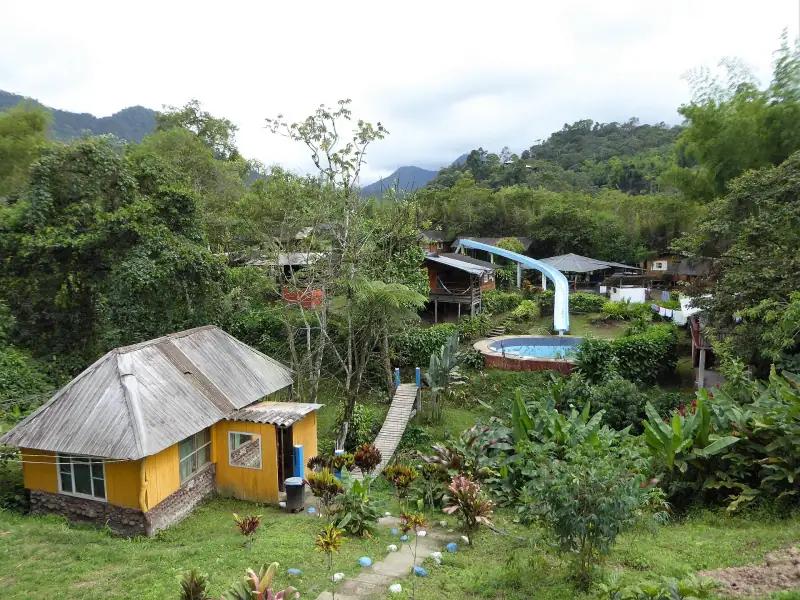
Where to stay in Mindo: areas and types of accommodation to help you choose
Where to stay in Mindo: the village, waterfall roads, river banks, cloud forest lodges. Areas, accommodation types and tips for choosing by trip.
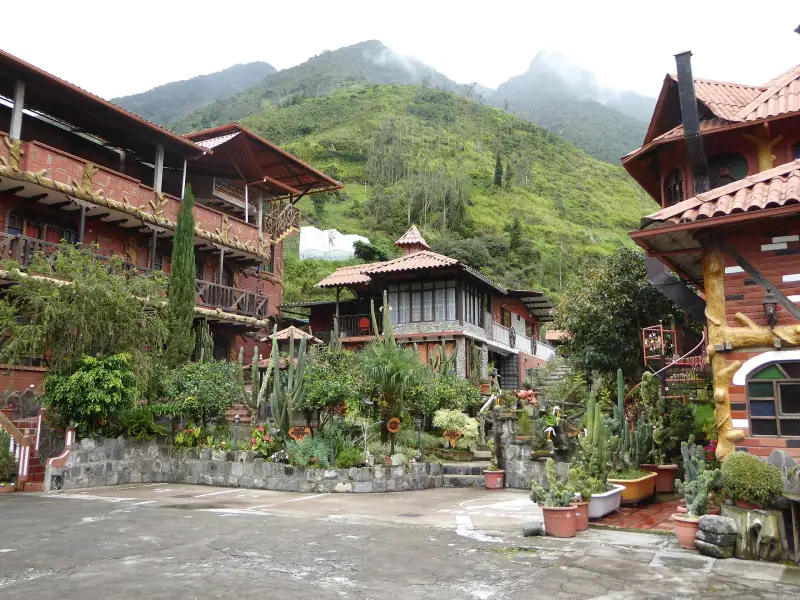
Where to stay in Baños: areas and types of accommodation to help you choose
Where to stay in Baños: town center, hot springs area, hillsides, waterfall road. Areas, accommodation types and tips for choosing by trip.
Ready-made
Ecuador itineraries
7 days
One week in Ecuador: a 7-day itinerary, day by day
QuitoLatacungaBaños
Can be adapted in the planner
5 days
Avenue of the Volcanoes in Ecuador: Cotopaxi, Quilotoa and Baños in 5 days
A 5-day itinerary on the Avenue of the Volcanoes from Quito: Cotopaxi, Quilotoa lagoon, Baños and Chimborazo, with travel times, stops and altitude notes.
3 days
What to do in Quito in 3 days: historic center, volcano views and the Mitad del Mundo
Quito in 3 days: UNESCO-listed historic center, Panecillo, cable car, La Ronda and the Mitad del Mundo. A realistic itinerary that builds up gradually.