Plan your trip
Ecuador travel budget: real costs, 3 priced profiles and money-saving tips
We may earn a commission when you book through links on this page, at no extra cost to you. We don't visit or try the places we cover: we summarize published sources. How we work
In short
- On the mainland, expect about $35 to $45 per person per day as a backpacker, $90 to $140 at mid-range comfort and $220 or more at the high end, excluding the international flight and the Galápagos.
- A set lunch (almuerzo) usually costs $2 to $5; intercity buses run roughly $1 to $2 per hour of travel.
- The Galápagos are budgeted separately: at least about $1,000 per person for 5 to 6 days on a budget, staying in a hotel on the islands, excluding the international flight.
- Add a 10 to 15% margin for the unexpected, and keep small bills: large notes are often refused.
Ecuador has a reputation for being affordable, and that is largely true: a full meal for a few dollars, buses crossing the Andes for the price of a coffee, simple lodgings for under ten dollars. Yet the final bill varies enormously depending on whether you stay on the mainland or board for the Galápagos, sleep in a hostel or a hacienda, take the bus or a private driver.
This guide details real costs item by item, offers three typical daily budgets and gives concrete tips for spending less without giving up the essentials. The figures are orders of magnitude cross-checked from several traveler guides and comparison tools consulted in 2026: they move with inflation, season and promotions. They are expressed in US dollars, the country’s currency, and are per person unless stated otherwise.
What to know before calculating
Three rules simplify everything else.
- The international flight is separate. Its price depends on the season, the airline and the number of stops. Compare it early, as it often weighs more than the stay itself for a short trip.
- The Galápagos are another country, budget-wise. Never mix the two in your calculation: the mainland often costs three to five times less per day than the archipelago.
- Altitude and climate affect spending. Quito and the Andes are cool, the Amazon and the coast are hot and humid. Plan for equipment if you travel light, and read our article on when to visit Ecuador to set your dates.
For paperwork, insurance and cash, see our guide to formalities, health and money in Ecuador. Entry rules depend on your passport. Check the official travel advice of your government before you book: travel.state.gov (US), GOV.UK (UK), travel.gc.ca (Canada), Smartraveller (Australia) (checked November 2026).
Accommodation: the most flexible item
Lodging generally represents the biggest share of the daily budget on the mainland, and it is also where you can play most easily.
Hostels and simple rooms
A dorm bed generally costs about $8 to $12 in Quito, and a little less in some smaller towns or rural areas, where you find beds at $4-5. A private room in a backpacker hostel is more like $20 to $30 for two. In secondary cities, simple small hotels often run around $16 to $25 a night. These properties frequently offer a shared kitchen, which helps cut meal costs.
Mid-range hotels
For a comfortable double room in a mid-range hotel, with private bathroom and breakfast, expect roughly $40 to $90 per room depending on the city and season. The colonial centers of Quito and Cuenca offer beautiful renovated houses in this range, and the room is shared by two, which halves the bill per person.
Haciendas, lodges and boutique hotels
Andean haciendas and lodges in the cloud forest or the Amazon go clearly higher: $150 a night and much more for some properties, often full board. In Amazon lodges, the stay is generally bought as a multi-night package including guide and transfers, with rates starting around $300 for three nights and climbing with comfort.
To know in which neighborhoods and cities to unpack, see our guide to where to stay in Ecuador.
🏨 Compare accommodation in Quito: from dorms to boutique hotels in the historic center, prices vary a lot from one neighborhood to another. Compare rates and cancellation conditions for your dates.
Transport: cheap buses, pricier domestic flights
Buses: unbeatable
This is the country’s great strength. A city bus ride in Quito costs about $0.25, whatever the distance. For intercity links, the rule of thumb is to expect around $1 to $2 per hour of travel, a little more in the Amazon. For example, a Quito-Baños trip, about 3 h 30, costs $6 to $7, and a Quito-Cuenca trip, about 8 h 30 to 9 h, is between $11 and $24 depending on the company and the comfort of the bus.
Buses leave from cities’ main bus terminals, such as Quitumbe in Quito. Always keep your belongings with you in the hold or cabin, and bring change.
Taxis, apps and transfers
In Quito, a taxi for about thirty minutes generally costs around ten dollars. For short trips in town, a taxi or a ride app remains reasonable, especially at night. For remote sites (volcanoes, lagoons), private drivers and day excursions are negotiable, with rates depending on distance and number of passengers.
Domestic flights
To save time between Quito and the coast or the Amazon, a domestic flight costs from about $50 one way, more in busy periods. For the Galápagos, the round-trip flight from the mainland is generally between $350 and $550 depending on season, airline and departure point (Quito or Guayaquil).
Renting a car
Car rental is an option for exploring the Andes at your own pace, but it is not necessarily cheap once you add gas, tolls and insurance. Expect generally about $35 per day for a small manual model and clearly more for an automatic.
✈️ Find a flight to Ecuador: fares vary strongly with the season, the airline and the number of stops. Compare several dates before locking in your ticket, as a few days' shift can change the bill.
Meals: the budget’s great asset
The set lunch
The habit that makes the difference: the almuerzo, the lunch menu that generally includes a soup, a main dish with rice and meat, fish or eggs, and a juice. It is most often between $2 and $5 depending on the city and neighborhood, sometimes less in markets and provincial towns. It is the main meal for many Ecuadorians, and you can do the same.
Markets and street food
Covered markets offer cooked dishes, fruit, fresh juices and snacks for a few dollars. A day eating mostly in markets and small comedores may not exceed $5 to $10. To know what to order, our guide to Ecuadorian cuisine lists the dishes and drinks not to miss.
Mid-range and upscale restaurants
In a decent restaurant where you order from the menu, expect more like $8 to $15 a dish, and $15 to $30 for a main course in a more refined place in Quito or Cuenca. International restaurants and fine dining can easily exceed $50 per person with drinks.
One point to watch in some restaurants: service and taxes are sometimes added to the displayed bill. Read the menu and the check carefully.
Activities and excursions: to be measured
This is where the budget can drift, as organized excursions add up quickly. A few benchmarks, to confirm before booking:
- Quito cable car (Teleférico): about $9 for a foreign adult.
- Mitad del Mundo: about $5 for the basic site entry, excluding extra attractions and museums.
- Quito basilica: a few dollars, around $2 to climb the towers.
- Mindo: activities such as visiting a butterfly farm generally cost a few dollars, and canyoning or a zip line cost more. Our article on Otavalo and Mindo from Quito details the options.
- Baños: adventure sports (rafting, canyoning, swing) are generally between $15 and $30 per activity.
- Cotopaxi hike: an organized day excursion from Quito often exceeds $80 per person, and the full climb of the volcano runs to hundreds of dollars with guide and equipment.
- Devil’s Nose train: around $40 round trip depending on sources, to check before booking. See our article on Chimborazo, Riobamba and the Devil’s Nose.
Many things are free or almost: wandering colonial centers, walking in parks, discovering markets, admiring volcanoes from the roads. Mix paid visits and free days.
🎟️ Excursions and tours in Ecuador: volcanoes, Quito, Galápagos, Amazon. Compare durations, cancellation conditions and what is included before choosing a formula.
The Galápagos: a separate budget
The archipelago is the main source of budget overruns. Here are the items to plan for, always to confirm before departure (as of October 2026; check the official sources, as these fees change):
- Round-trip flight from the mainland: about $350 to $550 depending on the period.
- National park entrance fee: $200 for a foreign adult, with a reduced rate for children, since August 2024.
- Transit control card: about $20.
- Hotel on the islands: from about $30 to $35 a night for a simple room, much more in a higher category.
- Day excursions: often $100 and up per person.
- Boat between two islands: around $30 per trip, sometimes with a small extra tax when changing island.
- Meals: a budget set lunch is around $4 to $5, but ordering from the menu is pricier than on the mainland.
A 5-to-6-day budget stay in a hotel on the islands represents at least about $1,000 per person excluding the international flight, and easily $2,000 or more with excursions. Cruises start well above: several thousand dollars for a five-day formula.
To choose between the islands and formulas, read our guide on which Galápagos islands to visit.
Three daily budget profiles
These ranges concern the mainland, per person per day, excluding the international flight. For a couple sharing a room, lodging per person is halved, which makes the mid-range profile more accessible than it looks.
Profile 1: backpacker, about $35 to $45 a day
- Lodging: dorm or simple room at $8-20.
- Meals: simple breakfast, almuerzo at $2-5, dinner at the market or cooked yourself: $8 to $14 in total.
- Transport: local and intercity buses, $3 to $10 on average depending on the day’s distance.
- Activities: free sites and an occasional paid visit: $3 to $8.
It is the mode of a slow trip, with a lot of walking and buses. It takes a bit of organization, but it is quite realistic in Ecuador.
Profile 2: mid-range comfort, about $90 to $140 a day
- Lodging: mid-range hotel, $40 to $70 per person depending on whether the room is shared.
- Meals: a mix of set lunches and good restaurants, $20 to $35.
- Transport: comfortable buses, taxis in town, an occasional private transfer: $10 to $20.
- Activities: a paid excursion every one to two days: $20 to $40 on average.
This is the profile of most travelers who want comfort without excess. It leaves room for a domestic flight or a night in a hacienda.
Profile 3: high end, $220 and up a day
- Lodging: haciendas, lodges or boutique hotels, $120 and up per person.
- Meals: good restaurants, $40 to $60.
- Transport: private driver, domestic flights: $50 and up.
- Activities: private guides, tailor-made excursions: $60 and up.
This budget climbs very fast if you add a Galápagos cruise or a full-board Amazon lodge.
A concrete 10-day example
For ten days in the Andes at the mid-range profile (Quito, Avenue of the Volcanoes, Cuenca), expect on the order of $900 to $1,400 per person, excluding the international flight. At the backpacker profile on the same route, the total can drop to around $350 to $450. The route details are in our article on the Avenue of the Volcanoes.
Extra costs people forget
A few lines do not always appear in budgets:
- Travel insurance: essential, especially as care is limited in the Galápagos and in remote areas. Compare policies from several providers.
- Health preparation: for vaccines and treatments, ask your doctor or a travel clinic well before departure, and see the official travel health pages (CDC in the US, TravelHealthPro in the UK). See also our guide to formalities and health.
- Tips: modest, but frequent in restaurants and for guides.
- Bank fees: withdrawals abroad and card payments may be charged. A card without foreign fees is useful.
- Equipment: warm clothes for nights at altitude, rain gear, repellent.
- Guide tips: on multi-day excursions, a tip is customary.
Tips for spending less
- Eat the almuerzo at midday. It is the best-value meal of the day, and dinner can stay light.
- Favor buses over private transfers. Intercity buses are frequent, generally comfortable, and very cheap.
- Share the room. A double or triple room divides the lodging bill.
- Book excursions once you are there. For activities in Baños, Quito or Mindo, comparing agencies on arrival often allows negotiating, but check safety and reviews. For long formulas and the Galápagos, booking early is useful.
- Choose your Galápagos well. A stay on one island with a hotel and day excursions generally costs less than a cruise.
- Avoid peak periods. Lodging and flights are pricier in high season.
- Keep small change. Buses and markets do not always accept large bills.
- Cook sometimes. A hostel with a shared kitchen and a market nearby make for nice savings.
- Alternate paid and free. Colonial centers, markets, parks and viewpoints cost nothing.
Where does your budget really stand?
Ask yourself four questions before setting an amount:
- How many days are you staying on the mainland and how many on the archipelago?
- Do you sleep in a dorm, a private room, or a hotel with breakfast?
- Do you prefer the bus, taxis, or a private driver?
- How much room do you give to paid excursions?
With these answers, add up the items in this guide, add a 10 to 15% margin for the unexpected, and you will get a realistic budget. To build your itinerary, you can rely on our article what to do in Quito in 3 days.
Ecuador lets you travel on little, and treat yourself without breaking the bank. By aiming for a coherent budget, keeping a margin and booking early the items that rise fast (flights, Galápagos), you will enjoy volcanoes, colonial cities and markets at a very reasonable cost.
Sources
- TelefériQo Quito: prices checked November 2026
- Mitad del Mundo: prices checked November 2026
- Galápagos National Park (Galápagos Government Council): prices checked November 2026
- Galápagos Government Council (CGREG): prices checked November 2026
Frequently asked questions
What daily budget should you plan in Ecuador?
For the mainland, expect about $35 to $45 per person per day in backpacker mode (dorm, set lunches, buses), $90 to $140 at mid-range comfort and $220 or more at the high end. These figures exclude the international flight and the Galápagos, which are budgeted separately.
Is Ecuador a cheap country?
Yes, especially for meals and bus travel, which are among the cheapest in South America. The items that push up the bill are domestic flights, organized excursions, Amazon lodges and above all the Galápagos, where everything is clearly pricier than on the mainland.
How much does a meal cost in Ecuador?
The set lunch, called almuerzo (soup, main dish, juice), is generally between $2 and $5 depending on the city and neighborhood. A meal ordered from the menu in a decent restaurant is more like $8 to $15, and more in the upscale places of Quito or Cuenca.
How much does a trip to the Galápagos cost?
Excluding the international flight, expect at least $1,000 per person for 5 to 6 days on a budget, staying in a hotel on the islands, and clearly more with day excursions or a cruise. On top of that come the flight from the mainland (about $350 to $550 round trip), the $200 park entrance fee and the $20 transit card (as of October 2026; check the official sources before you go).
Do you pay in dollars and withdraw cash?
Ecuador uses the US dollar. Cards are accepted in hotels and restaurants in cities, but cash remains essential for buses, markets, small restaurants and rural areas. Keep small change, as large bills are often refused.
What is the best period for traveling cheaper?
Hotels and excursions are generally cheaper outside school holidays and peak periods, which vary by region. See our guide to the best time to visit Ecuador, then compare prices: booking early helps mostly for the Galápagos and domestic flights.
More Ecuador guides
Keep reading
When to visit Ecuador: seasons, regions and the Galápagos
What is the best time to visit Ecuador? Sierra, coast, Amazon and Galápagos: dry and rainy seasons, wildlife and tips for choosing your month.
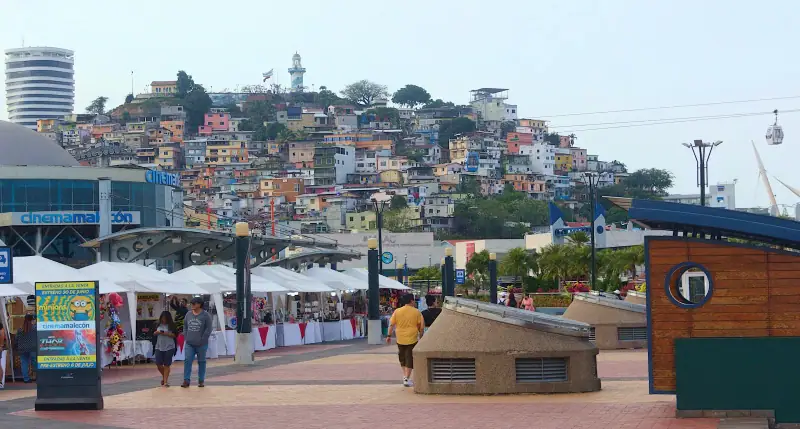
Where to stay in Guayaquil: areas and types of accommodation to help you choose
Where to stay in Guayaquil: downtown and Malecón, Las Peñas, Urdesa, Kennedy, the airport area or Samborondón. Areas, lodging types and tips for choosing.
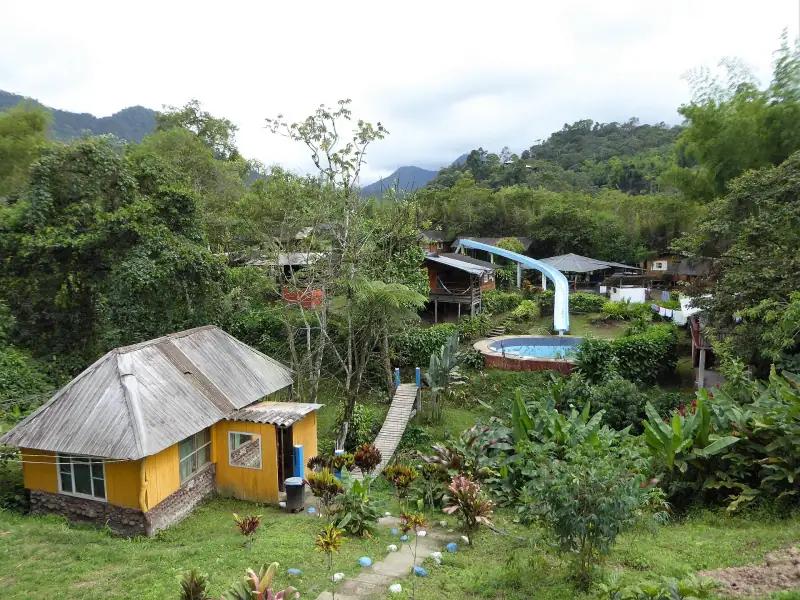
Where to stay in Mindo: areas and types of accommodation to help you choose
Where to stay in Mindo: the village, waterfall roads, river banks, cloud forest lodges. Areas, accommodation types and tips for choosing by trip.
Ready-made
Ecuador itineraries
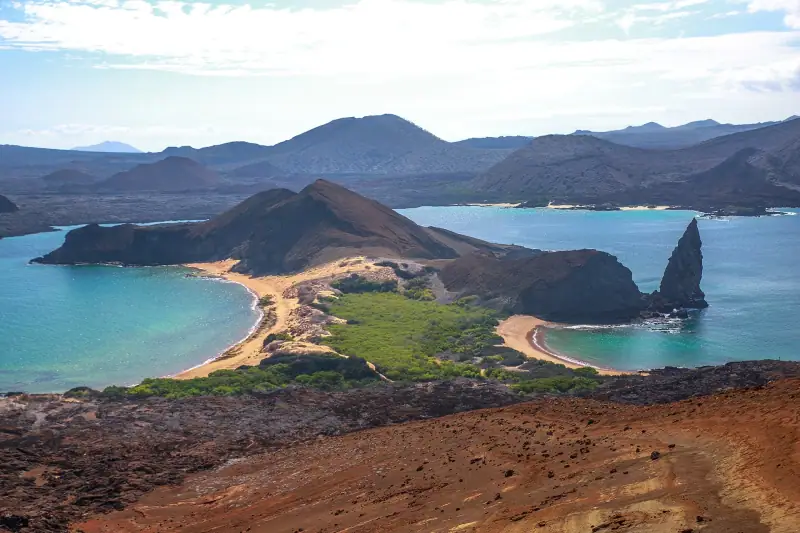
7 days
One week in Ecuador: a 7-day itinerary, day by day
QuitoLatacungaBaños
Can be adapted in the planner
5 days
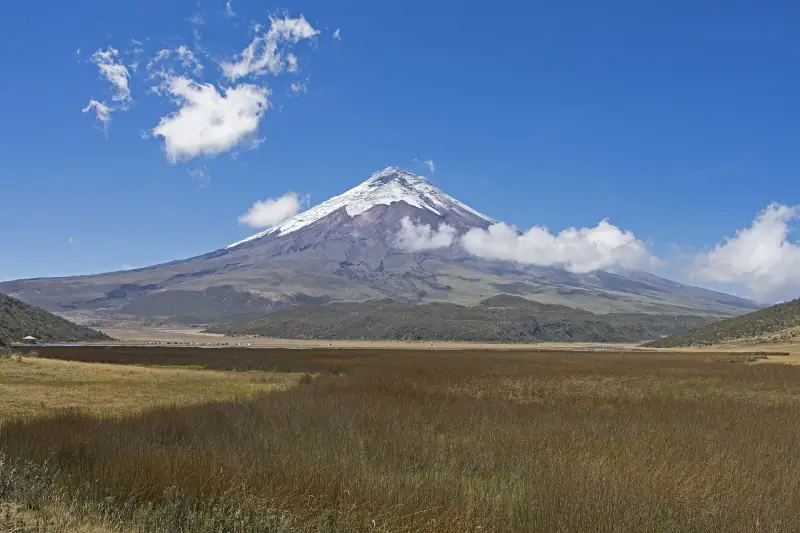
Avenue of the Volcanoes in Ecuador: Cotopaxi, Quilotoa and Baños in 5 days
A 5-day itinerary on the Avenue of the Volcanoes from Quito: Cotopaxi, Quilotoa lagoon, Baños and Chimborazo, with travel times, stops and altitude notes.
3 days
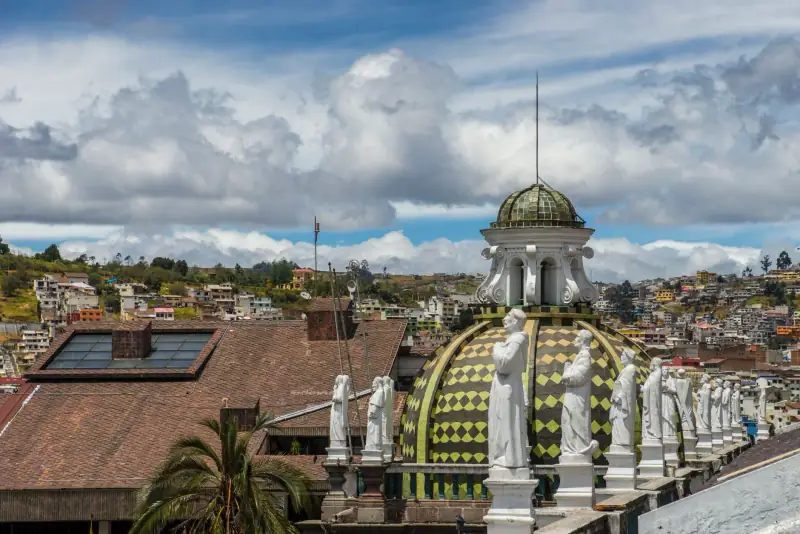
What to do in Quito in 3 days: historic center, volcano views and the Mitad del Mundo
Quito in 3 days: UNESCO-listed historic center, Panecillo, cable car, La Ronda and the Mitad del Mundo. A realistic itinerary that builds up gradually.