What to see
Visiting Perros-Guirec: what to see and do on the Pink Granite Coast
We may earn a commission when you book through links on this page, at no extra cost to you. We don't visit or try the places we cover: we summarize published sources. How we work
In short
- One full day covers Trestraou beach, the walk to Ploumanac'h among the pink rocks and the port; two or three days add a boat trip to the Sept-Îles and Trégastel.
- The path from Trestraou to Ploumanac'h is about 3 km (1.9 mi), with rocky stretches and uneven steps; allow 1 h to 1 h 30 each way.
- The Sept-Îles are France's largest bird reserve; landings are tightly regulated and puffins are present in spring and early summer.
- Book accommodation and boat trips ahead for July and August and the May long weekends.
Perros-Guirec is the main seaside resort of the Pink Granite Coast, on the shoreline of the Côtes-d’Armor. Between its family beach of Trestraou, its port, its early 20th-century villas and above all the improbably shaped granite blocks of Ploumanac’h, the commune concentrates in a few kilometers much of what makes northern Brittany charming: mineral landscapes, a spectacular coastal path, bird islands offshore and a table generous with seafood.
This guide helps you decide what to see, what to do, where to eat, where to stay and how to organize a day, a weekend or more. If you are preparing a wider stay, it complements the guide to the GR34 customs officers’ path in Brittany and the article on excursions to the Breton islands.
Why visit Perros-Guirec?
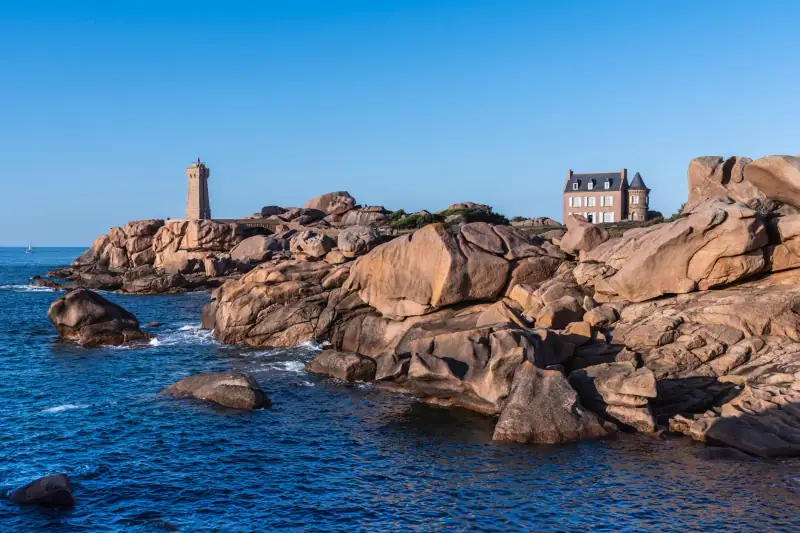
Perros-Guirec appeals first through its setting. The coast’s pink granite, polished by waves and wind, forms a jumble of rounded rocks that the imagination turns into a turtle, a witch or Napoleon’s hat: locals have named many of these blocks, and spotting them is part of the game. The evening light gives the stone tints that vary from pale pink to orange, which makes it a paradise for photographers.
The commune is also very practical. Three hubs, fairly close to one another, offer different atmospheres: the center and the port, more urban; Trestraou, the big beach and its promenade; Ploumanac’h, the fishing hamlet surrounded by rocks, which many consider the finest site on the coast. You can go from one to another on foot, by bike or by car in a few minutes.
Finally, Perros-Guirec is the gateway to the Sept-Îles archipelago, one of the most renowned bird sites in France. You can thus combine swimming, hiking, a boat trip and good food in a single stay, without piling on the kilometers.
Trestraou beach and the seaside promenade
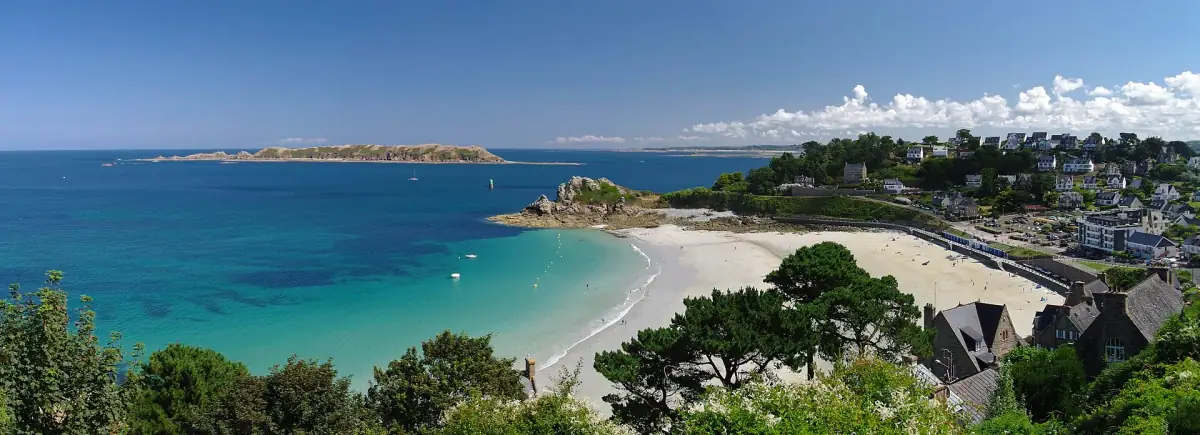
Trestraou is the main beach of Perros-Guirec: a long arc of fine sand, lined with a promenade, terraces, shops and fine villas. It is the ideal spot for a swimming break in summer, a game of beach volleyball or watching water activities: sailing, kayaking, paddleboarding or sand yachting depending on conditions. Tides are significant in northern Brittany, and the look of the beach changes completely between high and low tide; check the times before settling in.
The beach is also the departure point for several launches offering trips to the Sept-Îles. It is also where the walk to Ploumanac’h begins, detailed below. Above the beach, the town has kept Belle Époque seaside villas, often well restored, which recall that Perros-Guirec has been a vacation destination since the late 19th century.
If you travel with young children, Trestraou is an excellent choice: easy access, sand, services nearby. For more seasoned swimmers, remember that currents can be noticeable around the rocks: respect the supervised swimming zones in season.
The customs officers’ path between Trestraou and Ploumanac’h
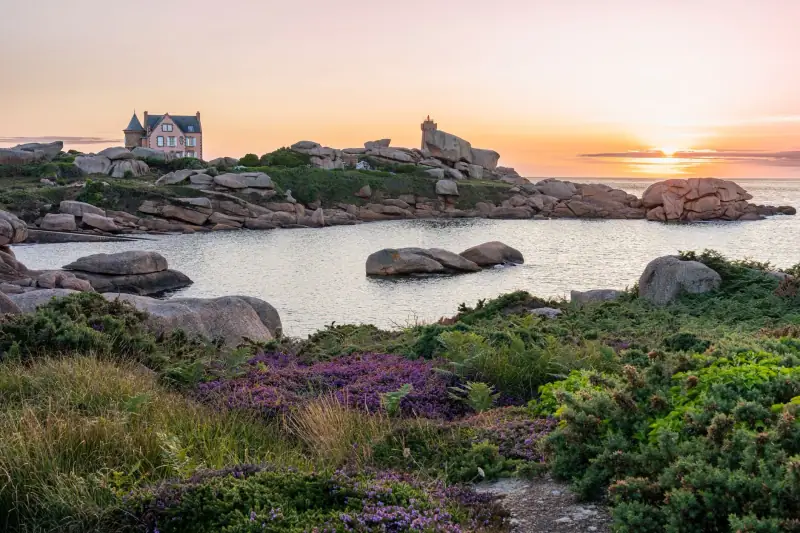
This is the most emblematic experience at Perros-Guirec. The customs officers’ path, part of the GR34, follows the shoreline from Trestraou beach to the port of Ploumanac’h, over about 3 km (1.9 mi). You walk between sea and pink blocks, along passages sometimes wide, sometimes cut between the rocks, with views that change at every turn.
A few tips to enjoy it:
- Allow 1 h to 1 h 30 each way if you like stopping for photos, and more if you picnic on the rocks.
- Wear good shoes: the ground is rocky and can be slippery.
- Choose your time: early morning and late afternoon offer the best light and fewer people than at midday, especially in July and August.
- Plan the round trip: walking back by the same path is the simplest. Some travelers prefer to return by car or use seasonal transport; ask locally.
The walk is accessible to most walkers, but not suited to all kinds of equipment: strollers and wheelchairs will meet difficulties on some stretches. The path is a section of the long GR34, which is covered in the guide to the customs officers’ path.
Where to stay in Perros-Guirec
Seafront hotels, guesthouses and rentals near Trestraou or Ploumanac'h: compare offers, especially in July and August when the best addresses go early.
Ploumanac’h: lighthouse, granite chaos and port
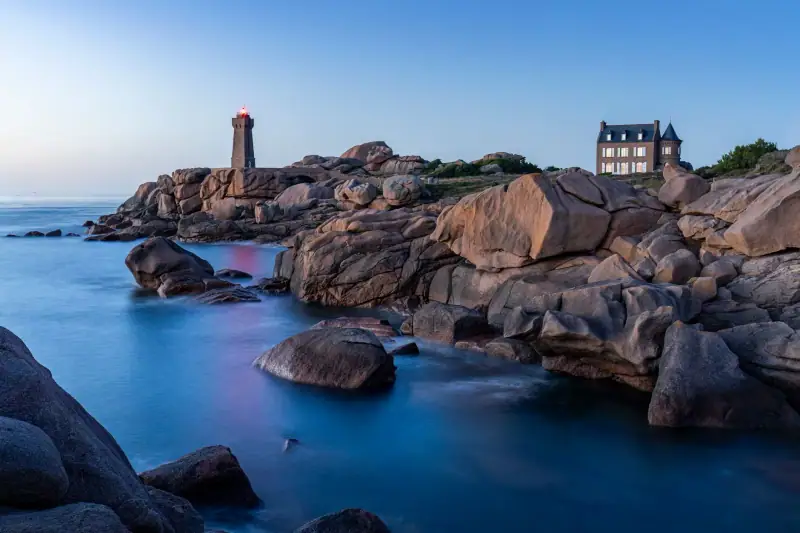
Ploumanac’h is a former fishing hamlet attached to Perros-Guirec, now one of the most photographed sites in Brittany. Here, the granite takes its most spectacular shapes: stacked blocks, arches, rocks set in balance. The small Mean Ruz lighthouse, built of pink granite and set on a pile of rocks at the port entrance, has become the emblematic image of the Pink Granite Coast.
Around the port, you will find terraces, seafood restaurants, small shops and a basin where boats settle on the mud at low tide. It is a pleasant place for a one-hour break or for lunch, but it fills quickly in summer.
In the area, a few landmarks worth a look:
- The Saint-Guirec oratory, a small structure set on the beach, which hosts a local folk tradition: visitors have long come to stick a pin in the nose of the saint’s statue, in the hope of finding a husband or wife, according to legend.
- Costaérès Castle, an astonishing granite residence built on an islet near the shore. It is private property: it is admired from the coast, without free visits.
- The Maison du Littoral, which presents the natural and cultural heritage of the coast. Hours vary by season.
If you have time, extend the walk beyond the port, toward Saint-Guirec bay and the protected site: the rocks there are among the most fascinating, and the setting sun is superb.
The Sept-Îles: a bird reserve offshore
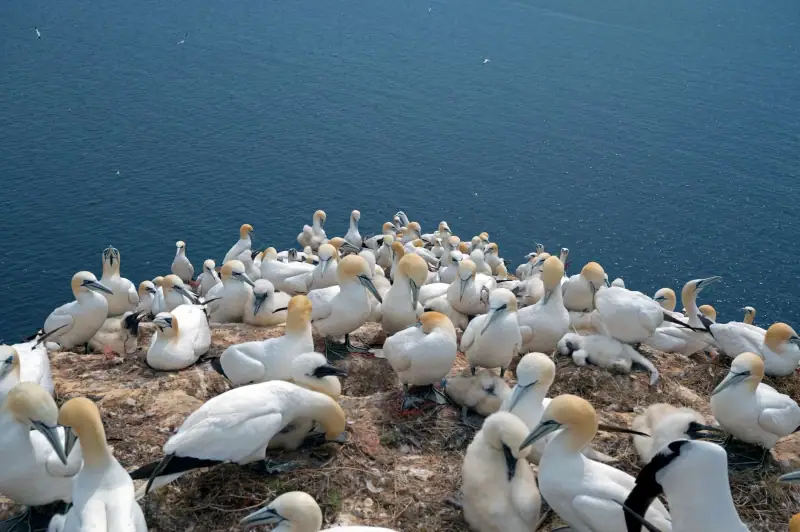
A few kilometers off the coast, the Sept-Îles archipelago is the largest bird reserve in France. Managed by the LPO, it hosts many seabird species, including northern gannets, cormorants, guillemots, razorbills and, in spring and early summer, Atlantic puffins. Gray seals also frequent the rocks.
Access is by boat, from Perros-Guirec (Trestraou) or Ploumanac’h. Regulations strictly protect the islands: boats circulate around the archipelago and only Île aux Moines can receive visitors, according to seasonal conditions. Remember to bring binoculars, a windbreaker and sun protection: on the water, it feels cooler than on land.
Book a few days ahead in summer if possible. Trips depend on the weather and the tide, and can be canceled in rough seas. For ideas for other boat trips, see also the article on the Breton islands.
Boat trips and activities on the Pink Granite Coast
Boat excursions, guided visits and water activities: compare the offers available in the region and book ahead in high season.
Perros-Guirec’s center, the port and Notre-Dame de la Clarté chapel
The center of Perros-Guirec is more discreet than the rocks of Ploumanac’h, but deserves a stroll. Saint-Jacques church, in the heart of town, mixes Romanesque and Gothic elements, and its bell tower overlooks the roofs. There are shops, bakeries, crêperies and a market, whose days and hours should be checked with the tourist office.
The marina, below, is the starting point for rides and boat trips. It is also a good place to observe the maritime atmosphere, with boats coming and going and fishermen preparing their outings.
On the heights, Notre-Dame de la Clarté chapel offers another interest. It is a religious building of local heritage and, above all, its surroundings offer a panorama over the coast and the Sept-Îles in clear weather. It is a good complement to a visit of the shoreline, especially if you like viewpoints.
Around Perros-Guirec: Trégastel, Pleumeur-Bodou and Tréguier
The Pink Granite Coast does not stop at Perros-Guirec: several neighboring sites are easily visited in a day.
Trégastel is an immediate neighbor, known for its even more massive granite blocks and its coves with clear water, such as Coz-Pors beach. The commune also has a marine aquarium devoted to the fauna of the Channel and the Atlantic, handy in rainy weather.
Pleumeur-Bodou offers two original visits: the Planétarium de Bretagne and the Cité des Télécoms, which traces the history of satellite communications. The site is popular with families, and the famous white sphere that housed the telecommunications antenna has become a local symbol.
Tréguier, farther east, is a small historic town with its Saint-Tugdual Cathedral, its cloister and its old houses. It offers an interesting contrast with the coastline, more heritage-oriented. To go further east, toward Paimpol, you can also consider an excursion to the island of Bréhat, described in the article on the Breton islands.
For these excursions, a car clearly simplifies organization. The guide to getting around Brittany helps you choose between train, bus and rental vehicle.
Where to eat and what to taste in Perros-Guirec
Local food is that of northern Brittany: seafood, buckwheat galettes and crêpes, cider, salted butter and pastries. Around the port of Ploumanac’h and Trestraou beach, terraces offer seafood platters, fish of the day and specialties such as scallops in season. In the center, crêperies are numerous and often more affordable.
The area is also known for its vegetable growing, in particular the pink onions and artichokes of the Trégor, found at the markets. Prices vary by season and location: in summer, it is wise to book for dinner, especially by the sea. To choose your addresses better, read the guide to crêpes and galettes in Brittany.
A practical idea: bring a picnic for the walk on the customs officers’ path. Bakeries and markets make it easy to put together a takeout meal, to enjoy facing the sea.
Where to stay in Perros-Guirec
The choice of area depends on the stay you imagine:
- Trestraou: ideal for families and stays centered on the beach, with hotels and rentals near the sand and the promenade.
- Ploumanac’h: calmer and more picturesque, with charming hotels and guesthouses among the rocks. The supply is more limited and prices are often higher.
- Town center: practical for shops and the market, with varied accommodation, often more affordable.
- Campsites and rentals: many campsites and tourist rentals are available around the commune, useful for families and groups.
Book early for July and August and the May long weekends, as the resort is very busy. To compare options across the region, see the guide to where to stay in Brittany.
A neighboring base along the coast
If Perros-Guirec is full or too expensive in high season, also compare accommodation in Lannion, a few kilometers away, well placed for exploring the Trégor.
Getting there and getting around
Perros-Guirec is in the north of the Côtes-d’Armor, a few kilometers from Lannion, the nearest town for services and connections. Lannion station is linked to the regional rail network, and road links serve the coast; schedules change by season, so check them before you leave.
By road, the commune is reached from Rennes, Saint-Brieuc and Morlaix. Allow about two to three hours from Rennes depending on traffic: check the route on a mapping app on the day of departure.
A car is handy for getting around the coast, but the center, Trestraou and Ploumanac’h are largely explored on foot or by bike. In summer, parking near Ploumanac’h and the beach is difficult; favor car parks a little away and finish on foot.
Sample program: one day, a weekend or three days
One day. In the morning, arrive at Trestraou and walk to Ploumanac’h along the customs officers’ path. Have lunch at the port or picnic on the rocks. In the afternoon, visit the surroundings of the Saint-Guirec oratory, then catch the evening light on the rocks around the lighthouse.
A weekend. Repeat the program above, then devote the second day to a boat trip to the Sept-Îles, followed by an afternoon in Trégastel or on the beach.
Three days. Add Pleumeur-Bodou (Planetarium and Cité des Télécoms), Tréguier and a freer day for swimming and walks. You can also include this stay in a 7-day road trip in Brittany.
Budget and practical tips
Perros-Guirec is a tourist resort: accommodation prices rise markedly in summer, during school holidays and on extended weekends. Meals range from cheap galettes and crêpes to costlier seafood platters. The walk on the customs officers’ path is free, while boat trips, site visits and activities are paid, with rates that change by season.
A few useful habits:
- Bring a light waterproof jacket: Breton weather changes fast, even in summer.
- Check tide times before planning the beach, kayaking or a boat trip.
- Avoid climbing on wet or seaweed-covered rocks.
- Respect the Sept-Îles reserve and do not disturb the birds.
- Book accommodation and trips in high season.
To choose the best period for your wishes, read the article on when to go to Brittany. To estimate your whole stay, see also the guide Brittany budget.
Frequently asked questions
How long do you need to visit Perros-Guirec?
One full day lets you see the essentials: Trestraou beach, the walk to Ploumanac'h among the pink rocks and the port. With two or three days, you add a boat trip to the Sept-Îles, a visit to Trégastel and an afternoon of rest on the beaches.
Why are the rocks of Perros-Guirec pink?
The shoreline is made of granite whose tint turns pink and ochre depending on the light and the composition of the rock. This granite has been sculpted by erosion into rounded blocks with sometimes astonishing shapes, hence the name Pink Granite Coast. The color is most spectacular in late afternoon, in clear weather.
Can you see puffins at the Sept-Îles?
Yes, the Sept-Îles archipelago is a renowned bird reserve, home notably to northern gannets and Atlantic puffins. Puffins are present in spring and early summer, during the breeding period. Landings are tightly controlled to protect the birds: most of the visit is made by boat, around the islands.
Do you need a car to visit Perros-Guirec?
It is not essential to enjoy Perros-Guirec: Trestraou beach, the customs officers' path and Ploumanac'h are explored on foot. A car becomes useful to reach Trégastel, Pleumeur-Bodou or Tréguier. Check the bus and train links to Lannion by season, as schedules vary.
What is the best time to visit Perros-Guirec?
May to September offers the longest days and the most regular boat trips. June and September are often a good compromise between weather and crowds. To see puffins, aim for late spring and early summer. Off season, the customs officers' path remains magnificent, but some activities run less often.
Is the walk between Trestraou and Ploumanac'h difficult?
No, it suits most walkers. The path follows the coast for about 3 km (1.9 mi), with a few rocky passages and uneven steps. Good shoes are recommended, especially if the ground is wet. It is poorly suited to strollers on the wildest stretches.
Is Perros-Guirec suitable for children?
Yes. Trestraou beach, the rocks to explore, the boats to the Sept-Îles and, nearby, the Trégastel aquarium and the Planétarium de Bretagne in Pleumeur-Bodou generally appeal to younger visitors. Keep an eye on the tide and on slippery rocks.
More Brittany guides
Keep reading
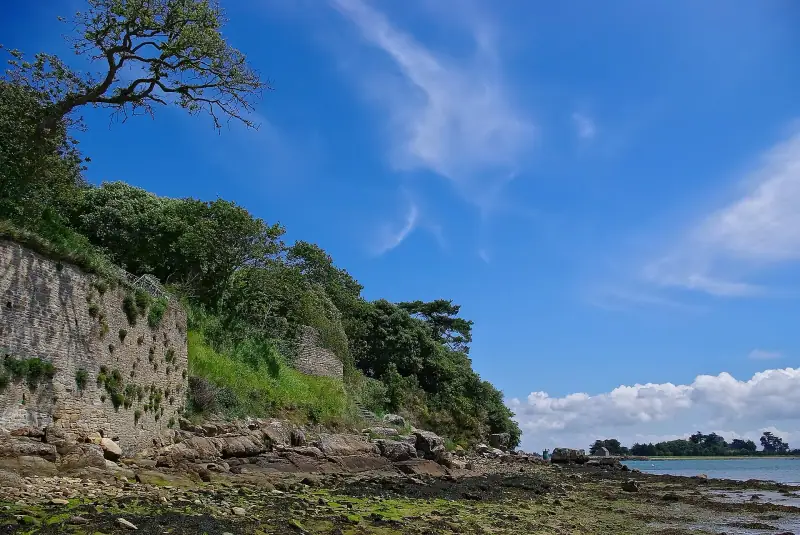
What to see in Morbihan: 12 highlights between gulf, megaliths and islands
What to see in Morbihan? The gulf, Carnac's alignments, Belle-Île, Quiberon, Josselin, Rochefort-en-Terre: the highlights and a plan to link them.
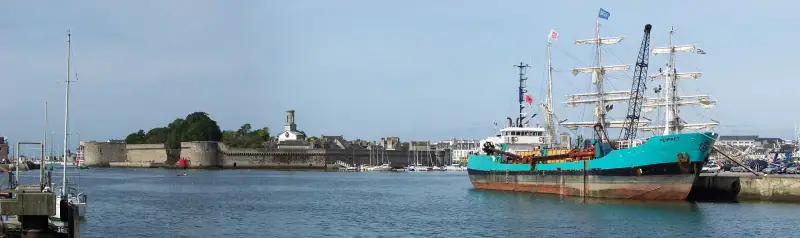
Visiting Concarneau: what to see and do between the walled town and the fishing port
Visiting Concarneau in Finistère: walled town, ramparts, Fishing Museum, Marinarium, beaches, Glénan and Filets bleus. What to see, eat and how to plan.
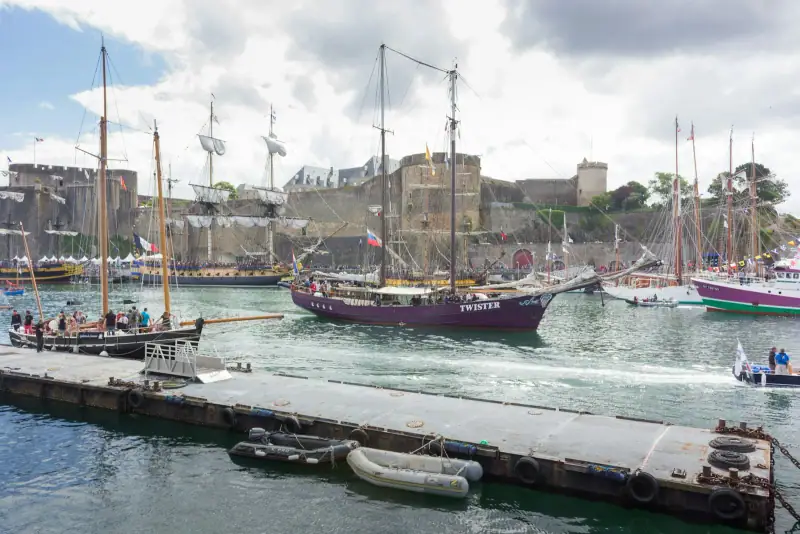
Visiting Brest: what to see and do in Finistère's great maritime city
Visiting Brest: castle, Océanopolis, Capucins, cours Dajot, Recouvrance and the roadstead. What to see, where to eat and which excursions to add.
Ready-made
Brittany itineraries
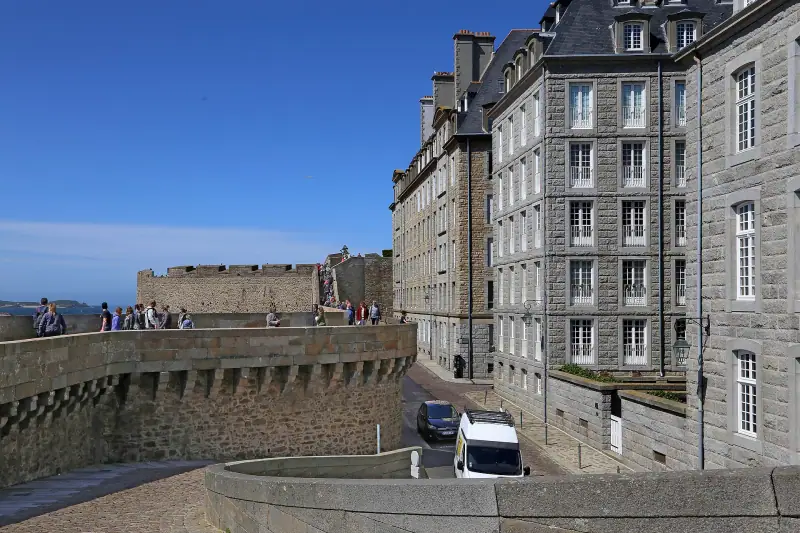
3 days
3 days in Saint-Malo, Cancale and Dinan: an Emerald Coast itinerary
A 3-day itinerary in northern Brittany: Saint-Malo's ramparts, Cancale's oysters, Dinan's medieval lanes. Daily plan, tides, transport and budget.
7 days
One week in Brittany without a car: a day-by-day itinerary by train and bus
RennesSaint-MaloQuimperVannes
7 days
Brittany road trip in 7 days: from Saint-Malo to the Gulf of Morbihan
A 7-day coastal road trip in Brittany: Saint-Malo, Pink Granite Coast, Crozon peninsula, Quimper, Carnac and Vannes. Stops, distances, budget and tips.