Itineraries
One week in Brittany without a car: a day-by-day itinerary by train and bus
We may earn a commission when you book through links on this page, at no extra cost to you. We don't visit or try the places we cover: we summarize published sources. How we work
Day by day
- Day 1Rennes: historic center, Lices market, Thabor park
- Day 2Train to Saint-Malo: ramparts, islets at low tide, sunset
- Day 3Day trip from Saint-Malo: Dinan or Cancale
- Day 4Train via Rennes to Quimper; evening along the Odet
- Day 5Quimper morning, bus to Concarneau walled town
- Day 6Train to Vannes: ramparts and half-timbered lanes
- Day 7Boat to a Gulf of Morbihan island, then train home
Where to sleep
- Rennes1 night
- Saint-Malo2 nights
- Quimper2 nights
- Vannes1 night
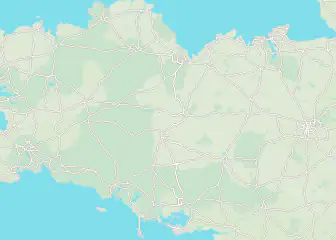
Weather through the year on this route
| Jan | Feb | Mar | Apr | May | Jun | Jul | Aug | Sep | Oct | Nov | Dec | |
|---|---|---|---|---|---|---|---|---|---|---|---|---|
| High °F (°C) | 489 | 4910 | 5412 | 5714 | 6317 | 6820 | 7222 | 7222 | 6920 | 6116 | 5412 | 499 |
| Low °F (°C) | 394 | 394 | 415 | 436 | 489 | 5412 | 5714 | 5714 | 5412 | 5010 | 457 | 405 |
Normals 1991–2020 at Rennes, Saint-Malo and Quimper: averages over 30 years, not a forecast. Source: NASA POWER (MERRA-2), grid of about 50 km. Figures computed by us in November 2026. Rain is shown only where a weather station confirms the figures.
In short
- A week by rail links Rennes, Saint-Malo (with a day trip to Dinan or Cancale), Quimper (with Concarneau by bus), Vannes and the Gulf of Morbihan.
- Roughly three longer train legs (Rennes to Quimper, Quimper to Vannes, and the way home); the rest are trips under an hour.
- You give up isolated sights such as the Finistère headlands and the Pink Granite Coast, which really need a car.
- Book TGV tickets early; buses and boats vary most by season, so check their times the day before.
Brittany has a reputation as a land you cross by car, flying low on coastal roads. That is a misconception. Between the TGV linking Paris to Rennes, Saint-Malo, Vannes, Quimper and Brest, the regional TER trains, the coaches and the boats, you can organize a full week without ever taking the wheel, and enjoy it. You even gain something: no parking to look for, no driving fatigue, and time to watch the landscape slide by from the window.
This one-week itinerary is the counterpart of the 7-day road trip in Brittany, designed for the car: here everything is designed for the rail. It alternates towns and small ports, heritage and seaside, and deliberately leaves out the sites that are too isolated. You will find the day-by-day plan, the connections to plan for, an indicative budget and the pitfalls to avoid. For an overview of transport, the guide to getting around Brittany remains the reference.
Overview: the itinerary at a glance
The principle is simple: you enter Brittany through Rennes, go north to the Emerald Coast, then come back down to southern Finistère and finally to Morbihan, before leaving from Vannes. The itinerary thus follows one big loop with no costly backtracking.
- Day 1: Rennes. Arrival, historic center, market and an evening in the lively streets.
- Day 2: Saint-Malo. Train from Rennes, ramparts, beaches and a first sunset over the sea.
- Day 3: Dinan or Cancale. A day excursion from Saint-Malo, as you prefer.
- Day 4: heading to Quimper. Back through Rennes, then a train to southern Finistère.
- Day 5: Quimper and Concarneau. Cornouaille town in the morning, walled town on the water in the afternoon.
- Day 6: Vannes. Train to Morbihan, ramparts and half-timbered lanes.
- Day 7: the Gulf of Morbihan. Boat to an island, then back by train.
In all, you will need about three somewhat long train trips (Rennes-Quimper, Quimper-Vannes and the way back to Paris or Rennes) and several short trips of under an hour. Exact durations change with the timetable: work them out on the SNCF website or on the regional network website when you book.
Before you go: good habits
Three habits simplify the whole trip. First, book TGV trains ahead, notably for Paris-Rennes or Paris-Vannes at the busiest times. Next, travel light: a wheeled suitcase on Breton cobblestones quickly becomes a chore. Finally, check bus and boat times the day before, because they, more than trains, vary from one season to the next. To choose your period, see the article on when to go to Brittany.
Day 1: Rennes, the gateway
Rennes is the capital of the region and the natural rail hub to start from. From Paris, the TGV takes a little over an hour and a half, which lets you arrive by mid-morning. As the station is a few minutes’ walk from the center, you can drop your bags at the hotel and set off straight away.
Morning: the historic center
Rennes’ heart is explored on foot. The half-timbered houses of the old town, around place Sainte-Anne and the neighboring streets, are the classic image of the city. You will also pass stone mansions, the Parliament of Brittany and place de la Mairie. Half a day is enough to get an idea, and the guide to visiting Rennes details the addresses and museums.
Afternoon: market and stroll
If you are there on a Saturday, do not miss the big Lices market, one of the best known in Brittany. On other days, the covered market in the city center is a good alternative for tasting regional products. Then get some air in Thabor Park, a garden in the French and English styles that suits a break before dinner.
Evening
Rennes is a student city: there are many café terraces and crêperies are everywhere. To understand what you are eating, browse the guide to crêpes and galettes in Brittany. Sleep here tonight: accommodation is varied and conveniently close to the station.
Where to stay in Rennes
Rennes is a good arrival base: hotels near the station, a pedestrian city center and connections to the whole region.
Day 2: Saint-Malo, the corsair city
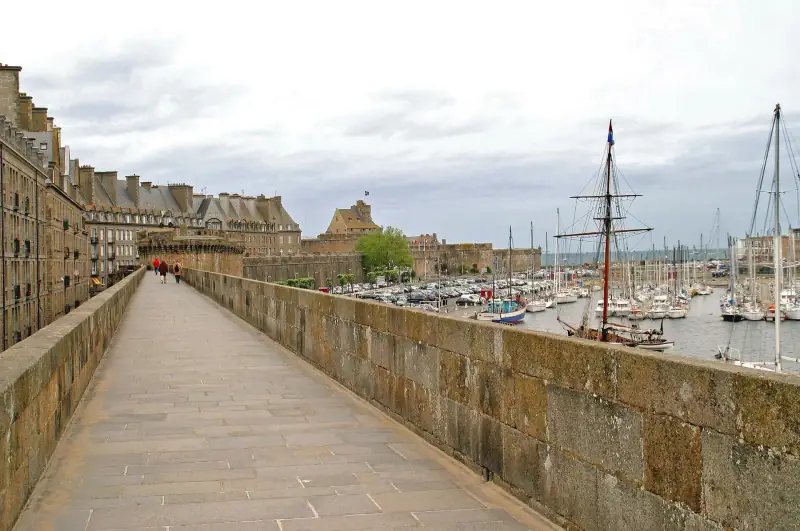
The trip between Rennes and Saint-Malo takes about an hour by train, with frequent departures. Leaving the station, you are a short walk from the old town, which makes Saint-Malo one of the easiest destinations to visit without a car. To stay there for several nights, the guide to where to stay in Saint-Malo will help you choose a neighborhood.
Morning: the ramparts
Climb the ramparts as soon as you arrive. The walk is about 1.8 km (1.1 mi) and takes an hour at an easy pace. You look down on the port, the beaches, the slate roofs and the islets of the bay. Carry a windbreaker: the wind rises quickly on the rampart walk.
Afternoon: beaches and islets
At low tide, you can walk to some islets, such as the Grand Bé, where Chateaubriand is buried. Check the tide times posted there or at the tourist office: the sea comes back fast and surrounds the islets in a short time. If the tide is high, settle for walking along the Sillon beach, which borders the town to the northeast.
Evening
Go back to the ramparts at sunset, facing west. The crowd has dispersed, the terraces light up and the bay takes on coppery tints. To learn all about the town, see the article on visiting Saint-Malo.
Activities in Saint-Malo
Guided visits, boat trips and excursions from Saint-Malo, without a car: compare offers.
Day 3: an excursion from Saint-Malo
Saint-Malo serves as a base for two nights, which saves unpacking. The third day is an excursion, with two options depending on your taste.
Option A: Dinan, the medieval town
Dinan is linked to Saint-Malo by regional coaches, with a journey time of under an hour in general. Some train journeys need a connection: compare the two modes of transport when you set out. Once there, everything is done on foot. Stroll rue du Jerzual, which descends to the port on the Rance, then climb back to the ramparts and the center. The town keeps a remarkable medieval ensemble and is visited well in a day. The article on visiting Dinan gives all the details.
Option B: Cancale and its oysters
Cancale is about twenty kilometers (12 mi) from Saint-Malo, and a regional coach goes there. The Port de la Houle is famous for its oysters, eaten by the sea. You will find the keys to choosing and tasting these products in the guide to seafood and oysters in Brittany. A coastal path then leaves toward Pointe du Grouin: a stretch of a few kilometers is enough to appreciate the view over the bay.
These two days are detailed in the itinerary 3 days between Saint-Malo, Cancale and Dinan, handy if you want to stay longer in the north.
Day 4: heading to southern Finistère
This is the most “transport” day of the week, and it deserves planning. The principle: reach Rennes from Saint-Malo by TER, then take a TGV or a direct train to Quimper. The trip between Rennes and Quimper takes a little over two hours in general, depending on the trains. Check the connections in Rennes and keep a safety margin.
Tips for the transport day
- Reserve a seat on the TGV stretch, especially in summer.
- Bring a takeout lunch: stations offer little choice at rush hour, and trains are pleasant for picnicking.
- Arrive in Quimper in late afternoon to enjoy the old town in peace.
On arrival, settle in for two nights. The guide to where to stay in Quimper lists the most practical neighborhoods. In the evening, stroll beside the Odet and in the lanes around Saint-Corentin Cathedral, lit at night.
Where to stay in Quimper
Quimper's center is explored on foot and the station is a few minutes away: a good landing point for two nights.
Day 5: Quimper and Concarneau
Morning: Quimper, town of art and faience
Quimper is the capital of Cornouaille, and its center is visited on foot. Start with Saint-Corentin Cathedral, whose two spires overlook the town, then follow the Odet and its flower-decked bridges. The town is known for its faience, which you discover in shops and museums. To go deeper, read the article on visiting Quimper.
Afternoon: Concarneau and its walled town
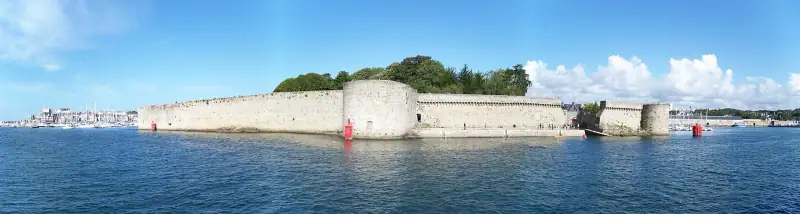
A regional coach links Quimper to Concarneau in a little under an hour. Times vary by season: note them ahead, especially the return. Concarneau is famous for its walled town, a small fortress surrounded by water, visited in one to two hours. The atmosphere is that of an active fishing port, with its trawlers, fish auctions and terraces. The guide to visiting Concarneau helps you organize the afternoon.
Go back to Quimper for dinner. If you prefer to end the day in Concarneau, check the time of the last coach before committing.
Day 6: heading to Vannes
The train links Quimper to Vannes in under two hours or so, with times that vary by day. It is the second big trip of the week. Sit on the window side: the line crosses a Brittany of hedgerow country and estuaries that differs from the coastal landscapes.
Afternoon: Vannes, between ramparts and lanes
Vannes’ old town is a jewel: well-preserved ramparts, gardens running along the walls, half-timbered houses around place Henri-IV and Saint-Pierre Cathedral. The port, at the end of a canal, makes a lovely walk. The station is linked to the center by a short walk of about fifteen minutes; with a big suitcase, a bus or taxi saves you the climb. You will find all the details in the guide to visiting Vannes.
Where to sleep
For the last night, favor the historic center, where you can do everything on foot. The guide to where to stay in Vannes compares neighborhoods according to your priorities.
Day 7: the Gulf of Morbihan
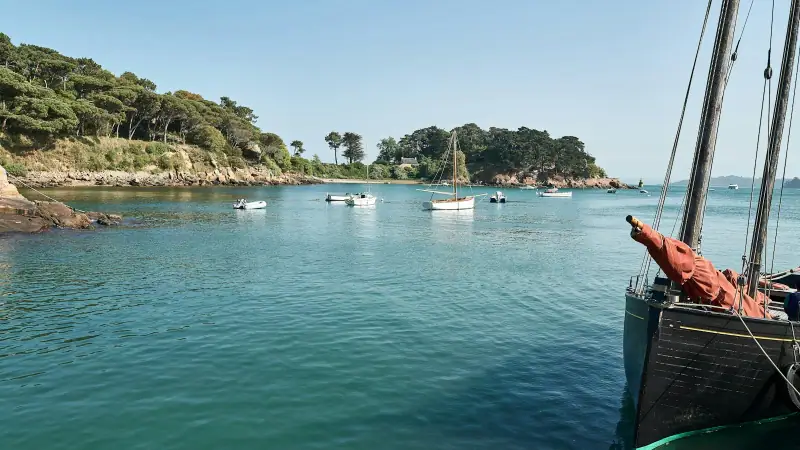
The last day is devoted to the gulf, a small inland sea dotted with islands. From Vannes, boats serve several islands of the gulf in season, notably Île aux Moines and Île d’Arz. You get around them on foot or by bike, which suits a car-free trip perfectly. Times depend on the season and the tides: check with the companies or the tourist office before committing.
What to do on the island
Choose a single island for the day rather than two: you will have a calmer day. Rent a bike on arrival, or walk along the coast to discover coves, small ports and stone houses. Plan lunch there or a picnic, and bring water. If the weather is bad, a walk in town and a museum visit make a good fallback.
Excursions around the Gulf of Morbihan
Boat rides, guided visits and discovery of the gulf's islands: compare the trips on offer.
Heading home
In the evening, return to Vannes by boat and take your train to Paris or Rennes. Allow a little under three hours to the capital by TGV depending on the trains. To avoid rushing, choose a late-evening departure rather than risk missing a boat. The article on the Breton islands gives other excursion ideas if you extend the stay, and the guide what to see in Morbihan offers sights to add.
Budget: what to expect
Without a car, there is no rental, no fuel and no parking. The budget is therefore split among four items: train tickets, accommodation, meals and activities.
- Train: TGV trains are cheaper when you book early, while TER trains have a steadier fare. Check which fares or passes apply to you if you travel often.
- Accommodation: six nights in four towns (Rennes, Saint-Malo, Quimper, Vannes) let you compare several ranges.
- Meals: crêperies and markets are economical, a seafood restaurant less so.
- Activities: many sights are free (ramparts, lanes, ports), which lightens the bill.
For detailed figures, see the guide to the budget in Brittany.
Tips for a successful trip
- Travel light. Cobblestones, stairs and station platforms are easier with a backpack or a small suitcase.
- Check the tides for boat excursions and for Saint-Malo’s islets.
- Note the last times of coaches and boats first thing in the morning.
- Keep a windbreaker: the weather changes fast in Brittany.
- Allow a margin of 10 to 15 minutes on each important connection.
- Book early for accommodation in summer and on long weekends.
Adapting the itinerary
- Less time (5 days): drop Dinan or Cancale and the Concarneau day, and keep Rennes, Saint-Malo, Quimper and Vannes.
- More time (9-10 days): add Brest and the roadstead, or a night on one of the islands of the gulf.
- As a family: the boat, ramparts and beaches appeal to children, but limit long trips to one a day.
- Off season: some coaches and boats run less often. In that case, concentrate on the towns linked by train and leave the islands aside.
In short
A week in Brittany without a car is entirely realistic: the train links the big towns, coaches complete the short trips and boats open the islands of the Gulf of Morbihan. You see fewer isolated sights than by car, but you gain in relaxation and simplicity. Always check times before leaving, book your TGV trains ahead and keep a little margin in your transport days. And if the urge to drive ever strikes, the 7-day road trip offers the complementary itinerary for exploring the coasts by car.
Sources
- Saint-Malo Tourist Office: figures checked November 2026
Frequently asked questions
Can you really visit Brittany in a week without a car?
Yes, as long as you choose well-served stops: Rennes, Saint-Malo, Quimper and Vannes are linked by train, and their nearby surroundings are reached by bus, boat or bike. You do give up some isolated sights, such as the Finistère headlands or the Pink Granite Coast, which need a car.
Which Breton towns can be reached by TGV?
Rennes, Saint-Malo, Vannes, Quimper and Brest are served by TGV from Paris. Rennes is the pivot: regional TER trains to the north coast and to southern Brittany leave from there. Check the times and journey durations when you book, as they vary by season.
Do you need to book train tickets in advance?
For TGV trains, yes: fares are generally lower when you book early, and trains can be full in summer and on long weekends. For Breton TER trains, tickets are most often bought at the station or online, with no compulsory reservation, but find out about the fares in force.
How do you get from Quimper to Concarneau without a car?
By a regional coach, which links the two towns in a little under an hour in general. Frequencies vary by season and day of the week: check the regional network timetable before leaving and allow a margin for the return.
Can you go to an island without a car?
Yes, it is even one of the best ways to vary the itinerary. From Vannes, boats serve the islands of the Gulf of Morbihan in season, and you get around them on foot or by bike. Times depend on the season and the tides: check with the companies or the tourist office.
What is the best time to travel by train in Brittany?
May to September for the weather and more frequent links, with a preference for June and September to avoid the crowds. Off season, the itinerary remains feasible, but some buses and boats run less often: check times before building your program.
How much does a week in Brittany without a car cost?
The budget depends mostly on accommodation and train tickets. Without a rental car or fuel, transport stays economical, especially if you book your TGV trains early. See the guide to the Brittany budget for rough figures on meals and nights.
More Brittany guides
Keep reading
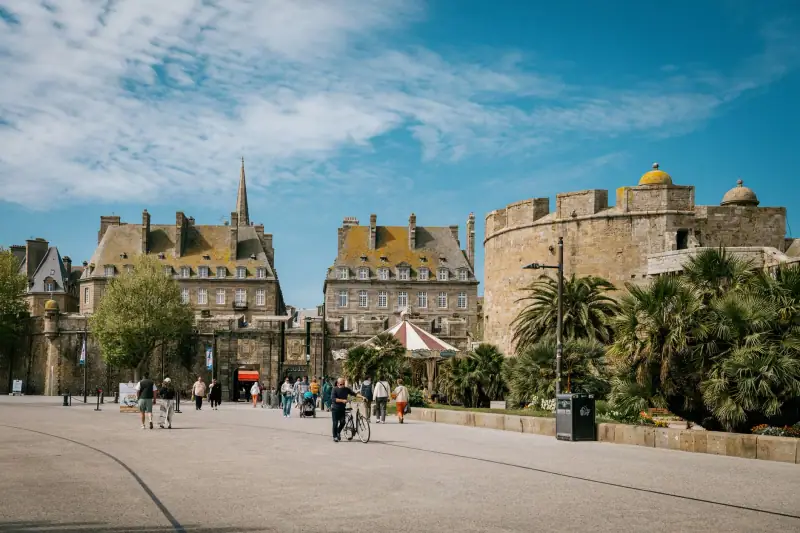
Where to stay in Saint-Malo: neighborhoods and types of accommodation
Where to stay in Saint-Malo? Intra-muros, Sillon, Paramé, Saint-Servan, Rothéneuf: compare areas and types of lodging for your budget and stay.

Carnac alignments: can you walk among the standing stones, and at what price?
Carnac alignments: free access October to March, €13 guided visit the rest of the year, rules, parking and dogs. What to know before you go.
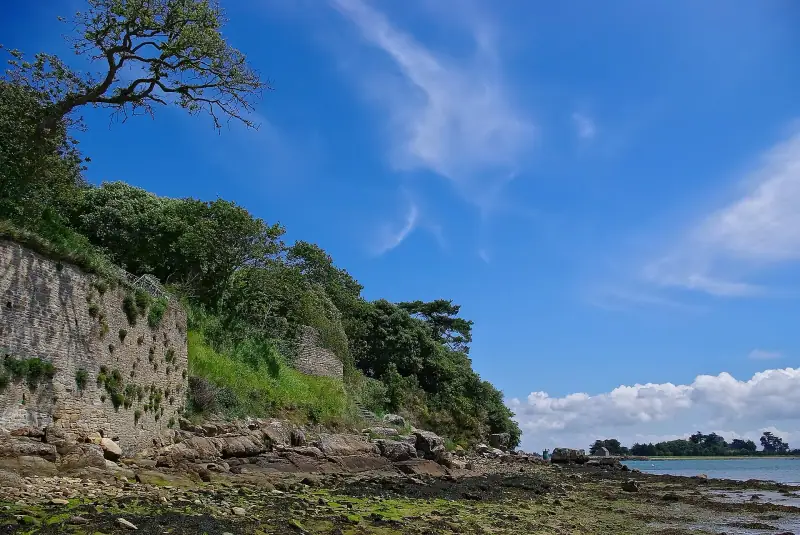
What to see in Morbihan: 12 highlights between gulf, megaliths and islands
What to see in Morbihan? The gulf, Carnac's alignments, Belle-Île, Quiberon, Josselin, Rochefort-en-Terre: the highlights and a plan to link them.
Ready-made
Brittany itineraries
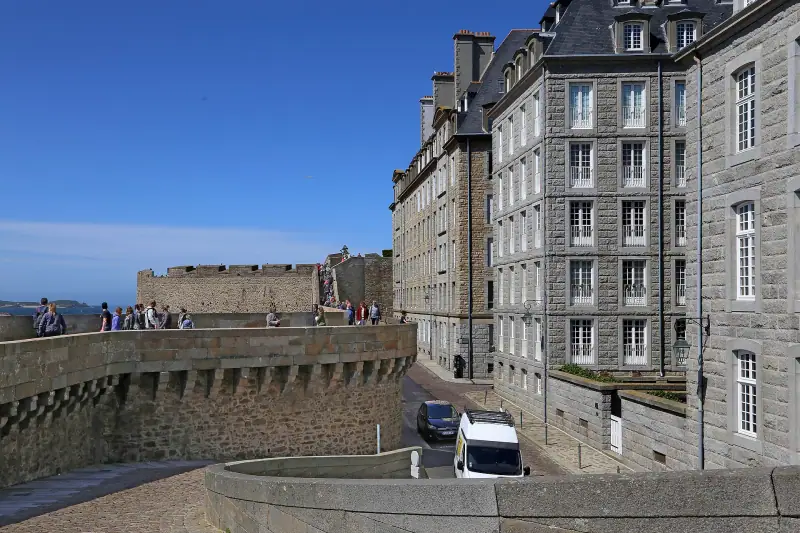
3 days
3 days in Saint-Malo, Cancale and Dinan: an Emerald Coast itinerary
A 3-day itinerary in northern Brittany: Saint-Malo's ramparts, Cancale's oysters, Dinan's medieval lanes. Daily plan, tides, transport and budget.
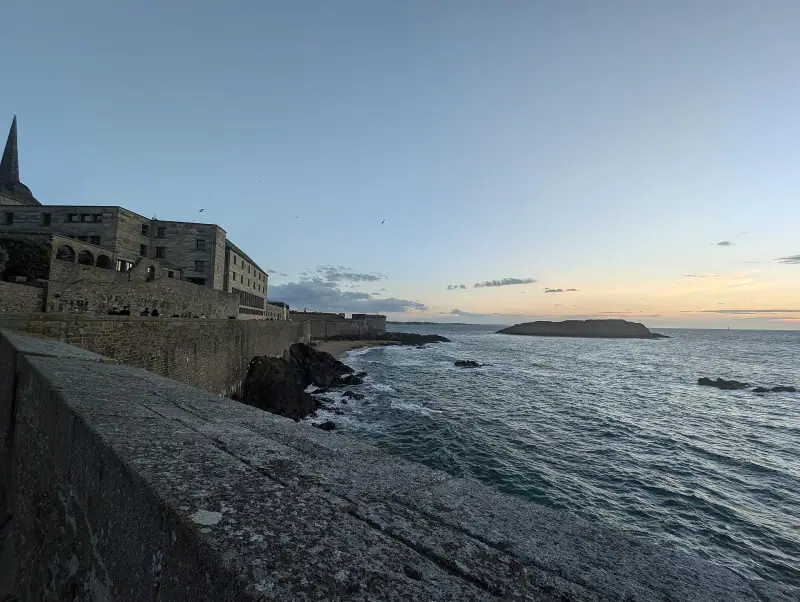
7 days
Brittany road trip in 7 days: from Saint-Malo to the Gulf of Morbihan
A 7-day coastal road trip in Brittany: Saint-Malo, Pink Granite Coast, Crozon peninsula, Quimper, Carnac and Vannes. Stops, distances, budget and tips.