Plan your trip
Budget for the American West: real costs and three priced profiles
We may earn a commission when you book through links on this page, at no extra cost to you. We don't visit or try the places we cover: we summarize published sources. How we work
In short
- On the ground, excluding flights, a couple spends on average between €250 and €750 per day (about $290 to $870); lodging and meals explain almost all of the gap.
- Since January 1, 2026, non-resident visitors aged 16 and over pay a $100 surcharge in 11 parks, including Zion, Bryce, Grand Canyon and Yosemite; the $250 annual pass covers it.
- The three on-site budgets for 15 days for two, excluding flights, are about $4,265 (economy), $7,185 (comfort) and $12,720 (premium).
- Prices are shown before tax and service: add 10 to 30% depending on the case, and a tip of 18 to 20% in sit-down restaurants.
The budget is often the big unknown of an American West road trip. The landscapes are free, but everything needed to reach them is not: a flight, a car for two weeks, nights in stop towns that are sometimes very expensive in high season, national park entrance fees that changed in 2026, and restaurants where the final bill clearly exceeds the price on the menu.
This guide breaks down the real costs item by item, based on rates collected in 2026, then offers three priced budget profiles for a couple over 15 days, on the circuit described in our 15-day American West road trip. It ends with a series of tips that really lower the bill.
A caution before starting. Prices change fast, notably for hotels, flights and gas. The amounts below are rough estimates, not quotes: always check the final rate on official sites or at the time of booking. Amounts given in euros are converted at about $1.16 per €1.
What an American West trip really costs
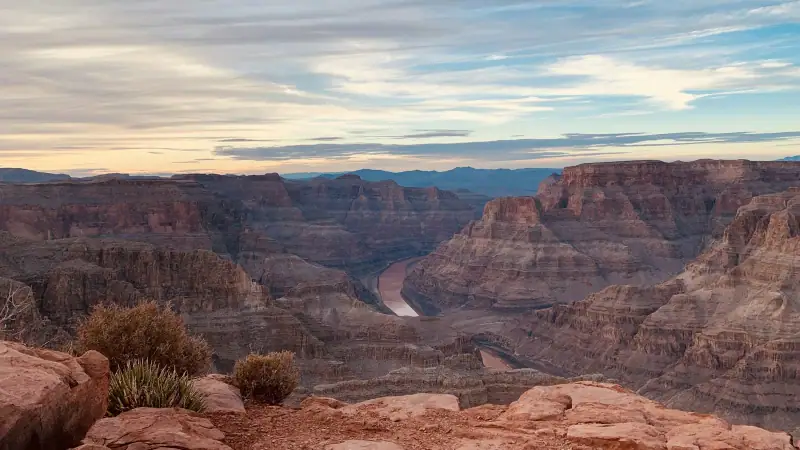
Before the detail, a simple benchmark: on the ground, excluding flights, a couple spends on average between €250 and €750 per day (about $290 to $870) depending on their travel style. The gap comes almost entirely from two items, lodging and dining. The car, fuel and park entrances vary much less from one profile to another.
Another point to include from the start: the United States almost always displays prices before tax and service. Sales tax is added at the register, hotels add lodging taxes, and the tip is added at the restaurant. Depending on the case, allow 10 to 30% more than the price read on the shelf or the menu.
The flight: the first big item
The plane ticket weighs heavily, but it depends mostly on the season and the arrival airport. Prices depend on where you fly from, so compare fares for your own departure airport and dates.
For a road trip, favor an “open jaw” trip: arrive in Las Vegas, leave from Los Angeles or San Francisco. The ticket price is often comparable to a classic round trip, and you avoid backtracking, which saves days of car and gas. In return, most rental companies charge drop-off fees for a vehicle returned in another city: ask for the total before booking. To know when to go and how the season affects all prices, see our guide to when to go to the American West.
Lodging: the most variable item
This is where the budget is won or lost. Several 2026 readings give an idea:
- Utah: about $165 to $177 a night on average, but park gateway towns soar in high season. In Springdale, at the gates of Zion, the average night climbs clearly in September compared with winter, according to the available readings.
- Arizona: about $200 a night on average across the state, with higher rates in tourist destinations.
- Las Vegas: mandatory stay fees (“resort fees”) are added to the room price. They average around $40 to $55 a night depending on the property, and can completely change the real cost of a booking. Room prices vary enormously with events: very high during big conventions, clearly lower midweek and downtown.
- Camping: the Watchman campground at Zion rises to $35 a night for a site without electricity and $45 with electricity from July 1, 2026. Reservations are made on Recreation.gov, several months ahead.
Compare hotels in Las Vegas
Filter by price and check the total with mandatory fees before booking.
For a couple, use these ranges per night and per double room, taxes and fees included:
- Economy: $90 to $130 (camping, simple motels, hotels outside the most sought-after areas).
- Comfort: $150 to $230 (well-located chain hotels, breakfast often included).
- Premium: $280 to $400 and more (lodges in the parks, big Las Vegas hotels, boutique hotels in San Francisco).
The detail of the best bases for each park is in our article on where to stay in the American West.
National parks: what changed in 2026
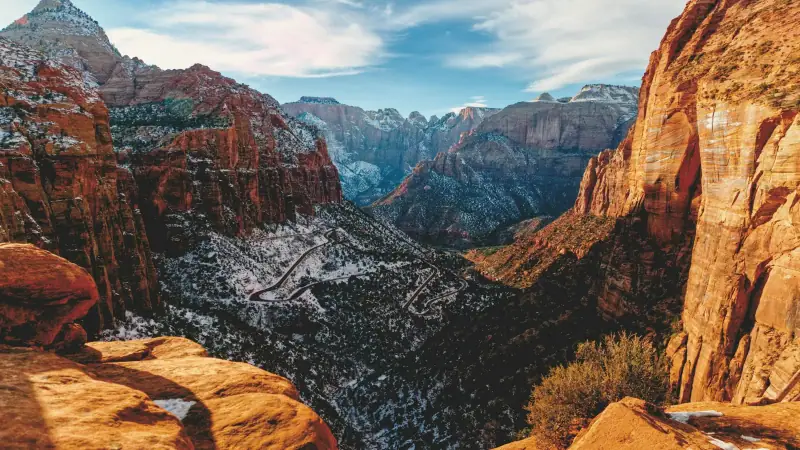
This is the big news for visitors from abroad. Since January 1, 2026, the National Park Service applies a $100 per person surcharge to non-resident visitors aged 16 and over, in 11 parks: Acadia, Bryce Canyon, Everglades, Glacier, Grand Canyon, Grand Teton, Rocky Mountain, Sequoia and Kings Canyon, Yellowstone, Yosemite and Zion.
This surcharge is added to the normal entrance fee, which is $35 per vehicle at Zion and several other major parks. Free entrance days are now reserved for US residents, and your ID may be requested at the entrance.
Annual pass or single entries?
The America the Beautiful annual pass costs $250 for non-residents ($80 for residents). It covers one vehicle, or the holder plus three adults when entry is paid per person, and it includes the $100 surcharge. Here is a calculation for a couple visiting Zion, Bryce Canyon, the Grand Canyon and Yosemite:
- Without the pass: 4 parks x (2 x $100 surcharge + $35 entrance fee) = about $940.
- With the pass: $250, nearly $690 in savings.
Even with a single park subject to the surcharge, a couple pays about $235: almost the price of the pass. For a solo traveler, the pass pays off from two parks. In nearly all itineraries, it is therefore the first purchase to make, on the park agency’s official site or at the entrance of the first park.
Guided tours and excursions
Antelope Canyon, Grand Canyon, Monument Valley: compare excursions and their prices before booking.
Paid activities on top
Beyond park entrance, some experiences are paid separately, and that is often where the budget slips. The most telling example is Antelope Canyon, which can only be visited with a Navajo guide: in early 2026, the base price of the Upper Antelope Canyon tour was $85 plus a $15 Navajo permit, or $100 per person, and the most sought-after slots or some operators’ offers go up to $120, or even $145. For a couple, that is between $200 and $290 for under two hours. Our article on Antelope Canyon and Horseshoe Bend details the options, some of which are cheaper.
Conversely, the great majority of what makes the West beautiful is free once in the park: free shuttles at Zion and the Grand Canyon, viewpoints, hundreds of miles of trails. See for example our guide to visiting Zion.
The car: rental, insurance and fuel
On a 15-day circuit, the car is the second item after lodging. Average rental rates published for 2026 range from $30 to $55 a day for an economy category on a weekly rental, but these figures are floors: in high season, at the airport, with a driver under 25, a second authorized driver or a drop-off in another city, the bill rises fast. Airport rentals are generally 15 to 30% more expensive than in town, because of airport taxes and fees.
For your budget, use per day: $50 to $60 (economy), $70 to $90 (mid-size) and $110 to $130 (SUV or large sedan), extra insurance included. Read the deductible terms carefully and the insurance already included with your credit card before adding the counter options.
Fuel
The 15-day loop covers about 2,200 to 2,500 mi (3,500 to 4,000 km). In spring 2026, prices recorded were around $4.20 a gallon in Utah and $4.70 in Arizona, with clearly higher rates in California, sometimes close to $6. Since a gallon is about 3.8 liters, you can compare with prices per liter. Depending on the vehicle’s consumption, $350 to $550 of fuel is enough for the whole circuit. Fill up in Utah and Arizona rather than in California when possible, and in towns rather than at isolated desert gas stations, which are more expensive.
Meals: from the convenience store to the restaurant
Food is the item you control best. Two rules sum up the American system. First, menu prices do not include sales tax. Second, a tip of 18 to 20% is the norm in sit-down restaurants, it is calculated on the pre-tax total and added to the bill. 2026 readings place the average tip at sit-down restaurants at about 19%, and about 16% at fast food. Restaurant meals also rose about 4.6% over a year, according to official statistics.
As a benchmark, for two people per day:
- Economy: about $60. Breakfast and picnic from the supermarket, one simple meal (fast food, food truck, burrito) a day.
- Comfort: about $130. Hotel breakfast, light lunch, dinner at a sit-down restaurant, drinks and tip included.
- Premium: about $250. Two restaurant meals a day, refined dinners in Las Vegas or San Francisco, wine and cocktails.
A $20-30 cooler bought at the first supermarket is one of the best investments of the trip: distances between two towns are long, and restaurants at the edge of parks are expensive and often full at noon.
Three budget profiles for 15 days for two
Here are three consistent scenarios, on the 15-day circuit (14 nights). They assume two adults, a flight into Las Vegas and home from Los Angeles, an annual parks pass, and 15 days of car. The amounts are in dollars for the stay on the ground, excluding flights.
Profile 1: economy
- Lodging: about $110 a night on average, or $1,540 (camping and simple motels).
- Car: about $55 a day, or $825.
- Fuel: about $350.
- Meals: about $60 a day, or $900.
- Entrances and activities: $250 for the annual pass and about $200 for Antelope Canyon, or $450.
- Miscellaneous (travel insurance, mobile plan, tips, parking): about $200.
Total on the ground: about $4,265 for two.
Profile 2: comfort
- Lodging: about $190 a night, or $2,660 (chain hotels, one or two nights in Las Vegas).
- Car: about $75 a day, or $1,125.
- Fuel: about $400.
- Meals: about $130 a day, or $1,950.
- Entrances and activities: annual pass, Antelope Canyon and a few outings, or $750.
- Miscellaneous: about $300.
Total on the ground: about $7,185 for two.
Profile 3: premium
- Lodging: about $330 a night, or $4,620 (lodges in the parks, upscale hotels).
- Car: about $120 a day, or $1,800.
- Fuel: about $550.
- Meals: about $250 a day, or $3,750.
- Entrances and activities: about $1,500 (private excursions, flightseeing, river trip).
- Miscellaneous: about $500.
Total on the ground: about $12,720 for two.
Key takeaway. Going from the economy profile to the comfort profile adds about $1,460 per person, more than half of it from lodging and meals. The car and park entrances change little: they are fixed costs you can hardly compress, so any savings have to come from the rest.
Ten tips to spend less
- Buy the annual pass at the first park. It pays off as soon as two parks are subject to the surcharge, or even one for a couple.
- Travel outside summer. Flights, lodging and the car cost less in spring and fall, and the heat is more bearable. Some gateway towns, like Springdale, still see prices rise in fall: compare months before choosing.
- Book early, with free cancellation. You lock in good rates without losing flexibility if prices drop.
- Sleep outside the gateway towns. An extra hour of driving can halve the price of a room; Flagstaff, for example, is a classic alternative at the Grand Canyon.
- Check the mandatory fees in Las Vegas. The price shown without the resort fee is misleading; always compare the total. A downtown hotel or a midweek stay often costs far less than a weekend on the Strip.
- Rent off-airport if logistics allow. Airport fees can add 15 to 30%.
- Use your credit card insurance if it covers rentals, but check what it excludes and the deductible amounts.
- Fill a cooler. Midday picnics and breakfasts in the room save dozens of dollars a day.
- Favor free activities. Park shuttles, viewpoints, trails: most of the big classics cost nothing beyond the entrance.
- Pay with a card without foreign transaction fees if you are paying from abroad, and keep a little cash, in small bills, for tips.
Stay in Flagstaff for the Grand Canyon
A base often more affordable than lodging near the park, with lots of choice.
Costs often forgotten
A few budget lines escape the first simulations:
- Entry requirements: they depend on your passport, and any travel authorization fee can change. Check the official travel advice of your government before you book: travel.state.gov (US), GOV.UK (UK), travel.gc.ca (Canada), Smartraveller (Australia) (checked November 2026). See also our guide to formalities for the American West.
- Travel insurance: essential, because medical costs in the United States can reach very high amounts. Compare the coverage rather than the price alone.
- Mobile connection: check your carrier’s international plan or use a travel eSIM, for offline maps and bookings on the road.
- Luggage and parking: some cities, including San Francisco, charge a lot for hotel parking; check it when booking.
- Vehicle drop-off fees if you return the car in a different city from the pickup.
- The safety margin: plan 10% of the total budget for the unexpected, notably a change of itinerary or a road closure.
For an overview of the destination before setting your budget, see the complete guide to the American West.
Conclusion: how much should you really plan?
A two-week road trip in the American West rarely costs less than about $4,265 for two on the ground, before flights, and can easily exceed $12,720 in a high-end version. The $100 per person surcharge in the big parks has made the annual pass almost a must, and lodging remains the most powerful lever for savings. By preparing reservations early, choosing the season well and limiting paid extras, it is entirely possible to enjoy the most spectacular landscapes in the country without blowing your budget.
Sources
- Zion National Park (National Park Service): prices checked November 2026
- Entrance Passes (National Park Service): prices checked November 2026
Frequently asked questions
What budget should you plan for 15 days in the American West?
On the ground, excluding flights, plan about $4,265 for two people in the economy version (camping, simple motels, supermarket meals), around $7,185 in comfort and about $12,720 in premium. These estimates rest on rates collected in 2026 and vary strongly with the season and booking date.
Are the national parks more expensive for foreign visitors in 2026?
Yes. Since January 1, 2026, non-resident visitors aged 16 and over pay a $100 per person surcharge in 11 parks, including Zion, Bryce Canyon, the Grand Canyon and Yosemite, on top of the usual entrance fee. The America the Beautiful annual pass costs $250 for non-residents ($80 for residents) and covers this surcharge.
Is the $250 annual pass worth it?
In most road trips, yes. For a couple, a single park subject to the surcharge already costs about $235 (2 x $100 surcharge plus $35 per vehicle), almost the price of the pass. From the second park concerned, the pass is clearly worthwhile. For a solo traveler, the break-even is at two parks.
How much does gas cost in the American West?
Prices vary a lot from state to state. In spring 2026, readings showed about $4.20 a gallon in Utah, $4.70 in Arizona and clearly higher prices in California. A gallon is about 3.8 liters. Plan $350 to $550 of fuel for a 15-day circuit, depending on the car.
Do you need to tip in the United States?
Yes, in sit-down restaurants a tip of 18 to 20% is expected: it is added to the displayed price, as is sales tax. It is less systematic in fast food. Plan about 25% more than the menu price for a sit-down meal.
When should you book to pay less?
Lodging near the parks (Springdale, Page, Moab, Grand Canyon) fills up very early in high season and prices climb with demand. Book several months ahead, favoring cancellable rates, and consider spring or fall to avoid summer price peaks.
Is it better to pay by card or in cash?
Cards are accepted almost everywhere, including for small amounts. If you are paying from abroad, choose a card with no foreign transaction fees, and keep a little cash in small bills for tips and a few parking lots.
More American West guides
Keep reading
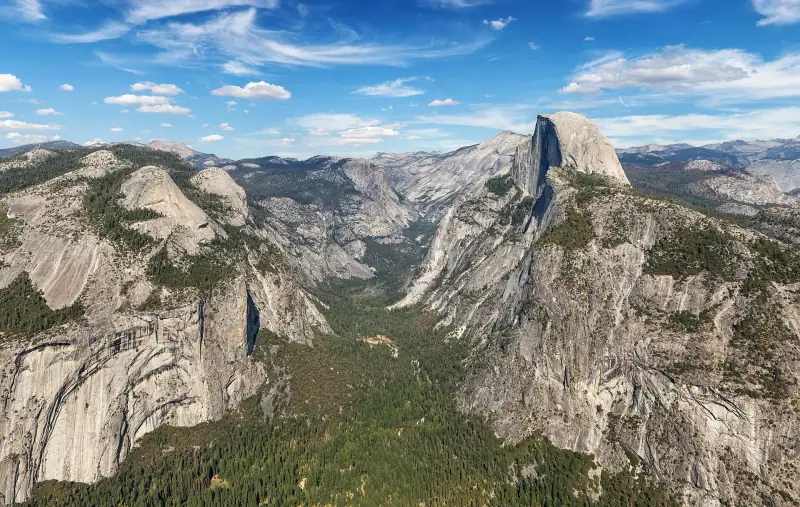
When to go to the American West? A month-by-month guide
When to go to the American West: Death Valley heat, snow at Bryce, closed roads at Yosemite, crowds. A season comparison for your road trip.
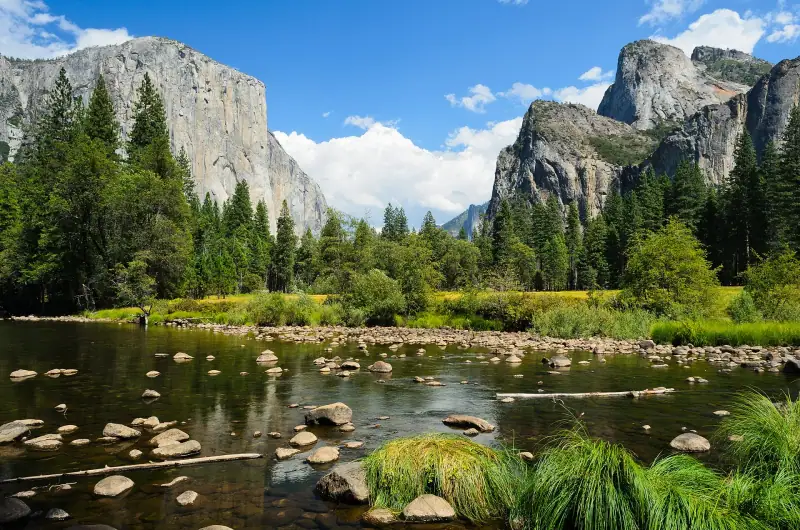
Visiting Yosemite: waterfalls, cliffs and tips for your road trip
Plan your Yosemite visit: valley, El Capitan, Yosemite Falls, Glacier Point, Mariposa Grove, Tioga Road, best season and where to stay.
Visiting Arches National Park and Moab: arches, hikes and tips
Plan your Arches National Park visit from Moab: Delicate Arch, Windows, Devils Garden, light, heat, where to stay and your road trip.
Ready-made
American West itineraries
8 days
American West road trip in December: 8-day itinerary and passable roads
Las VegasSpringdaleBryce CanyonPageGrand Canyon South Rim
8 days
8-day road trip from Las Vegas: Zion, Bryce, Page and the Grand Canyon
Las VegasSpringdaleBryce CanyonPageGrand Canyon South RimLas Vegas
9 days
9-day road trip: San Francisco, Yosemite, Death Valley and Las Vegas
San FranciscoYosemiteLee ViningLone PineDeath ValleyLas Vegas