Things to do
Antelope Canyon and Horseshoe Bend: guided tour and practical tips
We may earn a commission when you book through links on this page, at no extra cost to you. We don't visit or try the places we cover: we summarize published sources. How we work
In short
- Antelope Canyon lies on Navajo land and can be visited only on a guided tour with an authorized operator, at a set time slot. Book once your dates are fixed.
- Upper Antelope Canyon is a flat walk; Lower is narrower, with stairs and ladders. Tours are canceled when there is a flash flood threat.
- Horseshoe Bend is a short trail of about 1.2 mi (2 km) round trip, with almost no shade: bring water and a hat.
- One full day in Page covers both sites; an extra night adds Lake Powell or a boat outing.
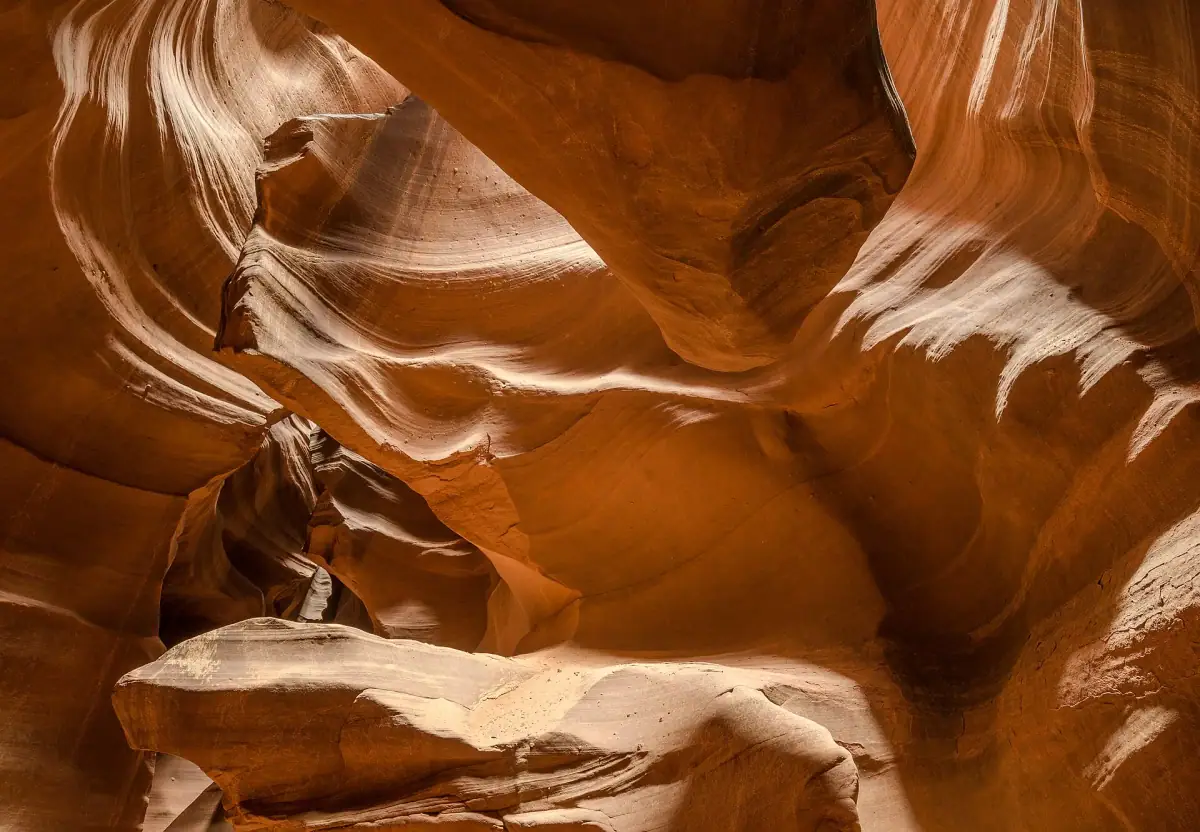
In northern Arizona, the small town of Page holds two of the most famous images of the American West: the wavy walls of Antelope Canyon, where light slides in orange ribbons, and the loop of the Colorado River seen from the Horseshoe Bend overlook. The two sites are close to each other and easily combined in a single day.
This guide explains how to organize the visit: choosing between the two canyons, booking, avoiding common mistakes and fitting this stop into a road trip.
Understanding Antelope Canyon before you book
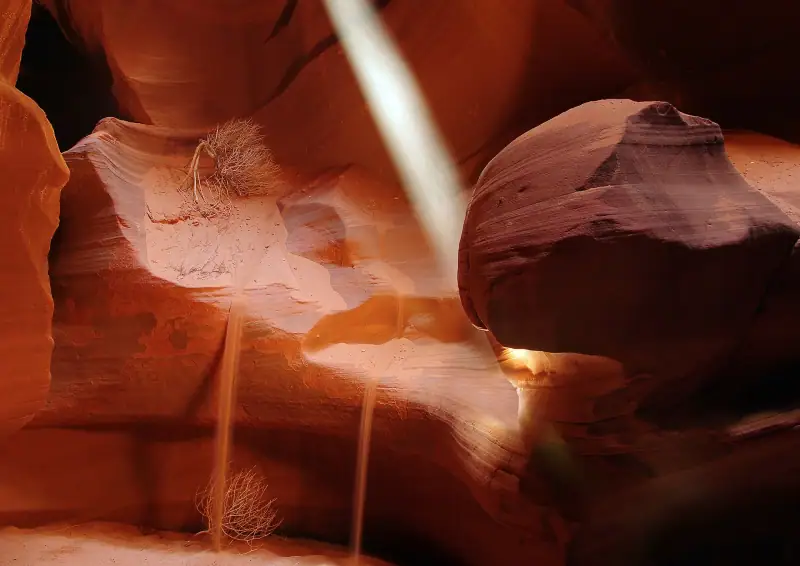
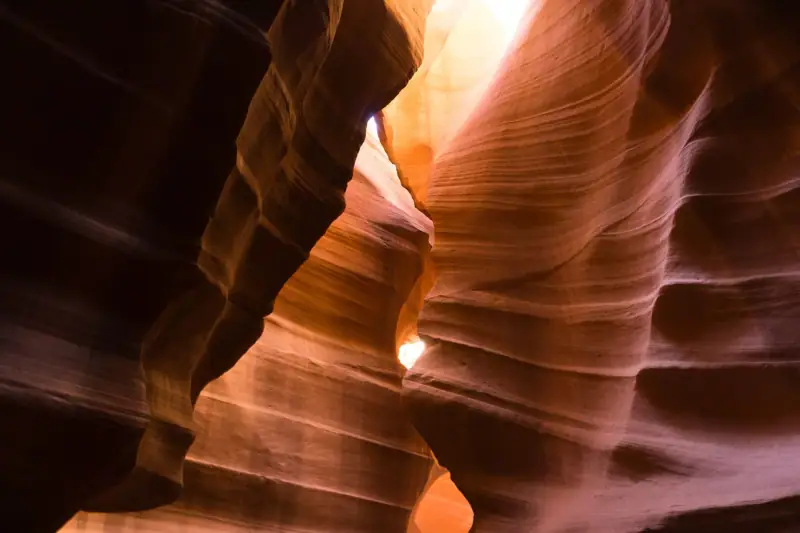
Antelope Canyon is a slot canyon: a very narrow sandstone corridor, carved over the centuries by flash floods rushing into the rock. Water polished the walls into smooth curves, and the light coming down from above draws orange, red and purple reflections.
The site lies on Navajo Nation land. You can’t enter freely: the visit is always with a Navajo guide, in a small group, with a precise time slot. This rule protects a fragile place that is dangerous in a storm, because a flood can occur even when the sky is clear above you.
Two main sections can be visited:
- Upper Antelope Canyon: the most photographed part, accessible on the flat, with tall walls that narrow. It is the simplest choice for families or people with limited mobility.
- Lower Antelope Canyon: a narrower, more winding corridor, walked via metal stairs and a few tight passages. It takes a bit more agility.
Other, more recent sections in the area are offered by some agencies. Whatever you choose, check that the operator is authorized by the Navajo Nation.
Choosing your tour: times, groups and booking
The key point is booking ahead. Slots are limited, and those that give the most spectacular light are the first to disappear in high season. Book as soon as your dates are fixed.
A few benchmarks for choosing:
- The middle of the day is the period when you have the best chance of seeing light beams in the Upper Canyon, especially in summer. It is also the most requested time.
- The rest of the day offers softer light, warm hues and fewer people. For photos, the result is still very beautiful.
- A dedicated photo tour, longer and in a small group, exists with some operators: it suits those who want to take time to frame shots. Tripods are often restricted on standard tours, so ask beforehand.
Before leaving, check with your agency the rules on bags, the allowed bag size and the meeting point. They vary from one operator to another. The time zone can also create confusion in this region: confirm the local time of your appointment.
Antelope Canyon guided tours
Compare guided tours and book your slot ahead, especially in high season.
Horseshoe Bend: the Colorado’s meander
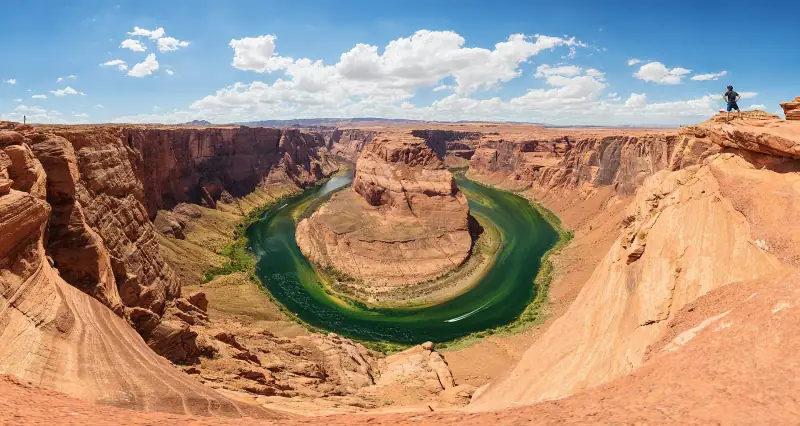
A few minutes by car from Page, Horseshoe Bend is an overlook above an almost perfect horseshoe-shaped loop of the Colorado River. The deep green river wraps around a large mass of red rock, at the bottom of a canyon with vertical walls.
Access is simple. From the parking lot, a trail of about 1.2 mi (2 km) round trip leads to the cliff edge. It is not difficult, but it crosses open ground, without shade, and the heat can be heavy in summer. A few tips:
- Come early in the morning or late in the afternoon: the light is nicer and it is less hot.
- Bring water and a hat, even for this short walk.
- Stay careful near the edge: the cliff is sheer and no barrier lines it along its whole length. Watch children especially.
- Bring a wide-angle lens if you want to photograph the whole loop.
Parking is paid: check current conditions before you come. The site is very busy, especially midday, and it is best to arrive when the tour groups are not there.
Lake Powell and Glen Canyon Dam
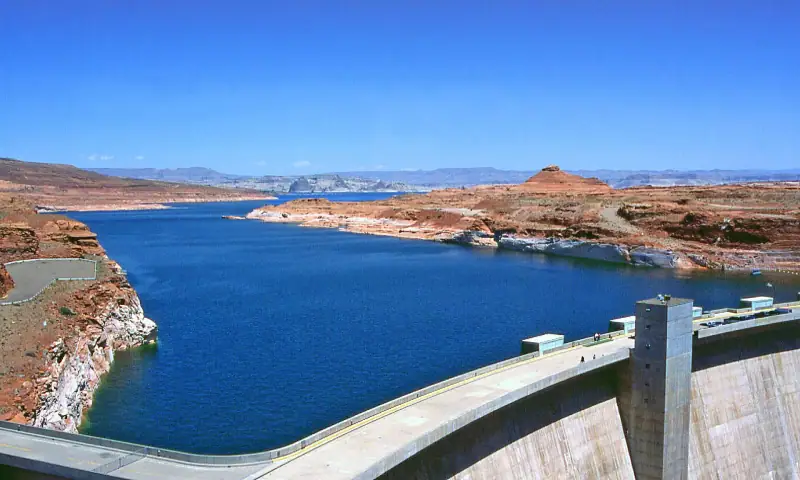
Page sits on the edge of Lake Powell, an immense reservoir created by Glen Canyon Dam on the Colorado. Its turquoise water, red sandstone cliffs and many coves make a landscape very different from the region’s dry canyons.
If you have a bit more time, several activities are possible:
- A boat outing on the lake, to discover the side canyons from the water.
- A kayak paddle in the calmer areas, in the hot season.
- A stop at the dam and its visitor center, to understand the history of the reservoir and its role in the region.
The lake level varies by year and season: some coves are not always accessible in the same way. Check the recreation area’s official website before booking a specific outing.
Where to stay in Page?
Page is small and its hotels fill up fast in season: compare and book early.
Organizing a day in Page
A well-filled day in Page can follow this simple pattern:
- Morning: Horseshoe Bend, before the crowds and the heat.
- Midday: your Antelope Canyon guided tour, according to the slot you booked.
- Afternoon: some rest, then Lake Powell or the dam.
- End of the day: one last viewpoint at sunset, if you still have energy.
If you booked a slot early or late in the day, simply reverse the order. The essential thing is to keep a margin between activities: trips are short, but lines and parking can take time.
For eating, Page offers simple restaurants and national chains, enough for a road trip stop. Keep water and snacks in the car: distances are long and services rare once you leave town.
When to visit Antelope Canyon and Horseshoe Bend
The region is very hot in summer and cool in winter. Each season has its appeal:
- Spring: pleasant temperatures, good light. A very good period, even if the wind can pick up.
- Summer: strong heat and a flood of visitors. It is the season of the famous light beams in the Upper Canyon, but also of afternoon thunderstorms.
- Fall: mild temperatures, more moderate crowds, magnificent light.
- Winter: days are cool and visitors fewer, but the light in the canyons is softer.
Thunderstorms are a real issue: when there is a flash flood threat, tours are canceled. Keep some flexibility in your schedule and read the cancellation terms before booking. To compare the seasons of the whole circuit, see our guide to when to go to the American West.
Page in an American West road trip
Page is one of the most practical stops on the Colorado Plateau, because it lies at a reasonable distance from several major sites:
- To Bryce Canyon: about 3 h of driving. Our guide to visiting Bryce Canyon helps you prepare the stop.
- To the Grand Canyon: allow about 2 h 30 to 3 h to reach the south side. See our tips for visiting the Grand Canyon.
- To Monument Valley: about 2 h of driving, an easy stop to add.
- From Las Vegas: the road is long, around 4 h 30 to 5 h, and is better done as a transfer day.
Our 15-day American West road trip links these stops in a logical order. A rental car is essential in this region.
Where to stay in Page
Lodging in Page consists mostly of motels and chain hotels, apartments and a few campgrounds. The town is small, and demand is strong in the good season: rooms are often booked weeks ahead.
To limit the budget, compare motels a little away from the center or book in the shoulder season. To compare the types of lodging across the whole circuit, read our guide to where to stay in the American West.
Compare flights to Las Vegas
Las Vegas is the usual gateway to reach Page and the neighboring parks.
Practical tips before you go
- Book Antelope Canyon as soon as your dates are fixed and check that the agency is authorized by the Navajo Nation.
- Protect your gear: the fine sand of the canyon gets into cameras everywhere.
- Bring water, a hat and sun protection to Horseshoe Bend.
- Keep a margin in your schedule in case of a storm or cancellation.
- Follow the guide’s instructions: the walls are fragile and the safety rules are strict.
- Check rates and conditions on the official websites: they change from one season to the next.
With a bit of planning, Page and its surroundings offer one of the most photogenic stops of the American West: a canyon sculpted by water, a spectacular meander and a big turquoise lake in the middle of the desert.
Frequently asked questions
Can you visit Antelope Canyon without a guide?
No. Antelope Canyon lies on Navajo land and can only be visited with an authorized agency, on a guided tour. Book ahead, especially from late spring to fall, as the most sought-after slots go fast.
What is the difference between Upper and Lower Antelope Canyon?
The Upper Canyon is entered almost at ground level and the walk is flat, which makes it more accessible. The Lower Canyon is narrower and has stairs and ladders: it takes a bit more effort, but it is often less crowded. Both are spectacular.
Do you have to walk a lot to see Horseshoe Bend?
No. The overlook is reached by a short trail, largely without shade, of about 1.2 mi (2 km) round trip. It is not difficult but you are exposed to the sun: bring water, a hat and good shoes.
How much time should you plan in Page?
A well-filled day lets you do an Antelope Canyon visit and go to Horseshoe Bend. With an extra night, you can add Lake Powell or a boat outing. Page is also a convenient base between Bryce Canyon, Monument Valley and the Grand Canyon.
What is the best time for Antelope Canyon?
The most famous light beams appear mostly around the middle of the day, in summer. The rest of the year, the light is softer and the orange colors remain superb, with fewer crowds. Thunderstorms are a risk: tours are canceled when there is a flash flood threat.
More American West guides
Keep reading
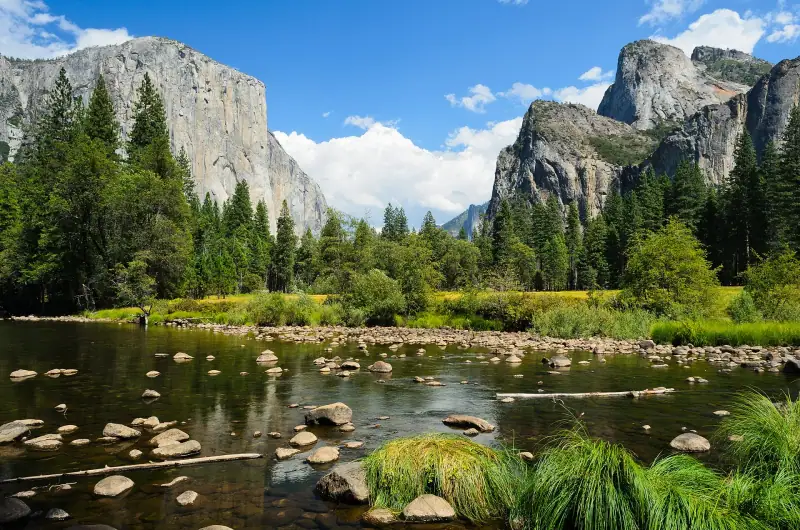
Visiting Yosemite: waterfalls, cliffs and tips for your road trip
Plan your Yosemite visit: valley, El Capitan, Yosemite Falls, Glacier Point, Mariposa Grove, Tioga Road, best season and where to stay.
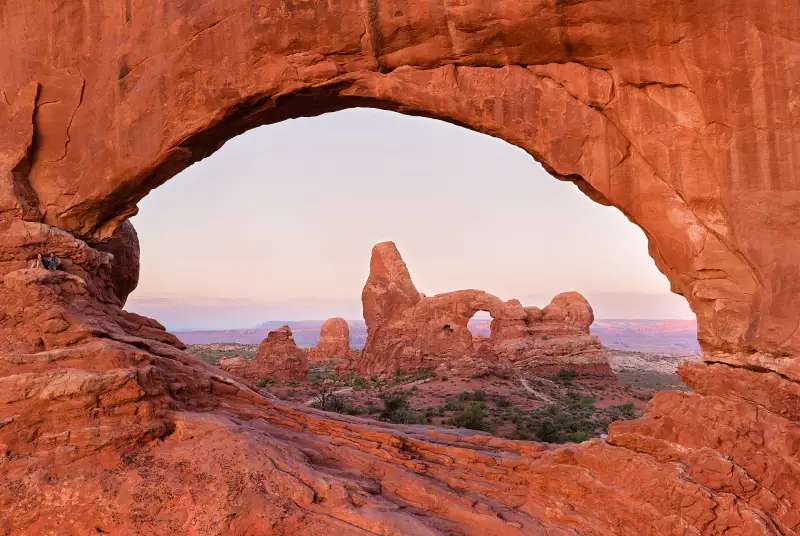
Visiting Arches National Park and Moab: arches, hikes and tips
Plan your Arches National Park visit from Moab: Delicate Arch, Windows, Devils Garden, light, heat, where to stay and your road trip.
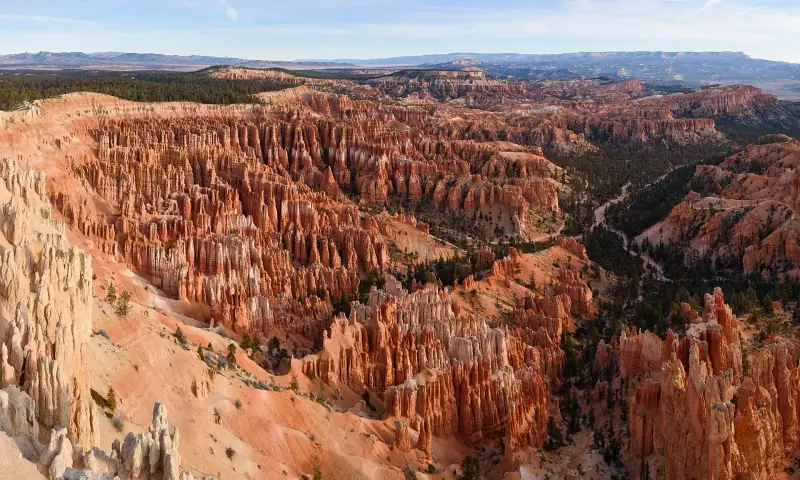
Visiting Bryce Canyon: hoodoos, hikes and practical tips
Plan your Bryce Canyon visit: viewpoints, Navajo Loop, Queen's Garden, sunrise, stargazing, where to stay and fitting it into your road trip.
Ready-made
American West itineraries
8 days
American West road trip in December: 8-day itinerary and passable roads
Las VegasSpringdaleBryce CanyonPageGrand Canyon South Rim
8 days
8-day road trip from Las Vegas: Zion, Bryce, Page and the Grand Canyon
Las VegasSpringdaleBryce CanyonPageGrand Canyon South RimLas Vegas
9 days
9-day road trip: San Francisco, Yosemite, Death Valley and Las Vegas
San FranciscoYosemiteLee ViningLone PineDeath ValleyLas Vegas