Things to do
Visiting Arches National Park and Moab: arches, hikes and tips
We may earn a commission when you book through links on this page, at no extra cost to you. We don't visit or try the places we cover: we summarize published sources. How we work
In short
- A full day covers Windows, Delicate Arch and Devils Garden. The Delicate Arch hike is about 3 mi (5 km) round trip on bare rock with no shade.
- Depending on the year and season, a timed-entry reservation may be required: check the National Park Service website before you go.
- Moab, a few minutes from the park entrance, is the most practical base; book early in spring and fall.
- Start early: it is cooler, less crowded, and the light is better. Summer thunderstorms can cause flash floods.
In eastern Utah, the desert has sculpted hundreds of red sandstone arches. Arches National Park holds more than 2,000 recorded ones, the highest concentration on the planet, and many are reached at the end of an easy trail. Delicate Arch, the arch that appears on Utah license plates, has become its symbol.
The park is compact, the main road serves most of the sights, and the small town of Moab offers everything a traveler needs. It is one of the most rewarding stops of the American West. This guide helps you organize your day, choose your hikes and fit Arches into your circuit.
Understanding Arches National Park before you go
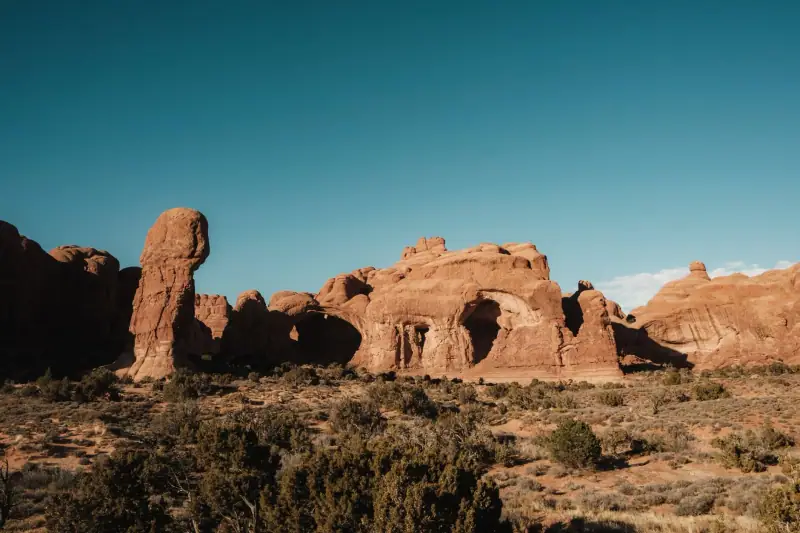
The arches formed in sandstone, worn over time by water, frost, wind and the movement of the salt beneath the rock. Walls crack, rock fins thin out, then some break through and form an arch. The process continues: arches eventually collapse, and others form.
The park is visited mostly by car, with a main road that climbs from the entrance, then runs past the big sights to the Devils Garden area. Trails start from small parking lots along this road.
To organize your visit, keep three ideas in mind:
- Roadside viewpoints take little effort and suit a short visit.
- Short trails lead to the most famous arches in under an hour.
- Longer hikes let you get away from the crowds and see isolated arches.
Arches is one of the busiest parks in Utah. Check the National Park Service website to see whether a timed-entry reservation is required for your dates, as this system has varied from year to year. Our 15-day American West road trip shows how to place Arches among the other big parks.
Getting to Arches and Moab
The park entrance is a few minutes’ drive from Moab, north of town. There is no effective public transit to the park: the car is the natural solution.
From Las Vegas, plan on a big day of driving, about 7 h without stops. Most travelers break up the trip by passing through the Zion or Bryce area. From Monument Valley, the drive to Moab takes about 2 h 30, and the area is easily reached from the loop of Utah parks.
A few tips for the road:
- Fill up before leaving big cities: gas stations are rare on some stretches.
- Keep water in the car, in addition to what you carry on hikes.
- Start early: the light is nicer and the heat weaker.
- Allow a margin for photo stops: the landscapes are spectacular from the outskirts of Moab.
Book your rental car ahead in high season: the Utah parks are far from big cities and vehicles go fast.
Where to stay in Moab?
Moab is the best base for Arches. Book early in spring and fall.
Windows Section: Turret Arch and Double Arch
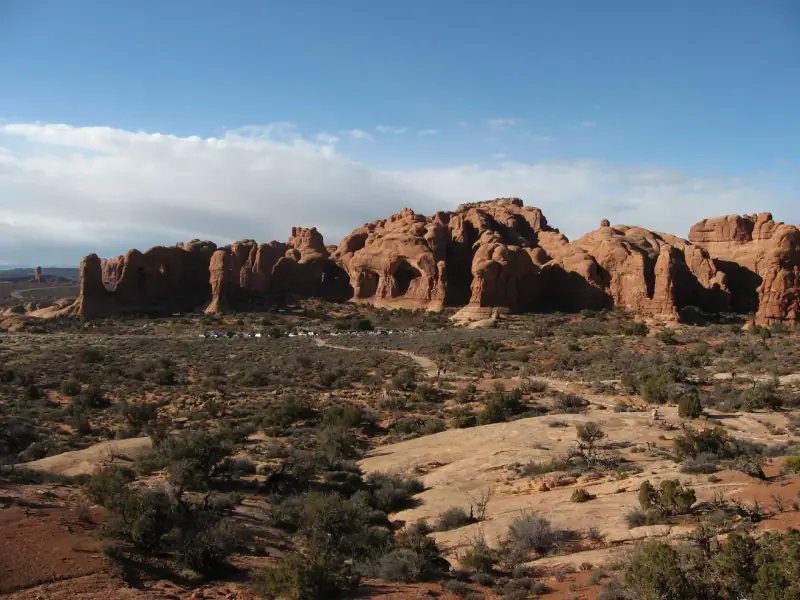
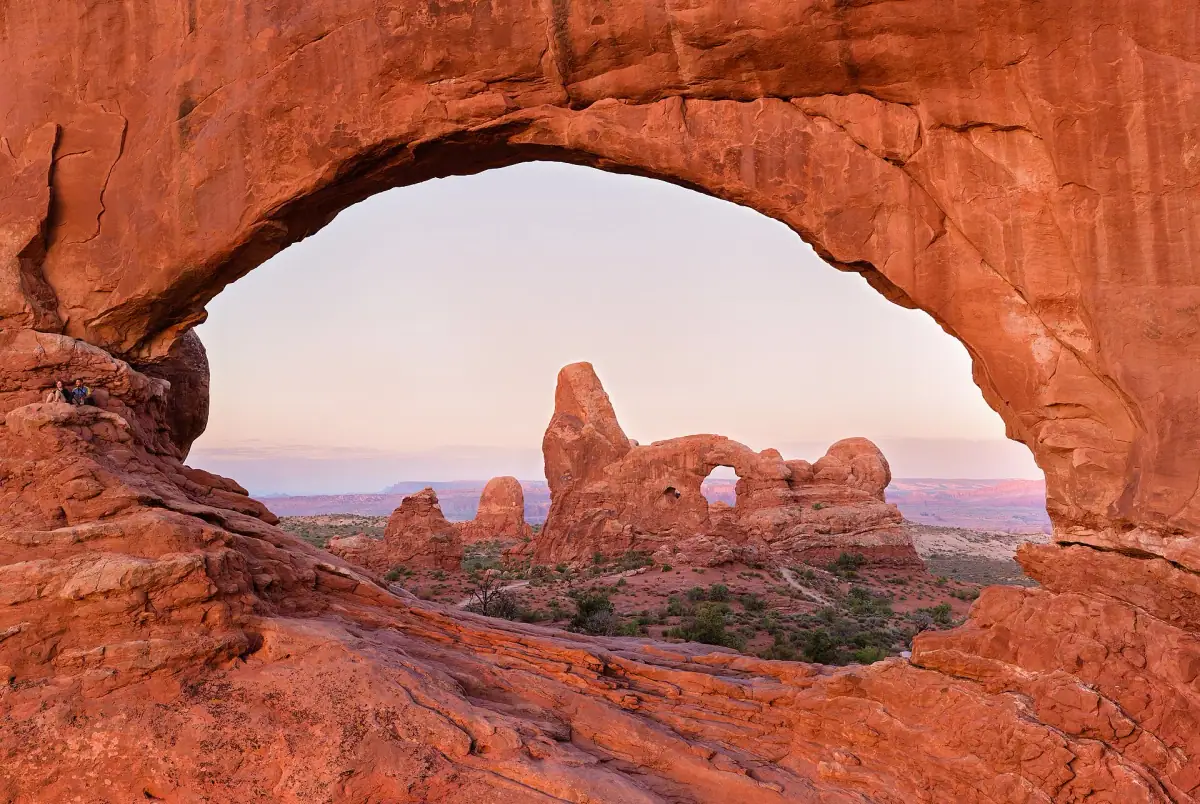
The Windows area is one of the easiest sectors to reach. From a dedicated parking lot, a short, well-developed trail leads to several large arches, including North Window, South Window and Turret Arch. The three are grouped together and can be seen in under an hour.
A little farther, Double Arch is one of the most photogenic arches in the park. Two large openings share the same base, and you can get close enough to feel the scale of the rock. The trail is short and well suited to families.
A few tips for this sector:
- Come early or late in the day: the parking lot fills up fast in the middle of the day.
- Walk carefully: smooth rock can be slippery after rain.
- Take time to look: the arches change color with the height of the sun.
If you have little time, this area is enough to understand why the park is famous. A stop at the Balanced Rock viewpoint, a block of rock balanced on a pedestal, rounds out the visit.
Delicate Arch, the symbol of Utah
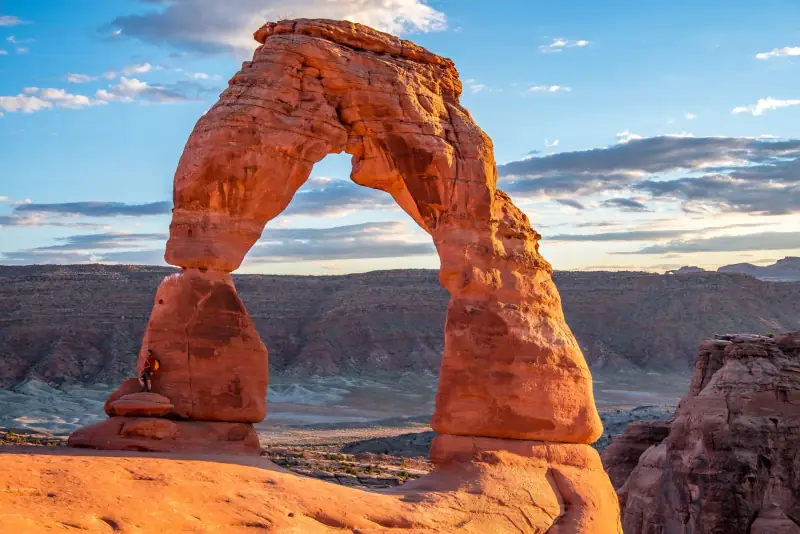
Delicate Arch is the best-known arch in the park, and one of the most famous images of the American West. It stands alone at the edge of a rock bowl, with the La Sal Mountains in the background when the sky is clear.
There are two ways to see it:
- The full hike: about 3 mi (5 km) round trip, with a steady climb on bare rock. There is almost no shade, and the last stretch crosses a narrow ledge. It takes normal fitness and good shoes.
- The distant viewpoints: an overlook reached from a parking lot lets you see the arch from afar, with little effort. It is the best option if you can’t do the hike.
For the hike, late afternoon is the most sought-after time: the rock takes a deep orange tint at sunset. It is also the busiest. If you prefer quiet, leave earlier in the morning, when the heat is lower.
A few precautions:
- Bring lots of water, even in mild weather.
- Protect yourself from the sun with a hat and sunscreen.
- Bring a headlamp if you stay for sunset: the return is often at nightfall.
- Stay on the marked trail and follow the park’s instructions.
Excursions around Moab
Guided hike, river trip or 4x4 excursion: compare the available activities.
Devils Garden and Landscape Arch
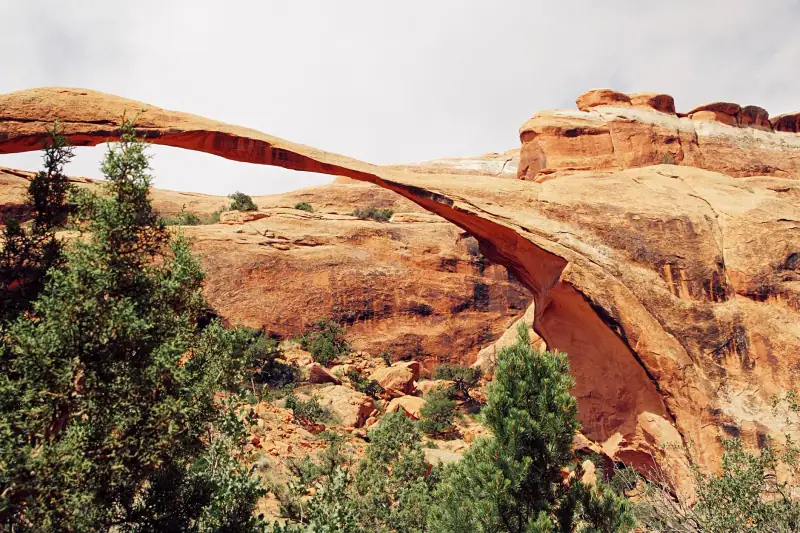
At the end of the main road, Devils Garden is the ideal sector for a longer hike. The main trail reaches Landscape Arch, a very long, very thin arch, among the longest in the world. This first part is easy and popular.
Beyond, longer trails lead to other arches, but the terrain becomes wilder: exposed rock, narrow passages, and sometimes sections that call for balance. Allow more time and watch the conditions, especially after rain.
Several smaller arches lie in this sector, and many visitors enjoy walking there to escape the crowds of the main sights.
A word on Fiery Furnace: this maze of passages between the rocks can only be visited with a permit or a ranger-guided tour. It is easy to get lost there, hence the rule. Find out ahead about access conditions.
In this sector, allow from 1 h to half a day depending on the distance you choose. A picnic at the Devils Garden parking lot makes a good break before the return.
A one-day itinerary
If you only have one day, here is a simple plan, to adapt to the season:
- Early morning: enter the park and go straight to Devils Garden to walk to Landscape Arch, when the light is soft and the parking lot is still calm.
- Late morning: stop at Balanced Rock, then visit the Windows area.
- Afternoon: back to Moab for lunch and rest during the hottest hours.
- Late afternoon: hike to Delicate Arch for sunset, with a headlamp for the return.
This sequence avoids the worst of the heat and spreads the effort well. It fits in one long day, but don’t hesitate to take two if you like walking at your own pace. In summer, reverse the order of the hikes according to the forecast temperature.
Compare flights to Las Vegas
Las Vegas is the usual gateway for the Utah parks: compare flights for your dates.
What to do around Moab
Moab is an adventure town, and many travelers stay more than one night. Several other sites are worth the detour:
- Canyonlands National Park, Island in the Sky district: about 40 min by road from Moab, a vast plateau overlooking deep canyons, with immense viewpoints. For the dawn arch, see our guide to the Mesa Arch sunrise from Moab.
- Dead Horse Point State Park: a spectacular overlook over a meander of the Colorado River, next to Canyonlands.
- The Colorado River: rafting or canoe trips, from a quiet paddle to more athletic runs depending on the season.
- Mountain biking and 4x4: the region is known for its tracks, with guided outings for beginners.
For an activity without driving, half-day guided outings are a good compromise: they let you discover the landscapes without having to check the terrain or the route.
When to visit Arches
The park is open year-round, but the season strongly shapes the experience:
- Spring: mild temperatures, clear light, but heavy crowds. Thunderstorms are possible.
- Summer: very hot during the day. Hike at dawn or in the late afternoon, and bring lots of water. Summer thunderstorms can cause flash floods.
- Fall: ideal season, with pleasant temperatures and beautiful light.
- Winter: cold, sometimes snowy, but quiet. Snow-covered arches make remarkable photos.
To compare the seasons in each park of the circuit, see our guide to when to go to the American West.
Where to sleep and eat in Moab
Moab has most of the area’s lodging: hotels, motels, inns and campgrounds. The town is small, and prices climb fast in the most in-demand seasons. Book far ahead if you travel in spring or fall.
Staying in Moab lets you go back to rest after a hike, find a restaurant in the evening and leave early in the morning for the park. To compare the types of lodging of your circuit, read our guide to where to stay in the American West.
For meals, the town offers a wide range of places, from cafés to more classic restaurants. Hours vary with the season: check them on arrival. In the park, there is no food near the trails: bring a lunch and plenty of water.
Fitting Arches into your circuit
Arches fits easily into a circuit of the big parks:
- With Bryce Canyon: after visiting Bryce Canyon, the road east leads to Moab through varied landscapes. Allow for a long driving day.
- With Monument Valley: Monument Valley is about 2 h 30 by road from Moab. The two stops form a natural pair in a circuit starting from Arizona.
- With Canyonlands: a second day in the area lets you add Island in the Sky.
A simple rule: give Arches at least one full day, and ideally half a day more if you want to discover Canyonlands or the river.
Practical tips before you go
- Check the park’s official website: fees, any timed-entry reservation, trail conditions and closures.
- Consider the annual national parks pass if your circuit includes several: it can be better value than single entries.
- Bring lots of water: the trails are exposed and have no water points.
- Start early: heat and crowds are lower in the morning.
- Stay on the trails: the desert soil hosts a very fragile living crust.
- Watch the weather: thunderstorms can cause flash floods in canyons.
- Do not climb on the arches: it is forbidden, dangerous and harmful to the formations.
With good preparation, Arches National Park is one of the most memorable stops of an American West trip: red rock arches, accessible hikes and a sunset over Delicate Arch that you will remember for a long time.
Frequently asked questions
How long does it take to visit Arches National Park?
A full day lets you see the main sights: Windows, Delicate Arch and Devils Garden. With half a day, focus on the scenic drive and one or two short trails. A second day is useful if you want to add Canyonlands or longer hikes.
Do you need to reserve to enter Arches National Park?
Depending on the year and season, the park has set up a timed-entry reservation system during peak periods. The rules change: check the official National Park Service website before you leave to find out whether a reservation is required for your dates.
Is the hike to Delicate Arch hard?
It is of moderate difficulty: about 3 mi (5 km) round trip, with a steady climb on bare rock, with no shade. It remains accessible to most walkers in good condition, but becomes painful in full sun. Start early or in the late afternoon, and bring plenty of water.
What is the best season to visit Arches?
Spring and fall are the most pleasant, with mild temperatures. Summer is very hot during the day: hike at dawn or at the end of the day. Winter is quieter and sometimes snowy, with superb landscapes but cold nights.
Where should you stay to visit Arches?
Moab is the most practical base: the town is a few minutes from the park entrance and has hotels, motels, restaurants and equipment rental. Book early in spring and fall, the most in-demand periods.
More American West guides
Keep reading
Visiting Yosemite: waterfalls, cliffs and tips for your road trip
Plan your Yosemite visit: valley, El Capitan, Yosemite Falls, Glacier Point, Mariposa Grove, Tioga Road, best season and where to stay.
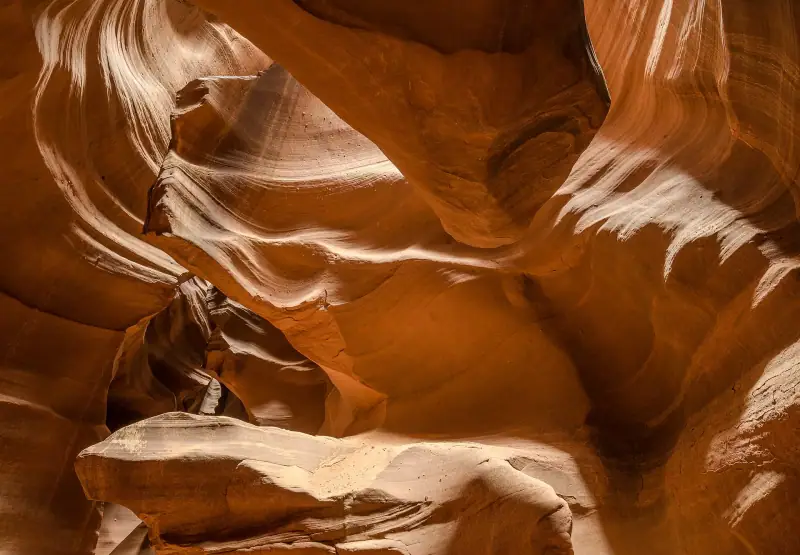
Antelope Canyon and Horseshoe Bend: guided tour and practical tips
Plan your stop in Page: Antelope Canyon guided tour, Horseshoe Bend overlook, Lake Powell, best season, where to stay and your road trip.
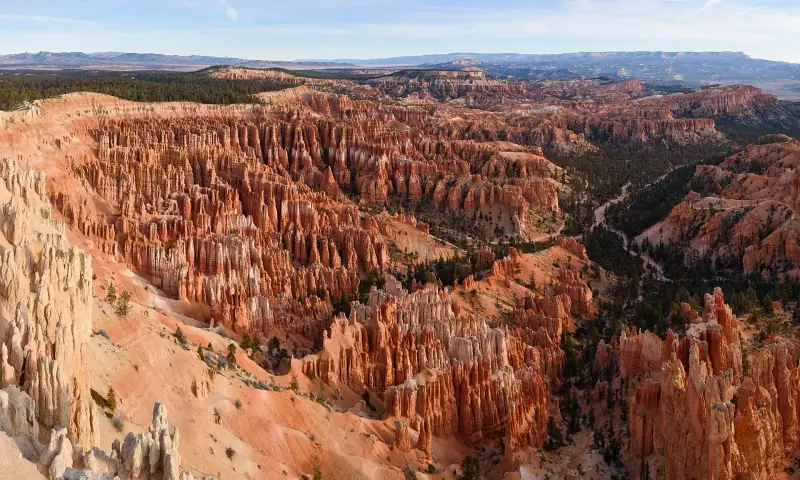
Visiting Bryce Canyon: hoodoos, hikes and practical tips
Plan your Bryce Canyon visit: viewpoints, Navajo Loop, Queen's Garden, sunrise, stargazing, where to stay and fitting it into your road trip.
Ready-made
American West itineraries
8 days
American West road trip in December: 8-day itinerary and passable roads
Las VegasSpringdaleBryce CanyonPageGrand Canyon South Rim
8 days
8-day road trip from Las Vegas: Zion, Bryce, Page and the Grand Canyon
Las VegasSpringdaleBryce CanyonPageGrand Canyon South RimLas Vegas
9 days
9-day road trip: San Francisco, Yosemite, Death Valley and Las Vegas
San FranciscoYosemiteLee ViningLone PineDeath ValleyLas Vegas