What to see
Complete guide to visiting Vietnam: regions, cities, budget and tips

We may earn a commission when you book through links on this page, at no extra cost to you. We don't visit or try the places we cover: we summarize published sources. How we work
In short
- Two weeks link north to south at a reasonable pace: Hanoi, Ha Long Bay or Ninh Binh, Hue, Hoi An and Ho Chi Minh City. Three weeks add the northern mountains, the Mekong Delta or an island.
- There is no single best season: the north has four seasons, the center is exposed to late-year rain and typhoons, and the south is tropical with a dry and a wet season.
- Planes are fastest for long distances; the Reunification Line train suits night legs or coastal scenery; buses and cars with a driver cover medium distances.
- Plane tickets are usually the biggest expense; meals and local transport are inexpensive, and cash in dong remains common outside big cities.
Stretching more than fifteen hundred kilometers along the South China Sea, Vietnam looks like a long green ribbon: from the mountains and rice terraces of the north, to the karst landscapes of Ha Long Bay, to the beaches and imperial cities of the center, down to the canals of the Mekong Delta and the anthill of Ho Chi Minh City. Few countries offer so many contrasts in so little distance, with a cuisine that changes almost at every stop.
This pillar guide gathers the essentials for preparing your trip: an introduction to the country, regions and cities, must-sees, climate, transport, accommodation and budget. Each section points to a detailed article on this site, so you can go deeper into what interests you. Durations and distances are given as orders of magnitude: traffic and weather often change them.
All the guides on this site at a glance
Before getting into the details, here is the full list of articles available on this site, grouped by theme:
Preparing your trip
- When to go to Vietnam: weather by region and best time
- Vietnam budget: how much a trip costs, item by item
- Vietnam formalities: passport, visa, health and insurance
Itinerary and activities
- Vietnam 15-day itinerary: north to south, day by day
- Ha Long Bay cruise: choosing between Ha Long, Lan Ha and Bai Tu Long
Discovering cities and sites
- Hanoi: what to see and do in 3 days
- Ninh Binh: what to see and do in 2 days from Hanoi
- Sapa: what to see and do in 3 days in the northern rice terraces
- Hue: what to see and do in 2 days
- Hoi An: what to see and do in 2 to 3 days
- Ho Chi Minh City (Saigon): what to see and do in 3 days
Food
- Vietnamese cuisine: 15 must-try dishes
Vietnam in brief: what to know before you go
Vietnam is a Southeast Asian country whose capital is Hanoi, in the north, and whose largest city is Ho Chi Minh City, in the south, still called Saigon in everyday speech. Its elongated S shape explains the diversity of its landscapes and climates: a cool, even cold winter at altitude in the north, a more regular tropical climate in the south, and a rainy season in the center that comes late in the year.
The currency is the Vietnamese dong. Amounts in dong have many zeros, which is confusing at first: take the time to get used to the banknotes before your first purchases. The official language is Vietnamese, a tonal language written in the Latin alphabet, a legacy of history. In tourist areas, you will easily find people who speak English, and sometimes a little French.
The country is young, dynamic and very urban in its big cities. The two-wheeler is king: you will see streams of scooters in Hanoi as in Ho Chi Minh City, and crossing the street becomes a small rite of passage. The trick is to move at a slow, steady pace, without running or stopping suddenly, so that drivers can go around you.
Culturally, Vietnam is shaped by more than a millennium of Chinese influence, by the Buddhist and Confucian tradition, by the French colonial period and by the conflicts of the 20th century. You will feel it in the pagodas, in the architecture of city centers, in the museums and in the cuisine, which keeps the taste of baguette bread alongside beef broth.
The main regions of Vietnam
To organize a trip, it helps to split the country into broad zones. They also match the regions of this site.
Hanoi and the Red River Delta
In the north, Hanoi is the natural entry point for many travelers. The Old Quarter, with its shopping lanes, cafés and temples, is a first sensory shock. Around the capital, the Red River Delta brings together craft villages, rice fields and, a little under two hours by road, the limestone rock landscapes of Ninh Binh, sometimes nicknamed the Ha Long Bay on land. To make the most of it, see our guide Ninh Binh: what to see and do in 2 days.
Ha Long Bay and Lan Ha Bay
East of Hanoi, the Gulf of Tonkin shelters thousands of limestone islets rising from green water. Ha Long Bay is a UNESCO site; neighboring Lan Ha Bay is often presented as calmer. Spending a night aboard a junk is the classic experience. Our article Ha Long Bay cruise compares the different bays and options.
The northern mountains
In the northwest, near the Chinese border, the mountains are home to ethnic minorities, colorful markets and spectacular rice terraces, especially as the rice ripening period approaches. Sapa is the best-known gateway; the Hà Giang region appeals to travelers looking for big landscapes and more adventurous routes. Details in our guide Sapa in 3 days.
The center
Central Vietnam concentrates much of the historical heritage. Hue, the former imperial capital of the Nguyen, is known for its Citadel, its tombs and its refined cuisine. Da Nang, a modern seaside city, serves as an airport hub and beach resort. Hoi An, a former trading port with old houses, lanterns and tailors, is one of the most charming stops in the country. Between Hue and Da Nang, the road crosses the famous Hai Van Pass (the “Cloud Pass”), one of the finest drives in the country.
The south
The south is dominated by Ho Chi Minh City, a bustling commercial metropolis, alive day and night, and by the Mekong Delta, a labyrinth of canals, orchards and floating markets explored by boat. The atmosphere is more tropical and more relaxed than in the north.
The islands
Off the southwest, Phu Quoc is the best-known island for its beaches, while the Con Dao archipelago attracts those looking for preserved seabeds and a wilder setting. These islands round off a circuit well, at the end of the trip, for resting.
Find a flight to Vietnam
Hanoi and Ho Chi Minh City are the two main gateways. Compare flights and stopovers, and consider open-jaw tickets (arrive in the north, leave from the south) to avoid backtracking.
Hanoi, the capital to explore on foot
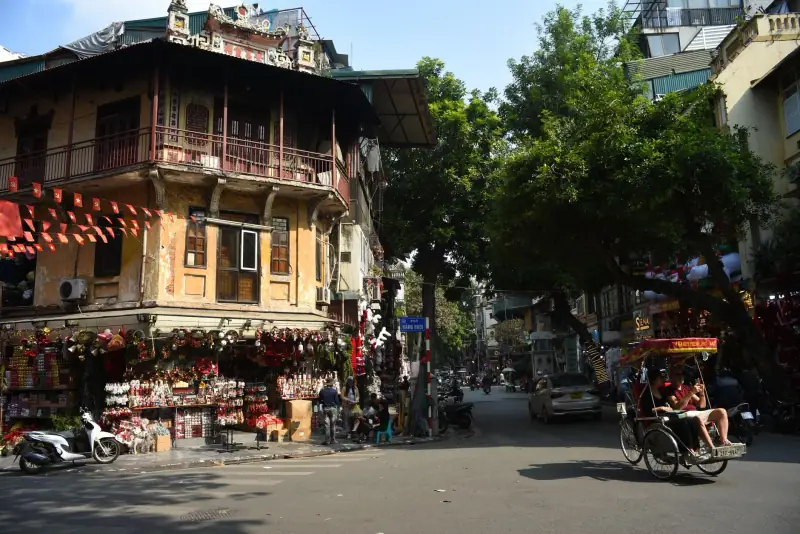
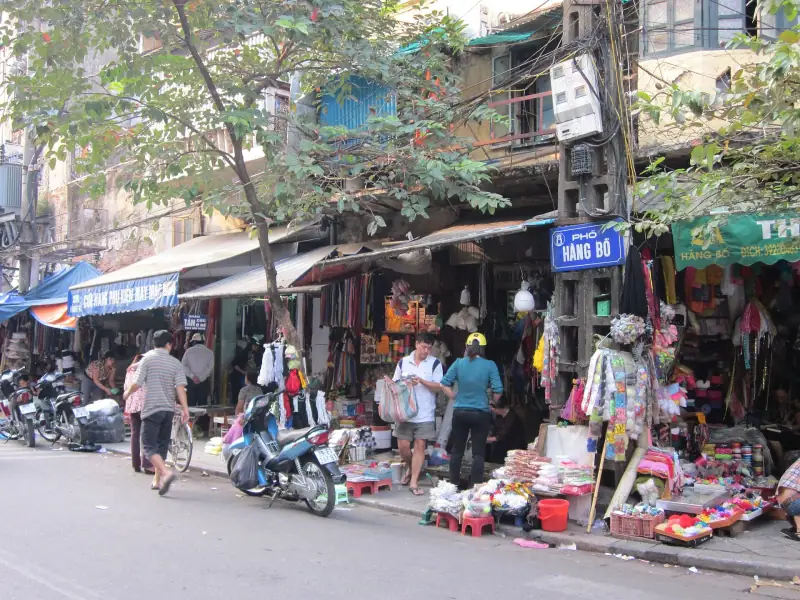
Hanoi is often the first contact with the country. The city mixes thousand-year-old temples, colonial buildings, lakes and lanes where anything and everything is sold. The Old Quarter is visited on foot, with no precise plan: each street historically has its own craft, and you come across street stalls at all hours. Hoàn Kiếm Lake, with its small temple on an islet, is a favorite place for locals to walk in the morning and at the end of the day.
Classic visits include the Ho Chi Minh Mausoleum, the One Pillar Pagoda and the Temple of Literature, the country’s first university. A water puppet show, a traditional Vietnamese art, is a popular family activity. Allow three days for a good overview, as detailed in our guide Hanoi: what to see and do in 3 days.
It is also the ideal place to taste northern cuisine: phở, rice noodle soup in a fragrant broth, was born here, and bún chả, grilled pork with vermicelli, is a lunchtime classic. You will find these specialties in our article Vietnamese cuisine: 15 must-try dishes.
Ha Long Bay and Ninh Binh: the limestone landscapes

Two sites compete for the title of the north’s “great landscape”: Ha Long Bay and Ninh Binh. Both rest on limestone terrain, but the experience is very different.
At Ha Long, you sail among the islets aboard a junk, with the option of visiting caves, paddling a kayak and sleeping on board. The choice of bay (Ha Long, Lan Ha or Bai Tu Long), boat and length changes the experience and the price a lot: the criteria are gathered in the article Ha Long Bay cruise. Cruises can be canceled in bad weather, hence the value of keeping some slack in your schedule.
At Ninh Binh, you explore rivers lined with cliffs by rowboat, climb staircases to viewpoints and visit old religious and imperial sites. The destination is often done as an excursion from Hanoi, but a night there lets you avoid the crowds early and late in the day.
Excursions from Hanoi
Ha Long Bay, Ninh Binh, cooking classes, food tours: compare day excursions and packages with transfer.
Sapa and the northern mountains
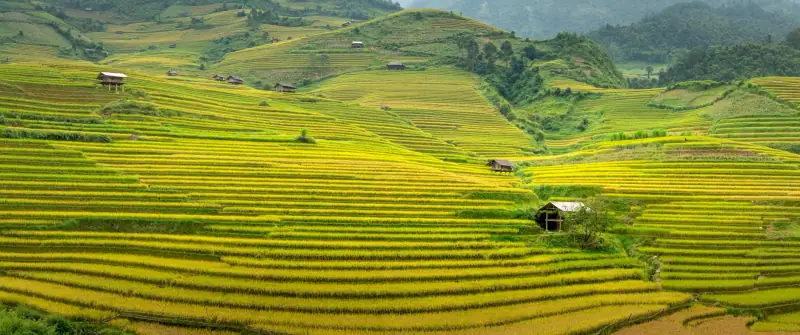
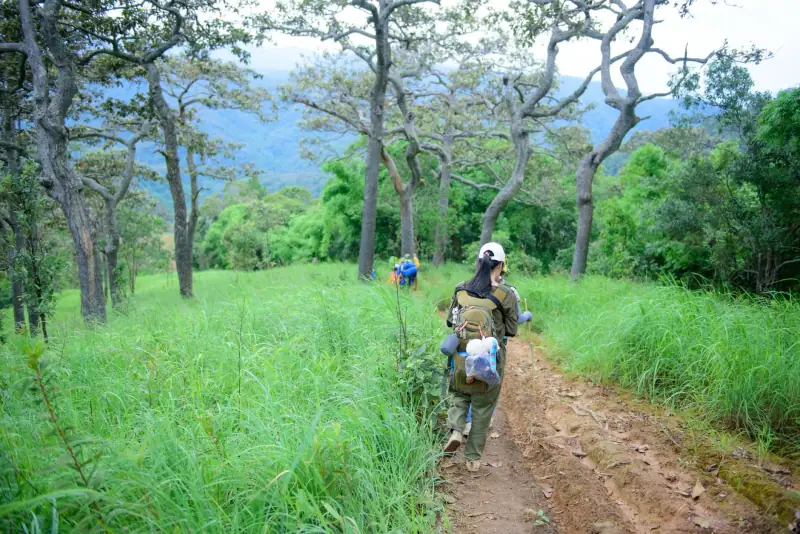
If you like walking and mountain villages, the northwest is worth the detour. Around Sapa, trails link hamlets of different ethnic minorities through terraced rice fields. The landscapes change with the season: shimmering water at planting time, intense green in summer, golden tones before the harvest. Mist is frequent, and temperatures can be cool, even when it is hot on the plains.
The link with Hanoi is by bus, car with a driver, or a combination of night train and transfer. The trip takes several hours: plan at least two nights there so the journey is worthwhile. For details, see our article Sapa in 3 days.
Hue, Hoi An and the center: history and a gentle pace

Central Vietnam is where the trip slows down. Hue preserves the remains of the Nguyen dynasty: the Imperial Citadel, tombs scattered in the countryside, Thien Mu Pagoda on the Perfume River. The site is a UNESCO World Heritage Site, and the city is also known for its cuisine inherited from the imperial table. Our guide Hue in 2 days offers a visiting plan.
Further south, Hoi An is a former trading port whose historic center, pedestrian in the evening, is lit with lanterns. Merchants’ houses, a Japanese covered bridge, local cuisine, tailoring workshops: the town can be visited in two to three days, with beaches a few kilometers away and the My Son sanctuary as an excursion. Find all this in our article Hoi An in 2 to 3 days.
Between the two, Da Nang is a modern coastal city with a convenient airport. Many travelers land there to reach Hoi An, or use the city as a base to explore the coast. Keep in mind that the center is more exposed to heavy rain and typhoons at the end of the year: a point to check in the guide when to go to Vietnam.
Ho Chi Minh City and the Mekong Delta
In the south, Ho Chi Minh City is the exact opposite of Hanoi: wider, more modern, more oriented toward commerce and nightlife. The colonial center brings together Notre-Dame Cathedral and the Central Post Office, two French-inspired buildings. The Reunification Palace and the War Remnants Museum tell the country’s recent history, and Cholon, the Chinese district, offers pagodas and lively markets. The full program is in our guide Ho Chi Minh City in 3 days.
One to two hours by road from the city, depending on the destination chosen, the Mekong Delta can be discovered on a day excursion or a two-day stay. You travel by boat on canals lined with coconut palms, visit orchards, craft workshops and, for the early risers, floating markets. Southern cuisine is sweeter, fruitier and fresher than in the north, with lots of herbs and tropical fruit.
Vietnam’s must-sees
If you must remember the essentials, here are the sites and experiences that come up most often in travel accounts:
- Hanoi’s Old Quarter: for the atmosphere, street food and culture shock.
- Ha Long or Lan Ha Bay: for a night among the limestone islets.
- Ninh Binh: for the rivers and cliffs, less than two hours by road from the capital.
- The rice fields of Sapa: for walking and ethnic minorities.
- The Citadel of Hue: to understand the country’s imperial history.
- Hoi An: for its old town lit up in the evening.
- Ho Chi Minh City: for its energy and museums.
- The Mekong Delta: for life on the water.
- An island such as Phu Quoc: to finish at the beach.
Seeing everything in one trip is possible, but it involves a lot of transport. Our 15-day itinerary offers a realistic sequence, with stops that limit backtracking.
When to go to Vietnam
The country spans several climate zones: the north has four seasons, with cool and damp winters, the center is exposed to a late-year rainy season, and the south is tropical with a dry and a wet season. There is therefore no single “best time” for the whole country: the right season depends on the region you favor.
As a general rule, spring and fall are considered the most balanced periods for a full circuit, while summer is hot and humid almost everywhere, and the end of the year brings heavy rain to the center. The Tết holidays, the Lunar New Year, are also a period to know about: Vietnamese travel massively, transport is packed and some shops close for a few days. The detailed calendar is in our article when to go to Vietnam, which presents the weather region by region.
Getting to Vietnam
Several airlines link Hanoi and Ho Chi Minh City to the rest of the world, with or without a stopover; check flights and connections for your departure point. The flight time is generally long, and longer with a stopover. Jet lag is felt mostly in the first days: plan a quiet first day.
A tip for optimizing a circuit: book a so-called “open-jaw” ticket, that is, arrive in Hanoi and leave from Ho Chi Minh City, or the reverse. That way you avoid retracing the same route in reverse. Compare the prices of both directions, as they vary by season and airline.
Before booking, check the entry conditions: passport validity, any visa and health recommendations. Rules change. Entry rules depend on your passport: check the official travel advice of your government before you book: travel.state.gov (US), GOV.UK (UK), travel.gc.ca (Canada), Smartraveller (Australia) (checked November 2026). Our article Vietnam formalities is also available.
Getting around Vietnam
Distances are greater than you might imagine: between Hanoi and Ho Chi Minh City, the railway line is more than seventeen hundred kilometers (1,056 mi) long. Here are the main options.
The plane is the fastest solution for long distances. Several airlines operate domestic flights between Hanoi, Da Nang, Hue, Ho Chi Minh City, Phu Quoc and other cities. Book ahead in high season and check baggage rules, sometimes stricter on economy fares.
The train of the Reunification Line runs the length of the country from north to south. It is slow, but offers sleeper berths for the night and crosses beautiful landscapes, especially between Hue and Da Nang. It suits some stretches well, less so crossing the entire country in one go.
The bus and minibus cover most connections at moderate prices. Sleeper buses run at night on long trips. Comfort varies: choose well-rated companies and book through your accommodation or a known agent.
A car with a driver is practical for excursions and short to medium trips, for example between Hue and Hoi An with stops at the Hai Van Pass. It saves time and lets you stop at your own pace. Renting a vehicle without a driver is uncommon and discouraged for travelers not used to local driving.
Two-wheelers: renting a scooter attracts many travelers, but traffic is dense and the rules need to be known. The rules for riding a scooter or motorbike in Vietnam depend on your license: check the official sources, and check that your insurance is valid for riding a two-wheeler in the country before renting one.
Ride-hailing apps are widely used in big cities for car or motorbike-taxi rides: they show the price in advance and limit fare discussions.
Where to stay in Vietnam
Accommodation is one of the items with the best value for money. You find hostels, family guesthouses, city hotels, seaside resorts and guesthouses in the mountains.
A few markers by stop:
- Hanoi: the Old Quarter is lively and central, but noisy; the surroundings of Hoàn Kiếm Lake or the French Quarter are calmer while still easy to reach on foot.
- Ha Long Bay: accommodation is most often aboard a junk for one or two nights, with meals included; check recent reviews.
- Ninh Binh: guesthouses in the middle of the countryside let you sleep near the rice fields and cliffs.
- Sapa: look for accommodation with a view of the valley, or choose a homestay in a village for a more authentic immersion.
- Hue: a hotel near the Perfume River is convenient for getting around on foot or by taxi.
- Hoi An: the old town is charming, but accommodations on the outskirts, often with a pool and bike rental, are calmer and cheaper.
- Ho Chi Minh City: the center around the colonial district is the most practical for a first visit.
- Islands: on Phu Quoc, beach resorts dominate; book ahead in high season.
Compare accommodation in Vietnam
Hostels, city hotels, guesthouses or resorts: compare offers and reviews for each stop of your circuit.
A few general tips: book ahead for holiday periods and for Ha Long junks, read recent reviews, and check what is included (breakfast, transfers, cancellation). In cities, a well-located hotel often lets you do without transport for the main visits.
Vietnamese cuisine: a journey on the plate
Food is one of the main reasons to travel to Vietnam. It rests on a balance between salty, sweet, sour and spicy, with a large place for fresh herbs, rice and broth. Each region has its specialties: in the north, more restrained and fragrant dishes; in the center, a spicy and refined cuisine; in the south, sweeter flavors and an abundance of fruit.
You eat very well in the street, on small plastic stools: spot the places frequented by locals, where dishes turn over quickly. Vietnamese coffee, strong and often served with condensed milk, is an institution. To know what to order, see our 15 must-try dishes.
To go further, a cooking class or guided food tour is a good way to understand the ingredients and taste several specialties in a short time. Hanoi, Hoi An and Ho Chi Minh City offer many.
Food tours and cooking classes
Street food tastings, markets and cooking workshops in Hoi An, Hanoi or Ho Chi Minh City: compare options and reviews.
What budget to plan for Vietnam
Vietnam lets you travel at a reasonable cost compared with many destinations. Street meals, local transport and simple accommodation are affordable, while cruises, upscale hotels, domestic flights and private excursions push up the bill. The long-haul plane ticket is generally the heaviest item.
To build your budget, think in items: international flights, domestic flights and trips, accommodation, meals, activities and site entrance fees, travel insurance, and a margin for the unexpected and for purchases. Cash payment remains very common, especially outside big cities: plan to withdraw dong and check your bank’s fees for withdrawals abroad. We detail each item in Vietnam budget: how much a trip costs.
Itineraries: how long to stay?
The ideal length depends on your priorities, but here are a few markers for building a realistic circuit.
One week: concentrate on one zone. For example Hanoi, Ninh Binh and Ha Long Bay in the north, or Ho Chi Minh City, the Mekong Delta and an island in the south. Avoid trying to cross the whole country.
Two weeks: the most common format for a first trip. It lets you link Hanoi to Ho Chi Minh City with the main stops in the center. Our 15-day itinerary details a day-by-day sequence.
Three weeks and more: you can add the northern mountains, several nights in the Mekong Delta, an island or a less touristy region, while keeping time to rest.
A simple rule: do not sleep just one night in more than two stops in a row, and accept leaving places aside. Fewer stops and more time in each place is better than spending your days in transit.
Practical tips for traveling well
Health and insurance. Ask your doctor or a travel clinic, and see the official travel health pages (CDC in the US, TravelHealthPro in the UK). Take out travel insurance with good medical and repatriation coverage; it is especially useful if you plan physical activities or a two-wheeler. Details are in our article Vietnam formalities.
Water and food. Drink bottled or filtered water. For meals, favor dishes cooked to order and busy establishments.
Connection. A local SIM card or eSIM is generally easy to get and inexpensive, which lets you use maps, translation and transport apps. Check your carrier’s international plan or use a travel eSIM.
Respecting customs. In pagodas and temples, cover shoulders and knees and speak softly. Ask permission before photographing people, especially in mountain villages. Remove your shoes when entering a home or a place of worship.
Haggling. It is common in markets and for some services without a posted price. Stay smiling and firm, and keep in mind the differences in living standards to stay reasonable.
Safety. Keep bags and phones on the inner side of the sidewalk to avoid bag snatching, especially from motorbikes. Use ride-hailing apps or taxis from recognized companies, and check the price before getting into a vehicle without a meter.
Climate and luggage. Pack light, breathable clothing, a rain jacket or poncho in the wet season, a fleece for the northern mountains and shoes suited to walking. Sunscreen and insect repellent are useful all year.
Organizing your trip step by step
So that you forget nothing, here is a simple thread:
- Choose the period according to the regions you want to visit, with the guide when to go to Vietnam.
- Set the length and itinerary from our 15-day circuit, to shorten or lengthen.
- Check the formalities: passport, visa, insurance, with the article Vietnam formalities.
- Estimate the budget with our item-by-item detail.
- Book the flights, then the accommodation for the key stops and the cruises.
- Prepare each stop with the city guides: Hanoi, Ninh Binh, Sapa, Hue, Hoi An and Ho Chi Minh City.
- Complete with activities such as the Ha Long Bay cruise and the culinary specialties.
Summary
Vietnam is a country you discover slowly, despite the temptation to see everything. Choose a period suited to the regions visited, limit the number of stops, alternate lively cities and landscapes, and leave room for the food. With good preparation, you will enjoy the country’s diversity without exhausting yourself in transit.
This pillar guide will be expanded as new articles are added to the site. In the meantime, explore the detailed guides listed above to prepare each stop of your trip.
Frequently asked questions
How long do you need to visit Vietnam?
Two weeks let you link north to south at a reasonable pace, with the main stops: Hanoi, Ha Long Bay or Ninh Binh, Hue, Hoi An and Ho Chi Minh City. With three weeks, you add the northern mountains, the Mekong Delta or an island. Less than ten days means concentrating on one half of the country.
What is the best time to go to Vietnam?
There is no ideal period for the whole country, because the climate differs sharply between the north, the center and the south. Spring and fall are often the most balanced for a full circuit, but the detail depends on your itinerary: see our dedicated guide to the weather by region.
Do you need a visa to go to Vietnam?
Entry rules depend on your passport and the length of your stay, and change regularly. Check the official travel advice of your government before you book: travel.state.gov (US), GOV.UK (UK), travel.gc.ca (Canada), Smartraveller (Australia) (checked November 2026), and check your passport's validity.
Is Vietnam a safe country for travelers?
Vietnam is generally considered a country where travel is without particular difficulty. The main nuisances are petty tourist scams, bag snatching in big cities and dense traffic. Keep your belongings close, use ride-hailing apps and take travel insurance.
How do you get from one city to another?
The plane is fastest for long distances, the Reunification Line train is a good compromise for night trips or coastal scenery, and buses or cars with a driver cover medium distances. Distances are large: plan transport time in your schedule.
What budget should you plan for a trip to Vietnam?
Vietnam remains a destination where you can travel at a controlled cost: meals and local transport are inexpensive, accommodation varies a lot with comfort. The plane ticket is usually the first expense. Our dedicated article details the items one by one.
Do you need to speak Vietnamese to travel?
No. In tourist areas, basic English is generally enough, and a translation app solves most situations. Learning a few words, such as hello (xin chao) and thank you (cam on), is appreciated.
More Vietnam guides
Keep reading
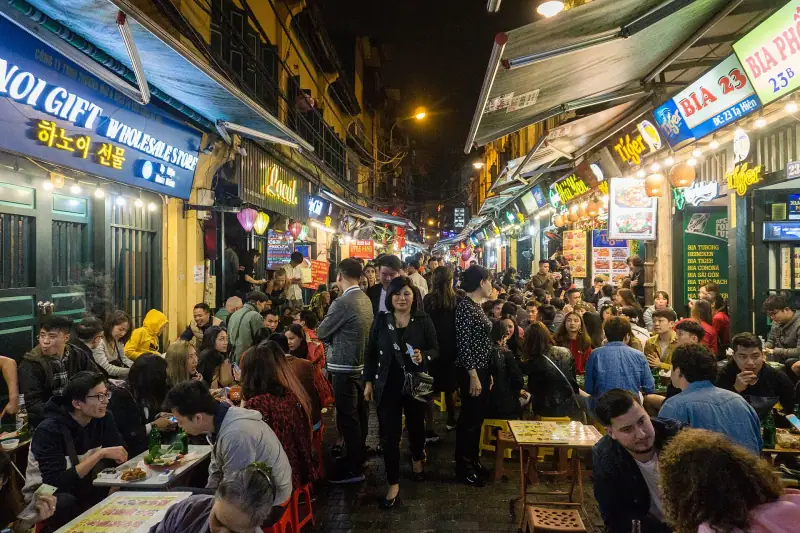
Hanoi: what to see and do in 3 days, a guide to the capital
What to see in Hanoi? Old Quarter, Hoàn Kiếm Lake, Temple of Literature, mausoleum, citadel, street food: a 3-day itinerary, tips and where to stay.
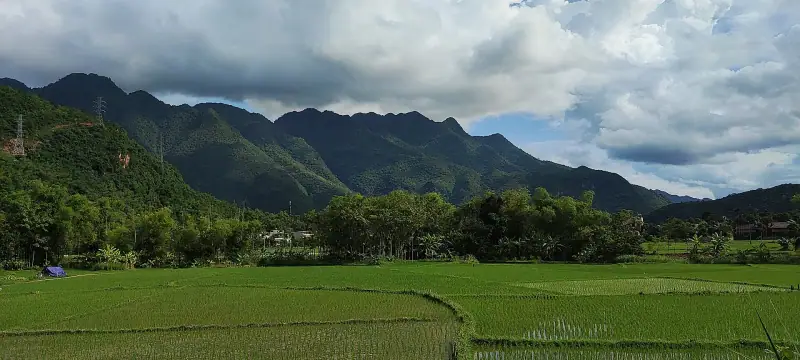
Mai Châu without a car from Hanoi: bus, Lac village or Pom Coong
Getting to Mai Châu from Hanoi without a car: bus or van, duration, prices, Lac or Pom Coong, how many nights and what to know before booking.
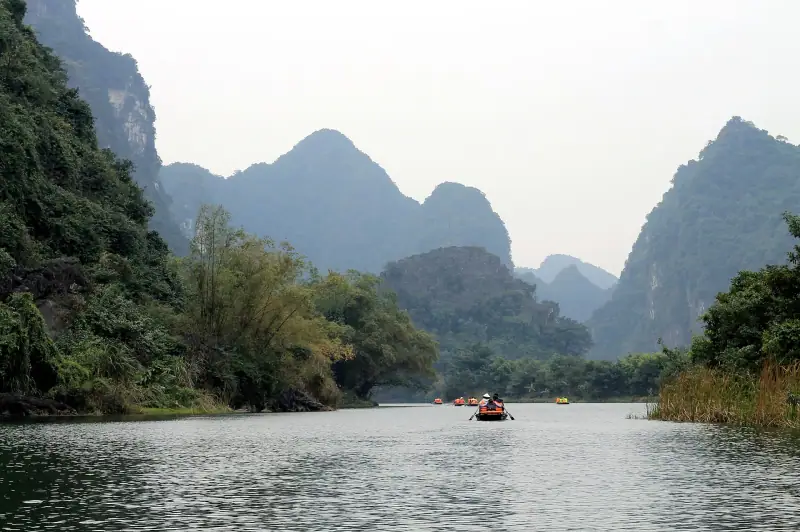
Ninh Binh: what to see and do in 2 days from Hanoi
What to see in Ninh Binh? Tràng An, Tam Cốc, Hang Múa, Hoa Lư, Bái Đính Pagoda: a 2-day itinerary, seasonal tips and where to stay.
Ready-made
Vietnam itineraries
10 days
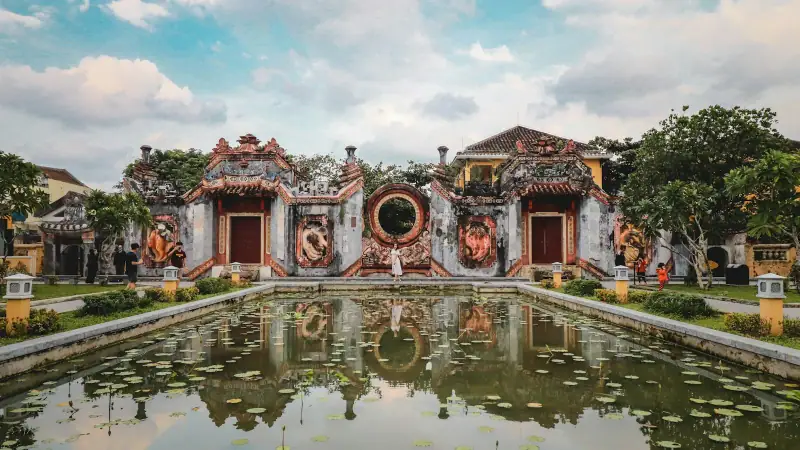
Vietnam in 10 days without a car: a realistic itinerary by train, bus and plane
Vietnam in 10 days without a car: Hanoi, Ninh Binh, Hue, Hoi An and Ho Chi Minh City, with distances, real travel times and train, bus or plane options.
7 days
Northern Vietnam in 7 days: Hanoi, Ninh Binh and Ha Long Bay
HanoiNinh BinhHa Long Bay cruise

15 days
Vietnam 15-day itinerary: north to south, day by day
HanoiNinh BinhHa Long or Lan Ha Bay cruiseHoi An