What to see
Mai Châu without a car from Hanoi: bus, Lac village or Pom Coong
We may earn a commission when you book through links on this page, at no extra cost to you. We don't visit or try the places we cover: we summarize published sources. How we work
In short
- Mai Châu is 135 to 140 km (84 to 87 mi) west of Hanoi; allow 3 h 30 to 4 h 30 by bus or van, depending on traffic and roadworks.
- Ask for a drop-off at Lac or Pom Coong (about 150,000 to 450,000 VND one way depending on the mode) rather than at the town of Mai Châu.
- One night is enough for a first visit: cycling, dinner in a stilt house, then back the next day. A second night lets you add Pu Luong.
- Avoid driving the Thung Khe pass at night; October to April is the most stable period for the road.
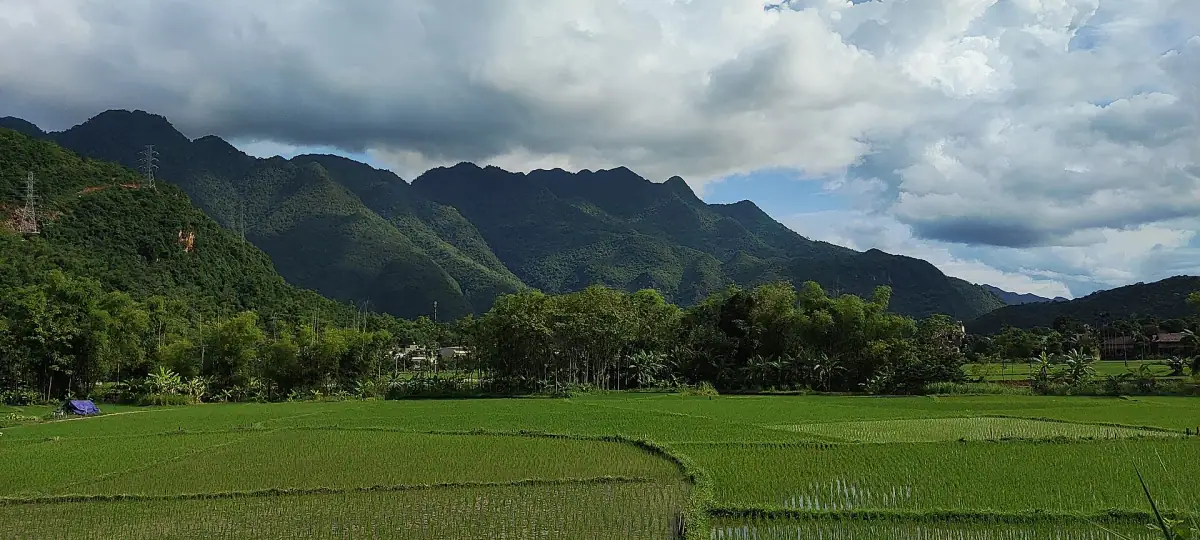
Yes, Mai Châu works very well without a car: a bus or van from Hanoi, 3 h 30 to 4 h 30 on the road depending on traffic, and you are in a rice valley where you sleep in stilt houses among the White Thai people. The only thing to plan is the last kilometer: depending on the operator, the vehicle drops you in the villages of Lac or Pom Coong, or in the town, a few kilometers away.
In short: take a van or bus that states a stop at Lac or Pom Coong (about 150,000 to 450,000 VND one way depending on the mode), sleep at least one night there, choose Pom Coong for quiet and Lac for activity, and avoid driving the Thung Khe pass at night.
This guide is written for people who have neither a car nor a motorbike and wonder whether the detour is worth the trip. Prices and durations are orders of magnitude, because sources differ: confirm them with your accommodation or the operator before you leave.
Getting to Mai Châu by bus from Hanoi
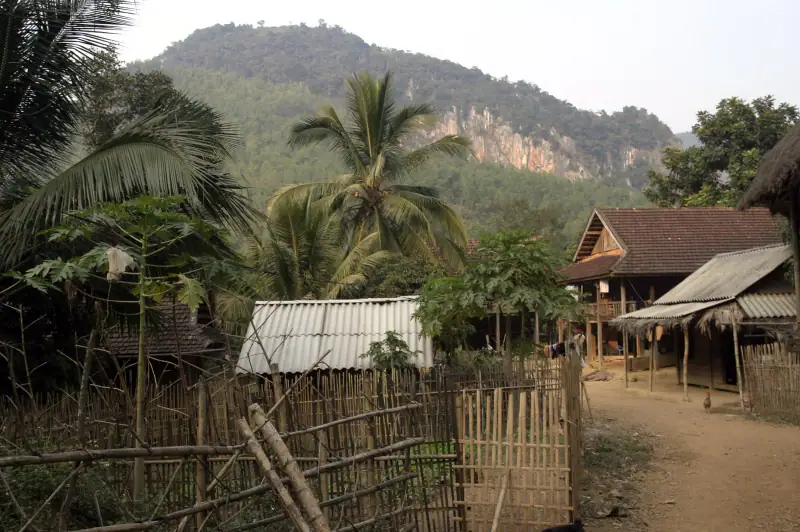
Mai Châu is in the former province of Hòa Bình (merged into Phú Thọ province in 2025), west of Hanoi, about 135 to 140 km (84 to 87 mi) away. The Vietnamese national tourism office presents it as a nature getaway near the capital, about three hours by road via Hòa Bình. In practice, independent travelers should allow 3 h 30 to 4 h 30 on public transport.
There are four options:
- The local bus from My Dinh bus station: the cheapest option, around 150,000 to 250,000 VND one way depending on the source, but with stops and sometimes a drop-off in the town.
- The “limousine” van with hotel pick-up: about 300,000 to 450,000 VND, more comfortable in the Old Quarter where the streets are narrow.
- The tourist shuttle booked through your accommodation: about 250,000 to 400,000 VND, with a direct drop-off in the village.
- A car with a driver: around 1.8 to 2.8 million VND, worthwhile for a group or if you want to stop along the way.
To prepare your departure from the capital, our guide Hanoi: what to see and do covers the neighborhoods, and where to stay in Hanoi, Old Quarter or French Quarter helps you pick a hotel the van can reach easily.
The Thung Khe pass and the road
National Road 6 is generally passable, but roadworks are frequent. The tricky stretch is the Thung Khe pass (about 1,000 m / 3,280 ft): tight bends, steep slopes, possible fog. From May to September, the rainy season makes the road slippery, and October to April is the most stable period. Do not travel at night.
Also keep official advice in mind: in heavy rain, official travel advice recommends avoiding mountain roads, passes and roads running along watercourses, especially after dark. Check your government’s official travel advice before you go: travel.state.gov (US), GOV.UK (UK), travel.gc.ca (Canada), Smartraveller (Australia) (checked November 2026). If an alert is in effect, postpone your departure by a day.
Stay in Mai Châu
Compare stays in the valley, from stilt houses to small hotels, and check that a transfer from Hanoi is offered.
Lac or Pom Coong: which village to choose?
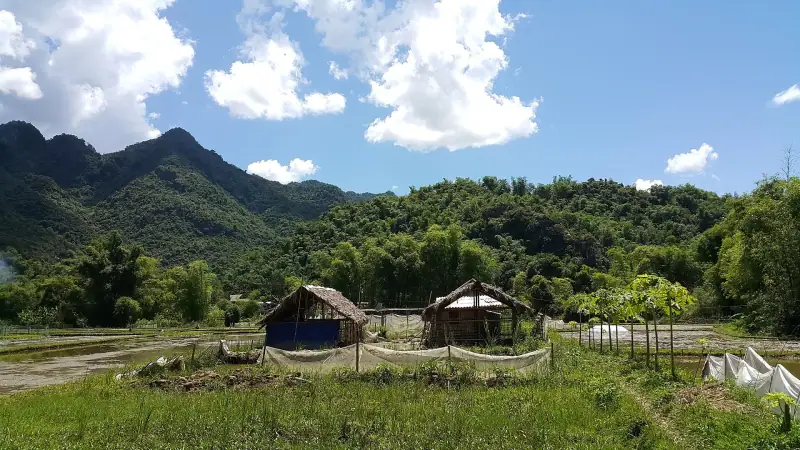
Both villages are home to the White Thai, who grow rice and weave brocade, and both host travelers in stilt houses. The differences are of degree, not of kind.
Lac: lively and convenient
Lac is the best-known village. It has the most weaving shops, restaurants and places to stay, which makes arriving without a reservation easier. The downside: more daytime visitors and evenings that are sometimes highly organized.
Pom Coong: quiet and residential
Pom Coong, a village of a little over 300 inhabitants according to one specialist guide, is described as quieter. It regularly puts on song and dance shows. The lanes are narrow, and large buses do not always enter: ask your carrier where it stops.
Bottom line: for a first night, choose Pom Coong if you want quiet, Lac if you want choice. In both cases, the rice fields are a few minutes’ walk away.
What to do in Mai Châu without a car

The valley is fairly flat, which makes it ideal for a stay without a motor vehicle.
- Cycling: Lac, Pom Coong, Van and Na Phon are linked by small roads through the rice fields. Accommodations generally rent bikes.
- Walking: trails lead from the villages into the hills; ask your host for the day’s route.
- Family meals: dinner in a stilt house is the experience most recommended by official sources.
- Weaving: handmade fabrics are negotiable; expect polite haggling.
- Dance show: offered by some accommodations in the evening, more touristy than intimate, but pleasant.
For another terraced rice landscape, further north and much higher, see Sapa: what to see and do.
Excursions from Hanoi to Mai Châu
If you prefer transport and a guide booked in advance, compare the excursions and tours offered to Mai Châu and Pu Luong.
How many nights: one day, one night or two?
| Option | Time there | Best for | What to know |
|---|---|---|---|
| Day trip | 3 to 4 h | Tight schedules | 7 to 9 h on the road: tiring |
| 1 night (recommended) | 1 evening + 1 morning | First visit | Cycling, dinner and sunrise over the valley |
| 2 nights | 1.5 days | Walkers, cyclists | Option to add Pu Luong |
| 3 days / 2 nights with Pu Luong | 2 days | Hiking fans | About 1 h 20 by road between the two |
Pu Luong, about 1 h 20 away by road, offers terraced rice fields and more hiking. It combines with Mai Châu, but takes some logistics: a local transfer or an excursion.
When to go
The national tourism office mostly recommends September to November, when the rice fields are golden and the weather is cool and clear. March to May is also pleasant. Sources differ a little on November to February (cooler): bring a warm layer for the evenings. For the big picture, see our guide when to go to Vietnam.
Practical tips
- Book the stop, not just the ticket: “Mai Châu” can mean the town or the villages. Write “Lac” or “Pom Coong” when you book.
- Keep some cash: small accommodations and shops in the valley mostly accept cash. Our Vietnam budget guide details daily costs.
- Plan your connection: mobile coverage is decent in the villages but patchy in the hills; check your carrier’s international plan or use a travel eSIM (see eSIM or SIM card in Vietnam) before you leave.
- Pack a small bag: a light bag for one night; the big luggage can stay at your Hanoi hotel if you come back.
- Accommodation: reviews differ on whether a real “homestay” is possible in Mai Châu; confirm that you will sleep in a stilt house if that is what you want.
Insects can be present on evenings by the rice fields and under the stilt houses. For health precautions, ask your doctor or a travel clinic, and see the official travel health pages (CDC in the US, TravelHealthPro in the UK).
Mai Châu or Ninh Binh: which first?
If you only have one getaway from Hanoi, Ninh Binh is closer (about two hours), easier by public transport and more spectacular with its limestone peaks. Mai Châu suits you better if you want quiet, contact with rural life and evenings without crowds. The two do not combine easily in a single day.
Sources
Frequently asked questions
How long does it take to get from Hanoi to Mai Châu by bus?
Allow 3 h 30 to 4 h 30 for about 135 to 140 km (84 to 87 mi), depending on traffic leaving Hanoi, stops and roadworks on National Road 6. The national tourism office gives about 3 hours by car or bus via Hòa Bình: leave some slack.
Where do buses to Mai Châu leave from in Hanoi?
Local buses usually leave from My Dinh bus station in the west of the city. "Limousine" vans pick passengers up at their hotel in the Old Quarter or Hoàn Kiếm. Check the schedules before booking: return departures are less frequent.
Where does the bus drop me off: in town or in the villages?
It depends on the operator. Tourist shuttles often drop you directly in Lac or Pom Coong. Some local buses stop in the town of Mai Châu, 3 to 5 km (2 to 3 mi) from the villages, from where a motorbike taxi costs a few tens of thousands of dong. Ask when you book.
Lac or Pom Coong: which one to choose?
Lac is the busiest and most visited village, with more shops and places to stay. Pom Coong, smaller and more residential, is generally described as quieter. If you want peace, choose Pom Coong; if you want activity and choice, choose Lac.
Is one night enough in Mai Châu?
Yes for a first visit: 2 days and 1 night allow a bike ride through the rice fields, dinner in a stilt house and departure the next day. With a second night, you can add Pu Luong, about 1 h 20 away by road.
Can you visit Mai Châu as a day trip from Hanoi?
It is possible but not comfortable: 7 to 9 hours on the road round trip for a few hours there. The stay is much nicer with a night there, because the evening and morning light on the valley is what makes the trip worthwhile.
More Vietnam guides
Keep reading

Hanoi: what to see and do in 3 days, a guide to the capital
What to see in Hanoi? Old Quarter, Hoàn Kiếm Lake, Temple of Literature, mausoleum, citadel, street food: a 3-day itinerary, tips and where to stay.

Ninh Binh: what to see and do in 2 days from Hanoi
What to see in Ninh Binh? Tràng An, Tam Cốc, Hang Múa, Hoa Lư, Bái Đính Pagoda: a 2-day itinerary, seasonal tips and where to stay.
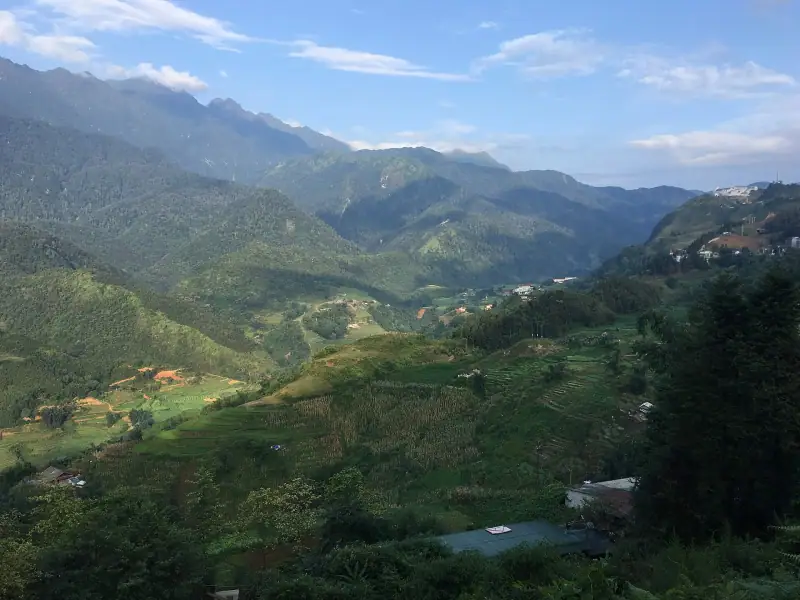
Sapa: what to see and do in 3 days in the rice terraces of the north
What to see in Sapa? Rice terraces, ethnic minority villages, Fansipan, Ô Quy Hồ Pass: a 3-day itinerary, access from Hanoi, season and where to stay.
Ready-made
Vietnam itineraries

10 days
Vietnam in 10 days without a car: a realistic itinerary by train, bus and plane
Vietnam in 10 days without a car: Hanoi, Ninh Binh, Hue, Hoi An and Ho Chi Minh City, with distances, real travel times and train, bus or plane options.
7 days
Northern Vietnam in 7 days: Hanoi, Ninh Binh and Ha Long Bay
HanoiNinh BinhHa Long Bay cruise

15 days
Vietnam 15-day itinerary: north to south, day by day
HanoiNinh BinhHa Long or Lan Ha Bay cruiseHoi An