Itineraries
Vietnam 15-day itinerary: north to south, day by day

We may earn a commission when you book through links on this page, at no extra cost to you. We don't visit or try the places we cover: we summarize published sources. How we work
Day by day
- Days 1-3Hanoi: Old Quarter, Hoàn Kiếm Lake, Temple of Literature, mausoleum
- Days 4-5Ninh Binh: boat ride, bike ride, viewpoint, historic site
- Days 6-7Ha Long or Lan Ha Bay one-night cruise, return to Hanoi
- Days 8-9Hue: Imperial City, imperial tombs, Perfume River, Thien Mu Pagoda
- Days 10-12Hoi An: old town, beaches, cooking class, My Son
- Days 13-15Ho Chi Minh City sights and Mekong Delta day trip
Where to sleep
- Hanoi3 nights
- Ninh Binh2 nights
- Ha Long or Lan Ha Bay cruise1 night
- Hoi An3 nights
In short
- Six stops in 15 days: Hanoi (days 1-3), Ninh Binh (4-5), Ha Long or Lan Ha Bay (6-7), Hue (8-9), Hoi An (10-12), Ho Chi Minh City and the Mekong Delta (13-15).
- The plan uses at most three domestic flights, with stops of two to three nights.
- Ninh Binh is about 2 hours from Hanoi by road; Ha Long Bay 2 h 30 to 3 hours; Hue to Hoi An about 3 to 4 hours; Da Nang to Ho Chi Minh City is a flight of about 1 h 30.
- Book domestic flights, the Ha Long Bay cruise and accommodation ahead during school holidays, Tết and high season.
Vietnam is a long, narrow country, and that is precisely what makes a north-south circuit so appealing: in two weeks, you go from the lively lanes of Hanoi to the limestone peaks of Ninh Binh, then to Ha Long Bay, the imperial city of Hue, the lanterns of Hoi An and finally the energy of Ho Chi Minh City and the Mekong Delta.
This 15-day itinerary is designed to limit unnecessary travel: three domestic flights at most, stops of two to three nights, and days that leave time to wander. The travel times given are orders of magnitude, since traffic and weather can change them.
The circuit at a glance
| Days | Stop | Main idea |
|---|---|---|
| 1 to 3 | Hanoi | Old Quarter, Hoàn Kiếm Lake, street food |
| 4 and 5 | Ninh Binh | Boat ride through the rice fields, caves, limestone peaks |
| 6 and 7 | Ha Long or Lan Ha Bay | One-night cruise |
| 8 and 9 | Hue | Imperial city, tombs, Perfume River |
| 10 to 12 | Hoi An | Old town, beaches, cooking class |
| 13 to 15 | Ho Chi Minh City and the Mekong Delta | Museums, markets, life on the water |
Before booking, see our guide on the best time to go to Vietnam: the north, the center and the south do not share the same season.
Days 1 to 3: Hanoi, the capital to explore on foot
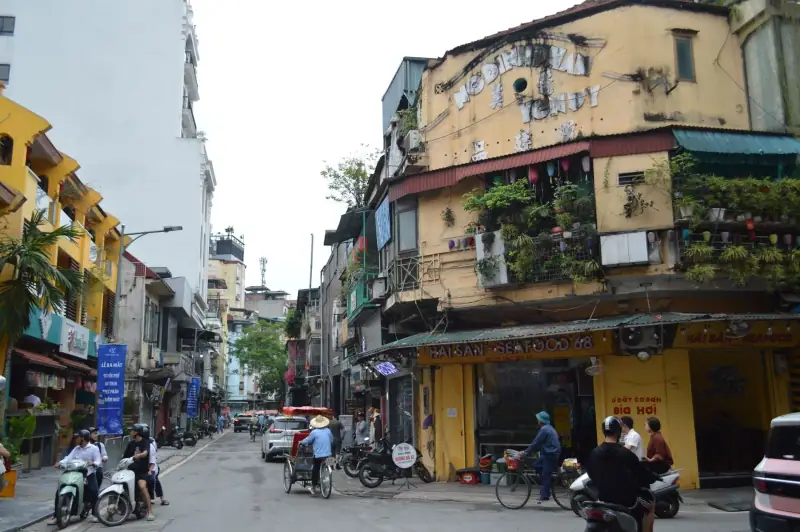
Hanoi is an excellent gateway. The city is dense, noisy and endearing, and you should allow a day or two to adjust to the time difference and the two-wheeler traffic. Plan a quiet first day: a walk around Hoàn Kiếm Lake, discovering the Old Quarter and its streets specialized by trade, then a street food meal.
The second day can be devoted to cultural visits: the Temple of Literature, Hoa Lò Prison and the Ho Chi Minh Mausoleum (check the opening days and the required dress before going). On the third day, follow your whims: water puppet show, an old-town café, the Museum of Ethnology or the French Quarter.
To go deeper, our guide Hanoi: what to see and do details the neighborhoods and the main sights.
Where to stay in Hanoi?
For a first stay, the Old Quarter is ideal for doing everything on foot. Compare accommodation and availability before fixing your flight.
Days 4 and 5: Ninh Binh and its karst landscapes

Ninh Binh is south of Hanoi and is generally reached in about 2 hours by road, by car with a driver, bus or train. The region is known for its limestone peaks rising from the rice fields, discovered by flat-bottomed boat on rivers lined with cliffs and caves.
Devote the first afternoon to a boat ride or a bike ride in the countryside, and the next morning to a high viewpoint or a historic site nearby. The region is very photogenic at dawn and at the end of the day, when the light is soft and groups are smaller.
More details in our article Ninh Binh: what to see and do.
Days 6 and 7: Ha Long Bay or Lan Ha Bay

Ha Long Bay is a UNESCO World Heritage Site for its thousands of limestone islets. From Hanoi, it is generally reached in 2 h 30 to 3 hours by road, depending on traffic. The most common option is a one-night cruise: sailing among the islets, kayaking, swimming when the weather allows, meals on board and sunrise on deck.
Lan Ha Bay, next door, offers comparable landscapes, often presented as calmer. When booking, check the exact program, the boat size and what is included.
One point of attention: the weather. Mist and typhoons can disrupt or cancel outings, especially in summer and fall. Keep some flexibility in your schedule, and buy travel insurance that covers cancellation. The return to Hanoi is the next day in late morning, which allows an afternoon or evening flight to central Vietnam.
Book your flights early
International flight to Hanoi or domestic flights to the center and south: compare fares and schedules to connect without losing time.
Days 8 and 9: Hue, the former imperial capital
From Hanoi, the simplest is to take a flight to Hue or to Da Nang, then continue by car. Hue was the capital of the emperors of the Nguyen dynasty, and its Imperial City, a UNESCO site, is the main testimony to it. Allow half a day to a full day for the citadel, its gates, pavilions and gardens.
The next day, spend your time on the imperial tombs scattered along the Perfume River, Thien Mu Pagoda and the local cuisine, known for its refined dishes inherited from the court. The region’s climate is wetter than elsewhere, with frequent rain at the end of the year: bring something to protect yourself.
Days 10 to 12: Hoi An, lanterns and beaches

Hue and Hoi An are linked by road in about 3 to 4 hours, passing through the Da Nang area and, depending on the route, over the Hai Van Pass, which offers fine views of the coast. Take a break on the way if the weather allows.
Hoi An is one of the most appreciated stops of the trip. Its UNESCO-listed old town mixes merchants’ houses, a Japanese covered bridge and tailor shops, and it takes on all its charm in the evening with its lanterns. Days are split between visiting the center, cycling in the countryside, An Bang or Cua Dai beach, and cooking classes.
The third day can be devoted to an excursion, for example the My Son ruins, or to a half day of relaxing before the flight south. All the details are in our article Hoi An: what to see and do.
Cooking classes and excursions in Hoi An
Cooking class, boat ride, bike tour or My Son excursion: browse the activities offered and their reviews before choosing.
Days 13 to 15: Ho Chi Minh City and the Mekong Delta
From Da Nang, a domestic flight of about 1 h 30 reaches Ho Chi Minh City, which many travelers still call Saigon. The mood changes: the city is bigger, more modern and very lively. You visit the War Remnants Museum, the Reunification Palace, Notre-Dame Cathedral, the old Central Post Office and Ben Thanh Market.
An excursion to the Mekong Delta completes the trip. In a day from Ho Chi Minh City, you discover life on the water: canals, orchards, floating markets and small craft workshops. Day packages are practical; with a night there, you avoid the crowds and enjoy more peaceful rhythms.
Keep your last morning for shopping and preparing the return: traffic can slow the trip to the airport.
Adapting the itinerary to your trip
- More time? Add two or three days in the northern mountains, toward Sapa or Hà Giang, or a beach extension to Phu Quoc.
- Less time? Drop Ha Long Bay or Hue, or stay in the northern or southern half of the country.
- Family trip? Reduce the number of stops and favor Hoi An, where trips are short.
Practical tips for a successful circuit
A few simple rules make the trip easier:
- Check the visa before booking: entry rules depend on your passport and change. Check the official travel advice of your government: travel.state.gov (US), GOV.UK (UK), travel.gc.ca (Canada), Smartraveller (Australia) (checked November 2026).
- Book ahead domestic flights, the Ha Long Bay cruise and accommodation during Tết and holidays.
- Plan buffers around flights in case of delays, especially in typhoon season.
- Travel light: clothes dry quickly, and it is easy to have laundry done in the cities.
- Buy travel insurance covering cancellation and medical care.
- Use recognized ride-hailing apps for urban trips to avoid price disputes.
Where to stay in Ho Chi Minh City?
For your last stop, compare accommodation in the center, convenient for the museums, markets and restaurants.
Should you do this itinerary in reverse?
Yes, it is possible and sometimes wise. Starting from Ho Chi Minh City lets you begin with the hotter south, then head up to the north. The choice depends mostly on the season and the price of flights. If you travel from November to April, the south is in its dry season; if you travel in spring, the north is pleasant and the center starts to warm up. The direction matters less than consistency with the weather: adapt it to your dates.
Whichever direction you choose, keep a balance between sightseeing days and free time. An overfilled trip leaves little room for the unexpected, whereas the best memories are often born of an improvised stroll, a coffee on a sidewalk or a conversation with a local.
Frequently asked questions
Is fifteen days enough to see Vietnam?
Fifteen days let you link Hanoi to Ho Chi Minh City through the main stops: Ninh Binh, Ha Long Bay, Hue, Hoi An and the Mekong Delta. The country is too long to see everything: you make choices and accept leaving aside the northern mountains and the islands.
Should you go from north to south or south to north?
Both directions work. The most important thing is to choose the direction that puts each region in its best season, and to check fares for international flights into Hanoi and out of Ho Chi Minh City, or the reverse. See our guide on the best time to go.
How do you get between the stops?
For long distances, the plane is fastest: domestic flights link Hanoi, Da Nang and Ho Chi Minh City. Between nearby stops, people use private transfers, buses or the train. The night or day train along the coast is a picturesque but slower alternative.
Can you add Laos or Cambodia to this circuit?
It is possible with a few extra days, but they are better given a dedicated trip.
What budget should you plan for 15 days in Vietnam?
The budget depends mainly on comfort level, season and the number of domestic flights. Vietnam generally remains affordable on the ground for accommodation and meals; international and domestic flights make up most of the spending. Compare fares several weeks ahead.
Do you need to book in advance?
Yes for domestic flights, the Ha Long Bay cruise and accommodation during school holidays, Tết and high season. For everything else, booking a few days ahead is usually easy.
More Vietnam guides
Keep reading
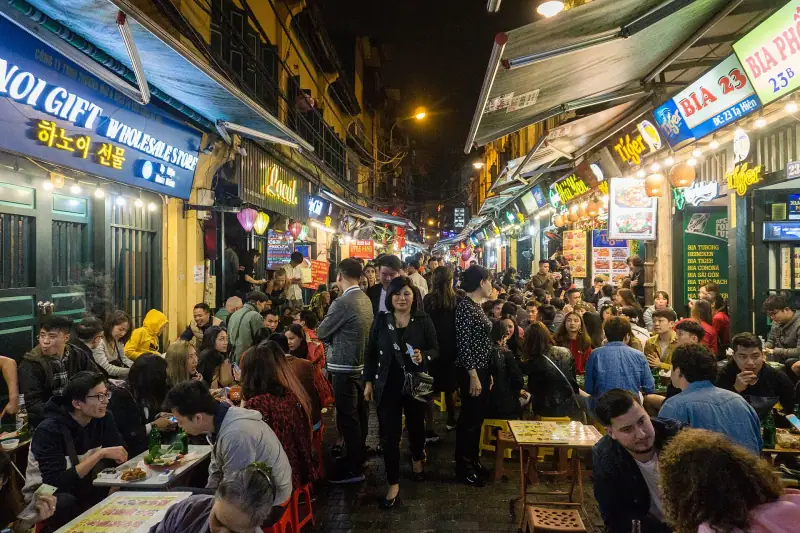
Hanoi: what to see and do in 3 days, a guide to the capital
What to see in Hanoi? Old Quarter, Hoàn Kiếm Lake, Temple of Literature, mausoleum, citadel, street food: a 3-day itinerary, tips and where to stay.

Mai Châu without a car from Hanoi: bus, Lac village or Pom Coong
Getting to Mai Châu from Hanoi without a car: bus or van, duration, prices, Lac or Pom Coong, how many nights and what to know before booking.

Ninh Binh: what to see and do in 2 days from Hanoi
What to see in Ninh Binh? Tràng An, Tam Cốc, Hang Múa, Hoa Lư, Bái Đính Pagoda: a 2-day itinerary, seasonal tips and where to stay.
Ready-made
Vietnam itineraries

10 days
Vietnam in 10 days without a car: a realistic itinerary by train, bus and plane
Vietnam in 10 days without a car: Hanoi, Ninh Binh, Hue, Hoi An and Ho Chi Minh City, with distances, real travel times and train, bus or plane options.
7 days
Northern Vietnam in 7 days: Hanoi, Ninh Binh and Ha Long Bay
HanoiNinh BinhHa Long Bay cruise