What to see
Hoi An: what to see and do in 2 to 3 days

We may earn a commission when you book through links on this page, at no extra cost to you. We don't visit or try the places we cover: we summarize published sources. How we work
In short
- Two days cover the old town, a meal or cooking class and half a day at the beach; three days add an excursion to My Son or the countryside.
- Hoi An has no airport: you arrive via Da Nang, about 30 km (19 mi) away, 45 minutes to an hour by road.
- February to April is often considered the most pleasant; October to December can bring typhoons and flooding of the old town.
- A ticket is generally required for the old town's heritage sites, with a limited number of visits; check the price and terms at the ticket office.
On the coast of central Vietnam, Hoi An is a former trading port whose historic heart, a UNESCO World Heritage Site since 1999, has kept its low houses, tiled roofs and narrow lanes. On the Thu Bon River, the yellow facades are covered with lanterns at nightfall: it is one of the country’s best-known images.
The town long welcomed Vietnamese, Chinese and Japanese merchants, and that history can still be read in its architecture and its cuisine. This guide helps you organize 2 to 3 days in Hoi An: what to see first, when to walk in the old town, where to eat, which excursion to add and where to sleep. The durations and distances given are orders of magnitude, to adjust to traffic and season.
Getting to Hoi An
Hoi An has no airport. You most often arrive via Da Nang, about 30 km (19 mi) away, a 45-minute to 1-hour drive depending on traffic. The main options:
- A taxi or a pre-booked car, the simplest solution on arrival, especially with luggage.
- A shuttle or minibus, offered by some hotels and agencies, often cheaper in a group.
- The train to Da Nang, if you arrive along the coast from Hue or Hanoi, then a road transfer.
From Hanoi, plan a domestic flight to Da Nang rather than a long overland trip: the country stretches more than 1,500 km (932 mi) from north to south. If you hesitate over the season, first see our guide when to go to Vietnam.
Find a flight to Da Nang
Da Nang is the airport closest to Hoi An. Compare flights and schedules before fixing your dates.
The old town: Hoi An’s historic heart
The old quarter can be covered on foot in half a day, but it deserves more if you like to wander. The streets are lined with merchants’ houses, shops, Chinese community assembly halls and small temples. Many buildings are visited with a single ticket that gives access to a limited number of sites; the exact price and the sites included should be checked at the ticket office.
A few markers for organizing:
- Set off early in the morning: the light is soft, groups are still few and the heat is bearable.
- Come back at the end of the day to see the lanterns light up and the river fill with small boats.
- Let yourself get lost in the lanes perpendicular to the main streets: that is where you find quiet cafés and craft workshops.
- Respect places of worship: shoulders and knees covered, low voice, no photos where signed.
The Japanese covered bridge and the old houses
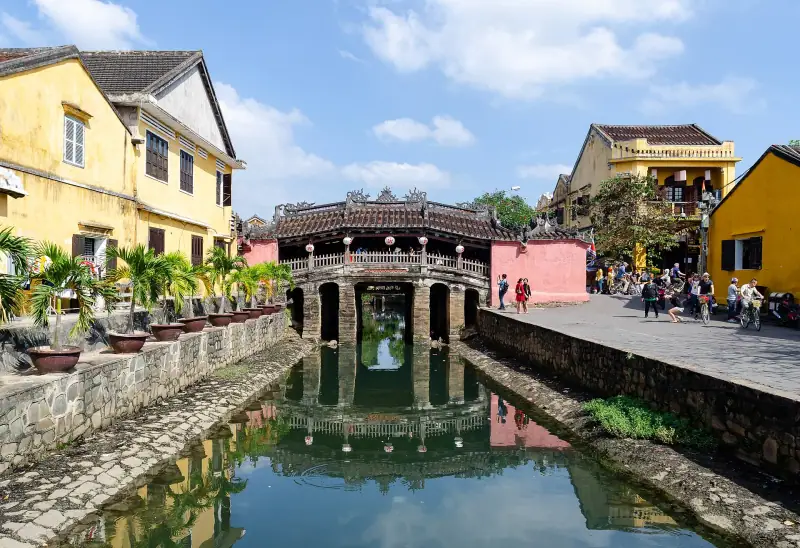
The Japanese covered bridge, often called the bridge-pagoda, is the town’s emblem. Its origin goes back to the 17th century and it bears witness to the presence of Japanese merchants in Hoi An. Small and quickly crossed, it is most beautiful seen from outside, as the light falls. Nearby, several merchants’ houses keep their dark wooden frames, inner courtyards and family altars.
Visit one or two rather than all: the point is to understand how people lived and traded at the time, not to tick off a list. The Chinese community halls, with richly decorated doors and courtyards adorned with ceramics, complete this discovery well. To compare with another major city in the country, read our guide what to see and do in Hanoi.
The lanterns and the Thu Bon River

At night, Hoi An changes face. Colored silk lanterns light the streets and riverbanks, and you can climb into a small boat to set a candle on the water. It is touristy, but pleasant if you go without excessive expectations and negotiate the fare before boarding.
On full-moon nights, a monthly event reduces the old town’s electric lighting in favor of lanterns and entertainment. The dates change each month with the lunar calendar: check them before booking your stay if this moment appeals to you. Expect a large crowd on those evenings.
Where to stay in Hoi An?
Charming hotels near the old town, guesthouses in the rice fields or places near the beach: compare availability and reviews.
Hoi An cuisine: cao lầu, bánh mì and other specialties
Hoi An is known for its food, and you can spend a whole day eating. A few dishes to look for:
- Cao lầu, thick noodles served with pork, fresh herbs and a few crispy bits. It is the town’s emblematic specialty.
- Bánh bao bánh vạc, often called “white rose,” translucent shrimp dumplings, served in small portions.
- Mì Quảng, noodles in a scant broth, originating from Quảng Nam province.
- Bánh mì, a baguette sandwich filled with meat, vegetables and herbs, ideal for a quick lunch.
- Cơm gà, rice with shredded chicken, a simple dish that is very common in the region.
Small street stalls and family restaurants are the best places to taste these dishes. Choose those with many local customers, where the cooking is done in front of you. A cooking class, with a market visit, is a good way to understand the herbs, sauces and techniques.
Cooking classes and food tours in Hoi An
Market visit, Vietnamese cooking or street tasting: browse the bookable activities, with the cancellation terms shown on each offer.
An Bang and Cua Dai beaches
A few kilometers from the old town, the beaches let you relax after sightseeing. An Bang is the most popular with travelers: sand, beach bars and casual restaurants. Cua Dai is closer to the river mouth and has been affected by erosion in recent years; the situation varies with the seasons.
The trip is easily done by bike, in about twenty minutes from the center. Be careful with swimming: currents can be strong out of season and in rough seas, and the lifeguards’ flags mark the supervised zones. Avoid midday in summer, when the sun is very strong.
Cam Thanh, Tra Que and the countryside around Hoi An
Beyond the town, the countryside is easy to reach and very pleasant by bike. Two outings come up often:
- Tra Que, a market-gardening village a few kilometers from the old town, known for its vegetable and aromatic herb gardens. Some families offer introductions to farming and cooking.
- Cam Thanh, a village in an area of water coconut palms, where you can climb into round wicker boats, the traditional “baskets.” The experience is very touristy, but fun if you take it as a light interlude.
These outings are easily organized by the half day, preferably in the morning or late afternoon. They combine well with a beach break or a cooking class.
My Son sanctuary: a historical excursion
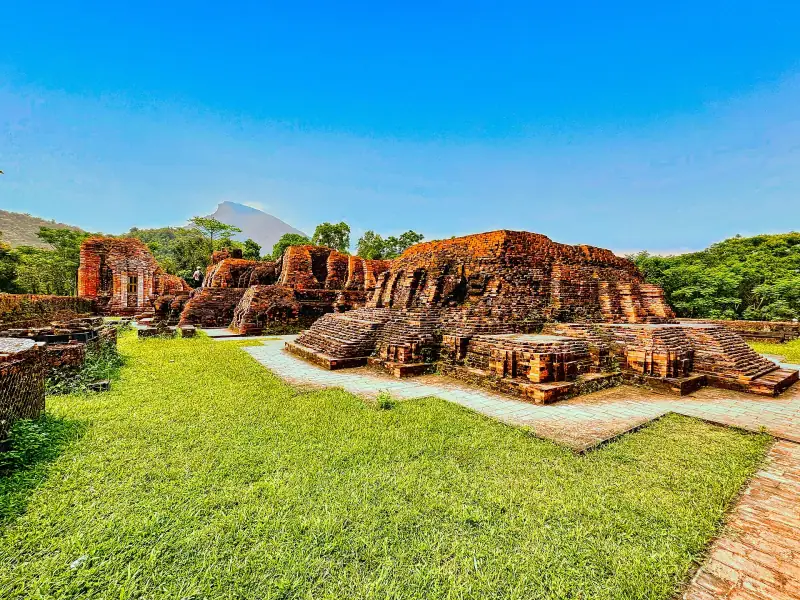
About 40 km (25 mi) from Hoi An, the My Son sanctuary brings together brick towers linked to the ancient kingdom of Champa. The site is a UNESCO World Heritage Site, like Hoi An’s old town, and is visited in half a day including transport. It was damaged by the war, but its remains are still interesting for understanding a civilization very different from that of the northern Vietnamese.
Set off early to avoid the heat and groups, wear a hat and good shoes. A guided visit adds a lot, because the explanatory signs are limited.
Excursions from Hoi An
My Son, bike ride, basket boat or lanterns on the river: browse the bookable activities before leaving.
Suggested itinerary: Hoi An in 2 to 3 days
- Day 1: old town in the morning (covered bridge, one or two old houses, market), a cao lầu lunch, rest, then back at dusk for the lanterns.
- Day 2: bike to Tra Que or Cam Thanh in the morning, An Bang beach in the afternoon, dinner by the sea or in town.
- Day 3 (optional): excursion to My Son early in the morning, back for a last stroll or a cooking class.
If you continue north, Hue is about 120 km (75 mi) away by the coastal road, a trip that passes over the Hai Van (“Cloud”) Pass. For the north of the country, also see our guide Ninh Binh: what to see and do.
Where to stay in Hoi An
Three areas stand out. The old town suits you if you want to do everything on foot and enjoy the evening, but it is noisier and pricier. The surroundings, rice-field side, offer more calm and often larger rooms, with a bike provided. The beach area is ideal if you want to alternate sightseeing and swimming.
Book ahead for weekends, Vietnamese holidays and full-moon nights, the busiest. Also check the cancellation policy, useful in the rainy season, when a typhoon can change your plans.
When to visit Hoi An
The period from February to April is often considered the most pleasant: clear skies and bearable temperatures. From May to August, it is hot and humid, with intense sun but very pleasant beaches. From late summer to December, rain is more frequent and the Thu Bon River can overflow, at times flooding the low streets of the old town. Find the detail by region in our guide when to go to Vietnam.
Practical tips
- Tailors: Hoi An is known for its made-to-measure clothing. Compare several workshops, specify the fabric and the delivery date, and plan at least a day for fittings.
- Money: keep cash for small stalls and markets.
- Heat: water, hat and sunscreen, especially on a bike.
- Scams: agree on the price before getting into a boat, cyclo or taxi.
- Crowds: the old town is very busy in the evening; the morning is much calmer.
Final thoughts
Hoi An is an ideal stop for slowing down during a trip to Vietnam. In two or three days, you have time to wander the old town, taste the local food, pedal to the beach and visit My Son. Choose the season carefully, stay flexible if the weather changes, and book your accommodation early to enjoy the town in the best conditions.
Frequently asked questions
How long do you need to visit Hoi An?
Two days are enough for the old town, a meal or cooking class and half a day at the beach. With three days, you add an excursion to My Son or a trip into the countryside and the Thu Bon River delta.
Do you need a ticket to enter Hoi An's old town?
A ticket is generally required to access the old town's heritage sites (old houses, community halls, covered bridge). It gives access to a limited number of visits. The price and terms can change: ask at the ticket office.
What is the best time for Hoi An?
Spring, from about February to April, is often considered the most pleasant: dry weather and bearable heat. The rainy season, from about October to December, can come with typhoons and flooding of the old town.
How do you get from Da Nang to Hoi An?
Da Nang Airport is about 30 km (19 mi) from Hoi An, generally 45 minutes to an hour by road. A taxi, a pre-booked car or a shuttle are the most common options.
Can you visit Hoi An by car or scooter?
The heart of the old town is pedestrian or heavily restricted at certain hours. Cycling and walking are the best ways to get around; a bike is also ideal for reaching the rice fields and the beach.
More Vietnam guides
Keep reading

Hanoi: what to see and do in 3 days, a guide to the capital
What to see in Hanoi? Old Quarter, Hoàn Kiếm Lake, Temple of Literature, mausoleum, citadel, street food: a 3-day itinerary, tips and where to stay.

Mai Châu without a car from Hanoi: bus, Lac village or Pom Coong
Getting to Mai Châu from Hanoi without a car: bus or van, duration, prices, Lac or Pom Coong, how many nights and what to know before booking.

Ninh Binh: what to see and do in 2 days from Hanoi
What to see in Ninh Binh? Tràng An, Tam Cốc, Hang Múa, Hoa Lư, Bái Đính Pagoda: a 2-day itinerary, seasonal tips and where to stay.
Ready-made
Vietnam itineraries

10 days
Vietnam in 10 days without a car: a realistic itinerary by train, bus and plane
Vietnam in 10 days without a car: Hanoi, Ninh Binh, Hue, Hoi An and Ho Chi Minh City, with distances, real travel times and train, bus or plane options.
7 days
Northern Vietnam in 7 days: Hanoi, Ninh Binh and Ha Long Bay
HanoiNinh BinhHa Long Bay cruise

15 days
Vietnam 15-day itinerary: north to south, day by day
HanoiNinh BinhHa Long or Lan Ha Bay cruiseHoi An