What to see
What to see in Valencia and on the Costa Blanca: 10 must-sees
We may earn a commission when you book through links on this page, at no extra cost to you. We don't visit or try the places we cover: we summarize published sources. How we work
In short
- A week covers two or three days in Valencia, two in Alicante and around, and one or two on the northern coast villages such as Altea and Calpe.
- Valencia, Alicante, Elche and Xàtiva are linked by train, and a tram runs along the coast between Alicante and Dénia; a car helps for Guadalest, coves and inland villages.
- Valencia to Alicante is about 170 km (106 mi) by road, under two hours by the fastest trains.
- Spring and early fall are the most pleasant; book early for the March Fallas and for summer.
Between Valencia and the Costa Blanca, Spain’s Mediterranean coast unfolds within a few hours’ drive a great variety of faces: a metropolis facing the sea, a lagoon where paella was born, towns heavy with history, palm groves, islets, cliffs, perched white villages and long sandy beaches. This region in the southeast of the country is also one of the sunniest in Europe, which explains its success in every season. This guide presents ten places not to miss, from north to south, with concrete tips to put together your stay. If you begin with the regional capital, also see our 2-day Valencia itinerary.
Valencia, the big city facing the sea
Valencia is Spain’s third-largest city by population and the natural gateway to the region. Its historic center is explored on foot: the cathedral and its Miguelete tower, which you can climb for a view over the rooftops, the Plaza de la Reina, the Plaza de la Virgen and the lanes of the Carmen district, full of painted facades and bars. The city mixes medieval heritage, wide avenues and urban beaches, which lets you vary the pleasures from one day to the next.
Two sites deserve particular attention in the center. The Lonja de la Seda, the former silk exchange in late Gothic style, is a UNESCO World Heritage Site. Right across, the Mercado Central, one of the largest covered markets in Europe, displays fruit, fish, cured meats and local products under a glass-and-metal structure. It is an excellent place for a first immersion, and a good opportunity to try a filled roll or a freshly squeezed orange juice: oranges are the region’s pride.
For choosing a neighborhood, our guide on where to stay in Valencia compares the historic center, the Carmen and the areas near the sea. Food lovers will also find pointers in our article on the specialties to try in Spain, and our page on horchata in Valencia and Alboraya.
The City of Arts and Sciences and the Turia Gardens
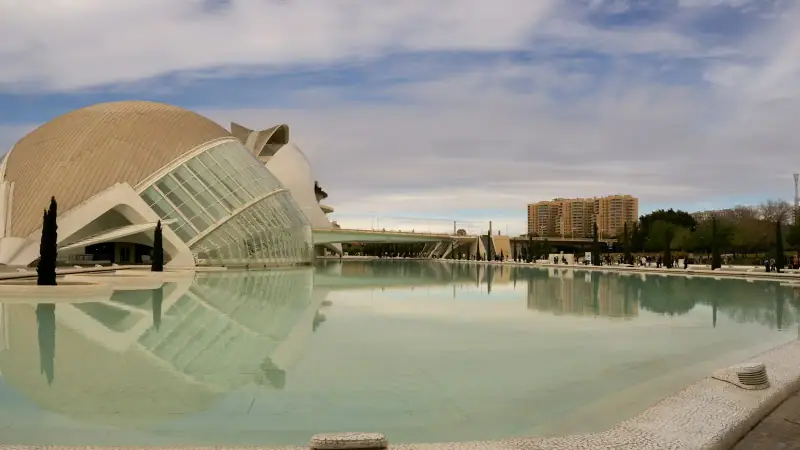
The contrast is striking between the old center and the City of Arts and Sciences, a futuristic complex largely designed by Valencian architect Santiago Calatrava. An opera house, planetarium, science museum, suspension bridge and vast aquarium line up around pools of dazzling blue. Even without entering the buildings, the outdoor walk is spectacular, especially at the end of the day when the light reflects on the water and the white concrete.
This complex sits in the former bed of the Turia river, diverted after serious floods in the 20th century. The dried-up bed has become a long garden about ten kilometers (6 mi) long crossing the city: bike lanes, playgrounds, sports fields, fountains and lawns. Renting a bike lets you link the center to the City of Arts in an easy and pleasant ride, including with children. Bring good shoes and water: shade is sometimes scarce in summer.
Where to stay in Valencia
Historic center, Carmen district or near the beach: compare accommodation for your dates and budget, booking early for the Fallas period.
The Albufera, the lagoon where paella was born
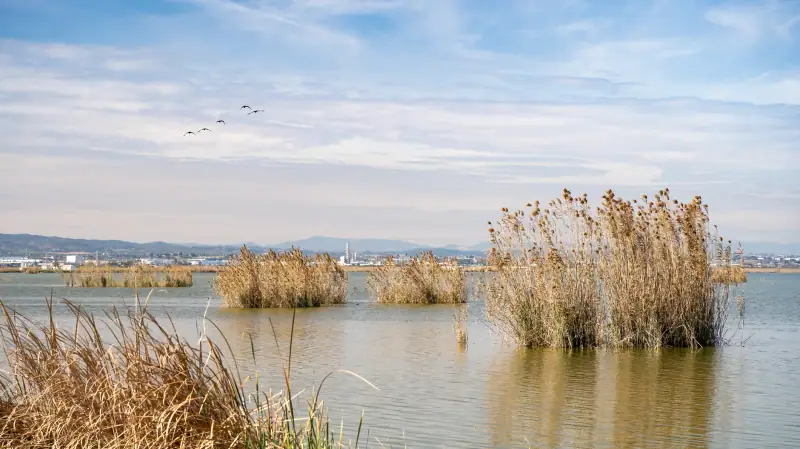
About ten kilometers (6 mi) south of Valencia, the Albufera natural park protects a large freshwater lagoon separated from the sea by a strip of dunes and pine forests. The rice fields around it explain the story of paella, a dish born in these farmlands. The place is popular with birdwatchers, because many species of waterbirds live or stop over there, depending on the season.
The classic outing is a ride on a traditional boat on the lagoon, notably at sunset, from the landing stage of one of the lakeside villages. You can then have lunch or dinner in the area, where paella and all i pebre, an eel stew, are emblematic dishes. The simplest way to get there is to take a bus from Valencia or rent a bike. Outside the periods of great heat, the bike ride between rice fields and canals is a lovely moment.
Xàtiva and Sagunto, the fortresses of the hinterland
To leave the coast for a bit, two fortified towns suit a half day well. Xàtiva, southwest of Valencia, is dominated by a castle spread over two hills, with great ramparts and fine views over the plain. The quiet lower town deserves a stroll for its squares and churches. It is linked to Valencia by train, which makes it an excursion without a car.
North of Valencia, Sagunto also has a ridge-top fortress, covering several periods of history, and a restored Roman theater. The whole gives a good overview of the importance of this coast in Antiquity. Both sites are better visited in the morning or late afternoon, because the exposed parts are hot in summer.
Dénia and Jávea, the northern gate of the Costa Blanca
Heading south, Dénia is the first big town of the Costa Blanca. Its castle overlooks the port and the old town, and the lanes of the center hold many fish and seafood restaurants. The town is also known for its gastronomy, notably Dénia red prawns, a much-appreciated local product. The port is a departure point for sea connections to other destinations.
A little farther south, Jávea (Xàbia in Valencian) combines a small historic center, a fishing port and a coast cut by cliffs and coves. Cape Nao and the coastal trails offer fine panoramas. This area is less built up than other stretches of the coast and suits those looking to swim in clear waters, outside the heart of summer.
Calpe and the Peñón de Ifach
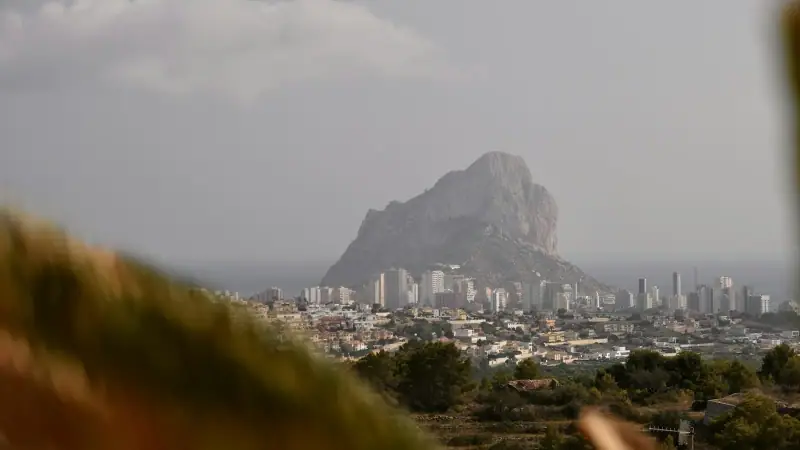
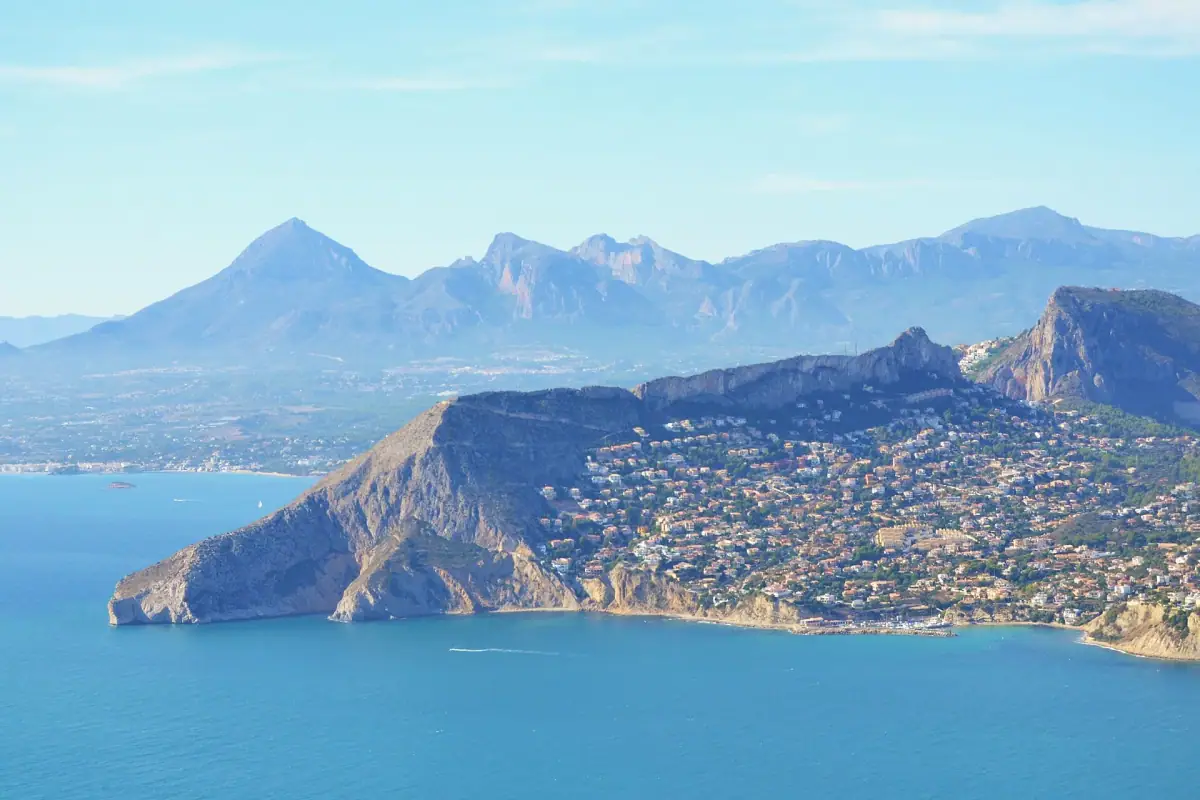
Calpe is dominated by a limestone rock jutting into the sea: the Peñón de Ifach, about 330 meters (1,080 ft) high. This islet attached to the coast by a narrow strip of land has become one of the symbols of the Costa Blanca. It is part of a natural park and is climbed by a trail that passes through a tunnel in the rock, with a magnificent view over the bay. The climb is accessible to most walkers, but bring good shoes and water, and avoid the hot hours.
The town also has an old quarter with whitewashed lanes, sandy beaches and salt flats close to the rock. The beaches are lively in summer, while late spring and September are calmer. A tram runs along the coast between Alicante and Dénia and serves several coastal towns, which makes getting around without a car easier in this area.
Tours and excursions in Valencia and on the Costa Blanca
Albufera tour, guided visits, excursions to Tabarca or Guadalest: compare offers and book ahead in high season.
Altea, Guadalest and Villajoyosa: villages with character
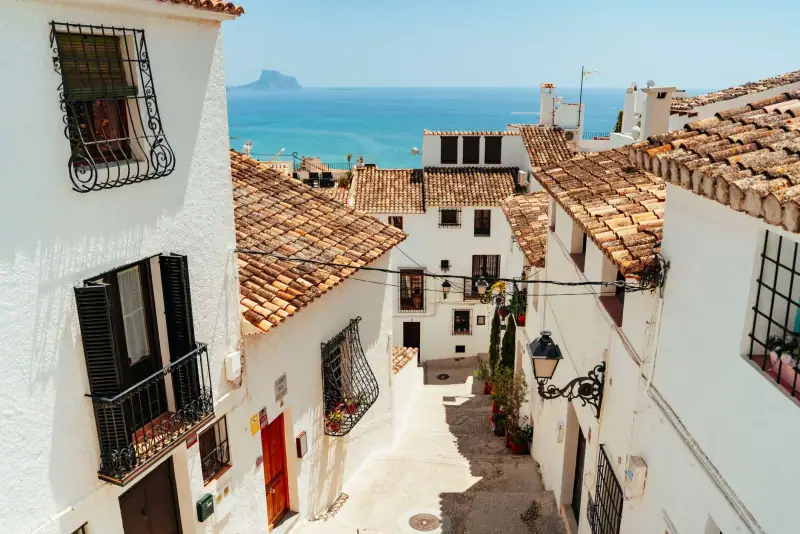
Inland on the Costa Blanca as on the coast, several villages deserve a detour. Altea is famous for its white old town crowned by a blue-domed church. You climb on foot through sloping lanes with small squares, art galleries and terraces overlooking the sea. It is a pleasant place to dine, when the evening light changes the color of the facades.
Guadalest, in the hinterland, is a village perched on a rock, reached by a tunnel cut through the stone, with a bell tower standing out against the mountains. It attracts many visitors during the day, especially in summer: come early or late in the day to enjoy the calm. A turquoise lake spreads out below. Villajoyosa, for its part, is known for its fishermen’s houses with colorful facades lined up in front of the beach, and for its chocolate-making tradition. These three places complement a stay that mixes coast and small roads well.
Alicante, between the castle and the seaside promenade
Alicante is the capital of the Costa Blanca. Santa Bárbara Castle overlooks the city from a rocky hill; you climb on foot or by an elevator cut into the rock, and the view over the bay justifies the effort. Below, the Explanada promenade, paved with undulating mosaics and lined with palm trees, runs along the port and serves as a meeting point for residents.
The Santa Cruz district, at the foot of the castle, is a tangle of flowered white lanes and small staircases. The center is also rich in tapas bars, markets and museums. Postiguet beach is a few minutes’ walk from the center, which lets you combine visits and swimming. Alicante has an international airport, which makes it very practical as an entry point to the region. Between Valencia and Alicante, allow about 170 km (106 mi) by road, and a train trip of under two hours for the fastest services.
Tabarca, Elche and the pink lakes of Torrevieja
South of Alicante, three out-of-the-ordinary stops complete the stay. Tabarca island, off Santa Pola, is the only inhabited island of the Valencian Community: a small fortified village, rocky coves, a marine reserve and fish restaurants. It is visited as a day trip by boat, preferably outside midsummer, when crossings are busiest. The water is very clear and snorkeling is appreciated.
Elche (Elx) is known for its palm grove, a group of tens of thousands of date palms listed by UNESCO, and for the Mystery Play of Elche, a medieval sacred drama sung every year in August, also on UNESCO’s intangible heritage list. The city is easy to reach from Alicante by train. Finally, near Torrevieja, a large salt lagoon sometimes takes on a pinkish hue, depending on the light and salinity. This phenomenon makes it a surprising place for a short photo stop.
How to organize your stay between Valencia and the Costa Blanca
Here are some possible combinations depending on the length of your trip:
- 4 days: Valencia (2 days), the Albufera for half a day, then a round trip to Xàtiva or Sagunto. Everything is done without a car.
- 7 days: Valencia (3 days), then Alicante (2 days) with Elche or Tabarca, and two days on the northern coast around Calpe and Altea.
- 10 days: add Dénia and Jávea, Guadalest and Villajoyosa, and take time for the beach between visits.
- With family: favor Valencia (Turia gardens, aquarium, Malvarrosa beach) then a beach base at Calpe or Alicante, with short stops.
A car simplifies discovering the coves and the hinterland, but in July and August parking near the beaches becomes complicated. For a mixed stay, you can reach Alicante by train, then rent a car there for just a few days.
Rent a car between Valencia and Alicante
To reach the coves, Guadalest and the hinterland villages at your own pace, compare rental companies.
When to go and how much to budget
The climate is Mediterranean, with hot, dry summers and mild winters. Spring and early fall are generally the most pleasant periods to combine visits and beach. Our guide to when to go to Spain details the seasons for the whole country. In Valencia, Fallas week, in March, is a unique spectacle of festive monuments and fireworks, but accommodation is pricier and bookings are essential.
On the budget side, the region remains affordable compared with Barcelona or the islands. Hotel prices climb in July and August on the coast, while restaurants often offer a moderately priced menú del día on weekdays: our article on the menú del día explains how to order it. To estimate all of your spending, see the guide to the budget for Spain.
Practical tips
- Getting there: Valencia and Alicante-Elche airports are the two main entry points. The train links Valencia and Alicante.
- Languages: Valencian and Spanish are both official. In tourist areas, English is widely understood.
- Meal times: lunch is late, often after 2 pm, and dinner after 9 pm. Several restaurants close between services.
- Sun protection: the sun is strong from spring. Bring a hat, sunscreen and water for walks on rocks and at castles.
- Reservations: book accommodation ahead during the Fallas and in summer, as well as crossings to Tabarca in high season.
- Insurance: to travel with more peace of mind, travel insurance can cover medical costs and cancellations.
A coast to travel without hurrying
From the modernity of the City of Arts and Sciences to the white lanes of Altea, from the Albufera lagoon to the Rock of Ifach, the Valencia and Costa Blanca region brings together heritage, nature, beaches and gastronomy in a compact territory. Depending on your wishes, you can build an urban stay centered on Valencia, a beach stay around Calpe and Alicante, or a loop mixing both. Choose two or three bases rather than multiplying stops, avoid the heart of summer if you can, and keep time for markets, terraces and seaside walks: those moments are often what make the difference.
Frequently asked questions
What to see in Valencia and on the Costa Blanca in one week?
A week lets you spend two or three days in Valencia (historic center, City of Arts and Sciences, Albufera), then two days in Alicante and around (castle, Tabarca island, Elche) and one or two days in the northern coast villages such as Altea and Calpe.
What is the difference between Valencia and the Costa Blanca?
Valencia is a big city on the east coast, with its own province. The Costa Blanca is the coastline of the province of Alicante, farther south, from Dénia to Pilar de la Horadada. Both areas are part of the Valencian Community and are visited very well together.
Do you need to rent a car to visit the region?
Not always. Valencia, Alicante, Elche and Xàtiva are linked by train, and a tram runs along the coast between Alicante and Dénia. A car becomes useful for Guadalest, the coves and inland villages, where public transport is scarcer.
What is the best time to go?
Spring and early fall are generally the most pleasant: mild temperatures, a sea already usable in late spring and in September, and more moderate crowds than in midsummer. Winter is mild but swimming is no longer on the agenda.
Can you visit Tabarca island as a day trip?
Yes, it is the most common format. Boats leave notably from Alicante and Santa Pola depending on the season. Check hours and bookings with the companies, as crossings are less frequent off-season.
Where to taste a real Valencian paella?
Paella was born around Valencia and the Albufera. The Albufera villages, such as El Palmar, are renowned for this dish. Be wary of tourist restaurants displaying photos of overly colorful paellas: in general, a short menu and made-to-order preparation are a good sign.
More Spain guides
Keep reading
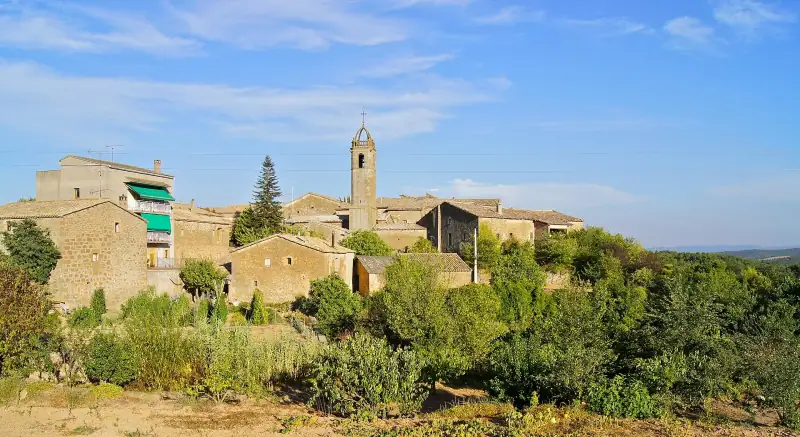
What to see in Catalonia: the region's 12 must-sees
What to see in Catalonia? Barcelona, Girona, Costa Brava, Figueres, Montserrat, Tarragona, Pyrenees: our selection to plan a stay in the region.
Complete guide to visiting Spain: regions, cities, budget and tips
Visiting Spain: must-see regions and cities, best time to go, transport, accommodation and budget. The pillar guide to prepare your trip from A to Z.
What to see in Madrid and Castile: 10 stops between the capital and the art cities
What to see in Madrid and Castile? Prado, Toledo, Segovia, Ávila, Salamanca, Burgos: our selection of stops and tips to plan your trip.
Ready-made
Spain itineraries
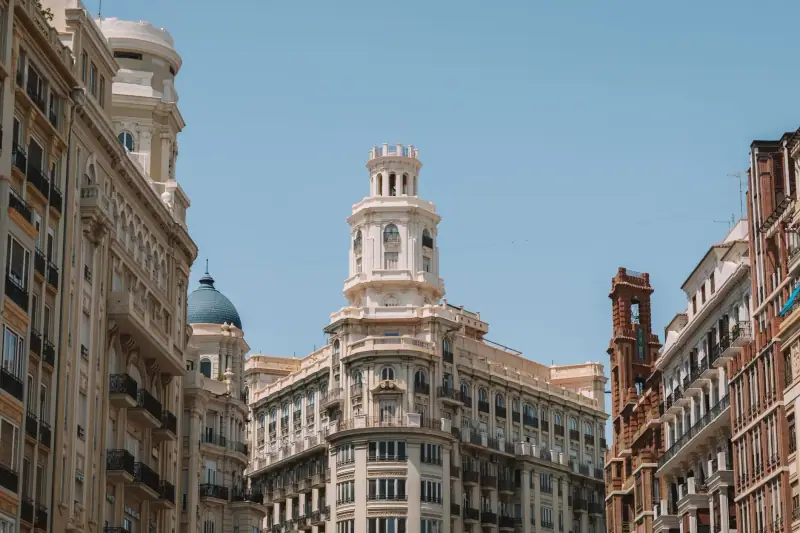
2 days
Valencia in 2 days: an itinerary through the old town, the Turia and the beach
What to do in Valencia in 2 days? Historic center, market, City of Arts and Sciences, Turia Gardens, paella and beach: our day-by-day itinerary.
7 days
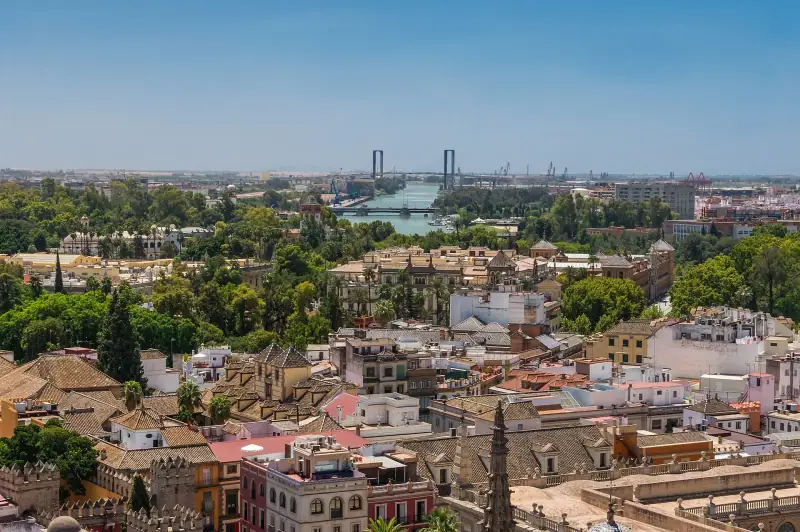
Andalusia in 7 days: Seville, Córdoba, Granada and Málaga
A 7-day Andalusia route: Seville, Córdoba, Granada and Málaga, with travel times, a day-by-day pace, useful reservations and pitfalls to avoid.
3 days
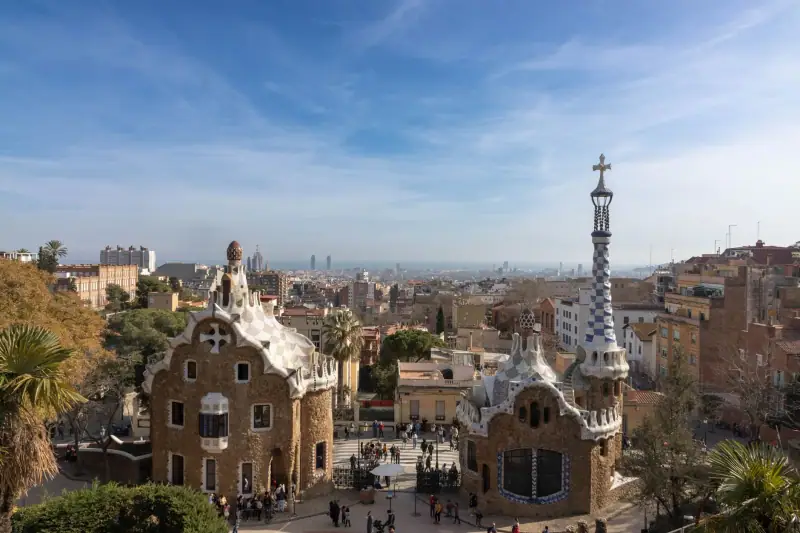
Barcelona in 3 days: a day-by-day itinerary for a first stay
Sagrada Família, Park Güell, Barri Gòtic, Montjuïc and Barceloneta: a 3-day Barcelona itinerary with the best order of visits, transport and tips.