Plan your trip
When to go to South Africa: weather, seasons and best months
We may earn a commission when you book through links on this page, at no extra cost to you. We don't visit or try the places we cover: we summarize published sources. How we work
In short
- There is no single best month: for a trip combining Cape Town, the Garden Route and a safari, March-April and September-October are generally the best compromise.
- The dry season, about May to September, is best for a safari in Kruger; whales are visible roughly from June-July to November, with a peak in September-October.
- Seasons are reversed: the southern summer runs December to February, winter June to August.
- Prices and crowds peak around Christmas and New Year: book several months ahead.
Choosing when to go to South Africa means keeping one simple rule in mind: the country is in the southern hemisphere, so the seasons are reversed compared with the northern hemisphere. The southern summer runs from December to February, winter from June to August. But the real difficulty lies elsewhere: the country is huge, and its climate changes strongly between the Cape Town coast, the Lowveld plains where Kruger Park is located, the Indian Ocean coast and the Drakensberg mountains.
In other words, the “best time” depends on what you come for: safari, hiking, beach, vineyards, whales or a road trip along the coast. This guide helps you decide region by region.
South Africa’s climate in brief
South Africa broadly enjoys a temperate and very sunny climate, with strong regional nuances:
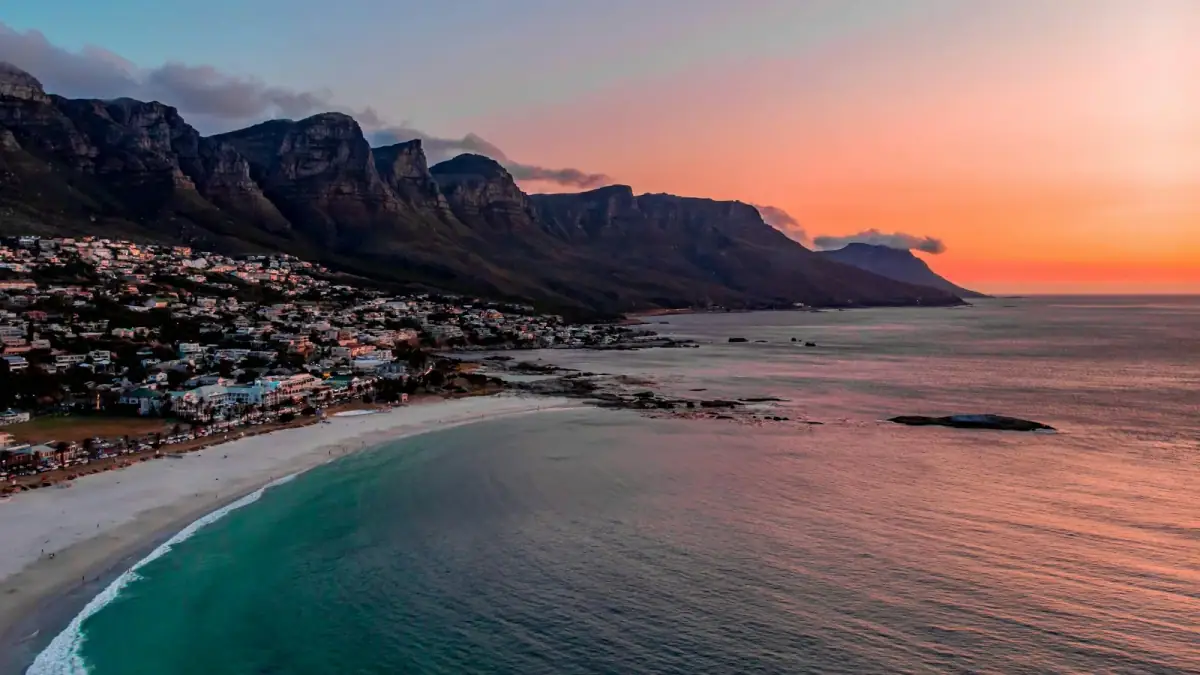
- Cape Town and the peninsula: Mediterranean-type climate. Dry, hot and windy summers, cooler and rainy winters.
- The northeast (Kruger, Johannesburg): hot summers with frequent afternoon thunderstorms, dry winters with mild days and cool nights.
- The east coast (Durban, KwaZulu-Natal): subtropical climate, hot and humid in summer, mild in winter.
- The Garden Route: rain possible all year, hence very green vegetation.
- The interior (Karoo, Drakensberg): big temperature swings between day and night, cold winters at altitude, with snow possible on the summits.
This diversity has an advantage: there is almost always a region at its best. It also means adapting your itinerary to the season, rather than the reverse.
December to February: the southern summer
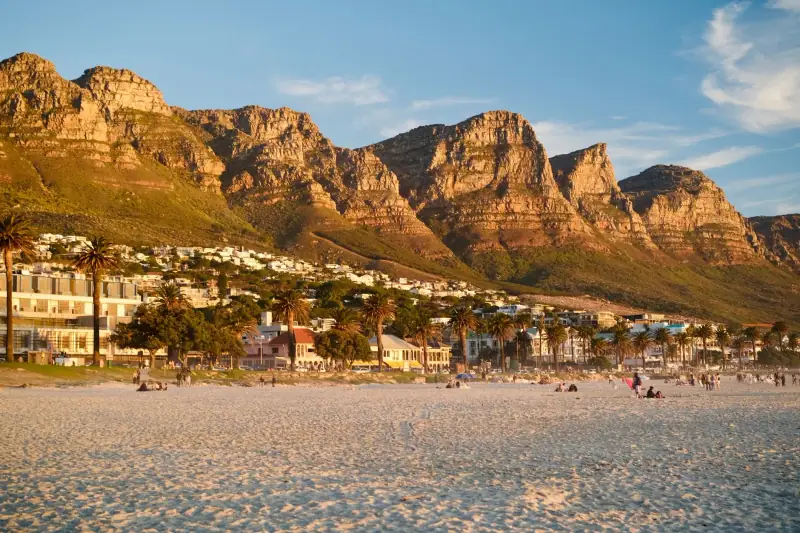
This is high season for beaches, South African school holidays and the year-end festivities. At the tip of the continent, days are long, dry and sunny. The Winelands vineyards are busy, and Cape Town’s outdoor restaurants are full.
The pluses:
- Very stable summer weather around Cape Town and the peninsula.
- A festive atmosphere and many outdoor activities.
- Long days for driving and sightseeing.
The constraints:
- Prices and crowds at their highest, particularly around Christmas and New Year: book several months ahead.
- Wind that is sometimes strong in Cape Town, which can disrupt some activities, including access to Table Mountain by cable car.
- Heat and thunderstorms in the Lowveld: the vegetation is dense and wildlife viewing is generally harder than in winter.
Hotels in South Africa
Compare the lodging available for your dates, especially in high season when the best places go fast.
March to May: the southern autumn
For many travelers this is the best compromise. The summer heat eases, crowds thin out after the school holidays and prices become more reasonable. Around Cape Town, days often remain sunny and pleasant, with a less bothersome wind than in midsummer.
Who is it for? A first trip combining cities, coast and safari. March and April are particularly appreciated for the vineyards: the harvest generally takes place at the end of summer and the start of autumn, which gives the Winelands a very lively atmosphere.
In the northeast, the dry season settles in gradually from April-May: thunderstorms become rarer and wildlife viewing gets easier as winter approaches.
June to August: the southern winter
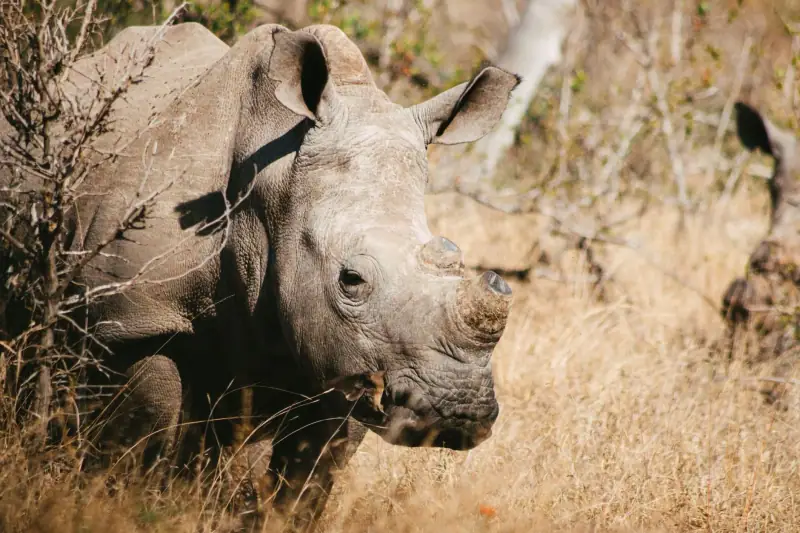
Winter is the high season for safari. In the Kruger Park region and the neighboring private reserves, the dry season thins the vegetation and pushes animals to gather near waterholes, which makes them easier to see. Days are often sunny, but dawn safari departures can be really cold: bring several layers of clothing, a hat and gloves.
The pluses:
- The best general conditions for wildlife viewing.
- Little rain in the northeast, and fewer mosquitoes.
- The start of whale season on the southwest coast, from about June-July.
The constraints:
- In Cape Town and on the west coast, it is the rainy and stormy season: gray days alternate with clear spells.
- Cold nights at altitude, notably in the Drakensberg, where snow can fall on the heights.
- Some hikes are less accessible in bad weather.
Safaris and excursions
Discover the safaris and activities on offer in South Africa, with free cancellation on many offers.
September to November: the southern spring
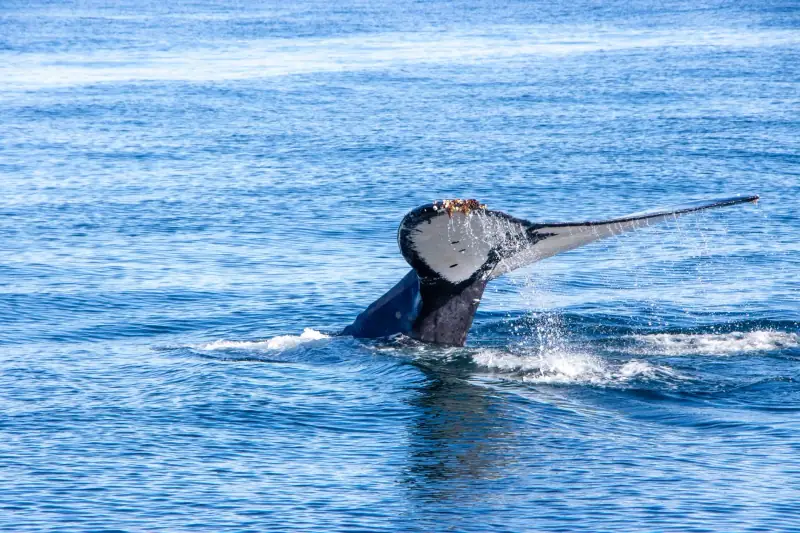
Spring is another excellent period, sometimes the most beautiful of the year. Temperatures rise, nature turns green again, and prices are generally lower than in summer high season.
What not to miss:
- Whales: on the southwest coast, around Hermanus, the watching period for southern right whales runs from about June-July to November, with a peak generally between September and October. These dates vary every year: find out locally.
- Wildflowers: on the west coast, north of Cape Town, the spring blooms generally occur at the end of winter and the start of spring, roughly August to September. Their intensity depends strongly on the season’s rains.
- Safari: September and October extend the dry season. The heat increases in the Lowveld, but viewing remains very good before the year-end rains arrive.
On the Garden Route, spring is pleasant for driving, hiking in the forests and enjoying the coast before the summer holiday rush.
Which period for your type of trip?
The right calendar depends above all on your priority.
For a safari: May to September for the best visibility of wildlife. The rainy season can be interesting for lovers of green landscapes and animal births, but viewing is harder.
For Cape Town and the peninsula: November to April for fine weather, with March and April the best compromise if you want fewer crowds.
For the Garden Route: the region can be visited all year. Spring and autumn are often the most pleasant for a road trip, with mild temperatures and fewer crowds than in December-January.
For whales: September to October, with sightings possible from about June to November.
For hiking in the Drakensberg: autumn and spring generally offer more stable conditions. Summer is the thunderstorm season at altitude, and winter can be very cold on the summits.
For budget: aim for months outside school holidays and year-end festivities, for example March-May or September-November. Flights are often cheaper than in December and in July-August.
With family: school holidays do not coincide with the best weather everywhere. July-August suits a safari very well; the Christmas holidays are better suited to Cape Town and the coast.
Flights to South Africa
Fares vary greatly with the dates: compare several periods before booking.
Preparing your trip: practical points
A few points to plan for, whichever season you choose.
Flight and time difference. The flight is long-haul. The time difference depends on where you start: South Africa is on UTC+2 all year, with no daylight saving time change.
Entry requirements. Entry rules depend on your passport. Check the official travel advice of your government before you book: travel.state.gov (US), GOV.UK (UK), travel.gc.ca (Canada), Smartraveller (Australia) (checked November 2026). If you travel with children, specific formalities apply: find out well in advance.
Health. Ask your doctor or a travel clinic, and see the official travel health pages (CDC in the US, TravelHealthPro in the UK), well before you go, especially for Kruger Park and the northeast.
Safety. As in many big countries, basic vigilance is essential, particularly in big cities: avoid displaying valuables, favor car or ride-hailing trips at night and follow your accommodation’s advice.
Recommended gear:
- Several layers of clothing: swings between morning and afternoon can be large, especially in winter and at altitude.
- A windbreaker: wind is frequent around Cape Town.
- Good sunscreen, a hat and sunglasses, as sunshine is high almost all year.
- Binoculars for safaris and whale watching.
- A light rain jacket for the Garden Route and winter in Cape Town.
Driving. In South Africa, you drive on the left. A car is the most practical way for a road trip, notably between Cape Town, the Winelands and the Garden Route. Compare rental offers and book early in high season.
Our verdict: when to go?
- Best overall balance (cities, coast, safari): March-April and September-October.
- Best for safari: May to September.
- Best for whales: September-October.
- Best for the beach and summer atmosphere in Cape Town: December to February, accepting higher prices and more people.
- Low prices and quiet: May-June and late autumn, outside the holidays.
In short, there is no bad time to go to South Africa, only periods better suited to your plans. Choose your priority first, then adjust your dates and itinerary accordingly.
Frequently asked questions
What is the best month to go to South Africa?
There is no ideal month everywhere, because the climate varies by region. For a trip that combines Cape Town, the Garden Route and a safari, March-April and September-October generally offer the best compromise between weather, prices and wildlife viewing.
What is the best time for a safari in Kruger?
The dry season, from about May to September, is the most favorable: the vegetation is less dense and the animals concentrate around waterholes. The southern winter brings cool, even cold mornings, but often sunny days.
When can you see whales in South Africa?
Southern right whales visit the southwest coast, notably around Hermanus, from about June-July to November, with a peak generally seen between September and October. Dates vary from year to year.
Do you need a visa for South Africa?
Entry rules depend on your passport. Check the official travel advice of your government before you book: travel.state.gov (US), GOV.UK (UK), travel.gc.ca (Canada), Smartraveller (Australia) (checked November 2026).
What is the time difference in South Africa?
South Africa is on UTC+2 all year, with no daylight saving time change.
More South Africa guides
Keep reading
South Africa budget: real trip cost by item and by profile
What budget for South Africa? Lodging, transport, meals, activities: three profiles priced in euros and dollars, plus tips to spend less.
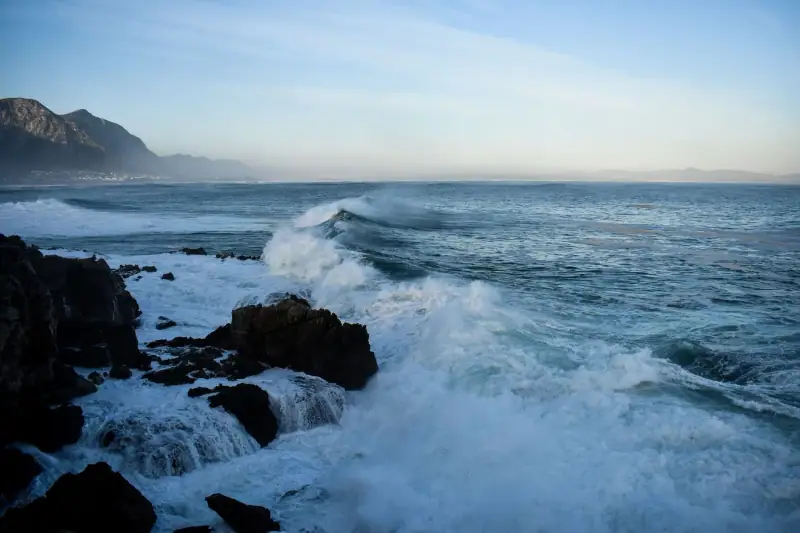
Driving in South Africa: renting a car, rules and tips
Driving in South Africa: driving on the left, licenses, tolls, gas stations, safety and tips for renting a car on your road trip.
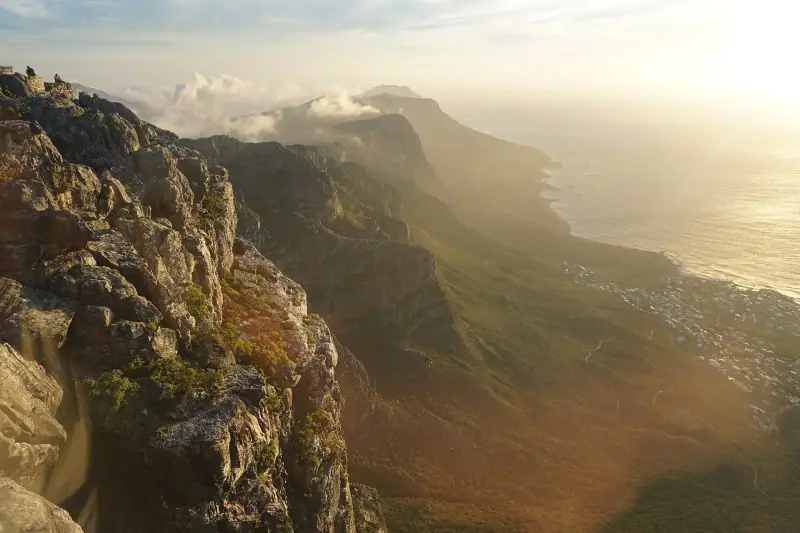
Complete guide to visiting South Africa: regions, budget, tips
Visiting South Africa: regions, cities, highlights, when to go, transport, lodging and budget. The pillar guide to prepare your trip.
Ready-made
South Africa itineraries
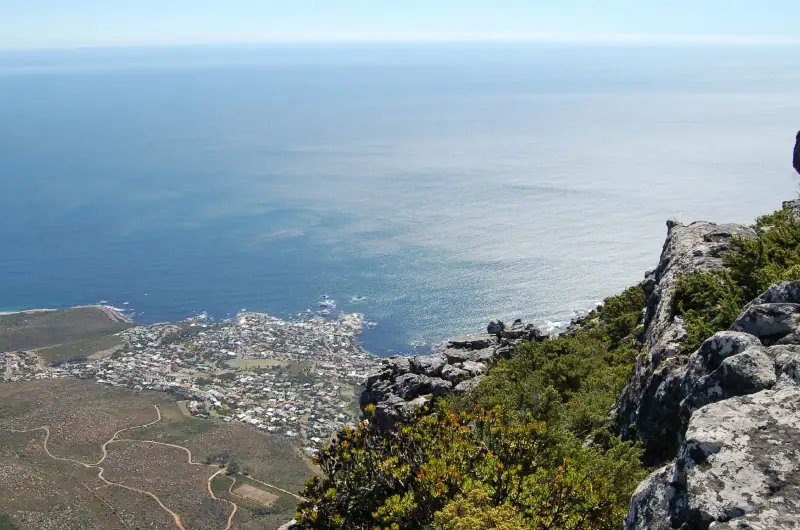
8 days
Garden Route road trip: 8 days from Cape Town to Gqeberha
An 8-day Garden Route road trip: Hermanus, Swellendam, Mossel Bay, Knysna, Plettenberg Bay and Tsitsikamma, with realistic stages and distances.
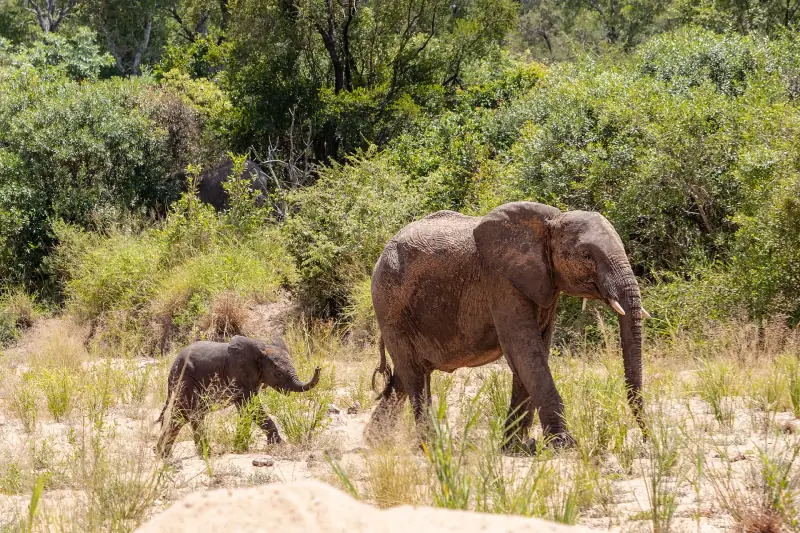
14 days
South Africa in 2 weeks: Kruger, Cape Town and Garden Route itinerary
A 14-day South Africa itinerary: Kruger safari, Cape Town, Winelands and the Garden Route, with domestic flights, drives and practical tips.
5 days
Cape Town in 5 days: day-by-day itinerary, peninsula and Winelands
A 5-day Cape Town itinerary: Table Mountain, Waterfront, Bo-Kaap, the Cape of Good Hope peninsula, Winelands and Hermanus, with distances and tips.