Food & drink
Winelands: the Stellenbosch and Franschhoek wine route
We may earn a commission when you book through links on this page, at no extra cost to you. We don't visit or try the places we cover: we summarize published sources. How we work
In short
- Stellenbosch is about 50 km (31 mi) from central Cape Town, roughly 45 minutes without traffic; Franschhoek is about 75 km (47 mi), a little over an hour.
- A car is the most flexible option; if you plan several tastings, choose a designated driver or take a guided tour with a driver.
- Wines to try: pinotage, chenin blanc, cabernet sauvignon, syrah and Cap Classique sparkling wines.
- One day combines Stellenbosch and Franschhoek; two days or more leave time for tastings and lunches without rushing.
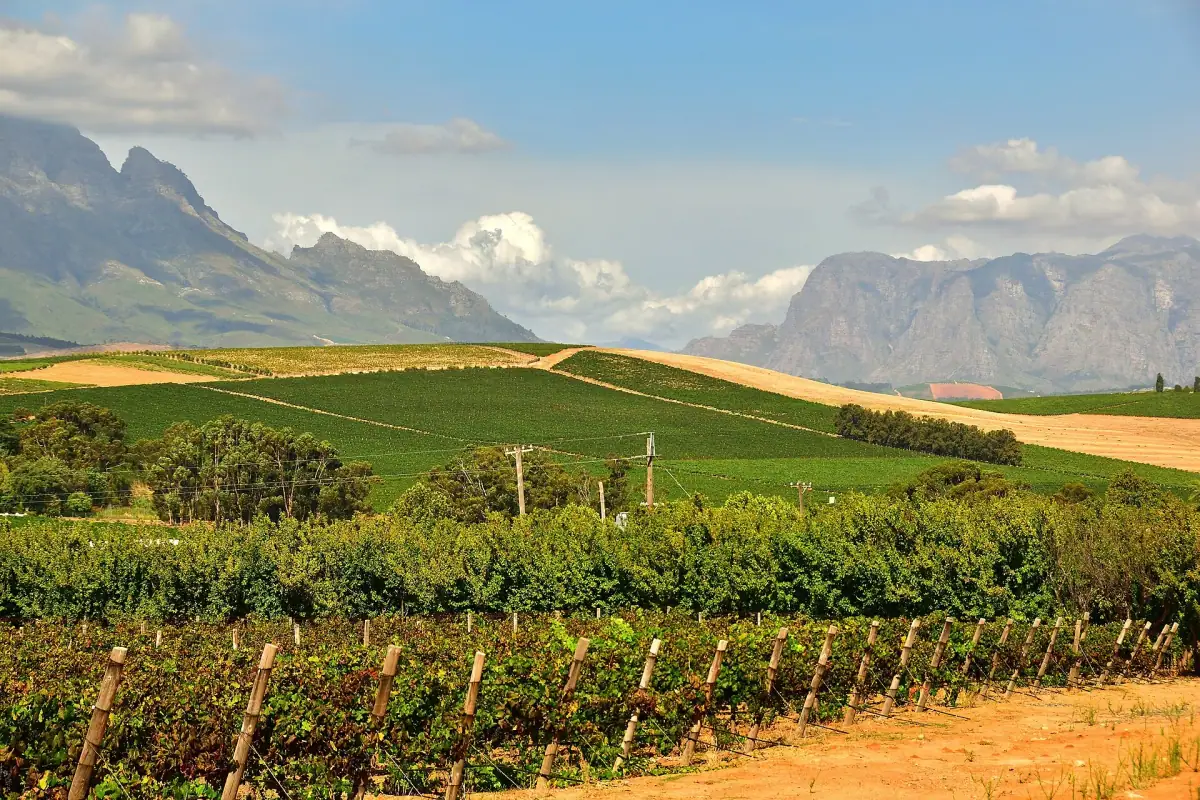
Less than an hour from Cape Town, the hills are covered in vines, the mountains form a spectacular backdrop and wine estates with white Cape Dutch-style facades follow one another along the roads. The Winelands rank among the most attractive wine regions in the southern hemisphere, and one of the best reasons to add a few days of food and wine to a trip to South Africa.
This guide presents the three main hubs, Stellenbosch, Franschhoek and Paarl, the grape varieties to know, how to organize tastings and the most pleasant seasons. For where to sleep in Cape Town before or after this getaway, see our guide on where to stay in Cape Town by neighborhood.
The Winelands in a few words
South African winegrowing goes back to the 17th century, when settlers of the Dutch East India Company planted the first vines around Cape Town. French Huguenot settlers, who arrived at the end of the 17th century, then contributed to the development of the region, which still explains estate and place names of French origin today, starting with Franschhoek, whose name means “French corner” in Afrikaans.
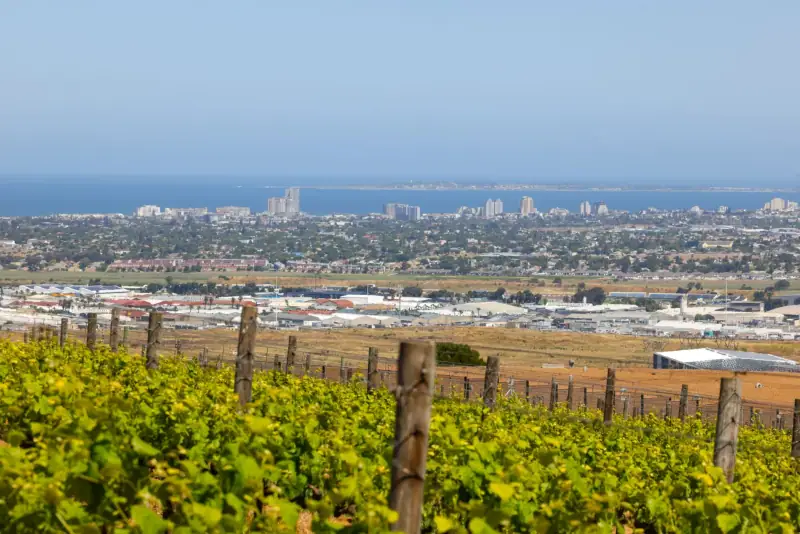
The Mediterranean-type climate, with hot, dry summers and mild, wet winters, suits the vine very well. The mountains framing the valleys create a great variety of soils and exposures, which makes it possible to produce white, red and sparkling wines of very different styles within a compact territory.
For a visitor, this compactness is an asset: you can spend the morning in the shaded streets of Stellenbosch, have lunch at an estate and end the afternoon facing the mountains of Franschhoek, without ever driving very long. The roads are well maintained and the signage for the estates is clear.
Stellenbosch, the university town
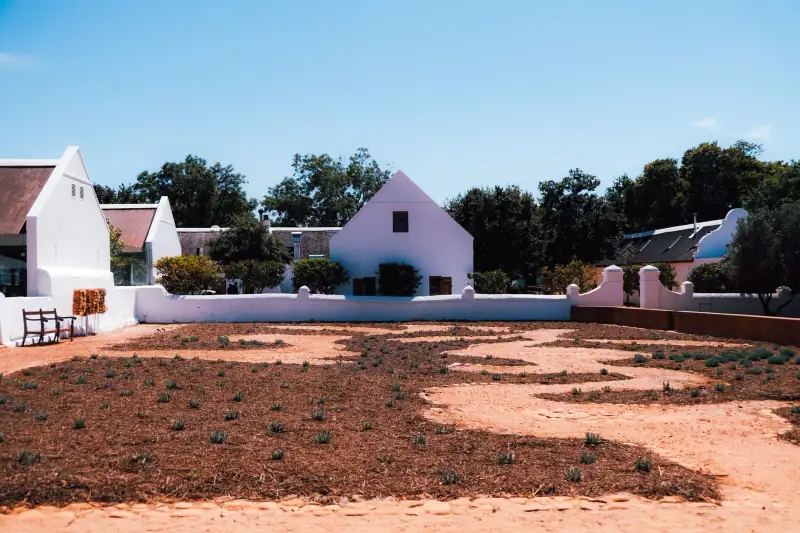
Stellenbosch is one of the oldest towns in South Africa and has a distinct atmosphere, between a lively university town and a well-kept historic center. Its oak-lined streets shelter Cape Dutch-style buildings, galleries, cafés and many restaurants. The presence of students gives the center a particular life outside the holiday periods.
The town is also a good starting point to explore the surrounding estates. The neighboring valleys offer tastings in modern cellars as well as historic farms, often with a lunch overlooking the vines. The region’s emblematic grape is pinotage, a cross of pinot noir and cinsault created in South Africa in the 20th century, which is found almost nowhere else. Cabernet sauvignon and Bordeaux-style blends are also highly regarded here.
For a first visit, plan half a day in town, on foot, then one to two half days at the estates. Distances between estates are short, but tastings take time: three visits a day, lunch included, is a comfortable pace.
Tastings and wine excursions
Compare day excursions in the Winelands, with a driver so you can taste without worry.
Franschhoek, the French corner for food lovers
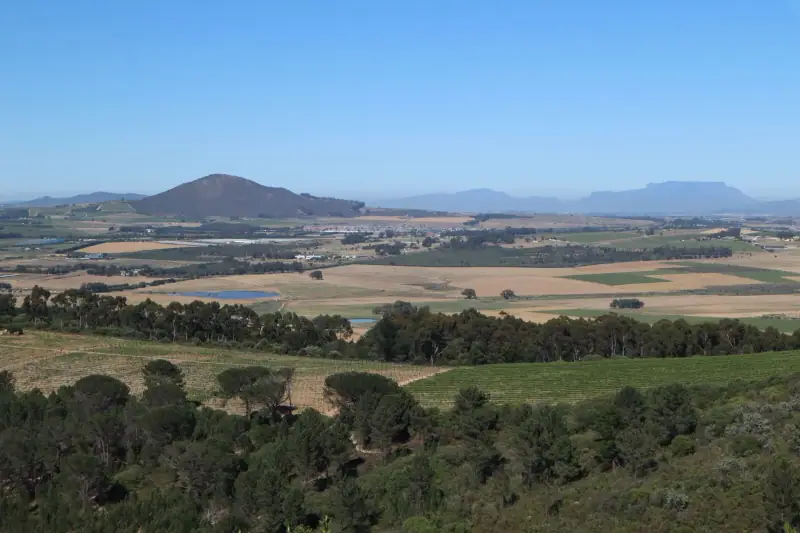
Franschhoek occupies a valley framed by mountains, about an hour from Cape Town. This small town is often presented as the food capital of the country: its main street lines up restaurants, bakeries, chocolate makers and shops, and many wine estates are only a few minutes from the center.
The Huguenot heritage is still very present, with a monument dedicated to their arrival and several French-language estate names. The valley’s wines are known for whites, notably semillon and chardonnay, as well as for traditional-method sparkling wines. It is a good place to get to know Cap Classique, South Africa’s equivalent of champagne in its method of production.
An original way to visit the valley is to take the Franschhoek Wine Tram, a hop-on hop-off service that links several estates on a circuit. Check the circuits and schedules in force before you come, as the offer varies with the season. Another pleasant option is to rent a bicycle to get between the estates close to the center, as long as you do not multiply the glasses.
Paarl and the other wine valleys
Paarl, north of Stellenbosch, is the third major town of the Winelands. More spread out and less touristy, it stretches along a long main street, overlooked by granite massifs, one of which gave the town its name. It suits those who want quieter tastings and a less crowded setting.
Other areas deserve the attention of enthusiasts: Constantia, on the Cape Peninsula, is considered the oldest wine region in the country and is easily visited in half a day from the city. Farther east, the Hermanus region, which you cross on the Garden Route, produces white wines and pinot noirs that are well regarded.
Each valley has its character, but for a first stay, the triangle of Stellenbosch, Franschhoek and Paarl is more than enough to fill two to three days without ever getting bored.
Which wines and grape varieties to taste?
South Africa produces a wide range of wines, which makes discovery exciting for a curious visitor. Here are the types to try:
- Pinotage: the emblematic red, fruity and sometimes spicy in character, from a local cross.
- Chenin blanc: a very widespread white grape, originally often called “steen”, made in fresh or richer versions.
- Cabernet sauvignon and Bordeaux-style blends: structured reds, at the heart of Stellenbosch’s reputation.
- Syrah: a spicy red that thrives in the warmest areas.
- Cap Classique: traditional-method sparkling wine, ideal as an aperitif.
At most estates, tasting is paid, with a fee that varies with the number of wines offered and the level of the estate. Some credit this fee toward bottles you buy. Ask at the estate or check its website, as practices change. Glasses are generally small, which lets you taste several, but it is perfectly fine to spit into a bucket provided for that purpose.
Lunch at an estate: pairings and atmosphere
One of the great pleasures of the Winelands is having lunch at an estate. Many offer a restaurant or a terrace overlooking the vines, from a simple picnic to a fine-dining table. The cooking often highlights local products: grilled meats, fish from the coast, regional cheeses and Cape Malay-inspired desserts.
For the most sought-after meals, a reservation is strongly advised, especially in high season and on weekends. The restaurants of Stellenbosch and Franschhoek fill quickly in December and January, as everywhere in the country. If you have a specific wish, book a few days ahead, or even more for a very popular table.
For a more modest budget, many estates offer picnic baskets to share on the lawn, which gives an equally pleasant experience at lower cost. Children are often welcome, and some estates even have playgrounds.
Sleeping among the vines
Compare hotels, guesthouses and wine estates in Stellenbosch and Franschhoek.
Getting organized: car, driver or excursion
The estates are scattered through the countryside and public transport there is limited. A rental car is therefore the most flexible option: you drive on the left in South Africa, which takes some adjustment, but the roads of the Winelands are well maintained and traffic is smooth outside the rush hours around Cape Town.
The main point of vigilance is drinking and driving. Checks exist and tolerance is low. If you plan to do many tastings, divide the roles: a sober driver, or a private driver, a ride-hailing car or a guided day excursion. The latter is often the most comfortable for a first approach, as the guide selects the estates and manages the schedule.
From Cape Town, allow about 45 minutes by road to Stellenbosch and a little over an hour to Franschhoek, outside heavy traffic. It is better to avoid leaving at rush hour on weekdays on the roads leaving the city.
Flights to Cape Town
Compare flights to Cape Town, the natural entry point for the Winelands.
When to visit the Winelands
Each season has its charm. The southern summer, from December to March, brings hot, dry, sunny weather, ideal for lunch on a terrace, but it is also high season, with higher prices and heavy crowds. The harvest generally takes place at the end of summer, between January and March depending on the grape, and gives the estates a particular atmosphere.
Autumn, in April and May, is appreciated for the golden and russet colors of the vines, with pleasant temperatures and fewer people. Winter, from June to August, is cooler and rainier, but the landscapes are green and the estates quieter, sometimes with attractive offers. Spring, from September to November, sees the vines turn green again and flowers appear, with a mild climate.
To compare these seasons with the rest of the country, see our guide to the best time to visit South Africa.
How much time to allow and what to combine
One day is enough to get a taste of the Winelands from Cape Town, combining Stellenbosch in the morning and Franschhoek in the afternoon. Two days let you sleep there, enjoy a quiet dinner and multiply experiences without fatigue. With three days, you add Paarl, a hike in the neighboring mountains or a day by bike.
These days fit easily into a wider stay: the region is visited before or after the Cape Peninsula, and you can then continue east along the Garden Route. Nature lovers will complete the trip with a safari in Kruger National Park, for a full contrast between vineyards and savanna.
Taste South Africa with a guide
Food tours, cooking classes and tastings bookable online, with free cancellation on most activities.
Practical tips for a successful tasting
A few habits simplify the visit. Book ahead at the most popular estates, notably on weekends and in high season. Eat before you start, drink water between tastings and do not hesitate to share a flight between two. Ask questions at the reception: the teams generally like telling the story of their wines and suggesting pairings.
If you buy bottles, ask about international shipping: some estates offer it, while bringing them home in checked baggage remains subject to airline rules and the customs allowances of your country. Finally, remember sunscreen and a hat: the southern sun is powerful, even outside summer.
With a little preparation, the Winelands offer one of the most pleasant days of a trip to South Africa, mixing landscapes, history and food.
Frequently asked questions
How far are Stellenbosch and Franschhoek from Cape Town?
Stellenbosch is about 50 km (31 mi) from central Cape Town, roughly 45 minutes by road without traffic jams. Franschhoek is about 75 km (47 mi) away, a little over an hour. The two towns are about thirty kilometers (19 mi) apart.
Do you need to rent a car to visit the Winelands?
It is the most flexible solution, as the estates are scattered through the countryside. If you plan several tastings, choose a designated driver, or opt for a guided excursion with a driver.
Which wines should you try first?
Pinotage, the country's emblematic grape, as well as chenin blanc, cabernet sauvignon and syrah. Sparkling wines made by the traditional method, called Cap Classique, are also worth the detour.
What is the best time to visit the vineyards?
The southern summer, from December to March, offers dry, sunny weather, with the harvest at the end of the season. Autumn, in April and May, is appreciated for the colors of the vines. Winter is cooler and rainier but quieter.
Can you do the Winelands in one day from Cape Town?
Yes, a day lets you combine Stellenbosch and Franschhoek, but two days or more leave time to enjoy the tastings and lunches without rushing.
More South Africa guides
Keep reading

Complete guide to visiting South Africa: regions, budget, tips
Visiting South Africa: regions, cities, highlights, when to go, transport, lodging and budget. The pillar guide to prepare your trip.
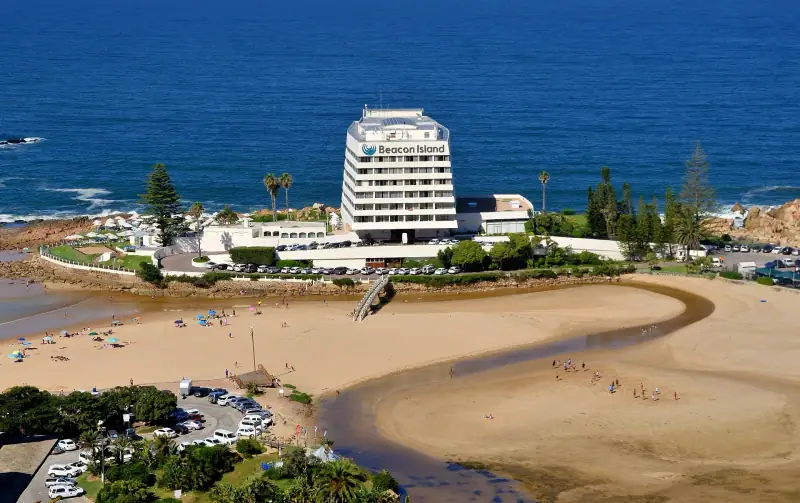
Knysna or Plettenberg Bay: where to stay on the Garden Route
Knysna or Plettenberg Bay for sleeping on the Garden Route? Lagoon or beaches, neighborhoods, number of nights, car and tips to choose without regrets.
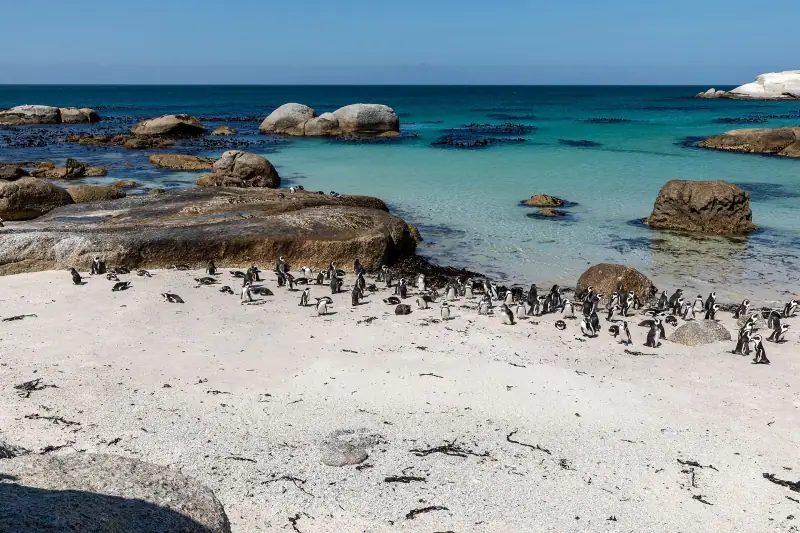
Boulders Beach: seeing the penguins, access, fees and how to avoid the crowd
Boulders Beach in Simon's Town: how to get there from Cape Town, free boardwalks or paid beach, hours, best time of day and season to avoid the crowd.
Ready-made
South Africa itineraries
8 days
Garden Route road trip: 8 days from Cape Town to Gqeberha
An 8-day Garden Route road trip: Hermanus, Swellendam, Mossel Bay, Knysna, Plettenberg Bay and Tsitsikamma, with realistic stages and distances.

14 days
South Africa in 2 weeks: Kruger, Cape Town and Garden Route itinerary
A 14-day South Africa itinerary: Kruger safari, Cape Town, Winelands and the Garden Route, with domestic flights, drives and practical tips.
5 days
Cape Town in 5 days: day-by-day itinerary, peninsula and Winelands
A 5-day Cape Town itinerary: Table Mountain, Waterfront, Bo-Kaap, the Cape of Good Hope peninsula, Winelands and Hermanus, with distances and tips.