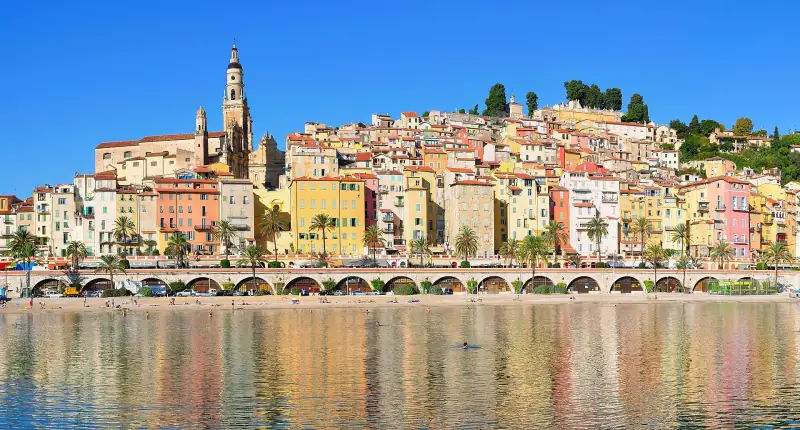
What to see
Visiting Aix-en-Provence: what to see and do in 1 to 3 days
We may earn a commission when you book through links on this page, at no extra cost to you. We don't visit or try the places we cover: we summarize published sources. How we work
In short
- One day covers the classics: Cours Mirabeau, the old town, fountains, Saint-Sauveur cathedral and a market. Two days add Cézanne's studio and the Granet museum.
- The historic center is largely pedestrian. A car is only useful for Montagne Sainte-Victoire and nearby villages; park outside the boulevards.
- The Aix-en-Provence TGV station is about 15 km (9 mi) from the center, linked by shuttles of about a quarter of an hour.
- Spring and early fall are the most pleasant. July brings the Aix Festival, with bigger crowds and higher prices.
Plane trees forming a vault over an avenue, mossy fountains around every corner, ocher facades and 17th-century mansions: Aix-en-Provence has the charm of a city of art and water, between a lively university town and the historic capital of Provence. It is also the city of Paul Cézanne, who spent most of his life here and painted relentlessly the Montagne Sainte-Victoire that stands out on the horizon.
This guide helps you decide what to see in Aix-en-Provence, in what order, and how to spread your visits over one, two or three days. You will also find advice on the season, transport, lodging and outings around the town. Opening hours and prices change: check them on official sites before you go.
Cours Mirabeau, the town’s main axis
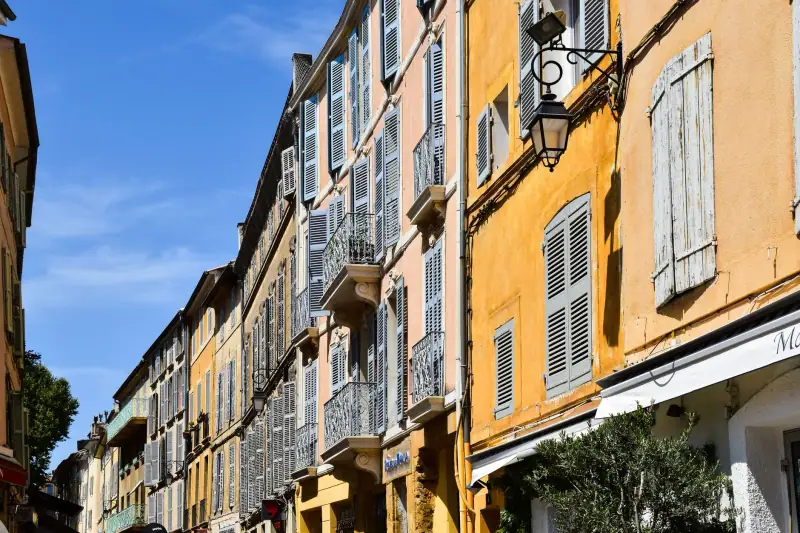
This is the natural starting point of any visit. Cours Mirabeau is a wide avenue lined with century-old plane trees whose branches form a tunnel of greenery that filters the light in summer. It clearly separates two atmospheres: to the south, the Mazarin district with its elegant mansions; to the north, the medieval old town with tighter lanes.
You will find 17th- and 18th-century facades, café terraces where it is easy to linger, and several fountains, including the Fontaine Moussue (mossy fountain), covered in thick green moss kept alive by the warm water flowing over it. The Cours is lively from morning to night: it is worth passing through at different hours, early in the morning as the town wakes up, then late in the day when the light gilds the facades.
At the west end of the Cours, the Fontaine de la Rotonde marks the entrance to the town center. It is a practical landmark: many buses and taxis stop there, and it is a classic meeting place. For a first visit, allow a good hour to walk the Cours in both directions, stopping at a terrace.
Fountains and squares of the old town
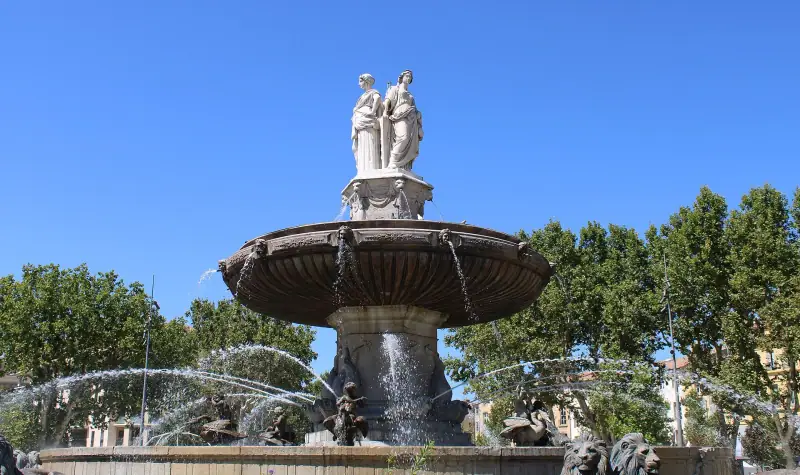
Aix is sometimes nicknamed the “city of a thousand fountains.” The number is a figure of speech, but it captures the omnipresence of water: hot springs that attracted the Romans, public fountains of all sizes, basins on every square. The town was founded by the Romans in 122 BC under the name Aquae Sextiae, the “waters of Sextius,” and thermal bathing is still part of its identity.
Rather than following a strict map, let the lanes guide you. A few stops worth making:
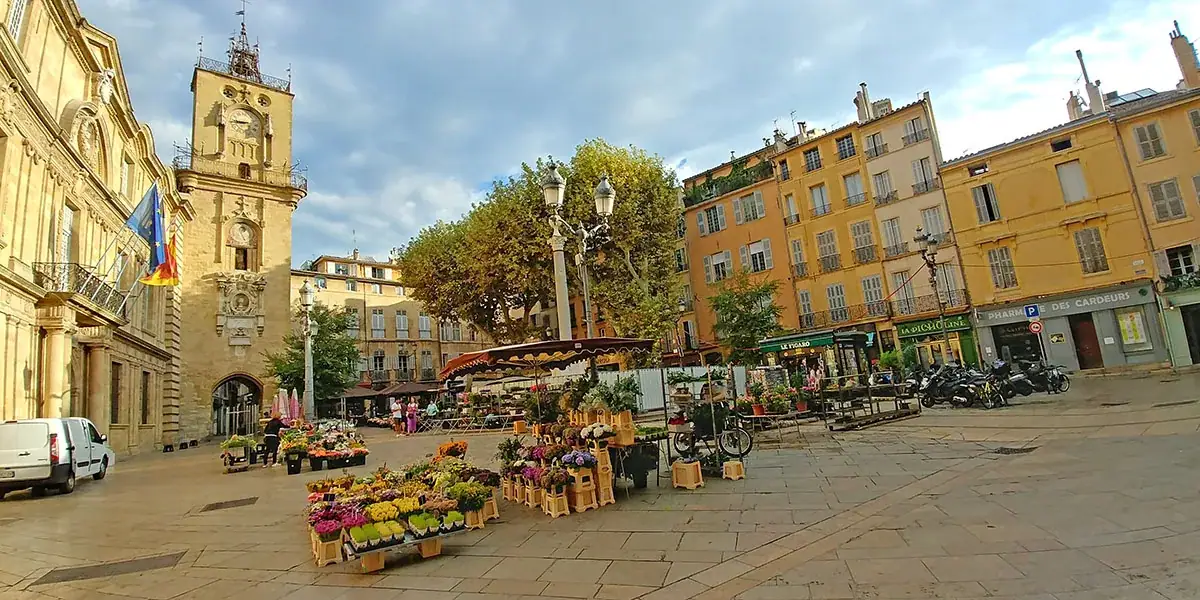
- Place de l’Hôtel de Ville, with its Clock Tower and belfry, where a market is sometimes held. The surrounding facades tell the administrative history of the town.
- Place d’Albertas, a small elegant square in classical style, much photographed, which sometimes hosts concerts in summer.
- Place des Quatre-Dauphins, in the Mazarin district, with its 17th-century fountain decorated with four dolphins.
- Place des Cardeurs and Place Richelme, livelier and more popular, lined with terraces and shops.
A stroll through this area takes half a day if you stop for coffee or go into the shops. The streets are largely pedestrian: walking comfort is excellent, as long as you wear shoes suited to cobblestones.
Saint-Sauveur cathedral and its cloister
Saint-Sauveur cathedral is a fascinating monument because it mixes several eras: you can read Romanesque, Gothic and later elements, accumulated over centuries on a site already occupied in antiquity. This layering of styles gives it a somewhat composite look, but that is precisely what makes it interesting.
Inside, lovers of religious art will appreciate the altarpieces, the woodwork and the baptistery, a reminder of how old Christianity is in the region. The cloister, open during organized visits depending on the period, is a haven of calm a few steps from the busy streets. Allow an hour there, a little more if you like looking at architectural details. Decent dress is expected in places of worship.
Hotels and rooms in central Aix
Staying in the historic center lets you do everything on foot and enjoy the town in the evening.
In the footsteps of Cézanne
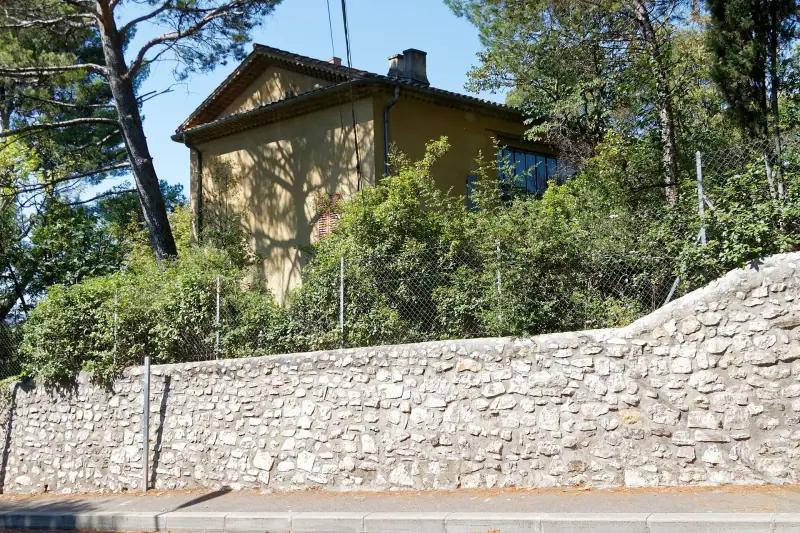
Paul Cézanne was born in Aix in 1839 and died here in 1906. His relationship with the town and its landscapes is fundamental to his work: Montagne Sainte-Victoire, the Bibémus quarries and the landscapes of the Jas de Bouffan became major motifs of modern painting. The town has built a visitor trail around him.
Cézanne’s studio, at Les Lauves, north of the center, is the most moving place. The artist worked there at the end of his life, and the studio has been preserved in a state close to the original: large north-facing windows for the light, personal objects and the still lifes he painted. It is generally visited at set times, sometimes with booking advised in high season.
The Cézanne trail in the center is marked by plaques in the pavement linking the places of his life: birthplace, school, family bank. It is easily done on foot in an hour or two and gives your stroll a guiding thread.
Cézanne also painted a few kilometers from town, notably at the Bibémus quarries, which have a fine view of the mountain. These sites are visited in certain seasons and generally by reservation. Ask the tourist office in advance.
Museums and mansions
Aix is rich in museums for a town of its size. The Granet museum, housed in a former priory, presents collections of painting, sculpture and archaeology, with works by Cézanne and a room devoted to the town. It also stages temporary exhibitions, sometimes very popular: check the program before you come.
The Mazarin district, laid out in the 17th century, has fine mansions with carved doors and wrought-iron balconies. Some house cultural institutions, such as the Hôtel de Caumont, now an art center. You can simply walk the streets of the district, calmer than Cours Mirabeau, to appreciate the architecture without going in.
The Vasarely Foundation, on the outskirts, is devoted to the optical and kinetic art of Victor Vasarely. Its building, designed as a work in itself, surprises with its geometry. It is a visit apart, for those interested in 20th-century art, and contrasts sharply with the historic atmosphere of the center.
For a two-day stay, choose one museum and one Cézanne site: it is a good balance between art and walking. For wider context on the region, our complete guide to Provence helps place Aix among the other stops.
Markets and Aix flavors
Aix’s markets are part of the town’s charm. The market for fruit, vegetables and fresh produce is generally held in the morning on Place Richelme, in the historic center, while other markets, of varied goods, crafts or flea-market items, enliven other squares on different days of the week. Days and hours change with the seasons: check with the tourist office. To understand how Provençal markets are organized overall, see our guide to Provence markets.
As for specialties, the calisson is the emblem of Aix: a diamond-shaped confection made of almond paste and candied melon, covered with royal icing. The town’s confectioners offer many variants, and it is a classic souvenir to bring home. You will also find olive oil, olives, goat cheese, tapenades and seasonal fruit. To go with the meal, the region produces well-known rosé wines: discover them in our article on Provence wines.
For meals, the town is not short of terraces. Choose places a little off the busiest streets, where quality is often better at similar prices, and check recent reviews before booking.
Montagne Sainte-Victoire and the surroundings

Montagne Sainte-Victoire is Aix’s great natural backdrop, visible from many points in town. This limestone ridge east of the town, made famous by Cézanne’s paintings, is a protected site that attracts hikers, climbers and landscape lovers. Several trails of varying length and difficulty let you get close: some are easy, others involve a good elevation gain.
In summer, access to some massifs in the region can be regulated, even banned when there is fire risk: check information from the prefecture or the massif’s official site before you go. Carry plenty of water, hiking shoes and a hat, and avoid the hottest hours of the day.
If you prefer a quiet outing, several viewpoints on the mountain can be reached by car from Aix, and the roads around it make it easy to stop for photos. You can also approach the massif from neighboring villages, which are calmer.
Guided tours and excursions around Aix
Guided walks, outings in the Aix area and excursions in Provence, to compare according to your interests.
What to do in 1, 2 or 3 days in Aix
One day. Start with Cours Mirabeau in the morning, continue with a market if it is a market day, then lunch on a terrace. In the afternoon, walk the old town, its squares and fountains, step into Saint-Sauveur cathedral, then finish in the Mazarin district in the evening light.
Two days. Add a second day devoted to art: Cézanne’s studio at Les Lauves in the morning, the Granet museum in the afternoon, and dinner on a calmer street in the center.
Three days. Devote the third day to nature: a hike on Montagne Sainte-Victoire, a walk around a nearby lake or an excursion to a neighboring village. Aix is also a good base for reaching Marseille, Cassis or the Luberon by car or public transport: our 3-day itinerary between Marseille, Cassis and Aix shows how to combine these stops.
If you are coming from the Rhône valley, Aix pairs well with Avignon: also read our guide to visiting Avignon to compare the two atmospheres, one papal and fortified, the other classical and aristocratic.
How to get there and get around
Aix-en-Provence is well served. The Aix-en-Provence TGV station is about fifteen kilometers (9 mi) from the center, and shuttles link it to the bus station in about a quarter of an hour: allow a little extra time for the connection. From Marseille, about thirty kilometers (19 mi) away, buses and trains reach Aix in under an hour in general, depending on traffic and the mode chosen.
In town, the historic center is covered on foot. City buses serve the more distant districts, such as Les Lauves or the Vasarely Foundation. By car, avoid entering the lanes of the center: park in a lot on the edge, and finish on foot. Our guide to getting around Provence details the other transport options.
Where to stay in Aix-en-Provence
For a first visit, lodging in the historic center is the most practical: you will be within walking distance of the squares, fountains and restaurants, and you will enjoy the quiet streets in the evening. Boutique hotels set in former mansions are plentiful, but rates climb quickly in summer and during festivals.
If your budget is tighter or you travel by car, look at the districts just outside the center or at B&Bs in the countryside, in the Aix area, where prices are often more affordable and parking simpler. You can also stay in Marseille and come to Aix for the day. To compare possible bases, read our guide on where to stay in Provence.
Which season to choose for visiting Aix?
Aix can be visited all year. In spring, temperatures are mild and terraces fill up. Summer is hot, sometimes very hot: bring water and plan visits early or late in the day. July is marked by the Aix Festival, a major opera and classical music event, which gives a special atmosphere but pushes prices up. Fall offers beautiful light and more affordable rates. Winter is quieter, some businesses slow down, but markets and museums stay open.
The mistral, a dry, cold wind that sometimes blows in Provence, can make walks cooler: bring a windbreaker in the shoulder seasons. To compare periods more precisely, see our guide to when to go to Provence.
Key takeaways
To make the most of Aix-en-Provence, start from Cours Mirabeau, let the squares and fountains carry you, set aside time for Cézanne and keep half a day for Montagne Sainte-Victoire. One day is enough for the classics, two days let you taste art and museums, three days open the door to nature and surrounding villages. Check hours and prices on official sites, avoid the car in the center and book early if you come in July.
Frequently asked questions
How long does it take to visit Aix-en-Provence?
One day is enough for the classics: Cours Mirabeau, the old town, fountains, Saint-Sauveur cathedral and a market. With two days, you add Cézanne's studio, the Granet museum and the Mazarin district. A third day lets you head out to Montagne Sainte-Victoire or the surrounding villages.
What should you see first in Aix-en-Provence?
Cours Mirabeau and its plane trees, the old town with its squares and fountains, Saint-Sauveur cathedral, the Granet museum and Cézanne's studio at Les Lauves are the essentials. The Mazarin district and its mansions round out the visit.
Can you visit Aix-en-Provence without a car?
Yes. The historic center is largely pedestrian and can be covered on foot. A car is only useful for Montagne Sainte-Victoire, nearby villages or the Luberon. In the center, it is better to use a parking lot on the edge of the boulevards.
How do you get to Aix-en-Provence from Marseille or by high-speed train?
From Marseille, regular buses and trains reach Aix in under an hour. The TGV arrives at Aix-en-Provence TGV station, about fifteen kilometers (9 mi) from the center, linked to the town by shuttles. Check the arrival station when you book.
What is the best time to visit Aix-en-Provence?
Spring and early fall are the most pleasant: soft light, open terraces, bearable heat. Summer is very hot, with the Aix Festival in July drawing large crowds. Winter is quiet, but markets and museums stay open.
Which specialties should you try in Aix-en-Provence?
The calisson, a confection made of almonds and candied melon, is the town's emblematic specialty. Markets also offer olive oil, olives, goat cheese, seasonal fruit and vegetables, and many rosé wines are found in the region.
Can you visit Aix-en-Provence with children?
Yes. Fountains, lively squares, parks and markets appeal to children, and a nature walk toward Montagne Sainte-Victoire or a nearby lake extends the day. Adapt the length of walks to their age, especially in summer.
More Provence guides
Keep reading
What to see around Mont Ventoux: the climb, Nesque gorges, Dentelles and villages
What to see around Mont Ventoux: the summit, Nesque gorges, Dentelles de Montmirail, Sault, Bédoin and Vaison-la-Romaine. A guide to plan your visit.
What to see on the Valensole plateau: villages, lavender and gorges to explore
What to see on the Valensole plateau: Riez, Valensole, Puimoisson, Gréoux, Quinson and Les Mées, villages, heritage and landscapes beyond the lavender.
What to see in the Alpilles: Les Baux, Saint-Rémy and villages worth a stop
What to see in the Alpilles: Les Baux-de-Provence, Saint-Rémy, Glanum, Fontvieille, olive groves and trails. A guide to plan 2 to 3 days in the range.
Ready-made
Provence itineraries

3 days
Lavender route in Provence in 3 days: Valensole, Sault and the Luberon, stops and distances
Moustiers-Sainte-MarieSault
3 days
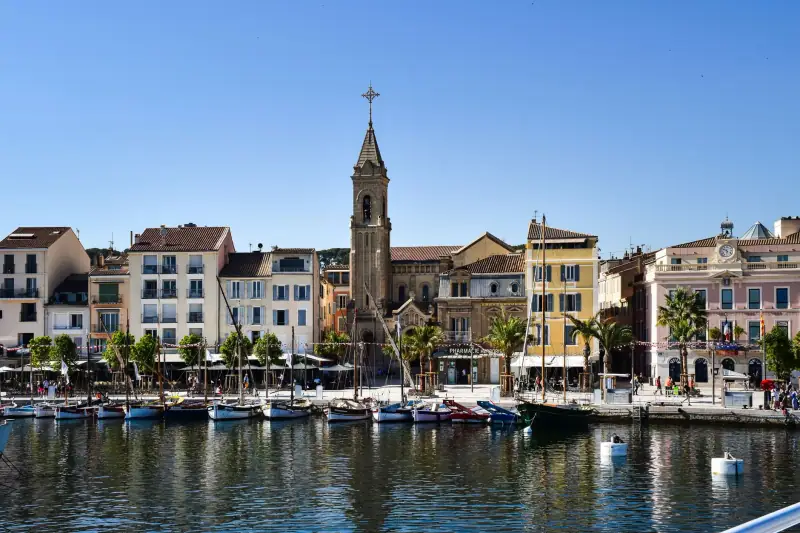
3 days between Marseille, Cassis and Aix-en-Provence: a detailed itinerary
3-day Provence itinerary: Marseille and the Vieux-Port, Cassis calanques, Aix-en-Provence and its fountains. Day by day, distances and tips.
5 days
5-day Provence itinerary: Avignon, Luberon, Alpilles and Camargue
A day-by-day 5-day Provence itinerary: Avignon, Luberon, Alpilles, Arles, Camargue, Aix and Cassis, with realistic distances and practical tips.
Can be adapted in the planner