What to see
What to See Around Utrecht and Central Netherlands: Veluwe, Amersfoort, Arnhem
We may earn a commission when you book through links on this page, at no extra cost to you. We don't visit or try the places we cover: we summarize published sources. How we work
In short
- Utrecht is a rail hub, so you can sleep in one place and head out each morning to Amersfoort, Arnhem, De Haar Castle or the Veluwe.
- Two days cover Utrecht and its immediate surroundings; add a full day for De Hoge Veluwe and the Kröller-Müller Museum, and three to four days with Amersfoort and Arnhem.
- De Hoge Veluwe lends white bikes free of charge to visitors; the park ticket does not include the Kröller-Müller Museum.
- Book the Rietveld Schröder House in advance: visits are in small groups.
When people talk about the province of Utrecht and central Netherlands, they immediately think of the city of Utrecht, its canals and the Dom Tower. It is an excellent starting point, but the region offers much more: a fortified town with postcard charm, a fairy-tale castle, vast heathlands and forests, one of the country’s finest art museums in the middle of nature, and eastern cities such as Arnhem. This guide helps you build a star-shaped stay around Utrecht, without a car if you wish, and complements the article on day trips to Utrecht and Haarlem.
Why explore central Netherlands
The center of the country is the easiest area of the kingdom to get around. Utrecht is a rail hub: trains arrive from every direction, which lets you sleep in the same place for several days and head to a different destination each morning. The region is also clearly less touristy than Amsterdam: queues are shorter, lodging is often a bit more affordable and the landscapes are much more varied than the usual image of canals.
There are three very different atmospheres. West of Utrecht, polders, rivers and castles. In the center, brick towns on a human scale. In the east, the Veluwe, a large massif of forests, heath and inland dunes, which contrasts with the idea of an entirely flat, engineered country. If you have already planned the classic circuit, slip these stops into a seven-day itinerary in the Netherlands to enrich it.
Utrecht, the ideal base for fanning out
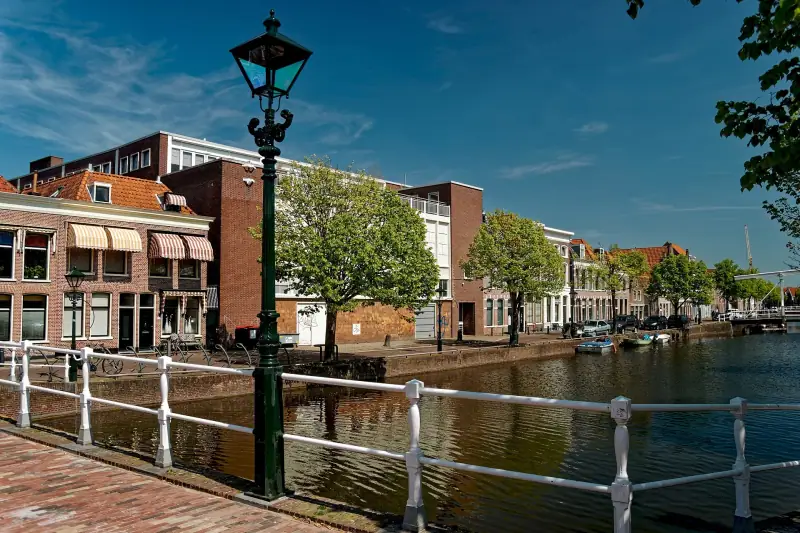
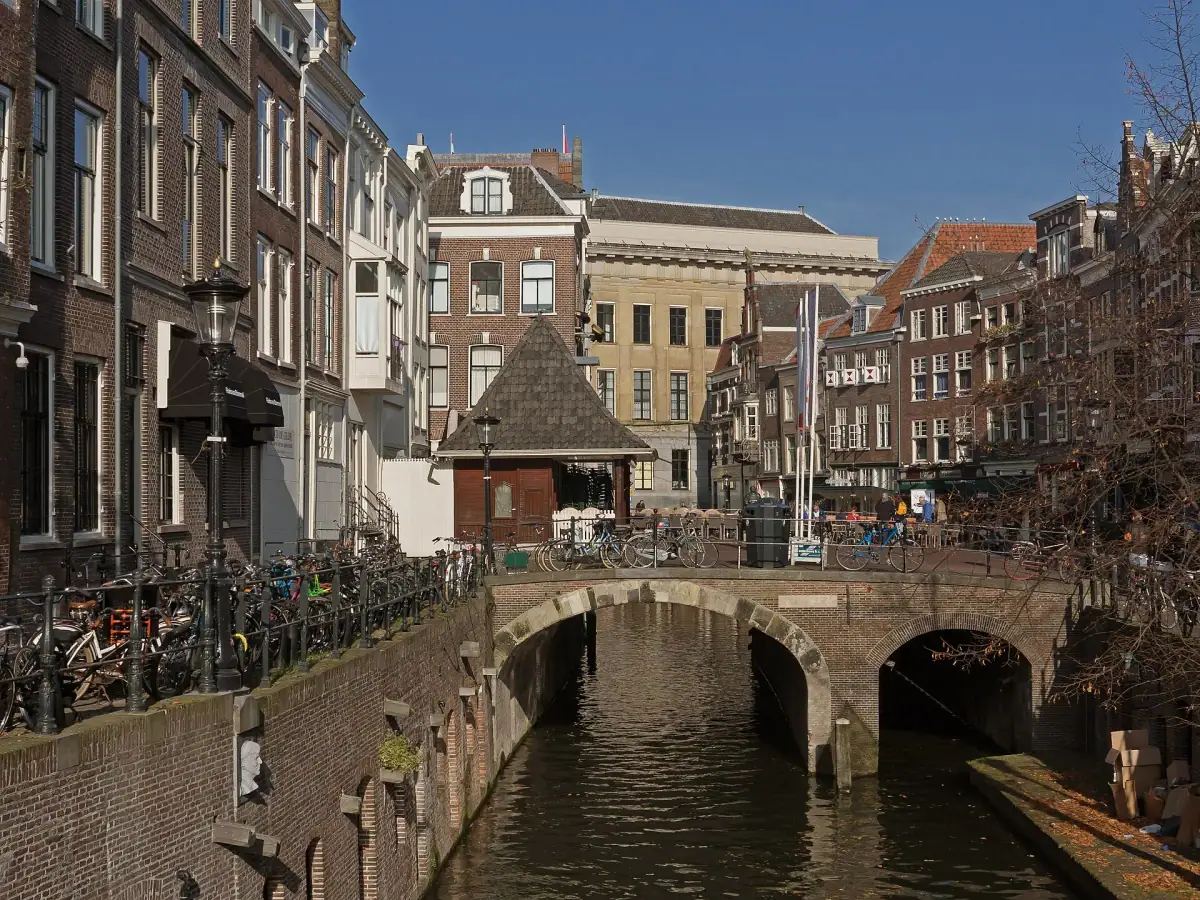
Utrecht deserves a full day on its own, especially for the Oudegracht, its wharves below street level and the Dom Tower, already covered in the article on day trips from Amsterdam. What is often forgotten is the richness of its museums, which save rainy days.
The Centraal Museum brings together art, the city’s history and design, and also runs the Rietveld Schröder House, built in 1924 by the architect Gerrit Rietveld and listed as a UNESCO World Heritage site. This small house with colored planes and movable partitions is one of the manifestos of the De Stijl movement. Visits are in small groups, so it is best to book in advance on the official site.
Families will enjoy the museum devoted to Miffy, the famous little rabbit imagined by the Utrecht author Dick Bruna. It is opposite the Centraal Museum, in the center. The Museum Speelklok, dedicated to automata and mechanical musical instruments, rounds out this selection well if you travel with children.
To choose a neighborhood to sleep in, see the guide to neighborhoods to stay in Utrecht: being close to the central station is a real asset, because it saves you time on every excursion.
🏨 Sleeping in Utrecht: by staying in one place, you fan out easily to Amersfoort, the Veluwe and Arnhem. Compare lodging in the center for your dates.
De Haar Castle, a fairy-tale setting west of Utrecht
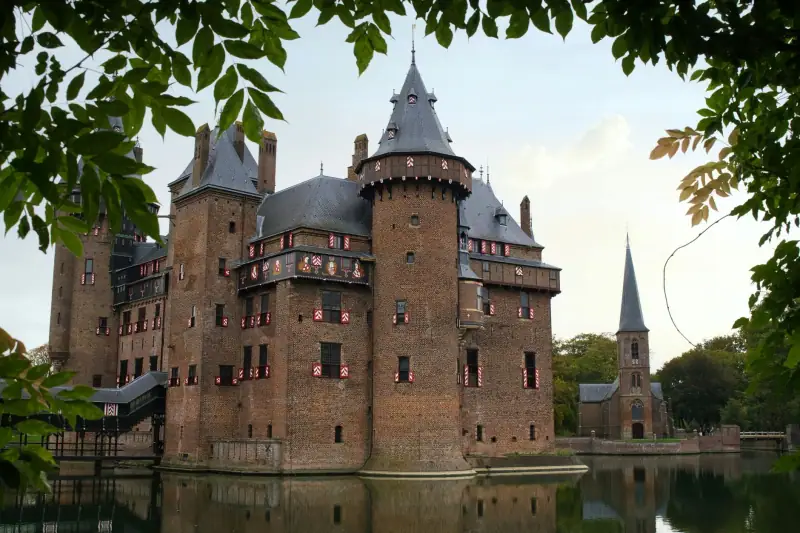
West of the city, in the village of Haarzuilens, De Haar Castle (Kasteel de Haar) is generally presented as the largest moated castle in the Netherlands. The medieval ruins were rebuilt in the late 19th century, under the direction of the architect Pierre Cuypers, also known for the Rijksmuseum in Amsterdam. The result, with its towers, moats and English-style park, looks like a film set.
It is easy to reach from Utrecht: a train gets to Vleuten station in about ten minutes, then allow a walk or a bike ride to reach the estate. The park and gardens are visited separately from the castle, whose interior is seen on a guided visit at certain times. Check the official site for the season’s hours.
Half a day is enough: the trip, the park visit, a coffee there. If the weather is fine, the ride back by bike through the polders is a very good way to feel the Dutch countryside.
Amersfoort, a small-scale fortified town
A short train ride from Utrecht, Amersfoort is one of the best-preserved medieval towns in the country. Its center, surrounded by canals and remains of ramparts, is covered on foot in a few hours. No big avenues: only cobbled lanes, half-timbered and gabled houses, small bridges and cafés by the water.
Three places deserve a stop:
- The Koppelpoort, built around 1425, which was both a land gate and a water gate, a rare feature in the Netherlands. It stands on the Eem, the river that runs through the town, and can be photographed from every angle.
- The Onze-Lieve-Vrouwetoren tower, nicknamed “Lange Jan,” about 98 meters (322 ft) high. It is considered one of the tallest late Gothic bell towers in the country and can be climbed; tickets are taken at the nearby information office or online.
- Mondrian’s birth house, the Mondriaanhuis, which recalls that the painter Piet Mondrian was born in Amersfoort. The ground floor is devoted to his life and artistic evolution, the upper floors host temporary exhibitions.
Amersfoort has the advantage of being calm in the evening and easy to combine with the Veluwe by bus or bike. If you like towns discovered without a map, it is a very good alternative to the big stops.
De Hoge Veluwe National Park, nature and white bikes
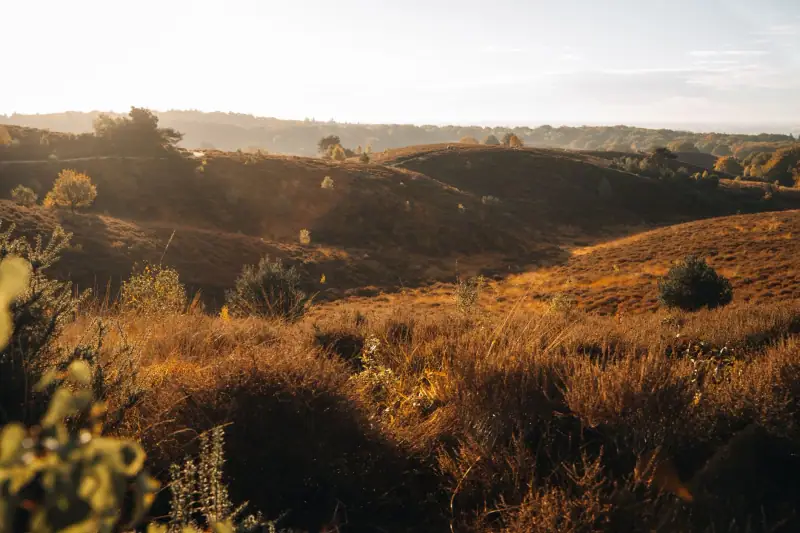
In the east, De Hoge Veluwe National Park is one of the trip’s great surprises. Over about 5,500 hectares (about 13,600 acres), it mixes forests, heather heath, meadows and drifting sand areas, which gives it an air of open space unexpected in the Netherlands. In late summer, the purple heather gives the landscape a very particular color.
The park has a wonderful feature for travelers without a car: more than a thousand white bikes (about 1,800, according to official information) are made available free of charge to visitors. You take them at one of the starting points, at the entrance, the visitor center or the museum, ride on the paths and leave them at the end of the ride at one of those places. The paths are flat, marked and suited to all levels.
The park entry fee gives access to the site and the bikes, but not to the Kröller-Müller Museum. Keep that in mind in your budget, and see the budget for the Netherlands guide to estimate your spending there. A typical one-day plan: in the morning, a bike loop on the heath; lunch near the visitor center; in the afternoon, the museum.
The park is also home to the Museonder, an underground museum devoted to the soil and what lives beneath our feet, accessible with the park entry, as well as the Sint-Hubertus hunting lodge, built by the architect Hendrik Petrus Berlage, which can be visited at specific times. Check opening before traveling.
The Kröller-Müller Museum, art in the middle of the woods
In the heart of the park, the Kröller-Müller Museum is one of the country’s great art museums. Its main asset is a collection of paintings by Vincent van Gogh among the most important in the world, with works from his Dutch period and his years in France. The museum also presents paintings by other 19th- and 20th-century masters, including Seurat, Mondrian and Picasso.
Outside, the sculpture garden is one of the finest surprises: large contemporary works are laid out in clearings, among trees and ponds, in the open air. The walk is done on foot and easily takes an hour or two; it is especially pleasant in clear weather.
Allow half a day for the museum alone, and a full day if you also want to ride in the park. If Amsterdam wore you out with queues at the Rijksmuseum or the Van Gogh Museum, you will appreciate the tranquility of the place. To compare with the capital, read the article on Amsterdam museums not to miss.
🎟️ Guided tours and excursions: walking tours, boat rides or day excursions from Utrecht or Amsterdam can be booked online, often with free cancellation depending on the offer.
Arnhem, between museums and nature
In the east, Arnhem is the gateway to the Veluwe. The city, capital of the province of Gelderland, was heavily damaged during the Second World War (the Battle of Arnhem, in September 1944) and today has a center more modern than the northern cities, with districts of shops, restaurants and bars. Its interest lies mostly in its surroundings and its places to visit.
Two sites stand out:
- The Netherlands Open Air Museum (Nederlands Openluchtmuseum), which recreates houses, farms and windmills from all regions of the country. It is a good family visit for understanding the architecture and daily life of the past.
- Burgers’ Zoo, a large animal park that reproduces several natural habitats, much liked by children.
Arnhem can also serve as a starting point to reach the Veluwe by bus from the station. For history lovers, the city and its surroundings hold several memorials to the 1944 battle; the tourist office can guide you depending on your available time.
Apeldoorn and Het Loo Palace
North of the Veluwe, Apeldoorn is home to Het Loo Palace, former summer residence of the House of Orange-Nassau, now turned into a museum. The period apartments, the furniture and above all the very symmetrical French-style gardens evoke a small Dutch Versailles. It is a good stop if you like royal history and formal gardens, and it combines well with a day in the Veluwe region.
Hours and access (palace, gardens, exhibitions) vary by season: check the official site before planning. If you are short of time, choose between this palace and De Hoge Veluwe park, as each takes half a day to a full day.
Getting around the region
The train is the key. Utrecht Centraal is a hub from which connections leave for Amersfoort, Arnhem and many other cities; for schedules and tickets, use the app or the site of the national railway, NS. The article on getting around the Netherlands by train and bike details transit tickets, the OV-chipkaart card and bike rental.
For the Veluwe, the last kilometer is done by bus or bike depending on the chosen entrance; check connections on the day itself, because they depend on the season and the day of the week. If you prefer a car, the roads are good and parking lots are signposted, but access to city centers is often complicated and paid. The bike remains the best way to explore the countryside around each town.
🚗 Rent a car: to reach the Veluwe and chain several sites in a day, a vehicle offers flexibility. Compare rental companies.
Three itineraries of 2 to 4 days from Utrecht
Here are three ways to organize your stay, depending on the time you have.
Two days: the best of Utrecht
- Day 1: Oudegracht, Dom Tower, lunch near the cathedral, Centraal Museum and the Miffy museum in the afternoon.
- Day 2: Rietveld Schröder House in the morning (booking advised), then De Haar Castle in the afternoon.
Three days: Utrecht, Amersfoort and the Veluwe
- Day 1: Utrecht, following the program above.
- Day 2: Amersfoort in the morning (Koppelpoort, Lange Jan), back to Utrecht late in the afternoon.
- Day 3: De Hoge Veluwe park and the Kröller-Müller Museum, full day.
Four days: add Arnhem
- Days 1 to 3: as above.
- Day 4: Arnhem and the Netherlands Open Air Museum, or Apeldoorn and Het Loo Palace.
These plans remain feasible by public transport. To adapt them to the seasons, see the guide on when to go to the Netherlands.
Practical tips for your visit
A few habits avoid unpleasant surprises:
- Book places with limited time slots: the Rietveld Schröder House and the climb of some towers run in small groups, with places sometimes limited in high season.
- Check closing days: many museums close one day a week, often early in the week, and hours vary by season.
- Bring a waterproof jacket: the weather changes fast, even in summer, and showers are frequent in the center of the country.
- Shoes: for the cobblestones of the cities as for the sandy paths of the Veluwe, wear closed, comfortable shoes.
- Respect nature: in the park, stay on the paths, do not disturb wildlife and take your trash with you.
- Payment: bank cards are widely accepted, but some small kiosks or parking lots still ask for coins.
To go further
Central Netherlands lends itself well to a second trip: once the big classics are seen, you just need to pick a new direction from Utrecht. If you want to complete it with cities farther west, read the article on Gouda, Leiden and Dordrecht. And if you prefer to compare regions first, the complete guide to the Netherlands gives an overview for building your itinerary.
Frequently asked questions
What is there to see in the Utrecht and central Netherlands region?
The essentials are Utrecht and its medieval center, De Haar Castle to the west, the city of Amersfoort and its ramparts, then farther east De Hoge Veluwe National Park with the Kröller-Müller Museum, as well as Arnhem and its museums. All of it is reached from Utrecht by train, sometimes completed by a bus or a bike.
How many days should you plan to visit the Utrecht and central region?
Allow two days for Utrecht and its immediate surroundings, and a full day for De Hoge Veluwe park and the Kröller-Müller Museum. With Amersfoort and Arnhem, three to four days let you travel without rushing.
How do you visit De Hoge Veluwe park without a car?
The park has white bikes made available free of charge to visitors at its entrances, at the visitor center and near the museum. You can reach the park by train to the Ede or Arnhem area, then by bus: check schedules and connections on the day itself.
Does the De Hoge Veluwe park ticket include the Kröller-Müller Museum?
No, park entry and museum entry are separate: the park fee gives access to the park and the white bikes, but the museum is paid separately. Check the official sites for current rates and hours.
Utrecht or Amersfoort: which to choose for sleeping?
Utrecht offers more lodging choice and a very well-served central station, which makes it the best base for fanning out across the region. Amersfoort is smaller and calmer: it suits a quiet night or if you prefer a fortified-town setting.
What is the best time to visit central Netherlands?
Spring and early fall are pleasant: days are long enough for cycling, the Veluwe heather is generally in bloom in late summer, and crowds are more moderate than in midsummer. Always bring a waterproof jacket.
More Netherlands guides
Keep reading
What to See in North Holland: Villages, Cheese and Dunes
What to see in North Holland: Haarlem, Zaanse Schans, Volendam, Marken, Edam, Alkmaar, Zandvoort dunes and Texel. Tips and trips from Amsterdam.
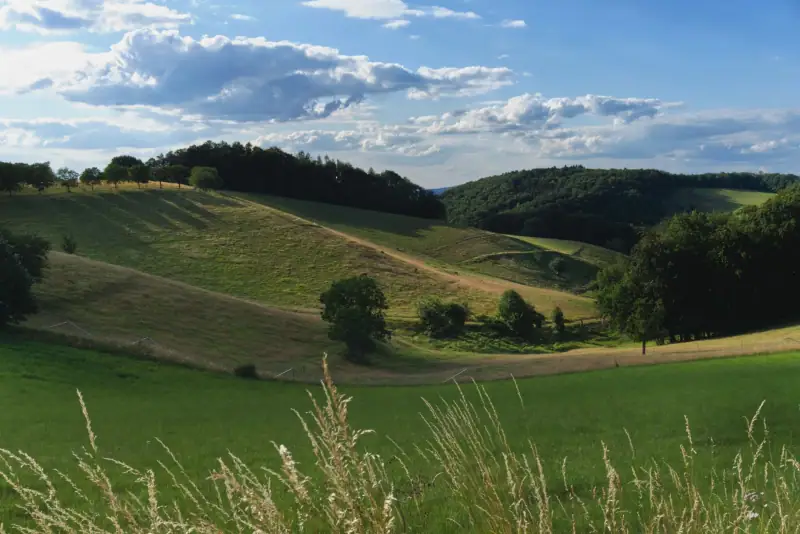
What to See in Dutch Limburg: Valkenburg, Thorn, Roermond
Beyond Maastricht, Limburg offers hills, marl caves, the white village of Thorn, Roermond and the country's highest point. What to see and how to plan.
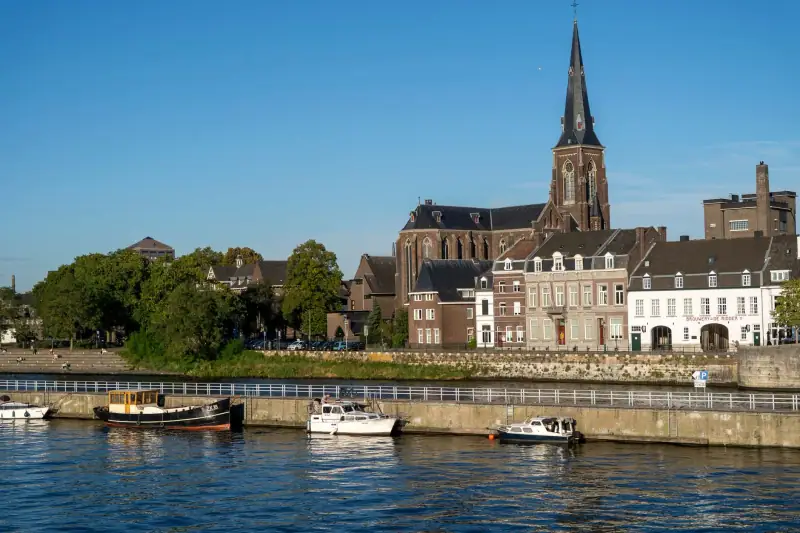
Visiting Maastricht: What to See and Do in 1 to 2 Days
Maastricht, southern Netherlands: Vrijthof square, basilicas, a bookstore in a church, ramparts, caves and vlaai. What to see and how to get there.
Ready-made
Netherlands itineraries
4 days
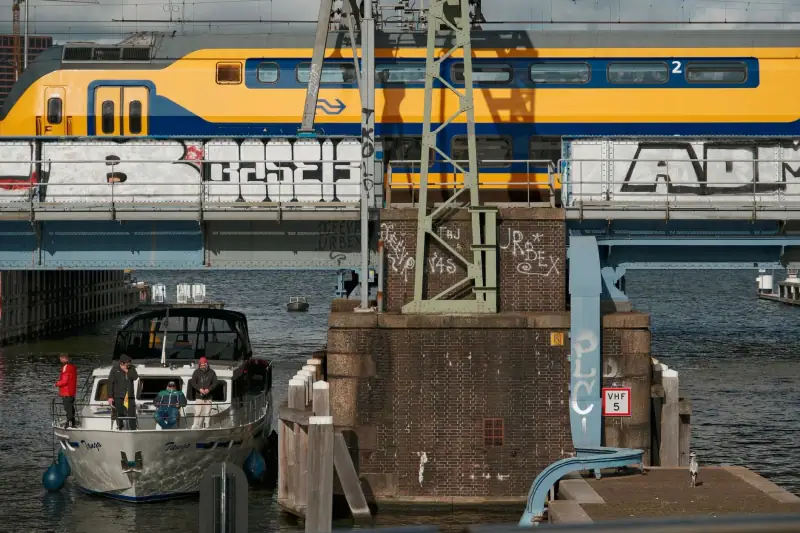
Amsterdam and Maastricht in 4 Days Without a Car: Is It Doable by Train?
AmsterdamMaastricht
7 days
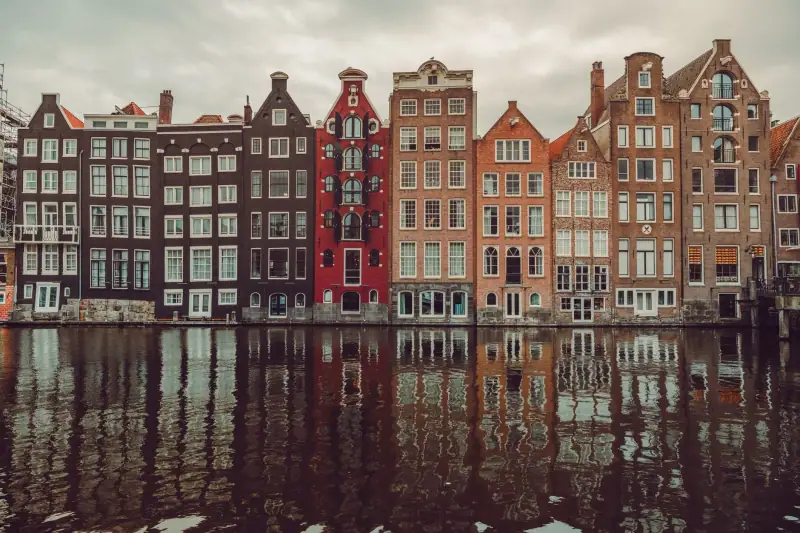
Netherlands 7-Day Itinerary: Amsterdam, Delft, Rotterdam, Kinderdijk and Utrecht
A one-week itinerary in the Netherlands by train: Amsterdam, Haarlem, Zaanse Schans, The Hague, Delft, Rotterdam, Kinderdijk and Utrecht, day by day.