What to see
What to See in Dutch Limburg: Valkenburg, Thorn, Roermond
We may earn a commission when you book through links on this page, at no extra cost to you. We don't visit or try the places we cover: we summarize published sources. How we work
In short
- Limburg is the only truly hilly Dutch province: Valkenburg's marl caves and castle ruins, white Thorn, Roermond, and the Vaalserberg at about 322 m (1,056 ft).
- Two days cover Maastricht and Valkenburg; with three or four days you add Thorn, Roermond and a day of walking or cycling in the hills.
- Valkenburg is about a quarter hour by train from Maastricht; Roermond about 40 minutes and about 40 km (25 mi) away; Thorn has no station.
- The caves are former marl quarries, visited with a guide and cool all year: bring a jacket.
When you think of the Netherlands, you imagine canals, windmills and a totally flat horizon. Limburg, the southernmost province of the country, goes against that image: wooded hills, vineyards, villages of pale stone, peaceful rivers and a culture that looks as much toward neighboring Belgium and Germany as toward Amsterdam. The guide to Maastricht details the provincial capital; this article explores the rest of the territory, with stops that are easy to chain from the city.
Why Limburg deserves a detour
Dutch Limburg stretches in a long narrow strip along the Meuse, squeezed between Belgium to the west and Germany to the east. The south of the province, often called Zuid-Limburg, is the most spectacular part: this is where the reliefs, small valleys and typical villages are found. Farther north, the landscape flattens and turns toward the Meuse lakes, pine forests and heath.
This border position has shaped local identity. You hear a dialect, Limburgish, which residents defend with pride. The food is more generous than in the rest of the country, pastries hold a major place (more on that below) and carnival, celebrated at the end of winter, is a true institution. You sometimes feel closer to a small Walloon town than to a neighborhood of Amsterdam.
Another advantage: fewer crowds. Outside school vacations, Limburg stays calm, with lodging often more affordable than in the capital. If you are planning a wider stay, slip it into a seven-day itinerary in the Netherlands by ending in the south.
Valkenburg, the town of caves and a ruined castle
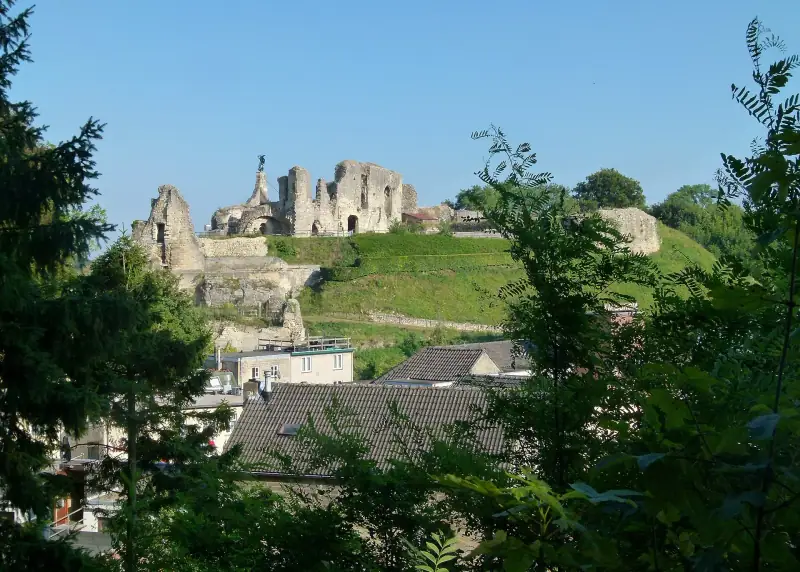
Valkenburg aan de Geul is the best-known tourist destination in Limburg after Maastricht. The small town, set in the Geul valley about fifteen kilometers (9 mi) east of Maastricht, packs a very varied heritage into a few streets: ramparts, medieval gates, pale stone houses, café terraces and shops that live largely off visitors.
Its emblem is Valkenburg Castle, or rather its ruins, perched on a hill above the center. It is presented as the only hilltop fortress, built on a promontory, in the Netherlands, a country where castles are almost all built on the plain, surrounded by water. The climb on foot is short, and the remains offer a nice view over the town’s roofs and the surrounding hills.
The marl caves
Under the hill, the soft limestone rock called marl was quarried for centuries to build the houses, churches and the castle itself. The galleries left by this quarrying now form underground networks that can be visited. Two sites are particularly well known: the Gemeentegrot (the municipal cave) and the Fluweelengrot (the velvet cave), located under the castle ruins. These are not natural caves but quarries, and that is an important nuance: you discover sculptures, drawings on the walls and stories of wartime refuges.
Visits are generally guided and last a little over an hour. The temperature stays cool all year: take a jacket, even in midsummer. Hours and rates vary by season; check the official sites before leaving rather than relying on an old blog post.
🏨 Sleeping in southern Limburg: Maastricht and Valkenburg are the two most practical bases for fanning out. Compare lodging for your dates.
Valkenburg at Christmas time
At the end of the year, Valkenburg changes atmosphere completely. The caves host Christmas markets, an unusual underground setting, sheltered from cold and rain. These markets draw many visitors, including from Belgium and Germany: if you plan to come in December, book your lodging far in advance and choose a weekday.
How to get there
Valkenburg is linked to Maastricht by train, a trip of about a quarter hour. The station is a few minutes’ walk from the center. It is therefore an ideal half-day excursion, or even a full day if you add the climb to the castle, a cave visit and a walk in the valley.
The Heuvelland hills and the country’s highest point
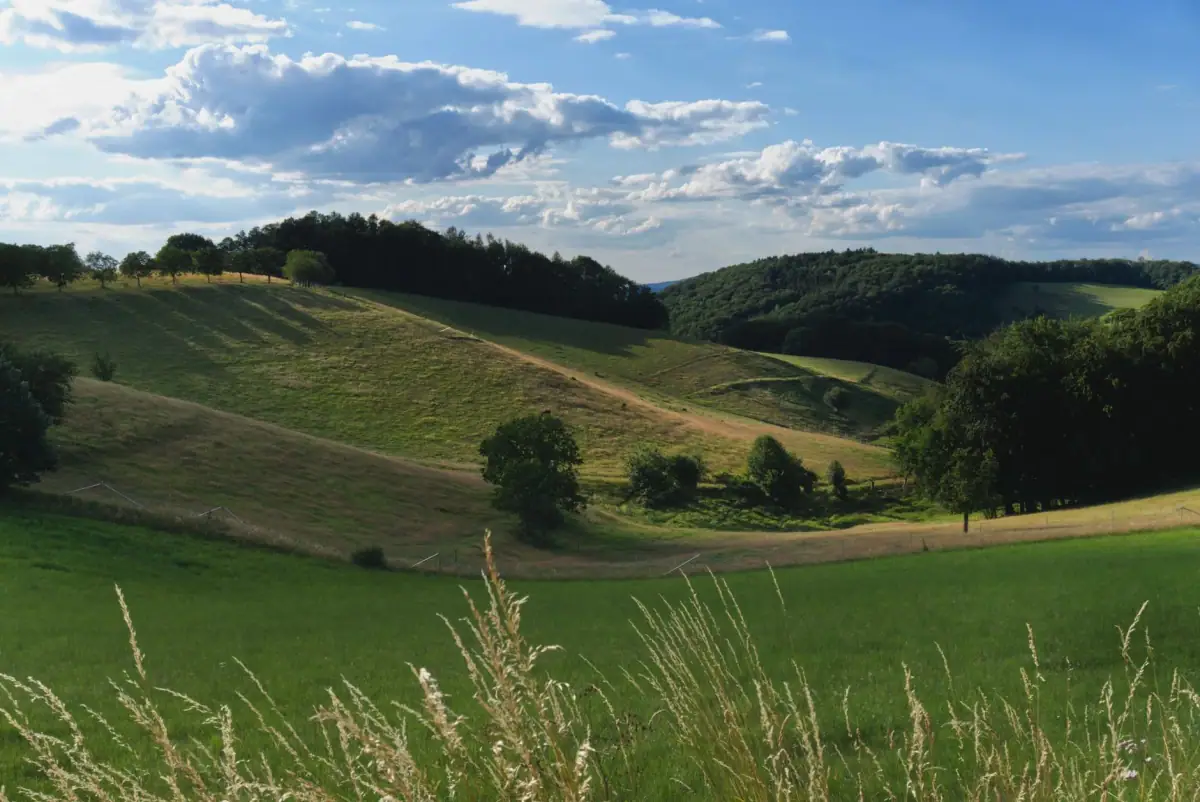
Around Valkenburg stretches the Heuvelland, literally the “hill country.” Here, fields slope gently down to small streams, sunken lanes wind between orchards and villages are lined with farmhouses of pale stone or half-timbering. It is the favorite playground of Dutch hikers and cyclists, who find a rare challenge here for their country.
The node-number network (knooppunten) that covers the Netherlands also works on foot: you follow a succession of numbers posted on poles to compose your own loop. On a regular bike, the climbs can be demanding; an electric bike is a good idea if you are not used to elevation. The guide to getting around the Netherlands by train and bike details rental and the basic rules.
The Vaalserberg and the tripoint
At the southeastern end of the province, near Vaals, the Vaalserberg is the highest point of the Netherlands’ continental territory, at about 322 meters (1,056 ft) of elevation. That figure seems modest, but it takes on its full meaning in a country where a large part lies at sea level or below. Nearby is the Drielandenpunt, the point where the borders of the Netherlands, Belgium and Germany meet. The place is very touristy, equipped with terraces, a panoramic tower and shops; it is a fun visit for children, who can put a foot in each country.
Vaals is less easy to reach without a car than Valkenburg: you most often get there by bus, with a change. Check connections before leaving, and keep some margin in your schedule.
Villages and castles of the valley
In the neighboring valleys, several pale stone villages make pretty stops: you find Romanesque churches, breweries and small castles, sometimes converted into hotels or restaurants. The best way to discover them remains a half-day hike with no precise goal, letting the nodes guide you. Bring walking shoes, because trails can be muddy after rain, and something to eat: shops are rare between villages.
Thorn, the white village
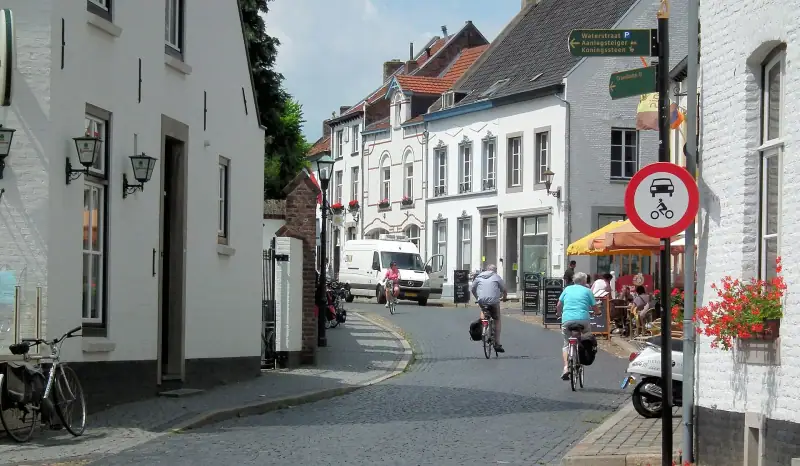
In the center of the province, Thorn is probably the most photogenic village in Limburg. Its houses, entirely whitewashed, earned it the nickname “white town.” The lanes are narrow and cobbled, lined with white facades with dark shutters, which gives the center an almost Mediterranean atmosphere, very unexpected under the Dutch sky.
The history of the place is singular: Thorn grew up around an abbey of noble ladies and long formed a small independent entity within the Holy Roman Empire, before being annexed following the upheavals of the late 18th century. The abbey church dominates the center and mixes several styles; the Baroque interior is rich and worth the detour. A small local museum tells the story of the abbey and the village.
Allow two or three hours to wander the lanes, enter the church and take a break on a terrace. Thorn is about 45 kilometers (28 mi) from Maastricht; there is no station in the village, and the trip is made by car, by bike or by local transport with a connection. If you like peaceful places, it is an excellent stop to combine with Roermond.
Around the village, the old gravel pits of the Meuse have become lakes, some of which are set up for swimming, sailing or cycling. The shores of these bodies of water are popular with Dutch families in summer.
🚗 Rent a car: Thorn, the Heuvelland and the small villages are simpler to chain with a vehicle. Compare rental companies.
Roermond, the city at the confluence of the Meuse and the Roer
Roermond is one of the oldest cities in the province. Its name comes from the Roer, which flows into the Meuse here. The historic center, fairly compact, can be discovered on foot in half a day: cobbled squares, shopping streets, town hall, St. Christopher’s Cathedral and several churches testify to an important religious and commercial past.
The most remarkable monument is the Munsterkerk, former church of a Cistercian nuns’ abbey, built in the 13th century in a late Romanesque style close to that of the Rhine. Its silhouette, with its towers and arcading, recalls the great Rhenish churches and illustrates well the Germanic influence on the region.
Roermond is also known for its factory outlet center (Designer Outlet), one of the busiest in northwestern Europe, which draws visitors from neighboring countries. If shopping tempts you, allow time for it; otherwise, simply ignore it, because the historic center and the banks of the Meuse are separate and much more pleasant for a stroll.
The city is about 40 kilometers (25 mi) north of Maastricht, and the rail link is direct or with a single change: allow about 40 minutes. Check schedules on the national railway’s app. Nature lovers will find nearby lakes and developed walking areas, as well as De Meinweg National Park, an area of heath and forest near the German border, where walking is ideal in dry weather.
Kerkrade, Heerlen and the former mining basin
Limburg was long the heart of coal mining in the Netherlands. This industrial history left traces in the cities of Heerlen and Kerkrade, in the southeast of the province. The mines closed in the 1960s and 1970s, and the former sites were converted into museums, cultural centers or leisure areas.
Kerkrade is also home to Rolduc Abbey, a large monastic complex whose Romanesque church is one of the most striking religious buildings in the region. The site mixes heritage, lodging and dining. It is an interesting visit for lovers of Romanesque architecture, and a good alternative if the weather spoils your hiking plans.
Heerlen and Kerkrade are cities focused more on daily life than on tourism: you come for the history, for a stop on the road to Vaals, or to change scenery after the postcard villages.
What to eat in Limburg
Limburg’s table is an excellent reason to travel. The emblematic dish is the vlaai, a thin-crust pie filled with fruit (cherries, apricots, plums, rice pudding), enjoyed at any hour with a coffee. It is found in virtually every bakery in the region; each family has its favorite version. The article on what to eat in the Netherlands presents the country’s other specialties for comparison.
On the savory side, southern cooking readily borrows from Belgian and German traditions: slow-cooked dishes, meats in sauce, asparagus in spring, mussels in season, local beers served in brown cafés. Menus are often more generous than in the north of the country, and prices lower than in Amsterdam. Do not hesitate to ask for the dish of the day: restaurateurs are proud of their local produce and happy to advise you.
🎟️ Guided tours and excursions: marl caves, walks in the hills, tastings or day excursions from Maastricht can be booked online, often with free cancellation depending on the offer.
Getting around Limburg
The train is the backbone of the network. Maastricht is linked to Valkenburg and Heerlen by a line crossing the south of the province, and to Roermond by the line running along the Meuse. For schedules, tickets and transit cards, use the national railway’s app: it shows connections in real time, including for regional buses.
For villages and sites far from stations (Thorn, the Heuvelland, Vaals), you have three options:
- The regional bus, practical but less frequent in the evening and on weekends. You need to plan the schedules ahead.
- The bike, preferably electric in the hills. It can be rented in Maastricht and several cities.
- The car, the most flexible if you visit several villages in the same day. Parking in old centers is sometimes paid and limited.
Distances stay short: between Maastricht and Roermond, allow about 40 kilometers (25 mi), between Maastricht and Valkenburg about fifteen (9 mi). It is therefore easy to stay within reasonable limits for a day. For general logistics, also see the advice on the budget in the Netherlands to plan your transport and visit spending.
Two itineraries of 2 to 4 days
Two days from Maastricht
- Day 1: morning in Maastricht (Vrijthof, basilicas, ramparts), then train to Valkenburg in the early afternoon: castle ruins, a cave visit, dinner there or return in the evening.
- Day 2: a day in the Heuvelland, hiking or on an electric bike, with a stop in a village for a vlaai, then return to Maastricht.
Four days to see the south and the center
- Day 1: Maastricht, with the help of the city guide.
- Day 2: Valkenburg and its caves.
- Day 3: Heuvelland, Vaals and the Vaalserberg, by car or bike.
- Day 4: Roermond in the morning, Thorn in the afternoon, return to Maastricht in the evening.
These plans are to be adapted to the weather and the season. To choose your dates, read the guide on when to go to the Netherlands.
Where to stay to explore Limburg
Most travelers choose Maastricht as a base: the central station is the starting point for almost all excursions, the offer of hotels and restaurants is the widest and the evening atmosphere is pleasant. The guide to neighborhoods to stay in Maastricht helps you choose between the historic center, the right bank and the station area.
Valkenburg is a good alternative if you want a more countryside setting, with characterful hotels and direct access to the caves and hills. Note that the town is very busy in high season and during the Christmas markets; book ahead. For a romantic or quiet stop, the hill villages offer guesthouses and small hotels, often set in former farms.
Practical tips for your visit
- Check hours and closing days: small museums, caves and churches have seasonal hours, sometimes reduced on weekdays or in low season.
- Dress in layers: the air is cool in the caves and on the heights, even in summer, and the weather changes fast.
- Wear good shoes: cobblestones in the towns, sometimes muddy dirt paths in the hills.
- Anticipate carnival: in February, several Limburg towns live to the rhythm of parades and popular festivities; lodging fills up and some shops close.
- Keep some change: bank cards are widely accepted, but some parking lots, kiosks or public toilets still ask for coins.
- Respect nature and private property: stay on marked trails, especially in agricultural and protected areas.
To go further
Limburg is discovered at its own pace: a morning of walking in the hills, a vlaai break at noon, a white village in the afternoon and an evening in the streets of Maastricht are enough to understand why the Dutch consider it their warmest region. To extend your trip toward the center of the country, read the article on the cities to see around Utrecht and the Veluwe, and for an overview, the complete guide to the Netherlands will help you build your itinerary.
Frequently asked questions
What is there to see in Dutch Limburg apart from Maastricht?
The most popular stops are Valkenburg and its marl caves, the white village of Thorn, the city of Roermond at the confluence of the Meuse and the Roer, the country's highest point near Vaals and the villages of the Heuvelland, the hilly region of the south. Maastricht remains the best base for fanning out.
How many days should you plan to visit Limburg?
Two days let you see Maastricht and Valkenburg. With three or four days, you add Thorn, Roermond and a day of walking or cycling in the hills. Limburg is small, but its local transport takes a little organization.
Can you visit Limburg without a car?
Largely yes. Valkenburg and Roermond are served by train, and the regional bus network completes the offer. For Thorn and the Heuvelland villages, a car or a bike is more flexible; check bus schedules on the day itself, especially on weekends.
Why is Limburg so different from the rest of the Netherlands?
It is the only truly hilly Dutch province. Its culture, carnival, food and dialect face neighboring Belgium and Germany, which gives it an atmosphere much closer to that of a region of the Rhineland or Wallonia than to Amsterdam's.
Are the Valkenburg caves natural?
No, they are former underground marl quarries, a soft limestone rock worked for centuries for construction. They are generally visited with a guide, in a cool atmosphere: bring a jacket even in summer and check the hours on official sites.
What is the best period to discover Limburg?
From spring to early fall for walking and cycling in the hills. In December, Valkenburg is known for its Christmas markets set up in the caves. February is carnival time, very festive, but lodging is booked early.
More Netherlands guides
Keep reading
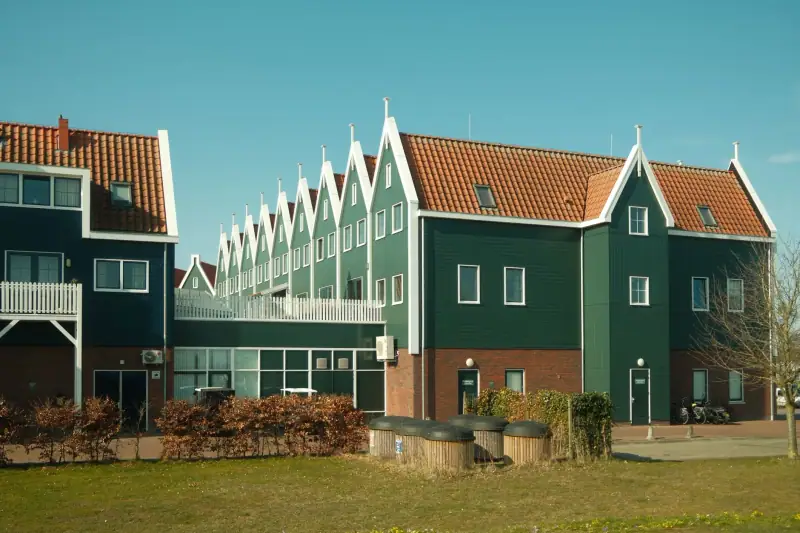
What to See in North Holland: Villages, Cheese and Dunes
What to see in North Holland: Haarlem, Zaanse Schans, Volendam, Marken, Edam, Alkmaar, Zandvoort dunes and Texel. Tips and trips from Amsterdam.
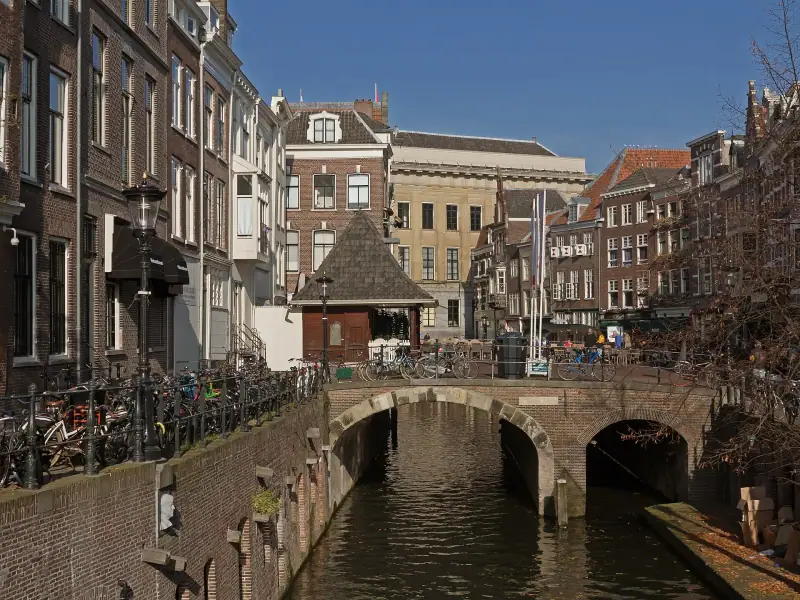
What to See Around Utrecht and Central Netherlands: Veluwe, Amersfoort, Arnhem
Beyond Utrecht, central Netherlands has Amersfoort, De Hoge Veluwe park, the Kröller-Müller, Arnhem and castles. What to see and how to plan.
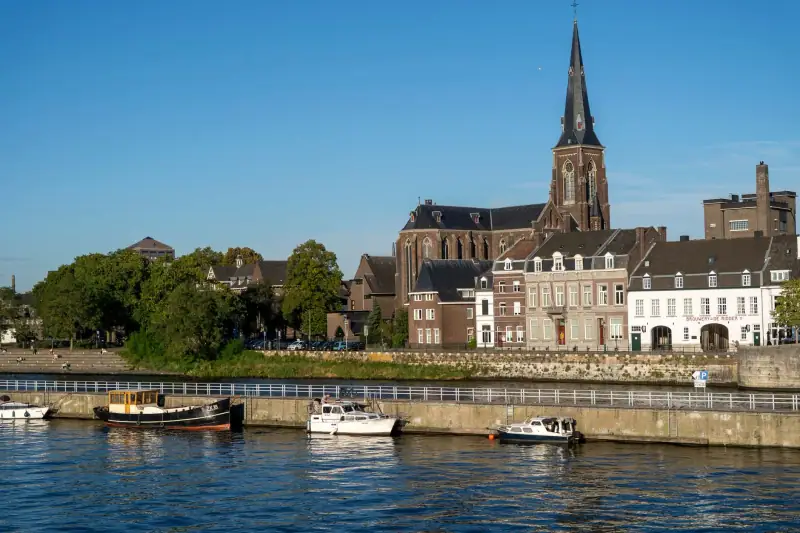
Visiting Maastricht: What to See and Do in 1 to 2 Days
Maastricht, southern Netherlands: Vrijthof square, basilicas, a bookstore in a church, ramparts, caves and vlaai. What to see and how to get there.
Ready-made
Netherlands itineraries
4 days
Amsterdam and Maastricht in 4 Days Without a Car: Is It Doable by Train?
AmsterdamMaastricht
7 days
Netherlands 7-Day Itinerary: Amsterdam, Delft, Rotterdam, Kinderdijk and Utrecht
A one-week itinerary in the Netherlands by train: Amsterdam, Haarlem, Zaanse Schans, The Hague, Delft, Rotterdam, Kinderdijk and Utrecht, day by day.