What to see
What to See in North Holland: Villages, Cheese and Dunes
We may earn a commission when you book through links on this page, at no extra cost to you. We don't visit or try the places we cover: we summarize published sources. How we work
In short
- North Holland packs windmills, former Zuiderzee fishing villages, cheese, dunes and art cities into a compact area, mostly reachable in under an hour from Amsterdam.
- Two to three days are enough to see the essentials from Amsterdam or Haarlem; add one or two nights for the island of Texel.
- Alkmaar's cheese market is traditionally held on Friday mornings, in season, from about April to September; check dates with the tourist office.
- Go early or late in the day to Volendam, Zaanse Schans and Alkmaar to avoid the crowds.
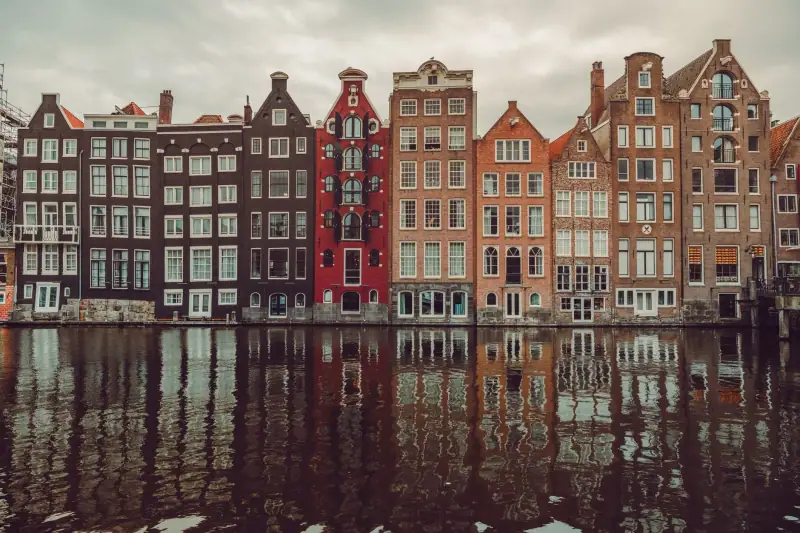
When people talk about the Netherlands, they think of Amsterdam, but the province around it, North Holland (Noord-Holland), holds a large part of the images associated with the country: windmills, fishing villages on the edge of the former Zuiderzee, wheels of cheese, dunes facing the North Sea and cities with gabled facades. Everything is close, flat and easy to link by train, bus or bike. Here is what to see, village by village, with tips to organize two or three days of discovery without a car.
Understanding North Holland in a few words
The province stretches over a narrow peninsula. To the west, the North Sea and a long line of dunes; to the east, the IJsselmeer, a large freshwater lake that used to be an arm of the sea, the Zuiderzee, before the Afsluitdijk dike was built in the 1930s. In between, polders, canals and old towns that prospered thanks to maritime trade, fishing and the Dutch East India Company (VOC).
This geography explains the variety of visits. On the west coast, there are beaches and dunes; in the center, art cities such as Haarlem; in the east, historic ports with wooden and brick houses. To the north, the island of Texel is a nature escape in its own right.
The province’s great advantage is its compactness: from Amsterdam, most stops are reached in under an hour. You can therefore sleep in Amsterdam or Haarlem and fan out every day, which avoids changing hotels. For transport modes, see the guide to getting around the Netherlands by train and bike.
Haarlem, the art city within reach of the train
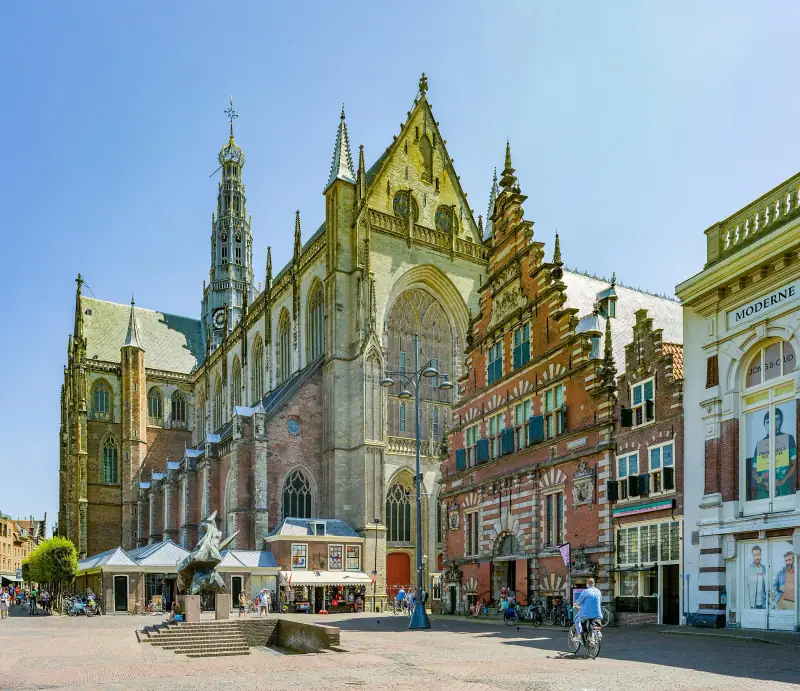
Haarlem is the capital of the province and one of the most beautiful cities in the country. It is about fifteen minutes by train from Amsterdam Centraal, which makes it an ideal stop for a first day. Its heart is the Grote Markt, a large square lined with old facades and cafés and dominated by the Grote Kerk (St. Bavo Church), an imposing Gothic building.
The city is known for its painting tradition: the painter Frans Hals lived and worked here in the 17th century, and the Frans Hals Museum presents his portraits as well as other works of the Dutch Golden Age. The Teylers Museum, founded in the 18th century, is often presented as the oldest museum in the Netherlands, with its collections of science, fossils and drawings. Between visits, the small pedestrian streets and the almshouses (hofjes) offer quiet pauses.
To go deeper into the city, read the article on Utrecht and Haarlem as day trips from Amsterdam. And if you want to sleep here rather than in the capital, the guide where to stay in Haarlem details the neighborhoods.
🏨 Sleeping in North Holland: Haarlem, Alkmaar or Amsterdam serve as practical bases for fanning out by train. Compare lodging for your dates, especially in high season and on spring weekends.
Zandvoort and the North Sea dunes
West of Haarlem, the coast changes the scenery completely. Zandvoort is the region’s main seaside resort, reachable by train from Haarlem in about ten minutes. Its wide beach of fine sand, lined with beach pavilions, draws the Dutch from the first fine days. The seasonal restaurants set up on the sand serve fish, beer and ice cream, and the atmosphere is family-friendly.
Farther north, the Zuid-Kennemerland national park protects a vast area of dunes, forests and heath a few kilometers from the city. It is an ideal terrain for walking or cycling, with marked trails where you sometimes meet Highland cattle or horses used to maintain the landscape. Bring a windbreaker: even in summer, the North Sea wind is frequent.
If the weather is fickle, keep a fallback plan: Haarlem and its museums are very close. The region is made for these back-and-forth trips, with landscapes that change in a few minutes by train.
Zaanse Schans: windmills on the riverbank
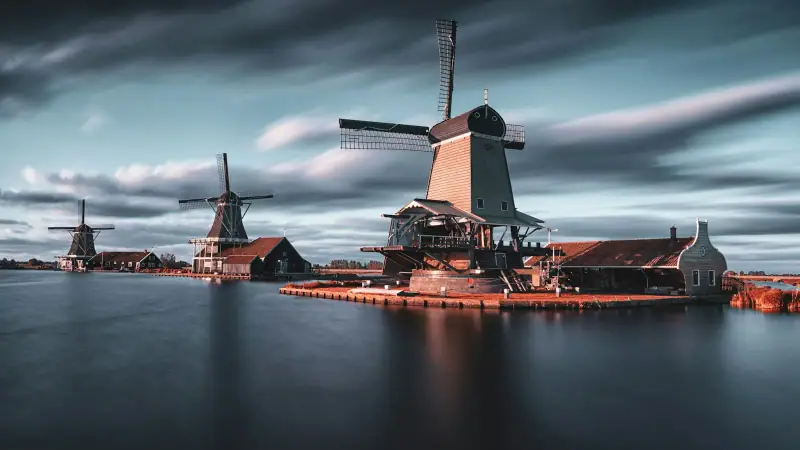
Northwest of Amsterdam, the Zaanse Schans district, on the banks of the Zaan, gathers windmills, green wooden houses and craft workshops. It is an open-air museum district where you discover how windmills were used to press oils, saw wood or grind pigments. Several windmills can be visited inside, and demonstrations of clog or cheese making take place there.
The site is very busy in the middle of the day, especially in summer. To enjoy the light and the reflections on the water, arrive early in the morning or late in the afternoon, when the groups have left. Zaanse Schans is reached from Amsterdam by train to Koog-Zaandijk station, then on foot. Find the details in the article on the windmills of Kinderdijk and Zaanse Schans.
Volendam, Edam and Marken: the tour of the former Zuiderzee
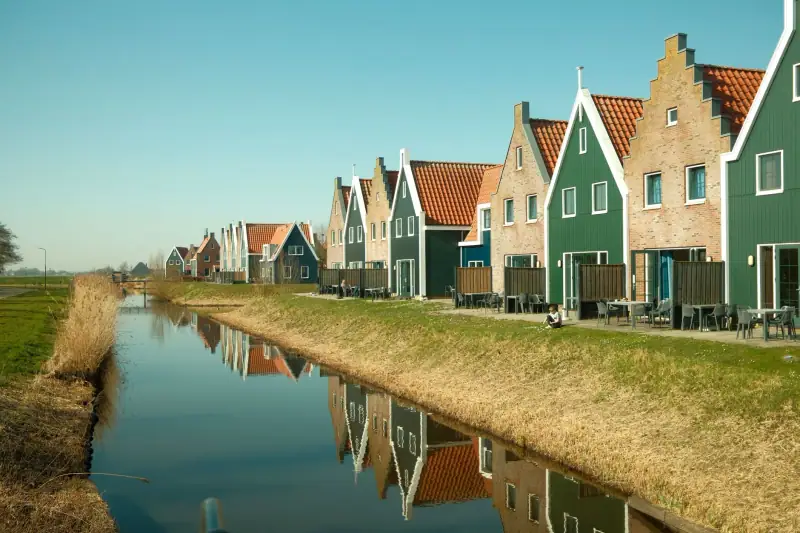
On the shore of the IJsselmeer, three villages combine easily into one day, northeast of Amsterdam.
Volendam is a former fishing port that has become one of the most visited destinations in the country. Its lively dike, fish restaurants, wooden houses by the harbor and souvenir shops give it a postcard look. You can often taste herring, smoked eel or fried fish, and some photo studios offer to photograph you in traditional costume. Come late in the day to see the light on the harbor, when the crowd thins.
Edam, a few kilometers away, is known worldwide for its red-rind cheese, exported for centuries. The town itself is quiet, with its canals, small lifting bridges and brick facades. A demonstration cheese market is held there in summer: check the dates with the tourist office. Even outside those days, a walk in the center and a few purchases in the cheese shops make a pleasant moment.
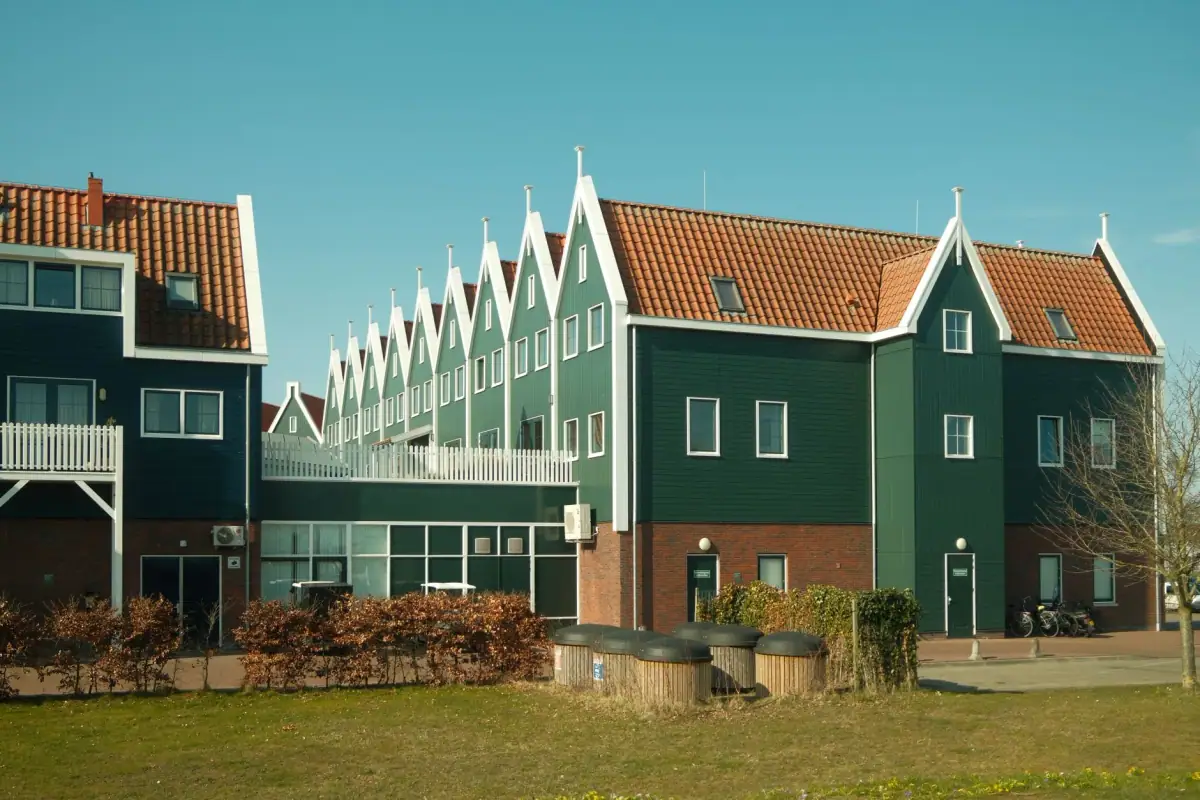
Marken was once an island of the Zuiderzee, linked to the mainland by a dike since the 1950s. Its wooden houses, often green, stand on small mounds (terpen) that protected them from the water. The small lighthouse, nicknamed the “Horse of Marken,” closes the walk along the dike. The atmosphere is far more peaceful than in Volendam, and it is an excellent place to walk or rent a bike.
Allow a full day for these three villages, or half a day if you only visit Volendam and Marken. Regional bus connections from Amsterdam let you get there without a car; check the day’s schedules with the carriers.
🎟️ Excursions from Amsterdam: if you prefer not to handle connections, day excursions to the fishing villages, windmills and cheese shops can be booked online, with cancellation terms that vary by offer.
Alkmaar and its cheese market
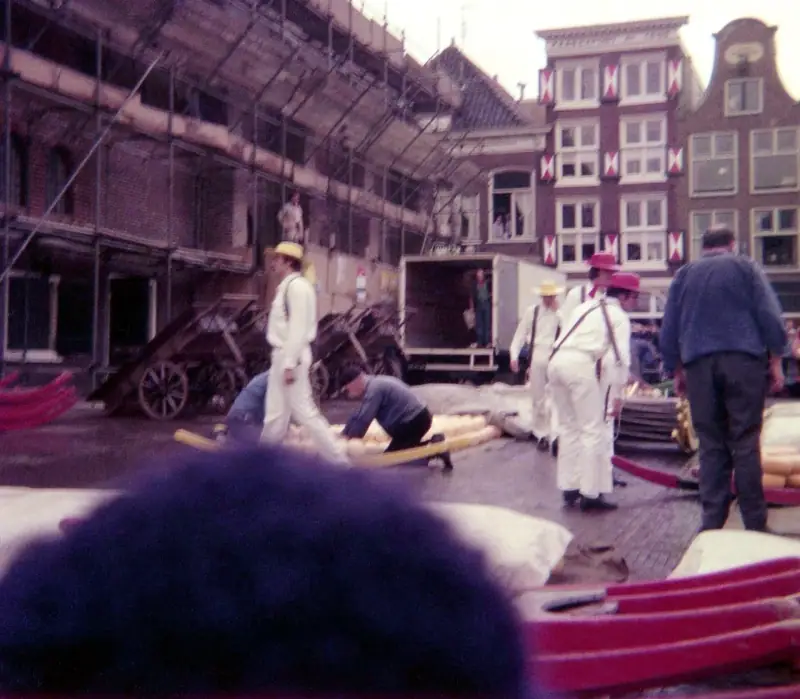
Alkmaar, north of Haarlem, is the cheese town par excellence. From Amsterdam, allow about half an hour by train. The center is charming, with canals, old houses and a cheese museum, but it is the traditional market that draws the public: on Friday mornings, in season, porters in white outfits and colorful hats carry wheels of cheese on wooden stretchers, and traders buy them after a ritual negotiation of hand claps.
The show takes place on the Waagplein square, in front of the old weigh house. Arrive well ahead to find a spot with a clear view, because the crowd thickens quickly. If the dates do not match your trip, the town is still worth a trip for its canals and an atmosphere less touristy than Amsterdam’s.
The market is part of the country’s culinary traditions, covered in the article on specialties to taste in the Netherlands. Taste several ages of gouda: young, it is mild and supple; aged, it becomes drier and stronger.
Hoorn and Enkhuizen: the VOC ports
Farther north, on the IJsselmeer coast, Hoorn and Enkhuizen recall the maritime golden age of the 17th century. These two small towns were important ports of the Dutch East India Company, and their quays, warehouses and merchants’ houses still bear witness. Hoorn keeps a picturesque harbor surrounded by decorated facades; it is a pleasant place to have lunch overlooking the water.
Enkhuizen is home to the Zuiderzeemuseum, which recreates the life of the region’s inhabitants before the closing of the Zuiderzee, with an open-air museum of period houses and workshops. It is a very interesting visit for understanding how the population adapted to the end of open-sea fishing, and a good idea for families.
These two towns are linked to Amsterdam by train, with a trip of about an hour depending on connections. They suit a separate day, quieter than the village circuit, or a night there for those who want to enjoy the quays in the evening.
Broek in Waterland and the Waterland: countryside by bike
Just north of Amsterdam, the Waterland region is a landscape of meadows, canals and small wooden houses. Broek in Waterland, in particular, is known for its carefully maintained houses, flowery gardens and quiet lanes. You stroll on foot or by bike, with no other goal than to enjoy the silence.
This area is ideal for a day by bike: the paths are flat, well marked and little used on weekdays. You can link several villages in a loop, stopping at a café or a farm shop to taste local products. Rent the bike in Amsterdam and take the ferry across the IJ to Amsterdam-Noord, which is part of the pleasure.
Texel, the wild Wadden island
At the far north of the province, Texel is the largest of the Dutch Wadden Sea islands. You reach it by boat from Den Helder, with a crossing of about twenty minutes. The island offers long beaches, dunes, forests, free-roaming sheep and excellent birdwatching: many migratory birds stop there.
Texel is best discovered by bike, the best way to grasp its diversity. Plan at least one night so as not to do the round trip in a rush: from Amsterdam, the total trip (train, then bus or walking, then boat) takes several hours. In season, book your lodging far in advance, because the island is very popular with Dutch families.
It is a destination for those who seek nature more than monuments, and an excellent counterpoint to the province’s art cities.
🚗 Rent a car: useful for linking the IJsselmeer villages or reaching Den Helder and Texel at your own pace. Compare rental companies and rates for your dates.
Three possible itineraries depending on your time
The province lends itself to several formulas. All start from Amsterdam or Haarlem and are done without a car.
- One day, classic version: morning at Zaanse Schans for the windmills, lunch in Volendam, then a walk in Edam or Marken late in the afternoon. It is the most popular circuit, and the easiest to book as an organized excursion.
- Two days, city and sea version: first day in Haarlem (Grote Markt, Frans Hals Museum, almshouses), second day in Zandvoort and in the Zuid-Kennemerland dunes if the weather allows.
- Three days, full version: add Alkmaar on Friday for the cheese market, then a day in Hoorn and Enkhuizen. This pace leaves time to wander.
If you have more time, Texel deserves one or two nights on its own. To fit the province into a wider trip, the seven-day itinerary in the Netherlands shows how to combine it with the country’s other regions.
Practical tips for your visit
A few habits simplify a stay in the region:
- Hours: markets, museums and windmills have hours that vary by season. Check them on official sites or with tourist offices before leaving.
- Bike: it is the best way to discover the countryside. Wear a helmet if you are used to it and respect the bike lanes, heavily used by residents.
- Weather: wind and rain can change within hours, especially on the coast. A light windbreaker is more useful than an umbrella.
- Crowds: for Volendam, Zaanse Schans and Alkmaar, go in the first hours of the day or the late afternoon.
- Payment: bank cards are accepted almost everywhere, including in small shops. Keep a little cash for markets.
- Budget: to estimate your whole stay, see the article on the budget for a trip to the Netherlands.
- Respect for places: some villages, such as Marken or Broek in Waterland, are residential areas. Stay discreet, do not enter gardens and ask before photographing residents.
When to go to North Holland
The province can be visited all year, but each season has its own personality. Spring is the most photogenic period, with the bulb flower fields in the region and mild temperatures. Summer is ideal for Zandvoort beach, Texel and bike rides, with long days, but it is also high season, so more people and pricier lodging. Fall offers superb light and fewer crowds, while winter is calmer, suiting Haarlem’s museums, cafés and small towns, provided you accept short days.
To compare the months in detail, read the guide on when to go to the Netherlands.
In short
North Holland is the best introduction to the Netherlands outside Amsterdam: in a few days you see art cities, windmills, fishing villages, traditional markets, beaches and a wild island, all reachable by public transport. Choose two or three stops according to your tastes, leave early to avoid the groups, and allow time for breaks on a café terrace: that is where the region reveals its charm.
Frequently asked questions
Where is North Holland?
It is the province (Noord-Holland) that occupies the peninsula in the northwest of the Netherlands, between the North Sea to the west and the IJsselmeer to the east. It includes Amsterdam, Haarlem, Alkmaar, Zaandam, Hoorn and Enkhuizen, as well as the island of Texel to the north.
How many days do you need to visit North Holland?
Two to three days let you see the essentials by fanning out from Amsterdam or Haarlem: one day for Haarlem and the coast, one for the villages on the IJsselmeer, one for Alkmaar and the windmills. Add one to two nights if you want to go to Texel.
Can you visit the region without a car?
Yes. Regional trains and buses link Amsterdam to Haarlem, Alkmaar, Zaandam, Hoorn and Enkhuizen, and cycling complements local trips very well. The villages of Volendam, Edam and Marken are reachable by bus from Amsterdam. Check the day's schedules on the carriers' sites.
When is the Alkmaar cheese market held?
It is traditionally held on Friday mornings, in season, from about April to September, on the Waagplein square. Dates and times may change: check with the tourist office before traveling.
What is the best time to go?
May to September for the beach, markets and bike rides. Spring adds the bulb flower fields in the region. Fall and winter suit cities and museums, with fewer people but short days and sometimes strong winds on the coast.
Are Volendam and Marken worth the detour?
Yes, provided you go early in the morning or late in the afternoon to avoid the tour buses. Volendam is a very lively former fishing port, Marken a calmer village with wooden houses on mounds. The two combine easily in half a day.
More Netherlands guides
Keep reading
What to See in Dutch Limburg: Valkenburg, Thorn, Roermond
Beyond Maastricht, Limburg offers hills, marl caves, the white village of Thorn, Roermond and the country's highest point. What to see and how to plan.
What to See Around Utrecht and Central Netherlands: Veluwe, Amersfoort, Arnhem
Beyond Utrecht, central Netherlands has Amersfoort, De Hoge Veluwe park, the Kröller-Müller, Arnhem and castles. What to see and how to plan.
Visiting Maastricht: What to See and Do in 1 to 2 Days
Maastricht, southern Netherlands: Vrijthof square, basilicas, a bookstore in a church, ramparts, caves and vlaai. What to see and how to get there.
Ready-made
Netherlands itineraries
4 days
Amsterdam and Maastricht in 4 Days Without a Car: Is It Doable by Train?
AmsterdamMaastricht
7 days
Netherlands 7-Day Itinerary: Amsterdam, Delft, Rotterdam, Kinderdijk and Utrecht
A one-week itinerary in the Netherlands by train: Amsterdam, Haarlem, Zaanse Schans, The Hague, Delft, Rotterdam, Kinderdijk and Utrecht, day by day.