What to see
Visiting Etosha National Park: a complete guide to the Namibian safari
We may earn a commission when you book through links on this page, at no extra cost to you. We don't visit or try the places we cover: we summarize published sources. How we work
In short
- The best season is the dry season, May to October, when animals gather at the permanent waterholes; July to September is the peak.
- Plan at least 3 nights; each NWR camp (Okaukuejo, Halali, Namutoni) has a floodlit waterhole open to guests all night.
- Main roads are compacted gravel passable by any car; a 4x4 is not required. Driving is forbidden at night, and camp gates close at sunset.
- Entry fees rose sharply in 2026 (about N$280 per foreign adult per day, per published rates): confirm with NWR or the ministry before you go.
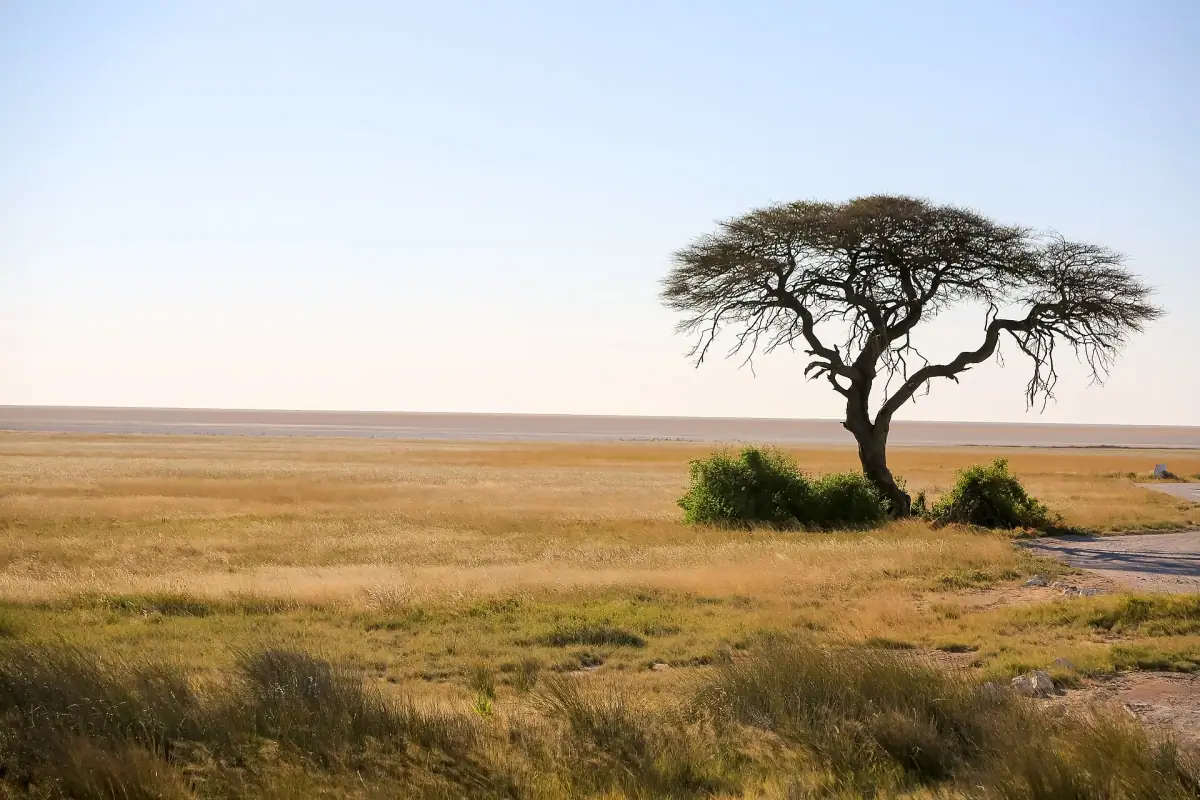
Etosha National Park is one of the great safari destinations in Africa. Not because of its Big Five (although all are present), nor its endless savanna landscapes, but because of one unique feature: the great salt pan (Etosha Pan), a white depression of several thousand square kilometers visible from space, around which some of the densest wildlife on the continent gathers. Here, the animals come to you. You only have to stop near a waterhole and wait.
Founded in 1907 (first as a game reserve, then as a national park from 1967), Etosha covers about 22,000 km² (8,500 sq mi) in northern Namibia. It welcomes hundreds of thousands of visitors from around the world each year, drawn by the simplicity of the self-drive safari: you move freely in your own car, stop at the waterholes and watch. No mandatory guide, no imposed Land Rover, no visitor quota per zone. Etosha is one of the few African parks where the “free” safari is still fully accessible, including on a reasonable budget.
Etosha’s wildlife: what you will see
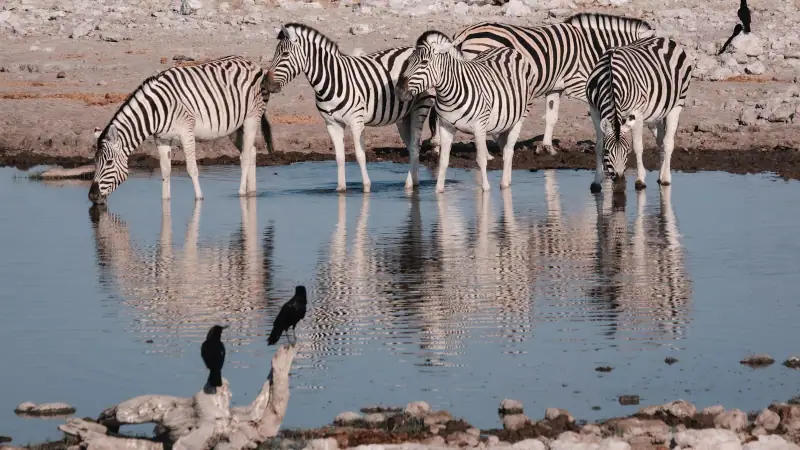
Etosha has exceptional biodiversity. The salt pan creates a particular ecosystem: in the dry season, animals have no choice but to converge on the permanent waterholes fed by underground pumps. This artificial system (set up in the 1970s) has made Etosha one of the best places in the world to watch wildlife at close range, without having to cover hundreds of kilometers.
The big mammals
African elephants: probably the stars of the park. Etosha’s herds are among the most impressive in Namibia, with several hundred individuals in matriarchal families. At the waterholes, they sometimes arrive in groups of 50 to 80, creating unforgettable scenes. They are especially active in late afternoon and at dawn.
Black rhinos: Etosha is one of the best places in the world to see the black rhino (Diceros bicornis), a critically endangered species. The Namibian population is considered one of the last healthy populations in Africa. They regularly come to the waterholes at night; the floodlit waterhole at Okaukuejo camp is famous for its night sightings. Patient and silent, black rhinos often surprise visitors with their sudden appearance in the half-light.
Lions: recent estimates put the population between 300 and 400 individuals in the park. Etosha is one of the parks where the chances of seeing lions by day are among the best in southern Africa. In the dry season they often stay near the waterholes waiting for prey.
Leopards: more elusive, active mostly at night and at dawn. Present in the bushy and rocky areas of the park, notably around Halali.
Cheetahs: seen on the open plain, often in small groups of coalition males. Etosha offers good chances thanks to the short vegetation around the salt pan.
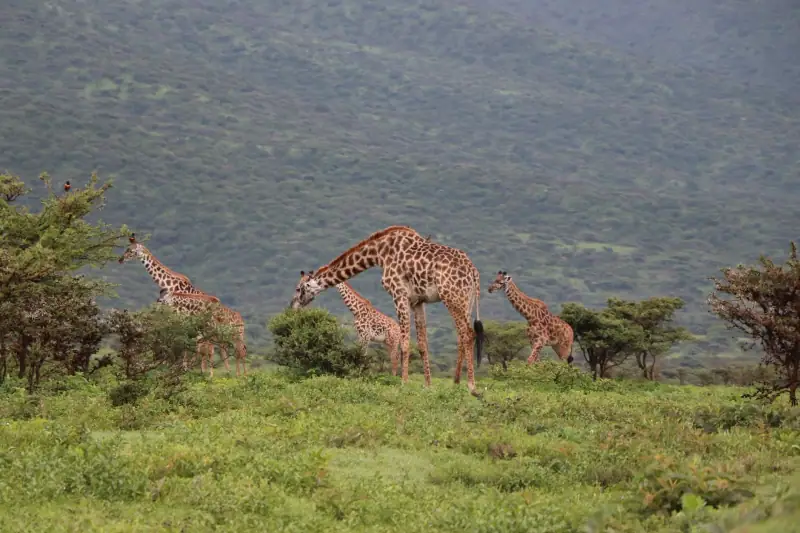
Giraffes: abundant in all zones of the park. The Angolan giraffe (a subspecies found in northwestern Namibia) is the only one here, recognizable by its more irregular spots and lighter color than the Masai giraffe.
Zebras, wildebeest, springbok, oryx: in considerable numbers, often in mixed herds around the waterholes. The springbok (Namibia’s national gazelle) is everywhere in the park, tens of thousands of them.
Spotted hyenas, jackals: present around the waterholes, often waiting for the remains of a kill. Hyenas are the dominant scavengers of the park.
Birds
More than 340 species have been recorded in Etosha. In the rainy season (November to April), the salt pan becomes a temporary wetland and hosts thousands of flamingos (Phoenicopterus roseus) and other migratory waders. In the dry season, diversity stays high: bustards, coursers, rollers, hornbills, drongos, African vultures and bearded vultures visit the park. It is also one of the few African sites where white pelicans nest.
Safaris and excursions in northern Namibia
Guided visits of Etosha, night game drives on the park's edge, transfers from Windhoek.
The NWR camps: where to sleep in the park
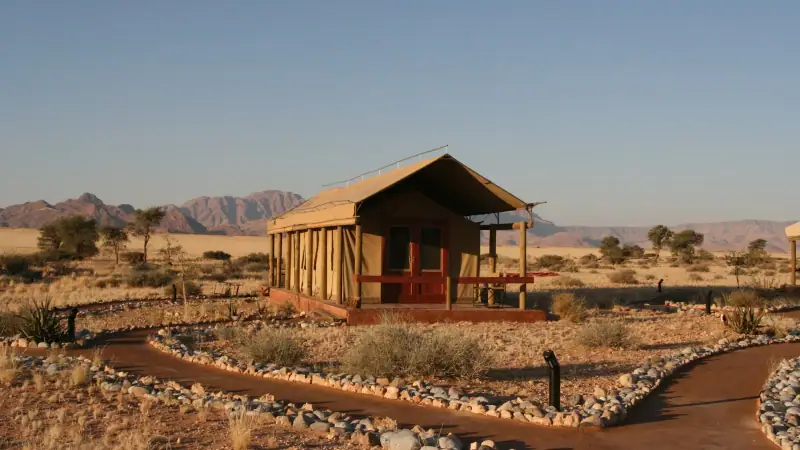
The camps run by Namibia Wildlife Resorts (NWR) inside the park let you live the safari at its fullest: get up before dawn for the first light, drive until the gates close, then watch at night at the camp’s floodlit waterhole. Each camp has bungalows, a restaurant, a pool and a basic supermarket (book ahead or bring supplies, especially in high season).
Okaukuejo: the legendary camp of the south
Okaukuejo (pronounced “Oh-ka-veh-yo”) is the oldest and most famous of the Etosha camps. Near Anderson Gate (the south gate), about 430 km (267 mi) from Windhoek, it is the main entry point for the great majority of visitors. Its 15 m (49 ft) panoramic tower, reachable from the bungalows, gives a 360° view over the plain.
Its floodlit waterhole is legendary: lit all night from inside the camp (open access for guests), it regularly attracts lions, elephants, black rhinos, zebras and springbok in the half-light. The most patient watchers spend 3 to 4 hours at the waterhole after dinner, and are often rewarded with hunting scenes or rhinos drinking in the bluish light of the floodlights. It is probably one of the best night-viewing experiences in Africa, entirely free for camp guests.
Accommodation: standard and luxury bungalows, equipped tents, campsites with electricity. Restaurant and supermarket in the camp.
Halali: the central camp
Halali is halfway between Okaukuejo and Namutoni, in a more rugged and wooded area than the rest of the park. Its dolomite hills create natural shelters for leopards and small predators; sightings here are often more discreet but more surprising.
Its waterhole, slightly set back from the camp, is reachable on foot from the bungalows (via a secure path). Known for night sightings of black rhinos, it is less busy than Okaukuejo and creates a more intimate atmosphere.
Halali is also an excellent starting point for exploring the central zone of the park, often under-visited. The roads between Halali and Sprookieswoud (“Enchanted Forest”) are known for leopards and elephants.
Namutoni: the colonial fort of the east
Namutoni is the easternmost camp in the park, close to Von Lindequist Gate. It is set in a former colonial fort built by German troops in 1905, whitewashed and crenellated, with a square central tower. Listed as a Namibian historic monument, the fort has been restored and its former rooms now house the accommodation and a restaurant.
The eastern zone of the park around Namutoni is different from the rest of Etosha: denser vegetation, mopane woodland, many permanent water points (the region gets slightly more rain). The wildlife is different too: kudus, hyenas and leopards are more frequent. It is also an exceptional bird-watching area.
Onkoshi and Dolomite Camp: luxury in the park
For visitors with a bigger budget, NWR runs two luxury camps inside the park:
Onkoshi Camp (about fifteen wooden chalets on stilts) is at the northeastern edge of the salt pan, with a stunning view of the Etosha Pan. Access is reserved for guests; no day visitors. An exceptional setting, with evenings on the terrace facing the plain.
Dolomite Camp (in the west, an area long reserved for its guests, though Galton Gate has been open to all visitors since 2014) gives privileged access to the western part of the park, the least visited and often the richest in lions and cheetahs. Stone and wood chalets, fine-dining restaurant.
Accommodation in and around Etosha
Lodges, NWR camps and guesthouses on the edge: find your base to explore the park.
The park zones and routes not to miss
Etosha is crossed by a network of compacted gravel roads (about 800 km / 500 mi of listed tracks). Most are passable by any vehicle, including a sedan. The speed limit is 60 km/h (37 mph) in the park (enforced), and it is best to drive much slower on secondary tracks; respect the signs. Honking before blind bends is recommended.
The central road (Okaukuejo – Halali – Namutoni) is the main stretch. About 170 km (106 mi) from Namutoni to Okaukuejo, or half a day of “safari” driving, stopping at waterholes and taking time to watch. This road runs along the southern edge of the salt pan and gives clear views over the pan.
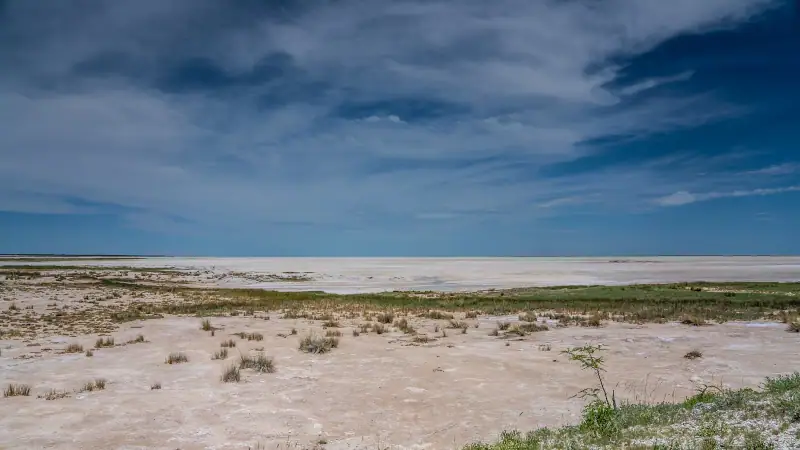
The roads around the salt pan let you follow the Etosha Pan along the north or the south. In the rainy season (November to April) the pan can be partly flooded and turns into a shallow lake that attracts flamingos, pelicans and ducks. In the dry season, the white, cracked surface creates a fascinating lunar landscape, perfect for photography.
Okerfontein and Chudop (between Okaukuejo and Halali): two waterholes known for lions. Arrive early in the morning and settle in; lions often hunt at dawn in this area.
Sprookieswoud (“Enchanted Forest”): an eerie forest of mopane trees twisted by wind and pan salt, in the central zone between Halali and the pan. A surreal atmosphere, photographed by every visitor who passes nearby.
Andoni (in the east, toward Namutoni): a semi-permanent wetland attractive to buffalo, kudus and elephants. Less busy than the main routes.
Best time and seasonality
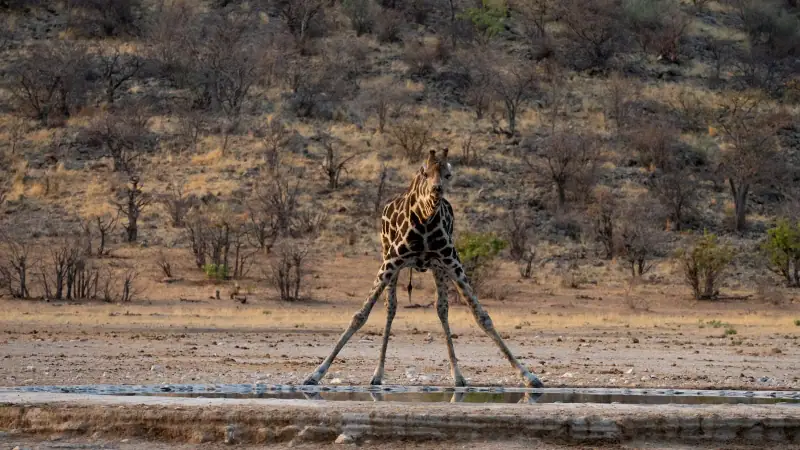
Dry season (May to October): the recommended period for safari. The rains stop in April or May, the vegetation dries out and animals concentrate around the permanent waterholes. Sightings peak from July to September, especially July to late August for wildlife density at the waterholes.
- May to June: start of the dry season, vegetation still partly green, mild temperatures (15 to 25 °C / 59 to 77 °F), fewer people.
- July to August: high season, cool nights (5 to 10 °C / 41 to 50 °F), excellent visibility. Lodges are full; book 3 to 6 months ahead.
- September to October: strong heat (35 to 40 °C / 95 to 104 °F), very short vegetation, peak wildlife sightings at the waterholes. In late October, the first rains can quickly transform the roads.
Rainy season (November to April): animals disperse through the park and sightings are less concentrated. On the other hand:
- Births take place from November to January (springbok, wildebeest, giraffes): many young animals and frequent predation scenes.
- The salt pan partly fills with water, attracting flamingos and migratory birds by the thousands.
- The green vegetation transforms the landscape.
- Camp prices are lower and the park is less busy.
For a full analysis of seasons in Namibia, see our guide to the best time to visit Namibia.
How to get to Etosha
From Windhoek: the standard route takes the B1 north to Otjiwarongo, then the C38 to Outjo and Anderson Gate. Total distance: about 440 km (273 mi), or 5 h to 5 h 30 on the road. A good paved road to Outjo, then gravel to the gate, generally in good condition and passable by any car.
A popular alternative goes through Damaraland (C35 via Khorixas) from the west, to see Twyfelfontein and the rock paintings before entering the park through Galton Gate (access to Dolomite camp). This two-day route is detailed in our guide to Damaraland.
From Swakopmund: about 550 to 600 km (342 to 373 mi) via Uis and Outjo (C34 then B1). Allow 6 to 7 hours. This route crosses Damaraland, a nice option to do both in one circuit.
By air: domestic or charter flights may serve the region (Ondangwa, private airstrips of high-end lodges); check connections and schedules with the airlines or your lodge. Lodge operators generally arrange transfers from regional airports.
Entrance gates:
- Anderson Gate (south): the busiest, 440 km (273 mi) from Windhoek. Direct access to Okaukuejo.
- Von Lindequist Gate (east): 110 km (68 mi) from Tsumeb, direct access to Namutoni.
- King Nehale Gate (north): open to guests of private lodges north of the park, rarely used for self-drive.
- Galton Gate (west): access to the west of the park and Dolomite camp; open to all visitors since 2014 (no fuel at the gate or the camp, so fill up beforehand).
Entry fees: a fee is charged for entry. It is collected at the park gates (or in the camps). Rates rose sharply in 2026 (about N$280 per foreign adult per day, according to published rates); check current amounts with NWR or the Ministry of Environment (MEFT). Also carry cash: check in advance which payment methods are accepted at the gate.
Car rental for your Etosha safari
Compare 4x4s, sedans and campervans for your Namibian road trip. Book ahead in high season.
Practical tips for a successful safari
Waterholes: the key to an Etosha safari
Unlike East African parks where a safari means following a guide tracking animals, Etosha works on a different principle: you wait, and the animals come to you. The winning strategy is simple:
- Arrive at an active waterhole in late afternoon (4 pm to 6:30 pm) or at dawn (6 am to 8:30 am).
- Switch off the engine. Wait in silence.
- The first animals usually arrive within 20 to 40 minutes. Others follow.
- In high season, a single waterhole can bring together elephants, giraffes, zebras, springbok, oryx and, if you are lucky, lions lying in ambush.
The best waterholes in the park:
- Okaukuejo (camp): black rhinos at night, elephants and lions by day
- Chudop (between Okaukuejo and Halali): excellent daytime activity, frequent lions
- Rietfontein (center-east): giraffes and elephants, often little visited
- Kalkheuwel (between Halali and Namutoni): a very active waterhole, all species
- Andoni (east): buffalo, kudus, access to the wetlands
Rules to follow in the park
- Never leave the vehicle except in the fenced camps and at marked viewpoints. This is a strict rule, and a matter of survival.
- Return before the camps close at sunset. Hours vary by season; check at the camp office.
- Keep the minimum distance from animals (especially elephants, lions and rhinos). Back away gently if an animal approaches your vehicle.
- No noise, no sudden movements at the waterholes. Patience is the first quality of safari.
Budget
The cost of a stay in Etosha varies considerably with accommodation:
- NWR camping (Okaukuejo, Halali, Namutoni): the cheapest option, with sites equipped with electricity. Be sure to book ahead through NWR.
- Standard NWR bungalows: a mid-range option, comfortable and functional.
- Private lodges on the edge: sometimes offer access to the park in their own vehicles, with a guide. Higher prices but better service and comfort.
For a full estimate of a Namibian budget, see our Namibia budget guide.
Etosha in your Namibian itinerary
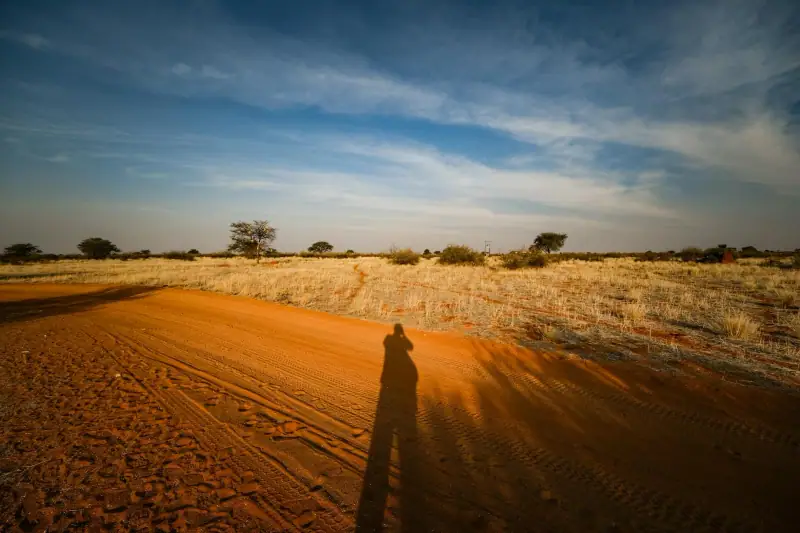
Etosha is a must-see in any Namibian itinerary of 10 days or more. Here is how to fit it in sensibly:
Classic “south-north Namibia” circuit (12 to 14 days):
- Days 1-2: Windhoek (arrival, visit)
- Days 3-5: Sossusvlei / Namib Desert (dunes, Dead Vlei)
- Days 6-7: Swakopmund / Walvis Bay (Atlantic coast)
- Day 8: Damaraland (Twyfelfontein, rock paintings)
- Days 9-12: Etosha (3 nights minimum, 2 nights at Okaukuejo + 1 night at Halali or Namutoni)
- Days 13-14: return to Windhoek via Otjiwarongo
For itinerary details, distances and duration estimates, see our Namibia road trip guide and our 7-day Namibia itinerary.
Timing tip: book your NWR camps as early as possible, ideally 3 to 6 months ahead for July and August. The Okaukuejo bungalows are especially in demand and go fast. Booking is done through the official Namibia Wildlife Resorts (NWR) site.
Etosha is a park you earn. Not in the sense of physical difficulty, but of patience. The visitor who stops, switches off the engine and waits at a waterhole is rewarded with scenes that wildlife documentaries take weeks to capture. Here, an hour is enough. The great white plain, elephants arriving in silence in the orange dust of dusk, a black rhino emerging in the camp’s floodlights at midnight: Etosha gives you images you will not forget.
To go deeper into your stay in northern Namibia, read our Etosha safari guide for detailed viewing strategies, and our article on Damaraland to discover the neighboring region.
Frequently asked questions
When should you visit Etosha National Park?
The best time is the dry season, from May to October. Animals gather around the permanent waterholes, the roads are passable and the sparse vegetation makes sightings easier. July to September is the peak: excellent visibility and night action at the floodlit waterholes. In the rainy season (November to April), animals disperse, but the green vegetation brings migratory birds and births.
How many days do you need to visit Etosha?
Three nights minimum (two full days of game drives) to see the essentials. Ideally four to five nights to visit the three zones of the park (west/Dolomite, center, east/Namutoni) and maximize sightings. If your time is limited, focus on Okaukuejo and Halali with the floodlit waterholes at night; two nights are enough for an unforgettable overview.
Do you need a 4x4 to visit Etosha?
No. The main roads of Etosha (between Anderson Gate, Okaukuejo, Halali and Namutoni) are compacted gravel passable by any standard car, even a sedan. Only a few secondary tracks need high ground clearance. A 4x4 offers more comfort and visibility (higher seating) but is not essential for a classic safari in the park.
Can you do night game drives in Etosha?
No, driving at night in the park is forbidden. The camps close their gates at sunset and visitors must be back before closing time or face a fine. However, each camp has a floodlit waterhole accessible from inside the camp all night; lions, elephants and black rhinos regularly come to drink in the dark. This is often where the most intense sightings happen.
Can you enter Etosha without a reservation?
Access to the camps run by Namibia Wildlife Resorts (NWR), Okaukuejo, Halali and Namutoni, requires a reservation ahead, especially in high season (July to September). The park entry fee is paid at the gate. Private lodges on the edge of the park (Etosha Village, Mushara Lodge, etc.) also give access. In low season a last-minute booking is sometimes possible, but the risk of being full is real in July and August.
What animals can you see in Etosha?
Etosha has one of the largest concentrations of wildlife in southern Africa: elephants, lions, leopards, cheetahs, black rhinos (a critically endangered species, and one of the best places in the world to see them), giraffes, zebras, blue wildebeest, springbok, kudu, oryx, spotted hyenas, jackals and civets. The bird list exceeds 340 species. Black rhinos regularly come to the waterholes at night; Okaukuejo camp is known for it.
More Namibia guides
Keep reading
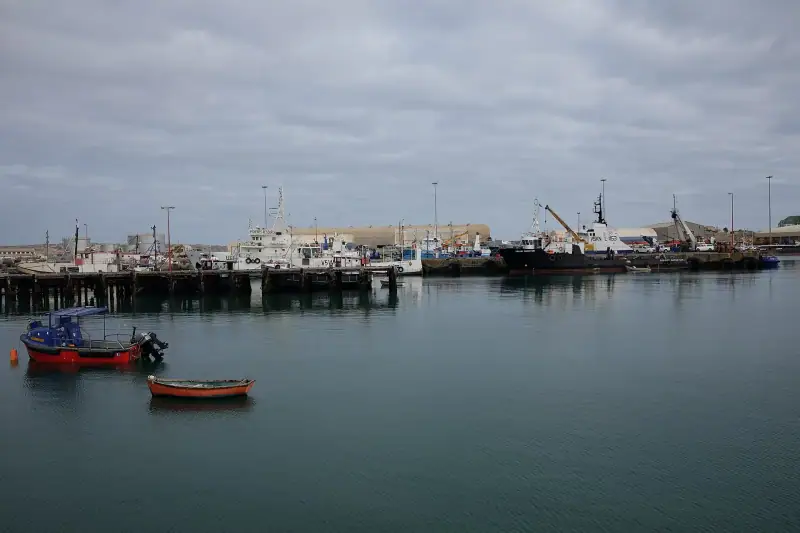
Visiting Lüderitz: a complete guide to the desert ghost town
Complete guide to Lüderitz: Kolmanskop, penguins, German architecture and the Namib Desert. All you need to visit this unique town in Namibia.
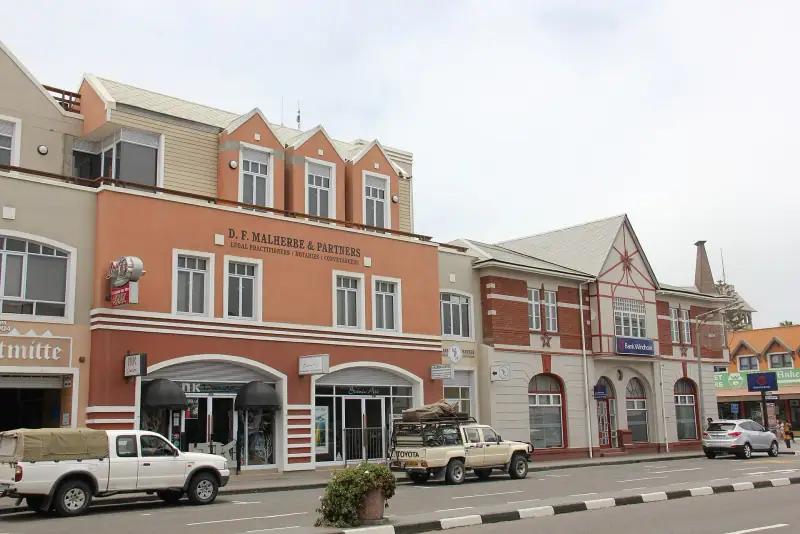
Visiting Swakopmund: a complete guide to Namibia's colonial pearl
Complete guide to Swakopmund: German architecture, sandboarding, Living Desert tours and restaurants. Everything to visit this unique Namibian town.
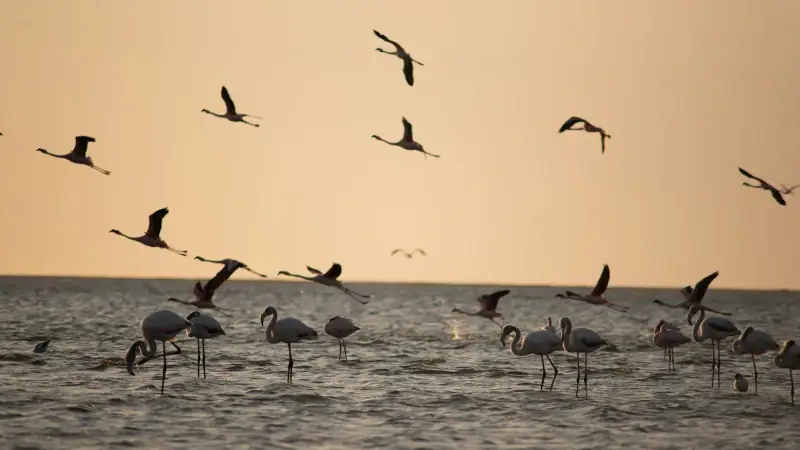
Visiting Walvis Bay: a complete guide to the flamingo lagoon
Complete guide to Walvis Bay: lagoon, flamingos, dolphins, Sandwich Harbour and fresh oysters. All you need to visit this unique Namibian town.
Ready-made
Namibia itineraries
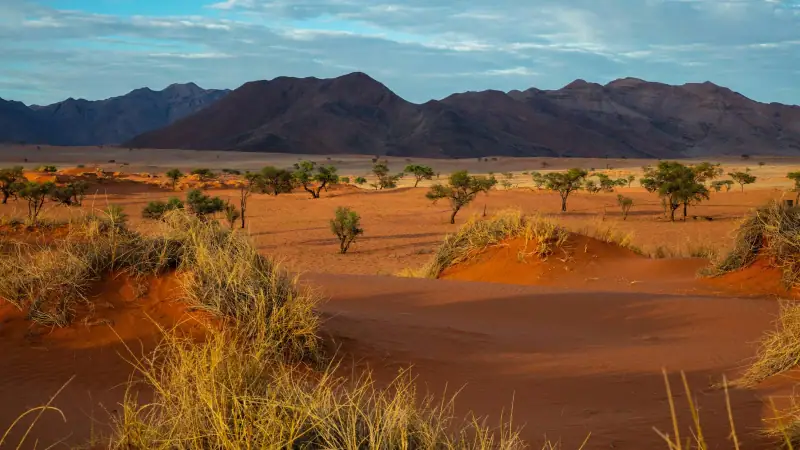
10 days
Namibia in 10 days without a car: a realistic itinerary by shuttle and transfer
WindhoekEtoshaDamaralandSwakopmundSesriem / SossusvleiWindhoek
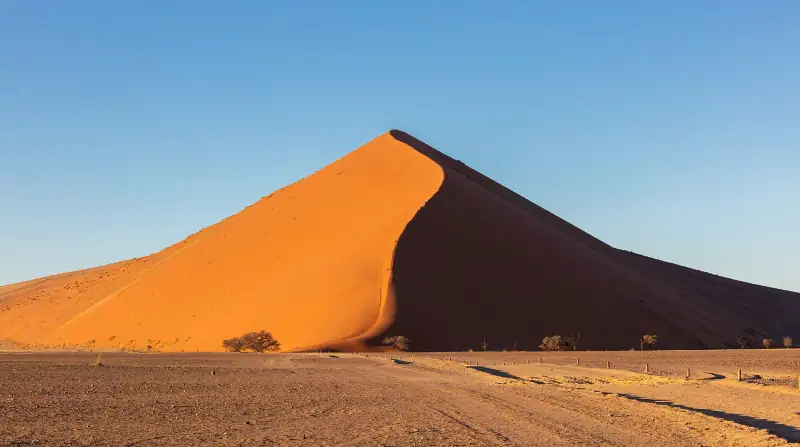
10 days
Namibia road trip in the rainy season (January to March): itinerary and passable roads
WindhoekEtosha (Okaukuejo)Khorixas / TwyfelfonteinSwakopmundSesriemWindhoek

21 days
Namibia road trip: a complete 2 to 3 week 4x4 itinerary
WindhoekSossusvlei / Namib-NaukluftSwakopmund / Walvis BayDamaraland / SpitzkoppeTwyfelfonteinSkeleton Coast, southern partEtoshaWaterberg PlateauFish River CanyonLüderitz and return to Windhoek