What to see
Visiting Swakopmund: a complete guide to Namibia's colonial pearl
We may earn a commission when you book through links on this page, at no extra cost to you. We don't visit or try the places we cover: we summarize published sources. How we work
In short
- Swakopmund is 360 km (224 mi) from Windhoek, about 4 hours on the paved B2, and 30 km (19 mi) from Walvis Bay.
- Two full days cover the essentials: the colonial center and sandboarding or quad biking on day one, a Living Desert tour and Walvis Bay on day two.
- The climate is cool all year: 10 to 21 °C (50 to 70 °F), with frequent morning fog and almost no rain.
- Book sandboarding, Living Desert tours and 4x4 excursions ahead in high season (June to August).
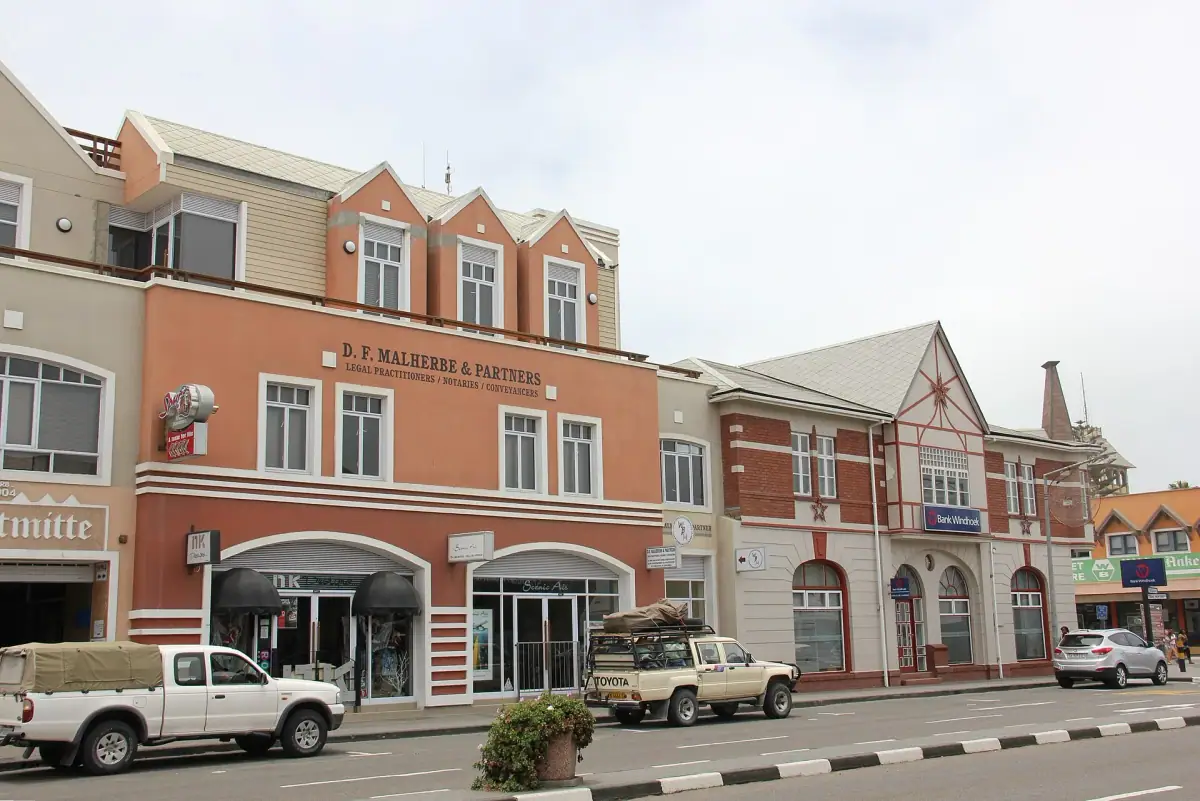
Swakopmund is a delightful anomaly in the African landscape. Imagine a town where Bavarian half-timbered facades sit alongside the red sand dunes of the oldest desert in the world, where Konditorei serve cream cakes facing the icy Atlantic, where biltong sellers share the street with outdoor gear shops. Founded by German settlers in 1892, the town is now the tourist capital of the Namibian coast, and one of the most original destinations in all of southern Africa.
360 km (224 mi) from Windhoek and 30 km (19 mi) north of Walvis Bay, Swakopmund is the ideal base for exploring the Namibian Atlantic coast: giant dunes for sandboarding, a living desert for night tours, the Walvis Bay lagoon for flamingos and dolphins, the Skeleton Coast for seals. But the town also deserves a visit for its own sake, for its remarkably preserved colonial architecture and its unique atmosphere between a European past and an African present.
German colonial heritage: a town out of time
Swakopmund is the best-preserved town of German South West Africa, the former name of Namibia under colonial rule. The town center is an open-air museum of Wilhelmine architecture from the late 19th and early 20th centuries.
The must-see buildings
The Woermann Haus (around 1905-1906) is probably the most photographed building in town. This neo-Baroque trading house now holds a museum and a library. Its square tower gives a panoramic view of the town and the Atlantic. The ocher and white facade, decorated with pilasters and carved cornices, is emblematic of German colonial style in Africa.
The railway station (Bahnhof, 1901) has been turned into a luxury hotel, the Swakopmund Hotel. Its pale green facade with turrets and its big clock are unmistakable. Even if you are not staying there, the interior is worth a look: the hotel bar keeps the original woodwork and stained glass.
The Alte Kaserne (1905), the former German military barracks, is one of the largest historic buildings in town. Its imposing central tower and symmetrical wings have survived more than a century of Atlantic winds. The building is now used by a Namibian high school.
The lighthouse (Leuchtturm, 1902) is still in service. Originally 11 meters (36 ft) high when built, it was raised to 28 meters (92 ft) in 1910. Painted red and white, it dominates the waterfront. It cannot be visited inside, but it is very photogenic from the jetty.
The Alte Gefängnis (old prison, 1909) is a gem of neo-Baroque architecture: its turrets, decorative machicolations and scrolled gables seem straight out of a Grimm tale transplanted into the Namibian desert.
The historic center walk
Start with the Swakopmund Museum (Strand Street), one of the best in Namibia for understanding the natural history of the Namib Desert and German colonization. Allow 1 h 30 to 2 h. Then walk up to the Woermann Haus, cross the Städtische Realschule mit Grundschule (1913, now Namib High School), and go down to the waterfront by Bismarck Street. A walk of about 2 hours covers the main monuments.
Activities and excursions in Swakopmund
Sandboarding, Living Desert tours, 4x4, skydiving and quad biking on the Swakopmund dunes.
Sandboarding and dune adventures
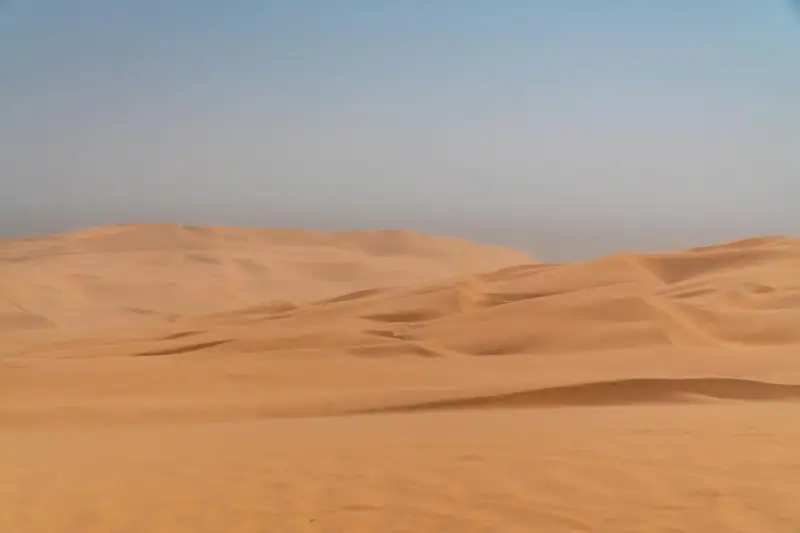
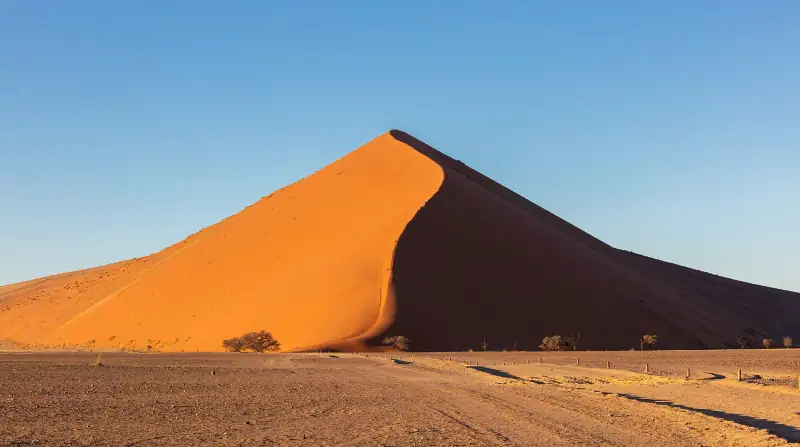
The dunes encircling Swakopmund are one of the most extraordinary outdoor playgrounds in Africa. Shaped by the Atlantic wind, these dunes reach 100 to 200 meters (330 to 660 ft) high just a few kilometers from the town center, and offer a spectacular setting for thrilling activities.
Sandboarding: the flagship activity
Sandboarding on the Swakopmund dunes is open to all levels. There are two options:
Lie-down: you slide down the dune on your stomach on a waxed board. The ride is fast (up to 80 km/h / 50 mph on steep slopes) and the technique is simple, ideal for beginners or those who don’t snowboard. Falls are painless in soft sand.
Stand-up: standing on the board, like snowboarding. More technical, but a 10-minute lesson covers the basics. Snowboarders adapt quickly; total novices will prefer to start with lie-down.
Group tours generally leave in the morning (7:30 to 8:00 am) from operators in town. The 4x4 transfer to the dunes takes 15 to 20 minutes. A full morning is enough for 4 to 6 runs. Average price: N$450 to 600 per person (equipment, transfer and instructor included).
Main operators: Alter Action, Namibia Tours & Safaris, Desert Tours Swakopmund.
Quad and buggy on the dunes
For those who prefer engine to muscle, quad or buggy tours on the dunes provide a spectacular adrenaline rush. Circuits last 1 to 2 hours depending on the option; some combine dunes and the Atlantic beach for a variety of terrain. Average price: N$700 to 1,200 depending on duration and vehicle type.
Tandem skydiving
Skydiving over the Namib Desert and landing on the Atlantic beach at Swakopmund is one of the most memorable experiences in Namibia. The plane takes off from the small local airport and climbs to 10,000 feet over the dunes. The jump lasts about 40 seconds of free fall, then 5 minutes under canopy with a breathtaking view of the desert, the Atlantic and the colonial town. Average price: N$2,800 to 3,200 tandem (no prior experience needed).
Living Desert: the secrets of the coastal desert at night
One of the most original tours in Namibia leaves from Swakopmund: the “Living Desert” tour, a night or twilight exploration of the coastal desert in search of wildlife that most travelers completely overlook.
The Namibian coastal desert, between the sea and the dunes, seems dead on the surface. It is not. Under the sand live dune geckos, burrowing snakes, fog beetles (which collect water from the morning mist), dune spiders (the dancing white lady spider) with surprising defensive pirouettes, and brightly colored agama lizards.
Specialist guides know exactly where to look: a 3-hour tour in a small group (4 to 8 people max) reveals about ten species you would never have found alone. The teaching is remarkable: you understand the unique adaptations to the Namibian coastal desert, fed by fog (Benguela fog) rather than rain.
Ideal time: dawn (departure 6:30 am) or twilight for photographic light and peak animal activity. Average price: about N$1,000 per person (rate shown by the official operator, half price for children aged 12 and under; check the current rate before booking). Reference operator: Tommy’s Living Desert Tours (Swakopmund).
Car rental in Namibia
A 4x4 or a standard car to explore Swakopmund, Walvis Bay and the Namib Desert at your own pace.
The jetty and the waterfront
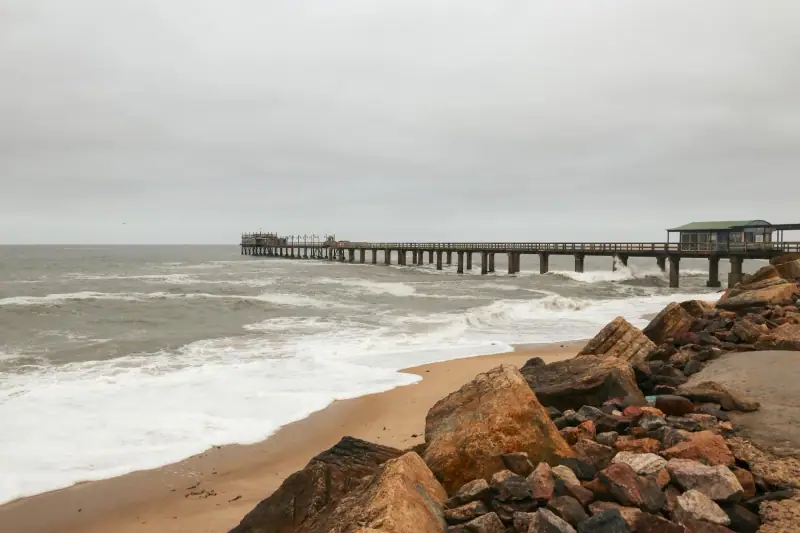
The Swakopmund Pier has a complex history. The original wooden jetty, completed on April 25, 1905, was 275 meters (902 ft) long and was extended to 325 meters (1,066 ft) in 1907. Facing the assaults of the Atlantic climate and the tides, a steel jetty was started in 1912, planned for 640 meters (2,100 ft), but construction stopped at 262 meters (860 ft) when World War I broke out. That unfinished steel structure is what you see today, one of the most remarkable in Africa. It remains a popular place to stroll and a fishing spot, originally built to ease the landing of goods (the port of Walvis Bay was not yet developed).
At its end is the restaurant “The Jetty”: panoramic views of the Namibian coast, fresh lobster, fish of the day. Sport fishing from the jetty is also popular with locals, especially early in the morning.
The waterfront (Strandpromenade) runs along the coast for 2 km (1.2 mi), between the jetty and the municipal pool carved into the rock. This natural sea pool, filled at high tide by the icy Atlantic (14 to 17 °C / 57 to 63 °F depending on the season), is used by fans of bracing swims. The water is cold but clean, and the view of the dunes in the background is surreal.
Food and restaurants: Konditorei, rock lobster and braai
Swakopmund is the most cosmopolitan town in Namibia after Windhoek, and this shows in its food scene. You find German culinary heritage (bakeries, Konditorei, charcuterie), traditional Namibian cuisine, and seafood from the Benguela Current.
Restaurants not to miss
The Jetty Seafood Restaurant: on the historic jetty, direct view of the Atlantic. Specialties include Cape rock lobster (kreef), fresh Walvis Bay oysters, fish from the Benguela Current. High prices but an exceptional setting. Book ahead.
Kücki’s Pub: a Swakopmund institution, a very busy pub atmosphere (traveler reviews are mixed). Relaxed vibe, generous portions. Specialties: game meat (oryx, springbok), grilled lobster, pasta. Food at all hours.
The Tug Restaurant: set in a former tugboat at the foot of the jetty (literally), this restaurant serves seafood and meat in a unique setting. The terrace facing the Atlantic is ideal at sunset.
Café Anton: the institution of the Namibian Konditorei. Cream cakes, apple strudel, Schwarzwälder Kirschtorte: everything the German settlers brought from Europe survives here in a remarkably authentic form. Breakfast and brunch recommended.
Napolitana: wood-fired pizzas and pasta in an Italian atmosphere. A safe bet for an affordable meal, with a good atmosphere in the evening.
Specialties to try
- Oryx steak: gemsbok (oryx) meat is tender, lean and tasty. Found throughout the country.
- Springbok: the Namibian antelope, lighter than oryx. Often served as carpaccio or on skewers.
- Biltong: meat dried in the desert wind, the national Namibian snack. Available everywhere in town; try it in oryx or springbok.
- Cape rock lobster (kreef): the specialty of the Namibian coast. Season from November to April.
- Struisvogel (ostrich): ostrich steak or burger, more tender than you might think.
Hotels in Swakopmund
From colonial guesthouse to luxury lodge, find your accommodation in Swakopmund.
Weather and best time to visit
Swakopmund enjoys a very particular microclimate, tempered by the Benguela Current that brings subantarctic waters up the Namibian coast.
Temperatures: mild all year. Between 15 and 21 °C (59 and 70 °F) in summer (November to March), 10 to 20 °C (50 to 68 °F) in winter (May to August). While Windhoek and Sossusvlei bake at 38 °C (100 °F) in summer, Swakopmund enjoys an almost Mediterranean climate thanks to the Benguela Current.
Fog (Benguela fog): frequent in the morning, especially from April to October. It generally lifts around 10 to 11 am. The fog is not a drawback: it is the key to the survival of the coastal desert wildlife and creates extraordinary photographic atmospheres, with colonial buildings emerging from the morning mist.
Wind: Swakopmund is less exposed than Lüderitz to the fearsome Südwester, but the Atlantic wind is everywhere. November to January are the windiest months.
Rain: almost nonexistent (about 30 mm / 1.2 in per year). It may rain two or three times a year.
Best time:
- June to August (southern winter): tourist high season. Cool temperatures (12 to 18 °C / 54 to 64 °F), frequent morning fog, crowds on outdoor activities. Book ahead.
- September to November: an excellent compromise: pleasant temperatures, fewer people, longer days. The lobster season starts in December.
- December to February: hot summer inland but cool on the coast. Namibian families on holiday, some activities busier. Ideal if you come from Sossusvlei.
Getting there and logistics
From Windhoek: 360 km (224 mi) on the B2 (via Okahandja and Karibib), fully paved. Allow 4 hours on the road. The C28 via the Khomas Hochland and the Namib Desert is more spectacular but takes 1 to 3 hours longer. The Desert Express (TransNamib) once linked Windhoek and Swakopmund on an overnight trip, but the service ended in 2020; check current availability with TransNamib before you go.
From Sossusvlei: about 340 to 410 km (211 to 255 mi) depending on the route, 3 h 45 to 4 h 30 on the road. You cross Namib-Naukluft Park by the C19 or the D1982, tracks in good condition for a 4x4, passable in the dry season for some sedans. Check track conditions before you go. Allow time for this stage: gravel roads and altitude changes can lengthen the trip slightly.
From Walvis Bay: 30 km (19 mi) on the coastal B2. 30 minutes. The two towns are naturally visited together.
Airport: Walvis Bay Airport (WVB, about 35 km / 22 mi) is the closest, with domestic connections to Windhoek. Taxis and shuttles link the two towns. Windhoek International Airport (WDH) is the main entry point for intercontinental flights.
In town: Swakopmund is a compact town, easy to walk. The historic center, waterfront, restaurants and activity operators are concentrated within a 1 km (0.6 mi) radius. Local taxis run for longer trips.
Currency: the Namibian dollar (NAD) is pegged to the South African rand. Standard Bank and FNB ATMs are numerous in the center. Bank cards are accepted in most tourist businesses.
Swakopmund in your Namibian itinerary
Swakopmund is almost always included in Namibian itineraries of more than 8 days. Its position on the Atlantic coast makes it a natural passage between the interior of the country and the coastline.
Classic Namibian coast itinerary (3 days):
- Day 1: Arrival, historic walk, Swakopmund Museum, dinner at Kücki’s
- Day 2 morning: Living Desert tour at sunrise. Afternoon: sandboarding or quad biking on the dunes
- Day 3: Head down to Walvis Bay (30 km / 19 mi): catamaran cruise (dolphins, seals, oysters), return via the salt pans and Dune 7
Fitting into a big Namibian circuit: Swakopmund fits ideally between Sossusvlei (3 to 4 days of dunes) and the Skeleton Coast or Etosha (to the north). See our Namibia road trip guide for distances, driving times and the best order of stops.
For accommodation, our guide to where to stay in Swakopmund covers every budget, from family guesthouse to luxury lodge via the emblematic colonial hotel.
Practical tips
Average daily budget:
- Budget (hostel, simple meals, one activity): N$700 to 1,000 per day
- Mid-range (guesthouse, restaurants): N$1,200 to 2,000 per day
- Comfort (colonial hotel, multiple activities): N$2,500+ per day
Shopping:
- Craft Centre (Peter Müller Street): Namibian crafts, jewelry, sculptures, textiles
- Namib Wool: sweaters and clothing in karakul wool (Namibian sheep)
- German bakeries (Bäckerei): rye breads, Brötchen, cakes; Konditorei Gurckhaus is an institution
Connectivity: 4G available throughout the town (MTC and TN Mobile). Most hotels and restaurants offer Wi-Fi. Check your carrier’s international plan or consider a travel eSIM.
Language: English is widely spoken. Afrikaans and German can still be heard in the old neighborhoods, a legacy of the country’s history. A word of Danke or Guten Tag always pleases locals of German origin.
Gear: bring a light windbreaker for the waterfront walk (the Atlantic wind is cool even in summer). Sunglasses and sun protection are essential on the dunes. Carry enough water for any excursion.
Swakopmund is a town unlike anything else in Africa, and that is precisely its strength. Here buttercream tortes compete with oryx steaks, Bavarian gabled facades stand out against red dunes, and webbed-foot geckos dance at night on fog-damp sand. A Namibia in miniature, both familiar and completely foreign, which you leave with the impression of having visited two continents at once.
To continue exploring the Namibian Atlantic coast, read our complete guide to Walvis Bay and our article on the Namib Desert. To prepare your circuit, the Namibia road trip guide gives you all the keys to a successful trip.
Frequently asked questions
How do you get to Swakopmund from Windhoek?
Swakopmund is 360 km (224 mi) from Windhoek, about 4 hours by road on the B2 (via Okahandja and Karibib) or the C28 (a more scenic road via the Khomas Hochland). Both roads are paved and in good condition. The Desert Express (the Namibian tourist train) used to run an overnight trip from Windhoek, but the service has been suspended since 2020; check availability before you go. A rental car remains the most practical option.
How many days do you need to visit Swakopmund?
Two full days are enough for the essentials: on the first day, explore the town on foot (architecture, museum, jetty, market) and book a sandboarding or quad experience in the afternoon. On the second day, go on a Living Desert tour in the morning and an excursion to Walvis Bay (lagoon, flamingos, catamaran cruise) in the afternoon. A third day is welcome if you want to do more water activities or head to Sandwich Harbour.
Can you go sandboarding in Swakopmund with no experience?
Yes, absolutely. Sandboarding on the Swakopmund dunes is open to all levels. The lie-down option on a wooden board is easy and ideal for beginners: you slide on your stomach. The stand-up option suits those with some snowboard or skateboard experience. Guided tours include the 4x4 transfer to the dunes, equipment and basic instruction. No prior experience is needed.
What is there to see in Swakopmund's colonial district?
Swakopmund's colonial heart has several remarkable buildings: the Alte Kaserne (former German barracks, 1905), the Leuchtturm (the 1902 lighthouse still in service), the Alte Gefängnis (old prison, neo-Baroque style), the Woermann Haus (trading house, 1905, with a panoramic tower), the railway station (Bahnhof, 1901, turned into a hotel), and the Wörmann villa. A 2-hour walk covers the main buildings of the center.
Is Swakopmund safe for tourists?
Swakopmund is generally safe in the tourist areas by day, but stay vigilant: pickpocketing, car break-ins and night-time assaults are reported, as in any Namibian town. Usual precautions: leave nothing visible in your vehicle, avoid isolated night outings, and use official taxis in the evening. The waterfront and historic center are well frequented and carry no particular risk by day.
Do you need to book activities ahead in Swakopmund?
In high season (June to August), booking ahead is strongly advised for sandboarding, Living Desert tours and 4x4 excursions. These activities have limited group sizes and fill up quickly. In low season you can usually walk up to operators in town, but booking the day before is still prudent. Booking.com and GetYourGuide offer online options.
More Namibia guides
Keep reading
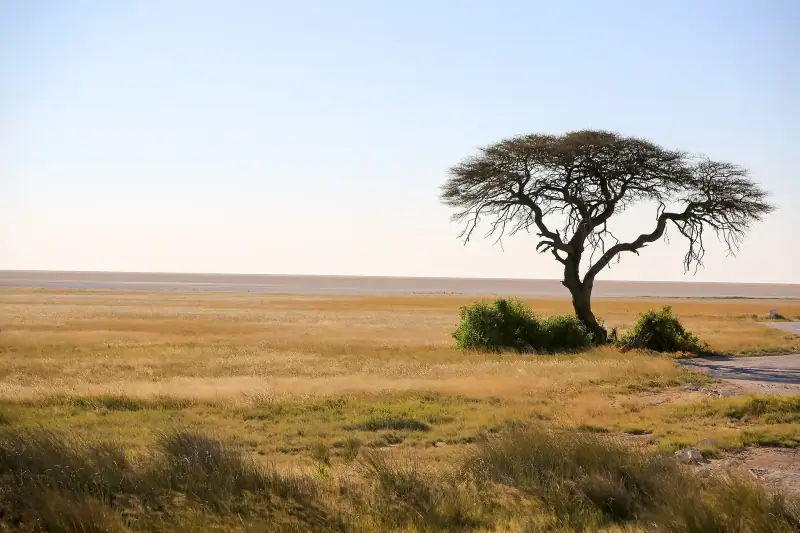
Visiting Etosha National Park: a complete guide to the Namibian safari
Complete guide to Etosha National Park: best season, camps, waterholes and animals to see. Everything to plan your safari in Namibia.
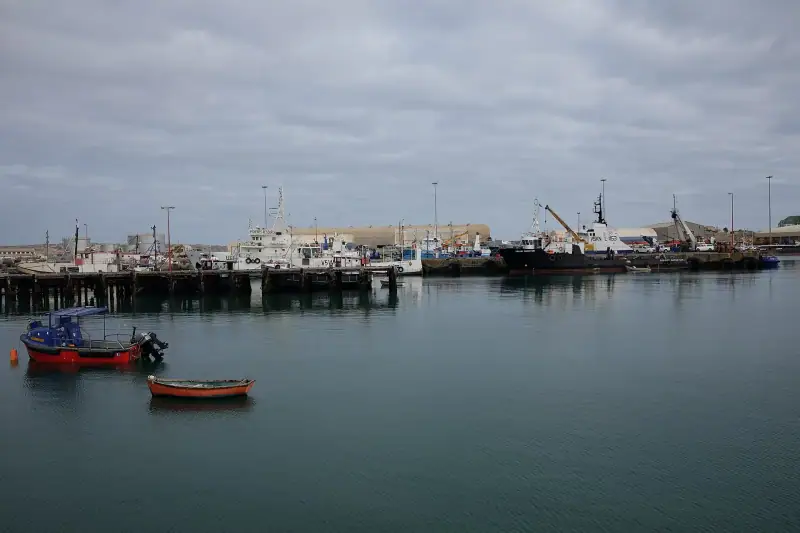
Visiting Lüderitz: a complete guide to the desert ghost town
Complete guide to Lüderitz: Kolmanskop, penguins, German architecture and the Namib Desert. All you need to visit this unique town in Namibia.
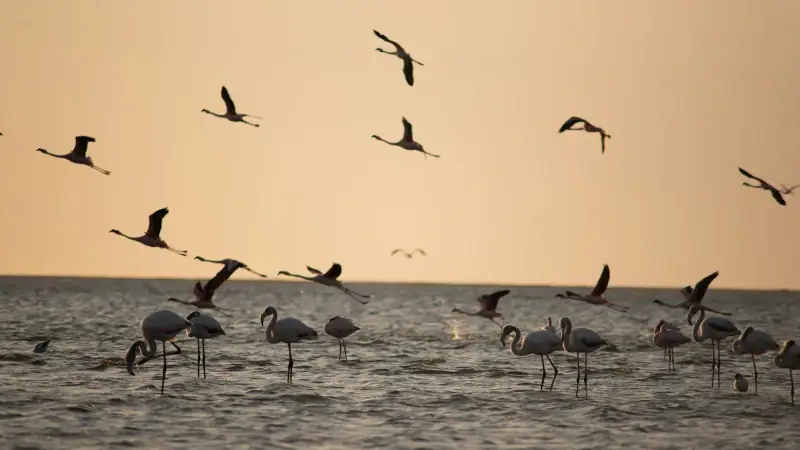
Visiting Walvis Bay: a complete guide to the flamingo lagoon
Complete guide to Walvis Bay: lagoon, flamingos, dolphins, Sandwich Harbour and fresh oysters. All you need to visit this unique Namibian town.
Ready-made
Namibia itineraries

10 days
Namibia in 10 days without a car: a realistic itinerary by shuttle and transfer
WindhoekEtoshaDamaralandSwakopmundSesriem / SossusvleiWindhoek
10 days
Namibia road trip in the rainy season (January to March): itinerary and passable roads
WindhoekEtosha (Okaukuejo)Khorixas / TwyfelfonteinSwakopmundSesriemWindhoek

21 days
Namibia road trip: a complete 2 to 3 week 4x4 itinerary
WindhoekSossusvlei / Namib-NaukluftSwakopmund / Walvis BayDamaraland / SpitzkoppeTwyfelfonteinSkeleton Coast, southern partEtoshaWaterberg PlateauFish River CanyonLüderitz and return to Windhoek