Plan your trip
Best time to visit Namibia: a month-by-month guide
We may earn a commission when you book through links on this page, at no extra cost to you. We don't visit or try the places we cover: we summarize published sources. How we work
In short
- The dry season, June to October, is best for safari: low vegetation, animals concentrated at waterholes and pleasant temperatures.
- For a first trip, aim for August or September: excellent safari conditions, pleasant temperatures at Sossusvlei, and enough accommodation if you book 3 to 4 months ahead.
- June and July are peak high season: book lodges and 4x4s 6 to 12 months ahead.
- Swakopmund stays cool all year (12 to 20 °C / 54 to 68 °F), while the interior can reach 40 °C (104 °F) in summer.
Choosing the right time to visit Namibia is one of the most important decisions in your preparation. This immense country, stretching more than 1,500 km (930 mi) from north to south, has very different climate conditions depending on the region and the season. The best time depends on what you are coming for: a safari in optimal conditions, dunes at dawn, baby animals or migratory birds.
Understanding the Namibian climate
Namibia is one of the driest countries in the world. Its climate is dominated by drought: most of the country receives less than 250 mm (10 in) of rain a year. The influence of two opposing ocean currents creates very distinct microclimates:
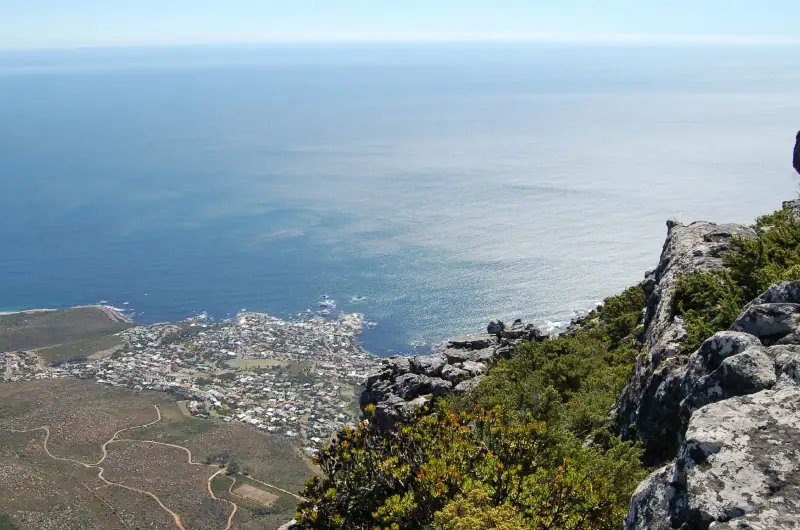
The Benguela Current runs along the Atlantic coast, bringing cold water up from the Antarctic. This current explains the paradox of the Namibian coast: a strip of arid, cool desert (with regular fog) right next to a scorching continental desert. Swakopmund has very cool summer temperatures (12 to 20 °C / 54 to 68 °F) while the interior bakes at 40 °C (104 °F).
The summer rains (November to April) fall mainly in the north and east of the country. The farther south you go, the greater the aridity.
Month by month in Namibia
January to February: southern heat wave, northern rains
January and February are the hottest months of the year. At Sossusvlei, temperatures can reach 45 to 50 °C (113 to 122 °F) by day. Visiting the dunes is strongly discouraged, or should be done before 7 am. In the north (Etosha, Caprivi), rains are abundant and tracks may be cut.
Who is it for? Birdwatchers will enjoy the migratory birds in the northern wetlands. Photographers will love the green contrasts after the rain.
Avoid: Sossusvlei, Damaraland (extreme heat and impassable tracks).
March to April: the transition
The rains decrease gradually. Temperatures remain high but begin to drop. The country takes on unusual green colors. Animals are born in large numbers, attracting predators.
Who is it for? Travelers who want to see young animals (wildebeest, zebras, impalas) with their babies. Late April is already a very good time for safari.
Advantage: fewer tourists, lower prices.
May: the awakening of high season
May marks the start of the dry season and the tourist high season. The vegetation begins to thin, the sky is immaculate blue and temperatures are ideal (20 to 30 °C / 68 to 86 °F by day, 5 to 10 °C / 41 to 50 °F at night in the desert). Wildlife gathers around the waterholes.
Who is it for? All travelers. May is one of the best months of the year.
June to July: the peak of high season
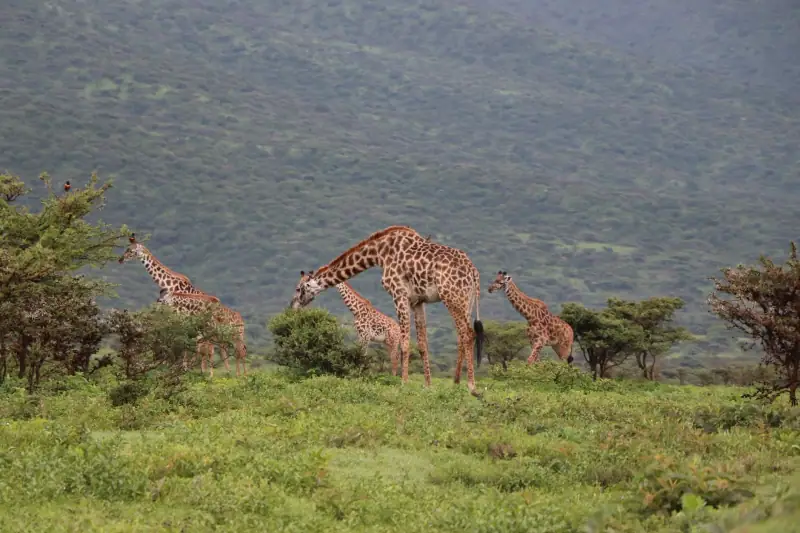
The best months for safari. Temperatures are the coolest of the year, the vegetation is sparse and animals gather in large numbers around water. Nights can be very cold in July (close to 0 °C / 32 °F in the desert). Etosha is at its best.
Who is it for? Everyone, but especially safari lovers. Book accommodation and 4x4s 6 to 12 months ahead.
Drawback: high season means maximum prices and full accommodation if you don’t plan ahead.
Lodges in Namibia
Book early for the best availability in high season.
August to September: the best balance
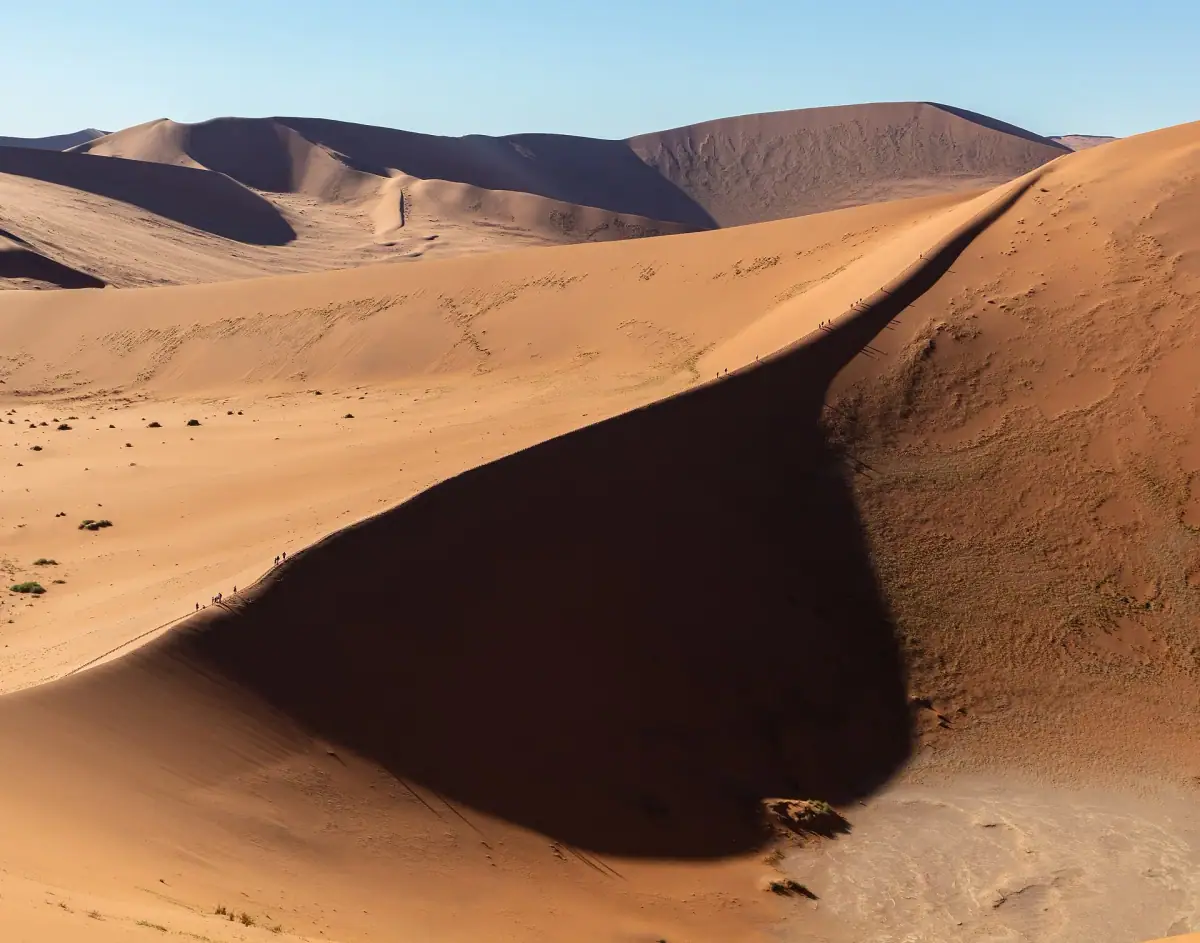
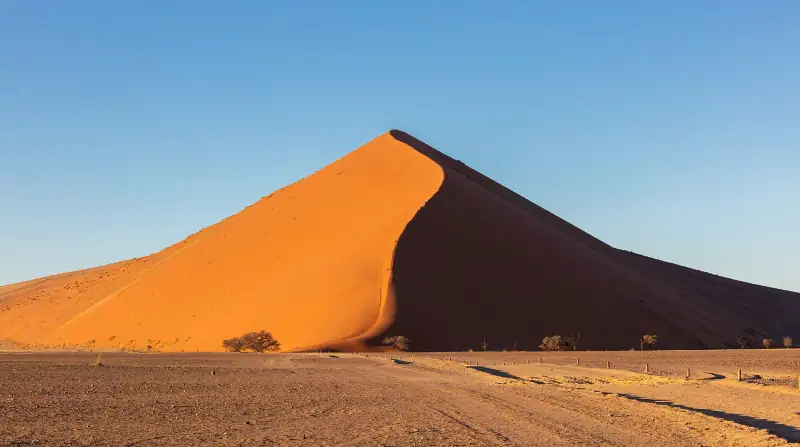
August and September combine excellent safari conditions (animals concentrated, low vegetation) with milder temperatures than July. Nights remain cool but days are pleasant. It is also the ideal period for the Sossusvlei dunes (sunrise at 20 °C / 68 °F).
Who is it for? The best compromise for a first trip to Namibia.
October: the heat returns
October is hot (35 to 40 °C / 95 to 104 °F inland) but the dry season is still well established. It is the month when waterholes are lowest and animals therefore most concentrated. Spectacular storms begin to appear at the end of the month.
Who is it for? Wildlife photographers, travelers who accept the heat.
November to December: the interlude
The first rains arrive in the north. Herds give birth during this period. Sossusvlei has its hottest nights. Christmas and New Year are the local tourist high season.
Who is it for? Bird lovers, travelers who prefer low seasons.
The best time by region
| Region | Best time | Avoid |
|---|---|---|
| Etosha | June to October | November to March |
| Sossusvlei | May to October | December to February |
| Swakopmund | All year | none |
| Damaraland | April to October | January to March |
| Skeleton Coast | July to October | December to March |
| Caprivi Strip | June to August | November to April |
Recommendations
First trip: aim for August or September. You will have the best safari conditions, pleasant temperatures for Sossusvlei, and enough accommodation options if you book 3 to 4 months ahead.
On a small budget: go in April to May or in November. You will enjoy rates 20 to 30% below high season with still very decent conditions in April to May.
Bird lovers: November to February, when migrants flock to the northern wetlands.
Average temperatures by town
Windhoek:
- Summer (Jan.): 29 °C max / 17 °C min (84 / 63 °F)
- Winter (July): 21 °C max / 7 °C min (70 / 45 °F)
Sossusvlei:
- Summer (Jan.): 38 °C max / 21 °C min (100 / 70 °F)
- Winter (July): 25 °C max / 5 °C min (77 / 41 °F)
Swakopmund:
- Summer (Jan.): 20 °C max / 14 °C min (68 / 57 °F)
- Winter (July): 16 °C max / 9 °C min (61 / 48 °F)
Etosha (Okaukuejo):
- Summer (Jan.): 35 °C max / 18 °C min (95 / 64 °F)
- Winter (July): 24 °C max / 8 °C min (75 / 46 °F)
The Atlantic coast stays cool all year thanks to the Benguela Current, in sharp contrast to the desert interior. Always bring a fleece for the nights, even in summer.
Events not to miss
The great zebra migrations (March to April): thousands of zebras migrate between Botswana and Namibia in the Chobe/Caprivi region. A spectacle comparable to the great African migrations.
Desert blooms (March to April): after the rains, Namaqualand (southern Namibia) is covered with orange and purple wildflowers. A fleeting and extraordinary sight.
Cultural events in Windhoek (September): festivals, markets and agricultural fairs (such as the Windhoek Show, at the end of the month) punctuate the season. Dates change every year: check with the tourist office before you go.
Whale watching (July to November): humpback and Bryde’s whales pass off the Namibian coast. Excursions from Walvis Bay are very popular.
Namibia is a destination best visited during the dry season (May to October) for safari, or outside the extreme heat for the dunes. Whatever period you choose, get ready to be overwhelmed by the wild beauty and immensity of this unique country.
Frequently asked questions
What is the best season for a safari in Namibia?
The dry season, from June to October, is ideal for safari. The vegetation is low, animals concentrate around the waterholes and temperatures are pleasant.
Can you go to Namibia in December?
December marks the start of the rainy season in the north. The south (Sossusvlei) remains accessible but is very hot. It is a less recommended period except for birds.
What is the temperature in Namibia in July?
In July, temperatures are mild to warm by day (20 to 28 °C / 68 to 82 °F depending on the region) but can be cold at night, especially in the desert (0 to 5 °C / 32 to 41 °F). Pack warm clothes.
When can you see flamingos at Walvis Bay?
Flamingos are present all year at Walvis Bay, but the colonies are bigger in the southern summer (November to March) when migratory birds arrive.
Is there a malaria risk in Namibia?
Malaria risk is reported in the north (Zambezi region, the former Caprivi, Kavango, north of Etosha), especially in the rainy season (November to April). Ask your doctor or a travel clinic, and see the official travel health pages (CDC in the US, TravelHealthPro in the UK).
More Namibia guides
Keep reading
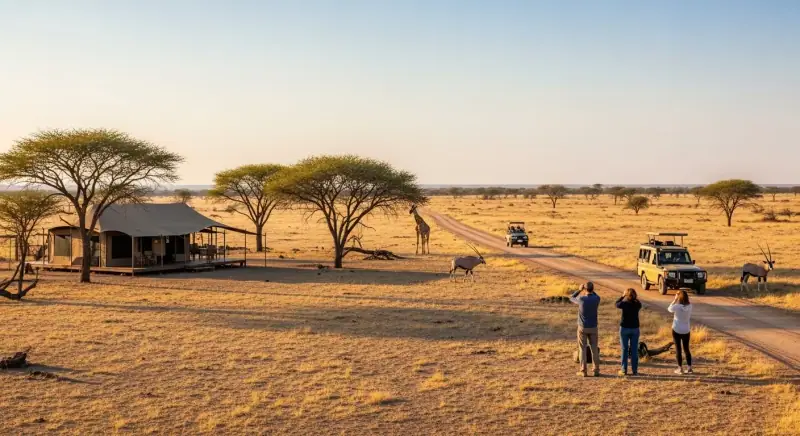
Namibia budget: how much does a trip cost in 2026?
Estimate the cost of your Namibia trip: accommodation, transport, safari, activities and tips for traveling for less.
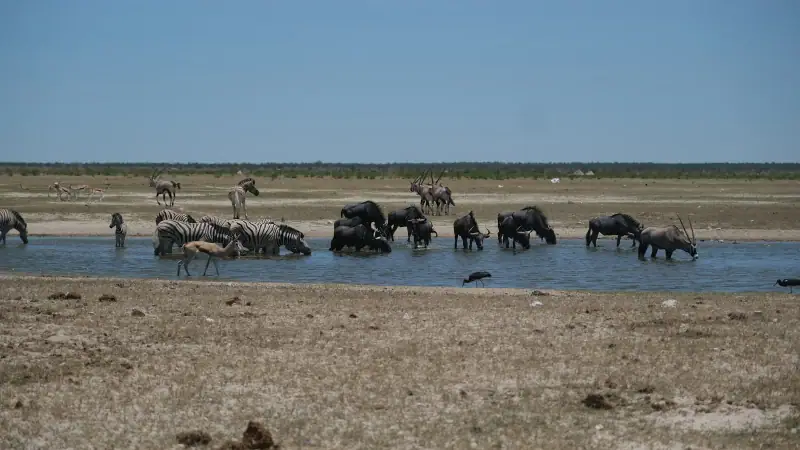
Where to stay in Etosha: NWR camps, lodges and practical tips
Choose where to stay in Etosha: official Okaukuejo, Halali and Namutoni camps or lodges outside the park. Budget, booking and safari tips.
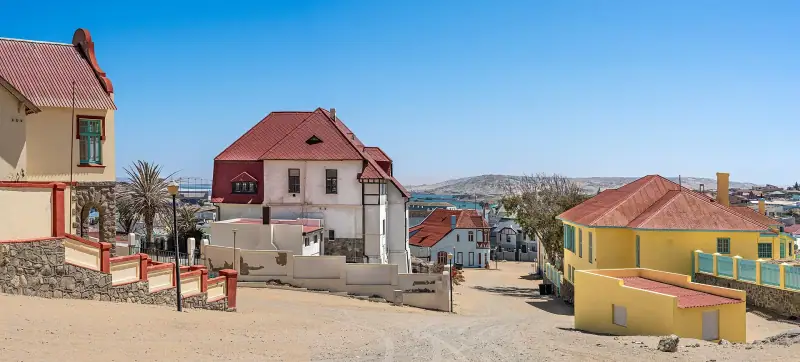
What to do in Lüderitz: activities and must-see visits
Kolmanskop, penguins at Halifax Island, Bogenfels, diving, flamingos: a complete guide to things to do in Lüderitz, Namibia's southern colonial gem.
Ready-made
Namibia itineraries
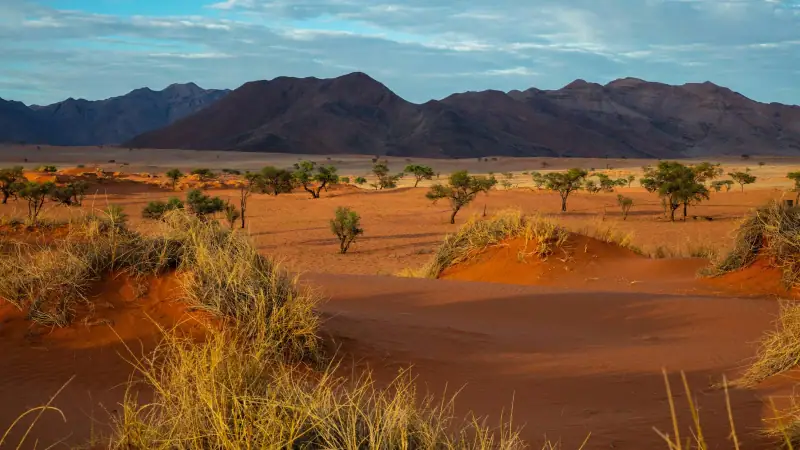
10 days
Namibia in 10 days without a car: a realistic itinerary by shuttle and transfer
WindhoekEtoshaDamaralandSwakopmundSesriem / SossusvleiWindhoek
10 days
Namibia road trip in the rainy season (January to March): itinerary and passable roads
WindhoekEtosha (Okaukuejo)Khorixas / TwyfelfonteinSwakopmundSesriemWindhoek

21 days
Namibia road trip: a complete 2 to 3 week 4x4 itinerary
WindhoekSossusvlei / Namib-NaukluftSwakopmund / Walvis BayDamaraland / SpitzkoppeTwyfelfonteinSkeleton Coast, southern partEtoshaWaterberg PlateauFish River CanyonLüderitz and return to Windhoek