Things to do
Things to do in Swakopmund: sandboarding, quad biking, kayaking and Namibian adventures
We may earn a commission when you book through links on this page, at no extra cost to you. We don't visit or try the places we cover: we summarize published sources. How we work
In short
- Sandboarding (lying on a board or standing), quad or buggy tours, kayaking with seals at Walvis Bay and tandem skydiving are the main adventure activities.
- In high season (July to September), book 2 to 3 days ahead, especially for sandboarding and skydiving.
- Indicative prices: sandboarding €40 to 70 ($46 to 81), quad 1 hour €50 to 80 ($58 to 93), tandem skydive €150 to 250 ($175 to 290).
- Two full days combine the main activities; a third day adds skydiving and stargazing.
Swakopmund is much more than a coastal town with Germanic charm: it is the undisputed capital of adventure in Namibia. Wedged between the immensity of the Namib Desert and the cold waters of the Atlantic, it offers a cocktail of activities unique in Africa. Sandboarding on 100-meter (330 ft) dunes, quad biking at full speed over Namibian ocher, kayaking among Cape fur seals and dolphins, skydiving over the desert… Here is the complete guide to everything you can do and feel in Swakopmund.
Sandboarding: sliding down the Namib dunes
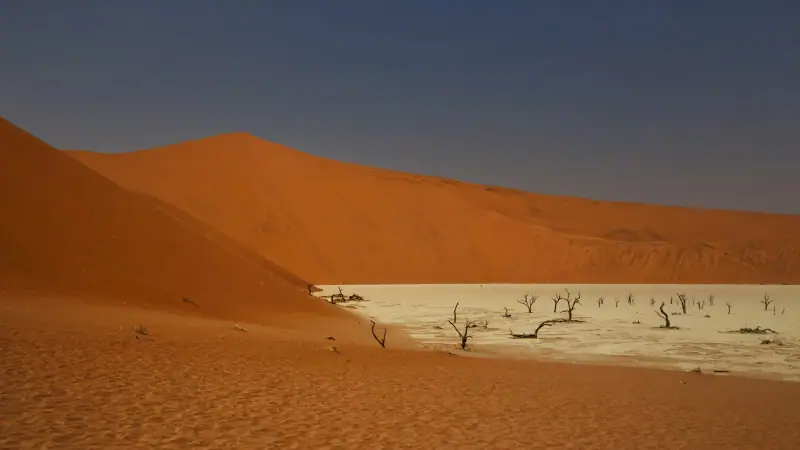
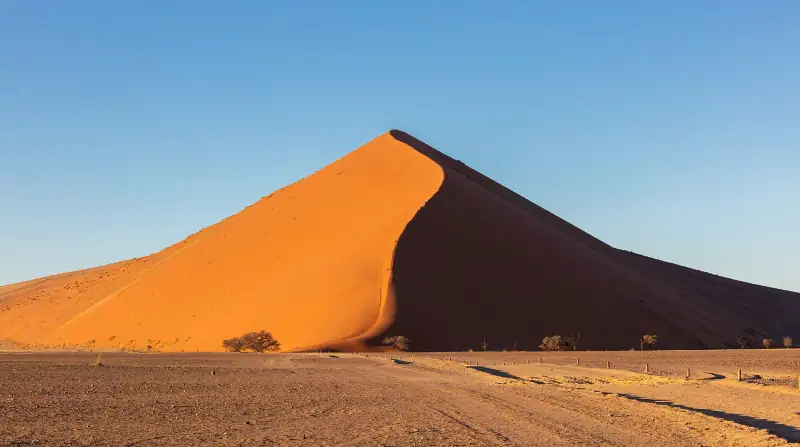
Sandboarding is the signature activity of Swakopmund. The dunes of the Namib Desert begin literally at the edge of town, and some rise more than 100 meters (330 ft) high. Nowhere else in the world lets you sandboard so close to an urban center in such conditions.
The two styles of sandboarding
Sand sledding (lying on your stomach): the most accessible version and often the fastest. You lie on a waxed plywood board and slide down the dune head first. Recorded speeds regularly exceed 70 km/h (43 mph). No particular technique is required, just a bit of courage for the first run.
Stand-up sandboarding: more like snowboarding, but on sand. It requires a minimum of balance and a good pair of knee pads. The learning curve is longer, but the feeling of surfing a dune standing up is hard to beat. Most operators offer a few introductory runs on lower dunes before moving on to serious slopes.
How to organize your sandboarding outing
Local operators offer outings including transport from Swakopmund, full equipment (board, wax, protection), 4x4 lifts to the top of the dunes and generally 3 to 5 runs. Mornings are recommended: the light is beautiful, the heat moderate and the sand still cool.
Wear clothes you don’t mind getting dirty; Namibian sand is very fine and gets in everywhere. Sunglasses and sunscreen are essential.
Sandboarding in Swakopmund
Book your sandboarding session with equipment and transport from Swakopmund.
Quad biking and buggies on the dunes
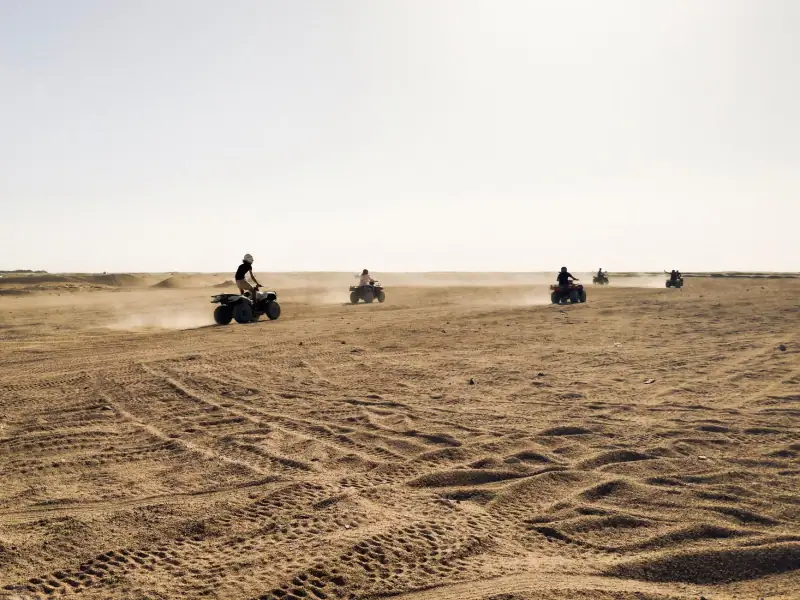
If sandboarding is the most emblematic activity, quad biking is often the favorite in terms of pure thrills. Climbing sand dunes on a powerful quad, tipping over the top and coming back down in a controlled slide on the flank is an experience hard to match.
Quad vs buggy: which to choose?
Quad (ATV): individual driving, perfect for those who like to have the controls in hand. Mastering a quad on sand is quick to learn; 10 minutes of training is enough for most adults. The dunes offer a forgiving surface in case of a slide.
Buggy: a 2- or 4-seat version, ideal for families or couples. The professional driver makes the decisions and you enjoy the panorama and the sensations. High-performance buggies reach impressive speeds on the flats between the dunes.
Quad operators run their circuits on the dunes a few kilometers south of Swakopmund, in the desert zone between the town and Walvis Bay. Circuits generally last between 1 and 3 hours depending on the option chosen.
Kayaking and seal watching at Walvis Bay
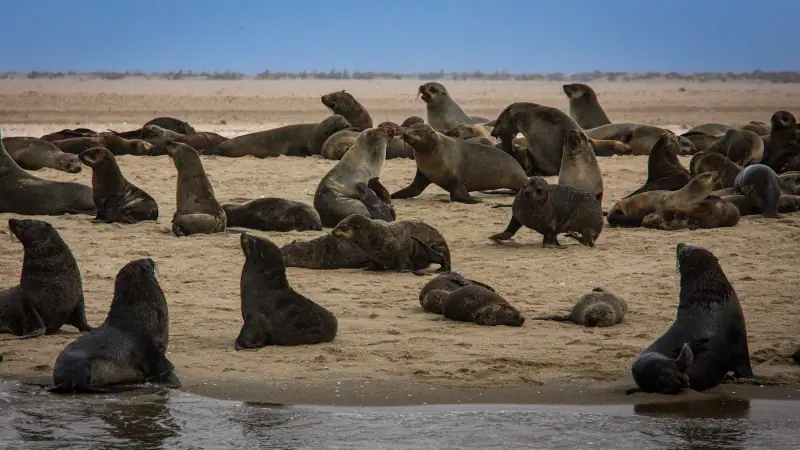
About 30 km (19 mi) south of Swakopmund, Walvis Bay is one of the richest wetlands in southern Africa. Here a large colony of Cape fur seals (about 50,000 animals at Pelican Point) lives alongside flamingos, bottlenose dolphins and great white pelicans (Pelecanus onocrotalus). The largest colony in Namibia is at Cape Cross, about 120 km (75 mi) to the north, with up to 200,000 animals in the breeding season (November to December).
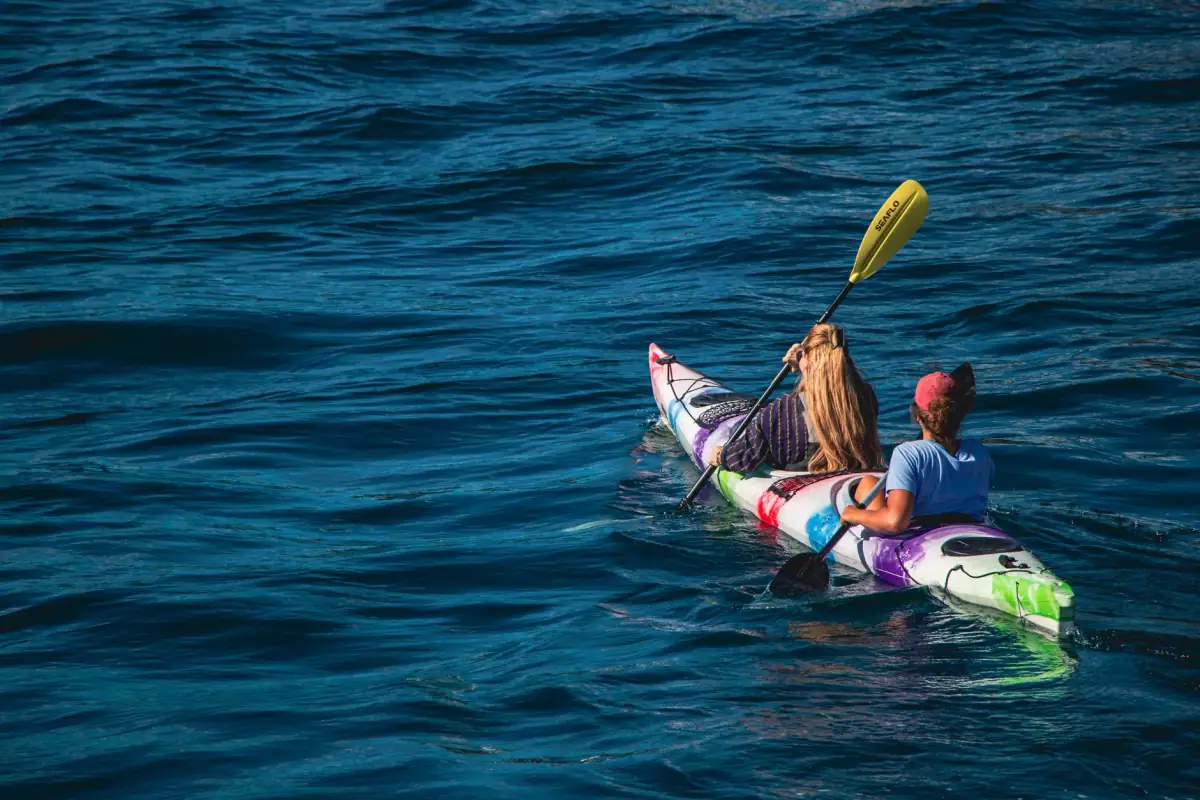
Kayaking in Walvis Bay
Guided kayak outing among the seals, dolphins and flamingos of Walvis Bay.
A typical kayak outing
Kayak outings generally leave from Walvis Bay harbor in the early morning. You paddle between the buoys and fishing boats before approaching the rocks where the fur seals laze. They are used to kayaks and come within a few meters, sometimes less. Some curious seals even put their front flippers on the edge of the kayaks.
Farther into the bay, flamingos form their famous pink ribbons in the shallow water. The site is a Ramsar-listed wetland of international importance and hosts up to 50,000 flamingos in high season.
Bottlenose dolphins are present all year in the bay. Experienced guides know their favorite areas and position the kayaks so the dolphins can approach naturally. Don’t expect a guaranteed encounter, but sightings are frequent.
Variants: boat and catamaran
If kayaking isn’t your style, catamaran trips are offered from Walvis Bay with fresh oysters and sparkling wine on board. The atmosphere is more festive, the distances covered are greater, and animal sightings are sometimes even better from the height of a boat. A very popular option for couples or groups.
Skydiving over the desert
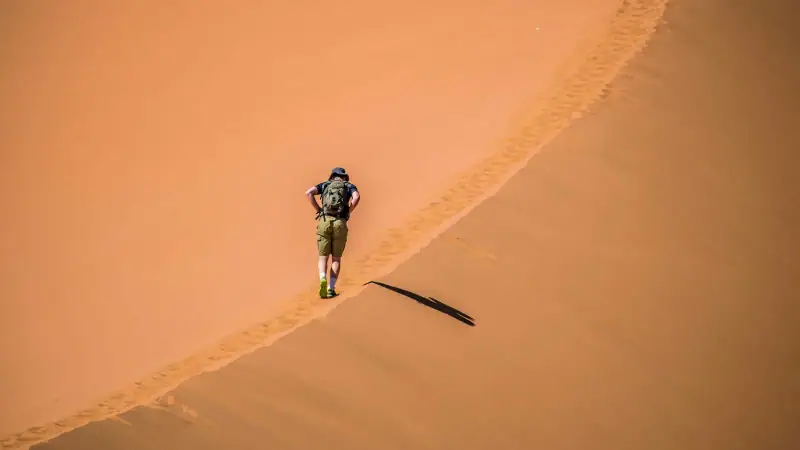
Few experiences in life rival a tandem skydive over the Namib Desert. The exit altitude is typically between 3,000 and 4,200 meters (9,840 to 13,780 ft) above sea level. Free fall lasts between 25 and 60 seconds depending on the height, then the opening of the parachute gives several minutes of silent gliding.
The panorama: a view like nowhere else
From this altitude you see at once:
- The orange and red immensity of the Namib Desert to the east
- The coastal dunes and their perpetual fog
- The blue-gray Atlantic to the west
- Walvis Bay and its turquoise lagoon to the south
- Swakopmund and its colonial buildings below
This desert-ocean combination seen from the sky is absolutely unique and, for many, the highlight of their trip to Namibia.
Requirements
The tandem jump is open to people in generally good health. Operators set their own weight limit and minimum age (written parental permission is generally required for minors): check with the operator before booking. No prior jumping experience is needed; training is done there in 30 minutes.
Weather affects jumps: the morning coastal fog (Swakopmund’s famous skyfog) can delay departures until mid-morning. Allow a waiting window of 1 to 2 hours.
Desert excursions: Living Desert and Moon Landscape
Moon Landscape
About 30 km (19 mi) east of Swakopmund via the C28, the Moonscape is one of the most singular geological formations in Namibia. This lunar landscape of ridges and valleys sculpted by erosion in Precambrian schist looks just like the surface of the Moon. It can be visited on a half-day excursion from Swakopmund, often combined with the Swakop River and the Welwitschia, those fossil plants that can live more than 1,000 years.
Living Desert Tour
Among the most popular excursions, the Living Desert Tour reveals the secrets of the coastal desert’s wildlife. Specialist naturalist guides show you what you would never see alone: sidewinder snakes in the sand, beetles that harvest dew, dancing desert lizards (dancing white lady spider included if you have the stomach), scorpions under UV light at night.
These 3- to 4-hour tours leave at dawn to catch the morning fauna. The guide digs in the sand, turns over stones, reveals hidden tunnels. It is a radically different approach from a classic safari but just as fascinating.
Sport fishing on the Atlantic
The Namibian coast is one of the richest fishing areas in the world thanks to the Benguela Current, which brings up cold, nutrient-rich water from the ocean floor. Species targeted from boats leaving Walvis Bay or Swakopmund include kob (kabeljou), steenbras and copper shark.
Surf fishing from the beaches north of Swakopmund is also widely practiced by locals. Fishing gear is easy to rent in town.
Stargazing
The Namibian sky is one of the darkest in the world. Just a few kilometers from Swakopmund, far from any light pollution, the Milky Way becomes visible to the naked eye with overwhelming clarity. Operators organize night outings with telescopes and an astronomy presentation, ideal as a complement to a day of activities.
The best time: moonless nights from May to October, when the coastal fog has cleared.
Car rental in Swakopmund
Rent a 4x4 to explore the dunes and desert on your own from Swakopmund.
Organizing your activities: practical tips
How to book
Most activity operators in Swakopmund have offices on or near the main street (Sam Nujoma Avenue). You can book directly in town, but in high season (July to September) it is better to do so 2 to 3 days ahead for the most popular activities (sandboarding, skydiving).
Online platforms (GetYourGuide, Viator) also offer advance booking with cancellation conditions that vary by offer (check them at the time of booking).
Activity budget
Activities in Swakopmund vary significantly in price. As a guide and without guarantee (prices change regularly):
- Half-day sandboarding: generally between €40 and 70 ($46 to 81) per person
- Quad biking, 1 hour: about €50 to 80 ($58 to 93)
- Kayaking at Walvis Bay (half day): between €50 and 80 ($58 to 93)
- Tandem skydive: the most expensive activity, often between €150 and 250 ($175 to 290)
- Living Desert Tour: about €40 to 60 ($46 to 70)
For couples or groups, some operators offer packages combining several activities at a discount.
Recommended combinations
Adrenaline day: sandboarding in the morning + skydiving in the afternoon (weather permitting) + dinner in town to recover.
Nature day: Living Desert Tour early in the morning (departure around 8 am, hotel or guesthouse in Swakopmund) + kayaking at Walvis Bay in late morning + back to Swakopmund in the afternoon with a visit to the crafts market.
Full adventure weekend: Day 1: sandboarding + quad biking; Day 2: kayaking at Walvis Bay + Moon Landscape excursion; Day 3: skydiving + stargazing.
What to bring
- Light clothes you can get dirty (red dune sand)
- Polarized sunglasses
- SPF 50 minimum sunscreen
- Reusable water bottle
- Closed shoes (no flip-flops for quad biking and sandboarding)
- Camera with dust cleaning gear
Preparing your Swakopmund stay
Swakopmund fits naturally into a wider Namibia road trip. It is about 360 km (224 mi) west of Windhoek by the paved B2, or about 4 hours on the road in good conditions. Most travelers spend 2 to 4 nights there, which lets you comfortably combine the activities presented here with a visit to the town and an excursion to Walvis Bay or the desert.
To learn more about the town itself, see our Swakopmund guide. To plan your whole stay, our Namibia road trip gives you a complete 14-day itinerary. And if you are looking for where to sleep, our selection of accommodation in Swakopmund covers every budget.
Swakopmund is one of those destinations that consistently exceeds expectations. You come for the dunes, you stay for the colonial atmosphere, the ocean’s coolness and the richness of the coastal wildlife. All of it a few hours from the oldest desert on the planet.
Frequently asked questions
Do you need to book activities in Swakopmund ahead?
In high season (July to September), booking 2 to 3 days ahead is strongly advised, notably for sandboarding and skydiving. In low season, you can often arrange activities the same morning by going directly to the operators.
Is sandboarding in Swakopmund dangerous?
No, sandboarding is open to all levels. The lie-down version on your stomach (sand sledding) is open from age 6. The stand-up version needs a minimum of balance but remains without major risk on low dunes. A safety briefing is always given before the descent.
Can you see dolphins while kayaking in Walvis Bay?
Yes, bottlenose dolphins are regularly seen in Walvis Bay during kayak outings. They sometimes accompany the kayaks for several minutes. Morning outings (7 to 9 am) are the best for seeing them.
What is the best season for activities in Swakopmund?
Activities can be done all year thanks to the coastal fog that keeps temperatures mild (15 to 22 °C / 59 to 72 °F). The high tourist season (July to September) offers the best visibility for skydiving. Avoid the strong winds of November to January for sandboarding.
Can children take part in the activities?
Most activities have age restrictions. Minimum ages (sand sledding, quad biking, kayaking, skydiving) vary from one operator to another and may change: always check with the operator before booking.
How many days should you plan for activities in Swakopmund?
Two full days let you combine the main activities: a morning of sandboarding + quad biking, a morning of kayaking at Walvis Bay, an afternoon desert excursion (Moon Landscape or Living Desert, depending on operators). A third day is ideal to add skydiving and a fishing trip or stargazing.
More Namibia guides
Keep reading
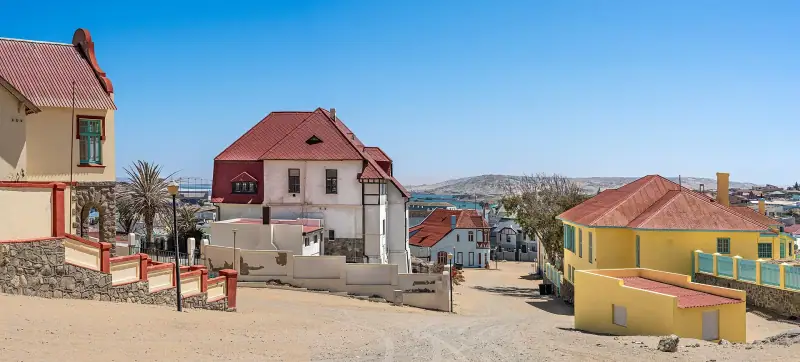
What to do in Lüderitz: activities and must-see visits
Kolmanskop, penguins at Halifax Island, Bogenfels, diving, flamingos: a complete guide to things to do in Lüderitz, Namibia's southern colonial gem.
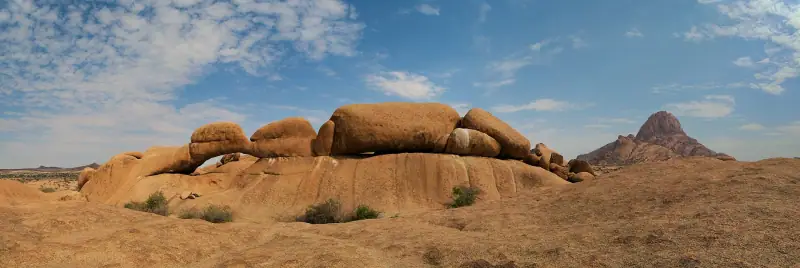
Spitzkoppe in Namibia: camping or day visit, entry fees and hiking without a guide
Spitzkoppe 2025-2026 fees (day visit N$180, camping N$300), booking, unguided hiking, rock paintings and tips for sleeping there.
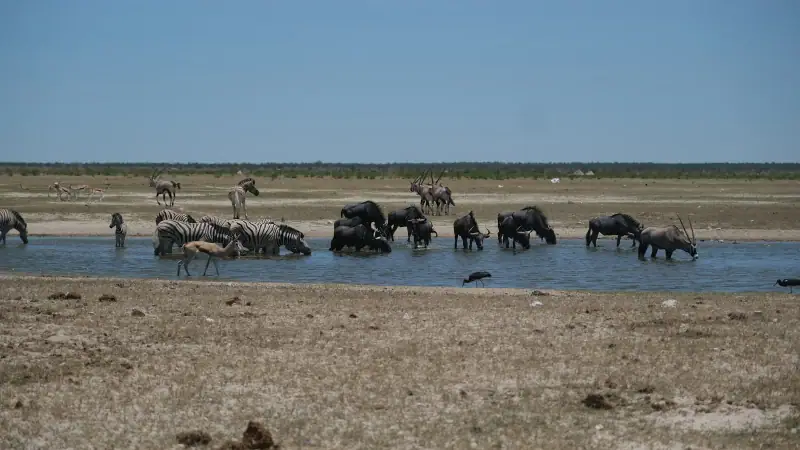
Where to stay in Etosha: NWR camps, lodges and practical tips
Choose where to stay in Etosha: official Okaukuejo, Halali and Namutoni camps or lodges outside the park. Budget, booking and safari tips.
Ready-made
Namibia itineraries
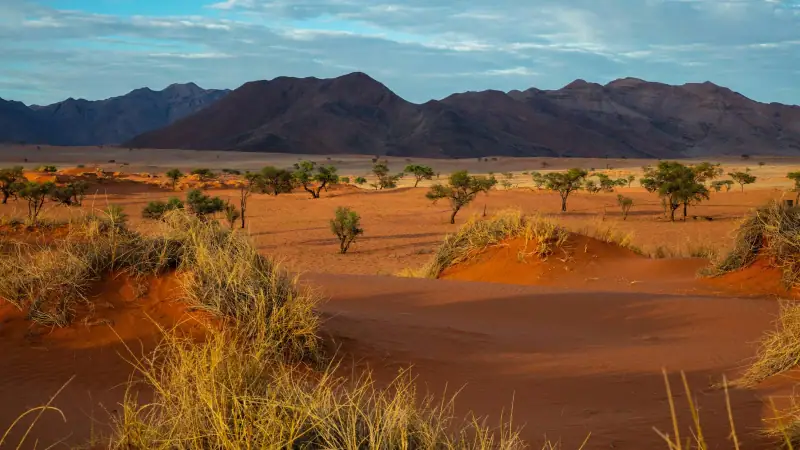
10 days
Namibia in 10 days without a car: a realistic itinerary by shuttle and transfer
WindhoekEtoshaDamaralandSwakopmundSesriem / SossusvleiWindhoek
10 days
Namibia road trip in the rainy season (January to March): itinerary and passable roads
WindhoekEtosha (Okaukuejo)Khorixas / TwyfelfonteinSwakopmundSesriemWindhoek

21 days
Namibia road trip: a complete 2 to 3 week 4x4 itinerary
WindhoekSossusvlei / Namib-NaukluftSwakopmund / Walvis BayDamaraland / SpitzkoppeTwyfelfonteinSkeleton Coast, southern partEtoshaWaterberg PlateauFish River CanyonLüderitz and return to Windhoek