Where to stay
Where to stay in Etosha: NWR camps, lodges and practical tips
We may earn a commission when you book through links on this page, at no extra cost to you. We don't visit or try the places we cover: we summarize published sources. How we work
In short
- Namibia Wildlife Resorts (NWR) runs three main camps inside Etosha: Okaukuejo, Halali and Namutoni. Book 3 to 6 months ahead for July to October.
- Sleeping inside the park gives you the floodlit waterholes at night; lodges outside require you to leave before the gates close at sunset.
- Plan at least 2 nights; an ideal stay is 1 night each at Okaukuejo, Halali and Namutoni.
- NWR camps run from about €22 to 28 ($26 to 32) per person for camping to €105 to 175 ($120 to 205) for comfortable chalets.
Etosha National Park is one of the largest and most accessible parks in southern Africa. With 22,270 km² (8,598 sq mi) of savanna, salt pan and bush, it is home to 114 mammal species, hundreds of birds and some of the last wild black rhinos on the continent. The question of where to sleep is far more strategic here than elsewhere: where you stay directly determines what you will see, what time you are in the park, and whether you can enjoy the legendary floodlit waterholes at night.
This complete guide helps you choose between the official Namibia Wildlife Resorts (NWR) camps inside the park and the private lodges outside the gates.
The official NWR camps inside the park
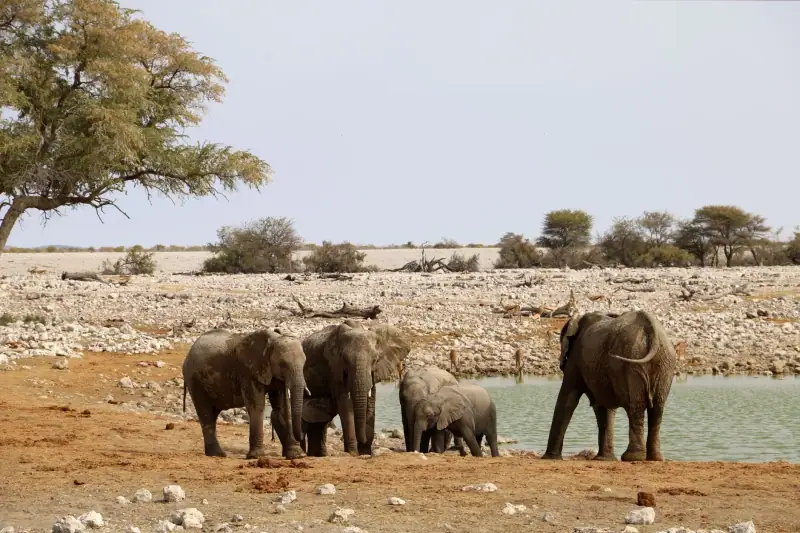
Namibia Wildlife Resorts (NWR) runs all the tourist facilities inside Etosha. Three main camps host visitors, each in a different sector of the park. A fourth camp (Dolomite) serves the west and is reserved for guests staying there.
Okaukuejo: the emblematic camp of the south
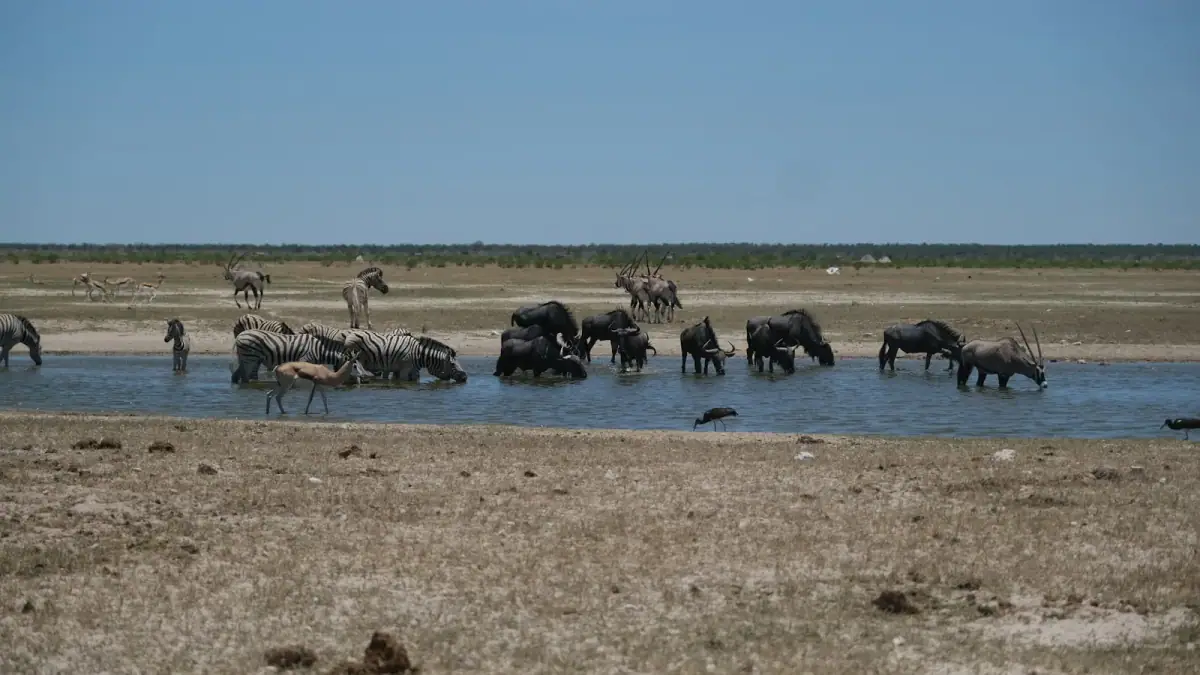
Okaukuejo is the most famous of the Etosha camps, and for good reason: it has one of the most active waterholes in the park, floodlit all night so that wildlife can be watched without disturbing the animals. Elephants, black rhinos, lions and giraffes regularly come to drink between sunset and sunrise. Some travelers spend the whole night on the benches of the viewing platform, eyes fixed on the lit water.
About 17 km (11 mi) from Anderson Gate (the main southern entrance), Okaukuejo is also the ideal starting point for game drives in the western part of the park. The camp offers spacious campsites, bungalows in several categories, a pool (welcome in the dry season), a restaurant, a shop and a fuel station.
Best for: first stays in Etosha, night photography fans, families with children.
Halali: the discreet central camp
Halfway between Okaukuejo and Namutoni, Halali is often less crowded than its two neighbors, which makes it an excellent choice for a calmer atmosphere. Its waterhole sits on a slight rocky rise, which is unusual in this flat landscape, and offers very different sightings from Okaukuejo. Black rhinos are regularly reported there.
The camp is slightly smaller than Okaukuejo but has the same essential facilities: camping, bungalows, pool, restaurant and shop. By day, the area around the camp often holds animals among the rocks and trees.
Best for: travelers who want to avoid the crowds, a second or third night in the park, wildlife photography at dawn.
Accommodation in Etosha
Compare the lodges and camps available around Etosha with free cancellation.
Namutoni: the historic atmosphere of the east
Namutoni has a place of its own in the park: the camp is set in and around a former German colonial fort from the early 20th century, restored and listed as national heritage. The white silhouette of its crenellated towers in the middle of the savanna creates an almost surreal atmosphere. The Namutoni waterhole is smaller than Okaukuejo’s but very popular with flamingos and many bird species; the east of the park is generally richer in birdlife.
Von Lindequist Gate (east) is a few kilometers away, which makes Namutoni ideal for travelers coming from Windhoek via the B1 or wanting to explore the east of the park first.
Best for: birdwatchers, travelers arriving from Windhoek, fans of Namibian colonial history.
Dolomite: the wild camp of the west (guests only)
Dolomite is in the western part of the park, an area normally closed to vehicles not staying at this camp. This exclusivity makes Dolomite the most intimate and wildest address in Etosha: you share the tracks with very few other cars, and your chances of seeing lions, elephants and oryx without a dozen 4x4s around you are much higher.
Rates are higher than at Okaukuejo, Halali or Namutoni, and booking well in advance is essential.
Best for: experienced travelers, fans of wild safaris and solitude, professional photographers.
Private lodges outside the park
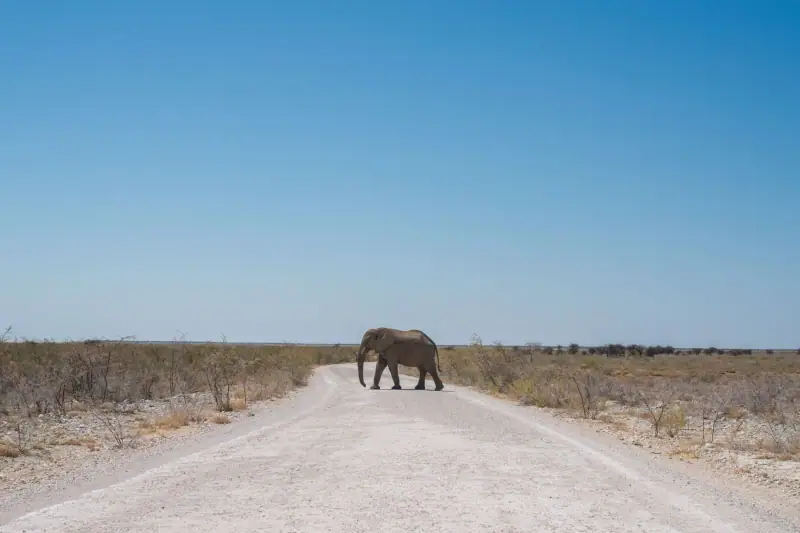
Many private lodges have set up near the Etosha gates, mainly near Anderson Gate in the south and Von Lindequist Gate in the east. These properties often offer a higher level of comfort than the NWR camps, with personalized service, infinity pools and sometimes guided game drives on their own private reserve next to the park.
The main drawback: you must leave the park before the gates close at sunset. You therefore lose the night viewing at the waterholes, one of the great privileges of those who sleep inside.
Car rental for Etosha
A vehicle is essential for a self-drive. Book early for the best deals.
High-end lodges (over €200 / about $230 per night)
The area south of Anderson Gate concentrates several luxury lodges and private reserves. Some sit in vast reserves next to the park, offering 4x4 safaris on little-visited land and night game drives (not allowed in the park itself). The experience is very different from an independent self-drive: an experienced guide, an open off-road vehicle, sundowner cocktails… This is the “classic African safari” format that many people imagine.
Mid-range lodges (€80 to 200 / about $93 to 230 per night)
Mid-range lodges offer excellent value. Thatched rooms (“rondavel” bungalows or platform tents), a pool, a restaurant and staff who know the park inside out. This type of accommodation suits independent travelers who want a little more comfort than a campsite without paying the rates of a luxury private reserve.
Many serve very early breakfasts (from 5:30 am) so guests can enter the park as soon as the gates open, which is crucial in the dry season when wildlife is most active in the first hours of the day.
Camping and small budgets
If you travel with a rooftop tent or a camping trailer, the NWR camps inside the park remain by far the best budget option. The sites are well equipped (water, electricity, toilets, showers) and often enclosed with electric fences for your safety.
More rustic campsites also exist outside the park, but without the bonus of night access to the waterholes.
Which entrance gate to choose?
Your choice of accommodation also depends on the Etosha gate you enter through.
- Anderson Gate (south): the main entrance and the most used. It gives direct access to Okaukuejo. From Windhoek, allow about 430 km (267 mi) via the B1 and then the C38.
- Von Lindequist Gate (east): convenient if you come from the B1 via Tsumeb. It leads directly to Namutoni.
- King Nehale Gate (north): used to cross the park when coming from the Ondangwa and Oshakati regions. Less used by foreign tourists.
Practical tips for choosing well
NWR booking: how it works
NWR camps are booked online on the official NWR site (nwr.com.na); if the online system is unavailable, requests go through [email protected]. Payment is required at booking. It is strongly advised to:
- Book 3 to 6 months ahead for high season (July to October)
- Confirm your arrival by email a few days before
- Arrive before the park gates close (the time varies by season, generally between 6 pm and 7:30 pm)
How many nights to plan
For a satisfying safari in Etosha, plan at least 2 nights. One night is not enough to explore more than one sector of the park, and moving between camps takes time.
An ideal stay is often split like this:
- 1 night at Okaukuejo: arrival from Windhoek, waterhole at night
- 1 night at Halali: exploring the central sector
- 1 night at Namutoni: east of the park, birds, departure via Von Lindequist Gate
Facilities in the NWR camps
All the main camps (Okaukuejo, Halali, Namutoni) have:
- A restaurant and bar (dinner at the camp is advised; do not leave the camps at night)
- A shop with basic provisions, souvenirs and park maps
- A fuel station (fill up before heading out on a game drive)
- A pool (precious in the dry season when temperatures often exceed 35 °C / 95 °F)
- Limited Wi-Fi (the connection is often weak in these remote areas)
Safety in the camps
NWR camps are surrounded by electric fences. You can walk freely inside the fenced perimeter. Outside the camps, never get out on foot: the park is home to lions, leopards, hyenas and wild elephants. Always stay in your vehicle outside fenced areas.
Best time to stay in Etosha
The dry season (May to October) is by far the best time to see wildlife in Etosha. The vegetation is less dense, natural water sources dry up, and animals concentrate around the few permanent waterholes, including those of the NWR camps. Temperatures are pleasant in the morning and evening but can be very hot at midday (up to 38 °C / 100 °F in September and October).
The rainy season (November to April) transforms the park: vegetation bursts into green, baby animals are born (wildebeest, zebras, impalas), and thousands of migratory birds arrive at the pan. But wildlife disperses and tracks can become difficult. Accommodation is cheaper and less busy.
For a trip combining Etosha and Sossusvlei, see our Etosha safari guide and our Etosha vs Sossusvlei comparison to plan your route better. You can also read our guide to northern Namibia to combine Etosha with other destinations.
Guided excursions in Etosha
Group safari from Windhoek or Swakopmund, transport and guide included.
Etosha is a destination that fully deserves the time you give it. Whether you choose the magic of Okaukuejo’s night waterholes, the calm of Halali or the historic atmosphere of Namutoni, each camp reveals a different side of this exceptional park. The key is simple: book early, arrive before dark, and let the animals come to you.
Frequently asked questions
Can you sleep inside Etosha National Park?
Yes, Namibia Wildlife Resorts (NWR) runs three main camps inside the park: Okaukuejo, Halali and Namutoni. They offer chalets, bungalows and campsites. Booking ahead is essential, especially in the dry season (June to October).
Which Etosha camp is best for seeing animals?
Okaukuejo is known for its waterhole floodlit at night, where elephants, black rhinos and lions come to drink. Halali also has an excellent waterhole, often less crowded. Namutoni is ideal for flamingos and birds in the east of the park.
How much does a night in an NWR camp in Etosha cost?
NWR rates vary by type of accommodation: a campsite costs about €22 to 28 ($26 to 32) per person, a basic room or bungalow about €90 to 120 ($105 to 140) per person in a double (breakfast included), and a comfortable chalet €105 to 175 ($120 to 205) per person, more for waterhole-facing chalets. These prices, shown in Namibian dollars on the official site (they vary by season), exclude park entry fees (about €14 / $16 per foreign adult per day, to be confirmed at the gate).
Do you need to book far in advance?
Absolutely, especially for high season (July to October). NWR camps fill up several months ahead for weekends and Namibian school holidays. Book through the official NWR site (nwr.com.na) as soon as your dates are fixed; if online booking is unavailable, write to [email protected].
Are outside lodges worth the extra cost compared with NWR camps?
It depends on your budget and the comfort you want. Private lodges offer a more intimate experience, more personal service and often guided game drives included. But NWR camps have the unmatched advantage of night access to the waterholes inside the park.
Can you visit Etosha without sleeping in the park?
Yes, but outside lodges require you to leave the park before the gates close at sunset. You then miss the night viewing at the floodlit waterholes, often the most memorable. Sleeping inside is strongly recommended.
More Namibia guides
Keep reading
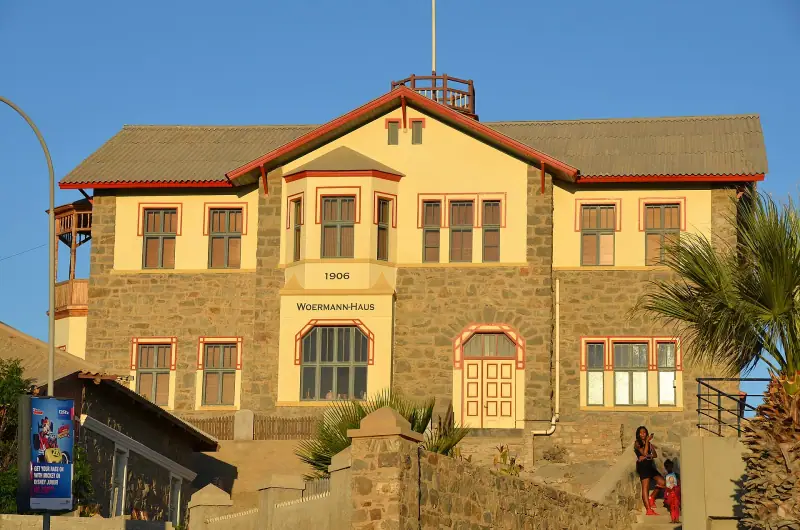
Where to stay in Lüderitz: the best places to sleep in Namibia's ghost-town gem
Hotels, guesthouses and camping in Lüderitz: a complete guide to choosing where to sleep in this isolated colonial town on the Namibian coast.
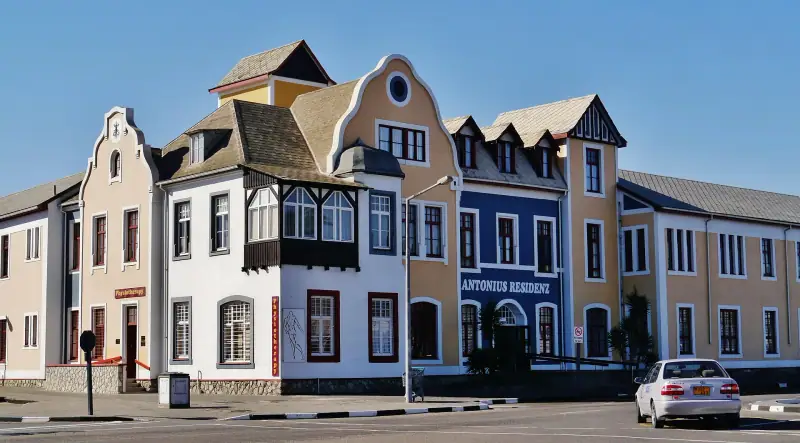
Where to stay in Swakopmund: hotels and guesthouses for every budget
Find the best places to stay in Swakopmund, Namibia's Atlantic pearl: hotels, guesthouses and lodges with ocean views, for every budget.
Where to stay in Windhoek: the best neighborhoods and hotels
The best hotels, guesthouses and neighborhoods to stay in Windhoek, the capital of Namibia. A complete guide for every budget.
Ready-made
Namibia itineraries
10 days
Namibia in 10 days without a car: a realistic itinerary by shuttle and transfer
WindhoekEtoshaDamaralandSwakopmundSesriem / SossusvleiWindhoek
10 days
Namibia road trip in the rainy season (January to March): itinerary and passable roads
WindhoekEtosha (Okaukuejo)Khorixas / TwyfelfonteinSwakopmundSesriemWindhoek

21 days
Namibia road trip: a complete 2 to 3 week 4x4 itinerary
WindhoekSossusvlei / Namib-NaukluftSwakopmund / Walvis BayDamaraland / SpitzkoppeTwyfelfonteinSkeleton Coast, southern partEtoshaWaterberg PlateauFish River CanyonLüderitz and return to Windhoek