Plan your trip
Kenya trip budget: real costs and 3 priced profiles
We may earn a commission when you book through links on this page, at no extra cost to you. We don't visit or try the places we cover: we summarize published sources. How we work
In short
- Safari is the heaviest item, generally 40 to 55% of a 10-day budget excluding flights; lodging adds 25 to 35%.
- Non-resident adult park fees quoted for 2026: about 90 USD a day in Amboseli, 80 USD in Nairobi National Park, 100 USD (January-June) or 200 USD (July-December) in the Mara.
- Estimated 10-day budgets per person, excluding international flights: €1,200-1,800 (about $1,390-2,090) economy, €2,600-3,800 (about $3,015-4,410) comfort, from €5,500 (about $6,380) premium.
- The SGR train between Nairobi and Mombasa costs 1,500 KSh in economy class, a very economical alternative to flying.
Kenya has a reputation for being an expensive destination, and it is not entirely unfounded: a proper safari costs more than a typical beach vacation. But the gap between a backpacker trip and a luxury stay is considerable, and a large part of the bill is decided before departure, when choosing the season, the park and the type of lodging.
This guide breaks down the real costs item by item (safari, lodging, transport, meals, activities, formalities), offers three priced sample budgets for ten days and ends with concrete tips to spend less without sacrificing the essentials. The prices quoted are drawn from sources published in 2026 (park rates, safari operators, the railway), but they change quickly: treat them as orders of magnitude and confirm them when you book.
About currencies. Most tourist rates are quoted in US dollars. Prices in Kenyan shillings (KSh) are given as published.
Overview: where does the money go?
Before going into detail, here is how the budget of a ten-day trip centered on a safari is split on average:
| Item | Approximate share of the budget (excluding flights) |
|---|---|
| Safari (parks, vehicle, guide) | 40 to 55% |
| Lodging | 25 to 35% |
| Transport outside safari | 5 to 10% |
| Meals and drinks outside the package | 5 to 10% |
| Tips, souvenirs, miscellaneous | 3 to 7% |
These proportions vary by profile, but they show one essential thing: cutting the cost of meals will change almost nothing in your budget, whereas choosing the right safari package can halve it.
Safari: the heaviest item
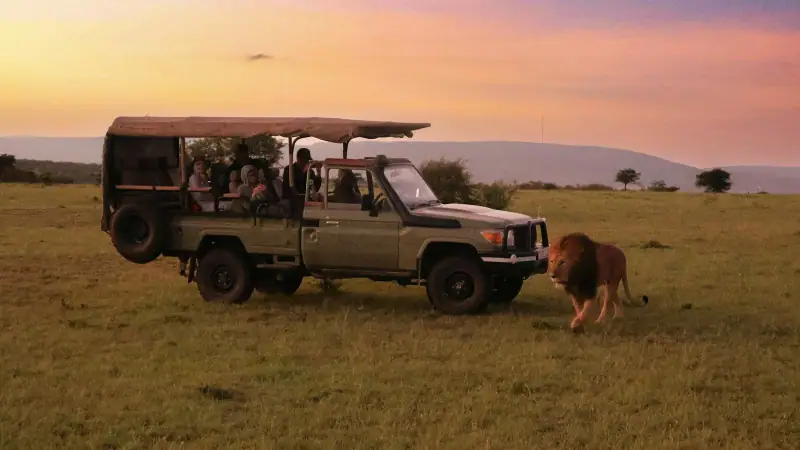
Park entry fees
Kenya’s national parks charge an entry fee per person per 24-hour period. A reform of the rate schedule took effect on October 1, 2025 and raised prices for the first time in a long while. For an adult non-resident visitor, the rates noted in 2026 include:
- Amboseli: about 90 USD per day, with the same rate all year.
- Nairobi National Park: about 80 USD per day.
- Masai Mara: about 100 USD per day from January to June, then about 200 USD per day from July to December, that is, during the great migration period.
The Masai Mara is therefore the most expensive park, precisely in the season when it is most in demand. These fees are not always itemized in agency offers: two quotes showing “200 USD per day” may not cover the same thing if one includes entry fees and the other does not. Our Masai Mara and Amboseli guides detail what each reserve offers for that price.
Package safaris: market ranges
Operators publish for 2026 ranges per person per day, all-inclusive (entry fees, 4x4 pop-top vehicle, English-speaking driver-guide, lodging, meals and planned activities):
- Economy to mid-range: about 250 to 300 USD per day for a road safari.
- Luxury: about 400 to 600 USD per day.
- Ultra-luxury or with domestic flights: 600 to 1,200 USD per day and beyond.
As an example, one operator lists for 2026 about 1,100 USD per person for a 5-day mid-range safari and about 2,000 USD for 7 days. These amounts exclude international flights, visa and tips.
More economical packages exist, in a shared group and in camping or simple lodging, with per-day prices clearly below the ranges above. They mean sharing a vehicle and giving up some flexibility.
Compare safaris in Kenya
One-day or multi-day safaris, with guide and transport: compare prices and packages.
What the price does not cover
Even an “all-inclusive” package leaves out several expenses: alcoholic drinks at lodges, laundry, optional activities (hot-air balloon flight, a Maasai village visit), tips and insurance. One operator suggests, for example, planning about 10 USD per person per day in tips for the team. For a first approach to safari, our guide to a safari in Kenya for a first trip explains how to compare packages.
Lodging: from camping to luxury lodge
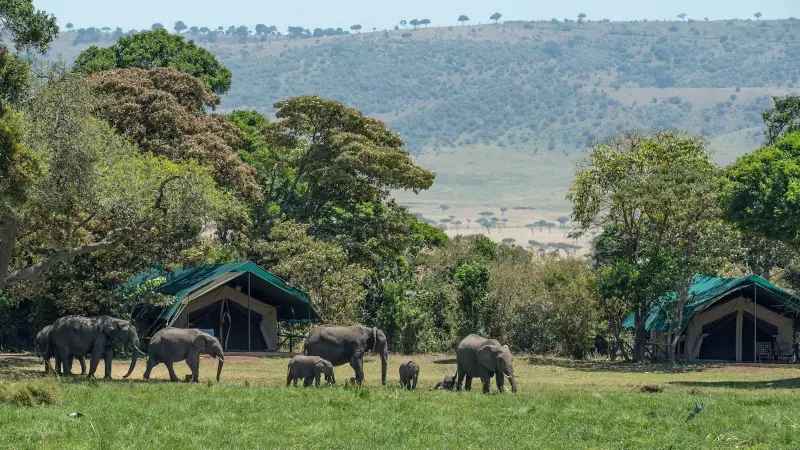
Outside the safari package, the price gap between categories is huge. Without naming specific properties whose rates change every season, here are the main families, from the most economical to the most expensive:
- Hostels and simple hotels in Nairobi or on the coast: the most accessible item of the trip. Prices there are well below those of safari lodges, and this is where competition between properties matters most.
- Camping and simple camps near the parks: an economical option, but comfort is basic and you need to make sure the site is safe.
- Mid-range lodges and tented camps: the safari standard. The rate is generally shown full board per person, and varies strongly between low and high season.
- Luxury camps and high-end lodges: one operator sums up the gap between a mid-range lodge and an ultra-luxury camp as more than 500 USD per person per night.
On the coast, in Diani or Mombasa, lodging ranges from small guesthouses to all-inclusive resorts. To compare areas and types of properties, see our guide to where to stay in Kenya.
Hotels in Nairobi and on the coast
Compare rates and free cancellation for your stop before or after safari.
Transport: flights, train and road
The international flight
This is the first item to budget, and it varies a lot with the season. Flights to Nairobi are more expensive during school holidays and during the great migration period. Booking early and staying flexible on dates is the most effective way to limit the bill.
Flights to Nairobi
Compare offers for your dates before locking in your safari.
The SGR train between Nairobi and Mombasa
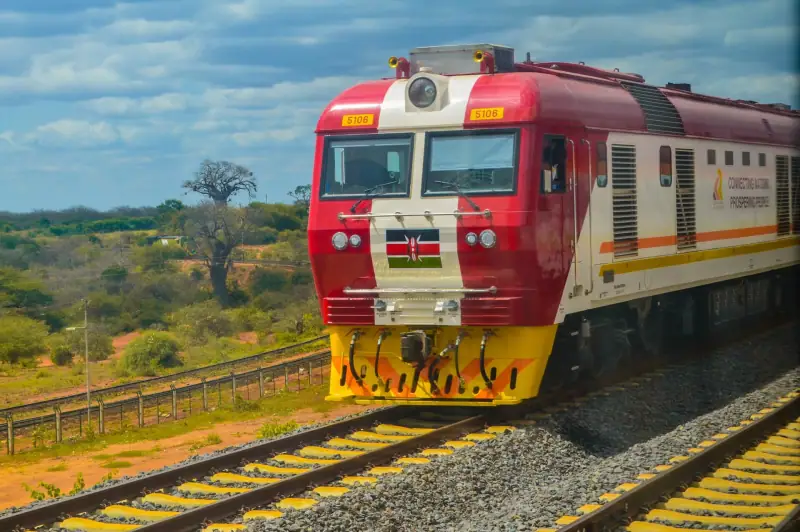
The standard gauge railway (SGR, or Madaraka Express) links Nairobi to Mombasa and is a very economical alternative to flying. The fares noted for the full route are:
- Economy class: 1,500 KSh (about €10 / $12).
- First class: 4,500 KSh (about €30 / $35).
- Premium class: 12,000 KSh (about €80 to 90 / $93 to 105).
Intermediate stations such as Voi, the gateway to Tsavo, are served, for about 1,050 KSh in economy class from Nairobi. Trains fill up quickly in holiday periods: book ahead.
Local travel
In town, ride-hailing taxis and motorbike taxis are cheap, but traffic in Nairobi can multiply journey times. For the parks, the simplest solution remains going through an operator that provides the vehicle and the driver-guide. Self-driving is possible in some areas, but tracks, flat tires and checkpoints can make the experience more trying. If you rent a car, check the insurance coverage for track driving.
Meals: the easiest item to control
On safari
At a lodge or camp, meals are almost always included (full board), with buffets or set menus. Drinks, however, are charged separately in many properties, and a beer or a soda costs more at the lodge than in town. Water is generally provided by the operator in quality packages.
In town and on the coast
Eating local is the best way to save: small neighborhood restaurants serve hearty dishes at low prices, and street stands offer grilled meats, grilled corn and skewers. Restaurants favored by visitors charge noticeably more. Our article on Kenyan cuisine and its specialties details what to taste and where to look for good local places.
A simple rule: plan a small daily budget for meals outside the package, alternating local places and a few pricier tables as a treat.
Activities and extras
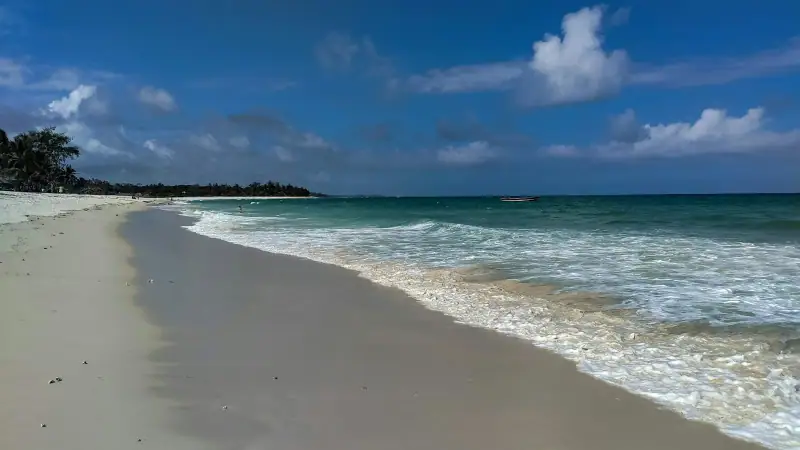
Beyond the classic safari, several activities have a separate cost:
- Visit to a Maasai village: free or fixed rate depending on the village. Check in advance what is included.
- Hot-air balloon flight: one of the most expensive extras of the stay, to book with your eyes open.
- Boat outings and diving on the coast: the price depends on the provider and the duration.
- Walking safari, visits to private reserves: pricing often higher than in the national parks.
- Nairobi visits: several sites can be visited for a modest price, as seen in our guide to what to do in Nairobi in 2 days.
Formalities, insurance and health
Kenya requires an electronic travel authorization (ETA) to be requested before departure. Fees and conditions vary, including by nationality. Entry rules depend on your passport. Check the official travel advice of your government before you book: travel.state.gov (US), GOV.UK (UK), travel.gc.ca (Canada), Smartraveller (Australia), and the official Kenyan government site (checked November 2026). Apply only on the official portal to avoid intermediary fees, as explained in our guide to the entry requirements for Kenya.
Add to your budget:
- Travel insurance with repatriation, essential for a stay in the bush. Some safari operators include air medical evacuation cover in their packages: ask about it.
- Health: ask your doctor or a travel clinic, and see the official travel health pages (CDC in the US, TravelHealthPro in the UK).
- Bank fees: check your card’s fees for withdrawals and payments abroad.
Three sample budgets for 10 days
Here are three scenarios built for one person, over ten days, excluding international flights. They are estimates built from the ranges above. They assume a trip as a couple (shared room) combining Nairobi, a multi-day safari and a few days on the coast.
Profile 1: economy (about €1,200 to 1,800 / $1,390 to 2,090)
- Safari: 3 to 4 days in a shared group, lodging in camping or a simple camp, the cheapest possible park (Nairobi National Park or Amboseli rather than the Mara in high season).
- Lodging outside safari: hostels and small hotels in Nairobi and on the coast.
- Transport: SGR train in economy class to reach the coast, shared local transport.
- Meals: local food, street stands, small neighborhood restaurants.
- Who is it for? Flexible travelers who accept limited comfort.
Profile 2: comfort (about €2,600 to 3,800 / $3,015 to 4,410)
- Safari: 4 to 5 days in a private vehicle or small group, mid-range lodges and tented camps, with Amboseli and the Masai Mara.
- Lodging outside safari: three- or four-star hotel in Nairobi, a beach stay of a few nights in Diani.
- Transport: domestic flight or first-class SGR, private transfers.
- Meals: a mix of full board at the lodge and restaurants in town.
- Who is it for? The choice of most travelers for a first visit, offering the best value for money.
Profile 3: premium (from €5,500 / $6,380)
- Safari: luxury camps, domestic flights between parks, private guide, exclusive activities such as the balloon.
- Lodging outside safari: high-end hotels, villa or beachfront resort.
- Transport: domestic flights and private transfers throughout.
- Meals: full board and drinks included in luxury camps.
- Who is it for? Honeymoons, big occasions, travelers who want maximum comfort. Prices can go well beyond this floor in high season.
To build the day-by-day program matching these budgets, start from our 10-day Kenya itinerary.
10 tips to spend less
- Go in low season. Between April and June, entry fees at some parks and lodge rates fall. The trade-off: rain that complicates the tracks. See the details in our guide on when to go to Kenya.
- Avoid the Masai Mara at peak migration. The entry fee doubles from July to December. Amboseli, with a stable rate all year, is a lower-cost alternative.
- Share the vehicle. A group safari or one with several people splits the 4x4 and guide costs, which weigh heavily for two.
- Compare quotes line by line. Check that entry fees, water, evacuation insurance and activities are included, otherwise the comparison is skewed.
- Book early. Mid-range lodges and flights fill up early in high season.
- Take the train rather than a plane between Nairobi and Mombasa: the trip costs a fraction of the price of a flight.
- Eat local in town. Meals in small neighborhood restaurants cost far less than in tourist places.
- Withdraw shillings and avoid exchanging at the airport. Rates there are generally less favorable than in town.
- Limit paid extras to those that really matter to you: a balloon flight or a village visit is not essential to a fine safari.
- Separate safari and beach. A beach stay in Diani or Mombasa costs less outside the year-end holidays. Our Diani Beach guide details what the coast offers.
Cash, cards and tips
Bank cards are accepted at lodges, hotels and big restaurants, but cash remains necessary for markets, taxis, tips and small expenses. ATMs are plentiful in Nairobi and the main towns, much rarer near the parks: stock up before leaving town.
For tips, a daily envelope for the driver-guide and camp staff is the common practice. Keep small bills and confirm with your operator the usual amount for your group.
Planning advice
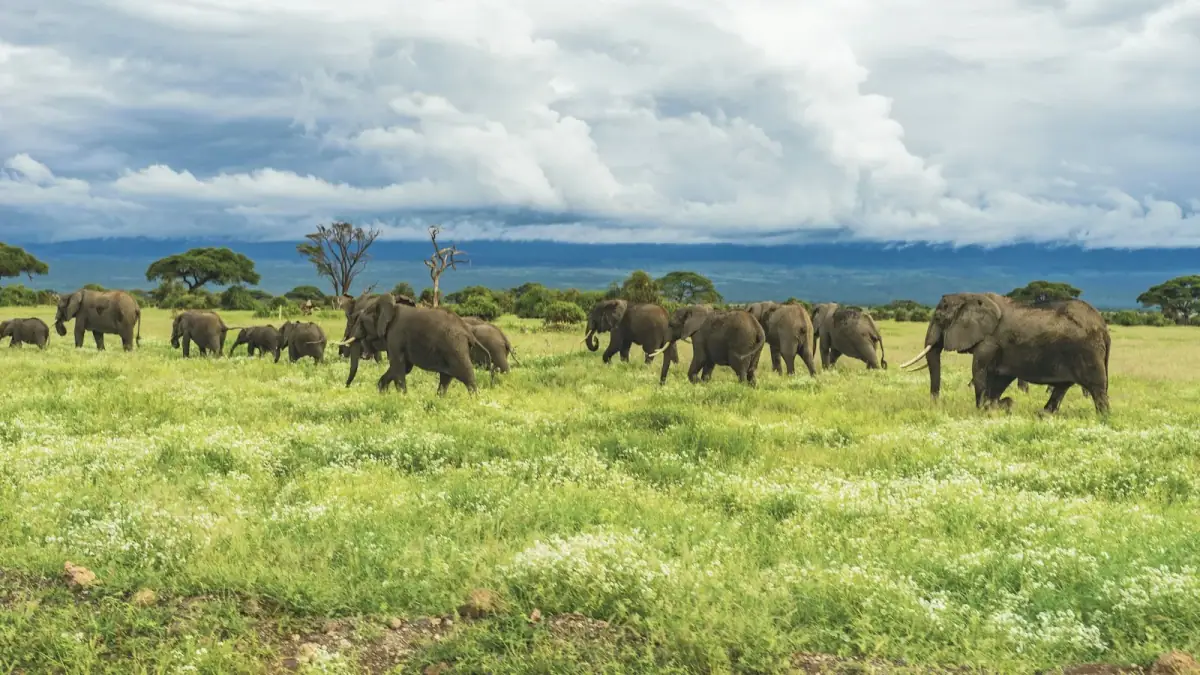
Start by setting the number of safari days and the main park, as these are the two variables that determine half the budget. Then choose the comfort level of lodging, and only then the departure date according to your means. Finally, add a margin of about 10% for the unexpected: unfavorable exchange rates, extras and tips. A well-planned budget avoids unpleasant surprises and lets you focus on the essentials: the morning light on the savanna and the herds of elephants at the foot of Kilimanjaro.
For a first overview of the country before pricing your trip, see our complete guide to Kenya.
Sources
- Kenya Wildlife Service: prices checked November 2026
- Kenya Wildlife Service: prices checked November 2026
- Kenya Railways (Madaraka Express): figures checked November 2026
Frequently asked questions
How much does a 10-day trip to Kenya cost?
Excluding international flights, roughly €1,200 to 1,800 (about $1,390 to 2,090) per person for an economy package, €2,600 to 3,800 (about $3,015 to 4,410) for comfort and €5,500 (about $6,380) and up for premium. These are estimates built from park fees and safari price ranges published in 2026: the final price depends mostly on the season and the number of safari days.
What is the heaviest expense?
Safari. Between park entry fees, charged per person per day, the vehicle with a driver-guide and lodging in a lodge or camp, it generally represents more than half the total budget. Meals and local transport weigh much less.
Are park entry fees included in the price of a safari?
In most agency packages, yes, but always check the "park fees" line of the quote. If you book yourself, they are extra: about 90 USD per adult per day in Amboseli and 80 USD in Nairobi National Park, and 100 to 200 USD in the Masai Mara depending on the time of year.
Can you travel to Kenya on a small budget?
Yes, if you accept compromises: group safari, camping or a simple lodge, public transport or the train, local meals. Kenya remains a destination where safari is costly, but daily life (meals, city transport, lodging outside the parks) is affordable.
Should you plan for tips?
Yes, it is a common practice in Kenyan tourism. Some operators suggest about 10 USD per person per day for the safari team. Also keep a few small bills for lodge staff, porters and restaurants.
Which currency should you bring: dollars, shillings or other?
The local currency is the Kenyan shilling (KSh). US dollars are widely used for parks and lodges, while other foreign currencies such as euros are harder to change outside the big cities. Withdraw shillings from an ATM in town and keep a few recent dollar bills in reserve.
Which period is the cheapest to go?
The low seasons, notably April to June for the national parks, offer lower entry fees and lodge rates. In return, rain complicates the tracks and some camps close. Our guide to the best time to go details these trade-offs.
More Kenya guides
Keep reading
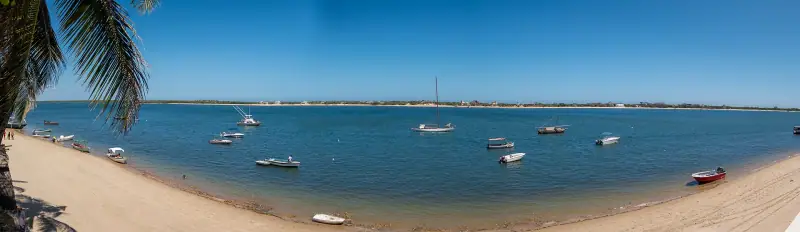
When to go to Kenya: seasons, migration and weather month by month
When to go to Kenya: dry and rainy seasons, the Masai Mara great migration, weather in Nairobi and on the coast, month by month for your trip plans.

Late arrival in Nairobi (JKIA): where to sleep the first night before a safari
Landing in Nairobi at night with a safari the next day? Hotel near JKIA or in Karen: transfer, late check-in, travel time and tips to choose well.
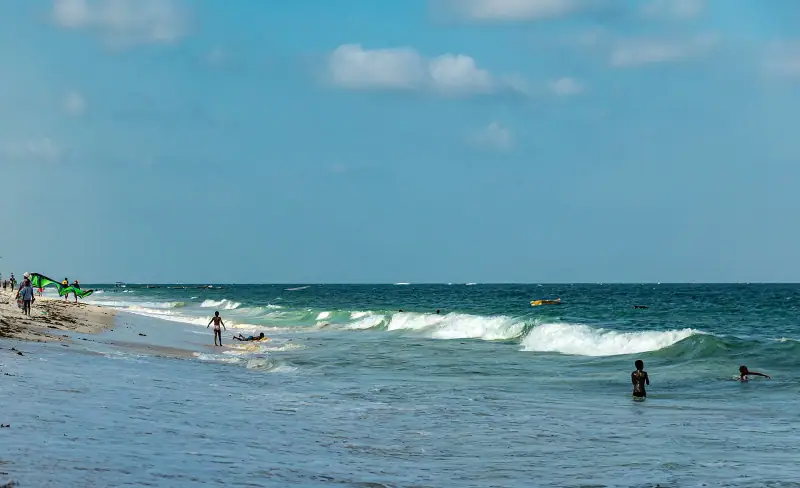
Diani Beach: guide to Kenya's finest beach
Diani Beach in Kenya: access, best time, beaches, colobus monkeys, snorkeling, kitesurfing and excursions for a beach stay after safari.
Ready-made
Kenya itineraries
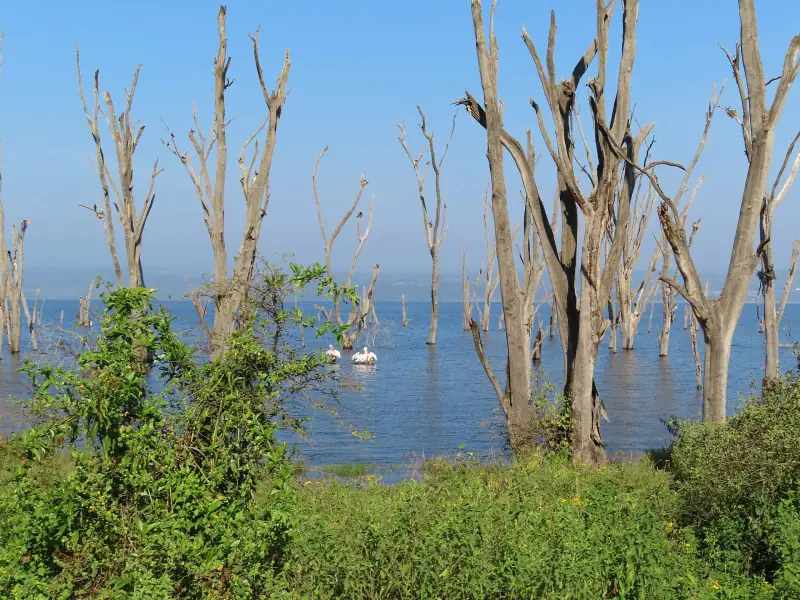
7 days
Kenya in 7 days: Naivasha, Nakuru and the Masai Mara without rushing
NairobiNaivashaMasai MaraNairobi
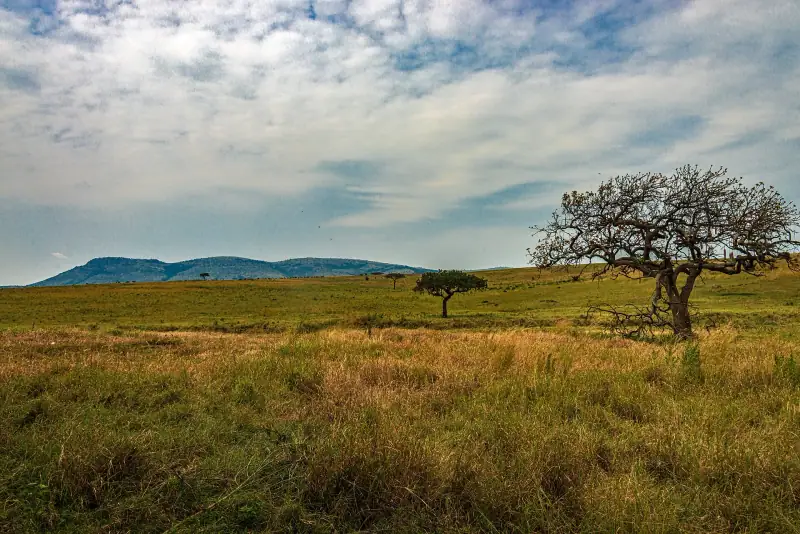
10 days
Kenya in 10 days: Nairobi, Amboseli, Masai Mara and Diani Beach
A day-by-day 10-day Kenya itinerary: Nairobi, Amboseli facing Kilimanjaro, a Masai Mara safari, then relaxing on Diani Beach. Budget and tips.